

What is Quiet Walking?
Quiet walking is a silent, intentional walk done without speaking, listening to music, or using digital devices. It is a mindful practice rooted in presence and sensory awareness, inviting participants to engage deeply with their environment and inner state. This contemplative form of walking draws heavily from Eastern philosophies, particularly Zen Buddhism, which incorporates kinhin, or walking meditation, as a core ritual of mindful movement. (1) Originating in Buddhist traditions, it emphasizes awareness in each step as a path to spiritual insight. (2)
Modern therapeutic frameworks, such as mindfulness-based stress reduction (MBSR), have adopted this practice for its proven psychological benefits. (3) Studies show quiet walking enhances mental clarity, supports emotional healing, and facilitates introspection (Selfless Insight – Google Books). (4) (5) It reflects ancient principles found in Zen aesthetics and has been linked to practices of silent illumination and non-discursive awareness. (6) As such, quiet walking is not merely a physical activity but a path toward mindful, purposeful being.
Comparison with traditional walking or casual strolls.
Here’s a clear comparison table highlighting the differences between Quiet Walking and Traditional Walking / Casual Strolls across various dimensions:
| Aspect | Quiet Walking | Traditional Walking / Casual Strolls |
| Definition | Silent, intentional walk without devices or conversation | General walk, often for leisure, exercise, or transport |
| Purpose | Mindfulness, inner awareness, sensory engagement | Relaxation, physical movement, sightseeing, or multitasking |
| Noise Level | No talking, no music, often practiced in silence | May include talking, music, phone use, or listening to surroundings casually |
| Digital Disconnection | Devices are avoided to promote present-moment focus | Devices often used for calls, music, or step tracking |
| Pace and Rhythm | Slow, deliberate, with attention to each step | Variable pace depending on purpose (leisure, brisk, wandering) |
| Mindfulness Level | High – emphasis on breath, steps, and surrounding sensations | Low to moderate – awareness may shift or be distracted |
| Setting Preference | Natural, quiet environments (e.g., trails, parks) preferred | Any setting, including urban or crowded areas |
| Physical Benefits | Moderate – benefits through relaxation and body awareness | Can be moderate to high depending on intensity |
| Mental/Emotional Impact | Enhances calm, reduces anxiety, promotes introspection | Can improve mood but often lacks meditative depth |
| Philosophical/Spiritual Roots | Rooted in Zen, Buddhism, and mindfulness traditions | No formal roots – typically secular or routine |
Key Principles of Quiet Walking
Quiet walking is guided by principles of mindfulness, silence, and present-moment awareness. It encourages you to walk slowly, stay disconnected from distractions, and fully engage with your surroundings and breath.
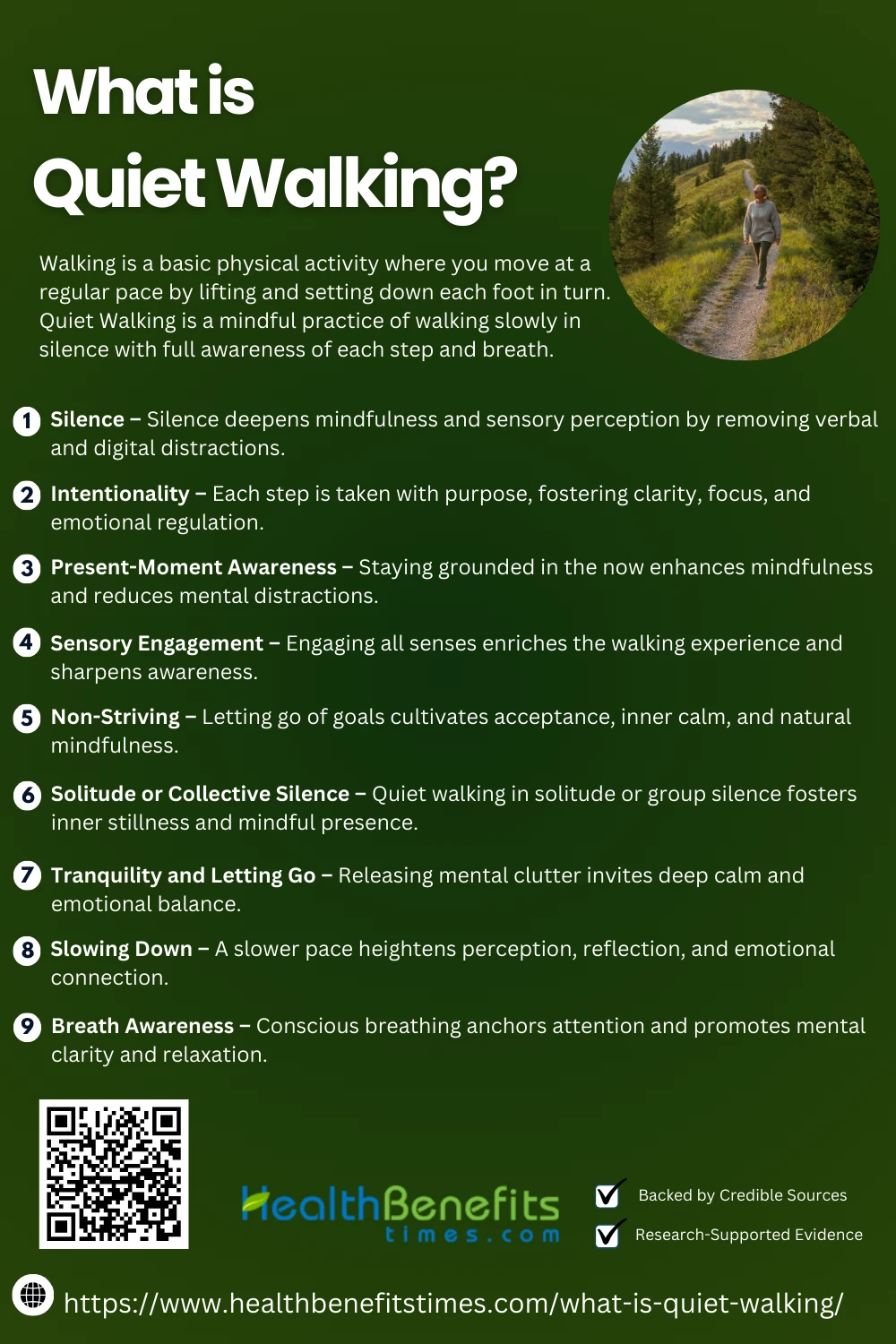
Silence is the foundational principle of quiet walking, fostering deeper mindfulness, heightened sensory perception, and emotional regulation. By eliminating verbal interaction and digital distractions, practitioners can cultivate an undisturbed connection with the present moment. (5) Silence enhances awareness of internal thoughts, amplifies external perception, and supports contemplative presence (Peace is Every Step) in ways ordinary walking cannot. (7) (8) (9)
2. Intentionality
Intentionality shapes the essence of quiet walking, distinguishing it from passive strolling. Every step is taken with awareness and purpose, fostering clarity and grounding. This conscious direction encourages internal reflection, strengthens self-regulation, and activates goal-directed mindfulness. (10) Intentionality not only refines attention but also cultivates emotional discipline.
3. Present-Moment Awareness
Present-moment awareness is central to quiet walking, anchoring attention to the now rather than rumination or future projections. Focusing on breath, bodily sensations, and surroundings deepens the meditative quality of the walk. (11) This clarity enhances cognitive control, emotional balance, and stress resilience. (9) (12) (5) Anchoring in the present also counters mental distractions. (8)
4. Sensory Engagement
Sensory engagement transforms quiet walking into a fully embodied experience. It invites deep awareness of sound, sight, scent, and touch—activating the body’s natural attunement to the environment. (7) This multisensory immersion supports cognitive clarity, enhances emotional depth, and sharpens attention. Engaging the senses quiets internal chatter and cultivates present awareness.
5. Non-Striving
Non-striving emphasizes being over doing—allowing each step in quiet walking to unfold without expectation or achievement. This mindset fosters acceptance and inner calm, freeing one from performance-driven thinking. Letting go of goals enables mindfulness to arise naturally. (11) It reduces stress and resistance to present experiences, and nurtures openness and receptivity.
6. Slowing Down
Slowing down is fundamental to quiet walking, allowing participants to become acutely aware of each step, breath, and moment. A reduced pace enhances sensory perception and emotional regulation. (5) It fosters deep connection to place and body awareness (Mindfulness in Motion), encourages reflection over reaction, and decreases cognitive load. (10) Deliberate slowness counters modern hyper-speed culture.
7. Breath Awareness
Breath awareness grounds the practitioner during quiet walking, serving as a natural anchor to the present. Conscious breathing synchronizes body and mind, promoting stability and relaxation. (11) This rhythm reduces anxiety and emotional reactivity, fosters internal spaciousness, and enhances mental clarity. (9) Breath is the silent guide within each step.
8. Solitude or Collective Silence
Quiet walking embraces both solitude and collective silence, nurturing inner stillness whether practiced alone or in silent groups. Solitude invites introspection and self-connection, while shared silence promotes calm communion without verbal interaction. (8) Both foster mindful presence, deepen awareness, and reduce internal distractions. (5) (7)
9. Tranquility and Letting Go
Tranquility and letting go are cultivated through the gentle discipline of quiet walking. As the mind slows, walkers release mental clutter, allowing calm to emerge naturally. Letting go of goals, thoughts, and distractions promotes deep restfulness. (11) This quietude enhances emotional balance, spaciousness in thought, and connection to the present.
Health benefits of Quiet Walking
Quiet walking offers a range of health benefits, from reducing stress and anxiety to improving focus and emotional balance. This mindful practice supports both mental clarity and gentle physical well-being.
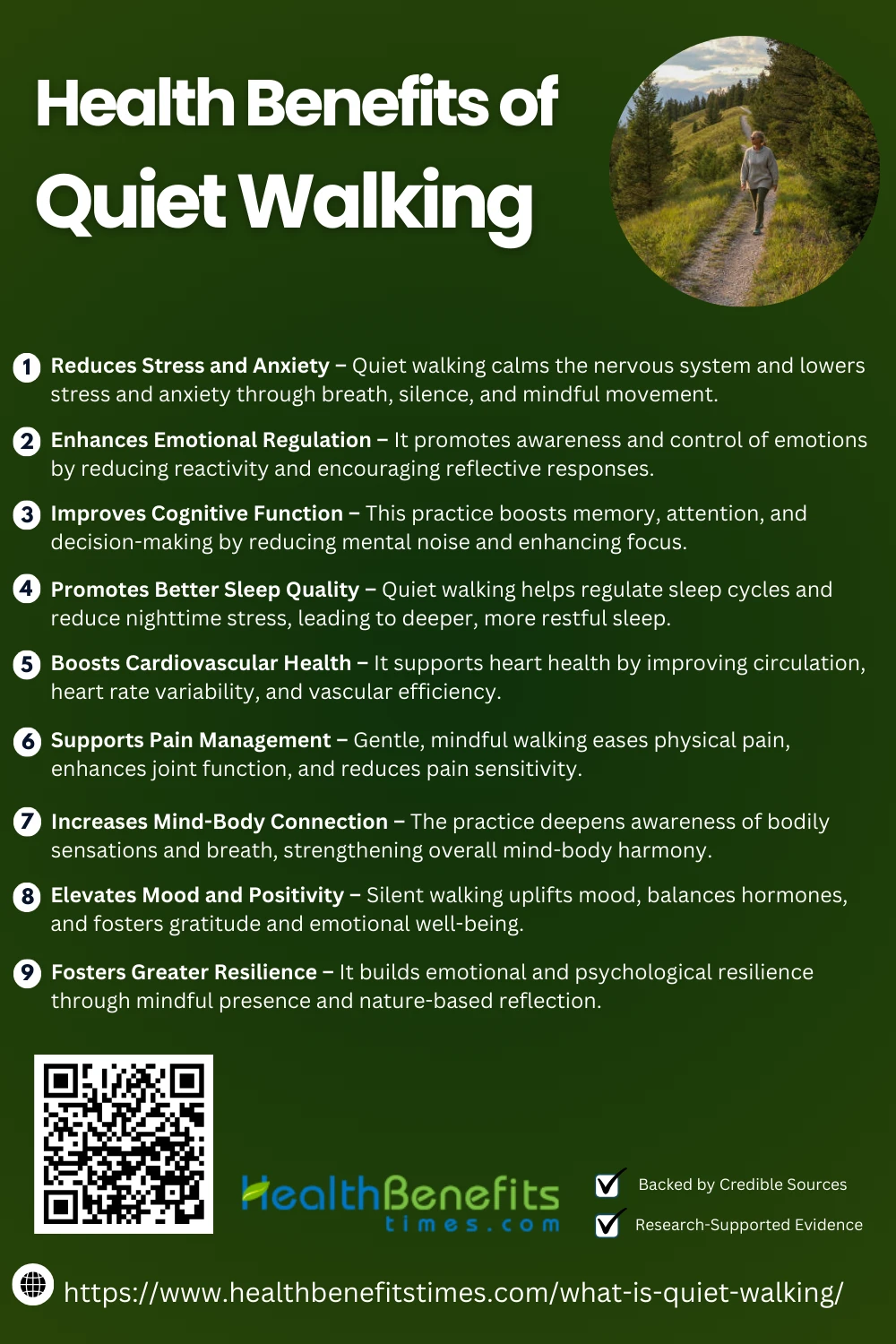
Quiet walking significantly reduces stress and anxiety by engaging the parasympathetic nervous system and calming mental activity. Its meditative pace lowers cortisol levels and improves psychological resilience. (5) Nature-based walking fosters tranquility (Mindfulness in Motion), while breath regulation supports nervous system balance. (11) Regular practice also reduces anxiety symptoms long-term and supports social peace. (3) (13)
2. Enhances Emotional Regulation
Quiet walking supports emotional regulation by increasing awareness of internal emotional states. Silence and intentional movement slow down reactive patterns and promote emotional insight. This practice engages non-judgmental observation of feelings, facilitating healthy responses over impulsivity and building resilience through routine reflection. (9)
3. Improves Cognitive Function
Quiet walking enhances cognitive function by reducing mental noise and improving sustained attention. Studies show that mindfulness walking strengthens working memory and executive control. (9) Slower pace aids in processing speed, while breath-linked walking enhances neural coherence. Regular practice improves clarity and decision-making and reduces cognitive fatigue. (13)
4. Promotes Better Sleep Quality
Quiet walking fosters restful sleep by lowering cortisol and synchronizing circadian rhythms. A recent study emphasized how this simple activity contributes to sleep-friendly environments and stress relief. (14) Walking interventions improve mobility, which reduces nighttime discomfort. (15) It also supports mental health stability and relaxation, aiding deep sleep consolidation. (13) (16) Consistent evening walking routines elevate overall sleep quality. (17)
5. Boosts Cardiovascular Health
Engaging in quiet walking improves heart rate variability and vascular efficiency. It reduces myocardial oxygen demand and enhances endothelial function post-exercise . (18) (19)Walking aids in mobility recovery and circulation, complements mitochondrial adaptation, and supports oxygenation even during minimal exertion. (15) (18) (14)
6. Supports Pain Management
Quiet walking aids pain management by improving joint mobility and reducing inflammation. Case studies highlight improvements in motor adaptation post-trauma. (20) Walking induces endorphin release, promoting natural analgesia. It also stabilizes gait, mitigating chronic pain flare-ups. (15) Quiet ambulation reduces stress-related pain sensitivity and enhances physical-emotional resilience. (13) (17)
7. Increases Mind-Body Connection
Quiet walking enhances mind-body integration by fostering breath awareness and embodied attention. A qualitative study revealed improvements in emotional resilience through mindful ambulation. (21) It also facilitates spiritual presence in motion and supports somatic clarity. (22) (12) Nature-based micro-walking reduces stress, while meditative walking strengthens sensory self-awareness. (23) (24)
8. Elevates Mood and Positivity
Walking in silence significantly uplifts emotional states by regulating stress hormones and promoting present-moment focus. One study found that walking without auditory distractions produced more stable mood patterns than music-accompanied walking. (25) It encourages mindful breathing, reducing cortisol, and enhances cognitive-emotional alignment. (26) (27) Further, green-walk rituals amplify gratitude and positive affect. (23) (26)
9. Fosters Greater Resilience
Quiet walking in natural or reflective settings builds psychological resilience by fostering mindfulness and cognitive flexibility. Urban studies show green trails promote emotional recovery and community resilience. (28) Meditative walking enhances inner calm and emotional buffering. Resilience also improves through contemplative movement, body awareness practices, and mindfulness-based nature exposure. (23) (22) (21)
How to Practice Quiet Walking
Quiet walking, often known as walking meditation or mindful walking, is a therapeutic practice that enhances mental clarity, emotional balance, and resilience through slow, intentional movement. Here’s how to do it effectively:
1. Choose a Quiet Setting
Pick an environment free from distractions—like a park, forest trail, beach, or even a long hallway indoors. Natural spaces can amplify the calming effects of the practice by reducing sensory overload and promoting serenity. Research confirms that exposure to nature enhances parasympathetic nervous activity, which supports relaxation and mindfulness. (28)
2. Stand Still and Center Yourself
Before you take your first step, pause. Stand tall, feet shoulder-width apart. Close your eyes or soften your gaze. Take three deep breaths—in through the nose and out through the mouth. This grounding technique activates the vagus nerve, which lowers heart rate and primes the mind for focus. (26)
3. Set an Intention
Mental framing boosts the psychological benefits of quiet walking. Set a gentle internal affirmation—such as:
- “I walk to calm my thoughts.”
- “I walk to observe, not judge.”
4. Walk Slowly and Mindfully
Begin walking at a pace slower than normal. Notice every micro-movement:
- Lifting your heel
- Shifting your body weight
- Touching down your sole
Focus fully on these sensations. Don’t rush. Walking meditation is not exercise—it’s an awareness practice, akin to Tai Chi or Qigong. (29)
5. Engage All Senses
Heighten your interoception (body awareness) and exteroception (surroundings) by opening your senses:
- Feel the ground texture under your shoes.
- Hear your breath or birdsong.
- Observe light filtering through trees or shadows on the pavement.
6. Gently Redirect Wandering Thoughts
If your mind begins to drift—into work, stress, or errands—notice it without judgment and return your focus to your breath or step rhythm. You’re not trying to silence thoughts, but to not follow them. Studies on mindfulness show that this simple redirection builds emotional resilience and cognitive flexibility. (22)
7. Walk for 10–30 Minutes
Beginners may start with 10 minutes. Over time, extend your practice to 20–30 minutes. You can walk in a loop, a straight path, or back-and-forth in a room. The consistency of rhythm matters more than the path.
8. End with Stillness
After walking, pause and stand still for a minute. Place your hands over your heart or at your sides. Notice your mental and physical state—what has changed? Take three slow breaths, acknowledging the shift from motion to stillness. This closing ritual is key in translating the calm into your daily life.
9. Practice Regularly
Like any mind-body technique, regularity builds skill. Try to integrate quiet walking into your weekly rhythm, ideally during stressful times or transitions.
Quiet Walking vs. Walking Meditation
While Quiet Walking and Walking Meditation may appear similar, they differ in intention, structure, and depth of awareness. Here’s a detailed comparison to help you clearly differentiate between the two:
| Aspect | Quiet Walking | Walking Meditation |
| Purpose | To calm the mind, reduce noise, and reflect internally during movement | To cultivate mindfulness, awareness of the present moment, and spiritual insight through formal practice |
| Formality | Informal and spontaneous; can be done anywhere, anytime | Formal and structured; typically practiced as part of a meditation routine or spiritual tradition |
| Pace | Natural or slightly slower than normal pace | Intentionally slow; each step is deliberate and coordinated with breath or mantra |
| Focus of Attention | General sensory awareness (e.g., breath, sounds, footfalls, scenery) | Laser focus on body sensations, breath, or specific anchor points like foot contact or bodily motion |
| Silence Requirement | Emphasizes physical and mental silence | Silence is preferred but not always essential if practiced in group settings |
| Use of Environment | Often practiced in peaceful outdoor spaces for reflection or stress relief | Can be done indoors or outdoors; less dependent on the environment |
| Mental Engagement | Reflective and intuitive; thoughts are allowed to arise and pass naturally | Observational and non-judgmental; the goal is to return to the present moment again and again |
| Spiritual/Philosophical Roots | Not necessarily spiritual; often psychological or wellness-oriented | Deep roots in Buddhist and contemplative traditions like Vipassana, Zen, and Thich Nhat Hanh’s teachings |
| End Goal | Stress reduction, clarity, inner quiet | Awakening, deep presence, cultivation of insight and compassion |
Ideal Settings and Times for Quiet Walking
Here’s a list of Ideal Settings and Ideal Times for practicing Quiet Walking
Ideal Settings for Quiet Walking
- Parks and Nature Trails – Calm, natural surroundings enhance mindfulness.
- Forest Paths (Forest Bathing) – Encourage sensory immersion and emotional restoration.
- Beaches or Lakesides – Rhythmic sounds of water support meditative flow.
- Open Fields or Meadows – Spacious views foster mental clarity.
- Garden or Backyard – Easily accessible, personal, and quiet.
- Indoor Hallways (During Off-Hours) – Great for rainy or cold days.
- Botanical Gardens or Arboretums – Naturally quiet and visually soothing.
Ideal Times for Quiet Walking
- Early Morning (Sunrise) – Minimal noise, mentally fresh start.
- Evening (Sunset) – Helps wind down and process the day.
- Midday Breaks – Reset during workday stress or screen fatigue.
- Light Rain (if safe) – Calming background sounds; promotes introspection.
- Moonlit Nights – Deeply meditative when safe and familiar.
Tips for Beginners
Quiet walking is a simple yet powerful practice that promotes mindfulness and calm. For beginners, learning key tips can enhance focus, deepen awareness, and make each step more meaningful.
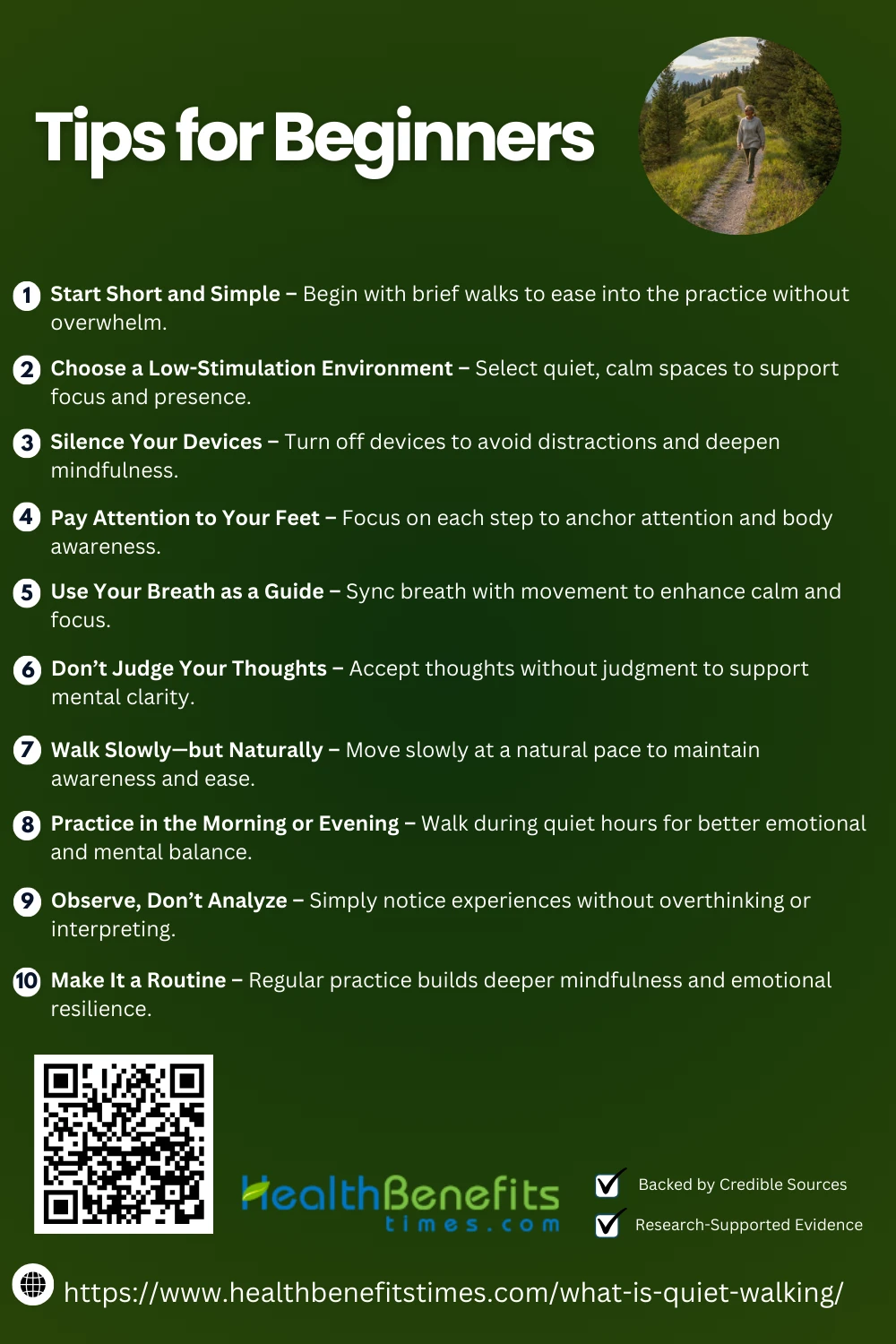
Beginners benefit most when they start quiet walking with short, manageable durations. Research shows that micro-habits, like brief mindfulness walks, increase adherence and reduce overwhelm. (30) Starting simple allows the nervous system to adjust gradually to calm stimuli. (31) In early-stage behavior change, even five minutes of intentional walking boosts mental clarity. (32)
2. Choose a Low-Stimulation Environment
Selecting a low-stimulation environment is key to cultivating presence. Nature-based or quiet settings reduce sensory overload, promoting mindful focus. (33) Studies suggest low-stimulus settings help especially for beginners adjusting to attentional shifts. (34) Such environments foster restoration and attentional balance. (35)
3. Silence Your Devices
Turning off digital distractions enhances the effectiveness of quiet walking by promoting uninterrupted attention. Studies show that smartphone notifications significantly reduce cognitive presence. (36) Device silence creates a protected space for introspection. (37) Reduced sensory input improves mindfulness retention during slow movement. (38)
4. Pay Attention to Your Feet
Focusing on foot movement anchors attention and strengthens body-mind awareness. Grounded foot sensations support mindful walking by engaging proprioception (Taylor, 2025). Each step offers a sensory checkpoint to reduce distraction. This embodied awareness is a core principle in mindful movement disciplines like Tai Chi and somatic therapy. (39) (29)
5. Use Your Breath as a Guide
Synchronizing breath with movement enhances awareness and calms the nervous system. Deep, rhythmic breathing improves emotional control and focus during mindful practices. (40) Breath-guided walking also aids in reducing anxiety and cognitive overload and builds resilience through parasympathetic activation. (41)
6. Don’t Judge Your Thoughts
In quiet walking, non-judgmental awareness of thoughts is key to developing mental clarity. Accepting thoughts without analysis supports emotional regulation and mindfulness stability. (42) Letting go of self-criticism prevents cognitive resistance and nurtures a compassionate inner mindset essential for beginners. (43)
7. Walk Slowly—but Naturally
Walking slowly enhances awareness without creating tension. Research on gait training emphasizes that natural pacing prevents mechanical strain and supports neurological flow (Somov et al., 2024). Natural rhythm improves proprioceptive feedback and reduces mindfulness fatigue during extended walking practices. (44)
8. Practice in the Morning or Evening
Morning and evening walks align best with the body’s natural circadian rhythms, fostering deeper calm and focus. Practicing during low-stimulation hours enhances emotional regulation. (45) Evening walks can assist sleep quality and help cultivate spiritual reflection. (46) (47)
9. Observe, Don’t Analyze
In quiet walking, simply observe without interpretation. Mindful observation fosters clarity and acceptance. (48) Analyzing thoughts or sensations interrupts the meditative flow and heightens stress. (49) Non-evaluative awareness is a central tenet of mindfulness-based practices. (50)
10. Make It a Routine
Consistency builds deeper benefits in quiet walking. Establishing a daily rhythm strengthens neural pathways for attention and emotional regulation. (51) Habitual practice fosters long-term psychological resilience. Integrating quiet walks into morning or evening routines enhances sustainability and mindfulness impact.
Common Challenges and How to Overcome Them
Quiet walking may seem easy, but beginners often face distractions, restlessness, or impatience. Understanding these common challenges and learning simple strategies can help you stay present and enjoy the practice.
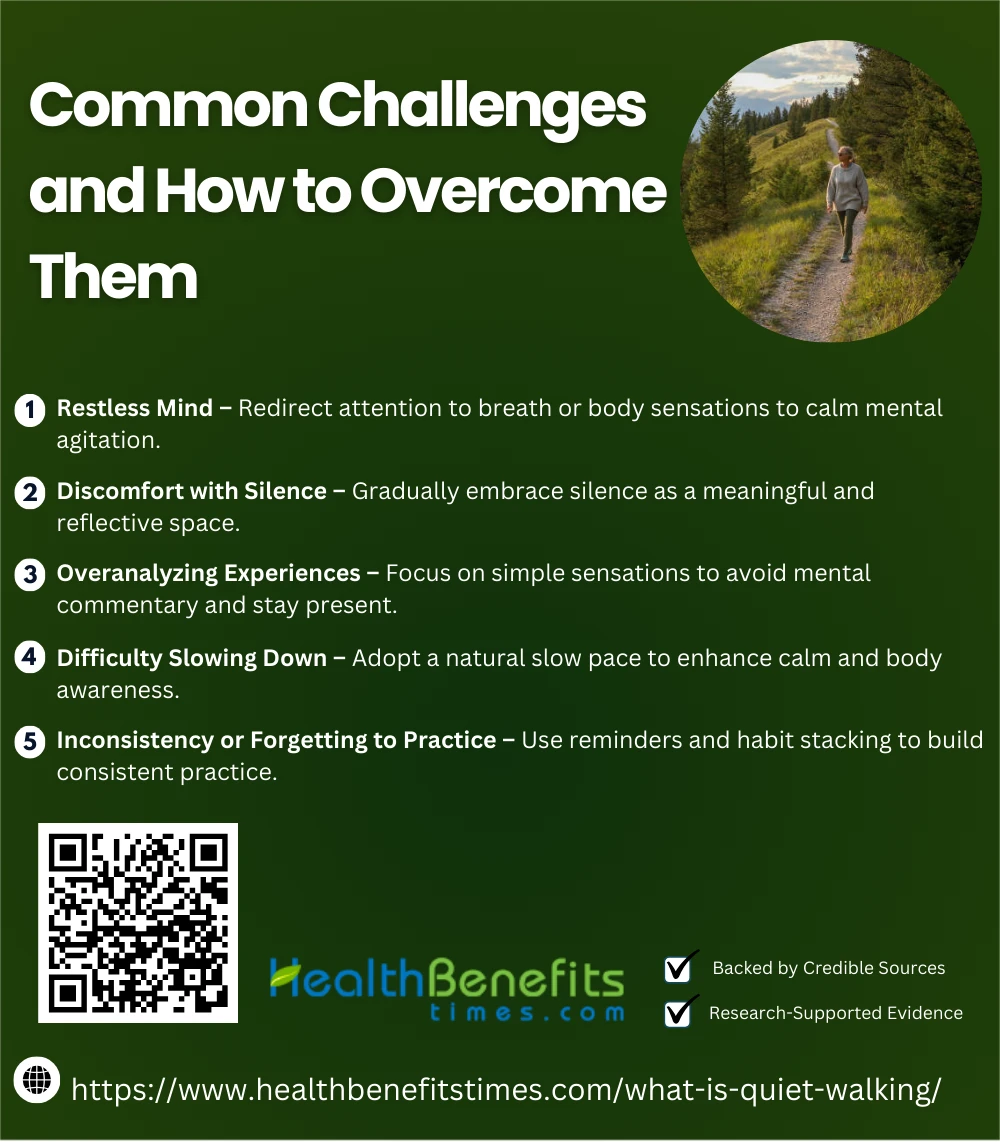
A restless mind disrupts the calm of quiet walking, especially for beginners. Redirecting focus to the breath or bodily sensations can help stabilize attention. Mindfulness techniques train cognitive regulation over time. Slow repetition fosters neural rewiring that reduces internal agitation. (52)
2. Discomfort with Silence
Many beginners feel uneasy in silence, mistaking it for loneliness or awkwardness. Research shows silence triggers discomfort in those unaccustomed to self-reflection. (53) Gradual exposure to silent spaces builds tolerance. (54) Framing silence as sacred enhances its emotional value. (55)
3. Overanalyzing Experiences
Overthinking during quiet walking disrupts flow and reduces mindfulness. Research shows that beginners often engage in internal commentary, which leads to distraction. (48) Training attention toward simple sensory experiences—like breath or footfall—can redirect focus. (49) Mindful observation without judgment is key to presence. (50)
4. Difficulty Slowing Down
Many beginners feel awkward walking slowly due to a productivity mindset. Research suggests that slower movements activate parasympathetic calming responses. (56) Natural pacing, rather than forced slowness, supports body-brain coherence. (57) Training to slow mindfully enhances sensory integration. (58)
5. Inconsistency or Forgetting to Practice
Forgetting to practice quiet walking is common among beginners. Setting reminder cues or linking walks to existing habits helps anchor the behavior. (59) Consistency enhances skill retention in mindfulness routines. (60) Habit stacking, a method in behavior design, reduces lapses. (61)
Common Misconceptions of quiet walking
Many people misunderstand quiet walking, thinking it’s just slow walking or only for meditation experts. Clearing up these misconceptions reveals its true value as a mindful, accessible, and healing practice.
1. “It’s Just Slow Walking”
Quiet walking involves more than reducing pace—it’s about intentional awareness, sensory focus, and mind-body integration. Research shows mindful walking enhances emotional regulation and attention skills. (62) It engages both cognitive and sensory processing and fosters reflective presence. (63)
2. “You Have to Empty Your Mind”
Quiet walking doesn’t require a blank mind. Instead, it encourages gentle awareness of thoughts. Studies show that mindful walking boosts emotional regulation through nonjudgmental observation. (64) It’s about presence, not suppression. Even acknowledging wandering thoughts improves self-awareness and mental health.
3. “It’s Only for Spiritual People”
Quiet walking is not exclusive to spiritual practices; it’s also supported by psychology and neuroscience. Research shows it enhances cognitive functioning and reduces stress across diverse populations. Moreover, it fosters creativity, not just mindfulness. Even short, reflective walks improve mental clarity. (65)
4. “It Requires Complete Silence”
Contrary to belief, quiet walking doesn’t demand absolute silence. Natural ambient sounds can actually aid mindfulness. Studies also show low-level background noise can stimulate mental restoration. Nature’s soundscape promotes calm without total stillness.
5. “You Need to Do It for a Long Time”
Quiet walking doesn’t require hours to be effective. Research shows even 10-minute walks can reduce anxiety and enhance mood. (66) Short mindful walks improve attention and working memory. Regular micro-walks throughout the day are linked to higher psychological resilience.
6. “You Have to Walk in Nature Only”
While nature enhances quiet walking, it’s not a necessity. Urban environments also support mindful movement and stress relief. (67) Inner calm can be cultivated even on city streets (Frontiers in Psychology). Key factors include attention and intention, not scenery alone.
7. “It’s the Same as Meditation Sitting Still”
Quiet walking differs from seated meditation by integrating movement with awareness. It improves mindfulness while engaging the body. Studies show walking meditation enhances balance and cognition uniquely. (68)
8. “There’s a ‘Right Way’ to Do It”
Quiet walking isn’t bound by rigid rules. It adapts to personal comfort and goals, whether for mindfulness, stress relief, or creativity. Studies confirm that individualized mindful walking boosts well-being. (69) Flexibility enhances long-term mental and emotional benefits.
Conclusion
Quiet walking is more than just moving in silence—it’s a mindful journey that connects your body, breath, and surroundings. By intentionally slowing down and focusing on each step, you cultivate awareness, reduce stress, and gain mental clarity. This simple practice doesn’t require special equipment or skills, making it accessible to anyone, anywhere. Whether done in nature or a quiet hallway, quiet walking offers a chance to pause, reflect, and reconnect with the present moment. As you integrate this practice into daily life, it can become a grounding ritual that nourishes both your mental well-being and physical health over time.
Comments
comments