


Introduction
Clinicians have long inspected fingernails during routine physicals because nail plates, beds and folds share the same blood supply, innervation and keratin-building nutrients as the skin and internal organs. When those systems falter whether from anemia, thyroid imbalance, liver dysfunction or chronic stress nails often display abnormalities weeks before more obvious symptoms appear. (1) (2) This article explains the anatomy that underpins nail health, reviews common diagnostic clues and offers evidence-based advice for protecting both nails and overall wellness.
The Anatomy of Nails
The nail unit is a complex, five-layered structure designed for protection, fine touch and object manipulation. (3)
- Nail plate – translucent, multilayered keratin sheet produced by the matrix
- Nail bed (sterile matrix) – vascular tissue anchoring the plate and supplying nutrients
- Matrix (germinal matrix) – rapidly dividing keratinocytes that generate 90% of the nail plate
- Proximal & lateral nail folds / cuticle (eponychium) – seal the matrix from microbes and toxins
- Hyponychium & onychodermal band – form a waterproof barrier beneath the free edge
Growth averages 3.4 mm per month in fingernails and 1.6 mm in toenails but slows with age, illness or malnutrition. (4)
Why Nails Reflect Health
- Shared micro-circulation– Reduced peripheral oxygen or poor perfusion quickly alters nail color.
- Rapid cell turnover– Matrix cells divide every 7–10 days; any nutrient shortfall (iron, zinc, protein) shows up as ridges or thinning.
- Keratin sensitivity– Hormones (thyroid, sex steroids) and systemic inflammation modify keratin synthesis, changing texture or growth speed. (5)(1)
Because of these links, nail assessment is now embedded in rheumatology, endocrinology and hepatology examinations. (6)
Common Nail Characteristics and Their Meanings
| Nail Characteristic | Possible Health Indication |
| Pale nails | Iron-deficiency anemia; chronic liver disease (7) |
| Yellow nails | Fungal onychomycosis; psoriasis; lung disease(8)(9) |
| Brittle nails | Hypo- or hyper-thyroidism; dehydration(10) |
| Longitudinal ridges | Normal aging; iron, vitamin B12 or zinc deficiency(11)(12) |
| White spots (punctate leukonychia) | Minor trauma; zinc deficiency, not calcium (13) |
Interpreting the table: one isolated change often reflects local trauma, but persistent, generalized or sudden alterations across several nails warrant laboratory evaluation for the listed systemic conditions.
Nail Color Changes
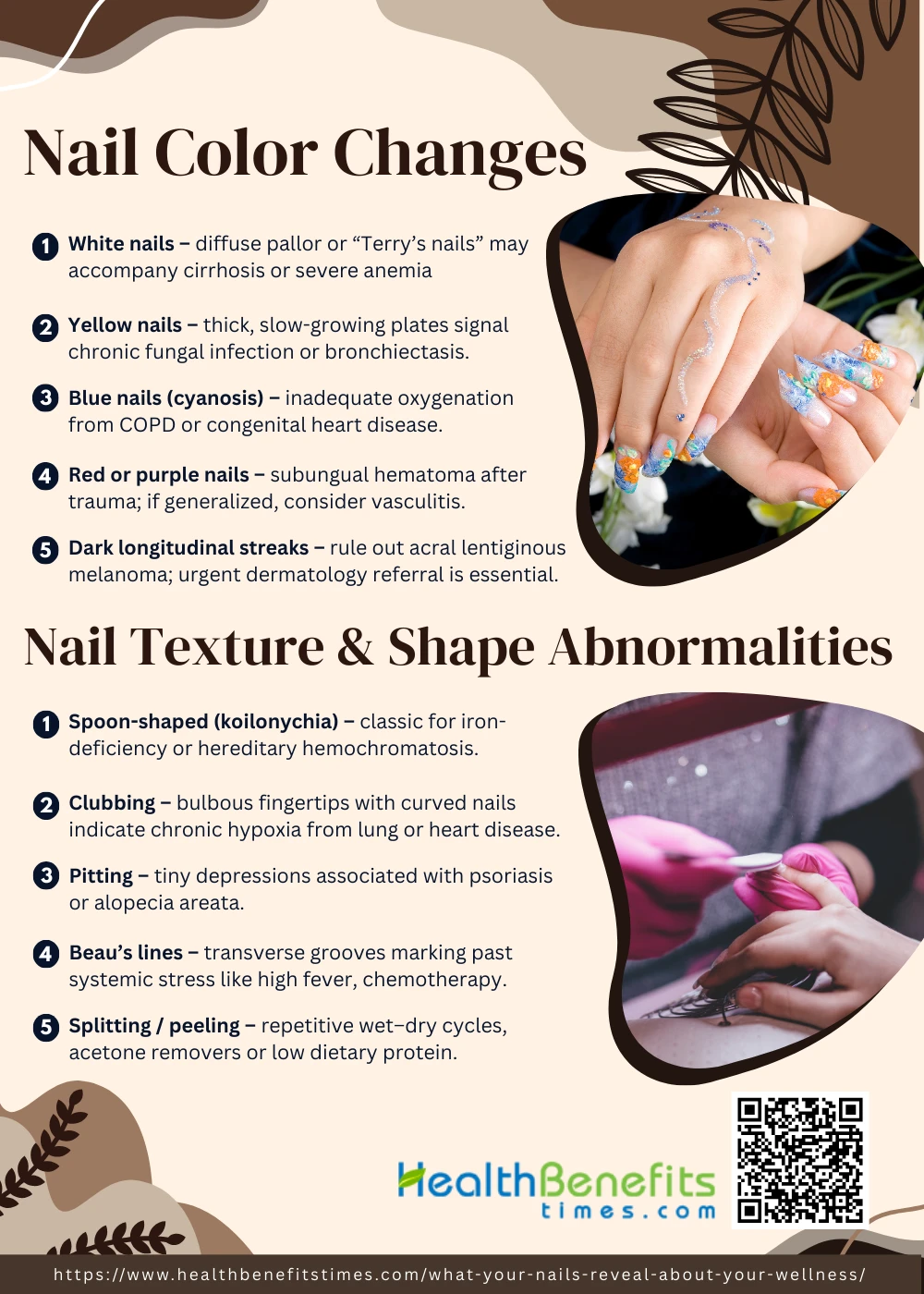
- White nails– diffuse pallor or “Terry’s nails” may accompany cirrhosis or severe anemia. (7)
- Yellow nails– thick, slow-growing plates signal chronic fungal infection or bronchiectasis. (8)
- Blue nails (cyanosis)– inadequate oxygenation from COPD or congenital heart disease. (2)
- Red or purple nails– subungual hematoma after trauma; if generalized, consider vasculitis or polycythemia.
- Dark longitudinal streaks– rule out acral lentiginous melanoma; urgent dermatology referral is essential. (1)
Nail Texture and Shape Abnormalities
- Spoon-shaped (koilonychia)– classic for iron-deficiency or hereditary hemochromatosis. (11)
- Clubbing– bulbous fingertips with curved nails indicate chronic hypoxia from lung or heart disease. (1)
- Pitting– tiny depressions associated with psoriasis or alopecia areata. (1)
- Beau’s lines– transverse grooves marking past systemic stress such as high fever, chemotherapy or COVID-19. (12)
- Splitting / peeling– repetitive wet–dry cycles, acetone removers or low dietary protein. (10)
Nail Growth Patterns
Fingernails completely replace themselves in about six months; toenails require 12–18 months. (4) Accelerated growth may appear during pregnancy or hyperthyroidism, whereas marked slowing accompanies aging, peripheral vascular disease or severe hypothyroidism. (5) Researchers even correlate faster growth rates with slower biological aging. (14)
Nutritional Deficiencies and Nail Health
| Nutrient Deficiency | Typical Nail Symptom |
| Iron | Koilonychia, thinning, pallor(11) |
| Zinc | White spots, Beau’s lines, slow growth(13)(12) |
| Biotin (vitamin B7) | Brittleness, splitting(11) |
| Calcium | Overall fragility, though white spots are not calcium-linked |
| Protein | Longitudinal ridges, weak attachment(15) |
Balanced meals rich in lean meats, legumes, eggs, leafy greens and nuts usually restore normal keratin synthesis within two or three nail-growth cycles.
Systemic Diseases and Nail Symptoms
- Diabetes – yellow, thickened nails or slow healing paronychia
- Thyroid disorders – brittle, onycholytic or thin nails(5)
- Heart failure / lung disease – clubbing or blue discoloration(1)
- Liver cirrhosis – Terry’s nails, half-and-half (Lindsay) nails(7)
- Chronic kidney disease – half-and-half nails linked to uremia(16)
Recognizing these patterns can accelerate referral and treatment.
Lifestyle Factors Affecting Nail Health
- Smoking– nicotine stains and vasoconstriction-related yellowing.
- Poor hygiene & damp footwear– promote dermatophyte infections.
- Excessive manicures / acrylics– chemical solvents weaken keratin bonds.
- Persistent stress– triggers Beau’s lines and picking behaviors (onychotillomania).
- Dehydration– reduces nail plate flexibility, increasing cracking.
When to Seek Medical Advice
Consult a healthcare professional if you notice:
- Sudden dark streaks or pigment spread onto surrounding skin
- Rapid onset of clubbing
- Painful swelling or pus (acute paronychia)
- Nails separating from the bed without injury
Such signs may herald melanoma, systemic hypoxia or deep infection.
Nail Care Tips for Better Health
- Maintain a balanced dietemphasizing iron, zinc, biotin and complete proteins.
- Hydratewith 1.5–2 liters of water daily to keep plates flexible.
- Avoid harsh chemicals wear nitrile gloves when cleaning.
- Trim regularlystraight across to reduce snagging and subungual debris.
- Moisturize cuticleswith ceramide-rich creams or natural oils after washing.
Myths and Misconceptions About Nail Health
- Myth: White spots always mean calcium deficiency – truth: trauma or zinc shortage are far more common. (13)
- Myth: Nail polish suffocates nails permanently – keratin is non-living; polish only causes temporary dryness.
- Myth: Nails must “breathe” between manicures – hydration and gentle removal matter more than air exposure.
- Myth: All gel manicures destroy nails – damage results mainly from aggressive filing or improper LED curing; moderate use with adequate breaks is safe.
Conclusion
Your nails act as quiet storytellers of internal balance. By observing their hue, texture and growth, you can detect nutrient gaps, endocrine shifts, infection or organ stress far sooner than laboratory tests alone. Pair regular self-checks with professional evaluation of persistent changes, nourish your body with diverse whole foods and protect the nail unit from physical and chemical trauma. In doing so, you safeguard not just attractive fingertips but the broader wellness they faithfully mirror.
Comments
comments