

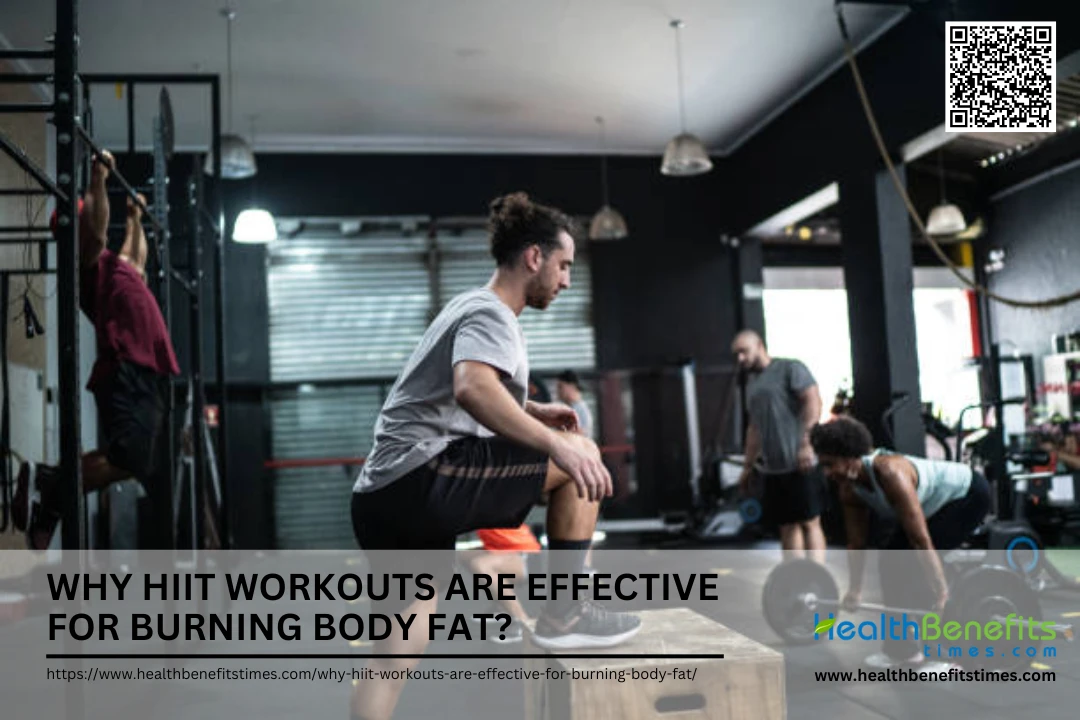
What is HIIT? Mention its Structure and examples
High-Intensity Interval Training (HIIT) is an exercise method involving short bursts of intense effort followed by brief recovery periods, maximizing caloric burn and cardiovascular efficiency definition of HIIT. Structured intervals typically last between 20 seconds and 4 minutes, alternating high-intensity and low-intensity phases HIIT structure. Examples include Tabata workouts (20 seconds on, 10 seconds off), hill sprints, or bodyweight circuits combining push-ups and lunges. (7) (8) HIIT enhances fat burning and endurance, providing results in less time compared to steady-state cardio. (9) (10)
Why HIIT workouts are effective for burning body fat?
High-Intensity Interval Training (HIIT) has gained immense popularity for its ability to burn body fat efficiently. By combining short bursts of intense exercise with brief recovery periods, HIIT maximizes calorie burn, boosts metabolism, and enhances fat loss in less time than traditional workouts. Discover why this dynamic approach is so effective.
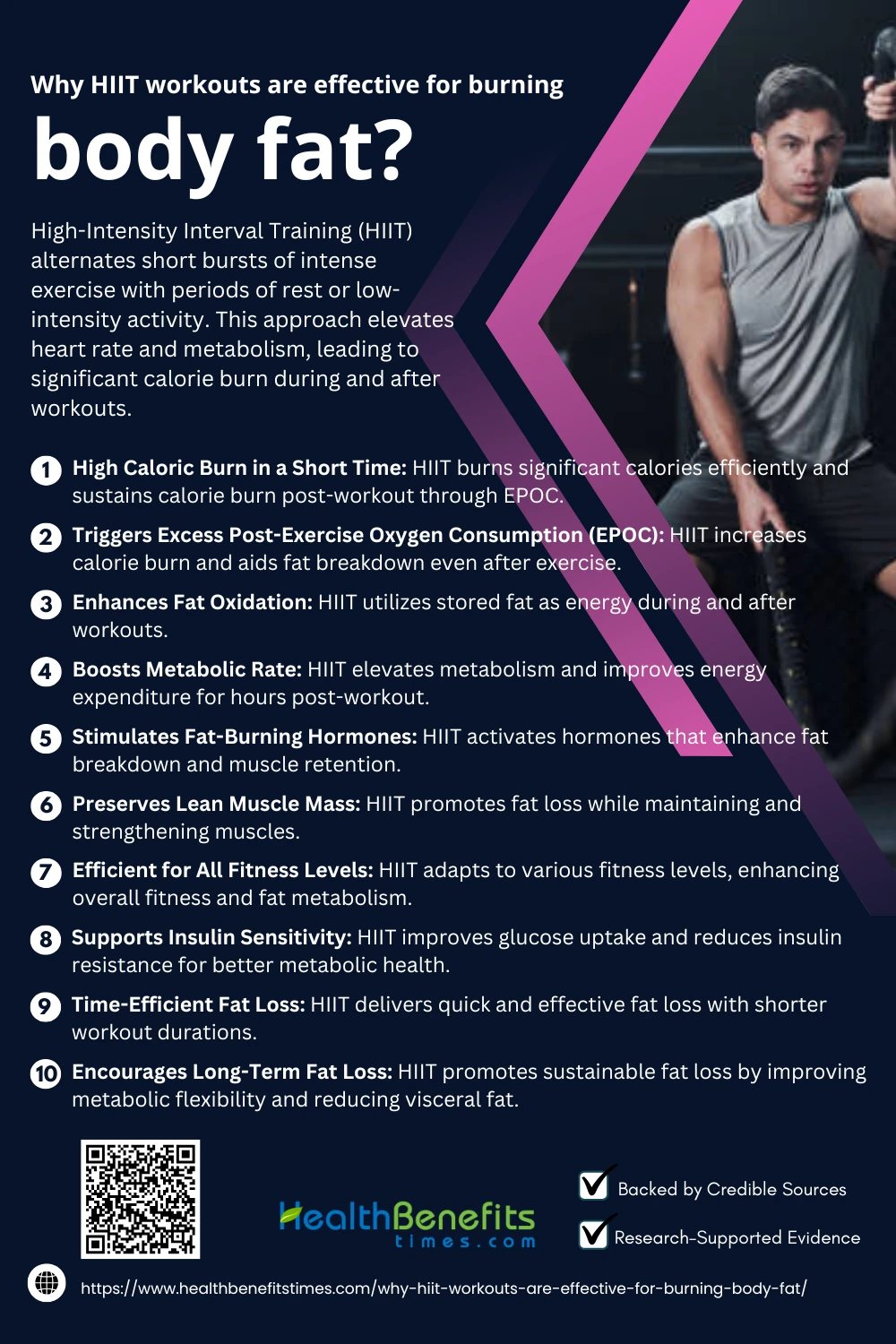
1. High Caloric Burn in a Short Time
High-Intensity Interval Training (HIIT) is known for its ability to burn high calories in a short time, making it an efficient workout method 11. (9) Additionally, HIIT promotes Excess Post-Exercise Oxygen Consumption (EPOC), maintaining calorie burn hours post-workout 12. (7) Its time efficiency provides comparable results to prolonged cardio, targeting stored fat more effectively and boosting metabolism. (10) (8) (11)
2. Triggers Excess Post-Exercise Oxygen Consumption (EPOC)
High-Intensity Interval Training (HIIT) is highly effective in triggering Excess Post-Exercise Oxygen Consumption (EPOC), a phenomenon where the body continues burning calories at an elevated rate after exercise. (9) During EPOC, oxygen replenishment and cellular repair require significant energy. (7) HIIT amplifies this effect due to its high-intensity bursts, increasing calorie expenditure. (8) Additionally, it boosts post-exercise hormonal activity, aiding fat breakdown and improving insulin sensitivity. (11) (10)
3. Enhances Fat Oxidation
High-Intensity Interval Training (HIIT) significantly enhances fat oxidation, enabling the body to utilize stored fat as a primary energy source during and after workouts fat oxidation. HIIT increases hormonal activity, such as adrenaline, which promotes lipolysis and the breakdown of fat stores. (8) Additionally, it reduces insulin resistance, making fat more accessible for energy. (11) The metabolic afterburn further accelerates fat oxidation post-exercise, while its time efficiency yields sustained fat-burning results. (10) (9)
4. Boosts Metabolic Rate
High-Intensity Interval Training (HIIT) significantly boosts metabolic rate through enhanced energy expenditure during and post-exercise. (12) It increases mitochondrial function and oxidative metabolism, leading to improved energy utilization. (13) HIIT triggers Excess Post-Exercise Oxygen Consumption (EPOC), sustaining calorie burn for hours after the workout. (14) Additionally, it promotes hormonal responses that support fat oxidation. (15) Its impact on insulin sensitivity aids glucose metabolism, further enhancing metabolic efficiency. (16) These metabolic improvements contribute to long-term energy balance. (17)
5. Stimulates Fat-Burning Hormones
High-Intensity Interval Training (HIIT) stimulates fat-burning hormones such as adrenaline, noradrenaline, and human growth hormone (HGH), which mobilize stored fat and enhance its oxidation. (1) HIIT sessions trigger a hormonal response that increases lipolysis, the breakdown of fat cells into usable energy. (18) The intense exercise alternated with rest periods optimizes the release of these hormones, surpassing steady-state cardio in fat metabolism. (19) Additionally, HGH spikes during HIIT contribute to improved muscle retention and fat utilization, while insulin sensitivity further enhances fat-burning efficiency. (20) (21)
6. Preserves Lean Muscle Mass
High-Intensity Interval Training (HIIT) helps preserve lean muscle mass by promoting fat loss while maintaining muscle tissue through its targeted intensity. (22) Unlike steady-state cardio, HIIT prioritizes anaerobic activity, enhancing muscle retention and growth. (23) The high-intensity phases activate fast-twitch muscle fibers, critical for muscular endurance and strength fiber activation, making HIIT an effective method for achieving a toned and strong physique.
7. Efficient for All Fitness Levels
High-Intensity Interval Training (HIIT) is an efficient workout for all fitness levels due to its adaptability, allowing personalized intensity and duration to meet individual needs. (24) Studies show that HIIT enhances cardiovascular health and endurance, benefiting beginners and elite athletes alike. (25) Its scalability ensures inclusivity for various age groups and fitness conditions. (26) HIIT boosts fat metabolism effectively across diverse skill levels. (27) This method improves overall fitness and offers significant progress in markers like endurance and strength, making it universally efficient. (28) (29)
8. Supports Insulin Sensitivity
High-Intensity Interval Training (HIIT) significantly supports insulin sensitivity by reducing insulin resistance and enhancing glucose uptake efficiency. (30) HIIT induces beneficial adaptations in skeletal muscle and cardiovascular systems, crucial for insulin efficiency. (31) It reduces liver fat and inflammation, improving metabolic profiles. (32) Additionally, HIIT enhances lipid metabolism, contributing to better glycemic control. (33) Its time-efficient protocols make it accessible for managing type 2 diabetes and prediabetes. (34)
9. Time-Efficient Fat Loss
High-Intensity Interval Training (HIIT) is a proven method for time-efficient fat loss, delivering significant results with short workout durations. (34) HIIT maximizes calorie burn during and after exercise through the Excess Post-Exercise Oxygen Consumption (EPOC) effect. (32) Its alternating high- and low-intensity intervals boost fat oxidation. (33) Compared to traditional steady-state cardio, HIIT achieves better results in half the time. (35) This makes it ideal for busy individuals seeking effective fat loss solutions. (23)
10. Encourages Long-Term Fat Loss
High-Intensity Interval Training (HIIT) promotes long-term fat loss by enhancing metabolic flexibility and maintaining a higher resting metabolic rate. (36) The afterburn effect, or Excess Post-Exercise Oxygen Consumption (EPOC), ensures continued calorie burn post-workout. (31) Additionally, HIIT reduces visceral fat and improves insulin sensitivity, crucial for long-term metabolic health. (32) Its adaptable nature makes it a sustainable option for maintaining fat loss over time. (23)
Comparing HIIT to Other Exercise Modalities
High-Intensity Interval Training (HIIT) outperforms traditional exercise modalities by delivering greater improvements in fat loss, cardiovascular health, and endurance in less time. (37) HIIT achieves a higher caloric expenditure compared to moderate-intensity cardio due to its post-exercise oxygen consumption. (38) While steady-state cardio builds aerobic capacity, HIIT enhances both aerobic and anaerobic systems. (39) Studies show HIIT is equally effective for improving VO₂ max and metabolic health. (40) Additionally, HIIT promotes muscle retention and fat oxidation, making it more comprehensive than resistance training. (41)
Practical Benefits of HIIT
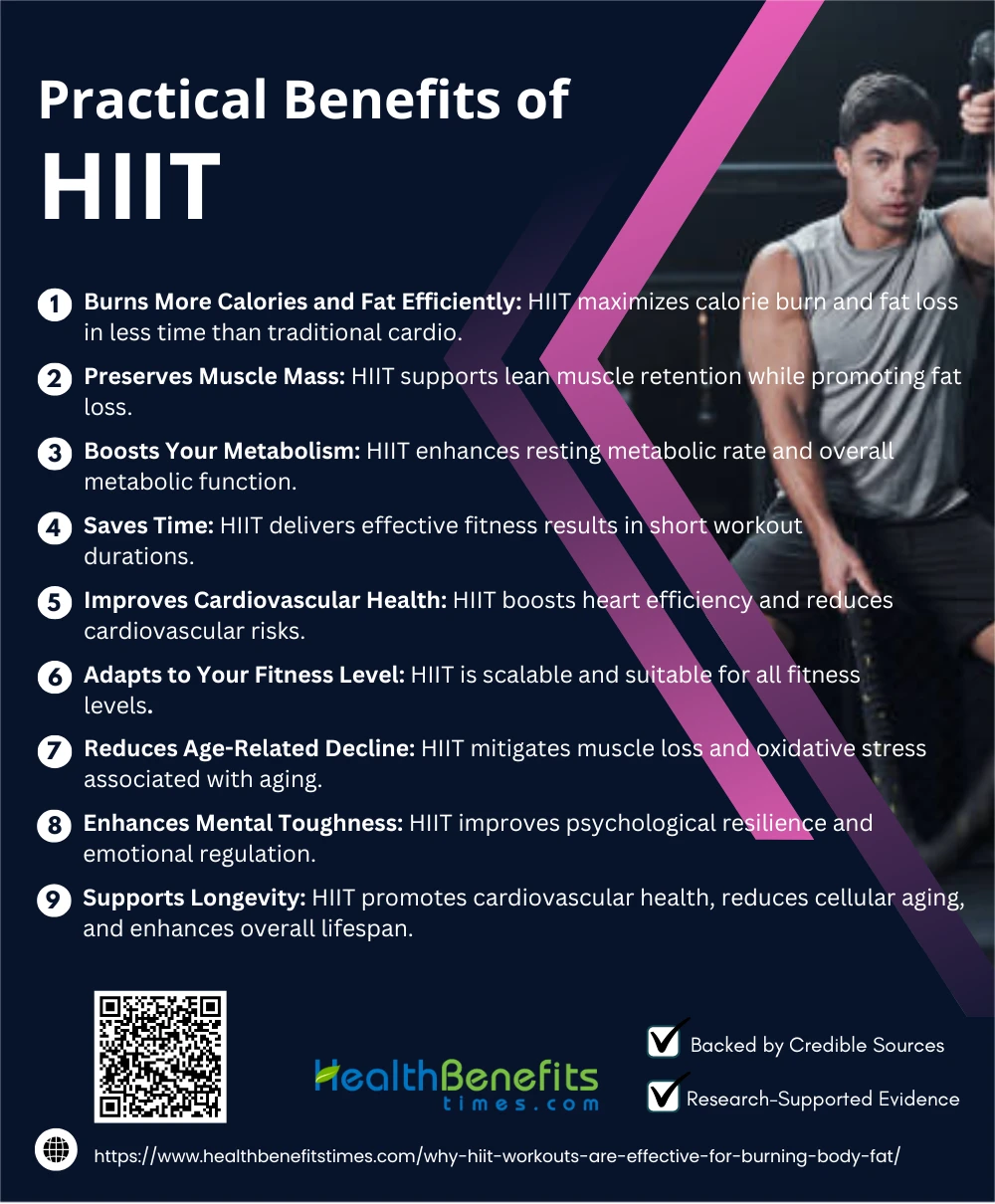
High-Intensity Interval Training (HIIT) efficiently burns calories and fat by combining short bursts of intense activity with recovery periods. Research highlights its superior calorie expenditure compared to traditional cardio exercises. (42) Additionally, HIIT promotes post-exercise oxygen consumption, further enhancing fat loss. (43) Studies also reveal that HIIT enhances metabolic functions and supports muscle preservation. (44) These benefits make HIIT a time-efficient solution for comprehensive fitness goals. (45)
2. Preserves Muscle Mass
High-Intensity Interval Training (HIIT) effectively preserves muscle mass by combining intense workouts with recovery intervals. Research shows HIIT prevents muscle loss in calorie-restricted diets, supporting lean mass retention. (46) It also enhances skeletal muscle adaptations, especially in older adults. (47) Additionally, HIIT promotes metabolic health without reducing muscle tissue. (48)
3. Boosts Your Metabolism
High-Intensity Interval Training (HIIT) significantly enhances metabolic function by improving mitochondrial efficiency and promoting fat oxidation. Studies highlight that HIIT boosts resting metabolic rates, aiding prolonged calorie burn post-exercise. (49) It effectively regulates glucose metabolism and mitigates metabolic syndrome, outperforming moderate-intensity exercises in promoting overall metabolic health. (50) (9)
4. Saves Time
High-Intensity Interval Training (HIIT) saves time while delivering significant health benefits. Research reveals that short HIIT sessions, as brief as 15 minutes, are as effective as longer moderate-intensity workouts. (51) Additionally, HIIT supports cardiovascular fitness efficiently in time-constrained individuals. (52) Its compact design makes it ideal for busy lifestyles. (53)
5. Improves Cardiovascular Health
HIIT (High-Intensity Interval Training) significantly improves cardiovascular health by enhancing aerobic capacity and cardiac function. Research shows HIIT boosts heart efficiency, even in patients with cardiovascular diseases. (49) It also reduces arterial stiffness and improves endothelial function. (52) Additionally, it stimulates mitochondrial biogenesis for overall heart health. (54)
6. Adapts to Your Fitness Level
HIIT (High-Intensity Interval Training) adapts to any fitness level, offering scalable intensity tailored to individual capabilities. Research highlights its flexibility, benefiting beginners and elite athletes alike. (55) With modifications, HIIT supports progressive fitness development while preventing burnout and delivering measurable health improvements. (53) (51)
7. Reduces Age-Related Decline
HIIT (High-Intensity Interval Training) effectively combats age-related decline by enhancing physical and cognitive abilities in older adults. Studies show HIIT improves VO₂ max and mitigates muscle atrophy, which are key in preventing frailty. (56) Additionally, HIIT reduces oxidative stress and inflammatory markers linked to aging. (57)
8. Enhances Mental Toughness
HIIT (High-Intensity Interval Training) enhances mental toughness by requiring individuals to push through discomfort and overcome physical and psychological barriers. It also builds confidence and emotional regulation during intense situations, making it an effective training method for holistic development. (58) (51)
9. Supports Longevity
HIIT (High-Intensity Interval Training) supports longevity by enhancing cardiovascular and mitochondrial health, key factors in aging. Research shows HIIT reduces cellular aging markers and improves metabolic efficiency. (59) Its anti-inflammatory benefits contribute to prolonged healthspan. (60) Additionally, HIIT aids in maintaining muscle mass and cognitive function with age. (61)
Tips for Effective HIIT Workouts
- Start Slow and Build Intensity
Begin with shorter, manageable intervals and gradually increase intensity as your fitness improves. This approach helps prevent injuries and builds endurance. - Prioritize Quality Over Quantity
Focus on executing exercises with proper form during high-intensity intervals to maximize results and minimize the risk of injury. - Incorporate a Warm-Up and Cool-Down
A thorough warm-up prepares your muscles and cardiovascular system for the workout, while a cool-down aids in recovery. - Set Clear Goals
Define your fitness objectives, whether it’s improving endurance, building strength, or weight loss, to tailor your HIIT routine effectively. - Monitor Your Heart Rate
Aim to reach 80–95% of your maximum heart rate during high-intensity phases and recover at 40–50% during low-intensity intervals. - Stay Hydrated
Keep your body hydrated before, during, and after the workout to maintain performance and recovery. - Mix It Up
Incorporate a variety of exercises, such as burpees, sprints, or cycling, to keep the routine engaging and target different muscle groups. - Allow Recovery Time
Schedule rest days to let your body recover and prevent overtraining, which can lead to fatigue or injury. - Fuel Your Body Properly
Eat a balanced meal or snack rich in carbohydrates and protein before and after your workout for optimal energy and recovery. - Track Your Progress
Keep a record of your sessions, noting improvements in duration, intensity, and fitness goals achieved over time.
Designing an Effective HIIT Routine
- Start with a Warm-Up
Begin with a 5–10 minute dynamic warm-up including light cardio, arm circles, and leg swings to prepare your muscles and prevent injury. - Choose a Work-to-Rest Ratio
Select a ratio based on your fitness level, such as 30 seconds of intense work followed by 15 seconds of rest for beginners or 40:20 for advanced. - Include Compound Movements
Focus on multi-joint exercises like burpees, squat jumps, or mountain climbers to maximize calorie burn and engage multiple muscle groups. - Incorporate Variety
Use a mix of cardio (e.g., sprints) and strength (e.g., push-ups) exercises to keep your routine engaging and balanced. - Adjust Intensity Levels
Ensure your high-intensity intervals reach 80–95% of your maximum effort, while recovery periods allow you to lower your heart rate. - Plan the Duration
Aim for 15–30 minutes, including both active intervals and rest, to ensure an effective yet time-efficient workout. - Track Progress
Gradually increase the intensity, reps, or duration as your fitness improves to maintain effectiveness and challenge. - End with a Cool-Down
Finish with 5–10 minutes of light cardio and stretching to reduce muscle soreness and improve flexibility. - Customize for Your Goals
Tailor exercises to align with your objectives, such as adding resistance for strength-building or plyometrics for explosive power. - Ensure Safety and Recovery
Pay attention to proper form and schedule rest days to allow your body to recover and prevent overtraining.
Potential Risks and Considerations
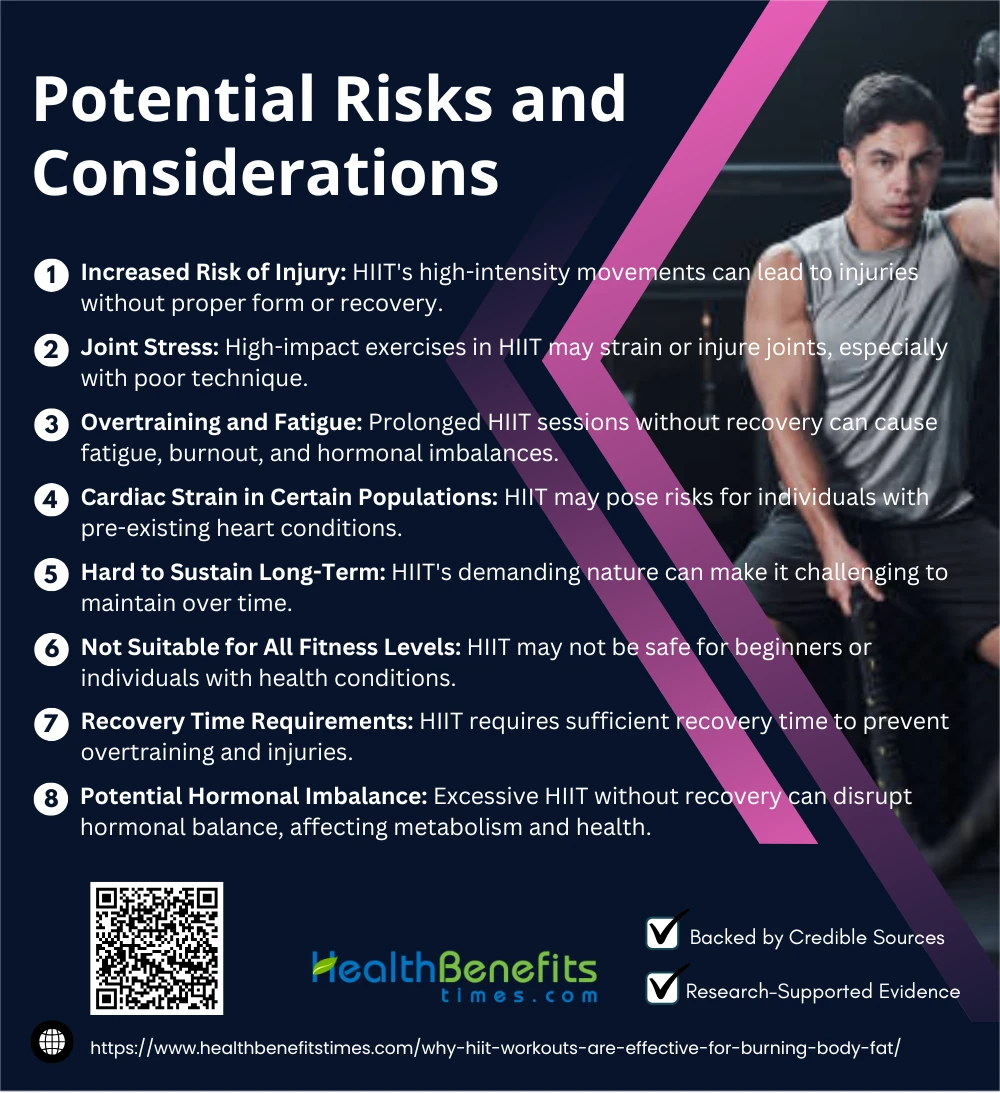
High-Intensity Interval Training (HIIT) is a popular fitness approach known for its efficiency and effectiveness. However, its demanding nature can pose risks such as injuries, overtraining, and cardiovascular strain, especially for beginners or those with health conditions. Understanding these potential challenges is crucial to safely incorporating HIIT into a fitness routine.
1. Increased Risk of Injury
High-Intensity Interval Training (HIIT) carries an increased risk of injury, especially for individuals unaccustomed to high-intensity movements. Common injuries include sprains, strains, and joint issues, primarily due to improper form or inadequate warm-ups. (62) Research highlights that a lack of recovery time between sessions can exacerbate the risk. (63) Additionally, overtraining during HIIT may result in muscle tears and long-term wear on joints. (64)
2. Joint Stress
HIIT (High-Intensity Interval Training) can cause joint stress due to its high-impact movements like jumping and rapid directional changes, increasing the risk of joint injuries. Research indicates repetitive joint strain in HIIT participants, especially without proper technique. (63) Overloading weak joints exacerbates this issue, while prolonged stress during intense intervals may lead to inflammation. (65) (64)
3. Overtraining and Fatigue
Overtraining and fatigue are significant risks in HIIT workouts due to their intense and repetitive nature. Prolonged high-intensity sessions without adequate recovery can lead to persistent fatigue, reduced performance, and physical burnout. (66) Studies also highlight increased risk of hormonal imbalances associated with overtraining. (67)
4. Cardiac Strain in Certain Populations
HIIT (High-Intensity Interval Training) can pose cardiac strain risks for specific populations, particularly those with pre-existing heart conditions. Studies highlight increased cardiovascular stress during high-intensity intervals, potentially triggering adverse events in susceptible individuals. (68) Proper medical evaluation and tailored intensity levels are recommended to mitigate risks. (69)
5. Hard to Sustain Long-Term
High-Intensity Interval Training (HIIT) can be hard to sustain long-term due to its physically demanding nature and the mental fatigue it induces over time. Studies indicate that adherence rates decrease with HIIT compared to moderate-intensity programs, especially in general populations. (70) Sustainability issues also arise from the recovery demands it places on the body. (71)
6. Not Suitable for All Fitness Levels
HIIT (High-Intensity Interval Training) is not suitable for all fitness levels, especially for beginners or those with pre-existing conditions. Studies highlight the risk of injuries and overexertion in untrained individuals attempting high-intensity regimens without proper progression. (63) Tailored protocols and medical supervision are essential for safety. (71)
7. Recovery Time Requirements
HIIT (High-Intensity Interval Training) demands sufficient recovery time to avoid overtraining and muscle fatigue. Studies emphasize the importance of 24–48 hours between sessions to allow muscle repair and glycogen replenishment. (63) Insufficient recovery can lead to burnout, reduced performance, and higher injury risk. (70)
8. Potential Hormonal Imbalance
Excessive HIIT (High-Intensity Interval Training) can lead to potential hormonal imbalances, such as elevated cortisol levels, which promote stress and fat storage. Studies highlight that prolonged high-intensity training without adequate recovery impacts hormonal cycles, including testosterone and estrogen fluctuations (81). ({% %}) These disruptions can affect overall metabolic and reproductive health (85). ({% %})
Common Misconceptions about HIIT
- Longer Workouts Yield Better Results
Many believe longer sessions are more effective, but HIIT focuses on efficiency—short, intense bursts achieve excellent results. - HIIT Will Bulk You Up
Contrary to belief, HIIT is designed to burn fat and improve cardiovascular fitness rather than significantly increasing muscle size. - Fancy Equipment Is Necessary
Many think expensive gym gear is required, but HIIT routines can be performed effectively using bodyweight exercises. - It Can Fully Replace Cardio
While HIIT improves endurance and burns calories, it’s not a complete substitute for steady-state cardio in certain training regimens. - Spot Reduction Is Possible
Targeting specific body parts for fat loss through HIIT is a myth; fat reduction is systemic and influenced by overall body composition. - It’s Only for Advanced Athletes
HIIT can be scaled for any fitness level, making it suitable for beginners as well as seasoned athletes.
Conclusion
High-Intensity Interval Training (HIIT) stands out as an exceptionally effective method for burning body fat due to its combination of efficiency and adaptability. By alternating intense activity with recovery periods, HIIT maximizes calorie burn, enhances metabolic rate, and stimulates post-exercise fat oxidation, making it superior to traditional workout regimens. Its versatility accommodates all fitness levels, enabling a tailored approach that encourages adherence and sustainability. Beyond fat loss, HIIT supports muscle preservation, cardiovascular health, and improved insulin sensitivity, offering a comprehensive fitness solution. For individuals seeking an efficient, impactful workout, HIIT provides a scientifically backed pathway to achieving and maintaining fitness goals.
Comments
comments