

Maple syrup is a naturally derived sweetener made by collecting the sap of sugar maple (Acer saccharum) and related species and then concentrating it through gentle boiling. The process transforms a clear, slightly sweet sap—composed primarily of water and about 2% naturally occurring sucrose—into a viscous, amber-hued syrup that’s roughly two-thirds sugar by weight. Beyond sucrose, maple syrup contains small amounts of organic acids (such as malic acid), amino acids, and a variety of minerals including potassium, calcium, zinc, and manganese, as well as antioxidant-rich phenolic compounds. These additional nutrients and bioactive compounds give maple syrup a more complex flavor profile and potential health benefits compared to refined white sugar, making it a popular choice for those seeking both sweetness and added nutritional value in their diets.
Nutritional Profile of Maple Syrup
Maple syrup delivers concentrated sweetness along with a spectrum of micronutrients and bioactive compounds that may confer additional health benefits when consumed in moderation. In 100 g of pure maple syrup, there are approximately 260 kcal, of which 60.5 g are simple sugars; it contributes significant amounts of manganese (2.15 mg, 93% DV) and smaller but meaningful levels of calcium (102 mg, 10% DV), potassium (212 mg, 5% DV) and magnesium (13 mg, 3% DV), alongside trace amounts of zinc, riboflavin and niacin. The presence of phenolic acids, organic acids and oligosaccharides gives maple syrup antioxidant and potential anti-inflammatory properties beyond its caloric content, distinguishing it nutritionally from refined sweeteners. (1) (2)
| Nutrient | Amount per 100 g | % Daily Value (DV) |
| Energy | 260 kcal | 13% |
| Total Carbohydrate | 67.1 g | 24% |
| – Sugars | 60.5 g | — |
| Protein | 0.04 g | 0% |
| Fat | 0 g | 0% |
| Calcium | 102 mg | 10% |
| Potassium | 212 mg | 5% |
| Magnesium | 13 mg | 3% |
| Manganese | 2.15 mg | 93% |
| Zinc | 0.1 mg | 1% |
| Riboflavin (B2) | 0.0006 mg | < 1% |
| Niacin (B3) | 0.001 mg | < 1% |
Due to following health effects Maple Syrup Is the Healthiest Sugar for better health
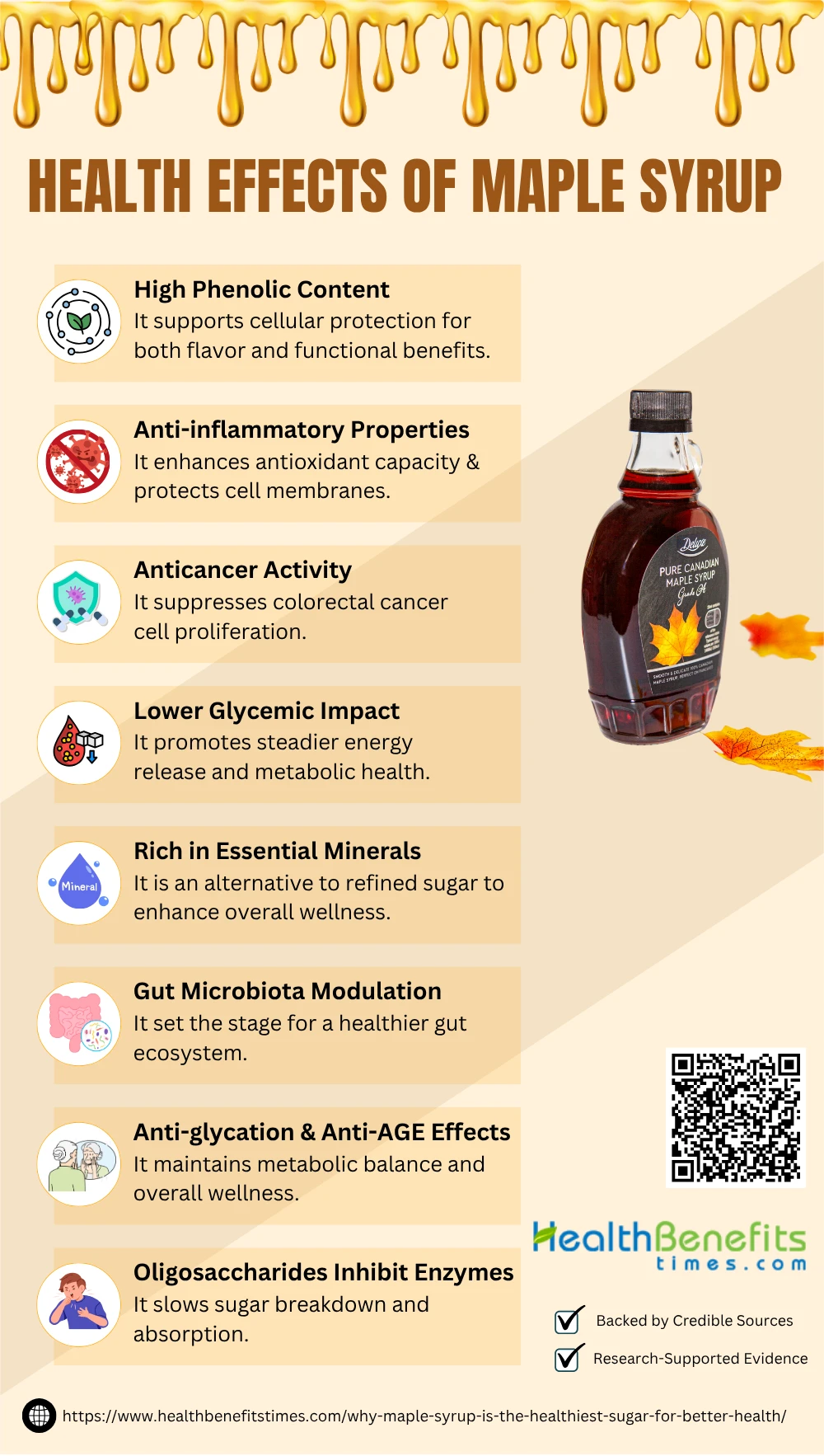
Pure maple syrup, beyond its natural sweetness, stands out among sweeteners for its rich profile of phenolic and antioxidant compounds. Dark-colored grades—from amber to robust—exhibit deeper hues and higher levels of melanoidins, a class of brown pigments formed during sap processing that contribute significantly to free-radical scavenging. (3) These compounds include unique phenolics such as lignans, coumarins, stilbenes, and phenolic acids, which are absent in refined sugars and most alternative sweeteners. (4) The synergistic blend of these phytochemicals not only neutralizes oxidative stress but also supports cellular protection, making maple syrup an appealing option for individuals seeking both flavor and functional benefits. (5)
Research Findings
- Research by Tsuda et al. demonstrated that darker grades of maple syrup possess substantially greater oxygen radical absorbance capacity, indicating stronger antioxidant potential linked to higher melanoidin content (H-ORAC method). (3)
- A detailed phytochemical analysis isolated 23 maple syrup phenolics—including lignans and coumarins—with potent DPPH radical scavenging activity, underscoring maple syrup’s capacity to quench free radicals. (4)
- In cellular models, a phenolic-enriched maple syrup extract reduced hydrogen peroxide-induced reactive oxygen species production by over 50%, highlighting its ability to protect human cells from oxidative damage. (6)
2. Anti-inflammatory Properties
Maple syrup, beyond its sweetening power, is a rich source of phenolic compounds and complex polysaccharides that support the body’s natural anti-inflammatory defenses. These bioactives—including quebecol, lignans, and flavonoids—modulate key inflammatory pathways by downregulating nuclear factor-κB (NF-κB) activity and reducing pro-inflammatory mediator production. (1) The unique profile of maple syrup polyphenols also enhances antioxidant capacity and protects cell membranes from oxidative damage. (7) Moreover, specialized polysaccharide fractions from sugar maple bark inhibit tumor necrosis factor-alpha (TNF-α) release in immune cells, illustrating syrup’s multifaceted role in promoting systemic well-being. (8)
Research Findings
- Reduction of key cytokines: Research by Kim et al. demonstrates that a phenolic-enriched maple syrup extract significantly lowered interleukin-1 beta (IL-1β) and TNF-α in lipopolysaccharide (LPS)-stimulated human macrophages. (9)
- Inhibition of NF-κB signaling: In vitro studies show that maple syrup phenolics suppress NF-κB activation in RAW 264.7 murine macrophages, thereby impeding the transcription of multiple pro-inflammatory genes. (10)
- Alleviation of systemic inflammation in vivo: In a lipopolysaccharide-induced peritonitis mouse model, oral administration of maple syrup extract reduced serum levels of IL-6 and TNF-α, confirming its capacity to dampen acute inflammatory responses. (11)
- Quebecol’s targeted action: The maple syrup–derived polyphenol quebecol inhibits NF-κB activation and decreases pro-inflammatory cytokine secretion in macrophage models, highlighting its potential as a dietary agent for inflammation control. (12)
3. Antimicrobial and Anticancer Activity
Maple syrup’s phenolic-rich extracts exhibit potent antimicrobial properties by enhancing antibiotic efficacy against Gram-negative pathogens and disrupting biofilm formation on clinical strains of Escherichia coli, Proteus mirabilis, and Pseudomonas aeruginosa. (13) Specific lignan compounds abundant in maple syrup effectively prevent Listeria monocytogenes biofilms on fresh produce surfaces, reducing colonization by more than 100-fold. (14) On the anticancer front, darker varieties of maple syrup have been shown to suppress colorectal cancer cell proliferation and invasion through AKT pathway modulation, while its key phenolic, ginnalin A, triggers caspase-dependent apoptosis in hepatocellular carcinoma models. (15) (16)
Research findings
- According to
- search by Topcu et al. showed that ginnalin A from maple syrup induced caspase-mediated apoptosis in hepatocellular carcinoma cell lines. (16)
4. Lower Glycemic Impact than Refined Sugars
Maple syrup offers a gentler rise in blood sugar compared to refined sugars, making it an attractive choice for those aiming to support balanced glucose levels. Its unique composition includes a complex mixture of sucrose, minerals, and polyphenols that collectively contribute to a moderated glycemic response, in contrast to the rapid blood sugar spikes typically seen with table sugar and high-fructose corn syrup. (17) Natural phytochemicals concentrated during sap evaporation further enhance maple syrup’s nutritional profile, helping to mitigate post-prandial glucose surges. By substituting refined sugars with maple syrup, individuals can enjoy sweetness while promoting steadier energy release and metabolic health. (18)
Research Findings
- Compared with sucrose, maple syrup produced significantly lower plasma glucose elevations in type 2 diabetic model rats, indicating a reduced glycemic impact in vivo (research conducted by Yamagishi et al.). (17)
- Maple syrup’s glycemic index of 54 is notably below that of common refined sugar (GI 65), demonstrating a milder effect on blood glucose levels (research by Mohammed et al.).
- A novel oligosaccharide identified in maple syrup slows carbohydrate digestion by inhibiting key enzymes such as invertase and α-glucosidase, suggesting a mechanism for its lower glycemic response (research by Sato et al.). (18)
5. Rich in Essential Minerals and Nutrients
Maple syrup stands out as a natural sweetener brimming with indispensable minerals and phytonutrients. Beyond its characteristic caramel-like flavor, maple syrup delivers substantial amounts of potassium, calcium, zinc and manganese, along with organic acids, amino acids and antioxidant polyphenols. (19) (20) These constituents support electrolyte balance, bone health, enzymatic function and cellular protection, making maple syrup a superior alternative to refined sugar for those seeking to enhance overall wellness.
Research findings
- Research conducted by Ariana Saraiva et al. using inductively coupled plasma–mass spectrometry (ICP-MS) quantified high levels of essential minerals in maple syrup: potassium (70.5–128.4 mg/100 g), calcium (212.8–380.5 mg/100 g), magnesium (48.8–124.5 mg/100 g) and zinc (23.8–91.0 mg/100 g). (19)
- Research by Faez Mohammed et al. indicates that a 60 mL serving of maple syrup provides 100 percent of the daily value of manganese, 34 percent of riboflavin (vitamin B₂), 11 percent of zinc and 6 percent of calcium. (20)
6. Prebiotic Actions and Gut Microbiota Modulation
Maple syrup is more than a natural sweetener—it harbors complex polysaccharides and bioactive compounds that act as prebiotics, selectively nourishing beneficial gut bacteria. One key discovery identified inulin and arabinogalactans in concentrated maple sap, underscoring their potential to resist digestion in the small intestine and reach the colon where they foster microbial growth. (21) Beyond its oligosaccharide content, maple syrup delivers polyphenols and trace minerals that may further modulate microbial metabolism and intestinal barrier function. (22) These combined prebiotic actions set the stage for a healthier gut ecosystem without relying on refined sugars.
Research Findings
- Research conducted by Francis et al. demonstrated the presence of inulin—a well-known prebiotic—alongside arabinogalactans in maple syrup, confirming its ability to reach the colon and serve as a substrate for commensal microbes (Detection of Inulin, a Prebiotic Polysaccharide, in Maple Syrup). (21)
- Animal studies replacing dietary sucrose with maple syrup observed a decrease in intestinal α-glucosidase activity, suggesting slower carbohydrate digestion and enhanced delivery of prebiotic compounds to the colon (The metabolic benefits of substituting sucrose for maple syrup…). (22)
- This substitution in mice also increased the abundance of beneficial bacteria—such as Lactobacillus johnsonii and Faecalibaculum rodentium—which are linked to improved gut barrier integrity and anti-inflammatory metabolite production. (22)
7. Anti-glycation and Anti-AGE Effects
Maple syrup stands apart from refined sugars by offering a complex matrix of bioactive compounds—chiefly phenolic–rich extracts and unique glucitol-core gallotannins—that naturally counteract the glycation process, where sugar molecules bind to proteins and form advanced glycation endproducts (AGEs). These bioactives not only scavenge free radicals but also inhibit the chemical reactions that stiffen proteins and accelerate cellular aging. (23) Additionally, gallotannins found exclusively in maple species disrupt multiple stages of AGE formation without altering protein structure, supporting tissue integrity and healthy aging. (24) Such anti-glycation actions position maple syrup as a superior sweetener choice for individuals seeking to maintain metabolic balance and overall wellness. (25)
Research Findings
- Research conducted by the RSC journal team demonstrated that a phenolic-enriched maple syrup extract reduced AGE formation by roughly half in lab assays, and prevented sugar-induced protein crosslinks that underlie tissue stiffening. (23)
- Research by Kong et al. showed that glucitol-core gallotannins from red maple leaves acted as antioxidants to block sugar-protein bonding throughout the glycation pathway, thereby preserving protein function.
- According to a study by Toyoda et al., the most active maple tannin maintained normal protein folding under high-sugar conditions and effectively inhibited late-stage AGE crosslink formation, highlighting its protective effect against glycation-related damage. (25)
8. Unique Oligosaccharides Inhibiting Carbohydrate-Digesting Enzymes
Maple syrup contains a unique oligosaccharide composed of fructose and glucose linked at the C-4 and C-6 positions, which naturally interacts with carbohydrate-digesting enzymes to slow sugar breakdown and absorption. (26) (27) (27) This specialized sugar combines sweetness with a functional benefit: by targeting enzymes such as invertase and α-glucosidase, it modulates post-meal glycemic response, offering a gentler rise in blood glucose compared with conventional sweeteners. For health-minded individuals seeking a flavorful alternative without sacrificing wellness goals, this characteristic positions maple syrup as a more balanced choice for sweetening foods and beverages.
Research Findings
- The novel fructose–glucose oligosaccharide in maple syrup inhibits sucrose breakdown by invertase, reducing the release of free fructose from sucrose (IC₅₀: 1.17 mmol/L). ({% trusted %})
- It also suppresses maltose decomposition by α-glucosidase, demonstrating inhibitory action on maltase (IC₅₀: 1.72 mmol/L), which helps delay carbohydrate digestion. (27)
- When administered with sucrose in diabetic rat models, this oligosaccharide led to significantly lower post-prandial plasma glucose levels without altering insulin secretion, indicating improved glucose control. (27)
- Another maple syrup oligosaccharide, neokestose, works synergistically to inhibit glycosidase activity, further supporting its role in modulating sugar metabolism.
Potential side effects and precautions
While maple syrup is generally celebrated as a natural sweetener with potential health benefits, consumers should be aware of several important side effects and precautions associated with its consumption. Despite its natural origin and nutritional profile containing minerals and antioxidant compounds, maple syrup carries inherent risks that warrant careful consideration, particularly for individuals with specific health conditions or concerns.
- Blood Sugar and Diabetes Concerns represent the most significant risk factor associated with maple syrup consumption. Although research suggests maple syrup may have a lower glycemic index (54) compared to refined sugar (65), it remains a high-carbohydrate sweetener that can significantly impact blood glucose levels. (5) Studies in diabetic rat models demonstrated that while maple syrup produced lower plasma glucose elevations compared to sucrose, it still caused substantial increases in blood sugar levels (17) For individuals with type 2 diabetes, pre-diabetes, or metabolic syndrome, even moderate maple syrup consumption can contribute to glycemic instability and should be carefully monitored or avoided. (5) (17) (27) The natural sugars in maple syrup, primarily sucrose with smaller amounts of glucose and fructose, can overwhelm insulin response mechanisms and exacerbate existing metabolic disorders.
- Weight Gain and Obesity Risk emerges as another critical concern, particularly with excessive consumption. Like all caloric sweeteners, maple syrup contributes significantly to daily energy intake, providing approximately 217 calories per 60 mL serving. (5) The high sugar content and caloric density can contribute to weight gain when consumed regularly or in large quantities, potentially leading to obesity and associated health complications. (5) This risk is compounded by maple syrup’s palatability, which may encourage overconsumption beyond recommended portions.
- Heavy Metal Contamination poses a potential safety concern that varies by production methods and geographic origin. Research has documented concerning levels of lead contamination in some maple syrup samples, with concentrations ranging from 38 to 948 μg/kg and averaging 291 μg/kg in Connecticut-produced samples. (28) The contamination typically occurs during processing when acidic maple sap contacts lead-bearing metals in older equipment, particularly galvanized containers and bronze gear pumps. (28) While modern production methods have largely addressed these concerns, consumers should be aware that lead exposure from contaminated maple syrup could pose health risks, particularly for children and pregnant women. (29) (30) Other studies have shown relatively low levels of heavy metals like cadmium (0.01 mg/kg) and mercury (0.001 mg/kg) in most commercial maple syrup samples. (30)
- Hydroxymethylfurfural (HMF) Formation during maple syrup processing represents another safety consideration. HMF is a compound that forms naturally during the heating and concentration of maple sap, and research has identified its presence in trace amounts in processed maple syrup. (31) Studies have shown that HMF can exhibit mutagenic, genotoxic, and cytotoxic properties under certain conditions. Animal studies have demonstrated that HMF can induce anaphylactoid reactions and has been associated with potential carcinogenic effects in rodent models. However, the levels typically found in maple syrup are generally considered within acceptable limits for human consumption. (32) (29)
- Digestive Sensitivity may occur in some individuals, particularly those with fructose malabsorption or FODMAP sensitivities. While maple syrup contains primarily sucrose, it also contains smaller amounts of fructose and various oligosaccharides that could trigger digestive symptoms in sensitive individuals. (5) Symptoms may include bloating, gas, abdominal pain, or diarrhea, particularly when consumed in larger quantities.
- Dental Health Concerns are inherent to all sugar-containing foods and beverages. The natural sugars in maple syrup can contribute to tooth decay and dental caries when consumed frequently or when proper oral hygiene is not maintained. The sticky consistency of maple syrup may increase its adherence to tooth surfaces, potentially prolonging sugar exposure and increasing cariogenic potential.
- Quality Control and Adulteration Risks represent additional safety considerations. Some commercial maple syrup products may be adulterated with less expensive sweeteners or may contain varying levels of beneficial compounds depending on processing methods and storage conditions. (33) (34) Consumers should purchase maple syrup from reputable sources and verify product authenticity to ensure both safety and nutritional quality.
- Medication Interactions warrant consideration, particularly for individuals taking medications for diabetes management. The significant carbohydrate content of maple syrup may require adjustments to insulin dosing or other diabetes medications. (35) (36) Individuals taking blood glucose-lowering medications should consult healthcare providers before incorporating maple syrup into their diets to prevent hypoglycemic episodes or blood sugar spikes.
- Special Population Precautions are especially important for vulnerable groups. Pregnant and breastfeeding women should consume maple syrup in moderation due to its high sugar content and potential heavy metal contamination risks. (28) (29) Children may be particularly susceptible to blood sugar fluctuations and should have maple syrup consumption limited as part of overall dietary sugar restrictions. Elderly individuals with diabetes or metabolic disorders should exercise particular caution due to potentially decreased glucose tolerance.
How to Choose High-Quality Maple Syrup
Selecting a truly high-quality maple syrup involves evaluating its sensory attributes, chemical composition, health benefits, and safety standards to ensure you’re getting the best natural sweetener for both flavor and wellness.
- Choose syrups with higher phenolic and antioxidant content, which are strongly correlated with darker grades and richer health benefits (19)
- Verify the grade classification (e.g., Grade A Amber, Grade A Dark) on the label—darker syrups have more complex flavors like caramel, nutty, and vanilla and greater antioxidant activity
- Look for organic certification to minimize exposure to pesticides and ensure sustainable tap-tree management practices (19)
- Check for certified purity and non-adulteration testing via spectral fingerprinting (mid-infrared or Raman), which detects added sugars or corn syrups (37)
- Confirm nutritional profiling that includes minerals (manganese, zinc) and vitamins (B-complex), often detailed in nutraceutical extract studies (38)
- Prefer producers who adhere to USDA or Canadian quality control standards, ensuring microbiological safety, proper Brix (°Brix ≥ 66), pH (5.2–7.2), and absence of harmful contaminants ({% trusted %})
- Opt for artisan or small-batch syrups that undergo minimal processing—these typically retain more of the original sap’s bioactive compounds
Incorporating Maple Syrup into a Healthy Diet
Maple syrup is more than just a natural sweetener—it contains unique polyphenols, inulin, and bioactive compounds that may promote metabolic health, antioxidant defenses, and gut microbiota balance. Below are evidence-based strategies for integrating pure maple syrup into a balanced wellness regimen:
- Substitute refined sugar with maple syrup to improve insulin sensitivity and reduce liver fat accumulation, as demonstrated in mice fed a high-fat high-sucrose diet where 10% of sucrose was replaced by maple syrup, resulting in better glucose tolerance and decreased steatosis. (22)
- Include a polyphenol-rich maple syrup extract supplement to alleviate dyslipidemia, since mice receiving 0.05% maple syrup extract showed significant reductions in LDL-cholesterol and upregulation of hepatic genes related to fatty acid degradation. (39)
- Leverage the prebiotic potential of maple syrup’s inulin content by adding it to homemade granola or yogurt parfaits, supporting beneficial gut bacteria and improving carbohydrate metabolism. (40)
- Use maple syrup–based marinades or dressings enriched in maple phenolics to exploit its anti-glycation and antioxidant properties that protect human colon cells from oxidative damage, potentially reducing AGE formation. (41)
- Blend maple syrup into smoothies or protein shakes using polyphenol-enriched maple sugar powders produced via freeze-drying or vacuum drying, which retain high antioxidant capacity and instant-like solubility for convenient nutrient boosts. (42)
Conclusion
In summary, maple syrup emerges as the healthiest natural sweetener by combining rich, antioxidant- and phenolic-packed phytonutrients with essential minerals and unique oligosaccharides that together support antioxidant defenses, modulate inflammation, promote balanced glucose metabolism, and nourish beneficial gut bacteria. Compared to refined sugars, its darker grades offer superior free-radical scavenging and anti-glycation effects, while its lower glycemic impact and prebiotic actions foster steadier energy release and gut health. When enjoyed in moderation and sourced from high-quality, uncontaminated producers, pure maple syrup delivers both sweetness and measurable functional benefits, making it an ideal choice for those seeking to enhance flavor without compromising wellness.
Comments
comments