


Causes of Chlamydial Infections
- Bacterial Infection: The direct cause of the condition is the Chlamydia trachomatis bacterium, which infects human cells in the reproductive tract, throat, or rectum 3.
- Vaginal and Anal Sex: The bacteria are most frequently passed from one person to another through unprotected vaginal or anal intercourse 1.
- Oral Sex: The infection can also be transmitted to or from the throat during unprotected oral sex with a partner who carries the bacteria 1.
- Genital Fluid Contact: The bacteria can spread through contact with infected genital fluids, meaning transmission can occur even if male ejaculation does not happen 1.
- Mother-to-Child Transmission: An infected pregnant woman can pass the bacteria to her infant during a vaginal delivery, which may lead to serious eye or lung infections in the newborn 4.
Symptoms of Chlamydial Infections
- Lack of Symptoms (Asymptomatic): The majority of infected individuals do not exhibit or notice any signs of the disease, allowing the bacteria to cause internal damage while remaining completely undetected without medical screening 1.
- Genital Symptoms in Women: When symptoms do appear in women, they most frequently manifest as an unusual, abnormal vaginal discharge or a painful, burning sensation when urinating 4.
- Genital Symptoms in Men: Men experiencing symptoms typically notice a clear or cloudy discharge from the tip of the penis, a burning sensation during urination, and occasionally, localized pain and swelling in one or both testicles 1.
- Rectal Symptoms: If the infection is located in the rectum, it can cause rectal pain, abnormal discharge, and unexpected bleeding, though rectal infections can also be completely symptom-free 1.
- Throat Symptoms: While chlamydia in the throat rarely presents with visible signs, it can occasionally cause a mild, persistent sore throat 4.
- Eye Symptoms: If infected genital fluids are accidentally transferred to the eyes, it can cause a condition similar to pink eye (conjunctivitis), resulting in redness, irritation, and a mucous discharge from the eye 3.
Why Natural Remedies can’t care Chlamydial Infections
- The Bacteria Hide Deep Inside Human Cells 5
- Lack of Targeted Bacterial Destruction Compared to Prescription Antibiotics 6
- Chlamydia’s Unique Two-Stage Life Cycle Resists Non-Medical Treatments 7
- Complete Absence of Scientific Proof for Herbal and Home Cures 1
- Inability of the Immune System to Clear the Infection Just by Boosting Health 8
- Inconsistent Chemical Strength and Dosage in Plant-Based Products 9
- Failure of Natural Remedies to Prevent Severe Long-Term Damage Like Infertility 10
Foods to Avoid When You Suffer from Chlamydial Infections
Chlamydial infections are bacterial conditions requiring targeted prescription antibiotics for complete eradication. While no specific diet cures the bacteria directly, consuming certain foods and beverages can severely interfere with medication absorption or impair immune function. Clinical evidence demonstrates that dietary minerals can form unabsorbable complexes with standard antibiotics in the digestive tract, effectively neutralizing their medical efficacy 11. Furthermore, diets heavy in refined ingredients compromise the body’s natural defense mechanisms by promoting chronic systemic inflammation 12. To ensure successful medical treatment and prevent severe reproductive complications, individuals must temporarily avoid dietary components that block drug absorption, trigger inflammation, or suppress immune cell activity.
1. Milk and Yogurt
Calcium in dairy binds to antibiotics like doxycycline, preventing your digestive system from absorbing the medication and severely reducing its clinical effectiveness 11.
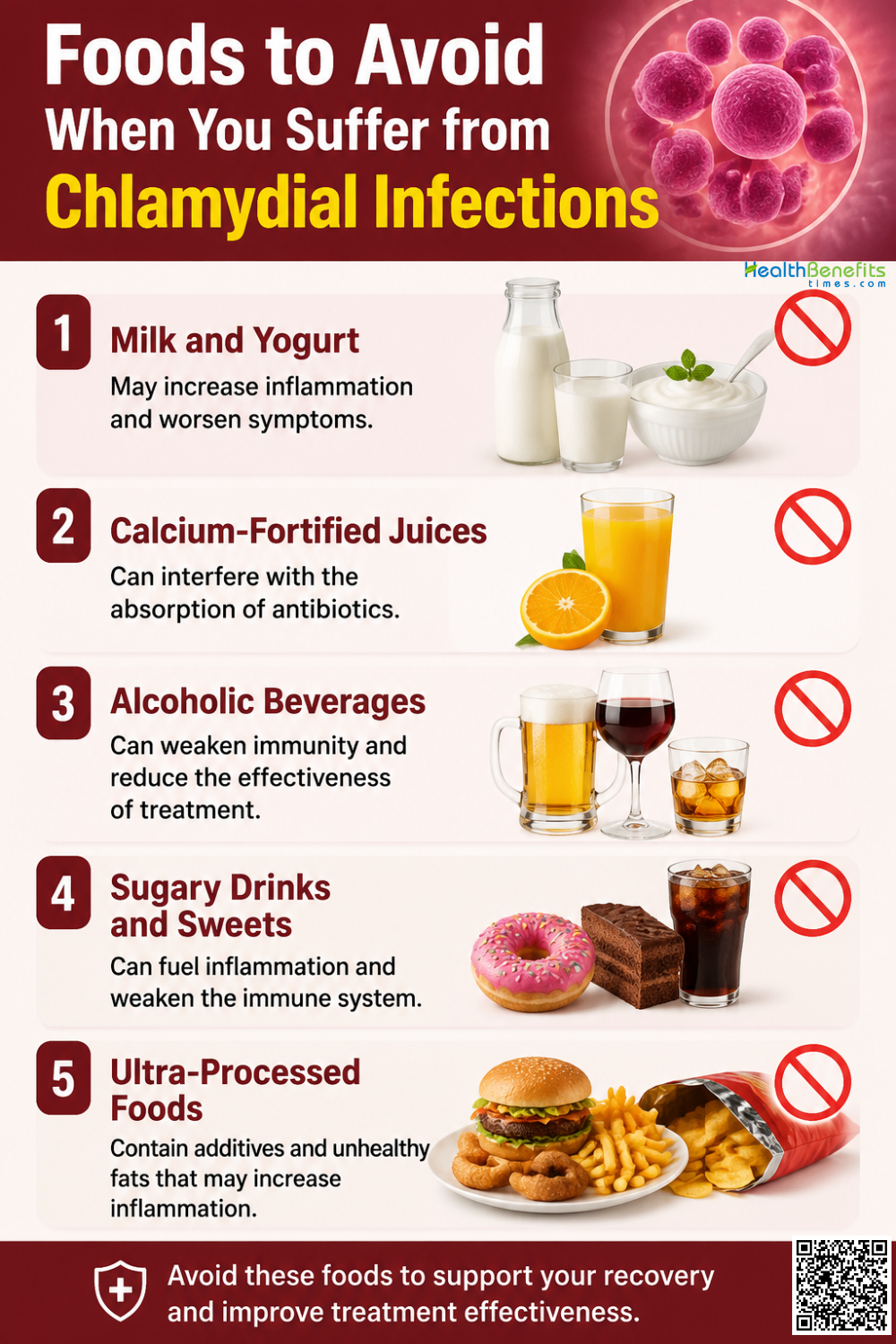
2. Calcium-Fortified Juices
Juices with added calcium create the same drug-blocking effect as dairy, trapping the antibiotic in your stomach and preventing it from reaching the infection 11.
3. Alcoholic Beverages
Alcohol suppresses your vital immune cells, reducing your body’s ability to destroy bacteria, and can dangerously interact with your prescribed medical treatments 13.
4. Sugary Drinks and Sweets
High intakes of added sugars provoke systemic inflammation and disrupt gut health, which weakens your immune system’s natural defense mechanisms during recovery 12.
5. Ultra-Processed Foods
Refined foods increase widespread inflammation in your body, forcing your immune system to combat dietary stress rather than focusing on clearing the bacterial infection 12.
When to see Doctor when you struggle from Chlamydial Infections
Chlamydia is frequently a silent bacterial infection that causes irreversible reproductive damage if left untreated. Because most infected individuals show no immediate warning signs, proactive medical testing is essential to stop the spread and prevent long-term harm 1. Prompt clinical intervention is required when physical symptoms do appear, as this indicates active tissue inflammation that can rapidly progress to severe complications, such as infertility or chronic pelvic pain 10. You must seek immediate evaluation from a healthcare provider if you experience any signs of infection or if a recent contact poses a risk to your health.
1. Known Exposure to the Infection
You must see a doctor immediately for testing if a sexual partner informs you they have chlamydia, even if you feel completely healthy 1.
2. Painful Urination
Seek medical care if you feel a burning sensation when urinating, as this is a primary clinical sign of active bacterial infection in the urinary tract 1.
3. Abnormal Genital Discharge
Consult a healthcare provider if you notice unusual discharge from the penis or vagina, which indicates your body is actively fighting a localized infection 8.
4. Severe Lower Abdominal Pain
Immediate medical attention is required for sudden pelvic pain, as this suggests the bacteria have spread, potentially causing dangerous conditions like pelvic inflammatory disease 10.
5. Returning Symptoms After Treatment
Return to your doctor if symptoms persist after finishing your prescribed antibiotics, as this means the bacterial infection was not fully cured and requires re-evaluation 6.
Comments
comments