
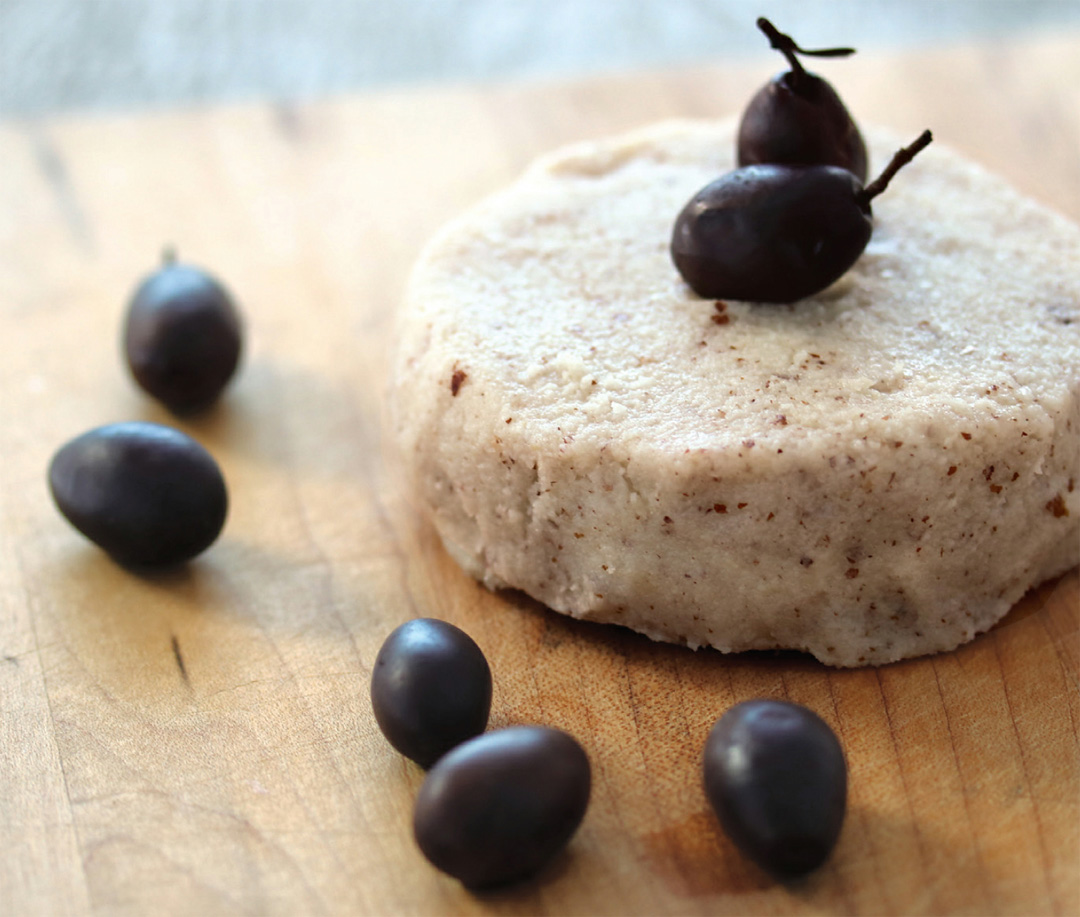
 I call this “farmer’s cheese” because it is made using the same type of process as traditional dairy-based farmer’s cheese, except that I use almond milk instead of cow’s milk. I heat the milk and add an acidifying agent (in this case I’ve used vinegar), which separates the curds from the whey, and then I further strain it to form a block of cheese. This cheese can be air-dried or not, depending on your preference. You can add herbs or other flavor additions to suit your palate. I love minced fresh basil or thyme in my cheese, but you can select any herbs you prefer. But even without aging or herbs, this cheese is simple and delightful. You can spread it on toast; eat it with fruit, crackers, nuts, or vegetable crudités; serve it with olives or antipasto; or enjoy it with a little fruit jam or coulis (a fruit sauce) as a dessert.
This cheese and other cheeses made in this manner usually don’t have any probiotics unless they are added after the milk has cooled and the cheese has been set. Typically, most aged cheeses are inoculated with yeasts or molds at that point but not always ones that are health promoting. You can age this cheese if you’d like to, although traditionally farmer’s cheeses or soft cheeses like this are not aged (i.e., not fermented) and do not contain any probiotics. To age this cheese, follow the instructions outlined in the sidebar “Aging Your Cheeses to Perfection” after you’ve completed the recipe here.