
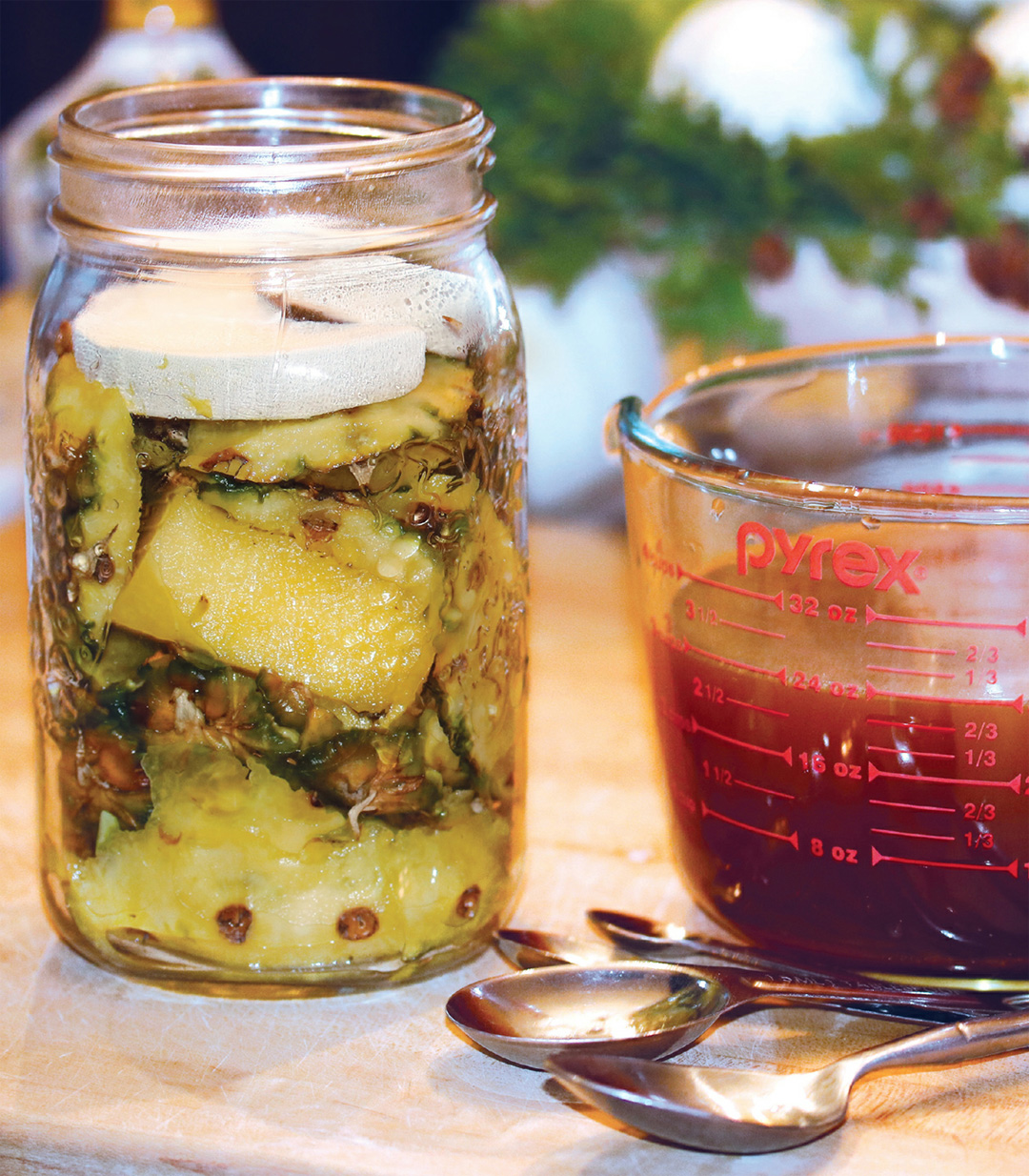
 Imagine having your pineapple (in the form of vinegar) and eating it too. That’s completely possible when you remove the skins and core from a pineapple, eat the fleshy fruit, and reserve the scraps to make pineapple vinegar. Because pineapples can contain many pesticides and other unwanted ingredients, I recommend using an organic pineapple for your vinegar. You should also wash the whole pineapple prior to cutting it so as to remove any mold or harmful bacteria that may have found their way onto the surface of the pineapple. After tasting this delightful pineapple vinegar, you’ll never look at fruit scraps the same way again.
How to Make It
- In a pitcher or large measuring cup, mix together the sugar and water, stirring if necessary to encourage the sugar to dissolve.
- Remove the skin and core from the pineapple. Set the meat of the fruit aside for another use. Coarsely chop the skins and core.
- Place the pineapple scraps in a 1- to 2-quart jar or crock, leaving about 1 to 2 inches at the top of the jar.
- Pour the sugar-water solution over the pineapple skins and core, leaving about ¾ inch at the top of the jar. The pieces will float to the top, and some won’t be submerged, but that’s okay.
- Cover the opening with a few layers of clean cheesecloth, and attach an elastic band around the mouth of the jar or crock to hold the cheesecloth in place.
- Every day, remove the cheesecloth, and stir to cover the pineapple pieces with the sugar-water solution. You must do this every day to ensure that the pineapple pieces don’t go moldy during the fermentation process. After two weeks, strain off the pineapple pieces, reserving the liquid; you can add the pineapple to your compost. Pour the liquid into a bottle, and seal with a tight-fitting lid or cork. The vinegar keeps for approximately one year.