

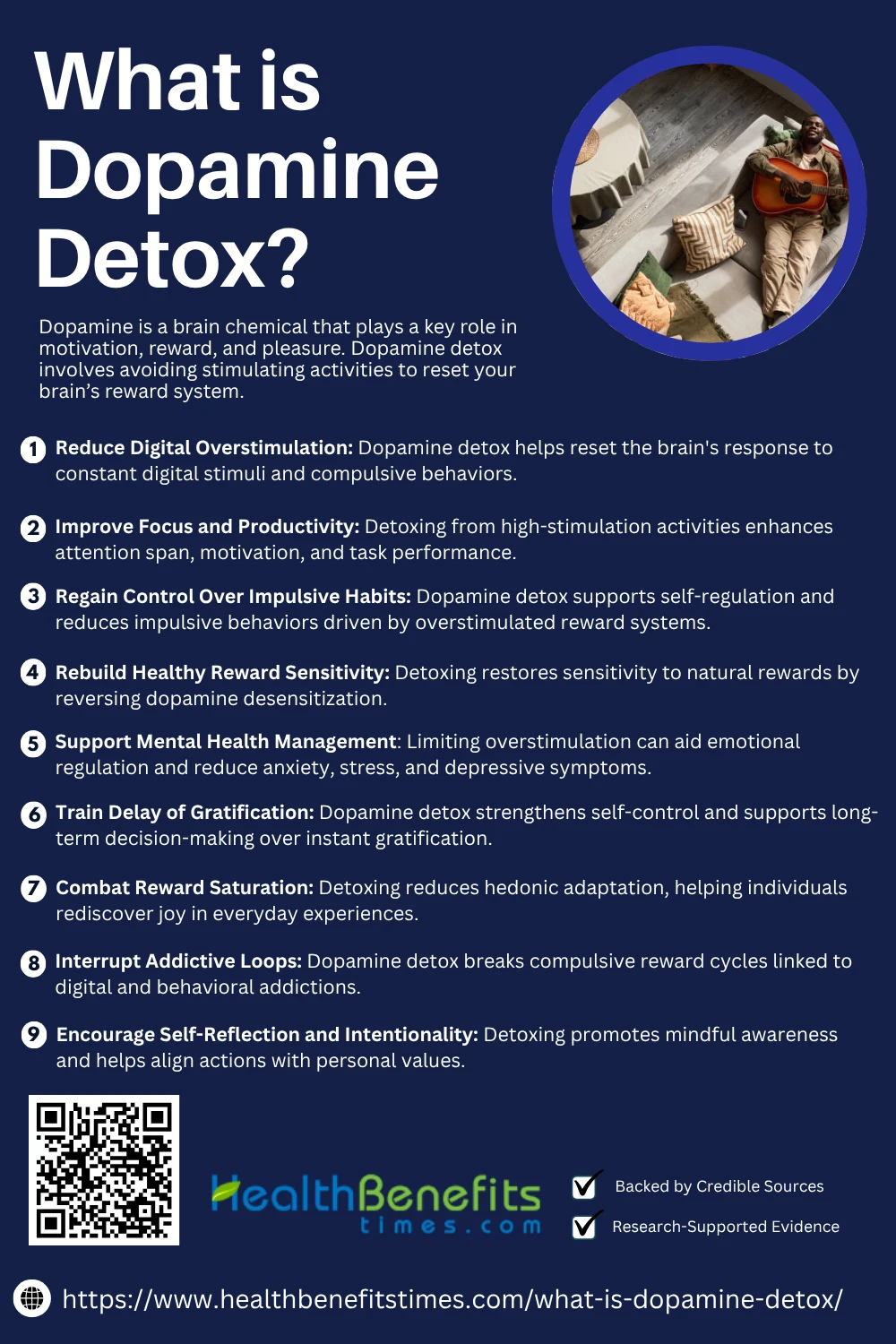
- Dopamine is a brain chemical that plays a key role in motivation, reward, and pleasure.
- Dopamine detox involves avoiding stimulating activities to reset your brain’s reward system.
- It aims to reduce distractions, improve focus, and promote intentional behavior in a world of constant stimulation.

Dopamine is a neurotransmitter involved in motivation, pleasure, and reward; its natural sources include protein-rich foods like eggs, dairy, soy, and fish, which provide the amino acid tyrosine used to synthesize dopamine (Dopamine Brain Food). In recent years, the term “dopamine detox” has gained popularity, especially in self-help and productivity circles, as a method to reduce overstimulation and reclaim focus by temporarily avoiding highly stimulating activities such as social media, gaming, and junk food. Proponents claim that constant exposure to pleasurable stimuli can lead to “dopamine saturation,” making everyday experiences less enjoyable and decreasing our motivation for essential tasks. While not a clinical term recognized in neuroscience, the dopamine detox trend aligns with behavioral theories that support stimulus control and mindfulness. However, scientific critiques argue that it misunderstands how dopamine actually functions, noting that we cannot “reset” our dopamine system through abstinence alone. The concept’s original form, introduced by Dr. Cameron Sepah, emphasized not a chemical cleanse but rather a practice in self-discipline and digital minimalism.
What is a Dopamine Detox?
A dopamine detox, also known as a dopamine fast, is a behavioral strategy in which individuals voluntarily abstain from highly stimulating activities—such as social media, video games, junk food, or even small talk—for a specific period, in order to reset behavioral patterns and increase self-awareness. Contrary to its name, the process does not literally lower dopamine levels in the brain; rather, it seeks to reduce dependency on immediate gratification and constant stimulation.
The concept was introduced by clinical psychologist Dr. Cameron Sepah, who initially used it as a tool within cognitive behavioral therapy to help Silicon Valley clients manage compulsive behavior and improve emotional regulation. His goal was not to eliminate dopamine, but to reduce unhelpful behaviors rewarded by it. Practitioners of dopamine detox aim to regain focus, control impulses, and combat digital overstimulation in a hyperconnected world.
Why Do People Try Dopamine Detoxes?
People try dopamine detoxes to escape constant stimulation from technology, social media, and instant gratification. They seek mental clarity, improved focus, and better control over habits and emotional responses.
 1. To Reduce Digital Overstimulation
Dopamine detoxes are increasingly practiced to counteract the effects of digital overstimulation caused by frequent exposure to screens and notifications. The dopamine system becomes over-engaged by constant stimuli, leading to desensitization and compulsive behavior patterns. (1) This pattern of overuse can impair attention and emotional balance. (2) Detoxing offers a way to reset these circuits and restore natural reward responses. (3) Studies also link detoxing with better regulation of dopamine receptors and improved mindfulness in digital behavior. (4) (5)
2. To Improve Focus and Productivity
Many individuals turn to dopamine detoxes as a way to reclaim their ability to concentrate and perform deep work by limiting distractions from digital sources. Research shows that excessive digital stimulation can impair attention span and reward pathways, making it difficult to sustain focus. (6) By avoiding frequent dopamine-triggering activities, people can train the brain to regain executive function and task persistence. (7) Neuroscience studies suggest dopamine detoxes help recalibrate motivation circuits and support willpower development. (8) Evidence from digital behavior research also shows enhanced productivity through decreased impulsivity and screen dependency. (9)
3. To Regain Control Over Impulsive Habits
Dopamine detoxes are often adopted to manage impulsive behaviors driven by overstimulated reward systems. These practices draw from addiction neuroscience, which highlights dopamine’s role in impairing inhibitory control and reinforcing habitual patterns (Frontiers in Psychiatry). Regular detoxing may help regulate reward-driven impulses, especially in individuals prone to compulsive behavior. (10) Research also supports that detox-like approaches strengthen self-regulation by rewiring disrupted neural pathways. (11) Additional evidence shows that such behavioral resets improve inhibitory control in addictive cycles, while restoring balance in prefrontal circuits linked to decision-making and restraint. (8) (12)
4. To Rebuild Healthy Reward Sensitivity
Dopamine detoxing is increasingly used to restore reward sensitivity disrupted by chronic overstimulation. Repeated exposure to high-reward stimuli may desensitize dopamine receptors, blunting natural motivation. (13) A detox allows time for the dopaminergic system to recalibrate, potentially reversing hedonic adaptation. (14) Studies also show that abstaining from artificial stimuli may enhance the brain’s response to natural rewards. (15) Evidence from addiction neuroscience supports that reduced stimulation helps rebalance neural circuits linked to pleasure and motivation. (16) Furthermore, a dopamine reset may promote increased reward anticipation by restoring dopaminergic tone and receptor sensitivity. (8)
5. To Support Mental Health Management
Dopamine detoxes are explored as supportive tools for mental health, aiming to reduce symptoms of anxiety, depression, and stress. By limiting exposure to overstimulating activities, individuals may reset emotional baselines and promote more balanced mood regulation. (17) Research suggests that such detoxes can complement emotional regulation strategies and reduce compulsive behaviors linked to poor mental health outcomes. (1) Integrating detox practices in therapy settings may improve well-being and focus on preventive care. (18) Additionally, dopamine’s role in mental disorders has led to detoxes being proposed as behavioral interventions for dopaminergic dysregulation. (19) Evidence also links dopamine-based interventions with enhanced self-control and mood stabilization. (20)
6. To Train Delay of Gratification
Dopamine detoxes are increasingly used to help individuals cultivate patience and improve long-term decision-making by enhancing the brain’s capacity to delay gratification. This behavioral aim is rooted in neuroscience research linking dopaminergic signaling with impulsivity and reward anticipation. The classic “Marshmallow Test” and follow-up studies emphasized the role of self-control in long-term success. (21) Brain regions involved in executive function, such as the prefrontal cortex, are crucial in resisting immediate temptations. (22) Detox strategies reduce exposure to instant gratification, creating opportunities for practicing restraint. (23) Emerging behavioral frameworks even link dopamine detoxing to improved academic and professional outcomes via increased focus on delayed rewards. (24)
7. To Combat Reward Saturation
Dopamine detoxes are seen as a solution to reward saturation, where overexposure to high-stimulus environments dulls the brain’s response to everyday pleasures. Chronic stimulation can lead to hedonic adaptation and desensitization of dopamine receptors. (2) This results in a decreased capacity to enjoy routine experiences, pushing individuals toward novelty-seeking behaviors. (25) Detoxing limits this saturation by reducing exposure to overstimulation, potentially resetting sensitivity to natural rewards. (26) Studies also link it with improved affect regulation through balanced dopamine activity (Google Books). Furthermore, emerging behavioral neuroscience views detoxing as a tool to mitigate overactive reward loops and restore baseline motivation. (12)
8. To Interrupt Addictive Loops
Dopamine detoxes are often used to disrupt addictive feedback loops, where repeated behaviors—like scrolling or gaming—are reinforced by dopamine-driven reward circuits. These loops can create compulsions that override rational control. (27) Detoxing limits these reinforcers, allowing cognitive systems to regain balance. (28) This approach supports the reset of the reward circuitry often hijacked in addiction. (29) Behavioral scientists argue detoxing can restore dopamine homeostasis and impulse regulation. (30) Further insights show that personalized detox strategies may lower trigger-response reactivity. (31)
9. To Encourage Self-Reflection and Intentionality
Dopamine detoxes are valued for promoting self-reflection and intentional behavior by encouraging individuals to disengage from digital distractions. This reflective space allows people to observe automatic habits and make more conscious decisions about technology use. (1) Studies show digital abstinence boosts mindful awareness and helps reclaim mental clarity. (32) By removing constant dopamine-driven stimuli, users often experience renewed focus on values and creativity. (33) Research confirms these detox periods can strengthen intentionality and emotional grounding. (4) Additionally, decision-making improves as users shift from reactive habits to purpose-driven behavior. (34)
What Happens During a Dopamine Detox?
During a dopamine detox, individuals intentionally avoid stimulating activities like social media, gaming, or junk food. The goal is to reset the brain’s reward system and regain mental discipline.
 1. Abstinence from High-Stimulation Activities
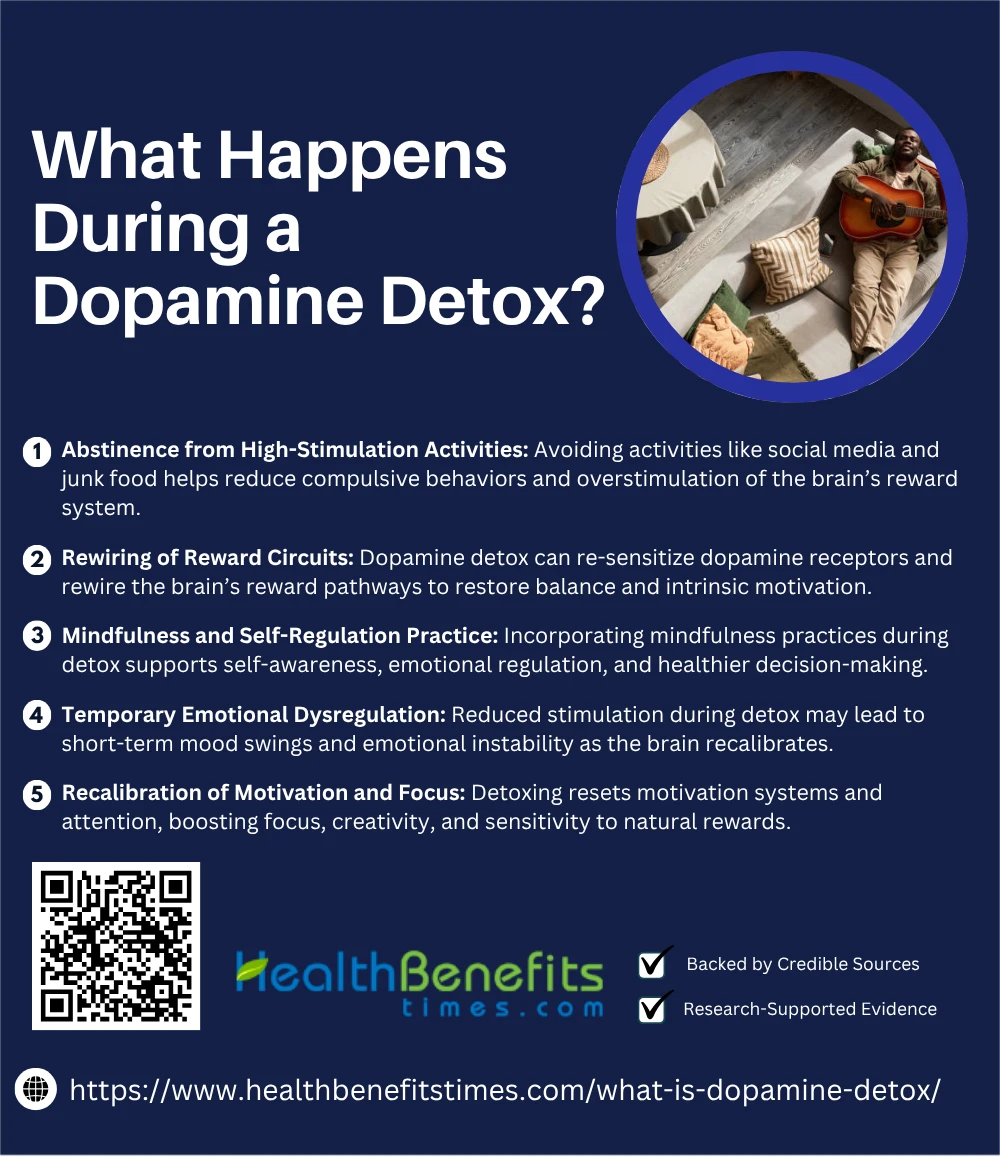
A key feature of a dopamine detox is avoiding high-stimulation activities such as social media, video games, or junk food, which overstimulate the brain’s reward system. This abstinence reduces compulsive behavior by limiting external dopamine triggers. (35) Studies show such behaviors excessively activate reward pathways, reinforcing dependence. (36) Detoxing helps restore balance and lowers overstimulation-induced emotional reactivity.
2. Rewiring of Reward Circuits
During a dopamine detox, abstaining from overstimulating behaviors may help rewire the brain’s reward circuits, allowing dopamine receptors to regain sensitivity. Studies suggest such detoxes can reverse desensitization in dopaminergic pathways associated with compulsive behavior. (37) This neuroplastic adaptation restores intrinsic motivation and emotional balance. (38) Additionally, rewiring supports long-term behavioral change by rebalancing the mesolimbic reward system. (39)
3. Mindfulness and Self-Regulation Practice
Dopamine detoxes often incorporate mindfulness practices like meditation and journaling to promote self-regulation and reflection. These activities help participants become more aware of behavioral patterns and impulses. Research shows that mindfulness-based training increases cognitive control and emotional stability, key aspects of detox goals. (40) Additionally, meditation has been linked to modulated dopamine activity, supporting healthier decision-making. (41)
4. Temporary Emotional Dysregulation
During a dopamine detox, individuals may experience temporary emotional dysregulation as the brain adjusts to reduced stimulation. This can include mood swings, irritability, or anxiety, often referred to as the “dopamine crash”. (42) Research shows that withdrawal from overstimulating behaviors can lead to dysregulated dopamine neurotransmission.
5. Recalibration of Motivation and Focus
A dopamine detox helps reset motivational systems by reducing overstimulation, allowing the brain to re-sensitize to natural rewards. Research confirms this process enhances intrinsic motivation by rebalancing dopaminergic activity and attention regulation. (1) Detoxes also improve focus by reducing dependency on instant gratification stimuli . (6) Users often report heightened creativity and clarity post-detox, reinforcing long-term goal orientation. (32)
What Dopamine Detox Is Not?
Despite the name, a dopamine detox does not involve removing dopamine from the brain. It is not a medical treatment, chemical cleanse, or neurological reset. Dopamine is essential for everyday functions like movement, motivation, and mood regulation. The term is often misunderstood—it’s not about stopping dopamine production but about reducing impulsive behaviors linked to overstimulation and creating space for self-regulation, not eliminating a brain chemical vital for human survival.
Health Benefits of Dopamine Detox
Dopamine detox may offer health benefits such as improved focus, reduced anxiety, better impulse control, and enhanced mental clarity by limiting overstimulation and encouraging mindful, intentional behaviors and routines.
 1. Improve Psychological Well-Being
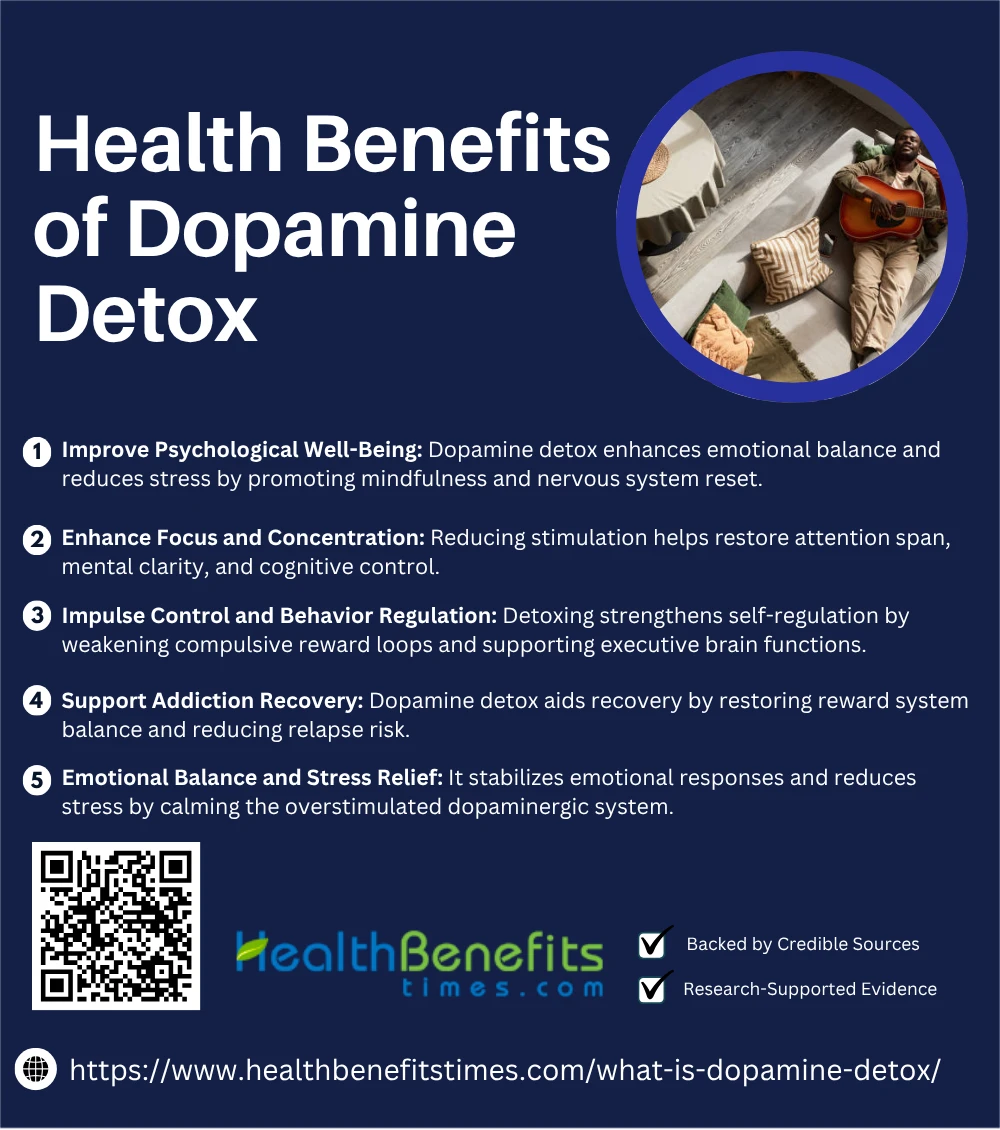
Dopamine detox practices are strongly associated with enhanced psychological well-being, including better emotional balance and reduced stress. By removing constant external stimulation, individuals give their nervous systems a chance to reset, promoting clarity and mindfulness. (1) These effects are strengthened by mindfulness-based interventions that regulate emotion and stress responses. (43) Dopamine detoxing also contributes to long-term resilience and mental health improvement. (44) Research in integrative therapy also confirms its benefits for managing anxiety and depression through behavioral regulation. (45)
2. Enhance Focus and Concentration
Dopamine detox, by reducing overstimulation from instant rewards, can improve attention span and mental clarity. Studies suggest that limiting dopaminergic spikes resets reward thresholds, leading to better task engagement. (46) This practice supports prefrontal cortex function essential for sustained focus. (47) Detox routines also reduce digital dependency, fostering deeper cognitive presence. (48) Evidence shows enhanced executive functioning through mindful regulation. (49)
3. Impulse Control and Behavior Regulation
Dopamine detoxes help reduce impulsive behaviors by weakening overactive reward loops and enhancing self-regulatory brain functions. Research shows detoxing supports better executive control in individuals prone to compulsive actions. (17) By limiting overstimulation, detoxes recalibrate the mesolimbic dopamine system, helping regulate urges and behavioral triggers. (50) Studies also show mindfulness practices embedded in detoxes bolster long-term behavior control. (51) Furthermore, therapeutic research confirms that dopamine resets improve neural regulation of self-control and motivation. (52)
4. Support Addiction Recovery
Dopamine detox can play a supportive role in addiction recovery by resetting the brain’s reward system. Prolonged substance use hijacks dopaminergic pathways, impairing natural reward sensitivity. (53) By minimizing stimuli, detox helps restore baseline dopamine function. (54) This process improves impulse control and reduces relapse risk. (55) Mindful practices during detox also enhance emotional self-regulation. (56)
5. Emotional Balance and Stress Relief
Dopamine detox assists emotional regulation by stabilizing reward circuitry disrupted by overstimulation. Chronic exposure to digital rewards heightens stress vulnerability. (57) Detoxing reduces cortisol-linked anxiety by recalibrating the dopaminergic system. (58) It also promotes emotional awareness through mindfulness. (59) Long-term, it enhances resilience to stressors by improving brain plasticity. (60)
Limitations/Criticisms of Dopamine Detox
Despite its popularity, dopamine detox faces criticism for oversimplifying brain science. Experts argue it lacks strong scientific backing and may promote unrealistic expectations or extreme avoidance of everyday activities.
 1. Lacks Clinical Validation
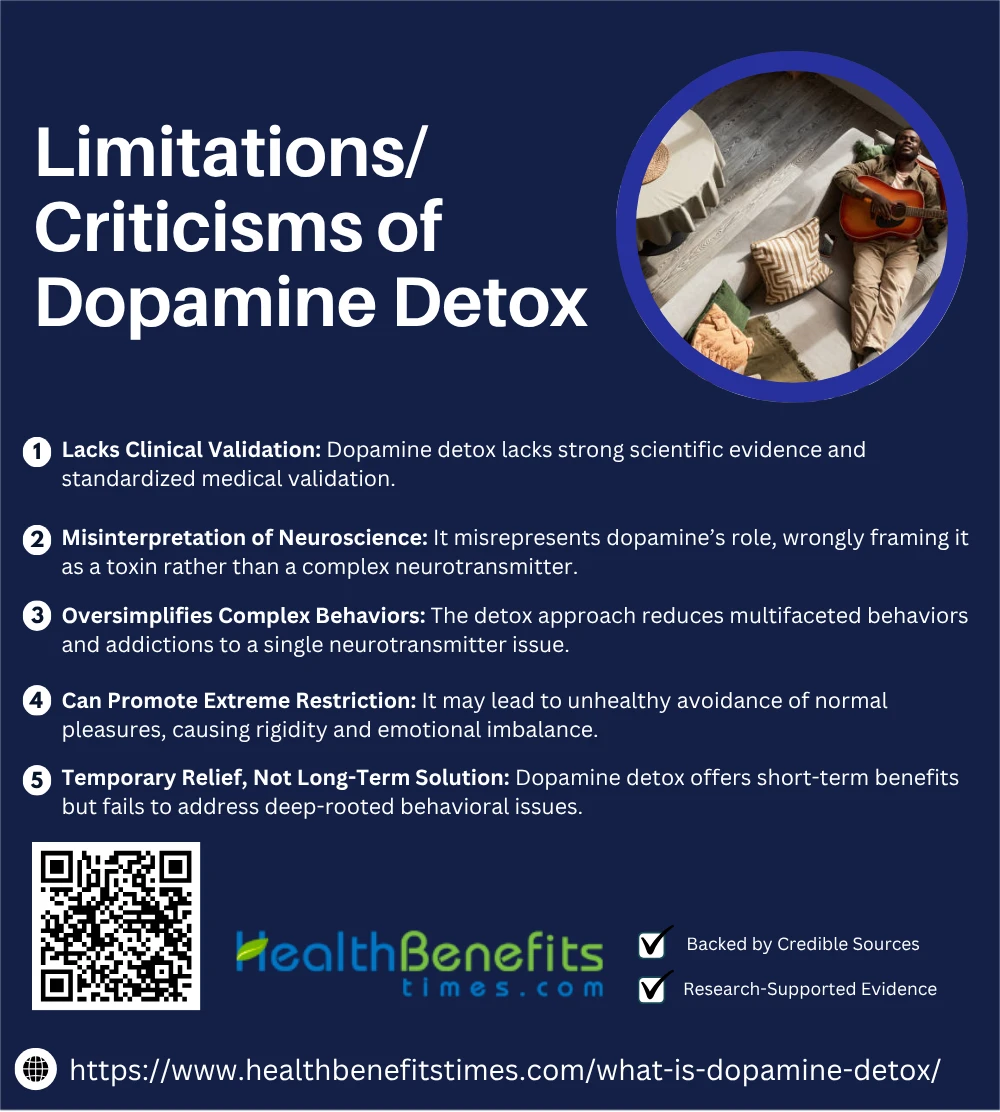
Dopamine detox lacks clinical validation as it is not supported by rigorous medical studies. Neuroscientists argue that there’s no direct evidence linking detox routines to dopaminergic regulation. (61) Most claims are anecdotal, lacking standardized protocols and scientific consensus on efficacy. (62) (46)
2. Misinterpretation of Neuroscience
The concept of dopamine detox misrepresents how dopamine functions in the brain. Dopamine is not a toxin that can be “flushed” out through behavior changes. (61) It’s a neurotransmitter involved in prediction and motivation, not mere pleasure. (63) Over-simplifying its role leads to public misunderstanding. (64)
3. Oversimplifies Complex Behaviors
Dopamine detox oversimplifies addiction and compulsive behavior by attributing them solely to dopamine dysregulation. Human motivation involves intricate biological, psychological, and social systems. (64) Reducing complex habits to a single neurotransmitter ignores these multifactorial influences and may lead to ineffective or misleading interventions. (54) (65)
4. Can Promote Extreme Restriction
Dopamine detox can inadvertently promote extreme lifestyle restriction, discouraging healthy pleasures essential for well-being. Over-avoiding stimuli may foster rigidity rather than balance. (66) Such extremes can mimic behavioral patterns seen in orthorexia or digital asceticism, undermining emotional resilience and mental health stability. (67) (68)
5. Temporary Relief, Not Long-Term Solution
Dopamine detox may offer short-term mental clarity, but it doesn’t address the underlying psychological patterns sustaining compulsive behavior. Sustainable change requires cognitive restructuring and behavioral therapy. (69) Reliance on detox alone often leads to relapse, lacking the depth of evidence-based long-term interventions. (70) (49)
How to Try a Simple Dopamine Detox safely
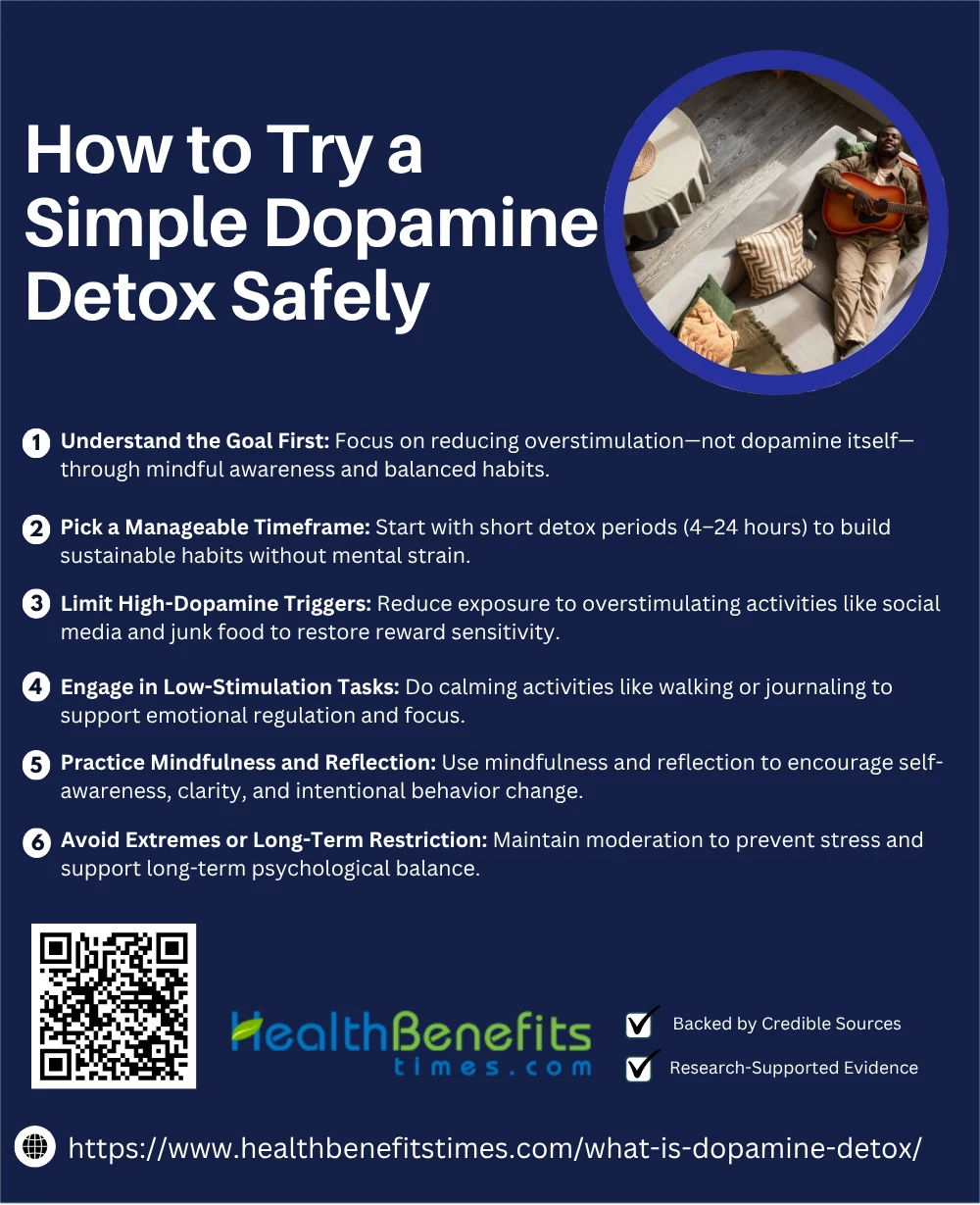
To try a simple dopamine detox safely, start by setting clear boundaries, avoiding overstimulating activities, and focusing on restful, mindful alternatives like journaling, walking, or meditating for short, manageable periods.
 1. Understand the Goal First
To try dopamine detox safely, it’s crucial to understand that the goal isn’t eliminating dopamine but reducing overstimulation from constant digital or sensory inputs. Dopamine is vital for motivation and reward prediction, not just pleasure. (63) Misinterpreting its function can lead to harmful extremes. (64) A safe detox emphasizes mindful awareness and cognitive balance. (49)
2. Pick a Manageable Timeframe
Selecting a manageable timeframe is essential for a safe dopamine detox. Beginning with 4 to 24 hours helps prevent psychological distress and promotes gradual habit change. (66) Extended deprivation can trigger anxiety or obsessive patterns. (67) Short detox windows promote sustainable self-regulation without overwhelming the brain’s adaptive systems. (59)
3. Limit High-Dopamine Triggers
To safely attempt a dopamine detox, it’s important to reduce exposure to high-dopamine triggers such as social media, processed food, and compulsive digital entertainment. These activities overstimulate the brain’s reward pathways, reducing sensitivity to natural rewards. (46) Chronic digital use is linked to attention and mood issues. (48) Cutting back supports neurological balance and self-control. (54)
4. Engage in Low-Stimulation Tasks
During dopamine detox, engaging in low-stimulation tasks like walking, journaling, or meditation helps reset attention and promotes emotional regulation. These activities activate slower, more reflective brain systems, countering the hyper-reactivity fostered by digital habits (Tang et al., 2015). (49) Practices like mindfulness reduce stress and enhance gray matter density in areas linked to emotional control (Hölzel et al., 2011), while also improving overall well-being (Lyubomirsky, 2008). (59) (66)
5. Practice Mindfulness and Reflection
Mindfulness and reflection are essential components of a safe dopamine detox, offering mental clarity and emotional grounding. Mindful practices reduce activity in the brain’s default mode network, enhancing focus and emotional stability. (59) Reflection encourages conscious behavior change rather than impulsive avoidance. (49) Integrating these methods improves resilience and reduces stress-related neural reactivity. (60)
6. Avoid Extremes or Long-Term Restriction
Safe dopamine detoxing requires moderation, not prolonged or rigid abstinence. Extended restriction from everyday stimuli may increase anxiety and reduce psychological flexibility. (67) Dopamine itself is critical for adaptive learning and motivation. (63) Balanced approaches that focus on mindful moderation rather than deprivation lead to sustainable behavioral improvement. (66)
Conclusion
Dopamine detox is a self-imposed break from highly stimulating activities like social media, junk food, or gaming, aimed at resetting your brain’s reward system. By minimizing exposure to instant gratification, it encourages mindfulness, enhances self-control, and improves focus. While the concept lacks strong scientific consensus, many find value in its psychological benefits and habit-forming discipline. It’s not about eliminating dopamine but rather learning to respond to it in a balanced way. When practiced safely and mindfully, dopamine detox can help you reconnect with simple joys, reduce compulsive behaviors, and regain clarity in a world overflowing with constant digital stimulation.