


Tempeh is a traditional Indonesian food made from fermented whole soybeans that are cultured and bound together into a dense, solid patty. Unlike tofu, which is made from soy milk, tempeh utilizes the entire bean, resulting in a firmer texture, an earthy, nutty flavor, and a significantly higher nutritional profile. The natural fermentation process not only makes the soybeans easier to digest but also promotes a healthy gut microbiome by providing valuable prebiotics. Exceptionally rich in plant protein, dietary fiber, and essential vitamins and minerals, tempeh has become a highly popular staple in vegetarian and vegan diets worldwide. It is an incredibly versatile ingredient in the kitchen, easily absorbing marinades and holding its shape beautifully when fried, baked, or grilled.
Nutritional Profile of Tempeh
Serving Size: 100g 1
| Nutrients | Amount | DV%* |
| Energy | 195 kcal 2 | 10% |
| Protein | 19.9 g 3 | 40% |
| Total lipid (fat) | 11.4 g 4 | 15% |
| Carbohydrate | 7.62 g 5 | 3% |
| Water | 59.6 g 6 | – |
| Copper, Cu | 0.54 mg 7 | 60% |
| Manganese, Mn | 1.28 mg 8 | 56% |
| Riboflavin | 0.357 mg 9 | 27% |
| Phosphorus, P | 253 mg 10 | 20% |
| Magnesium, Mg | 77 mg 11 | 18% |
| Zinc, Zn | 1.57 mg 12 | 14% |
| Niacin | 2.14 mg 13 | 13% |
| Iron, Fe | 2.13 mg 14 | 12% |
| Vitamin B-6 | 0.199 mg 15 | 12% |
| Potassium, K | 401 mg 16 | 9% |
| Calcium, Ca | 96 mg 17 | 7% |
Source: usda.gov
Percent Daily Values (%DV) are estimated based on a standard 2,000-calorie diet referenced by the FDA. Individual nutritional needs may vary.
Science Backed Health Benefits of Tempeh
#1. Boosts Gut Health
Tempeh, a food made from fermented soybeans, is good for gut health because it has probiotics, dietary fiber, and bioactive compounds like GABA and isoflavones. 1 These nutrients help the gut by encouraging healthy bacteria like Bifidobacterium and Akkermansia muciniphila, which protect the intestines, lower inflammation, and help absorb nutrients better. 2 Eating tempeh regularly may also help with digestive problems and conditions like inflammatory bowel disease, obesity, and type 2 diabetes by supporting gut bacteria and boosting the immune system. 3
What Research says:
- A study using zebrafish by Pingtung University found that fermenting tempeh with special Rhizopus oryzae strains increased good bacteria like Actinobacteria and reduced harmful bacteria like Proteobacteria in the gut. 1
- Research from Atma Jaya Catholic University in humans showed that eating tempeh every day for 28 days increased the levels of Bifidobacterium and Akkermansia muciniphila, both of which help improve metabolism (3). 3
- Clinical studies in older people also found that probiotics in tempeh, like Limosilactobacillus fermentum, helped improve brain function through the gut-brain connection, supporting the traditional use of tempeh for health (2). 2
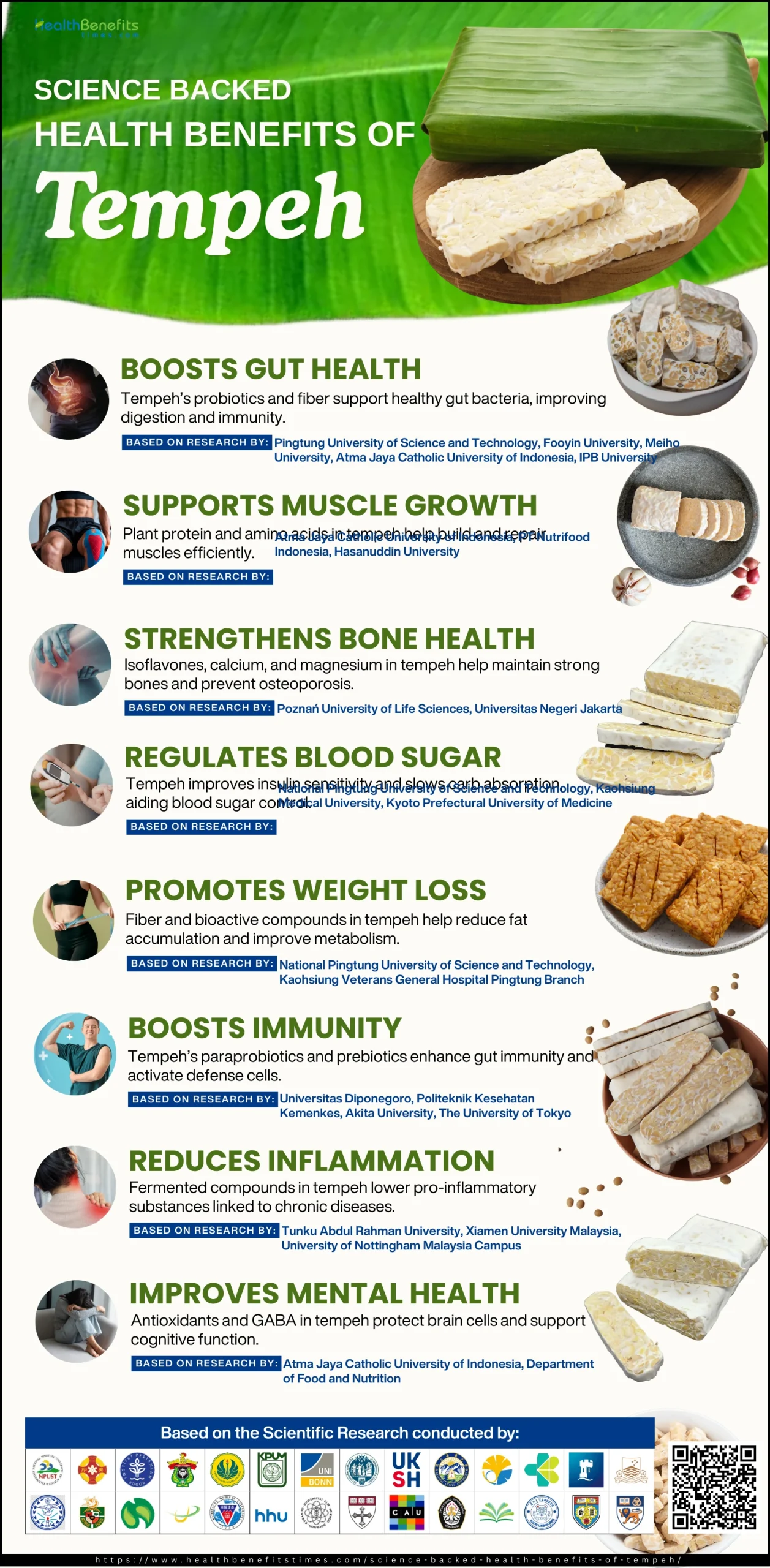
#2. Supports Muscle Growth
Tempeh helps build muscle thanks to its plant protein and essential amino acids like leucine, which trigger muscle growth. The amino acid L-arginine in tempeh also helps reduce fat buildup, aiding in lean muscle maintenance. Additionally, tempeh contains bioactive compounds, including paraprobiotics from heat-treated bacteria, that improve energy production in cells and help reduce fatigue after exercise, speeding up recovery. The vitamin B12 in tempeh prevents megaloblastic anemia, ensuring enough red blood cells for better oxygen delivery during physical activity. 4 Consuming tempeh regularly can help protect against muscle loss and improve overall muscle endurance.
What Research Says:
- A 2023 review in Nutrients showed that tempeh protein is as good as animal protein for muscle repair. Studies also found that fermented soy helps the body absorb amino acids better. Research further prove that observations showed that a tempeh drink helped reduce muscle soreness and creatine kinase levels after resistance exercises, more than a placebo. 4
#3. Strengthens Bone Health
Tempeh is packed with important nutrients that help strengthen your bones. A serving of tempeh provides a good amount of the following nutrients:
- Isoflavones (like daidzein), which act like estrogen in the body and help regulate bone health by enhancing calcium absorption and supporting bone formation.
- Calcium, which is crucial for maintaining strong bones and preventing bone loss, especially after menopause.
- Magnesium, which helps maintain bone density and control inflammation related to bone loss.
- Aglycone forms of isoflavones, which are easier for the body to absorb and help reduce bone breakdown while boosting bone-building activity.
These nutrients together support bone health and may help prevent conditions like osteoporosis. 5 6
What Research Says:
- Research from Poznań University of Life Sciences showed that rats who had their ovaries removed and were fed tempeh had better calcium levels, increased bone turnover, and less fat in their bone marrow. These effects were similar to the results seen with bisphosphonate treatment. 5
- In lab tests using Caco-2 and Saos-2 cells, it was found that tempeh digestion products helped bone cells develop, though the effects on calcium buildup in the bones were different. 7 8
- Another study found that tempeh, especially when combined with probiotics, increased magnesium in the feces and improved metabolic health, suggesting benefits for bone-related inflammation. 6
- Research from Universitas Negeri Jakarta also found that resveratrol, a compound from tempeh, helped reduce DNA damage in bone marrow cells and boosted bone cell growth in mice exposed to aluminum. 9
#4. Regulates Blood Sugar
Tempeh helps control blood sugar because it contains nutrients like isoflavones (genistein, daidzein), polyphenols, and dietary fiber. These nutrients improve insulin sensitivity, slow down the absorption of carbs, and lower inflammation, all of which are important for managing type 2 diabetes and preventing problems like fatty liver and heart disease. 10 11 The fermented isoflavones and fiber in tempeh also affect the gut bacteria, leading to the creation of short-chain fatty acids. These acids help with better glucose processing and insulin function. 12 13 On top of that, tempeh’s antioxidants fight the oxidative stress caused by high blood sugar, supporting overall health. 14 11
What Research Says:
- A study at Kaohsiung Veterans General Hospital found that eating 2 grams of tempeh every day for three months helped lower HbA1c and triglyceride levels in people with type 2 diabetes. 15 16
- In animal studies from National Pingtung University of Science and Technology, diabetic mice who were given 600 mg/kg of tempeh had lower blood sugar, reduced body weight, and less fat buildup in their liver, aorta, and kidneys. 10 12 13
- Research on tempeh gembus cookies from Universitas Diponegoro showed that using more tempeh flour in the cookies led to a lower glycemic index and glycemic load, making it a better snack for controlling blood sugar. 14
- A review of studies showed that fermented soy foods like tempeh help improve gut health and increase the production of short-chain fatty acids, which help with better blood sugar control. 11
#5. Promotes Weight Loss
Tempeh may help with weight loss due to its high content of isoflavones, polyphenols, and dietary fiber. These nutrients improve insulin sensitivity and reduce fat buildup in the body. 17 Isoflavones and polyphenols are antioxidants that help control blood sugar, lower cholesterol, and reduce triglyceride levels, all of which are important for managing obesity-related health problems. 18 Regular consumption of tempeh can also support the prevention or management of conditions like type 2 diabetes, fatty liver disease, and heart issues by improving overall lipid levels and decreasing inflammation in the body.
What Research Says:
- A study on diabetic mice showed that giving them 600 mg/kg of tempeh for 3 months helped lower their body weight and blood sugar levels. Further tests on tissue samples showed that tempeh reduced the size of fat deposits in the liver and blood vessels, suggesting it improved overall tissue health 17
- In another study with obese women, eating 150 g of processed tempeh daily for 28 days reduced triglycerides and improved insulin resistance. 18
#6. Boosts Immunity
Tempeh, a fermented soybean product, is great for boosting your immune system due to its paraprobiotics (non-living microbial cells) and prebiotic fibers. These help increase the production of Immunoglobulin A (IgA) in the gut, which strengthens your gut barrier and keeps harmful germs away. Tempeh also promotes healthy bacteria like Akkermansia muciniphila, which is linked to better metabolism and a lower risk of obesity and type 2 diabetes. 19 Additionally, compounds in tempeh encourage the release of immune-boosting molecules like interleukin-12 (IL-12) and interferon-gamma (IFN-γ), which activate the body’s natural defense cells, such as natural killer cells and macrophages, to fight infections. 20 Eating tempeh regularly can help protect against gut problems, metabolic issues, and common infections.
What Research Says:
- A study from Universitas Katolik Indonesia Atma Jaya and Institut Pertanian Bogor found that eating 100g of tempeh every day increased fecal IgA levels and the number of Akkermansia muciniphila This shows that tempeh helps improve immune function and balance the gut microbiota. 19
- Another study published in the Journal of Food Biochemistry showed that tempeh extract boosted the production of immune molecules IL-12 (1,080 µg/ml) and IFN-γ (682 µg/ml) in a lab setting, and also improved the ability of macrophage cells to fight off germs. 20
#7. Reduces Inflammation
Tempeh can help reduce inflammation thanks to its bioactive compounds like gamma-aminobutyric acid (GABA), free amino acids, and phenolic antioxidants, which increase during fermentation. These nutrients work by lowering harmful pro-inflammatory substances like IL-1β and TNF-α, and reducing nitric oxide (NO) production, which are all involved in chronic inflammation linked to conditions such as rheumatoid arthritis, heart disease, and liver disease. By eating tempeh, the body’s immune response is regulated, possibly reducing overall inflammation and offering protection against inflammatory diseases. 21
What Research Says:
- A study from Universiti Putra Malaysia found that an aqueous extract of Nutrient Enriched Soybean Tempeh (NESTE) helped reduce the secretion of harmful substances like NO, IL-1β, and TNF-α in lab tests with immune cells. The research showed that, the fermentation of tempeh increased compounds like GABA, amino acids, and phenolic substances, which are linked to its anti-inflammatory and pain-relieving effects. 21
#8. Improves Mental Health
Tempeh, especially when combined with nutrient-rich seeds like sunflower and pumpkin, and adzuki beans, can help improve mental health. It is high in antioxidants, gamma-aminobutyric acid (GABA), vitamins B2 and B12, and phytochemicals such as tocopherols and flavonoids. 22 These nutrients work together to lower oxidative stress and inflammation in the brain, which helps protect brain cells and improve functions like memory and verbal fluency. Eating tempeh regularly may help prevent or slow down age-related cognitive decline, dementia, and Alzheimer’s disease. 23
What Research Says:
- A clinical trial by Atma Jaya Catholic University of Indonesia found that older adults with mild cognitive impairment who ate mixed tempeh every day showed better cognitive skills, memory, and language abilities compared to those who ate regular soy tempeh. 22
- Animal studies using mice that age quickly showed that tempeh helped reduce oxidative stress, lower amyloid-beta buildup, and improve antioxidant activity through the Nrf2 and MAPK signaling systems, leading to better cognitive performance. 23
Health Risks and Precaution of Tempeh
Consumption of traditionally fermented tempeh presents potential health risks due to possible contamination with pathogenic microorganisms, biogenic amines (BAs), and mycotoxins Specific pathogens identified in contaminated tempeh include Salmonella entericaserotype Paratyphi B, which can cause gastroenteritis. Furthermore, the presence of mycotoxins such as zearalenone (ZEN) has been reported in tempeh; ZEN can interact with estrogen receptors and cause hormonal disruptions. The production of biogenic amines like histamine and tyramine, which at high levels can cause symptoms ranging from flushing and headaches to more severe food intoxication, is also a risk associated with spontaneous fermentation processes. 24
Comments
This article is based on Scientific Research Conducted by following Research Organization:
- Effect of Tempeh on Gut Microbiota and Anti-Stress Activity in Zebrafish–Pingtung University of Science and Technology, Taiwan, Fooyin University, Taiwan, Meiho University, Taiwan, Kaohsiung Veterans General Hospital, Taiwan
- Effects of Tempeh Probiotics on Elderly With Cognitive Impairment–Atma Jaya Catholic University of Indonesia, Indonesia, IPB University, Indonesia
- Tempeh consumption enhanced beneficial bacteria in the human gut–Atma Jaya Catholic University of Indonesia, Indonesia
- Soy-Based Tempeh Rich in Paraprobiotics Properties as Functional Sports Food: More Than a Protein Source–Atma Jaya Catholic University of Indonesia, Indonesia, PT Nutrifood Indonesia, Indonesia, Hasanuddin University, Indonesia
- Effect of Tempeh and Daidzein on Calcium Status, Calcium Transporters, and Bone Metabolism Biomarkers in Ovariectomized Rats–Poznań University of Life Sciences, Poland
- Influence of Tempeh, Daidzein, Probiotics, and Their Combination on Magnesium Status and Hematological Ratios in a Postmenopausal Osteoporotic Animal Model–Poznań University of Life Sciences, Poland
- Effects of Daidzein, Tempeh, and a Probiotic Digested in an Artificial Gastrointestinal Tract on Calcium Deposition in Human Osteoblast-like Saos-2 Cells–Poznań University of Life Sciences, Poland
- Effects of Daidzein, Tempeh, and a Probiotic Digested in an Artificial Gastrointestinal Tract on Calcium Deposition in Human Osteoblast-like Saos-2 Cells–Poznań University of Life Sciences, Poland
- Resveratrol-Tempeh reduce micronucleus frequencies bone marrow cells and stimulate osteocyte proliferation in aluminum chloride-induced mice–Universitas Negeri Jakarta, Indonesia
- The effects of using Tempeh as a supplement for type 2 diabetes–National Pingtung University of Science and Technology, Taiwan, Kaohsiung Veterans General Hospital, Pingtung Branch, Taiwan, Kaohsiung Medical University, Taiwan
- Fermented soybean foods and diabetes–Kyoto Prefectural University of Medicine, Japan, Matsushita Memorial Hospital, Japan
- Effects of Tempeh Fermentation with Lactobacillus plantarum and Rhizopus oligosporus on Streptozotocin-Induced Type II Diabetes Mellitus in Rats–Christian‑Albrechts University of Kiel, Germany, University Hospital Schleswig‑Holstein, Germany, Harvard T.H. Chan School of Public Health, Boston, USA, University Hospital Cologne, Germany, University of Ulm, Germany, University of Bonn, Germany, University Düsseldorf, Germany
- Effects of Tempeh Fermentation with Lactobacillus plantarum and Rhizopus oligosporus on Streptozotocin-Induced Type II Diabetes Mellitus in Rats–National Pingtung University of Science and Technology, Taiwan, National Chiayi University, Chiayi, Taiwan
- Glycemic Index, Starch, and Protein Digestibility in Tempeh Gembus Cookies–Universitas Diponegoro, Indonesia
- Data on effect of Tempeh Fermentation on patients with type II diabetes–National Pingtung University of Science and Technology, Taiwan, Kaohsiung Veterans General Hospital Pingtung Branch, Taiwan
- Data on effect of Tempeh Fermentation on patients with type II diabetes–Universitas Diponegoro in Semarang, Indonesia
- The effects of using Tempeh as a supplement for type 2 diabetes–National Pingtung University of Science and Technology, Taiwan, Kaohsiung Veterans General Hospital Pingtung Branch, Taiwan
- The effect of processed Tempeh Gembus to triglycerides levels and insulin resistance status in women with obesity–Universitas Diponegoro, Indonesia
- Effect of Tempeh Supplementation on the Profiles of Human Intestinal Immune System and Gut Microbiota–Universitas Diponegoro, Indonesia, Politeknik Kesehatan Kemenkes, Indonesia
- Fermented food Tempeh induces interleukin 12 and enhances macrophage phagocytosis–Akita University, Japan, The University of Tokyo, Japan
- Anti-inflammatory, analgesic and acute toxicity effects of fermented soybean–Tunku Abdul Rahman University, Malaysia, Xiamen University Malaysia, Malaysia, University of Nottingham Malaysia Campus, Malaysia
- Comparison of the effects of mixed tempeh with soy tempeh on cognitive function in older people–Atma Jaya Catholic University of Indonesia, Indonesia
- Tempeh attenuates cognitive deficit, antioxidant imbalance, and amyloid β of senescence-accelerated mice by modulating Nrf2 expression via MAPK pathway–Department of Food and Nutrition, Taiwan
- Enhancing food safety in soybean fermentation through strategic implementation of starter cultures–National University of Singapore, Singapore, The Australian National University, Australia