

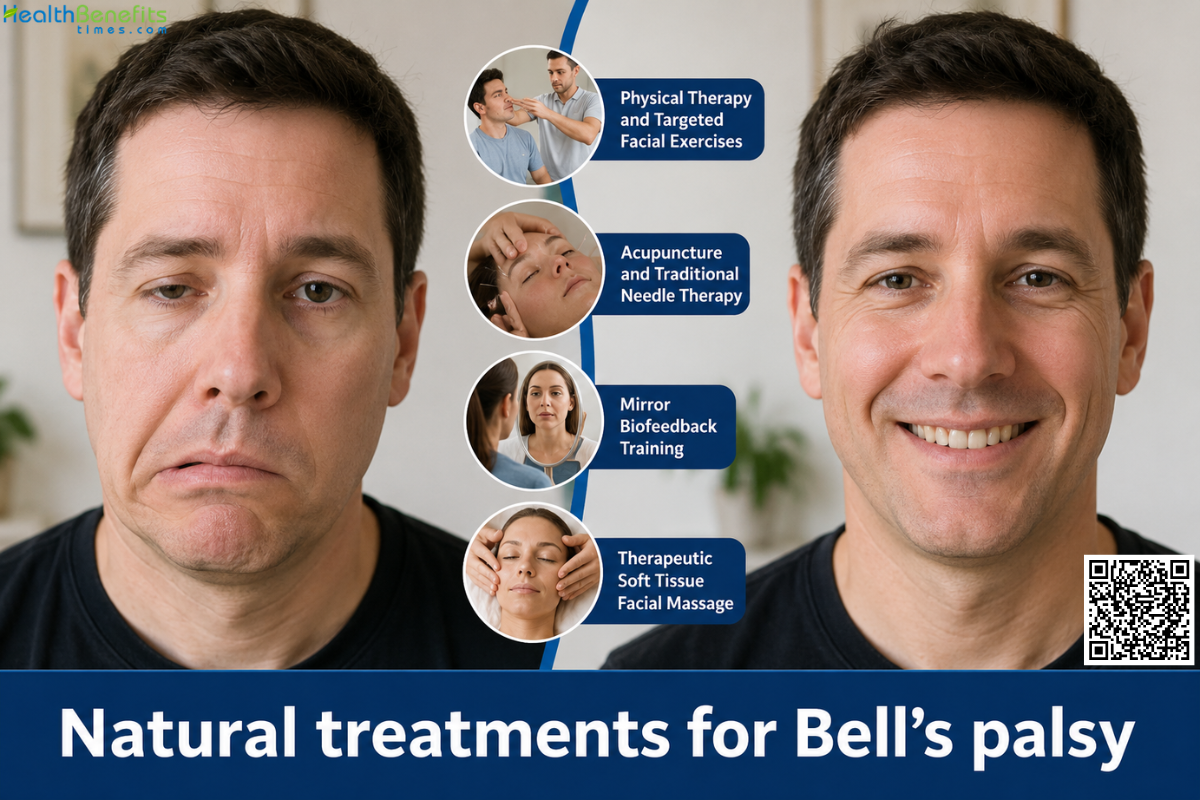
Bell’s palsy is a sudden, temporary weakness or paralysis of the muscles on one side of the face. The condition occurs when the seventh cranial nerve, which controls facial movements, becomes inflamed, swollen, or compressed 1. While the exact cause remains unknown, medical researchers believe it is frequently triggered by a viral infection that damages the nerve sheath 2. This nerve dysfunction results in symptoms such as a drooping mouth, difficulty closing one eye, and altered taste 3. It is a diagnosis of exclusion, meaning doctors must first rule out serious neurological emergencies like a stroke before confirming Bell’s palsy 4. The overall prognosis is highly favorable, as most patients begin recovering within three weeks and over 70 percent achieve complete facial function restoration within six months, particularly when treated with early oral corticosteroids 5.
Causes of Bell’s palsy
1. Herpes Simplex Virus Type 1 (HSV-1)
The reactivation of the dormant virus responsible for cold sores is widely considered the most frequent viral cause of this facial paralysis 6.
2. Varicella-Zoster Virus (VZV)
The virus responsible for chickenpox and shingles can reactivate in the cranial nerves, causing significant facial nerve inflammation and paralysis even when no visible skin rash is present.
3. Epstein-Barr Virus (EBV)
The pathogen that causes infectious mononucleosis serves as a recognized viral trigger that can lead to sudden facial weakness, especially in younger individuals 7.
4. Borrelia burgdorferi
This tick-borne bacteria, which causes Lyme disease, is a major infectious cause of acute facial palsy in geographic areas where the disease is common.
5. Systemic Risk Factors
Certain underlying health conditions, notably diabetes, high blood pressure, and the physiological changes occurring during pregnancy, are clinically established risk factors that increase a person’s susceptibility to facial nerve dysfunction.
Symptoms of Bell’s palsy
1. Facial Weakness or Paralysis
Patients experience a sudden onset of muscle weakness on one side of the face, which can rapidly progress to complete paralysis over a period of 48 to 72 hours 8.
2. Facial Drooping and Asymmetry
The affected side of the face noticeably sags, particularly at the eyebrow and corner of the mouth, causing difficulty with basic expressions such as smiling or frowning.
3. Incomplete Eye Closure
The paralysis frequently prevents the affected eyelid from closing completely, leaving the eye exposed and leading to significant dryness.
4. Tear Production Changes
The condition can disrupt normal tear regulation, resulting in either a chronically dry eye or excessive, uncontrolled tearing on the affected side.
5. Altered Sense of Taste
Individuals often report a metallic taste or a distinctly reduced ability to taste flavors, specifically on the front two-thirds of the tongue.
6. Sound Sensitivity
The paralyzed side often develops an impaired tolerance to normal noise levels, making ordinary sounds seem uncomfortably loud.
7. Localized Pain
A dull ache or pain frequently develops behind the ear or around the jaw on the affected side, sometimes preceding the visible physical weakness by a day or two 9.
8. Mouth Control Issues
The loss of muscle tone around the mouth commonly leads to unintentional drooling and creates mechanical difficulties when eating or drinking.
9. Abnormal Facial Sensations
Patients frequently report feelings of numbness, stiffness, or altered sensation across the affected side of the face and mouth.
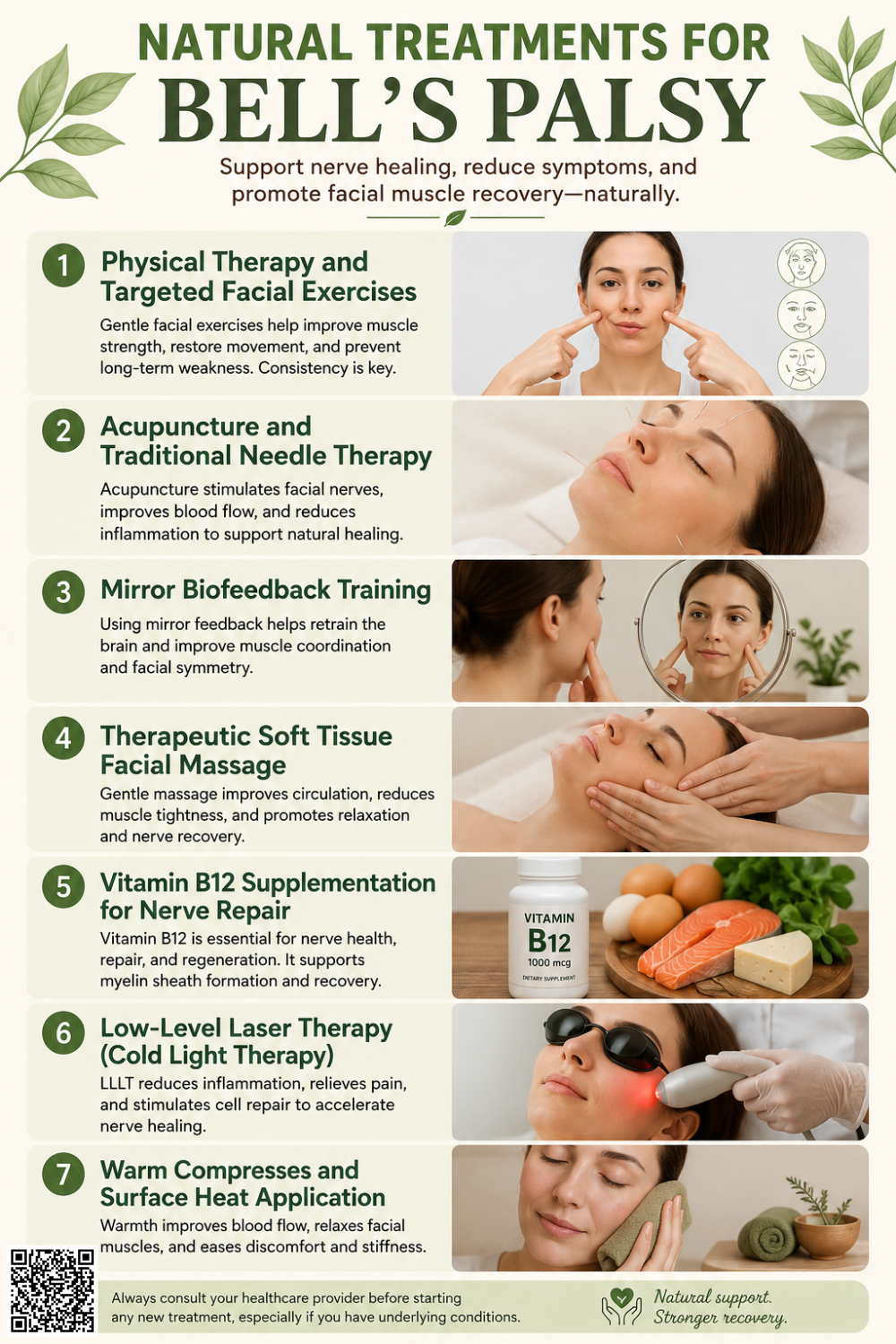 Natural treatments for Bell’s palsy
1. Physical Therapy and Targeted Facial Exercises
How it may help
Targeted facial exercises stimulate paralyzed muscles to maintain their tone and prevent permanent stiffness while the damaged nerve heals. Physical therapy encourages proper blood flow to the affected area and helps retrain the brain to coordinate normal facial movements, preventing incorrect muscle connections as recovery progresses.
What research says
Clinical reviews conclude that specialized facial therapy significantly improves the speed and overall quality of facial function recovery 10. Research confirms that patients who perform early, structured physical therapy experience far fewer long-term complications, such as permanent facial asymmetry or involuntary movements, compared to those who do not 11.
How to use it safely
You should consult a licensed physical therapist who specializes in facial paralysis to learn proper techniques. Perform gentle, controlled movements in front of a mirror to ensure accuracy. Practice these brief, daily routines without forcing the paralyzed muscles or causing yourself physical fatigue.
Potential precautions or side effects
Exercising too aggressively causes abnormal nerve healing, resulting in involuntary twitches known as synkinesis. Stop the exercises immediately if you experience physical pain or severe muscle spasms.
2. Acupuncture and Traditional Needle Therapy
How it may help
Acupuncture stimulates specific facial nerves by inserting very fine needles into the skin. This traditional therapy helps enhance local blood circulation, reduce nerve swelling, and encourage nerve repair. The physical stimulation also helps maintain facial muscle strength and prevents stiffness while the nerve naturally recovers 12.
What research says
Clinical reviews show that acupuncture may improve recovery when combined with standard medical care. A major data analysis found that patients receiving acupuncture experienced a higher rate of complete facial function restoration compared to those using medication alone 13. However, researchers note that additional high-quality studies are needed.
How to use it safely
You must only seek treatment from a licensed and certified acupuncturist who uses sterile, single-use needles 14. Always discuss this treatment with your primary doctor first to ensure it is appropriate for your specific condition and does not interfere with your current medical plan.
Potential precautions or side effects
Acupuncture can cause minor bruising, bleeding, or mild pain where the needles enter the skin. Extremely rarely, deep bleeding near the nerve can temporarily worsen facial weakness 15.
3. Mirror Biofeedback Training
How it may help
Mirror biofeedback training involves watching yourself in a mirror while performing specific facial movements. This visual feedback helps the brain reconnect with the affected facial muscles, teaching individuals how to isolate specific movements and gradually regain facial symmetry while the damaged nerve heals 16.
What research says
Clinical studies conclude that consistent mirror biofeedback significantly improves long-term facial symmetry and muscle function compared to traditional therapy. Furthermore, research shows this specific visual training is highly effective at preventing and reducing synkinesis, which is the unwanted, involuntary movement of certain facial muscles when intentionally trying to move others 17.
How to use it safely
You should practice this training under the direct guidance of a trained physical therapist. Perform the required movements slowly and gently in front of a mirror, focusing entirely on keeping the healthy side of your face relaxed while attempting to move the paralyzed side.
Potential precautions or side effects
Practicing these exercises too intensely can cause significant muscle fatigue and actively worsen involuntary facial twitches. Stop immediately if you experience pain, frustration, or severe muscle spasms.
4. Therapeutic Soft Tissue Facial Massage
How it may help
Therapeutic soft tissue facial massage involves manual manipulation of the face to improve local blood circulation and reduce tissue stiffness. This gentle physical stimulation helps prevent permanent muscle contractures, reduces facial swelling, and maintains necessary muscle tone while the inflamed facial nerve undergoes its natural healing process 18.
What research says
Clinical studies indicate that therapeutic facial massage, especially when combined with structured physical therapy, significantly improves the recovery of facial symmetry. Research concludes that these manual techniques effectively restore muscle function and reduce the risk of long-term complications, such as involuntary facial twitching known as synkinesis 19.
How to use it safely
You should consult a qualified physical therapist to learn the correct massage techniques. Apply gentle, controlled pressure using upward strokes, focusing on the paralyzed muscles. Practice these manual techniques daily, ensuring your movements remain smooth and never forcefully stretch or pull the sensitive facial tissues.
Potential precautions or side effects
Massaging too aggressively can cause tissue bruising, increase inflammation, or worsen involuntary nerve spasms. You must stop immediately if the manual massage causes facial pain, physical discomfort, or skin irritation 20.
5. Vitamin B12 Supplementation for Nerve Repair
How it may help
Vitamin B12, specifically its active form methylcobalamin, is essential for a healthy nervous system. It directly promotes the repair of damaged facial nerves by stimulating the regeneration of their protective coating, known as the myelin sheath, and improving how quickly nerve signals travel 21.
What research says
Clinical trials show that vitamin B12 supplementation significantly reduces the time needed for complete facial recovery. Researchers found that patients receiving methylcobalamin alongside standard corticosteroid therapy recovered their facial muscle function faster and experienced fewer long-term complications than those treated with steroids alone 22.
How to use it safely
You should always take high-dose vitamin B12 supplements under a doctor’s supervision. While daily oral pills are available, medical professionals often prefer targeted injections into the muscle to quickly reach the specific therapeutic levels needed to effectively support nerve repair 23.
Potential precautions or side effects
Vitamin B12 is generally very safe. However, medical injections can cause localized physical pain, minor bruising if you take blood thinners, and very rarely, severe allergic reactions 24.
6. Low-Level Laser Therapy (Cold Light Therapy)
How it may help
Low-level laser therapy uses specific light wavelengths to stimulate cellular activity without generating physical heat. This non-invasive treatment helps reduce facial nerve inflammation, improves local blood circulation, and accelerates the natural repair of damaged nerve tissues, which promotes faster recovery of facial muscle control 25.
What research says
Clinical trials demonstrate that low-level laser therapy significantly accelerates recovery times and improves facial symmetry when administered early. Researchers conclude that patients receiving this specialized light therapy alongside standard medical treatments achieve higher rates of complete facial nerve regeneration compared to those receiving traditional therapies alone 26.
How to use it safely
You must receive this treatment directly from a certified medical professional or physical therapist trained in clinical laser operation. Ensure that both you and the practitioner wear specialized protective eyewear during the session to completely shield your eyes from potential light damage.
Potential precautions or side effects
This non-invasive therapy is generally extremely safe. However, you might experience temporary, mild skin redness at the application site, and direct eye exposure causes permanent visual damage 27.
7. Warm Compresses and Surface Heat Application
How it may help
Applying warm compresses to the paralyzed side of the face increases local blood circulation and gently relaxes stiff muscles. This surface heat therapy helps relieve the physical discomfort, facial aches, and jaw pain that frequently accompany the early stages of nerve inflammation.
What research says
Leading neurological institutes recommend moist heat as an effective supportive treatment for pain management. While clinical guidelines clarify that surface heat does not cure the underlying nerve damage, it is widely endorsed to significantly improve patient comfort and prevent severe muscle tightness during recovery.
How to use it safely
You should soak a clean cloth in comfortably warm water and wring out the excess. Apply it gently to the affected side of your face for 15 to 20 minutes, repeating this soothing process several times throughout the day to maintain muscle relaxation.
Potential precautions or side effects
Because facial paralysis often causes numbness, you must always test the compress temperature on your wrist first to prevent accidental skin burns on the affected area.
 Foods to Avoid When You suffer from Bell’s palsy
1. Hard and Crunchy Foods
These items require excessive chewing force, which causes severe muscle fatigue and increases choking risks due to impaired facial muscle control 28.
2. Chewy and Sticky Foods
Dense textures easily become trapped inside the paralyzed cheek, creating a significant choking hazard and making safe swallowing highly difficult.
3. Large or Oversized Foods
Items like thick sandwiches are physically difficult to manage because facial muscle weakness severely restricts wide mouth opening and compromises lip seal 29.
4. Crumbly and Flaky Foods
Dry pastries increase the risk of accidental inhalation because paralyzed mouth muscles struggle to effectively contain and control small food particles.
5. Extremely Hot Liquids
Reduced sensory function on the affected side prevents individuals from accurately detecting high temperatures, significantly increasing the risk of accidental thermal burns 30.
When To see Doctor when you suffer from Bell’s palsy
1. Sudden Facial Paralysis
Immediate emergency evaluation is strictly required to effectively rule out a stroke, as sudden facial weakness is a primary warning sign of acute brain injury.
2. Within 72 Hours of Onset
You must seek care quickly, because starting oral corticosteroid medications within three days of initial symptoms significantly increases the probability of complete facial recovery.
3. Limb Weakness or Confusion
If your facial drooping is accompanied by severe dizziness, confusion, or weakness in your arms, you require immediate emergency stroke intervention.
4. Inability to Close the Eye
Prompt medical evaluation is necessary to obtain protective eye drops and specialized taping instructions, which prevent severe corneal scratching and permanent visual impairment.
5. Slowly Worsening Symptoms
You should consult a physician if your facial weakness gradually worsens over several weeks, because typical Bell’s palsy peaks rapidly, and slow progression suggests underlying tumors.