

Parkinson’s disease is a progressive disorder of the nervous system that primarily affects the body’s movement and coordination. The condition develops when specific nerve cells in the brain that produce dopamine, a chemical messenger responsible for smooth, controlled muscle action become impaired or die 1. As dopamine levels decrease, individuals typically experience characteristic motor symptoms, including uncontrollable shaking or tremors, significant muscle stiffness, slowed physical movement, and impaired balance 2. While the exact trigger for this nerve cell damage remains unknown, clinical research indicates that both genetic factors and environmental exposures play roles in its development. Although there is currently no cure, medical treatments and various therapies are highly effective at managing symptoms, significantly improving the quality of daily life for those living with the diagnosis
Causes of Parkinson’s disease
1. Dopamine-Producing Nerve Cell Loss
The core cause of Parkinson’s disease is the progressive death of neurons in a specific brain region known as the substantia nigra. These cells are responsible for producing dopamine, a critical chemical messenger that enables smooth, coordinated muscle movement; when these cells die, dopamine levels drop, leading to the motor symptoms of the disease 1.
2. Presence of Lewy Bodies
Brain cells in individuals with Parkinson’s disease often contain abnormal, microscopic protein clumps known as Lewy bodies. Research indicates these deposits contain alpha-synuclein, a protein that misfolds and accumulates within the cells, which is believed to interfere with normal cell function and eventually trigger cell death 2.
3. Genetic Mutations
In a small percentage of cases, specific genetic mutations directly cause or significantly increase the risk of developing the disease. Inheritance patterns vary, and while these mutations are often associated with familial forms of the disorder, they help researchers better understand the underlying biological pathways of the condition 1.
4. Environmental Triggers
Exposure to certain environmental factors, such as long-term contact with specific pesticides or herbicides, has been linked to an increased risk of developing Parkinson’s. While these exposures do not cause the disease in everyone, they are recognized as contributors to the cellular stress that can lead to dopamine cell damage 2.
Symptoms of Parkinson’s disease
- Resting Tremor: A rhythmic, involuntary shaking typically beginning in one hand or finger while the limb is at rest. This tremor often decreases or disappears when the person performs purposeful, voluntary movements 1.
- Bradykinesia (Slowness of Movement): Physical movements become significantly slower and more difficult to initiate over time. This makes simple daily tasks, such as dressing, bathing, or rising from a chair, take much longer to complete than usual 2.
- Muscle Rigidity: Stiffness and increased resistance to passive movement affect the limbs and trunk. This tightness causes persistent muscle aches and restricts the normal range of motion, often resulting in a painful, hunched posture 1.
- Postural Instability: Impaired balance and a diminished ability to maintain an upright position develop as the disease progresses. This symptom leads to an unsteady gait and a significantly increased risk of falls and related injuries 2.
- Loss of Automatic Movements: The brain loses the ability to perform unconscious, reflexive actions. This manifests as a reduced frequency of blinking, a decrease in facial expressions—often called a “masked face”—and a lack of normal arm swinging when walking 1.
- Speech and Writing Changes: The voice may become noticeably softer, monotone, or hesitant. Simultaneously, handwriting often becomes smaller, crowded, and shaky, a condition known as micrographia, making written communication increasingly challenging to execute 2.
Natural Remedies for Parkinson’s disease
1. Regular Aerobic Exercise
How it may help
Aerobic exercise improves cardiovascular health, which enhances blood flow to the brain and may support the maintenance of dopamine-producing neural pathways. Consistent physical activity helps mitigate common Parkinson’s symptoms by increasing overall mobility, enhancing gait speed, improving physical endurance, and strengthening the muscles required for daily functional independence 2.
What research says
Clinical research consistently demonstrates that regular, moderate-to-vigorous aerobic exercise significantly improves motor function and physical quality of life in individuals with Parkinson’s disease. Experts conclude that structured physical activity serves as a vital non-pharmacological intervention to slow functional decline and enhance balance, which reduces the frequency of falls and improves daily mobility outcomes 1.
How to use it safely
Consult a physical therapist to design a routine that focuses on safe, sustainable activities like brisk walking, cycling, or swimming. Start with short, manageable sessions, and prioritize exercises that emphasize balance and coordination. Always ensure your environment is free of tripping hazards to maintain stability during all workouts.
Potential precautions or side effects
Avoid high-impact activities that pose an immediate risk of falling. Overexertion can lead to extreme fatigue or temporary worsening of motor symptoms; always prioritize safety over intensity.
2. Strength and Resistance Training
How it may help
Strength training targets specific muscle groups to combat the progressive muscle weakness and physical stiffness characteristic of Parkinson’s disease. By building functional muscle mass, individuals gain better core stability and posture control, which are essential for maintaining independence, reducing the physical effort required for daily tasks, and improving overall mobility 2.
What research says
Clinical studies conclude that progressive resistance training significantly enhances muscle power and physical performance in patients with Parkinson’s disease. Medical experts emphasize that this form of exercise effectively addresses movement difficulties, demonstrating measurable improvements in balance, walking speed, and the ability to perform everyday activities safely compared to sedentary individuals 1.
How to use it safely
Begin with light weights or resistance bands under the direct supervision of a certified physical therapist. Focus on controlled, steady movements rather than speed. Ensure you have a stable chair nearby for support and always perform these exercises in a secure, level environment to prevent accidental falls.
Potential precautions or side effects
Avoid lifting heavy weights that cause joint strain. If you experience sharp pain or excessive muscle tremors during a session, stop immediately and reduce the resistance level.
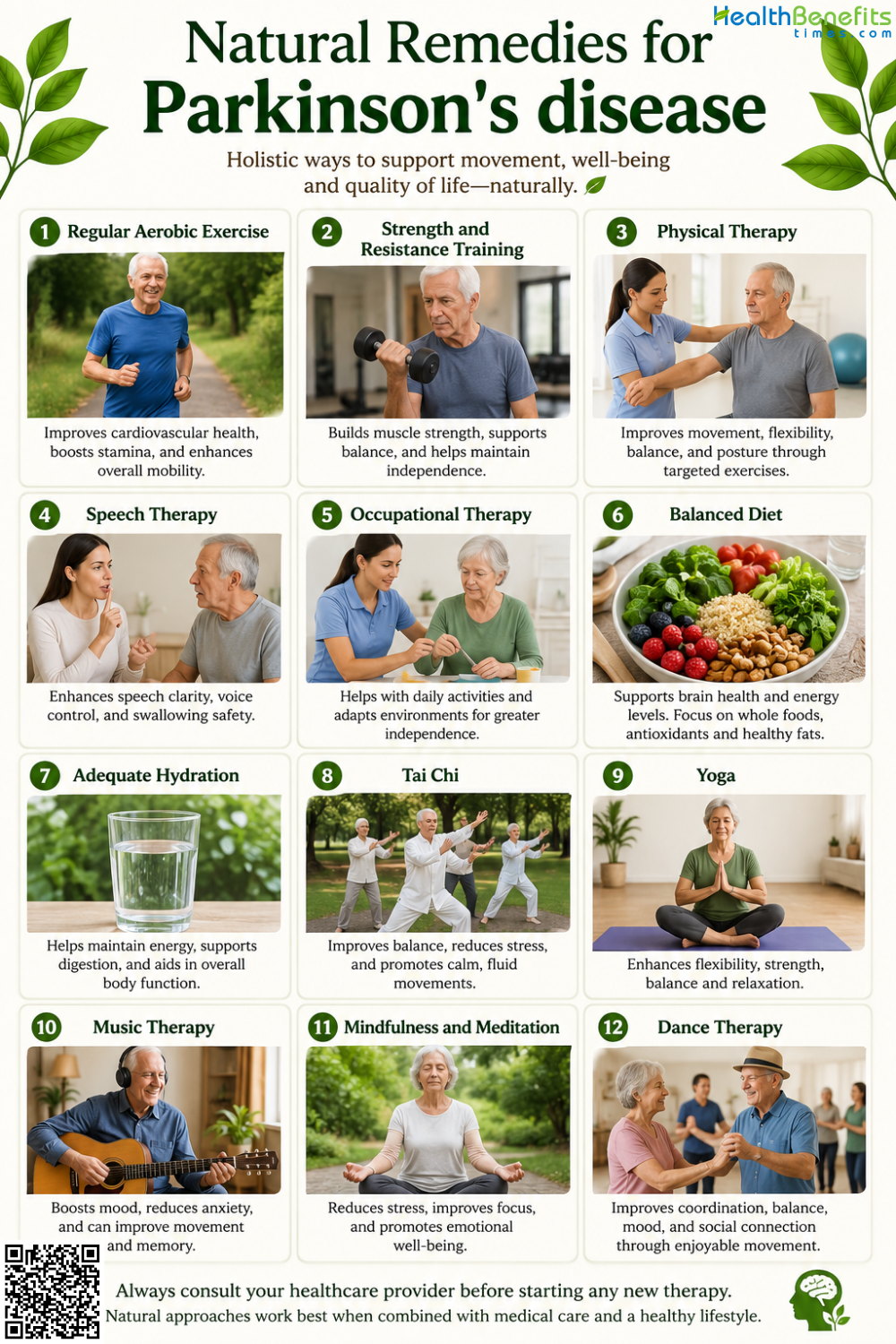
3. Physical Therapy
How it may help
Physical therapy provides targeted interventions to address gait abnormalities, balance deficits, and reduced range of motion. By employing specialized training techniques, physical therapists help individuals improve their walking mechanics, enhance postural stability, and develop effective strategies for fall prevention, which are crucial for maintaining daily independence and long-term functional mobility 2.
What research says
Clinical evidence strongly supports the role of physical therapy in managing the motor complications of Parkinson’s disease. Medical consensus indicates that consistent, specialized therapy programs lead to measurable improvements in physical performance, walking speed, and confidence, significantly reducing the frequency of falls and improving the overall quality of life for patients 1.
How to use it safely
Schedule regular sessions with a physical therapist who specializes in neurological movement disorders. They will conduct a thorough assessment to create a customized program tailored to your specific physical needs. Always adhere strictly to the therapist’s prescribed techniques and safety protocols during both supervised and home-based practice.
Potential precautions or side effects
Avoid performing advanced balance exercises without professional supervision or appropriate physical support to prevent accidental falls and potential injuries.
4. Speech Therapy
How it may help
Speech therapy focuses on strengthening the muscles involved in voice production and swallowing. It helps individuals improve vocal volume, clarity, and articulation, which often decline due to muscle stiffness. These exercises assist in maintaining effective communication and safe swallowing, significantly reducing the risk of choking and improving daily social interactions 1.
What research says
Clinical research concludes that intensive speech therapy, particularly techniques focused on increasing vocal volume, leads to significant, measurable improvements in communication for individuals with Parkinson’s disease. Medical experts note that these specialized interventions are essential for preserving the ability to speak clearly and ensuring long-term oral safety as the condition progresses 1.
How to use it safely
Work with a licensed speech-language pathologist to develop a personalized program. Consistently practice your assigned vocal exercises daily to maintain muscle strength. Ensure you are sitting in an upright, comfortable position during your training to maximize respiratory support and voice production effectiveness.
Potential precautions or side effects
Avoid overstraining your voice by pushing too hard during exercises, which may cause temporary throat discomfort. If you experience persistent swallowing difficulties, consult your doctor immediately.
5. Occupational Therapy
How it may help
Occupational therapy focuses on adapting the home and work environment to compensate for movement limitations. By identifying specific challenges in performing daily tasks—such as dressing, eating, or writing—therapists provide practical strategies and assistive devices. This personalized approach empowers individuals to remain independent, safe, and productive in their everyday routines despite progressive symptoms 2.
What research says
Clinical studies confirm that occupational therapy significantly improves the functional independence and quality of life for people with Parkinson’s disease. Medical experts conclude that timely interventions, including environment modifications and adaptive skill training, are essential for maintaining safety, reducing physical strain, and supporting long-term autonomy in personal and professional activities 1.
How to use it safely
Collaborate with a certified occupational therapist to perform a detailed assessment of your daily activities and living environment. Follow their recommendations for safety modifications, such as installing grab bars or using adaptive tools. Consistent use of these specialized strategies is key to preventing accidents and managing physical challenges.
Potential precautions or side effects
Ensure that any new assistive device is properly adjusted to your needs; improperly fitted equipment may cause discomfort or increase the risk of accidental slips and falls.
6. Balanced Diet
How it may help
A balanced diet rich in dietary fiber directly addresses severe constipation, a very common and uncomfortable non-motor symptom of Parkinson’s disease. Additionally, carefully managing daily protein intake helps ensure that critical Parkinson’s medications are absorbed effectively by the digestive system, stabilizing motor control throughout the day 2.
What research says
Clinical research demonstrates that high-fiber diets significantly improve bowel motility and reduce gastrointestinal distress in Parkinson’s patients. Furthermore, medical experts conclude that adjusting the timing of dietary protein intake successfully prevents the amino acids in food from blocking the absorption of levodopa, maximizing the medication’s overall effectiveness 1.
How to use it safely
Incorporate high-fiber foods, such as whole grains, vegetables, and fruits, gradually into your daily meals. To optimize medication absorption, take your prescriptions at least 30 minutes before eating meals that contain large amounts of meat, dairy, or other high-protein foods 2.
Potential precautions or side effects
Increasing dietary fiber too rapidly can cause painful abdominal bloating and gas. Furthermore, consuming high-protein meals simultaneously with medication often severely blocks drug absorption, worsening physical movement symptoms 2.
7. Adequate Hydration
How it may help
Drinking sufficient water softens stools, directly relieving the severe constipation commonly experienced in Parkinson’s disease. Additionally, maintaining proper fluid levels increases blood volume, helping prevent sudden drops in blood pressure when standing—a frequent complication that causes extreme dizziness and fainting 2.
What research says
Clinical guidelines confirm that increasing daily water intake is a highly effective treatment for managing blood pressure drops and bowel dysfunction in Parkinson’s disease. Medical authorities conclude that consistent hydration significantly reduces the frequency of fainting spells and reliably improves daily digestive regularity 1.
How to use it safely
Aim to drink six to eight glasses of water daily, spreading the intake evenly throughout the day. Take small, controlled sips rather than large gulps to prevent sudden choking, particularly if the disease has begun to affect your swallowing muscles 2.
Potential precautions or side effects
Limit fluid intake immediately before bedtime to prevent sleep-disrupting nighttime urination. If you have heart or kidney conditions, strictly follow your doctor’s advice regarding safe daily water limits 2.
8. Tai Chi
How it may help
Tai Chi utilizes slow, deliberate movements and continuous weight shifting to enhance postural stability. By engaging both the mind and the body, it directly counters the severe muscle stiffness and profound balance loss common in Parkinson’s disease, ultimately strengthening the lower body and making walking significantly safer 2.
What research says
Clinical trials confirm that practicing Tai Chi is highly effective for improving postural stability in individuals with mild to moderate Parkinson’s disease. Medical research concludes that this specific exercise significantly reduces the frequency of accidental falls and improves overall physical movement better than standard resistance training or stretching programs 3.
How to use it safely
Enroll in a beginner-level class led by an instructor experienced with neurological movement disorders. Always practice in a clear, well-lit space. Keep a sturdy chair nearby to hold onto for immediate physical support if you begin to lose your balance during the weight-shifting movements 2.
Potential precautions or side effects
Avoid practicing alone if you experience sudden freezing of gait or severe dizzy spells. Attempting advanced poses without proper supervision directly increases your immediate risk of dangerous falls 2.
9. Yoga
How It May Help
Yoga uses physical postures and controlled breathing to stretch stiff muscles, activate joint receptors, and improve body awareness (Zhang et al., 2023) 4. This mind-body connection enhances postural stability, increases flexibility, and reduces the rigidity and movement slowness common in Parkinson’s disease (Khuzema et al., 2020) 5.
What Research Says
Clinical trials confirm yoga is an effective, safe therapy for mild to moderate Parkinson’s (Suárez-Iglesias et al., 2021) 6. Participants show significant improvements in motor function, balance, and gait, alongside reduced fall risks (Van Puymbroeck et al., 2018) 7. Meta-analyses also demonstrate it alleviates non-motor symptoms like anxiety and depression (Ban et al., 2021) 8.
How to Use It Safely
To practice safely, you should start with gentle styles like Hatha or chair yoga under the guidance of an experienced instructor. Focus on breathing and balance, but always use a wall, chair, or a support partner to prevent falls during standing poses.
Potential Precautions or Side Effects
Avoid fast-paced or hot yoga styles, which may cause dizziness or worsen fatigue. Stop immediately if you experience sharp joint pain, sudden weakness, or worsening balance issues.
10. Music Therapy
How It May Help
Music provides an external rhythm that bypasses damaged brain networks, acting as a cue to initiate and maintain steady movement 9. Additionally, singing therapies strengthen throat muscles, directly improving voice volume, breath control, and swallowing difficulties associated with the condition 10.
What Research Says
Systematic reviews confirm that rhythmic auditory stimulation significantly improves walking speed, stride length, and balance 11. Furthermore, studies show active music participation effectively reduces non-motor symptoms, leading to measurable decreases in depression and anxiety while enhancing overall quality of life 12.
How to Use It Safely
You should consult a certified music therapist to match rhythmic cues to your specific mobility level. When walking to music independently, select familiar tracks with a strong, predictable beat. Always practice in a clear, hazard-free environment to maintain steady footing.
Potential Precautions or Side Effects
Do not use headphones while walking outside, as blocking surrounding sounds increases fall hazards. Avoid heavily layered or unpredictable music, which can trigger sensory overload and worsen movement freezing.
11. Mindfulness and Meditation
How It May Help
Mindfulness and meditation help manage stress by training the brain to focus on the present moment. This calms the nervous system, reducing the impact of stress hormones that can otherwise worsen movement difficulties and emotional distress in Parkinson’s disease 13.
What Research Says
Clinical studies demonstrate that mindfulness-based interventions significantly reduce depression, anxiety, and psychological distress in patients with Parkinson’s disease 14. Regular practice is also associated with subjective improvements in motor symptoms, including reduced tremors, as well as better coping skills and an enhanced overall quality of life 15.
How to Use It Safely
You can safely practice meditation by starting with short, five-minute sessions daily. Sit comfortably in a supportive chair with your feet flat on the floor. Focus on your breathing, and gradually extend your practice. Use guided audio tracks if you find it difficult to maintain concentration.
Potential Precautions or Side Effects
Meditation is generally safe, but intense sessions can sometimes trigger frustration or temporary anxiety. If focusing inward causes distress, stop the practice immediately and consult a mental health professional.
12. Dance Therapy
How It May Help
Dance therapy combines structured movement with rhythmic music, demanding active balance, weight shifting, and spatial awareness. The music acts as an external cue that helps the brain bypass damaged areas to initiate steps, effectively reducing stiffness and movement hesitation common in Parkinson’s disease 16.
What Research Says
Clinical meta-analyses confirm that regular dance therapy significantly improves balance, walking speed, and functional mobility compared to standard physical exercise 17. Furthermore, evidence indicates that participating in partnered or group dance routines effectively reduces depression and cognitive decline, leading to a better quality of life 18.
How to Use It Safely
You should choose classes specifically designed for movement disorders, which are led by specialized instructors. Start with partnered styles like Tango that provide physical support, or begin with seated routines. Always wear supportive, flat footwear and ensure the floor is free from tripping hazards.
Potential Precautions or Side Effects
Fast turns and complex footwork increase fall risk. You should stop immediately if you experience dizziness or severe fatigue. Always consult a doctor before beginning any new physical routine.
Foods to Avoid When You Suffer from Parkinson’s Disease
While there is no definitive diet to cure Parkinson’s disease, clinical evidence shows that specific foods can interfere with medication efficacy, worsen physical symptoms, or accelerate disease progression. You should carefully monitor your daily dietary habits and coordinate your meal timings with your prescriptions to optimize your treatment outcomes and prevent complications.
1. High-Protein Meals
Dietary protein competes with levodopa for intestinal absorption, significantly reducing the medication’s effectiveness in controlling motor fluctuations 19.
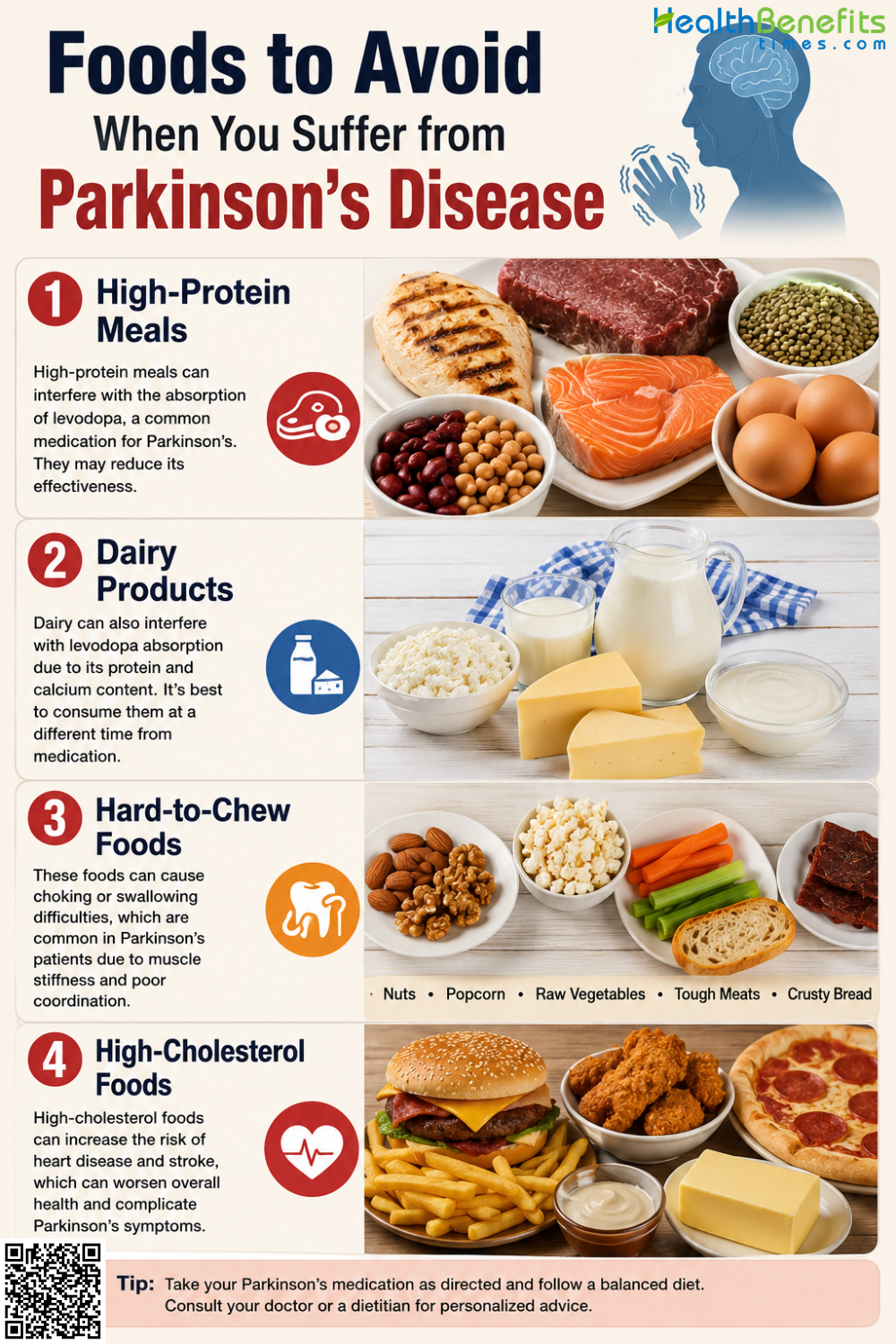
2. Dairy Products
Excessive consumption of milk and cheese is linked to an increased risk of developing Parkinson’s disease and faster disease progression 20.
3. Hard-to-Chew Foods
Tough meats and dry foods increase choking risks, as many patients develop severe oropharyngeal dysphagia, making swallowing difficult 21.
4. High-Cholesterol Foods
Elevated dietary intake of cholesterol and arachidonic acid from animal fats is associated with an increased overall risk of Parkinson’s disease 22.
When to See a Doctor When You Suffer from Parkinson’s Disease
While Parkinson’s disease progresses gradually, certain symptoms require immediate medical intervention to prevent life-threatening complications. You should seek emergency care if you experience acute motor deterioration, severe infections, or sudden behavioral changes, as these clinical presentations indicate a rapid health decline or potentially dangerous medication interactions 23. Prompt medical evaluation is essential to stabilize your condition, safely adjust your prescriptions, and manage underlying triggers like infections or severe dehydration.
1. Respiratory Issues or Choking
Difficulties swallowing and severe coughing can lead to aspiration pneumonia, which is a leading cause of emergency hospitalization and fatal respiratory failure 24.
2. Sudden Immobility
An abrupt inability to move, termed an akinetic crisis, can trigger severe muscle rigidity, high fever, and dangerous kidney complications requiring emergency intensive care 23.
3. Severe Falls and Trauma
Worsening balance issues and frequent falls significantly increase the risk of severe head injuries and hip fractures, necessitating immediate trauma evaluation and orthopedic management 25.
4. Hallucinations or Delirium
The sudden onset of visual hallucinations, acute confusion, or severe agitation typically indicates dangerous medication side effects or an underlying systemic infection 23.
5. Fever and Urinary Symptoms
A high fever accompanied by pain or urinary retention usually signals a severe urinary tract infection, which can drastically worsen your daily motor symptoms 25.