


Huntington’s disease is a genetic, progressive, and fatal brain disorder that causes nerve cells to break down over time. It is caused by an inherited defect in the HTT gene, which leads to the buildup of a toxic protein in the brain 1. Because the mutation is dominant, an individual needs only one defective copy from either parent to develop the condition. The disease typically begins in adulthood, most often between the ages of 35 and 55. As it progresses, the condition deeply impacts a person’s physical, mental, and emotional abilities. The most recognized physical sign is chorea, which involves uncontrollable, dance-like jerking movements 2. Individuals also frequently experience severe cognitive decline, memory loss, and mood disorders such as depression. While there is currently no cure to stop or reverse the brain damage, specialized therapies and medications can help manage these symptoms and support daily function 2.
Causes of Huntington’s disease
- Genetic Mutation: The primary cause is a specific defect in a single gene known as the HTT gene, which provides the body with instructions for making a protein called huntingtin 1.
- Autosomal Dominant Inheritance: The condition is strictly inherited from parents. An individual only needs to receive one defective copy of the HTT gene from either their mother or their father to eventually develop the disorder 2.
- Excessive DNA Repeats: The genetic mistake involves a specific sequence of DNA code, known as a CAG repeat, duplicating itself too many times. While a healthy gene has 10 to 35 of these repeats, the mutated gene responsible for the disease has 36 or more 1.
- Toxic Protein Accumulation: The excessive DNA repeats force the body to manufacture an unusually long, flawed version of the huntingtin protein. This mutated protein is toxic and clumps together in the brain, progressively damaging and killing nerve cells over time 2.
Symptoms of Huntington’s disease
- Involuntary Movements: A hallmark physical sign is sudden, uncontrollable, and jerky dance-like movements, commonly referred to as chorea 2.
- Muscle Stiffness: Individuals frequently develop severe muscle rigidity and prolonged contractions, which force the body into abnormal postures and restrict smooth, voluntary movement 1.
- Balance and Coordination Loss: The progressive brain damage heavily impacts a person’s natural balance and gait, making walking unsteady and significantly increasing the risk of dangerous falls 2.
- Speech and Swallowing Difficulties: As the disease weakens the muscles in the throat and mouth, speaking clearly becomes difficult, and swallowing problems create a severe risk of choking and malnutrition 2.
- Cognitive Decline: The condition damages the brain’s ability to plan, organize, and prioritize daily tasks, making it difficult for an individual to manage their own schedule or finances 1.
- Slowed Mental Processing: Answering questions, making decisions, and learning new information take significantly more time as the brain’s processing speed deteriorates 2.
- Impulse Control and Rigidity: It is common for individuals to act out without thinking, experience angry outbursts, or get rigidly stuck on a single thought or action without the ability to move on 1.
- Clinical Depression: Deep, persistent depression is the most frequent emotional symptom, and it occurs as a direct result of physical changes in the brain’s chemistry rather than just an emotional reaction to being diagnosed 2.
- Behavioral and Personality Changes: Additional psychiatric challenges include frequent mood swings, unusual irritability, loss of energy, extreme apathy, and withdrawing entirely from social situations and loved ones 2.
Natural Remedies for Huntington’s disease
1. Structured Physical Exercise and Endurance Training
How it may help
Structured physical exercise and endurance training help manage Huntington’s disease by improving motor function, balance, and coordination. Regular activity promotes brain health by encouraging the growth of new neural connections. It also boosts cardiovascular fitness, strengthens muscles, and helps stabilize mood, thereby enhancing overall daily functioning and quality of life.
What research says
Clinical studies indicate that guided aerobic and resistance training can significantly improve motor symptoms and walking speed in individuals with early to mid-stage Huntington’s disease 3. Evidence confirms that regular endurance exercises are both safe and effective for preserving physical independence and slowing functional decline over time.
How to use it safely
Work directly with a physical therapist to create a personalized plan tailored to your specific disease stage. Start with low-impact activities like stationary cycling or water aerobics to reduce fall risks. Always ensure your workout environment is well-lit and clear of tripping hazards 2.
Potential precautions or side effects
The primary risks include accidental falls, joint strain, and severe fatigue. Stop exercising immediately if you experience dizziness, sharp pain, or extreme exhaustion, and consult your medical provider.
2. High-Calorie and Nutrient-Dense Diets
How it may help
People with Huntington’s disease often experience severe, unintended weight loss due to continuous involuntary movements and increased metabolic demands. Consuming a high-calorie, nutrient-dense diet helps maintain body weight, preserves muscle mass, and provides the necessary energy to support physical functioning and overall health.
What research says
Clinical research confirms that individuals with Huntington’s disease require significantly higher caloric intake to offset elevated energy expenditure 4. Studies consistently show that maintaining a slightly higher body mass index correlates with slower disease progression and preserves functional independence for longer periods.
How to use it safely
Consult a registered dietitian to design an individualized meal plan. Eat several small, frequent meals rather than large portions. If you experience swallowing difficulties, puree your foods and thicken your liquids to significantly lower the risk of choking 2.
Potential precautions or side effects
The main risk is choking or inhaling food into the lungs as swallowing muscles weaken. Avoid heavily processed, high-sugar foods that can disrupt blood sugar levels and digestion.
3. Coenzyme Q10 (CoQ10)
How it may help
Coenzyme Q10 (CoQ10) is an antioxidant that helps cells produce energy. In Huntington’s disease, brain cells struggle to generate sufficient energy and experience severe stress. CoQ10 supplements theoretically aim to protect these vulnerable nerve cells from damage and restore normal cellular function.
What research says
Despite early optimism, major clinical trials conclude that high-dose CoQ10 does not slow the progression of Huntington’s disease 5. Studies confirm no meaningful difference in functional or mental decline between patients using CoQ10 and those taking a placebo, prompting doctors to advise against it as a targeted treatment.
How to use it safely
Always discuss CoQ10 with your neurologist before taking it. If you and your doctor decide to use it for general health, purchase supplements verified by independent testing groups. Closely follow your doctor’s dosage guidelines to prevent unintended interactions with your current disease management plan.
Potential precautions or side effects
CoQ10 is generally safe but can cause stomach pain, nausea, and sleep problems. It can also dangerously alter the effects of blood-thinning medications and blood pressure drugs 6.
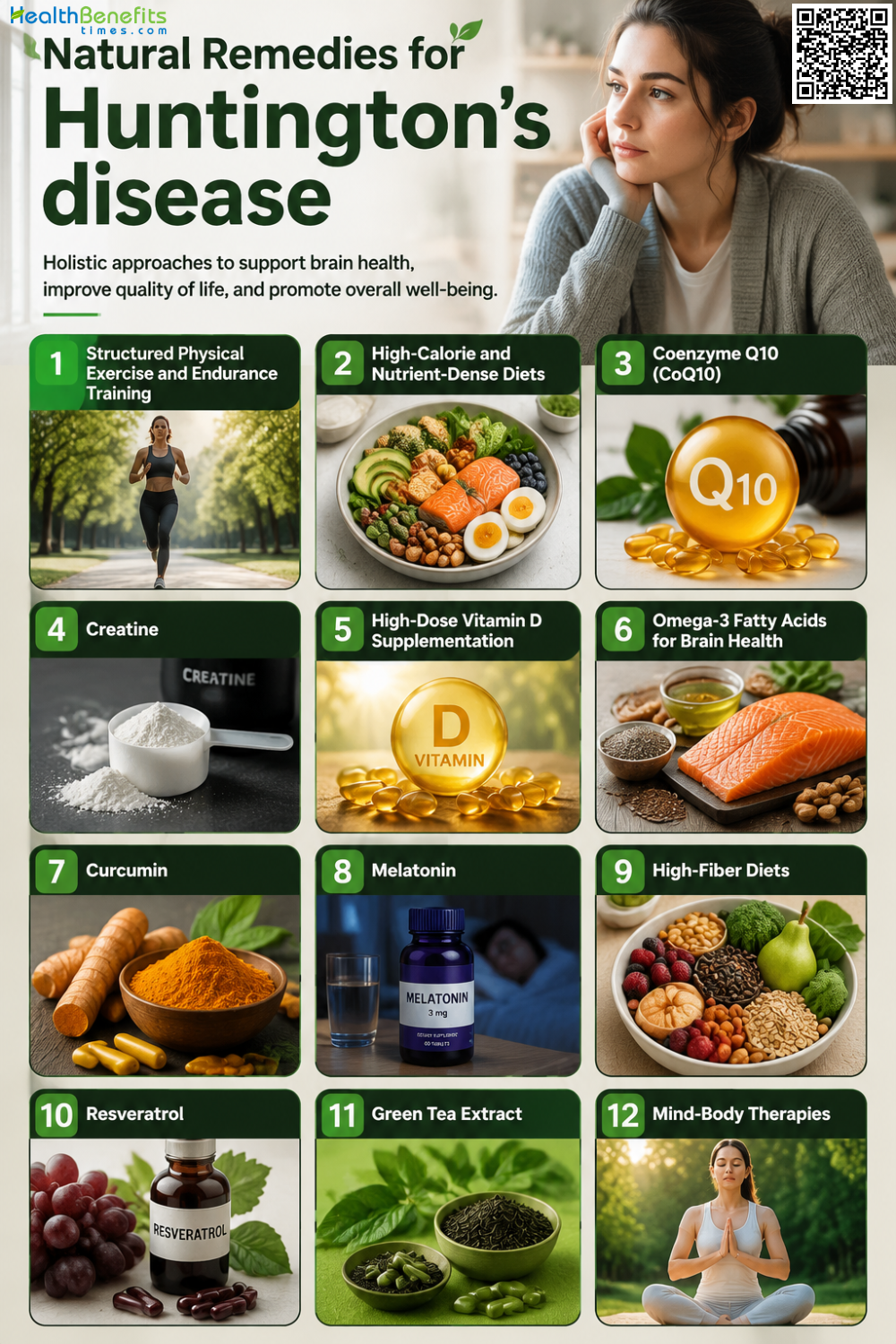
4. Creatine
How it may help
Creatine is a natural compound that helps supply energy to cells, particularly in the brain and muscles. Because Huntington’s disease impairs energy production within brain cells, researchers theorized that creatine supplements could boost cellular energy storage, protect nerve cells from damage, and slow physical and mental decline.
What research says
A major clinical trial testing high doses of creatine was halted early because it failed to slow functional decline in people with Huntington’s disease 7. Medical experts conclude that creatine is not an effective treatment for delaying the disease 8.
How to use it safely
Because evidence shows it does not benefit Huntington’s disease, doctors do not recommend using creatine for this condition. If you choose to take it for general fitness, consult your physician first. Drink plenty of water daily to support your kidney function.
Potential precautions or side effects
High doses commonly cause stomach pain and diarrhea 8. Excessive amounts may also lead to weight gain, muscle cramps, and potential kidney damage.
5. High-Dose Vitamin D Supplementation
How it may help
Huntington’s disease patients frequently experience severe vitamin D deficiency, which exacerbates muscle weakness, impaired balance, and bone loss. Supplementing aims to correct this, thereby supporting bone health, reducing accidental fall risks, and potentially offering neuroprotective benefits to vulnerable brain cells.
What research says
Studies reveal that most institutionalized Huntington’s patients suffer from vitamin D insufficiency 9. While animal studies show that high-dose vitamin D extends the lifespan of Huntington’s mice 10, large-scale human trials have not yet proven that supplementation slows the neurological progression of the disease in humans.
How to use it safely
Ask your doctor for a blood test to check your baseline vitamin D levels. If deficient, your healthcare provider will prescribe a specific dosage. Take the supplement exactly as directed and schedule regular follow-up blood tests to monitor your levels.
Potential precautions or side effects
Excessive vitamin D can cause hypercalcemia, a dangerous buildup of calcium in the blood. This condition may lead to nausea, muscle weakness, and painful kidney stones.
6. Omega-3 Fatty Acids for Brain Health
How it may help
Omega-3 fatty acids, particularly EPA and DHA, are essential building blocks for brain cell membranes. In theory, these fats reduce brain inflammation and protect neurons from the cellular stress that characterizes Huntington’s disease, potentially preserving cognitive function and reducing severe weight loss 11.
What research says
Despite promising early animal studies, large clinical trials testing high-purity EPA failed to show significant improvement in overall motor function or behavioral symptoms in people with Huntington’s disease 12. Consequently, medical experts do not endorse omega-3 supplementation as an effective treatment to slow the disease’s progression.
How to use it safely
If you choose to take omega-3 supplements for general health, discuss it with your neurologist first to establish a safe daily dose. Choose high-quality capsules verified by independent testing. Take them with meals to improve absorption and minimize stomach upset 13.
Potential precautions or side effects
High doses can increase bleeding risks, particularly if you take blood-thinning medications 13. Common, mild side effects include fish-tasting burps, indigestion, and nausea.
7. Curcumin
How it may help
Curcumin, the active compound in turmeric, possesses strong antioxidant and anti-inflammatory properties. It may protect vulnerable brain cells from damage and prevent the toxic buildup of harmful proteins. This brain-protecting action aims to preserve physical movement and slow the cellular breakdown that occurs in Huntington’s disease.
What research says
Laboratory and animal studies demonstrate that curcumin can reduce harmful protein accumulation and improve movement in models of Huntington’s disease 14. However, despite these promising early laboratory results, high-quality human trials have not yet proven that curcumin effectively slows disease progression or improves symptoms in patients.
How to use it safely
If you choose to use curcumin supplements, consult your neurologist to ensure they fit safely into your care plan. Because natural curcumin is poorly absorbed, select supplements formulated with black pepper extract to enhance absorption. Always take them with meals to improve digestion 15.
Potential precautions or side effects
Curcumin is generally safe, but high doses can cause stomach upset, nausea, or diarrhea. It may also increase bleeding risks, especially if you take blood-thinning medications 15.
8. Melatonin
How it may help
Melatonin is a hormone that regulates the sleep-wake cycle and acts as a powerful antioxidant. Because Huntington’s disease disrupts the brain’s internal clock and decreases natural melatonin production, supplementing aims to restore normal sleep patterns and potentially protect vulnerable brain cells from damage.
What research says
Research confirms that people with Huntington’s disease experience delayed and reduced natural melatonin levels, contributing to severe sleep disruptions 16. However, clinical trials indicate that taking melatonin supplements does not significantly improve overall sleep quality, mental function, or physical symptoms compared to a placebo 17.
How to use it safely
Speak with your healthcare provider before trying melatonin for sleep issues. If approved, use it only on a short-term basis. Because supplements are lightly regulated, purchase products verified by independent testing organizations to ensure accurate dosing and purity.
Potential precautions or side effects
Side effects are generally mild and include daytime drowsiness, headaches, and dizziness. Melatonin can interact dangerously with blood thinners and epilepsy medications 18.
9. High-Fiber Diets
How it may help
High-fiber diets help maintain a healthy balance of gut bacteria, which is often disrupted in Huntington’s disease. Fiber nourishes beneficial microbes that produce protective compounds, potentially reducing inflammation throughout the body. Additionally, a fiber-rich diet regulates digestion and relieves constipation, a frequent complication associated with the disease.
What research says
Animal studies show that high-fiber diets significantly improve gut function, behavior, and cognitive performance in Huntington’s disease models by repairing the gut microbiome 19. Human research confirms that patients experience significant gut bacteria imbalances, highlighting dietary fiber as a promising strategy for managing systemic disease symptoms 20.
How to use it safely
Gradually add fiber-rich foods like cooked vegetables, beans, and soft fruits to your meals so your digestive system can adjust. Drink plenty of water daily to keep digestion moving smoothly. Always puree or thoroughly mash high-fiber foods if you experience any swallowing difficulties to prevent choking.
Potential precautions or side effects
Adding fiber too rapidly can cause bloating, excessive gas, and stomach cramps. Unmodified raw or heavily fibrous foods present a severe choking hazard for individuals with advanced swallowing problems.
10. Resveratrol
How it may help
Resveratrol, a natural compound found in grapes and red wine, possesses strong antioxidant properties. It activates specific protective proteins that enhance cellular energy production. In Huntington’s disease, this action theoretically aims to protect vulnerable brain cells from damage, reduce toxic protein buildup, and improve overall mitochondrial function.
What research says
Laboratory studies show that resveratrol protects brain cells and improves movement in animal models of Huntington’s disease 21. However, despite promising preclinical results, there is currently no conclusive evidence from human clinical trials proving that resveratrol effectively slows disease progression or improves symptoms in patients 22.
How to use it safely
If you consider taking resveratrol, consult your neurologist to determine a safe dosage, as the ideal human dose remains unknown. Purchase supplements verified by independent testing. Never rely on red wine for resveratrol, because alcohol can worsen neurological symptoms and interfere with your prescribed medications.
Potential precautions or side effects
High doses can cause stomach pain, nausea, and diarrhea. Resveratrol may also interact with blood thinners, increasing the risk of abnormal bleeding and dangerous medication side effects 23.
11. Green Tea Extract
How it may help
Green tea extract contains epigallocatechin gallate (EGCG), a powerful antioxidant. In Huntington’s disease, EGCG theoretically protects brain cells by reducing severe oxidative stress and preventing the toxic buildup of misfolded proteins. This process aims to preserve nerve cell function and delay the decline of physical movements.
What research says
Laboratory and animal studies reveal that EGCG inhibits the toxic aggregation of mutant huntingtin proteins and improves motor function in Huntington’s models 24. However, large clinical trials in humans are lacking, and it remains unproven whether green tea extract effectively slows the disease or improves neurological symptoms in patients.
How to use it safely
Consult your neurologist before taking green tea extract supplements, as optimal dosing for neuroprotection is unknown. Select decaffeinated versions if you are sensitive to caffeine. Take the extract with a meal to improve absorption and lower the risk of severe stomach irritation.
Potential precautions or side effects
High doses of green tea extract can cause dangerous liver toxicity, nausea, and stomach upset. It may also interact negatively with certain medications, including blood thinners and beta-blockers.
12. Mind-Body Therapies
How it may help
Mind-body therapies, including mindfulness, yoga, and tai chi, help manage the psychological and emotional burden of Huntington’s disease. These practices lower severe anxiety, stabilize mood swings, and reduce physical tension. By promoting deep relaxation, they enhance coping mechanisms and improve the overall quality of life for individuals navigating the disease.
What research says
Clinical studies demonstrate that mindfulness-based interventions significantly reduce depression, anxiety, and psychological distress in neurological conditions 25. Research confirms these therapies do not alter physical disease progression but are highly effective in preserving mental well-being and enhancing emotional resilience in patients.
How to use it safely
Start by working with a certified instructor experienced in neurological conditions. If practicing yoga or tai chi, adapt movements or use a sturdy chair to accommodate balance issues and prevent falls 2. Practice consistently to maximize emotional benefits.
Potential precautions or side effects
The primary physical risk involves accidental falls during movement-based therapies. Additionally, deep meditation may occasionally trigger suppressed emotional distress or heighten anxiety in susceptible individuals.
Foods to Avoid When You suffer from Huntington’s disease
Individuals diagnosed with Huntington’s disease progressively experience impaired muscle coordination, which significantly compromises their ability to chew and swallow safely. This neurological decline frequently leads to oropharyngeal dysphagia, elevating the risk of life-threatening complications such as malnutrition, dehydration, and aspiration pneumonia. To ensure safe feeding and preserve pulmonary function, clinical dietary protocols strictly prohibit dietary textures that are difficult to manage within the weakened oral cavity.
1. Hard and Crunchy Foods
Avoid raw vegetables, nuts, hard candies, and chips. These require excessive chewing force and coordination, significantly increasing the risk of severe airway obstruction 26.
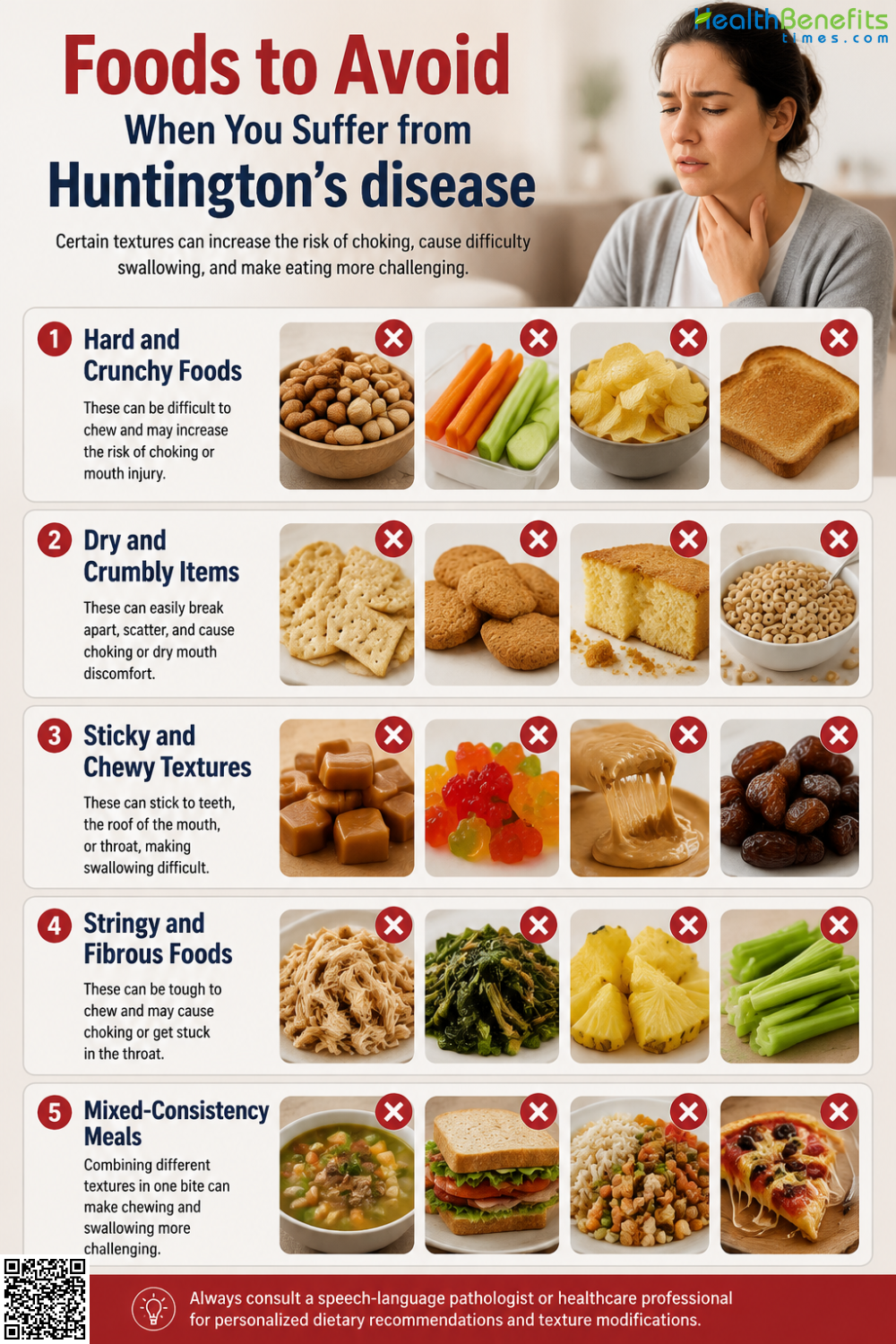
2. Dry and Crumbly Items
Exclude dry crackers, plain bread, and crumbly cookies. Lacking adequate moisture, these fragment easily in the mouth and can be accidentally inhaled into the lungs 27.
3. Sticky and Chewy Textures
Do not consume thick peanut butter, caramels, or marshmallows. Sticky consistencies stubbornly adhere to the throat, exhausting the weakened swallowing muscles needed to clear the airway 28.
4. Stringy and Fibrous Foods
Avoid celery, pineapple, and tough, un-minced meats. Fibrous textures are incredibly difficult to break down into a safe, cohesive mass, posing a constant choking hazard 26.
5. Mixed-Consistency Meals
Bypass soups with solid chunks or dry cereal in milk. Managing liquids and solids simultaneously requires advanced oral control, which frequently causes dangerous fluid aspiration 27.
When to see Doctor when you suffer from Huntington’s disease
Huntington’s disease is a progressive neurodegenerative disorder that requires continuous medical supervision. Because the condition dynamically alters motor function, cognitive abilities, and psychological stability, timely clinical intervention is critical. Regular medical evaluations ensure that treatment protocols are accurately adjusted to manage emerging symptoms, maintain physical safety, and prevent severe, life-threatening complications.
1. Worsening Swallowing Difficulties
Seek immediate medical evaluation if you experience frequent coughing or choking during meals. Swallowing dysfunction significantly increases the risk of fatal aspiration pneumonia 27.
2. Severe Mood Changes and Depression
Contact a doctor immediately if you develop severe anxiety, worsening depression, or suicidal thoughts. Psychiatric interventions and medication adjustments rapidly reduce the high risk of self-harm 29.
3. Increased Frequency of Falls
Schedule a clinical assessment if your involuntary movements worsen or you fall frequently. Doctors can adjust medications to manage severe chorea and prevent traumatic physical injuries 2.
4. Rapid and Unexplained Weight Loss
Consult your healthcare provider if you experience sudden weight loss despite eating normally. Advanced metabolic changes require immediate nutritional interventions to prevent severe muscle wasting 30.
5. New Behavioral Outbursts
Seek psychiatric support if you display uncharacteristic aggression or severe irritability. Medical management successfully controls these behavioral symptoms, ensuring safety for both patients and caregivers 29.