

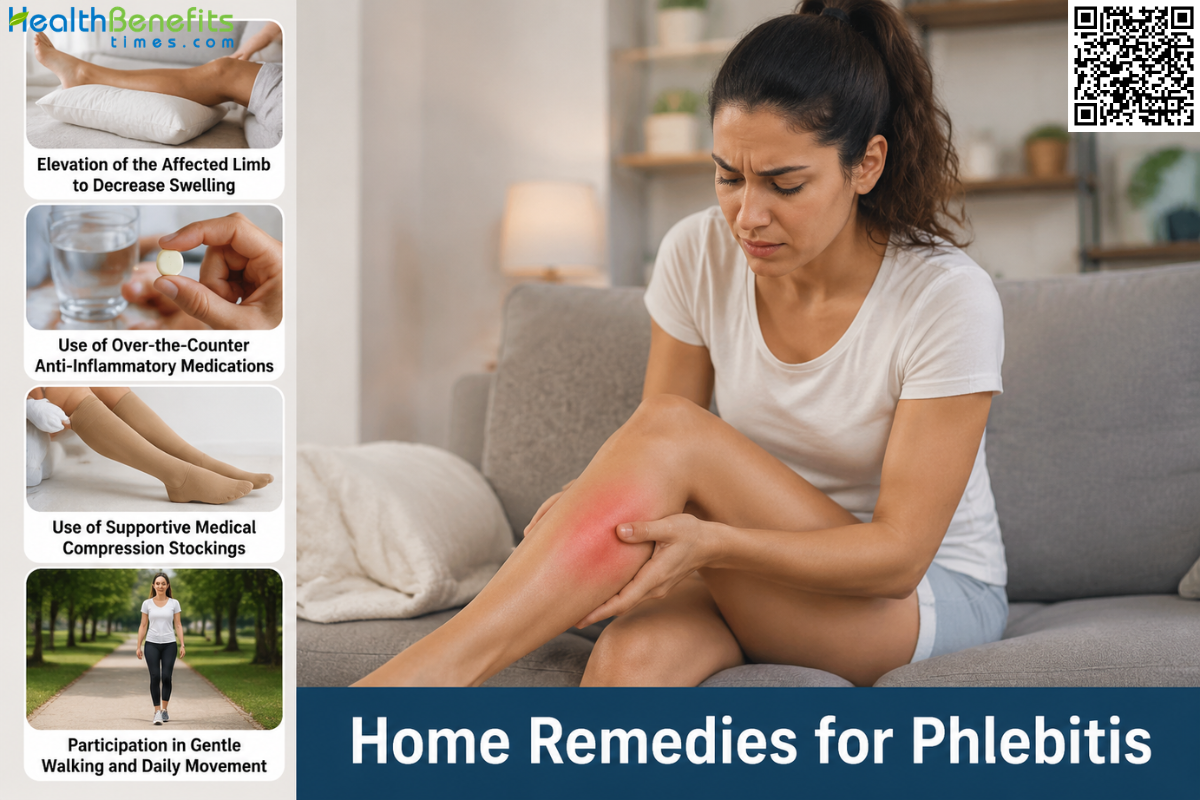
Disorders of the circulatory system can cause localized discomfort or progress to life-threatening cardiovascular emergencies if left untreated. Phlebitis, clinically defined as thrombophlebitis, is the swelling and inflammation of a vein most frequently in the legs caused by a blood clot that disrupts normal blood flow 1. The condition presents in two distinct forms: superficial thrombophlebitis, which affects veins just beneath the skin’s surface, and deep vein thrombosis (DVT), which impacts larger, internal veins 2. Patients typically experience visible redness, localized warmth, tenderness, and significant swelling around the affected vessel 1. While superficial inflammation is often managed conservatively with limb elevation, warm compresses, and nonsteroidal anti-inflammatory medications, deep vein involvement requires prompt clinical intervention using prescription blood thinners to prevent the clot from traveling to the lungs 1.
Causes of Phlebitis
1. Direct Vein Injury (Vascular Trauma)
Damage to the inner lining of a blood vessel is a primary trigger for inflammation and subsequent clotting. This frequently occurs in medical settings from the insertion of intravenous (IV) catheters, which can mechanically irritate the vein wall 3. Furthermore, the chemical properties of certain infused treatments, including highly acidic medications or chemotherapy drugs, can directly damage the vascular structure and provoke chemical phlebitis 4. Direct physical injuries or sudden trauma to the limbs can also initiate localized vein inflammation 2.
2. Reduced Blood Flow (Venous Stasis)
When blood moves too slowly through the circulatory system, it is significantly more likely to pool and form inflammatory clots. Sluggish circulation typically results from prolonged periods of physical immobility, such as being bedridden during a long-term illness or sitting still during extended airplane and car travel 2. Structural abnormalities like varicose veins—which are swollen, twisted vessels just beneath the skin—also disrupt normal blood flow and highly increase the risk of superficial vein inflammation 5.
3. Increased Blood Clotting (Hypercoagulability)
Certain medical conditions make the blood abnormally prone to forming clots, which can obstruct veins and trigger an immune response. Inherited genetic traits, such as Factor V Leiden mutations or specific natural anticoagulant deficiencies, alter the body’s baseline clotting balance 5. Acquired physiological states also strongly elevate this risk, most notably active cancer, pregnancy, and the routine use of estrogen-based medications like birth control pills 2.
4. Bacterial Infections
Microorganisms entering the venous system can directly inflame the vessel and cause infected blood clots, a clinical condition known as septic thrombophlebitis. This typically happens when bacteria, predominantly Staphylococcus aureus, invade through breaks in the skin, contaminated IV catheter insertion sites, or adjacent soft tissue infections 6. Inadequate sterile techniques during medical procedures or poor IV maintenance greatly increase the likelihood of developing infectious phlebitis 3.
Symptoms of Phlebitis
- Redness and Discoloration: The skin situated directly over the affected blood vessel frequently becomes visibly red and irritated. As the inflammatory process continues, the surrounding tissue may develop a persistently darkened or bruised appearance.
- Localized Warmth: The surface of the skin covering the inflamed vein typically feels noticeably warmer to the touch when compared to the nearby healthy tissue, which is a direct physical sign of the body’s localized inflammatory immune response.
- Pain and Tenderness: Individuals consistently experience a dull ache, throbbing, or burning sensation along the specific path of the inflamed vein. This localized discomfort often intensifies significantly when physical pressure is applied to the area or when the affected limb is resting in a lowered position.
- Swelling (Edema): The combination of vascular inflammation and restricted venous blood flow causes fluid to abnormally accumulate within the surrounding soft tissues, leading to visible swelling that most commonly affects the foot, ankle, or lower leg 2.
- Firm, Cord-like Vein: In cases affecting the veins located just beneath the skin’s surface, the clotted and irritated blood vessel may harden and lose its normal flexibility. When touched, the affected vein often feels like a solid, thickened, cord-like structure under the skin.
- Fever: The body may produce a low-grade fever as a systemic reaction to the vein’s inflammation. If the swelling is accompanied by a high fever, shaking, or chills, it strongly suggests a bacterial infection within the vein, which requires immediate clinical treatment 6.
Home Remedies for Phlebitis
1. Application of Warm Compresses
How it may help
Applying mild heat to the inflamed area causes local blood vessels to widen. This increased blood flow clears cellular waste, decreases tissue swelling, and relaxes nearby muscles, which directly relieves the pain and tenderness associated with inflamed superficial veins 1.
What research says
Clinical guidelines classify warm compresses as a standard first-line therapy for managing superficial thrombophlebitis. Evidence concludes that when combined with limb elevation, localized heat significantly accelerates symptom relief and reduces vascular inflammation without requiring invasive medical interventions 7.
How to use it safely
To apply this safely, soak a clean cloth in warm water—never hot—and wring out the excess. Place the damp compress directly over the inflamed vein for 15 to 20 minutes. You should repeat this procedure three to four times daily for continued comfort 1.
Potential precautions or side effects
Test the temperature beforehand to prevent thermal burns. You must avoid applying heat over open wounds, active skin infections, or areas with reduced sensation caused by nerve damage 8.
2. Elevation of the Affected Limb
How it may help
Raising the inflamed limb above the level of the heart utilizes gravity to encourage stagnant venous blood to flow back toward the center of the body. This mechanical shift reduces pressure within the affected vein, directly decreasing fluid buildup and tissue swelling in the surrounding area 1.
What research says
Clinical protocols establish limb elevation as a primary conservative treatment for superficial thrombophlebitis. Research concludes that utilizing gravity to improve venous return significantly accelerates the reduction of localized swelling and alleviates pain when compared to keeping the affected limb in a lowered position 7.
How to use it safely
When resting, you should prop your affected limb on supportive pillows so it rests slightly higher than your heart. Attempt to maintain this elevated position for 15 to 30 minutes several times throughout the day to maximize swelling reduction without causing muscle stiffness 1.
Potential precautions or side effects
Ensure the entire limb is fully supported to prevent joint strain. You should avoid sharply bending your knee, as this can inadvertently restrict circulation and worsen venous pooling 2.
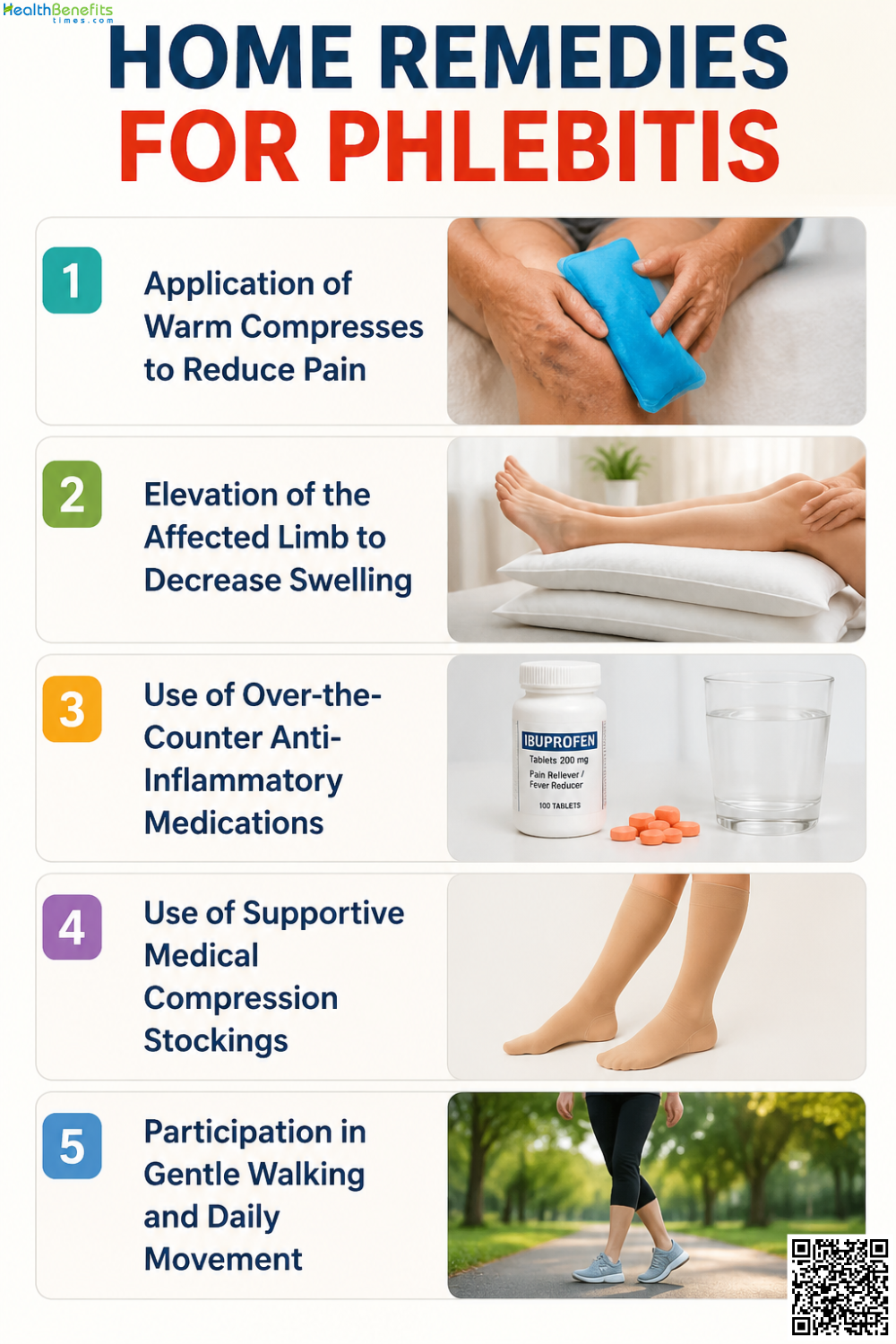
3. Use of Over-the-Counter Anti-Inflammatory Medications
How it may help
Over-the-counter nonsteroidal anti-inflammatory drugs (NSAIDs) reduce the body’s immune response by blocking the chemical enzymes responsible for vascular inflammation. This targeted action directly decreases the pain, throbbing, visible redness, and tissue swelling surrounding the affected superficial blood vessel 9.
What research says
Extensive clinical reviews establish that both oral and topical NSAIDs effectively improve localized pain symptoms in superficial thrombophlebitis. Furthermore, research concludes that utilizing these medications significantly reduces the incidence of superficial blood clot extension and recurrence by roughly 70 percent when compared to placebos 10.
How to use it safely
You can take oral anti-inflammatory medications, such as ibuprofen or naproxen, strictly following package dosing instructions and alongside meals to minimize stomach upset. Alternatively, apply topical anti-inflammatory gels directly over the inflamed vein for immediate, localized symptom relief 11.
Potential precautions or side effects
Avoid oral NSAIDs if you have stomach ulcers, kidney disease, or take prescription blood thinners, because this combination significantly increases your risk of developing severe internal bleeding complications 12.
4. Use of Supportive Medical Compression Stockings
How it may help
Supportive medical compression stockings apply gentle, graduated pressure to the legs. This continuous squeeze helps narrowed or inflamed veins push blood upward toward the heart, preventing fluid from pooling 13. By improving circulation, these stockings directly reduce painful tissue swelling and aching associated with vascular inflammation 7.
What research says
Clinical guidelines support graduated compression therapy to provide rapid symptom relief for superficial vein inflammation by significantly decreasing leg swelling and vascular pain 14. However, research notes that while compression stockings improve physical comfort, they do not replace necessary anticoagulant medications to prevent blood clots from spreading deeper 7.
How to use it safely
You should put compression stockings on first thing in the morning before daily leg swelling begins 13. Ensure the fabric lies completely smooth against your skin without wrinkles, and always remove the stockings before going to sleep at night to allow your skin to rest 13.
Potential precautions or side effects
Do not use compression stockings if you suffer from severe peripheral artery disease, as further restricting poor arterial blood flow can cause severe tissue damage 15.
5. Participation in Gentle Walking and Daily Movement
How it may help
The physical action of walking engages the calf muscles, which act as a natural pump to squeeze the leg veins. This continuous muscle contraction forces stagnant blood upward toward the heart, effectively preventing fluid from pooling in the lower limbs and reducing localized vascular swelling 7.
What research says
Clinical guidelines strongly recommend early mobility and daily walking to manage superficial vein inflammation. Research confirms that maintaining regular, gentle ambulation helps prevent blood clots from expanding into deep veins and accelerates recovery when combined with compression therapy 7.
How to use it safely
You should incorporate short, gentle walks into your daily routine rather than engaging in strenuous exercise. Wear supportive medical compression stockings while walking to maximize blood flow, and elevate your legs immediately afterward to further assist with circulation 7.
Potential precautions or side effects
Stop immediately if you experience severe leg pain, chest discomfort, or shortness of breath. These dangerous symptoms indicate that a blood clot may have traveled to your lungs 1.
Foods to Avoid When You suffer from Phlebitis
1. High-Sodium Foods
Excess dietary salt drives fluid retention, causing interstitial sodium accumulation that increases pressure on inflamed veins and significantly worsens peripheral swelling 16.
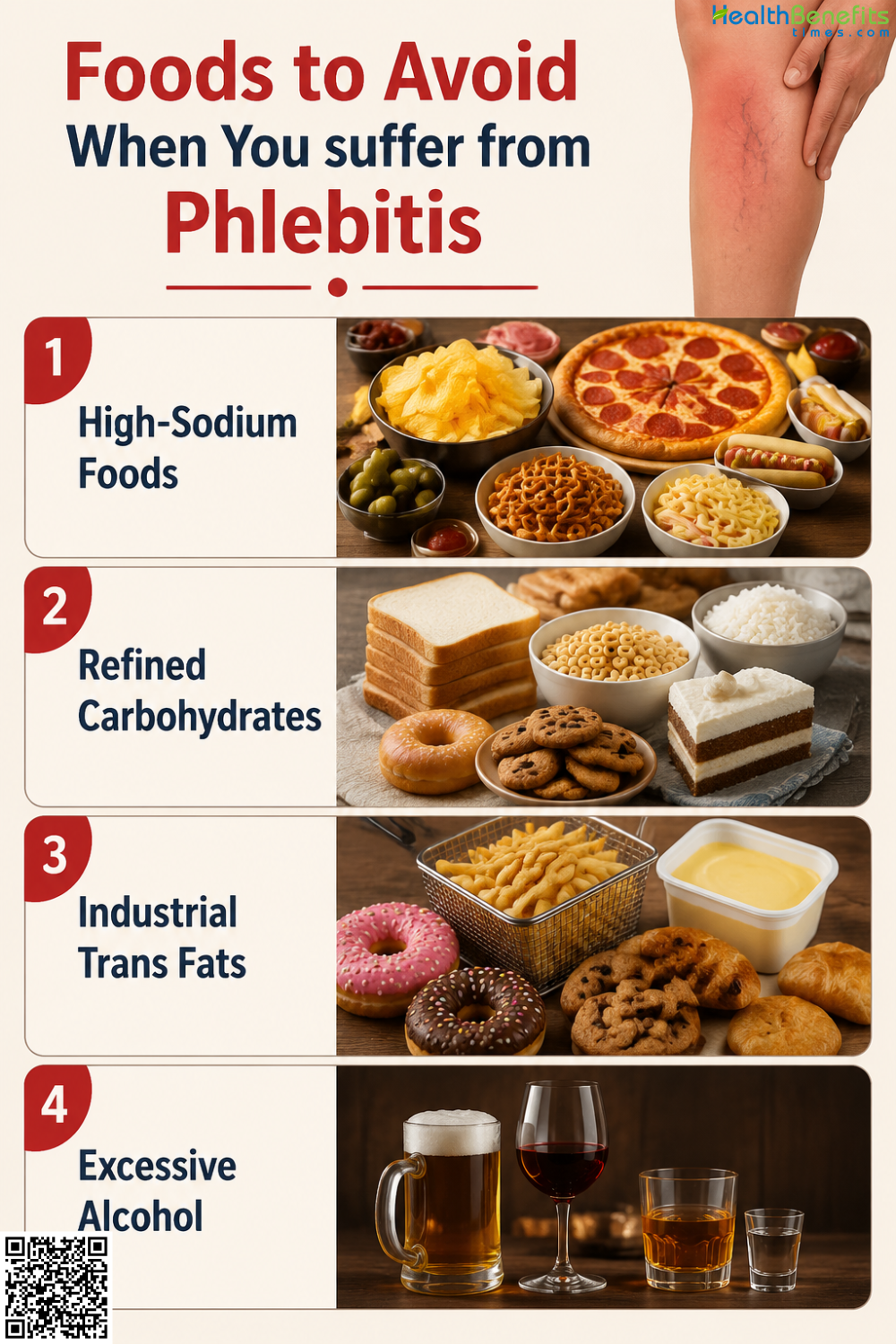
2. Refined Carbohydrates
Consuming refined carbohydrates triggers acute oxidative stress and systemic inflammation, directly impairing vascular function and elevating cardiovascular risks 17.
3. Industrial Trans Fats
Artificial trans fats in ultra-processed foods strongly provoke endothelial inflammation and blood vessel damage, hindering the healing of inflamed circulatory tissues 18.
4. Excessive Alcohol
Heavy alcohol consumption causes dehydration and alters blood-clotting proteins, which thickens the blood and significantly increases the likelihood of dangerous thrombosis formation 19.
When to See a Doctor When You Struggle from Phlebitis
While mild vein inflammation often responds well to conservative home therapies, certain warning signs require prompt clinical evaluation to prevent potentially life-threatening cardiovascular complications.
1. Worsening Pain and Swelling
If localized redness, pain, or tissue swelling suddenly intensifies or spreads further up your limb, seek immediate medical evaluation to rule out deep vein thrombosis 1.
2. High Fever and Chills
Developing a high fever, uncontrollable shaking, or chills strongly indicates that the inflamed vein has become infected, requiring urgent treatment with prescription antibiotics 1.
3. Shortness of Breath
Sudden breathing difficulty or sharp chest pain is a severe emergency indicating a blood clot has traveled to your lungs, requiring immediate hospital intervention 1.
4. Symptoms Failing to Improve
You should consult a healthcare provider if your superficial vein inflammation does not noticeably improve within a week or two despite utilizing conservative home therapies 1.