

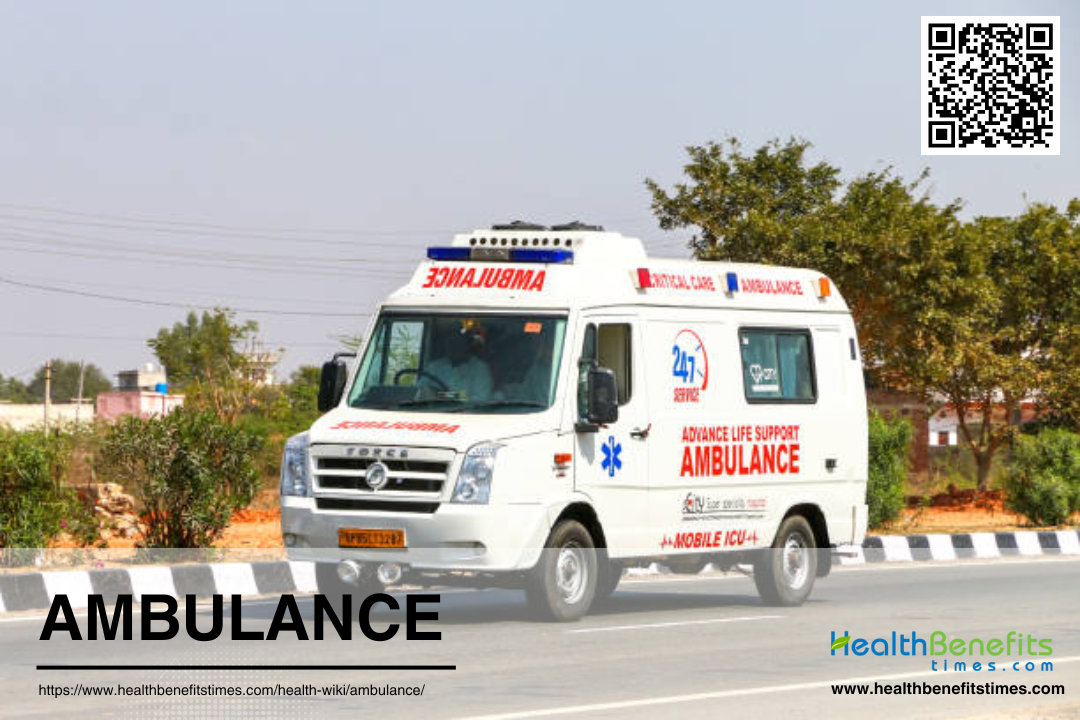
An ambulance is a specialized vehicle designed to provide emergency medical care and transport patients to healthcare facilities. Ambulances are equipped with medical equipment and staffed by trained personnel, such as paramedics and emergency medical technicians, who can administer life-saving treatments en route to the hospital. The demand for emergency ambulance services has been increasing globally, driven by factors such as population aging, mental health issues, and socio-economic disparities. The efficient coordination and deployment of ambulances are crucial to minimize response times and improve patient outcomes. However, the nature of ambulance work exposes personnel to significant psychological and physical stress, contributing to high rates of mental distress and illness among ambulance workers. Additionally, ambulances must maintain strict hygiene standards to prevent the spread of infections, as they can harbor various bacterial pathogens. Effective management and support systems are essential to ensure the well-being of both patients and ambulance personnel.
Types of Ambulances
Ambulances are specialized vehicles designed to transport patients in need of urgent medical care. They come in various types, each equipped with different features to cater to specific medical emergencies and patient needs. Below is a list of the different types of ambulances:
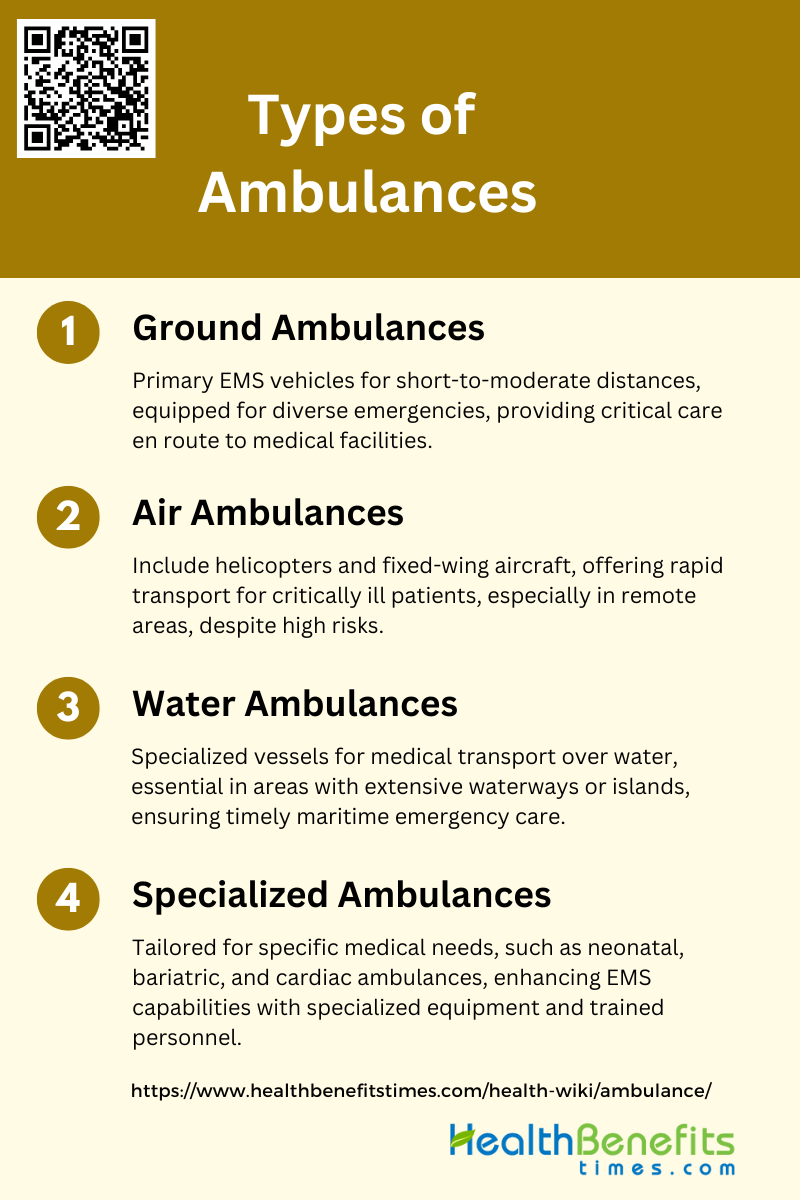
1. Ground Ambulances
Ground ambulances are the cornerstone of emergency medical services (EMS) and are essential for prehospital and interhospital patient transport. They are equipped to handle a wide range of medical emergencies and are staffed with trained personnel capable of providing critical care en route to medical facilities. Ground ambulances are particularly effective for short to moderate distances and are the most commonly used mode of patient transport, responding to the majority of EMS calls. They are cost-effective for shorter distances but may be time-inefficient compared to air ambulances for longer distances. The equipment and standards for ground ambulances are continually updated to ensure they meet the current medical and safety requirements.
2. Air Ambulances
Air ambulances, including both rotor-wing (helicopters) and fixed-wing aircraft, play a crucial role in modern trauma care by providing rapid transport for critically ill or injured patients to specialized medical facilities. Helicopter air ambulances (HAA) are particularly useful for accessing remote or hostile terrains and reducing the time between healthcare facilities. They are staffed with highly skilled personnel and equipped with advanced medical interventions, making them suitable for high-acuity patients. However, HAA operations carry significant risks, including high mortality rates for pilots and crew, and are among the most dangerous professions. Fixed-wing air ambulances are more cost-effective for longer distances and can combine the advantages of both helicopters and fixed-wing aircraft.
3. Water Ambulances
Water ambulances are specialized vessels designed to provide medical care and transport over water bodies. They are essential in regions with extensive waterways or islands where traditional ground or air ambulances cannot reach. These ambulances are equipped with medical facilities similar to those found in ground ambulances and are staffed with trained medical personnel. Water ambulances are crucial for ensuring timely medical intervention in maritime emergencies and for transporting patients from remote islands to mainland hospitals. While not as commonly discussed in the literature as ground and air ambulances, they are an integral part of the EMS system in specific geographic locations.
4. Specialized Ambulances
Specialized ambulances are designed to cater to specific medical needs and scenarios. These include neonatal ambulances equipped for transporting newborns, bariatric ambulances designed for obese patients, and cardiac ambulances equipped with advanced cardiac life support systems. Each type of specialized ambulance is tailored to provide optimal care for particular patient groups, ensuring that they receive the necessary medical attention during transport. The integration of specialized ambulances into the EMS system enhances the overall capability to address diverse medical emergencies effectively. These ambulances are often staffed with personnel trained in specific medical fields to provide the highest level of care.
Importance of Ambulance
Ambulances play a crucial role in emergency medical services and healthcare systems. Here are some key points highlighting their importance:
1. Timely Medical Care
The rapid response of ambulances ensures that patients receive immediate medical attention, which can be life-saving in critical situations such as strokes or heart attacks. For instance, a study highlighted the importance of reducing transportation time to ensure patients benefit from sophisticated medical treatments and technologies available at healthcare centers. Additionally, the efficient coordination of ambulances can significantly reduce average response times, further enhancing the timeliness of medical care.
2. Quick Transportation to Hospitals
Quick transportation to hospitals is one of the primary functions of ambulances, ensuring that patients reach medical facilities promptly. This is particularly important for patients with time-sensitive conditions such as trauma or acute myocardial infarction. Research has shown that the mode of transport can significantly impact the time to treatment, with specialized emergency medical system transport reducing hospital time delays for acute myocardial infarction patients. Moreover, the use of helicopter air ambulances can expedite the transport of patients from remote or hostile terrains to trauma centers, although it carries significant risks.
3. Medical Equipment and Expertise
This includes the use of sterile or disinfected equipment to prevent infection transmission and the ability to perform prehospital interventions. However, studies have indicated that many ambulances are not adequately equipped or staffed, highlighting the need for improvements in EMS services to ensure they can deliver effective prehospital care. The integration of telehealth and remote monitoring technologies in ambulances can further enhance the quality of care provided during transport.
4. Specialized Transport
Specialized transport services, such as helicopter air ambulances (HAA), are vital for transporting patients to facilities with greater capabilities, especially in cases of severe trauma. HAA services can reduce the time patients spend between healthcare facilities and provide access to advanced interventions and skilled personnel. Research has demonstrated that hospital-based helicopter emergency medical services (H-HEMS) significantly improve survival outcomes for major trauma patients compared to ground emergency medical services. These specialized transport options are crucial for ensuring that patients receive the best possible care in a timely manner.
5. Reduced Mortality and Morbidity
The use of ambulances and specialized transport services can significantly reduce mortality and morbidity rates by ensuring timely and appropriate medical care. Studies have shown that strong emergency medical services (EMS) systems play a pivotal role in reducing morbidity and mortality, particularly in low and middle-income countries. Additionally, the efficient coordination and dynamic allocation of ambulances can further reduce response times and improve patient outcomes. The integration of telehealth-enabled EMS programs has also been shown to reduce unnecessary ambulance transports and increase EMS productivity, contributing to better overall patient care.
6. Access to Remote Areas
This is particularly important in rural or underserved regions where healthcare facilities may be scarce. Helicopter air ambulances can extract injured patients from hostile terrains and transport them to trauma centers, ensuring they receive timely and appropriate care. The ability to provide in situ assistance and transport patients from any location within an area of influence is a key feature of emergency medical assistance services, helping to reduce mortality and improve patient outcomes.
Ambulance Equipment and Features
These features are designed to handle a wide range of emergencies, from minor injuries to life-threatening conditions. Below are some key pieces of equipment and features commonly found in ambulances:
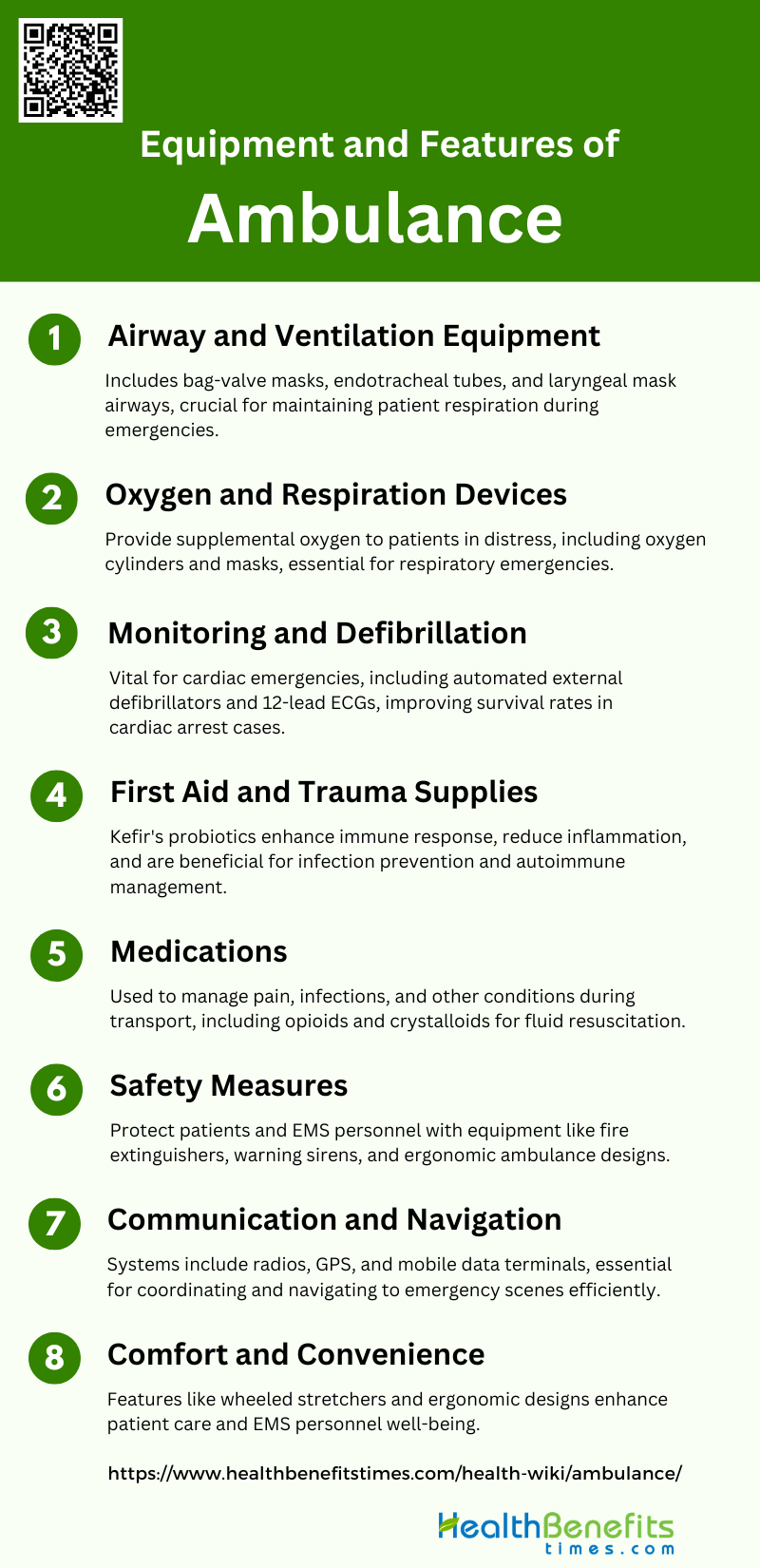
1. Airway and Ventilation Equipment
Airway and ventilation equipment are critical for maintaining patient respiration during emergencies. Common devices include bag-valve masks (BVM), endotracheal tubes (ETI), and laryngeal mask airways (LMA). Studies have shown that while BVM is widely used, it requires proper training to be effective. Supraglottic devices like the laryngeal tube (LT) have been found to be easier to use and effective in ventilation, especially for first responders with limited training. The availability of these devices varies, with some ambulances lacking advanced airway management tools.
2. Oxygen and Respiration Devices
Oxygen and respiration devices are essential for providing supplemental oxygen to patients in respiratory distress. Oxygen cylinders are commonly available in ambulances, but the presence of other advanced devices like oropharyngeal airways is limited. The use of oxygen masks, such as the Hudson type trauma mask, has increased significantly in recent years. However, some services have restrictions on the amount of oxygen that can be administered, highlighting the need for standardized protocols.
3. Monitoring and Defibrillation
Monitoring and defibrillation equipment are vital for assessing and managing cardiac emergencies. Automated external defibrillators (AEDs) are widely used and recommended for both lay rescuers and professional responders. The availability of 12-lead ECGs and portable emergency ventilators is high in some regions, but there are significant variations in equipment across different services. The use of AEDs has been shown to improve survival rates in out-of-hospital cardiac arrest cases.
4. First Aid and Trauma Supplies
First aid and trauma supplies are necessary for managing injuries and stabilizing patients. Common items include spinal boards, extrication devices, and various splints. The use of spinal boards and extrication devices is nearly universal, but the availability of other supplies like inflatable splints and traction splints varies. In some regions, the availability of essential trauma supplies is poor, limiting the ability to provide comprehensive care.
5. Medications
Medications are crucial for managing pain, infections, and other medical conditions during transport. Commonly used medications include opioids like Nalbuphine and morphine, with the latter seeing increased usage. However, the availability of medications can vary significantly, with some ambulances lacking essential drugs for advanced life support. The use of crystalloids for fluid resuscitation has increased, while the use of colloids has decreased.
6. Safety Measures
Safety measures are essential to protect both patients and EMS personnel. Equipment like ABC fire extinguishers and warning sirens are commonly available, but other safety devices like child safety seats and triage tags are less frequently found. The design of ambulances and EMS equipment should also consider human factors and ergonomics to minimize the risk of injury to EMS personnel. Despite advancements, more research is needed to improve safety standards.
7. Communication and Navigation
Effective communication and navigation systems are vital for timely and efficient emergency response. While the specific details on communication and navigation equipment were not highlighted in the provided papers, it is generally understood that these systems include radios, GPS devices, and mobile data terminals. These tools help EMS teams coordinate with dispatch centers and navigate to the scene quickly, ensuring prompt medical intervention.
8. Comfort and Convenience
Comfort and convenience features in ambulances are important for both patient care and EMS personnel well-being. Features like wheeled stretchers are commonly available, but other comfort items may be lacking. The design of the patient compartment should consider ergonomics to reduce strain on EMS personnel and improve patient handling. Ensuring a comfortable environment can enhance the overall effectiveness of emergency medical services.