

Smoking is the act of inhaling and exhaling the smoke of burning tobacco or other substances, typically through cigarettes, cigars, or pipes. It involves the combustion of these materials, which releases a mixture of chemicals that are absorbed into the lungs and bloodstream. This habit, although culturally and socially ingrained in many societies, is widely recognized as harmful to health. Smoking is linked to a range of serious medical conditions, including lung cancer, heart disease, and respiratory illnesses, as well as specific oral health problems such as gum disease, tooth loss, and oral cancer. Despite its known dangers, smoking remains prevalent, highlighting the addictive nature of nicotine and the challenges associated with quitting.
Importance of Dental Health and Impact of Smoking
Dental health is a cornerstone of overall well-being, playing a vital role in maintaining the ability to eat, speak, and smile confidently. Healthy teeth and gums not only enhance physical appearance but also prevent systemic health issues linked to poor oral hygiene. However, smoking poses a significant threat to dental health, undermining these benefits. The harmful chemicals in tobacco damage gum tissue, reduce blood flow, and weaken the immune system, making smokers more susceptible to gum disease, tooth decay, and tooth loss. Smoking also increases the risk of oral cancer and delays healing after dental treatments. Its effects extend beyond health, leading to stained teeth, bad breath, and a diminished sense of taste and smell, ultimately impacting a person’s quality of life. Protecting your dental health means understanding the risks of smoking and taking proactive steps to quit the habit.
Impact of Smoking on Dental Health
Smoking has a detrimental impact on dental health, causing both visible and hidden damage to your mouth. The harmful chemicals in tobacco weaken gum tissues, reduce blood flow, and impair the immune system, making smokers more prone to gum disease, tooth decay, and tooth loss. Smoking also stains teeth, creating yellow or brown discoloration, and contributes to persistent bad breath. Beyond these concerns, it significantly increases the risk of oral cancer, which can develop on the lips, tongue, or other areas of the mouth. Smokers often experience delayed healing after dental procedures and may face challenges with dental treatments like implants due to weakened bone and gum support. These effects emphasize the importance of quitting smoking to protect your oral health and overall well-being.
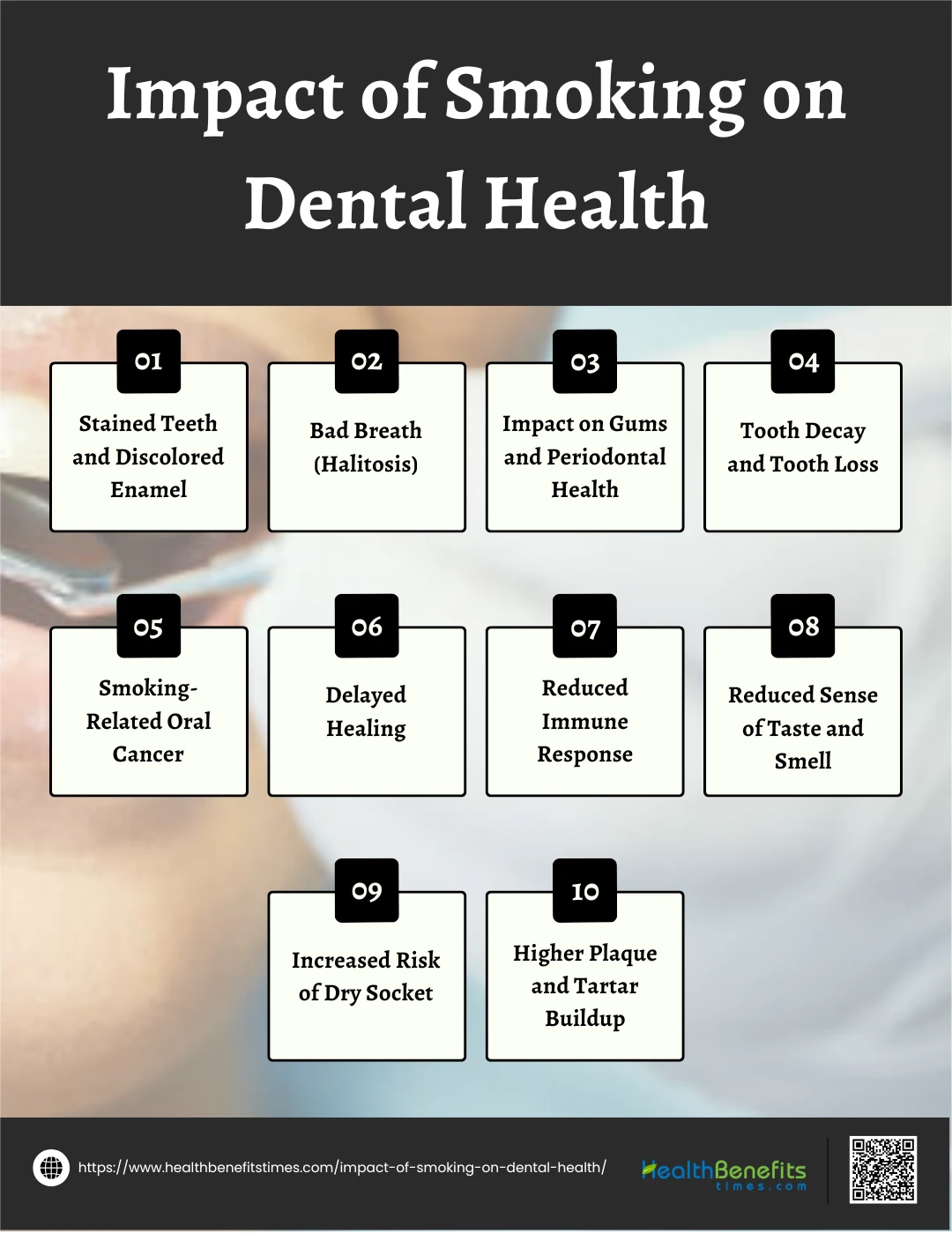
1. Stained Teeth and Discolored Enamel
Stained teeth and discolored enamel are among the most noticeable effects of smoking. The nicotine and tar in tobacco quickly settle into the porous surface of tooth enamel, causing teeth to yellow over time. For heavy smokers, this discoloration can progress to a deep brown shade, significantly altering the appearance of their smile. Unlike surface stains from food or beverages, tobacco stains penetrate deeper, making them harder to remove with regular brushing. While professional cleaning or whitening treatments can reduce the discoloration, ongoing smoking will continue to stain the teeth, often undoing any cosmetic improvements. Quitting smoking is the most effective way to prevent further staining and maintain a brighter, healthier smile.
2. Bad Breath (Halitosis)
Bad breath, or halitosis, is a common and persistent issue for smokers. Smoking leaves a distinct and unpleasant odor in the mouth due to the accumulation of tar and nicotine, which cling to the teeth, gums, and soft tissues. It also dries out the mouth by reducing saliva production, creating an environment where bacteria thrive and further contribute to bad breath. Over time, smoking can lead to gum disease and infections, both of which exacerbate halitosis. While mouthwash and mints may temporarily mask the smell, they do not address the underlying cause. The most effective way to combat smoking-related bad breath is to quit smoking and maintain a diligent oral hygiene routine, including regular visits to the dentist.
3. Impact on Gums and Periodontal Health
Smoking has a profound negative impact on the health of your gums and periodontal tissues. The harmful chemicals in tobacco reduce blood flow to the gums, depriving them of oxygen and essential nutrients needed for healing and overall health. This makes smokers more susceptible to gum infections, such as gingivitis, which can quickly progress to periodontal disease. Smoking also suppresses the immune system, making it harder for the body to fight off infections and recover from inflammation. Over time, the bone and tissue that support the teeth may deteriorate, leading to loose teeth or tooth loss. Furthermore, smoking can mask common symptoms of gum disease, such as bleeding gums, delaying diagnosis and treatment. Quitting smoking and seeking regular dental care are crucial steps in protecting your gum health and preventing severe periodontal issues.
4. Tooth decay and tooth loss
Smoking significantly contributes to tooth decay and tooth loss, making it a major threat to your oral health. The chemicals in tobacco encourage the buildup of plaque and tartar, which harbor harmful bacteria that attack tooth enamel and gums. Smoking also reduces saliva production, an essential factor in neutralizing acids and washing away food particles, further increasing the risk of cavities. Over time, untreated decay can extend to the roots of the teeth, leading to severe damage and eventual tooth loss. Additionally, smoking weakens the gum and bone structures that support teeth, accelerating their deterioration. Quitting smoking and practicing good oral hygiene are essential steps to prevent decay, protect your teeth, and maintain a healthy, functional smile.
5. Smoking-Related Oral Cancer
Smoking is a leading cause of oral cancer, posing a significant threat to your health. The tobacco in cigarettes contains numerous carcinogenic chemicals that can damage the cells in your mouth, leading to mutations that may result in cancer. Smokers are at a much higher risk of developing oral cancers, including those affecting the lips, tongue, cheeks, and throat. The risk is even greater for individuals who smoke and consume alcohol, as the combined effects of these substances are particularly damaging. Early symptoms of oral cancer may include persistent ulcers, lumps, white or red patches in the mouth, and unexplained pain or swelling. Regular dental checkups are crucial, as early detection greatly improves the chances of successful treatment. Quitting smoking is the most effective way to reduce your risk of oral cancer and protect your overall health.
6. Delayed Healing
Smoking significantly delays healing after dental procedures and oral surgeries, creating additional challenges for recovery. The chemicals in tobacco constrict blood vessels, reducing blood flow and oxygen supply to the tissues. This impairs the body’s natural ability to heal wounds, whether from tooth extractions, gum surgery, or dental implant placement. Smokers are more prone to complications like dry socket—a painful condition where the blood clot at the extraction site fails to form properly or is dislodged. Additionally, smoking weakens the immune system, making it harder to fight infections during the healing process. These delays not only prolong recovery times but can also lead to less successful outcomes for treatments. Quitting smoking before undergoing any dental procedure can significantly improve healing and ensure better long-term results.
7. Reduced Immune Response
Smoking weakens the immune system, significantly reducing the body’s ability to fight infections, including those in the mouth. The harmful chemicals in tobacco disrupt the natural defense mechanisms, impairing the immune response necessary to combat bacteria and heal damaged tissues. In the context of oral health, this means that smokers are more vulnerable to gum disease, infections, and complications after dental procedures. Reduced blood flow caused by smoking further limits the delivery of oxygen and nutrients needed for tissue repair, compounding the problem. This compromised immune response makes it harder for the body to recover from routine dental treatments or surgery, increasing the risk of prolonged healing and severe oral health issues. Quitting smoking can help restore immune function, improving both oral and overall health.
8. Reduced Sense of Taste and Smell
Smoking dulls your sense of taste and smell, significantly diminishing your ability to enjoy food and detect scents. The harmful chemicals in tobacco damage the sensory receptors in your nose and taste buds on your tongue, impairing their functionality over time. Smokers often report a reduced ability to differentiate flavors or notice subtle aromas, which can lead to a less satisfying eating experience. This sensory reduction is not only inconvenient but can also pose health risks, as the inability to detect harmful odors, such as spoiled food or gas leaks, may go unnoticed. Quitting smoking can gradually restore your sense of taste and smell, allowing you to fully appreciate flavors and scents once again.
9. Increased Risk of Dry Socket
Smoking significantly increases the risk of developing dry socket, a painful complication that can occur after a tooth extraction. Dry socket happens when the blood clot that forms to protect the extraction site is dislodged or fails to form properly, leaving the bone and nerves exposed. The chemicals in tobacco reduce blood flow and oxygen supply to the area, impairing the body’s ability to heal and increasing the likelihood of this condition. Additionally, the act of smoking—particularly the suction involved—can disturb the blood clot, further elevating the risk. Symptoms of dry socket include severe pain, bad breath, and an unpleasant taste in the mouth. Quitting smoking before and after a dental extraction can help prevent this complication and promote better healing.
10. Higher Plaque and Tartar Buildup
Smoking contributes to higher levels of plaque and tartar buildup on your teeth, creating a significant risk for oral health issues. The chemicals in tobacco promote the growth of harmful bacteria, which combine with food particles and saliva to form sticky plaque on the teeth and gumline. If not removed through regular brushing and flossing, this plaque hardens into tartar, a tough deposit that can only be removed by a dentist or hygienist. Plaque and tartar buildup irritate the gums, leading to inflammation, gum disease, and eventually tooth decay or loss if left untreated. Smokers are more prone to these issues as smoking also reduces saliva production, making it harder for the mouth to naturally clean itself. Regular dental cleanings and quitting smoking are essential steps to prevent the buildup and maintain healthier teeth and gums.
 How Quitting Smoking Heal your Mouth?
Quitting smoking not only benefits your overall health but also has a profound impact on your oral health. Once you stop smoking, your body begins to heal starts showing following healthy results:
- Improved Gum Health: Quitting smoking restores blood flow to the gums, helping them heal and reducing the risk of periodontal disease.
- Lower Risk of Oral Cancer: Over time, the likelihood of developing oral cancer decreases, eventually equating to that of a non-smoker.
- Whiter Teeth: Without constant exposure to nicotine and tar, teeth staining stops, allowing professional treatments to restore brightness more effectively.
- Fresher Breath: Bad breath caused by smoking diminishes as your mouth’s natural ability to fight odor improves.
- Faster Healing After Dental Procedures: Your immune system recovers, enabling quicker and more successful healing from extractions, surgeries, and other treatments.
- Reduced Plaque and Tartar Formation: Without smoking, the buildup of harmful substances on your teeth slows, making oral hygiene more effective.
- Restored Sense of Taste and Smell: Over time, your senses recover, allowing you to fully enjoy flavors and aromas again.
- Increased Success of Dental Implants: Quitting smoking enhances the likelihood of successful dental implants, as healthier gums and bone provide better support.
Prevention Methods for Teeth and Gum Problems in Smokers
Preventing teeth and gum problems in smokers requires quitting smoking as the most critical step to eliminate harmful effects on oral health. For those unable to quit, maintaining diligent oral hygiene, such as brushing with fluoride toothpaste, flossing, and using interdental brushes, can help combat plaque buildup and gum disease. Regular dental visits for early detection and professional cleaning are essential, along with staying hydrated and chewing sugar-free gum to alleviate dry mouth caused by smoking. Limiting alcohol and avoiding sugary or acidic foods further reduce oral health risks. Special dental products and vigilant monitoring for warning signs like bleeding gums or sores also support healthier teeth and gums for smokers.