


Calming your mind before bedtime is the practice of intentionally relaxing and quieting your thoughts to prepare your body and mind for restful sleep. It involves creating a peaceful environment and adopting routines or techniques that ease stress and reduce mental activity, which can otherwise prevent you from falling asleep. These methods may include deep breathing, progressive muscle relaxation, journaling, or avoiding stimulating activities like screen time or discussing stressful topics. By prioritizing relaxation and establishing calming rituals, you can transition smoothly from the busyness of the day to a restful night’s sleep, fostering better overall well-being.
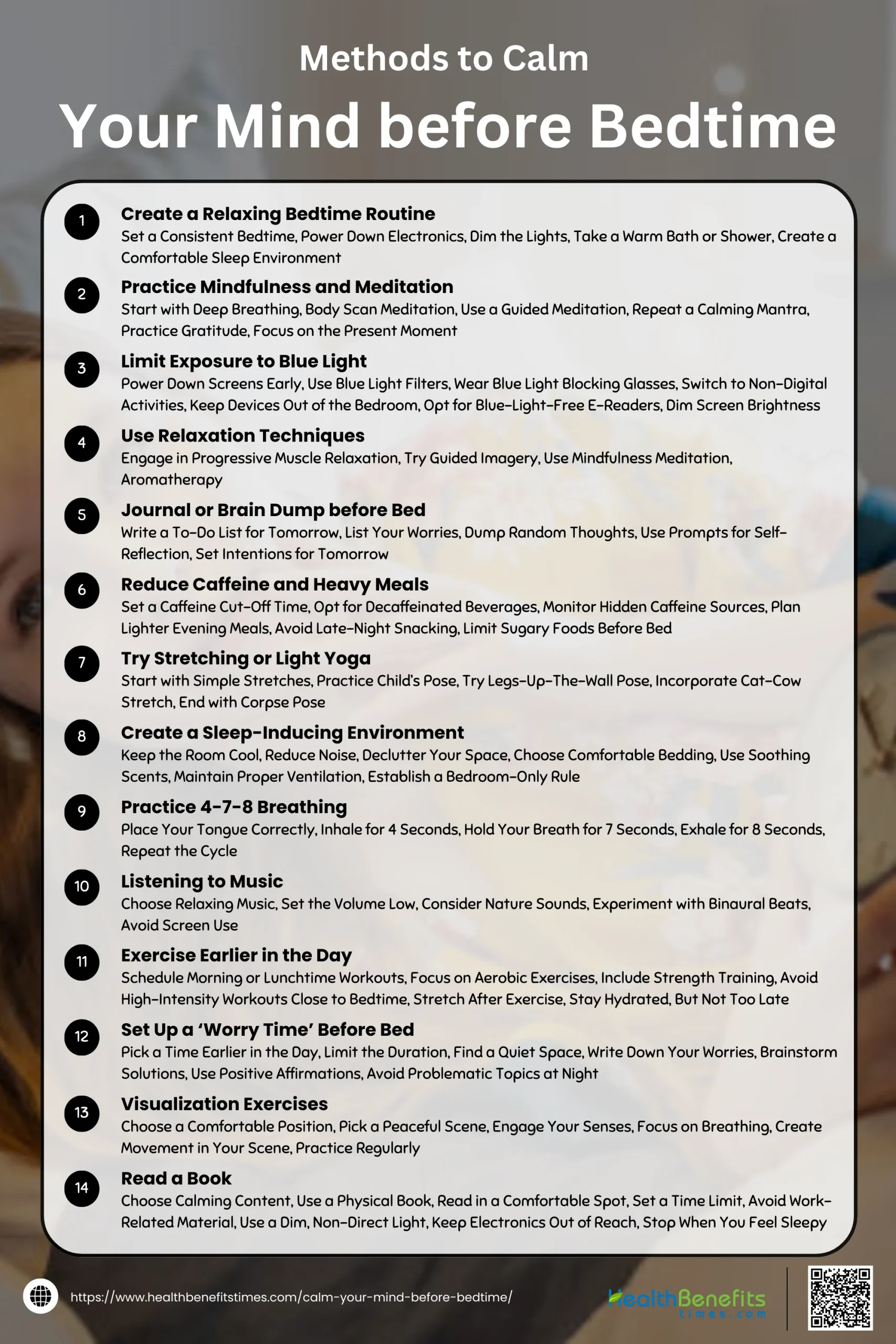
There are several effective methods to calm your mind before bedtime, helping you transition into a restful state. Techniques like deep breathing and progressive muscle relaxation focus on reducing physical tension and slowing your heart rate, which naturally eases mental stress. Journaling is another powerful tool, allowing you to offload worries or organize thoughts by writing them down. Creating a bedtime routine, such as reading, listening to soothing music, or practicing meditation, helps signal your body and mind that it’s time to wind down. Avoiding screens and stimulants like caffeine or intense conversations before bed can also help quiet racing thoughts. These methods, practiced consistently, can create a more peaceful mental state and improve your ability to fall asleep and stay asleep.
1. Create a Relaxing Bedtime Routine
Creating a relaxing bedtime routine is an effective way to signal your body and mind that it’s time to wind down and prepare for restful sleep. A consistent routine not only calms your thoughts but also improves sleep quality over time. By incorporating soothing activities and eliminating distractions, you can create an environment that promotes relaxation and ensures better rest.
Here are some steps to create a calming bedtime routine:
- Set a Consistent Bedtime
Go to bed and wake up at the same time every day, even on weekends. This consistency helps regulate your body’s internal clock. - Power Down Electronics
Avoid screens, including phones, tablets, and TVs, at least 30-60 minutes before bed. The blue light from devices can disrupt your sleep-wake cycle. - Dim the Lights
Lowering the lights in your bedroom signals your brain to start producing melatonin, the hormone that promotes sleep. - Take a Warm Bath or Shower
A warm bath helps relax your muscles and lower your core temperature, making it easier to fall asleep. - Create a Comfortable Sleep Environment
Make sure your room is cool, dark, and quiet, with comfortable bedding to enhance relaxation.
2. Practice Mindfulness and Meditation
Practicing mindfulness and meditation can be a transformative way to calm your mind and prepare for restful sleep. These techniques focus on bringing your attention to the present moment, helping you let go of racing thoughts and stress. With consistent practice, mindfulness and meditation can improve your ability to relax and create a peaceful mental state that supports better sleep quality.
Here are some simple ways to incorporate mindfulness and meditation into your bedtime routine:
- Start with Deep Breathing
Focus on your breath by inhaling deeply through your nose for a count of four, holding for seven, and exhaling slowly for eight. This technique, known as 4-7-8 breathing, promotes relaxation by slowing your heart rate. - Body Scan Meditation
Lie down and focus on each part of your body, starting from your toes and working upward. Notice any tension, then visualize it melting away with each breath. - Use a Guided Meditation
Listen to a meditation app or recording that guides you through a calming practice, such as visualization or affirmations, to ease your mind. - Repeat a Calming Mantra
Choose a simple, soothing phrase like “I am calm” or “I am at peace,” and silently repeat it to yourself during meditation to center your thoughts. - Practice Gratitude
Spend a few moments reflecting on three things you are grateful for. This shifts your focus from worries to positive thoughts, promoting relaxation. - Focus on the Present Moment
If your mind wanders, gently bring your focus back to your breath or the sensations in your body. Avoid judging your thoughts; simply let them pass.
3. Limit Exposure to Blue Light
Limiting your exposure to blue light before bedtime is essential for promoting healthy sleep patterns. Blue light from screens such as smartphones, tablets, and televisions suppresses melatonin production, the hormone responsible for regulating sleep. By reducing blue light exposure in the evening, you can help signal your body that it’s time to wind down and prepare for restful sleep.
Here are effective ways to limit blue light exposure:
- Power Down Screens Early
Turn off electronic devices at least 30-60 minutes before bedtime to give your brain time to transition to a sleep-ready state. - Use Blue Light Filters
Enable the blue light filter or “night mode” on your devices, which reduces the amount of blue light emitted by the screen. - Wear Blue Light Blocking Glasses
Invest in glasses designed to block blue light, especially if you must use screens in the evening. - Switch to Non-Digital Activities
Choose activities like reading a physical book, journaling, or meditating instead of watching TV or scrolling on your phone. - Keep Devices Out of the Bedroom
Designate your bedroom as a no-screen zone to avoid late-night distractions and blue light exposure. - Opt for Blue-Light-Free E-Readers
If you enjoy reading before bed, use e-readers with non-backlit screens, such as Kindle Paperwhite, that don’t emit blue light. - Dim Screen Brightness
Lower the brightness level on your screens during evening use to minimize the impact of blue light on your eyes and brain.
4. Use Relaxation Techniques
Using relaxation techniques before bedtime can help ease your mind and body into a state of calm, making it easier to fall asleep. These methods focus on reducing stress, slowing your heart rate, and shifting your thoughts away from daily worries. By incorporating these techniques into your nighttime routine, you can create a soothing pre-sleep ritual that promotes restful, high-quality sleep.
Here are effective relaxation techniques to try:
- Engage in Progressive Muscle Relaxation
Start at your toes and work your way up, tensing each muscle group for five seconds before slowly releasing. This helps relieve physical tension and encourages relaxation. - Try Guided Imagery
Visualize a serene scene, like a quiet beach or a peaceful forest. Use all your senses to imagine the sights, sounds, and sensations vividly. - Use Mindfulness Meditation
Focus on the present moment by observing your breath, bodily sensations, or a calming mantra. Let any thoughts that arise drift away without judgment. - Aromatherapy
Use calming scents like lavender or chamomile essential oils in a diffuser or spray them lightly on your pillow for a soothing bedtime ritual.
5. Journal or Brain Dump before Bed
Journaling or performing a brain dump before bed is a powerful way to clear your mind of lingering thoughts, worries, or tasks. By putting pen to paper, you can organize your thoughts, process emotions, and create mental space for relaxation. This practice helps to reduce mental clutter and prevent racing thoughts that often keep you awake, allowing for a smoother transition to restful sleep.
Here are practical ways to incorporate journaling or a brain dump into your bedtime routine:
- Write a To-Do List for Tomorrow
Jot down tasks or errands you need to handle the next day. This prevents you from overthinking responsibilities while trying to sleep. - List Your Worries
Write out any concerns or anxieties weighing on your mind. Seeing them on paper can make them feel more manageable and less overwhelming. - Dump Random Thoughts
Write down every thought that comes to mind without filtering or organizing. This “brain dump” clears your mental space and helps you relax. - Use Prompts for Self-Reflection
Answer simple prompts like “What made me happy today?” or “What’s one thing I want to let go of?” to center your thoughts. - Set Intentions for Tomorrow
Write a short statement about how you’d like to approach the next day, such as staying focused or being kind to yourself.
6. Reduce Caffeine and Heavy Meals
Reducing caffeine intake and avoiding heavy meals before bedtime are simple yet effective ways to promote better sleep. Caffeine is a stimulant that can interfere with your body’s natural ability to relax, while heavy meals can cause discomfort and disrupt your sleep cycle. By making mindful choices about what you consume in the hours leading up to bed, you can set the stage for a more restful night.
Here are practical steps to reduce caffeine and heavy meals before bedtime:
- Set a Caffeine Cut-Off Time
Avoid caffeine at least 4-6 hours before bed to allow its stimulating effects to wear off. This includes coffee, tea, energy drinks, and even chocolate. - Opt for Decaffeinated Beverages
Choose herbal teas or decaffeinated coffee in the evening to enjoy a warm drink without disrupting your sleep. - Monitor Hidden Caffeine Sources
Check labels for unexpected sources of caffeine, such as sodas, certain medications, or pre-workout supplements. - Plan Lighter Evening Meals
Opt for smaller, lighter meals in the evening, avoiding rich, fatty, or spicy foods that may cause indigestion or heartburn. - Avoid Late-Night Snacking
If you need a snack before bed, choose something light and easy to digest, such as a banana, yogurt, or a handful of nuts. - Limit Sugary Foods Before Bed
Avoid desserts and sugary snacks in the evening, as they can cause energy spikes and disrupt your sleep.
7. Try Stretching or Light Yoga
Stretching or practicing light yoga before bedtime can be a powerful way to transition your body and mind into a state of relaxation. These gentle movements release physical tension built up during the day, improve circulation, and activate your parasympathetic nervous system—the part of your body responsible for rest and digestion. By incorporating these calming practices into your nightly routine, you set the stage for a more restful and rejuvenating sleep.
Tips for Stretching or Light Yoga Before Bed
- Start with Simple Stretches
Ease into your practice with basic stretches like forward folds or a seated spinal twist. These stretches help relax tight muscles, especially in your back and shoulders, while calming the mind. - Practice Child’s Pose
This classic yoga pose encourages deep relaxation. Kneel on the floor, stretch your arms forward, and rest your forehead on the ground. It soothes the nervous system and stretches your hips and back. - Try Legs-Up-The-Wall Pose
Lie on your back and extend your legs up against a wall. This gentle inversion promotes blood flow, reduces stress, and helps drain tension from your lower body. - Incorporate Cat-Cow Stretch
Transition between arching your back (cow pose) and rounding it (cat pose) to release tension in your spine and improve flexibility. Focus on slow, synchronized breathing as you move. - End with Corpse Pose
Lie flat on your back with arms and legs comfortably spread. Close your eyes, focus on your breath, and let your entire body sink into the floor. This pose helps you fully unwind before sleep.
8. Create a Sleep-Inducing Environment
Creating a sleep-inducing environment is one of the most effective ways to ensure a restful night. Your surroundings play a key role in signaling to your body and mind that it’s time to relax and unwind. By optimizing your bedroom for comfort and tranquility, you can enhance your sleep quality and wake up feeling rejuvenated.
- Keep the Room Cool
Aim for a bedroom temperature between 60–67°F (16–19°C). A cooler environment encourages your body to reach its optimal core temperature for sleep. - Reduce Noise
Consider using a white noise machine or a fan to drown out disruptive sounds. Alternatively, earplugs can be a simple solution for a quieter environment. - Declutter Your Space
A clutter-free bedroom promotes a sense of calm and relaxation. Keep surfaces tidy and remove distractions that can interfere with your ability to wind down. - Choose Comfortable Bedding
Invest in a quality mattress, supportive pillows, and soft, breathable bedding. Comfort is essential to prevent tossing and turning during the night. - Use Soothing Scents
Aromatherapy with calming scents like lavender or chamomile can create a relaxing atmosphere. Use a diffuser or pillow spray to infuse the room with a gentle fragrance. - Maintain Proper Ventilation
Fresh air can improve sleep quality. Open a window or use an air purifier to ensure the room feels fresh and oxygenated. - Establish a Bedroom-Only Rule
Reserve your bedroom for sleep and relaxation only. Avoid working, eating, or engaging in stressful activities in this space to maintain its association with rest.
9. Practice 4-7-8 Breathing
The 4-7-8 breathing technique is a simple yet powerful practice to help calm your mind and body, making it easier to drift into sleep. Rooted in ancient yogic traditions, this technique focuses on controlling your breath to reduce stress, lower your heart rate, and relax your nervous system. With just a few minutes of practice, you can prepare yourself for a restful night.
- Place Your Tongue Correctly
Rest the tip of your tongue against the ridge of tissue just behind your upper front teeth. Keep it there throughout the exercise, even during exhalations. - Inhale for 4 Seconds
Take a deep, slow breath in through your nose, counting to four. Focus on filling your lungs completely. - Hold Your Breath for 7 Seconds
After inhaling, hold your breath for a steady count of seven. This step helps oxygen circulate through your body, promoting relaxation. - Exhale for 8 Seconds
Slowly exhale through your mouth, making a soft whooshing sound, for a full count of eight. Let the exhalation be steady and controlled, releasing all tension. - Repeat the Cycle
Complete this sequence four times to start. As you get more comfortable with the technique, you can increase the number of cycles for deeper relaxation.
10. Listening to Music
Listening to music before bed can be a soothing way to transition into sleep. Gentle, calming tunes help lower stress levels, slow your heart rate, and create a tranquil atmosphere conducive to rest. Whether it’s soft instrumental music or nature-inspired soundscapes, choosing the right playlist can make all the difference in preparing your mind and body for a peaceful night.
- Choose Relaxing Music
Opt for slow-tempo tracks, ideally between 60–80 beats per minute, as they are known to align with your heart rate during relaxation. Classical, ambient, or nature sounds work well. - Set the Volume Low
Keep the music at a low, comfortable volume. Loud sounds can disrupt your relaxation and make it harder to fall asleep. - Consider Nature Sounds
If you prefer non-melodic options, try nature-inspired sounds like rain, ocean waves, or rustling leaves. These can be incredibly calming and help mask disruptive noise. - Experiment with Binaural Beats
Some people find binaural beats helpful. These are sound waves that create calming effects on the brain by playing slightly different frequencies in each ear. Use headphones for the best experience. - Avoid Screen Use
Play your music from a device that doesn’t emit bright light, or set it up well before you’re ready to sleep. The blue light from screens can counteract the relaxing effects of music.
11. Exercise Earlier in the Day
Exercising earlier in the day is a powerful way to boost your energy and improve your sleep quality. Physical activity helps reduce stress, regulate your body’s internal clock, and release endorphins that enhance mood. By scheduling your workouts in the morning or early afternoon, you allow your body plenty of time to unwind before bedtime, creating the ideal conditions for restful sleep.
- Schedule Morning or Lunchtime Workouts
Plan your exercise sessions in the morning or around midday to optimize your energy and avoid overstimulation before bed. - Focus on Aerobic Exercises
Activities like jogging, swimming, or cycling can reduce stress and improve your sleep cycle. Just 20–30 minutes can make a significant difference. - Include Strength Training
Resistance exercises such as weightlifting or bodyweight routines can promote muscle recovery and enhance relaxation later in the evening. - Avoid High-Intensity Workouts Close to Bedtime
Intense activities like sprinting or heavy lifting late in the day can raise your heart rate and make it harder to wind down. - Stretch After Exercise
Finish your workout with light stretching or yoga to relax your muscles and prepare your body for rest. - Stay Hydrated, But Not Too Late
Drink water to stay hydrated after exercise but avoid overhydration in the evening to prevent nighttime wake-ups.
12. Set Up a ‘Worry Time’ Before Bed
Setting up a “worry time” before bed can help clear your mind and prevent racing thoughts from keeping you awake. By dedicating a specific time earlier in the day to address concerns and jot down solutions, you train your brain to let go of worries at bedtime. This simple yet effective practice creates mental space for relaxation and helps you transition smoothly into restful sleep.
- Pick a Time Earlier in the Day
Schedule your worry time at least one to two hours before bed to avoid carrying stressful thoughts into your bedtime routine. - Limit the Duration
Keep your worry time to 15–30 minutes. This boundary prevents overthinking and ensures the activity remains productive. - Find a Quiet Space
Choose a calm and distraction-free environment to focus on your thoughts without interruptions. - Write Down Your Worries
Use a journal or notebook to list out your concerns. Writing helps externalize your thoughts and makes them feel more manageable. - Brainstorm Solutions
For each worry, jot down a small action step or solution. This shifts your focus from stress to problem-solving. - Use Positive Affirmations
End your worry time with positive affirmations or reminders that you’ve done what you can for the day. - Avoid Problematic Topics at Night
If a new worry arises later in the evening, remind yourself that it can wait until your next scheduled worry time.
13. Visualization Exercises
Visualization exercises are a powerful way to calm your mind and prepare for sleep. By focusing on peaceful imagery or scenarios, you can shift your attention away from stress and racing thoughts. This technique promotes relaxation, engages your imagination, and helps you ease into a restful state of mind, making it easier to drift off to sleep.
- Choose a Comfortable Position
Lie down or sit in a relaxed position. Close your eyes to eliminate distractions and create a sense of focus. - Pick a Peaceful Scene
Imagine a serene setting, such as a quiet beach, a tranquil forest, or a cozy cabin. Choose a place that brings you comfort and calm. - Engage Your Senses
Visualize details in your scene: the sound of waves crashing, the warmth of the sun, the scent of pine trees. Engaging all five senses makes the experience more immersive. - Focus on Breathing
Combine your visualization with slow, deep breaths. As you inhale and exhale, imagine yourself becoming more relaxed within your chosen setting. - Create Movement in Your Scene
Picture yourself walking along a path, dipping your toes into cool water, or swaying in a hammock. Adding gentle movement can deepen the sense of tranquility. - Practice Regularly
Make visualization exercises part of your nightly routine. The more you practice, the easier it becomes to enter a relaxed state.
14. Read a Book
Reading a book before bed is a simple yet effective way to relax your mind and prepare for sleep. Immersing yourself in a good story or engaging content can redirect your thoughts from the stresses of the day, helping you unwind. When done in a calming environment with the right type of material, reading becomes a soothing nightly ritual that signals to your body it’s time to rest.
- Choose Calming Content
Opt for light, uplifting, or neutral books. Avoid thrilling, intense, or emotionally heavy material that might energize or distress you. - Use a Physical Book
Reading a paper book or magazine is ideal, as it avoids exposure to blue light from screens, which can disrupt your melatonin production and sleep cycle. - Read in a Comfortable Spot
Sit or recline in a cozy chair or bed with good lighting. A warm, inviting space helps enhance the relaxation effect of reading. - Set a Time Limit
Decide on a specific amount of time to read, such as 15–30 minutes. This ensures reading doesn’t take away from your total sleep time. - Avoid Work-Related Material
Skip professional or study-related books that might trigger stress or keep your mind actively engaged in problem-solving. - Use a Dim, Non-Direct Light
Choose a reading lamp that provides soft, warm light. This creates a calm ambiance without overstimulating your senses. - Keep Electronics Out of Reach
Avoid using e-readers with backlit screens or multitasking with your phone nearby. Focus solely on your book to fully relax. - Stop When You Feel Sleepy
As soon as your eyelids start to feel heavy, put the book down and transition into sleep. Don’t push through fatigue to finish a chapter.
When to Seek Professional Help
Sometimes, no matter how many strategies you try, challenges like persistent sleep issues, stress, or emotional difficulties may not improve on their own. This is when seeking professional help becomes important. A licensed therapist, sleep specialist, or healthcare provider can provide personalized solutions and treatments tailored to your specific situation. Knowing when to reach out can prevent small issues from becoming larger problems and pave the way toward better health and well-being.
- Persistent Sleep Problems: If you struggle to fall asleep or stay asleep three or more nights a week despite good sleep hygiene practices, it’s time to consult a specialist.
- Daytime Fatigue and Poor Concentration: Feeling constantly tired or unable to focus during the day can be a sign of underlying sleep or mental health issues that require expert attention.
- Intense or Prolonged Anxiety: If anxiety interferes with your ability to function or relax, professional support can help address the root causes and provide effective coping strategies.
- Physical Symptoms Linked to Stress: Recurring headaches, chest tightness, or digestive problems associated with stress should not be ignored and warrant a doctor’s evaluation.
- Unmanageable Racing Thoughts: Persistent, intrusive thoughts that disrupt your sleep or daily activities may indicate conditions like anxiety or obsessive-compulsive tendencies.
- Emotional Outbursts or Mood Swings: Frequent episodes of irritability, sadness, or anger might point to emotional difficulties that could benefit from therapeutic intervention.
- Dependence on Substances: If you find yourself relying on alcohol, caffeine, or medications to manage stress or sleep, a healthcare provider can guide you toward healthier alternatives.
- Loss of Interest in Daily Activities: Feeling detached from hobbies, work, or relationships can signal depression or burnout that a mental health professional can help address.
- Difficulty Managing Relationships: If unresolved conflicts or stressors are straining your relationships, therapy can provide tools to improve communication and resolve issues.
- Overwhelming Feelings of Helplessness: If you feel stuck or hopeless despite trying self-help strategies, reaching out to a professional can provide clarity and a path forward.
 Conclusion
Incorporating mindful strategies and seeking support when needed can significantly enhance your well-being and quality of life. Whether it’s improving your sleep, managing stress, or addressing emotional challenges, the key is to take proactive steps toward self-care. Remember, small, consistent changes can lead to big improvements, and seeking professional help when necessary is a courageous and empowering decision. Prioritize your health and happiness—it’s an investment that will pay off in every area of your life.
FAQs
- How can stress during the day affect your ability to sleep at night?
Stress throughout the day can build up and prevent your body from fully relaxing at night, leading to difficulty falling or staying asleep. Understanding stress management techniques can help ease the transition to restful sleep. - Are there specific foods or drinks that can help promote better sleep?
Yes, foods rich in magnesium, tryptophan, or melatonin, like bananas, almonds, or cherries, may support better sleep. Herbal teas like chamomile or valerian root are also known to aid relaxation. - What role does physical activity during the day play in improving sleep quality?
Regular exercise, especially aerobic activities, can reduce stress hormones and regulate your sleep-wake cycle. However, intense workouts close to bedtime might disrupt sleep. - How do seasonal changes affect sleep patterns, and what can you do about it?
Seasonal changes, particularly reduced daylight in winter, can disrupt circadian rhythms and melatonin production. Light therapy or adjusting your evening routine can help mitigate these effects. - When is it appropriate to use sleep aids, and what precautions should you take?
Over-the-counter or prescription sleep aids may help in short-term situations, like jet lag or acute stress. However, they should be used sparingly and under a doctor’s guidance to avoid dependency or underlying health risks.