

Professional dental cleanings do not damage tooth enamel; they are designed to remove plaque and tartar safely. Dental tools and techniques protect enamel while effectively cleaning teeth. Regular cleanings are essential for preventing cavities and gum disease.
 No, professional dental cleanings do not damage tooth enamel. The procedures involved, such as scaling and polishing, are designed to remove plaque and tartar without harming the enamel. Tooth enamel is the hardest substance in the human body, and the tools and techniques used by dental professionals are specifically developed to clean teeth effectively while preserving enamel integrity. Regular dental cleanings are essential for maintaining oral health and preventing issues like cavities and gum disease.
Here are some common myths and facts about dental cleaning and enamel:
Myth 1: Dental cleanings erode tooth enamel.
Fact: Professional dental cleanings are designed to remove plaque and tartar without harming the enamel. Dental hygienists use specialized instruments and techniques to ensure the integrity of the enamel is preserved during the cleaning process.
Myth 2: Whitening toothpastes are safe for daily use.
Fact: While whitening toothpastes can help remove surface stains, some contain abrasive agents that may wear down enamel over time, leading to increased sensitivity and a yellowish appearance as the underlying dentin becomes more visible. It’s advisable to use such products sparingly and consult with a dentist for safer whitening alternatives.
Myth 3: Charcoal toothpaste is an effective and safe whitening method.
Fact: Charcoal toothpaste is often marketed as a natural whitening solution. However, its abrasive nature can erode enamel, and many lack fluoride, which is essential for preventing tooth decay. Additionally, there’s limited evidence supporting its whitening efficacy.
Myth 4: Natural remedies like baking soda and lemon juice are safe for teeth whitening.
Fact: While baking soda has mild abrasive properties, frequent use can wear down enamel. Lemon juice is highly acidic and can erode enamel, leading to increased sensitivity and susceptibility to decay. It’s best to avoid such DIY whitening methods and seek professional advice.
Myth 5: Sparkling water is harmless to teeth.
Fact: Unflavored sparkling water is less harmful than sugary sodas, but its carbonation makes it slightly acidic, which can contribute to enamel erosion if consumed excessively. It’s advisable to consume it in moderation and maintain good oral hygiene practices.
Myth 6: Enamel can regenerate once it’s damaged.
Fact: Enamel, once eroded or damaged, does not regenerate naturally. Preventive measures, such as regular dental check-ups, proper oral hygiene, and avoiding overly abrasive products, are crucial to maintaining enamel integrity.
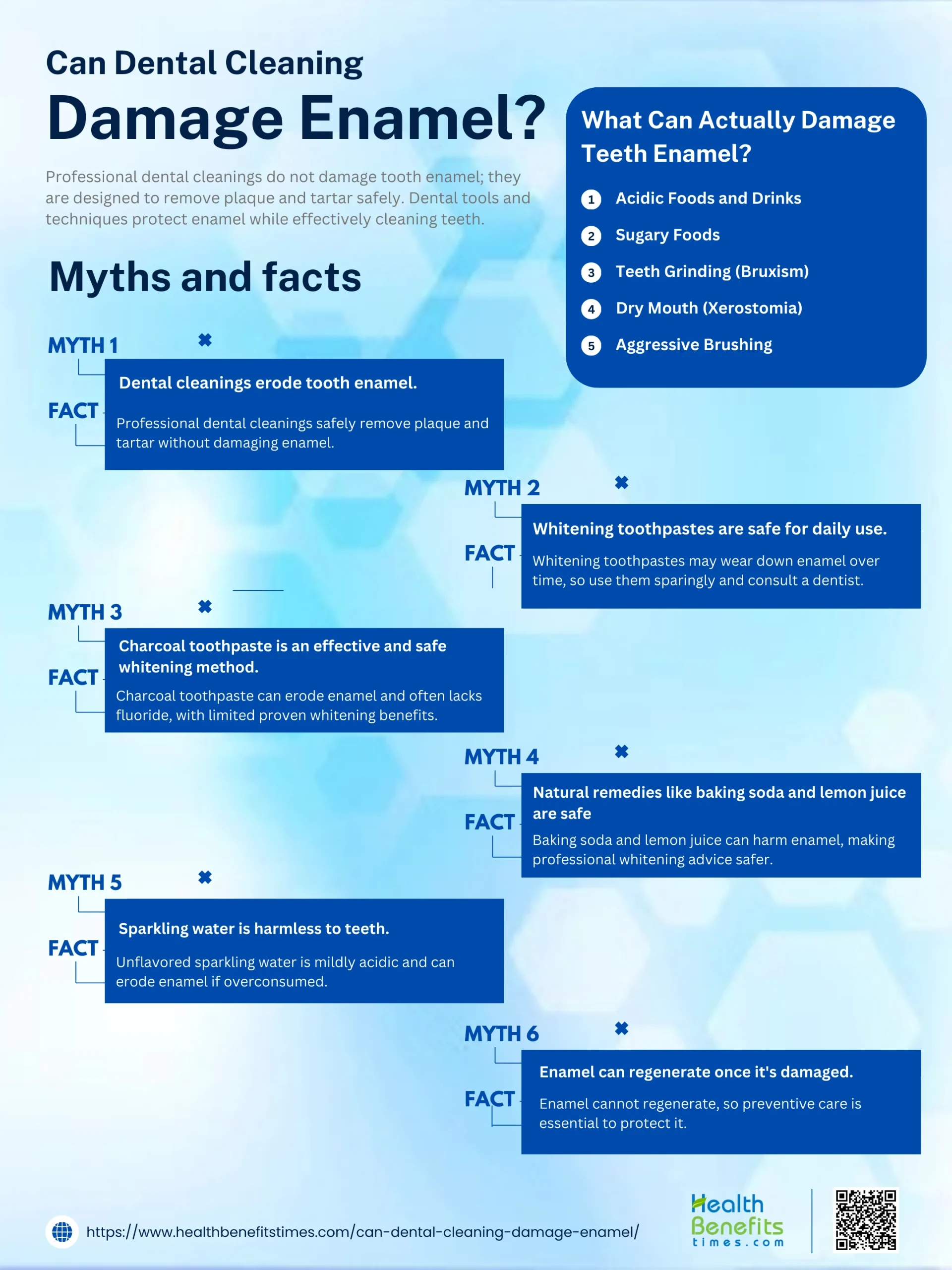 What Can Actually Damage Teeth Enamel?
While dental cleanings are safe for enamel, certain everyday habits and foods can gradually erode or weaken this protective layer. Enamel is tough, but it isn’t indestructible, and once it’s worn away, it cannot regenerate naturally. Understanding what can damage enamel helps you take steps to preserve it. Here are some common causes of enamel damage:
1. Acidic Foods and Drinks
Citrus fruits, sodas, and other acidic foods and beverages can soften and wear down enamel over time. Acids weaken enamel, making it more prone to erosion and cavities, especially with frequent consumption without rinsing or neutralizing the acid.
2. Sugary Foods
Bacteria in the mouth feed on sugars from foods like candy, pastries, and sugary drinks, producing acids that erode enamel. Frequent sugar intake fuels bacteria that form plaque, which can accelerate enamel damage if not removed regularly.
3. Teeth Grinding (Bruxism)
Grinding or clenching your teeth, especially during sleep, puts intense pressure on the enamel, wearing it down over time. This habit can lead to micro-cracks or fractures in the enamel, increasing sensitivity and decay risk.
4. Dry Mouth (Xerostomia)
Saliva helps wash away food particles and neutralize acids in the mouth. A dry mouth, caused by certain medications or dehydration, reduces saliva production, allowing acids and bacteria to linger longer on teeth and damage enamel.
5. Aggressive Brushing
Brushing too hard or using a hard-bristled toothbrush can wear down enamel. Gentle brushing with a soft-bristled toothbrush protects your enamel while effectively removing plaque and food particles.
Conclusion
In conclusion, regular dental cleanings are a simple yet powerful way to protect and enhance your oral health. By removing plaque, tartar, and surface stains, these cleanings support stronger enamel, healthier gums, and a fresher smile. Despite common myths, professional cleanings are safe, effective, and essential in preventing decay and gum disease. When you commit to routine cleanings, you’re not only caring for your teeth but also supporting your overall health. Embracing this preventive care keeps your smile bright and your teeth resilient, laying the foundation for a lifetime of optimal oral health.