

- Burnout is Exhaustion resulting from prolonged stress related to Job.
- Burnout Express as fatigue, reduced performance and feelings of cynicism or detachment.
- Burnout can lead to Physical Symptoms like headaches, stomach issues & sleep disturbances
 The signs of burnout often develop gradually and can affect you physically, emotionally, and behaviorally. If it left unaddressed which can worsen over time, impacting your overall well-being and making it difficult to manage daily tasks. Recognizing these symptoms early is crucial to prevent burnout from escalating into more severe health issues. Following are the most common early signs of Burnout:
6 Types of Burnout: Causes and Early Warning Signs to Watch For
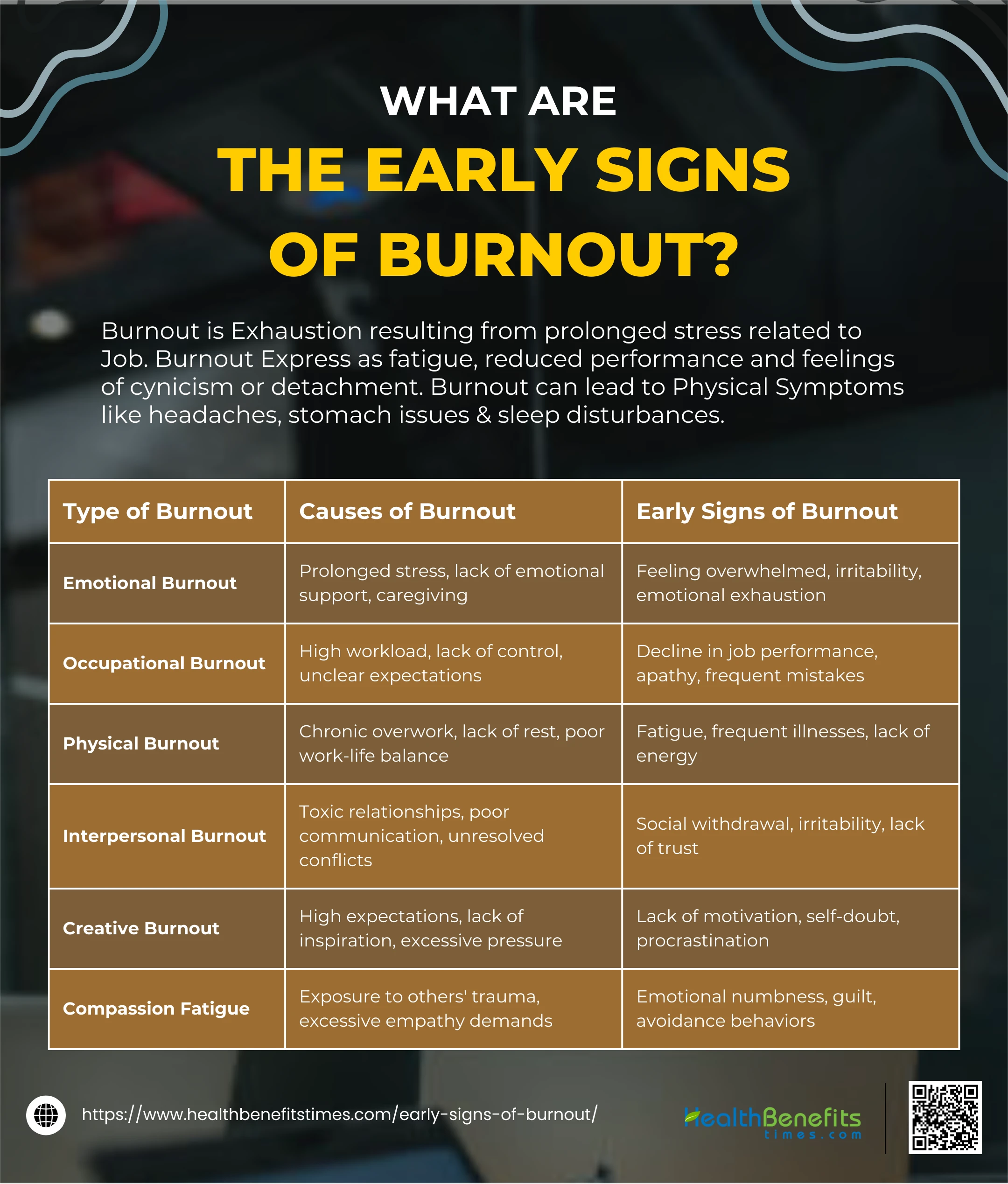
Burnout is a state of physical, emotional, and mental exhaustion caused by prolonged stress and overexertion. It manifests in different forms depending on the source of the stress, and recognizing the early warning signs is crucial for prevention and recovery. Below are six common types of burnout, their causes, and the signs to look out for.
1. Emotional Burnout
Emotional burnout occurs when prolonged stress or caregiving responsibilities drain your emotional reserves. This type of burnout is common among caregivers, healthcare workers, or individuals who provide emotional support to others.
Causes:
- Prolonged stress
- Lack of emotional support
- Caregiving responsibilities
Early Signs:
- Feeling overwhelmed and unable to cope
- Increased irritability and emotional sensitivity
- Persistent feelings of emotional exhaustion
2. Occupational Burnout
Occupational burnout stems from chronic workplace stress, often caused by high workloads, lack of autonomy, or unclear job expectations. It can affect both performance and overall job satisfaction.
Causes:
- High workloads and pressure to perform
- Lack of control over tasks
- Unclear or unreasonable expectations at work
Early Signs:
- Decline in job performance and productivity
- Apathy or detachment from work-related activities
- Making frequent mistakes or experiencing difficulty concentrating
3. Physical Burnout
Physical burnout is the result of pushing your body beyond its limits, often through overwork, lack of rest, and an imbalanced lifestyle. This type of burnout can lead to long-term health issues if left unchecked.
Causes:
- Chronic overwork or long hours
- Insufficient rest or recovery time
- Poor work-life balance
Early Signs:
- Constant fatigue, even after resting
- Increased frequency of illnesses due to a weakened immune system
- Persistent lack of energy or physical stamina
4. Interpersonal Burnout
Interpersonal burnout arises from strained relationships and unresolved conflicts. Toxic dynamics or poor communication can take a toll on emotional well-being, leaving you feeling isolated or distrustful.
Causes:
- Toxic relationships or environments
- Poor communication skills or unresolved conflicts
- Emotional demands from others
Early Signs:
- Withdrawing from social interactions or isolating yourself
- Heightened irritability and sensitivity in relationships
- Difficulty trusting others or maintaining healthy connections
5. Creative Burnout
Creative burnout affects individuals in creative fields or roles, often due to excessive pressure, unrealistic expectations, or a lack of inspiration. It can hinder innovation and motivation.
Causes:
- Unrealistic deadlines or expectations
- Lack of inspiration or creative freedom
- Excessive pressure to produce or perform
Early Signs:
- Loss of motivation to pursue creative projects
- Doubting your abilities or feeling inadequate
- Procrastinating or avoiding creative tasks altogether
6. Compassion Fatigue
Compassion fatigue, also known as secondary traumatic stress, occurs when excessive empathy for others’ suffering becomes overwhelming. This is common among healthcare providers, counselors, and social workers.
Causes:
- Constant exposure to others’ trauma
- Emotional demands of caregiving or empathizing deeply
- Neglecting personal emotional boundaries
Early Signs:
- Feeling emotionally numb or detached
- Overwhelming guilt about not being able to “do more”
- Engaging in avoidance behaviors, such as withdrawing from caregiving duties
 What are the Early Signs of Burnout?
#1 Emotional Signs of Burnout
Helplessness and Trapped Feelings, Cynicism and Negativity, Loss of Motivation, Sense of Failure or Self-Doubt
#2 Physical Signs of Burnout
Persistent Fatigue, Sleep Disturbances, Frequent Headaches, Gastrointestinal Issues, Muscle Aches and Tension
#3 Cognitive Signs of Burnout
Difficulty Concentrating, Memory Problems, Impaired Decision-Making, Negative Thought Patterns, Mental Fog
#4 Behavioral Signs of Burnout
Procrastination, Increased Irritability, Withdrawal from Responsibilities, Social Isolation, Decline in Work Performance, Reliance on Unhealthy Coping Mechanisms
#5 Work-Related Signs of Burnout
Declining Performance, Lack of Enthusiasm, Increased Absenteeism, Frequent Errors, Cynical Attitude, Conflict with Colleagues
#6 Interpersonal Signs of Burnout
Withdrawal from Social Interactions, Irritability in Relationships, Feeling Isolated, Loss of Empathy, Reduced Collaboration
Burnout vs. Depression
Burnout and depression are often confused because they share similar symptoms, such as exhaustion, emotional detachment, and reduced productivity. However, they differ significantly in their root causes and impact. Burnout is typically tied to specific stressors, such as work or caregiving, and may improve with rest or changes in environment. Depression, on the other hand, is a clinical mental health condition that affects all aspects of life and often requires medical treatment.
| Aspect | Burnout | Depression |
| Cause | External stressors, such as work or caregiving tasks. | Combination of genetic, psychological, and environmental factors. |
| Scope | Tends to affect specific areas of life, like work. | Impacts all aspects of life, including personal and professional. |
| Energy Levels | Often marked by exhaustion and lack of motivation. | Persistent fatigue, even without clear external demands. |
| Emotional Outlook | Cynicism and detachment, often tied to a particular stressor. | Feelings of hopelessness, worthlessness, or pervasive sadness. |
| Treatment Approach | Can improve with rest, lifestyle changes, and stress management. | Requires medical intervention, such as therapy or medication. |
| Recovery Time | Recovery is possible once stressors are addressed. | Long-term recovery often involves ongoing treatment and support. |
| Professional Diagnosis | Not classified as a medical condition. | Recognized as a clinical diagnosis requiring treatment. |
Ways to Treat and Handle Burnout
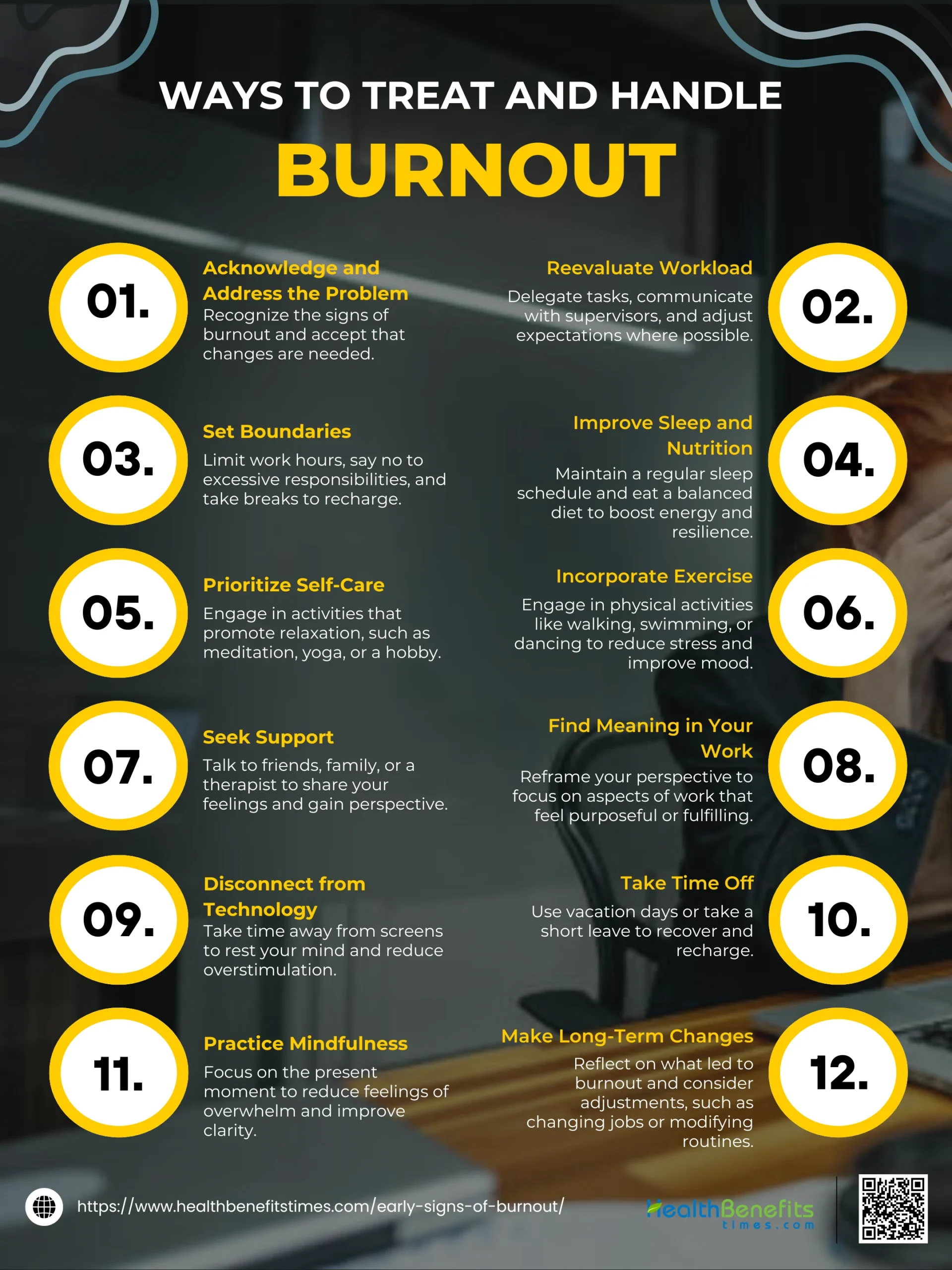
Treating and managing burnout requires a combination of practical strategies and lifestyle changes to restore balance and improve well-being. Addressing burnout involves recognizing its signs, reducing stressors, and incorporating habits that support mental, emotional, and physical health.
- Acknowledge and Address the Problem: Recognize the signs of burnout and accept that changes are needed.
- Set Boundaries: Limit work hours, say no to excessive responsibilities, and take breaks to recharge.
- Prioritize Self-Care: Engage in activities that promote relaxation, such as meditation, yoga, or a hobby.
- Seek Support: Talk to friends, family, or a therapist to share your feelings and gain perspective.
- Reevaluate Workload: Delegate tasks, communicate with supervisors, and adjust expectations where possible.
- Improve Sleep and Nutrition: Maintain a regular sleep schedule and eat a balanced diet to boost energy and resilience.
- Incorporate Exercise: Engage in physical activities like walking, swimming, or dancing to reduce stress and improve mood.
- Find Meaning in Your Work: Reframe your perspective to focus on aspects of work that feel purposeful or fulfilling.
- Disconnect from Technology: Take time away from screens to rest your mind and reduce overstimulation.
- Take Time Off: Use vacation days or take a short leave to recover and recharge.
- Practice Mindfulness: Focus on the present moment to reduce feelings of overwhelm and improve clarity.
- Make Long-Term Changes: Reflect on what led to burnout and consider adjustments, such as changing jobs or modifying routines, to prevent recurrence.
 Conclusion
Burnout is a pervasive issue that affects every aspect of life, from personal well-being to professional performance. Recognizing its signs early and taking proactive steps to address its causes are critical for preventing long-term damage to your health, relationships, and career. By prioritizing self-care, setting boundaries, and seeking support, you can regain balance and resilience, paving the way for a healthier, more fulfilling life. Remember, burnout is not a sign of weakness but a call to reevaluate your priorities and make meaningful changes that honor your well-being and overall happiness.
FAQs
- How does burnout affect decision-making in high-stakes environments?
Burnout can impair cognitive functions such as focus, memory, and decision-making, leading to slower responses and an increased risk of errors in high-pressure situations like healthcare, finance, or law enforcement.
- Can burnout occur in individuals who are not employed, such as retirees or unemployed individuals?
Yes, burnout is not exclusive to employment. It can affect retirees or unemployed individuals who face chronic stress from caregiving, financial concerns, or a lack of fulfilling activities.
- What are some cultural factors that contribute to burnout?
Cultural expectations, such as overemphasis on productivity, stigmatization of rest, or societal pressure to achieve perfection, can contribute to burnout by creating unrealistic demands and discouraging recovery.
- How does digital overload contribute to burnout?
Constant connectivity through devices and social media can lead to digital burnout, characterized by mental fatigue, disrupted sleep, and diminished capacity to unplug and relax.
- What role does workplace leadership play in preventing burnout among employees?
Effective leadership can mitigate burnout by fostering a supportive culture, promoting clear communication, setting realistic expectations, and ensuring employees feel valued and heard.