

Muscle pain (also called myalgia) is a very common symptom. It usually feels like an ache, soreness or stiffness in one or more muscles. Muscle pain can occur anywhere in the body and often involves the tendons or ligaments attached to those muscles. 1 It often starts during or shortly after physical activity or an injury. 2 Sometimes muscle aches accompany illnesses (for example, the flu), and can range from mild to severe. 3 In general, muscle pain is a signal from the body that something has stressed the muscle (from overuse, injury, infection or another condition). 2
Causes of Muscle Pain
1. Injury or strain. Tears, sprains or blows to muscle fibers can cause pain. 4 For example, a muscle pull during exercise or lifting something too heavy can lead to soreness or cramps.
2. Overuse or sudden activity. Using a muscle too much, too soon, or too often (without proper warm-up) can cause pain. 4 Starting a new workout routine or working a new muscle group often leads to delayed soreness.
3. Tension and stress. Emotional stress or muscle tension (for example, holding your shoulders up) can lead to persistent muscle aches. 4 Poor posture (like hunching over a desk) also strains muscles.
4. Some medicines are known to cause muscle pain as a side effect. 5 For example, cholesterol drugs (statins) or certain blood pressure medicines may lead to aching muscles.
5. Nutritional imbalances. Low levels of electrolytes (like potassium or calcium) or dehydration can make muscles prone to cramping and pain. 6
6. Viral and bacterial infections often cause muscle aches. Influenza (the flu), Lyme disease, and other infections commonly include muscle pain as a symptom. 3 6
7. Autoimmune or inflammatory conditions. Diseases like lupus or dermatomyositis affect connective tissues and can cause widespread muscle pain. 6
8. Chronic disorders. Conditions such as fibromyalgia or polymyalgia rheumatica cause persistent muscle aches and tenderness. 7 Rhabdomyolysis (severe muscle breakdown) and polymyositis (muscle inflammation) are rare but serious causes of muscle pain. 8
Symptoms of Muscle Pain
1. Aching or cramping sensation in one or more muscles.
2. Tenderness or soreness to touch in the affected muscles.
3. Stiffness or tight feeling that may limit movement.
4. Muscle fatigue or weakness after a workout or illness.
5. Spasms or sudden muscle cramps.
6. Redness or mild swelling in an injured muscle.
7. Pain that worsens with movement and improves with rest (in many cases).
Muscle Pain Facts
| Category | Details |
| Symptoms | – Muscle aches, soreness, or cramps<br>- Stiffness or tightness<br>- Tenderness or pain with movement<br>- Fatigue or weakness in affected muscle |
| Common Causes | – Overuse or injury (strain, sprain)<br>- Repetitive activities without rest<br>- Stress and poor posture<br>- Medications (e.g. statins)<br>- Infections (flu, Lyme) |
| Types of Pain | – Localized: pain in one specific muscle group (e.g., calf after exercise)<br>- Diffuse: widespread muscle aches (often from viral illness or fibromyalgia)<br>- Acute: sudden pain from injury<br>- Chronic: long-lasting ache in muscles (e.g., fibromyalgia) |
| How Pain Spreads | – Pain can radiate to nearby muscles or joints<br>- Soreness may move if posture or movement changes<br>- Often felt only in one area, but sometimes spreads after activity |
| Age Groups Affected | – People of all ages can get muscle pain<br>- Athletes and manual laborers often get acute strains<br>- Older adults may have more chronic aches from arthritis and age-related changes |
| Risk Factors | – Overexertion (e.g. new or intense exercise)<br>- Sitting/standing in one position too long<br>- Medications like statins or blood pressure drugs <br>- Chronic conditions (e.g. lupus, fibromyalgia) 5 4 7 |
| Diagnosis | – Based on physical exam and health history (onset, activity, location)<br>- Possible tests: blood work (to check muscle enzymes or infections), imaging if needed 9 |
| Other Facts | – Muscle pain (myalgia) is a symptom, not a disease by itself.<br>- Exercise, rest, and simple home treatments usually relieve most cases. <br>- Preventive steps: warm up, stretch, stay hydrated to lower risk. 10 11 12 |
Exercise and Natural Remedies for Muscle Pain
1. Gentle Stretching: Light stretching can release tension and increase flexibility in sore muscles. 13 For example, slowly reaching and holding each stretch for 20–30 seconds helps improve blood flow and reduce tightness. Stretching right after a warm shower or after initial rest can be especially soothing.
Note: People commonly do gentle stretches (e.g. hamstring stretches or yoga poses) before and after activities to prevent or ease muscle soreness.
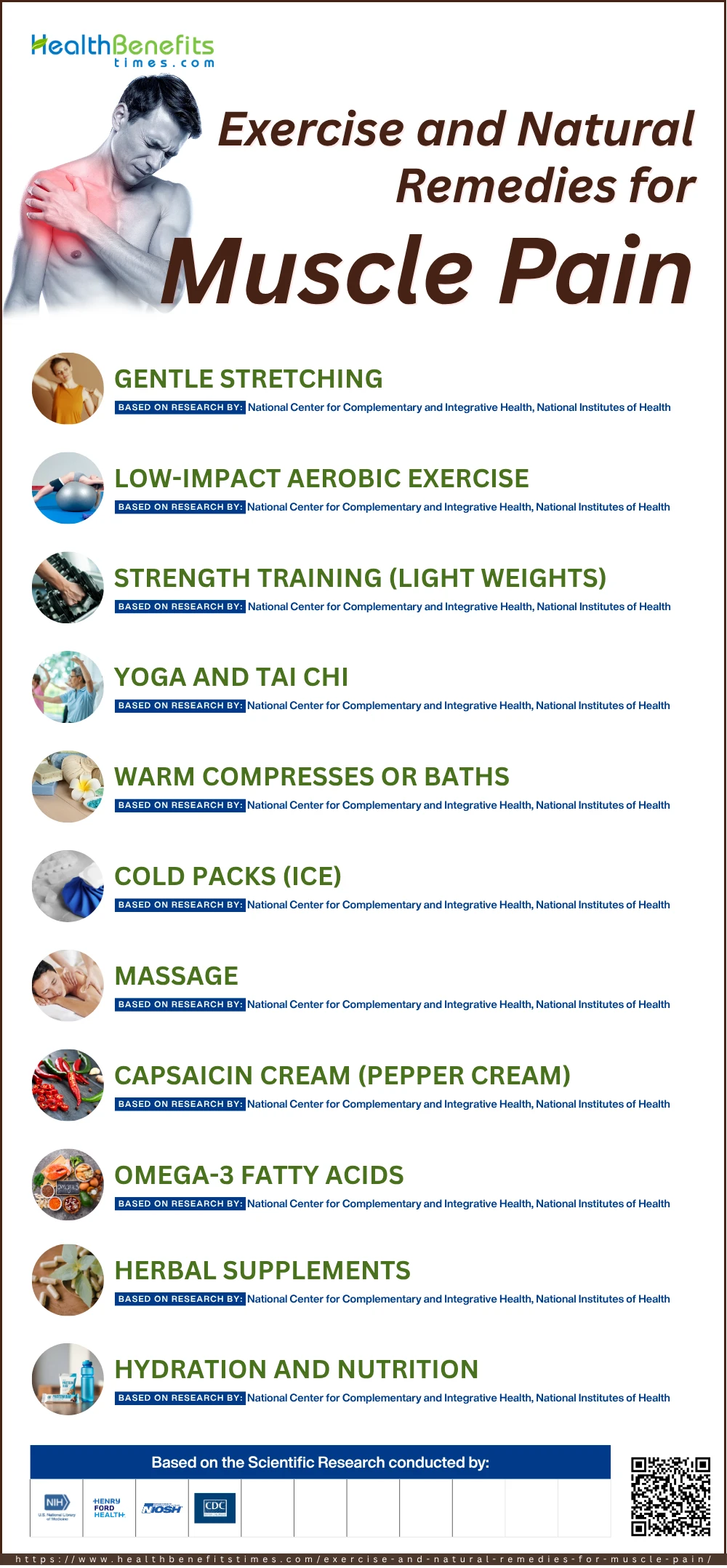 2. Low-Impact Aerobic Exercise: Activities like walking, cycling, or swimming boost circulation and help muscles heal. 14 These exercises increase blood flow without heavily straining the sore muscle. Even a short, gentle walk or bike ride can speed recovery by bringing oxygen and nutrients to the tissue.
Note: Many find relief by taking a slow, brisk walk or a light swim the day after a workout to reduce soreness.
3. Strength Training (Light Weights): Under professional guidance, light resistance exercises can build muscle support. Stronger muscles stabilize joints and may reduce future pain. Over time, gently lifting light weights or doing bodyweight exercises can help muscles adapt and become less prone to injury.
Note: Start with very low weights and focus on proper form; you can do small strength sessions a few times a week to aid long-term recovery.
4. Yoga and Tai Chi: These mind-body exercises combine stretching, strength, and relaxation. Research shows practices like yoga and Tai Chi can help manage chronic pain by improving flexibility and reducing stress. 15 The slow, controlled movements ease stiffness and encourage gentle muscle engagement without strain.
Note: Many people use yoga or Tai Chi classes (or videos at home) a few times a week for overall muscle health.
5. Warm Compresses or Baths: Heat therapy relaxes muscles and eases pain. After the first day of an injury, soaking in a warm bath (often with added Epsom salt) or applying a heating pad can increase blood flow and reduce stiffness. 11 16 Epsom salt (magnesium sulfate) in a warm bath is a time-honored home remedy; some evidence suggests it may ease inflammation and soothe sore muscles. 16
Note: Typically, people add 1–2 cups of Epsom salts to a warm bath and soak for 20–30 minutes once or twice a day.
6. Cold Packs (Ice): For sudden injuries or very recent strains, ice can reduce inflammation. Applying an ice pack wrapped in cloth to the painful muscle for 10–15 minutes (several times a day) can numb the area and limit swelling. 11 This is most helpful in the first 24–72 hours after a strain or sprain.
Note: A common approach is 20 minutes of ice now, and 20 minutes of heat later, alternating as needed after the first day.
7. Massage: Rubbing or massaging the sore muscle can improve circulation and relieve tightness. Gentle massage or self-massage (or using a foam roller) often helps muscle aches, especially those from overuse or tension. 13 Massage therapy (professional or self-administered) encourages muscle relaxation and lymphatic drainage, speeding recovery.
Note: People often use massage oils or foam rollers after exercise. Even a family member can help by gently kneading the tight area.
8. Capsaicin Cream (Pepper Cream): Topical creams with capsaicin (the active component in chili peppers) can lessen pain signals in the skin. According to U.S. health sources, capsaicin applied to sore muscles relieves minor aches by dulling nerve signals. 17 It causes a warming sensation, which can distract from pain and eventually reduce the nerve’s pain response.
Note: Capsaicin cream (available OTC) is applied as a thin layer to the affected area 2–4 times daily; wash hands after use to avoid burning eyes or mouth.
9. Omega-3 Fatty Acids: Fish oil supplements contain omega-3s which have mild anti-inflammatory effects. Some evidence suggests omega-3s can modestly reduce joint inflammation. 18 While not specific to muscle pain, they may help overall inflammation in the body that contributes to aches.
Note: Omega-3 is usually taken as capsules (e.g. 1000 mg daily) or by eating fatty fish (like salmon) several times a week.
10. Herbal Supplements: Certain herbs contain natural anti-inflammatories. For example, ginger and turmeric are long-used spices with anti-inflammatory compounds. 19 20 However, studies show their effect on muscle pain is mixed. Devil’s claw extract has some evidence for modest back pain relief. 21 These supplements might be tried as adjuncts, but they are generally no substitute for proper exercise and rest.
Note: Ginger can be consumed as tea or capsules. Turmeric (curcumin) is often taken in capsules or mixed in food. Always follow recommended doses on the package.
11. Hydration and Nutrition: Staying well-hydrated and eating a balanced diet supports muscle repair. Dehydration and nutrient deficiencies can worsen cramps and soreness. Drinking plenty of water, and eating protein (for muscle repair) plus fruits and vegetables (for vitamins and antioxidants) helps the body heal.
Note: Drinking water throughout the day and including foods like berries, leafy greens, and nuts (anti-inflammatory foods) aids recovery.
Foods and Activities to Avoid When You Suffer from Muscle Pain
- Junk and Processed Foods: Foods high in added sugar, trans fats, or excessive salt (like fast food, candy, sodas, frozen dinners) can promote inflammation and delay healing. Avoid processed snacks and sugary treats, as they may make muscle aches feel worse.
- Unhealthy Fats: Saturated and trans fats found in fried foods, butter, pastries, and processed meats should be limited. These fats can increase inflammation in the body.
- Excess Alcohol: Drinking too much alcohol can dehydrate you and worsen inflammation. Alcohol may also interrupt muscle repair during sleep. It’s best to limit alcohol intake when recovering from muscle pain.
- Heavy Straining Activities: Avoid intensive workouts, heavy lifting, or high-impact exercise while a muscle is already in pain. 22 Pushing through sharp or severe pain can cause more damage. Instead, stick to light activities or rest until the worst pain has subsided.
- Prolonged Inactivity: While rest is important, complete immobility (like staying in bed all day) can make muscles stiffer. Avoid sitting or lying still in one position for hours; gentle movement is better.
- Poor Ergonomics: Avoid working or sleeping in positions that strain sore muscles. For example, do not slouch for long periods or use a very soft mattress if you have back or neck muscle pain.
Myths and Misconceptions
| Myth | Reality |
| “You should always stop all exercise if it hurts.” | Light movement is often better than complete rest. Gentle activities like walking or stretching can speed recovery; only stop or modify the activity if pain is sharp or severe. |
| “Stretching will completely prevent soreness.” | Stretching before exercise is helpful, but it doesn’t eliminate post-exercise soreness entirely. A gradual warm-up and cool-down are also needed to reduce pain. |
| “Pain during exercise means I’m getting stronger.” | Experiencing minor discomfort is normal, but sharp or intense pain can signal injury. Pushing through severe pain can harm muscles; it’s better to ease back if pain is intense. |
| “Only medication can fix muscle pain.” | Over-the-counter or prescription drugs can help, but non-drug measures (exercise, massage, rest) are often effective too. Nonpharmacologic approaches are first-line for many muscle aches. |
| “Natural remedies have no risks.” | Even “natural” treatments can have side effects or interactions. For example, some herbal supplements may cause stomach upset or interact with medications. Always use them cautiously. |
| “Muscle aches always mean a serious disease.” | Most muscle pain comes from everyday causes like exercise or tension. Only when pain is severe, persistent, or accompanied by other worrying signs is a medical problem likely. |
Special Considerations
- Children: Muscle aches in kids often come from play, growing pains, or illness. Encourage gentle activity and good hydration. Unbearable pain, fever, rash, or weakness in a child’s muscle should prompt a doctor visit. Children can usually use the same home treatments (rest, ice, gentle massage) but in lighter doses.
- Pregnancy: Many pregnant women experience muscle aches (for example, back or leg pain) due to weight gain and hormonal changes. Prenatal yoga or stretching (with a doctor’s OK) can relieve discomfort. Use heat pads with caution and always avoid hot tubs. Consult a healthcare provider before taking any supplements or starting new exercise.
- Chronic Conditions: People with chronic illnesses (like arthritis, fibromyalgia, or diabetes) may have regular muscle pain. For these individuals, staying moderately active is often recommended to maintain mobility. 23 Low-impact exercise (water therapy, walking) and gentle strengthening can be beneficial. Treatment plans should be tailored, so it’s wise to work with a doctor or physical therapist familiar with the condition.
- Elderly: Older adults tend to lose muscle mass and may have stiff joints. Gentle, regular exercise (like stretching and low-impact aerobics) is important to maintain strength and reduce pain. Falls risk should be considered, so balance training and safe environments are key. Because healing may be slower with age, start any new activity very gradually.
Precautions Before Using Natural Remedies
- Check for Allergies: Always read labels. For example, make sure you’re not allergic to ingredients (like chili in capsaicin cream). Do a patch test with topicals (apply a small amount on skin first) to check for irritation.
- Consult Your Doctor: Before trying any supplement or remedy, especially if you are pregnant, nursing, or on medications, ask a healthcare provider. Some herbs (like turmeric or ginger) can interact with blood thinners or other drugs.
- Use Proper Dosage: Follow recommended doses for supplements and creams. More is not always better and can cause side effects (stomach upset or skin burns).
- Stop if It Hurts: If a natural remedy causes increased pain, rash, or other side effects, discontinue use and consult a doctor.
- Combine Wisely: Natural remedies can be used along with, but not usually in place of, prescribed treatments. Continue any doctor-advised therapies and use natural options as complementary support.
When to See a Doctor
- Persistent or Severe Pain: See a doctor if muscle pain is very intense, unexplained, or lasts more than 3 days without improvement. 24
- Swelling or Redness: Seek medical help if the area is visibly swollen, red, warm to the touch, or if you have a high fever along with the pain. 24 These could be signs of infection or serious injury.
- Weakness or Loss of Function: If you cannot move a part of your body normally or you feel significant weakness in a muscle, get evaluated.
- Dark Urine or Limited Urine: Very dark (tea-colored) urine after intense exercise or muscle injury is a warning sign of severe muscle breakdown (rhabdomyolysis). 25 Go to the emergency department if this occurs.
- After a New Medication: If muscle pain begins when you start or change the dose of a medicine (for example, statins), tell your doctor. 26
- Signs of a Serious Condition: Also seek care if muscle pain comes with difficulty breathing, chest pain, or sudden leg swelling. In such cases, prompt medical evaluation is needed.
Comments
This article is based on Scientific Research Conducted by following Research Organization:
- Muscle aches–National Library of Medicine, United States, National Institutes of Health, United States
- Mind and Body Approaches for Chronic Pain–National Center for Complementary and Integrative Health, United States, National Institutes of Health, United States
- Soothing Benefits Of Epsom Salt Baths–Henry Ford Health, United States
- Capsaicin Topical–National Library of Medicine, United States, National Institutes of Health, United States
- Nutritional Approaches for Musculoskeletal Pain and Inflammation–National Center for Complementary and Integrative Health, United States, National Institutes of Health, United States
- Signs and Symptoms of Rhabdomyolysis–National Institute for Occupational Safety and Health, United States, Centers for Disease Control and Prevention, United States