

- A short, intentional activity practiced daily to promote mental, emotional, or physical well-being.
- Backed by experts, this simple routine has been shown to reduce stress levels significantly.
- It’s easy to implement, fits into any schedule, and builds consistency for long-term wellness.
 Stress is broadly defined as the body’s response to any demand or challenge, encompassing physiological, emotional, and behavioral reactions to perceived threats or pressure from the environment. In today’s fast-paced world, chronic stress has become a silent epidemic, quietly eroding mental and physical well-being for millions. Whether it’s pressure from work, digital overload, or the ever-tightening squeeze of daily obligations, stress contributes to a host of health problems ranging from anxiety to heart disease. While many people believe stress relief requires significant lifestyle changes, new research suggests otherwise. In fact, experts now advocate for a remarkably simple yet powerful practice: a 5-minute daily habit that can significantly lower stress levels and improve resilience. This practice, rooted in cognitive and physiological science, activates the body’s relaxation response and shifts mental patterns in as little as one session.
What is This 5-Minute Daily Habit?
The 5-minute daily habit that experts reveal to significantly reduce stress is mindful breathing—a simple yet powerful practice that involves focusing attention on your breath while acknowledging and releasing distracting thoughts. This technique, derived from mindfulness-based stress reduction (MBSR), has shown consistent psychological and physiological benefits. (1) (2) (3)
Physiologically, mindful breathing activates the parasympathetic nervous system, helping lower cortisol levels, reduce blood pressure, and slow heart rate. (4) Mentally, it enhances emotional regulation, curbs rumination, and increases self-awareness. (5) (6) (7) Even brief daily sessions have been found effective for both novice and experienced practitioners. (8)
As mindfulness expert Dr. Jon Kabat-Zinn famously said, “You can’t stop the waves, but you can learn to surf.” Cultivating mindful breathing for just five minutes a day can shift your entire stress response system and foster resilience. (9)
List of 5-Minute Daily Habit That Lowers Stress
Discover simple, expert-approved habits you can do in just five minutes a day to lower stress. These small, consistent actions can make a big difference in your mental well-being.
 1. Mindful Breathing
Just five minutes of mindful breathing daily can significantly lower stress by activating the vagus nerve and calming the amygdala. Evidence shows reductions in heart rate and blood pressure following breathing-based interventions (4) It improves attentional control and reduces emotional reactivity. (7) Studies on healthcare professionals show mood and clarity enhancements. (8) Cognitive stress patterns also decline with regular practice and resilience improves significantly. (5) (6)
2. Gratitude Journaling
Practicing gratitude journaling for just five minutes daily can meaningfully reduce stress and enhance mental well-being. Research shows that healthcare practitioners who engaged in gratitude writing experienced reduced perceived stress and depressive symptoms. (10) This effect has also been validated among Black breast cancer survivors, promoting both psychological and spiritual wellness. (11) For college students, a two-week online gratitude journal increased motivation and reduced negative emotions. (12) Even preschool parents showed stress reduction after consistent journaling. (13) A meta-analysis further supports gratitude’s role in lowering anxiety and depression across diverse populations. (14)
3. Mini Yoga or Stretch Routine
Just five minutes of daily stretching or yoga can significantly lower physiological stress markers and enhance parasympathetic activity, fostering relaxation. Studies show that even brief yoga sessions reduce cortisol levels and anxiety symptoms. (15) Daily micro-sessions improve mood and mental clarity, and stretching increases vagal tone. Yoga supports emotional regulation and improves sleep quality through tension release.
4. Listening to Calming Music
Listening to relaxing music for just five minutes a day has measurable effects on reducing stress biomarkers like cortisol. (16) Music lowers anxiety and autonomic arousal in clinical and non-clinical populations. (17) Calming tracks also reduce PTSD symptoms and help in daily emotional self-regulation. (18) (19) Music therapy improves stress recovery post-task and enhances heart rate variability. (20)
5. Guided Visualization or Meditation
Just five minutes of guided visualization or meditation can reduce stress by activating brain regions involved in emotion regulation and parasympathetic recovery. A study on MBSR-based 5-minute interventions showed lowered anxiety in clinical pain settings. (21) Neurofeedback-supported meditation boosts focus and calmness. (22) Guided imagery improves mental clarity and stress control. (23) Brief practices help healthcare workers decompress rapidly, and heart-focused meditations regulate HRV. (24) (25)
6. Eccentric Home Exercise
Engaging in just five minutes of eccentric exercise—where muscles lengthen under load—enhances mood and reduces stress by triggering endorphin release and decreasing inflammation. (26) Eccentric training boosts cardiorespiratory efficiency in sedentary adults and alleviates muscle soreness while promoting neurochemical balance. (27) (28) Regular short sessions support cardiovascular health and functional resilience in older populations. (29) (30)
7. Digital Detox Pause
A brief daily digital detox—even just five minutes—can significantly reduce stress by decreasing cognitive load and enhancing attention regulation. Evidence shows that technology overuse increases stress and negatively impacts well-being. Disconnecting improves parasympathetic activity, as digital pauses can recalibrate overstimulated neural pathways. Studies link mindful disengagement from screens to improved cortisol rhythms. Even short unplugging moments enhance resilience, fostering mental clarity. (31)
8. Heart Rate Awareness via HRV Training
Practicing heart rate variability (HRV) training for just five minutes daily enhances emotional regulation and lowers stress. HRV biofeedback has been shown to increase parasympathetic activation, reducing anxiety symptoms. (32) Studies confirm that HRV training improves autonomic balance and reduces cortisol levels. (33) Mobile HRV programs effectively lower workplace stress. (34) It’s also validated in clinical populations such as those with depression and cardiovascular risk. (35) (36)
9. Micro-Mindfulness Before Work Tasks
Taking a 5-minute micro-mindfulness break before tasks significantly improves focus, reduces cognitive fatigue, and buffers against daily stressors. These practices enhance emotional regulation and resilience. (37) Short meditative breaks reduce cortisol in healthcare workers and mitigate distraction in digital work settings. (38) (39) Structured micro-breaks improve work recovery and motivation and support job satisfaction. (40) (41)
Benefits of 5-Minute Daily Habit
Even just five minutes a day can lead to noticeable improvements in mood, focus, and relaxation. Discover the powerful benefits of adopting a short daily habit for reducing stress.
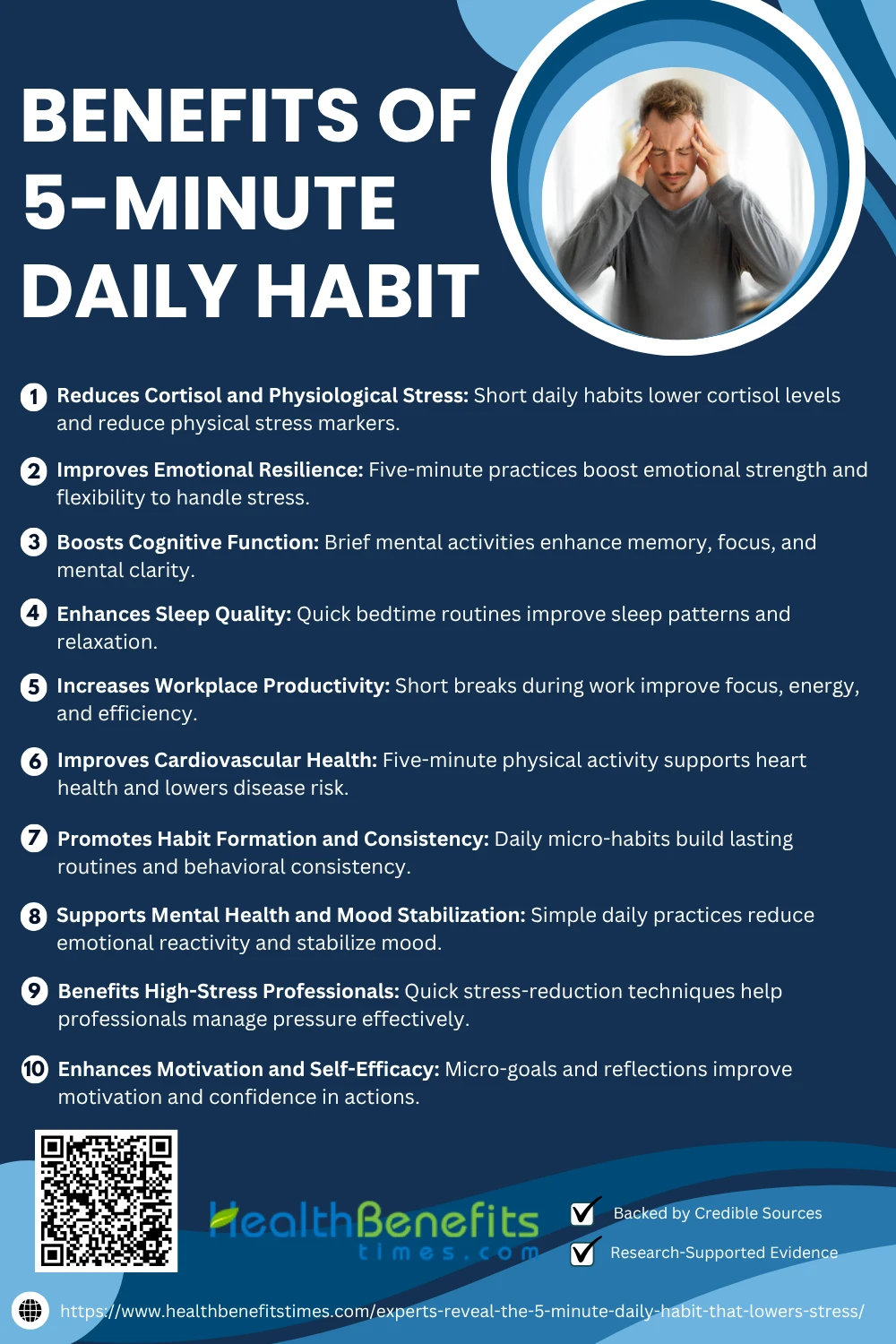 1. Reduces Cortisol and Physiological Stress
A simple 5-minute daily habit such as mindfulness or deep breathing can significantly reduce cortisol and physiological stress. Research shows that short mindfulness-based interventions effectively lower cortisol responses during acute stress episodes. (42) Similar outcomes were found in yoga-based routines, urban nature exposure, brief stress management, and mindfulness-based stress reduction programs. (43) (44) (45) (46)
2. Improves Emotional Resilience
Five-minute daily routines such as breathwork, gratitude writing, or mindfulness can strengthen emotional resilience. Short interventions enhance psychological flexibility, while brief mindfulness exercises reduce reactivity to stress. (47) (48) Positive reflection practices build lasting emotional capacity. (49) Even small acts of self-regulation improve coping ability, and structured daily routines buffer against emotional volatility. (50) (51)
3. Boosts Cognitive Function
Engaging in short, daily cognitive training like mindfulness or breathing exercises enhances mental sharpness. Studies show that even five minutes of focused attention can improve working memory and task-switching speed. (52) Similarly, brief aerobic activity supports executive function. (53) Walking boosts memory consolidation, and journaling improves cognitive clarity. (54) Even gratitude exercises enhance neuroplasticity.
4. Enhances Sleep Quality
A 5-minute evening routine such as acupressure or Qigong significantly improves sleep quality. A study on menopausal women showed Qigong reduced insomnia symptoms. (55) Likewise, 5-minute wrist acupressure improved geriatric sleep scores. (56) Cognitive wind-down exercises aid in circadian regulation. (57) A brief digital sleep regimen also boosted HRV. (58) Structured relaxation rituals remain effective. (59)
5. Increases Workplace Productivity
Taking structured 5-minute breaks can significantly boost workplace productivity. Studies show the Pomodoro technique—25 minutes of work followed by 5-minute breaks—increases focus and reduces fatigue. (105) Break-prompt systems enhance sedentary worker performance. (61) Microbreaks also improve task-switching and mental energy. (62) Short exercise breaks support cognitive flexibility. (28) Brief leadership habits boost decision-making. (63)
6. Improves Cardiovascular Health
Engaging in a consistent 5-minute daily habit of physical activity, like eccentric exercise, has been linked to measurable improvements in cardiovascular health. (28) Studies show such brief routines reduce blood pressure, enhance lipid profiles, and boost heart rate variability. (64) Even simple activities like short daily runs contribute significantly to lowering CVD risk. Interventions such as eHealth coaching and behavioral nudges reinforce these benefits through accessible formats. (65) (66) (67)
7. Promotes Habit Formation and Consistency
Practicing a 5-minute daily habit, such as mindfulness or reading, promotes long-term habit formation and behavioral consistency. (68) Research confirms that short mindful routines performed daily encourage automaticity and reduce resistance. (69) Even brief digital engagements have shown sustained habit development. (70) Experimental studies also highlight how habit-based routines and short literacy activities can foster consistency, especially in children and adults building new behaviors. (71) (72)
8. Supports Mental Health and Mood Stabilization
Consistently practicing a 5-minute daily habit like mindfulness or breathwork can stabilize mood and enhance mental health. A randomized trial linked short mindfulness sessions to reduced emotional reactivity. Physical activity breaks also yield psychological benefits. (73) (74) Digital sleep tracking improved mood patterns. (58) Eccentric exercise improves both mood and resilience, while MBCT-C interventions showed robust effects in adolescents. (28) (75)
9. Benefits High-Stress Professionals
High-stress professionals benefit greatly from 5-minute daily interventions like breath-focused mindfulness. Studies show these habits reduce cortisol and heart rate variability in clinicians and help ICU nurses during crises. (76) (77) Even brief mindful coloring reduced stress in COVID-era hospitals. (78) Tech-enabled mindfulness and on-the-job interventions further support mental clarity and emotional regulation. (79) (80)
10. Enhances Motivation and Self-Efficacy
Implementing a 5-minute daily habit—such as brief goal-setting or reflection—can significantly elevate motivation and self-efficacy. Studies show that micro-routines improve confidence in health decisions and that short active breaks boost perceived ability and enjoyment. In leadership settings, self-efficacy-focused training has been shown to raise performance expectations. Even 5-minute motivational content improves health behavior intentions, while counseling cues support personal behavior change in patients with chronic disease. (106)
How to Practice This Habit in Just 5 Minutes a Day
Practicing this habit takes only five minutes a day but can significantly improve your well-being. It’s simple, quick, and fits easily into any routine—perfect for building lasting, positive change.
 1. Set a Micro-Goal
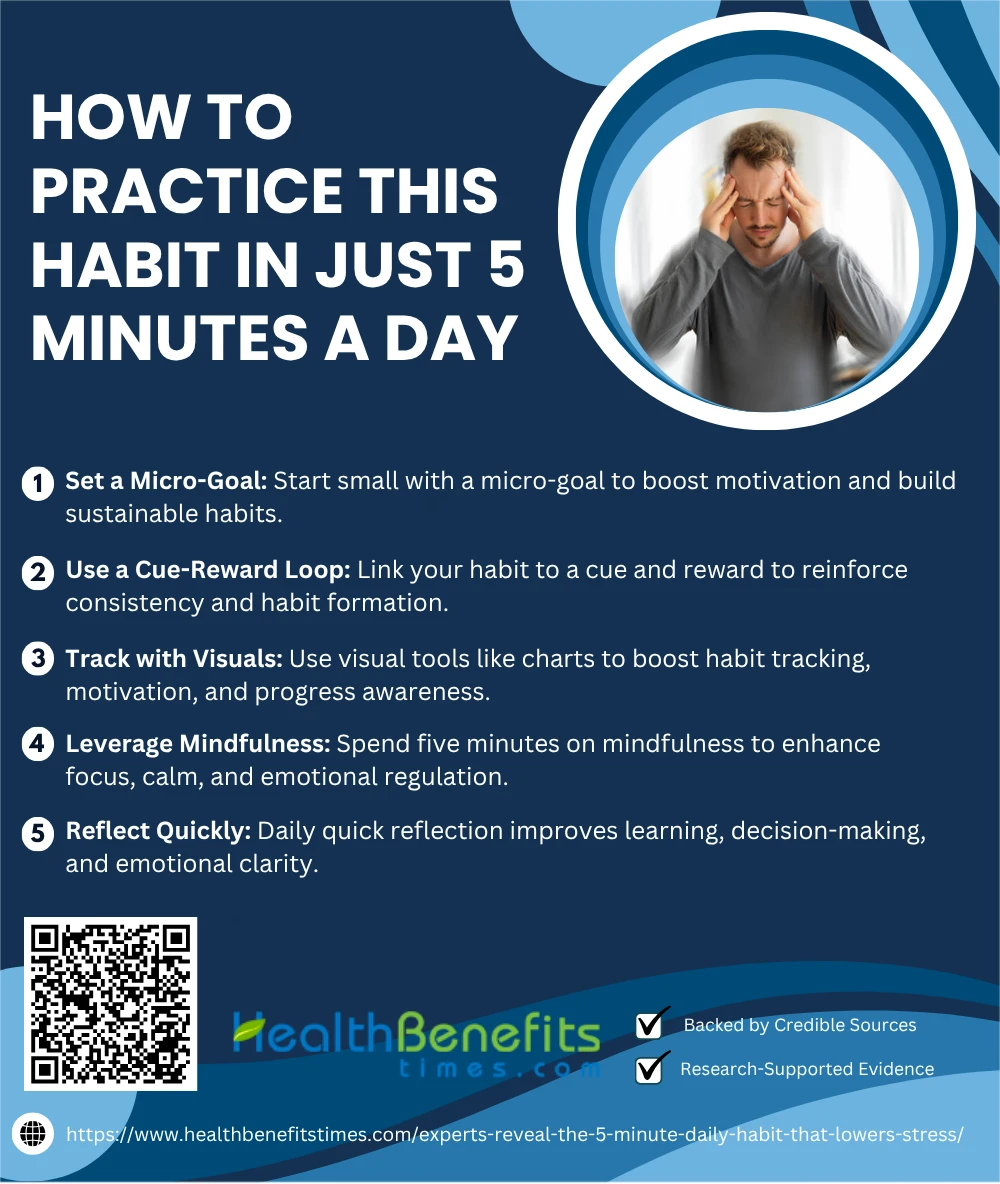
Setting a micro-goal improves self-efficacy, increases motivation (Larson, 2019), and supports habit formation. (82) Even a small task like journaling daily enhances long-term behavior. (83) Micro-goals also reduce resistance by lowering perceived difficulty.
2. Use a Cue-Reward Loop
Practicing the cue-reward loop for five minutes helps embed lasting habits. (84) Neuroscience confirms dopamine-based reinforcement strengthens behavior cycles. (85) Setting a visible cue and pairing it with an immediate reward boosts habit acquisition. Over time, the brain links cue and routine, forming an automatic loop that enhances consistency. (86)
3. Track with Visuals
Spending just five minutes daily to track habits visually enhances motivation and self-awareness. Visual trackers like charts and bullet journals leverage the power of visual feedback, promoting consistency. (87) Studies reveal that self-monitoring increases adherence and goal achievement. (88) Even color-coded progress bars stimulate reward pathways—an easy, engaging habit transformation tool. (89)
4. Leverage Mindfulness
Dedicating five minutes daily to mindfulness practice can rewire your brain for calm and clarity. (90) Research shows short sessions improve emotional regulation and reduce stress. (91) Techniques like deep breathing activate the parasympathetic nervous system, while consistent mindfulness boosts attention and resilience, even in micro-doses. (92) (93)
5. Reflect Quickly
Just five minutes of quick reflection daily enhances learning and decision-making. Studies show reflective practice improves performance and cognitive processing. Journaling your thoughts strengthens self-regulation, while daily reviews increase goal-directed behavior. (94) Even micro-reflection sessions can boost emotional intelligence, clarity, and long-term memory consolidation. (95)
Habit Stacking for Maximum Effect
Habit stacking is a powerful method to boost productivity by linking new habits to existing ones. It simplifies behavior change, making routines easier to remember, maintain, and maximize over time.
 1. Start with a Stable Anchor Habit
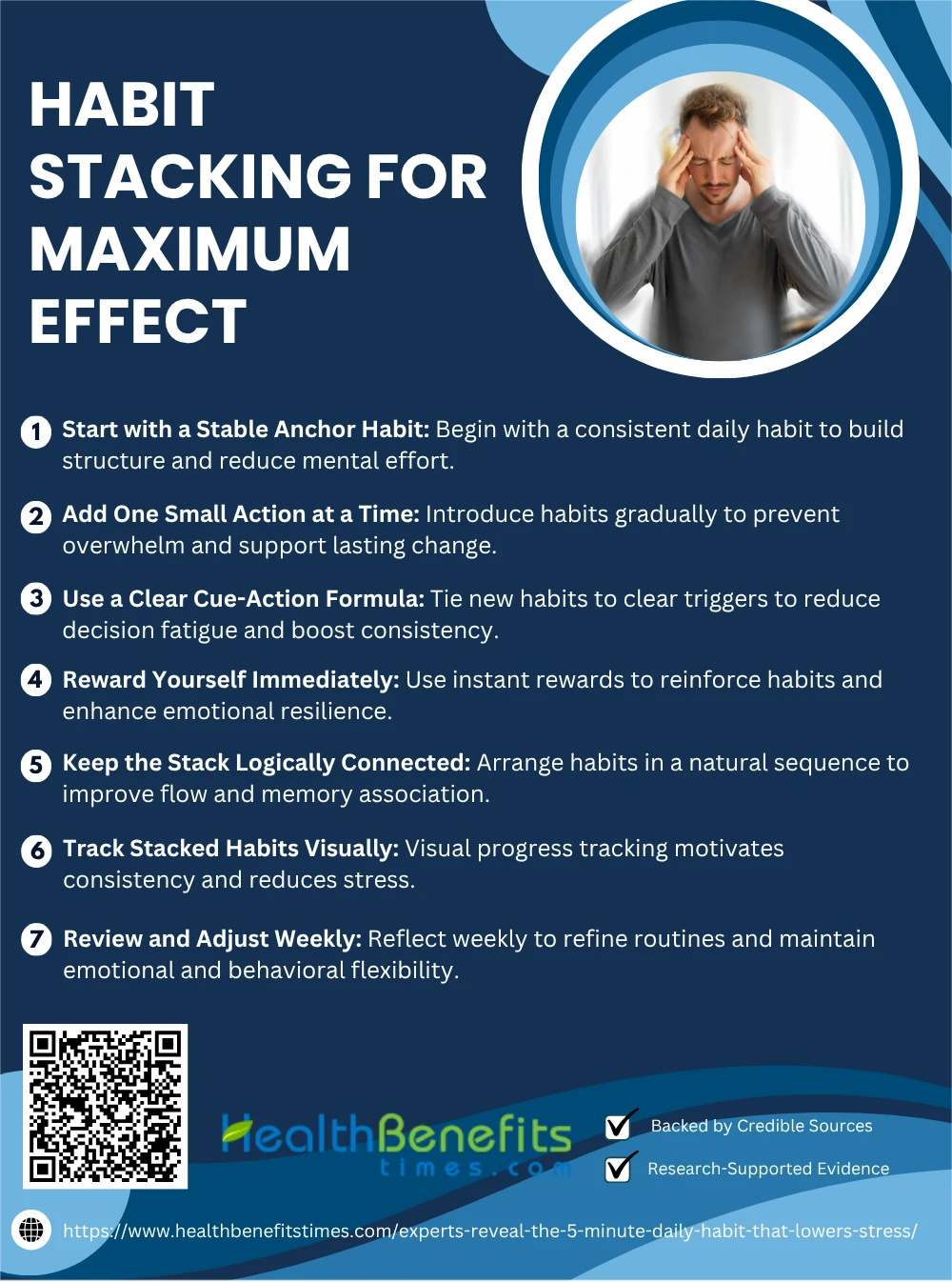
Using a stable anchor habit—like morning tea or brushing teeth—offers predictability that reduces cognitive load and lowers stress responses. (96) Anchored routines enhance emotional regulation, creating psychological safety through structure. (97) This consistency nurtures calm by embedding healthy behaviors in automatic, low-effort loops.
2. Add One Small Action at a Time
Incremental habit building prevents overwhelm and supports long-term change. Adding just one small action at a time lowers perceived effort and reduces anxiety. (98) (96) Research confirms that manageable steps activate positive reinforcement, making the process emotionally rewarding and neurologically sustainable. (84)
3. Use a Clear Cue-Action Formula
Creating a cue-action formula simplifies decision-making and reduces mental strain. (99) When actions follow predictable triggers, stress levels decrease due to reduced cognitive load. This approach strengthens habit automation and fosters executive function by minimizing the emotional cost of transitions and enhancing control over behavior. (100) (85)
4. Reward Yourself Immediately
Immediate rewards after tasks activate the brain’s dopamine system, promoting motivation and reducing cortisol. Short-term reinforcement enhances emotional resilience and supports habit stability. (96) (85) Science shows that positive reinforcement makes behavior more likely to repeat—creating a cycle where success and stress relief go hand-in-hand. (84)
5. Keep the Stack Logically Connected
Linking habits with logical connections reduces cognitive friction and increases flow. (101) When behaviors follow natural sequences—like meditation before journaling—the brain forms stronger associative memory. (102) This structure also supports goal consistency, minimizing stress from decision overload and enhancing ease through context-based habit anchoring.
6. Track Stacked Habits Visually
Visual tracking provides immediate feedback, which lowers anxiety and boosts motivation. Self-monitoring tools like charts or apps support habit continuity by making progress visible. Tracking also activates the brain’s reward circuitry and promotes emotional regulation, turning a simple checkmark into a powerful stress-reducing reinforcement. (97) (89)
7. Review and Adjust Weekly
Weekly reviews enhance self-awareness and adaptive behavior, allowing you to realign goals and ease mental clutter. (94) This reflection fosters executive functioning and reduces overwhelm by identifying friction points early. (97) Regular adjustments promote psychological flexibility, a proven factor in stress resilience and emotional regulation.
Common Mistakes to Avoid When Starting This Habit
Starting a new habit can be exciting, but common mistakes can derail progress. Understanding these pitfalls early helps you stay consistent, motivated, and successful in building lasting, positive routines.
 1. Skipping the Cue
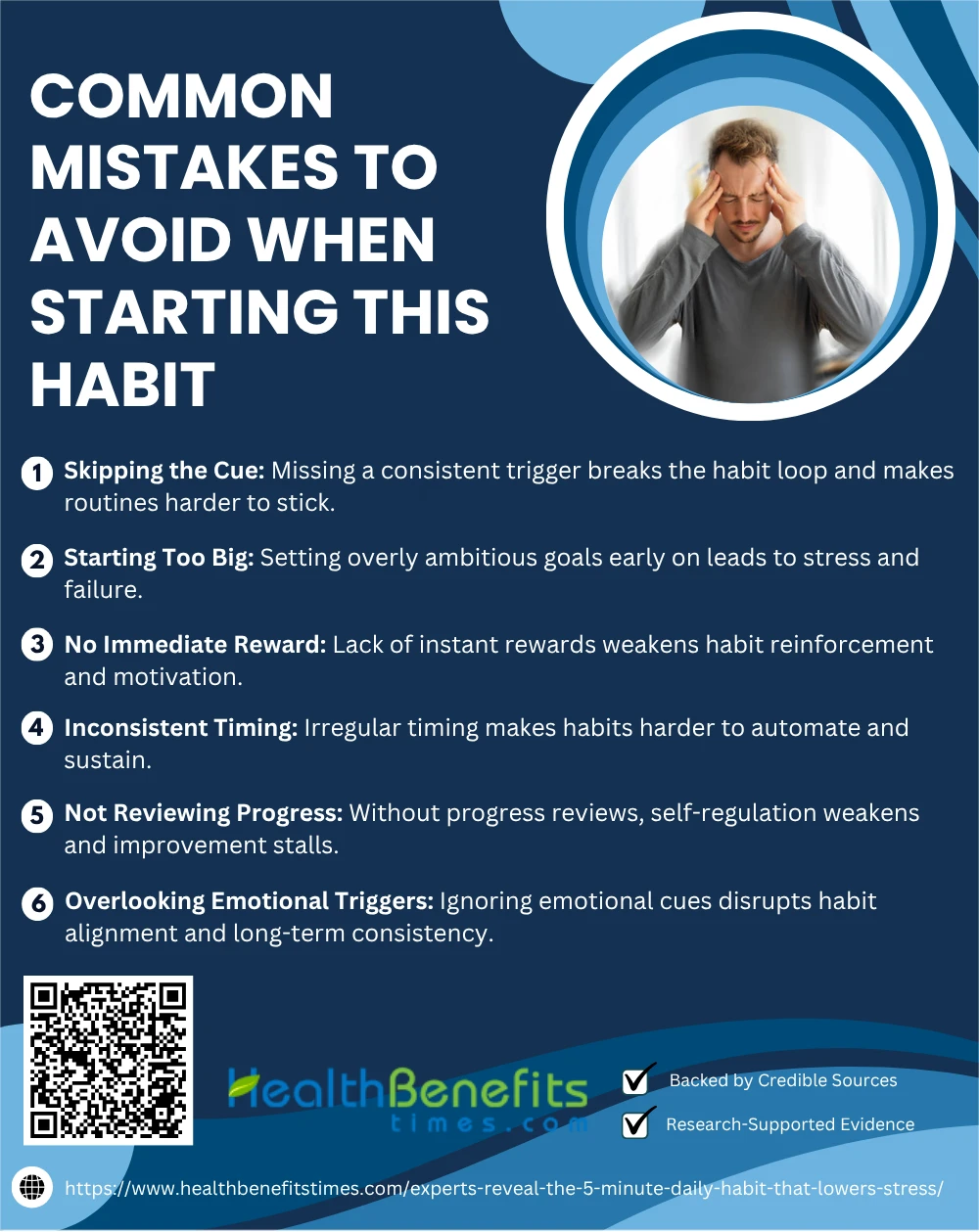
Skipping the cue undermines habit formation by disrupting the habit loop. (85) Without a consistent trigger, behaviors lack context, making them harder to remember and repeat. Research shows cues are critical for behavioral automation and drive the brain’s ability to shift routines into long-term memory patterns. (100) (84)
2. Starting Too Big
Beginning with overly ambitious goals increases stress and resistance, often leading to failure. Behavioral science supports the “tiny habit” approach, where small actions lower psychological barriers. (98) Scaling gradually activates positive reinforcement loops and builds habit stability more effectively than diving into overwhelming changes. (84)
3. No Immediate Reward
Neglecting immediate rewards weakens dopamine reinforcement, reducing the likelihood of repeating a habit. (85) Behavioral conditioning shows that positive reinforcement strengthens neural pathways linked to behavior repetition. (84) Without timely gratification, the brain struggles to associate effort with reward, undermining habit consolidation and decreasing long-term consistency.
4. Inconsistent Timing
Inconsistent timing disrupts routine stability and impairs habit automatization. When habits lack temporal regularity, they demand more cognitive effort, increasing resistance. Neuroscience indicates that fixed timing reinforces circadian synchronization and boosts behavioral memory through context-dependent encoding, making consistent habits easier and less stressful to maintain. (102) (103) ({% trusted %})
5. Not Reviewing Progress
Failing to review progress weakens self-regulation and stalls improvement. Weekly reflection enhances goal alignment, highlights barriers, and sharpens focus. (94) Research shows that self-monitoring builds habit consistency, while cognitive feedback loops empower behavioral adaptation and resilience against setbacks. (97)
6. Overlooking Emotional Triggers
Ignoring emotional triggers can sabotage habits by misaligning actions with internal states. Emotional cues often initiate habit loops, especially under stress. (85) Recognizing these signals fosters psychological flexibility and prevents reactive behaviors. Research confirms that emotional awareness strengthens self-control and long-term behavioral consistency. (95)
7. Tracking without Meaning
Tracking for the sake of ticking boxes can backfire if not connected to personal goals. Meaningful tracking enhances goal-directed behavior and strengthens intrinsic motivation. (104) (89) When reflections are intentional, tracking becomes a tool for self-awareness and adaptive learning, not just a routine task. (94)
Conclusion
Incorporating a simple five-minute daily habit, such as mindfulness meditation, can significantly reduce stress levels and enhance overall well-being. Research indicates that even brief, consistent meditation sessions can lower cortisol levels and strengthen neural connections between the prefrontal cortex and amygdala, leading to improved emotional regulation and focus. This minimal time investment fosters a sense of calm and resilience, making it an accessible and effective strategy for managing daily stressors.