Tropical moist forest from India, Burma, Bhutan, Pakistan, Thailand and Sri Lanka to southern China
Colors
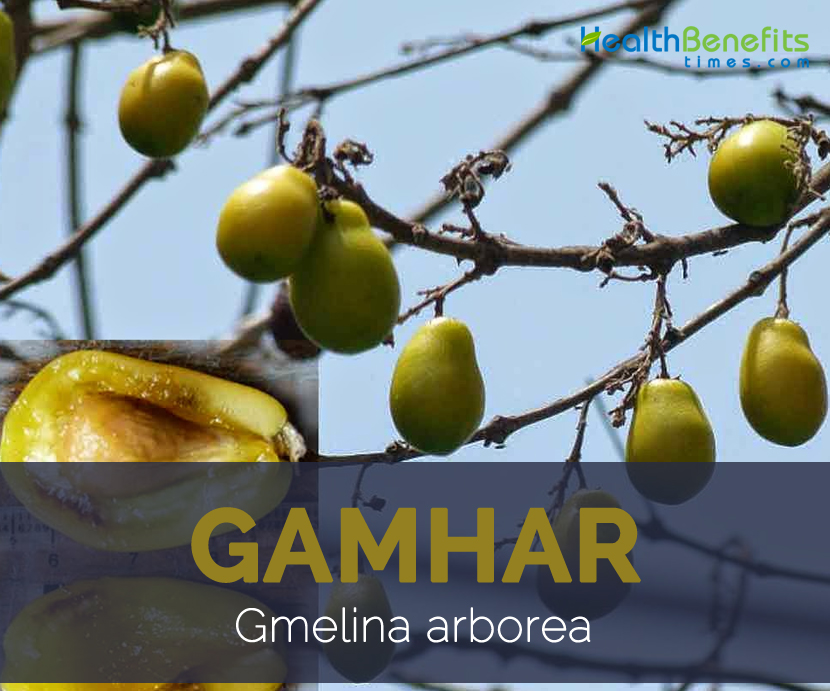
Dark green, turning yellow when ripe
Shapes
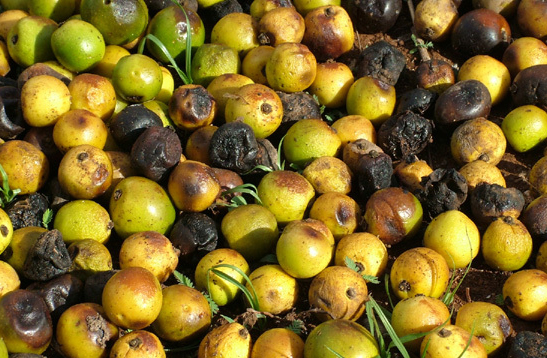
Smooth, ovate or pyriform, 2–2.5 cm long, smooth, large drupe, fleshy, glabrous
Taste
Bittersweet taste
Gmelina arborea, commonly known as beechwood, gmelina, goomar teak, Kashmir tree, Malay beechwood, white teak, yemane and locally known as gamhar, is actually a fast-growing deciduous tree, growing naturally throughout greater part of India at altitudes up to 1,500 meters. Apart from that it also occurs naturally in Myanmar, Thailand, Laos, Cambodia, Vietnam, and in southern provinces of China, and has been grown extensively in Sierra Leone, Nigeria, Malaysia, and on experimental basis in other countries as well. It is normally planted in gardens and roads. Since it is a medicinal tree and its roots, stem, stem bark, fruits, leaves, flowers all are used for medicinal purpose in India since ancient times. Its mention is found in all classical texts of Ayurveda.
Gamhar is a Southeast Asian tree that produces high-quality wood which is pale yellow to cream-colored or pinkish-buff when fresh, turning yellowish brown on exposure and is soft to moderately hard, light to moderately heavy, lustrous when fresh, usually straight to irregular or rarely wavy grained and medium course textured, The wood is used to make furniture, boats and musical instruments, such as Indian sitars and drums. It is also popular as firewood in part because of slow burning. Apart from that its leaves, bark, and roots are often used in tonics and tinctures to cure a wide variety of ailments, and the fruit consists of very high concentrations of helpful antioxidants. This plant has a lot of significance to traditional Indian Ayurvedic medicine, and is respected by many Eastern health practitioners as a broad remedy for moderate pain and inflammation.
Plant
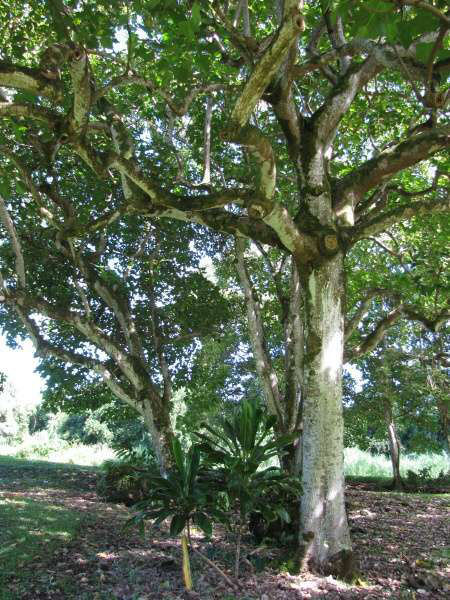
Gamhar is a fast-growing deciduous tree about 12–30 m high and 60–100 cm in diameter. The plant is found growing in tropical semi-evergreen, moist and dry deciduous forest and prefers moist, fertile soil having good drainage and does not thrive on ill-drained soils and remains underdeveloped on dry, sandy or poor soils. Bark is light gray or gray-yellow, smooth, thin, somewhat corking, becoming brown and rough; twigs stout, often slightly 4-angled.
Root
Root is cylindrical with uneven surface, greyish brown, and fracture somewhat tough in bark, brittle and predominant in woody portion. Fresh mature root bark is yellowish in color. Dry pieces are curved and channeled, thinner ones forming single quills, external surface rugged due to presence of vertical cracks, ridges, fissures and numerous lenticels, fracture short and granular.
Leaves
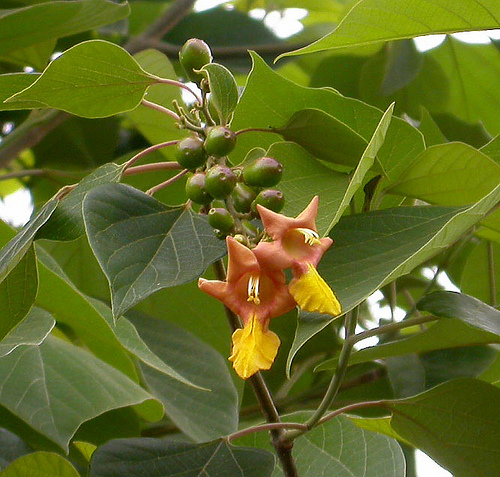
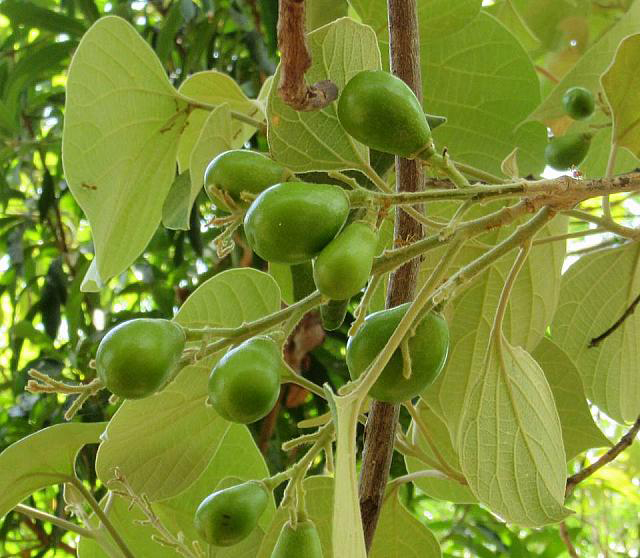
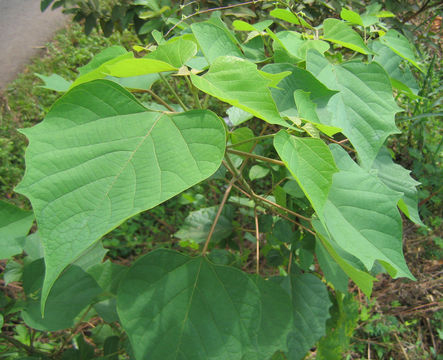
Leaves are 4-8 inch long, broadly ovate, acuminate, entire ; upper surface glabrous when mature, lower persistently clothed with fulvous stellate hairs, base cordate or truncate and shortly cuncate; petioles 2-3 inch long, cylindric, puberulous, glandular at the top.
Flowers
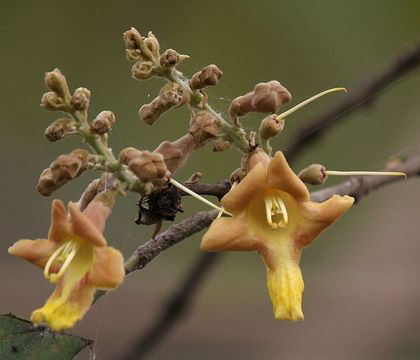
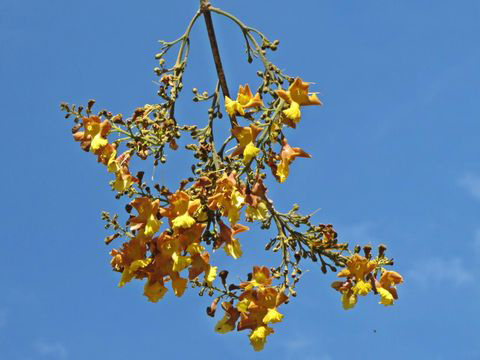
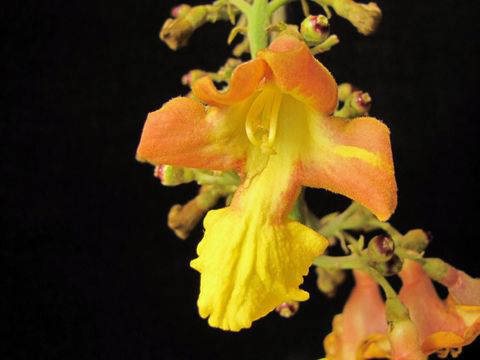
Flowers are bisexual, trumpet-shaped, hairy and short-stalked, having reddish to yellow color; resemble to those of vasa flowers. Flowering normally takes place from February to April.
Fruit
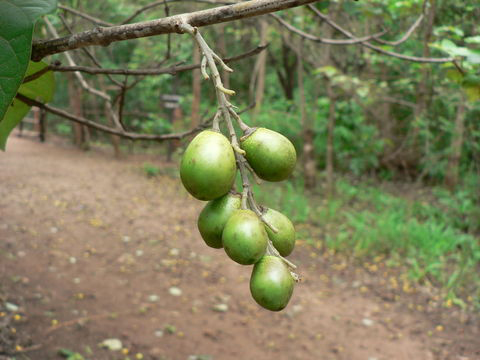
Fruit is smooth, ovate or pyriform, 2–2.5 cm long, smooth, large drupe, fleshy and glabrous sometimes with portion of attached pedicel, two seeded, sometimes one seeded. It is dark green when young turning yellow when ripe.
Seed
Seed is Ovate, 0.5-1 cm long, 0.4-0.6 cm wide, light yellow, and surface smooth, seed coat thin, papery.
This herb is capable to overpower pain and inflammation.
It is helpful herb to improve digestion and absorption in the body.
It is a good supporter for normal functioning of heart.
It is useful in maintaining the normal blood pressure level.
It is useful in improving brain functioning and it has feature to improve intelligence.
It is also natural anti-aging agent.
It is also natural herb to prevent hemorrhages.
The herb is used as a natural strength enhancer of the body.
It is useful herb which has features to increase milk secretion in the lactating mothers.
It properties makes it improve the quantity and quality of semen.
Fruit of Gambhari is also efficient in nourishing hair and promotes the growth of hair.
It can provide relief from burning sensation.
Fruit of this herbaceous plant is found to be useful natural agent in bleeding disorders like nasal bleeding, heavy periods, etc.
It deals with thirst, vata disorders wounds and emaciation.
Gambhari roots are suitable remedy in ascites due to Vata.
It helps in normalizing the abnormally raised temperature.
Fruits have advantageous anabolic effects in tuberculosis to accelerate the healing of cavitation in the lungs.
External application of the paste of the leaves on the forehead lessens the headache, especially in fever.
Decoction of its root can be used for abdominal tumors.
Flowers have its use in Leprosy.
Root and Bark is beneficial herbal agent in hallucination, piles, abdominal pain, burning sensations, fever, tridosha diseases and urinary infection.
Ayurvedic benefits of Gmelina Arborea
Acidity: Gambhari has Pitta reducing properties. Consume 2-3 fruits and drink water.
Biliousness, giddiness: Bark cooked with rice is eaten.
Bleeding disorder: Stem decoction is given to reduce bleeding disorders.
Cold, Cough, gonorrhea: Gambhari Stem bark + Kalmegha Andrographis paniculata whole plant, decoction is given to deal with cold and cough. Or 20 ml leaf juice is taken orally.
Diabetes: Take Gambhari fruit powder twice a day to get remarkable benefits.
Dryness of mouth-throat, less salivation: To get relief from dryness of mouth and throat consume Gambhari fruits.
Fever: A decoction of the roots and bark is given to deal with fever.
Galactagogue (increasing breast milk): Decoction of the root of Gmelina arborea + liquorice root + sugar is taken orally. Or a decoction of the roots and bark is given.
Gout, Arthritis: Mix Gambhari Fruit powder + Mulethi root powder, in equal amount and take 1 teaspoon twice a day. Or Prepare decoction of Gambhari Fruit powder + Gambhari stems bark + Mulethi root powder (each 1 teaspoon) by boiling in 400 ml water till it reduces to 100ml. Filter and drink regularly.
Root powder can also be applied topically.
Hemorrhage: Take ripe fruits with honey to cure Hemorrhage.
Headache in fevers: Leaf paste can be applied to heal headache in fever.
Improving chances of conception/pregnancy, improving fertility: Prepare decoction of Gambhari bark + Mulethi, and drink regularly to improve the chances of conception.
Leucorrhoea: Prepare powder of fruits and take twice-thrice a day.
Rheumatism: Root powder paste is applied to heal rheumatism.
Scorpion bite: Root bark paste is applied.
Smelly discharge worms from ulcers: The leaf paste or juice is used externally to cure Smelly discharge worms from ulcers.
Thirst Due To Fever: The decoction of the pulp of the fruits is given to decrease thirst during fever.
Ulcerative colitis: Eat fresh or dry fruits of Gambhari twice a day with water to heal ulcerative colitis.
Urticaria, Sheet pitta, Skin Allergy: Fruits are taken with milk. Or Fruit powder + Mishri, is taken.
Wounds: Leaf paste is applied for fast recovery of wounds
Different Products from different parts of the plant
Food: The fruit of G. arborea is edible.
Fodder: Leaves are regarded as good fodder and cattle eat the fruit.
Fuel: G. arborea is planted mostly for firewood, which has a calorific value of 4800 kcal/kg. For firewood, a spacing of 2 x 2 m is recommended. Plantations of G. arborea have been established for tobacco curing.
Apiculture: Flowers produce plentiful nectar, which produces high-quality honey.
Fiber: The wood produces good-quality pulp. Unmixed semi-chemical pulp is suitable only for carton board or low-grade writing paper, but kraft pulp of yemane wood is suitable for higher grades of writing paper. It is also utilized for particle board.
Timber: When first cut, the wood is yellowish- to reddish-white, turning light russet or yellowish-brown with a density of 400-560 kg/cubic m. The wood seasons well without degrading, but it is slow to dry both in the open and in a kiln. Where it is indigenous, it is regarded as a valuable general-purpose wood because of its dimensional stability. The natural durability of the wood is about 15 years. Uses include the manufacture of furniture, plywood core stock, mine props, matches and timber for light construction.
Tannin or dyestuff: Both wood ash and fruit yield a very persistent yellow dye.
Medicine: Bark, leaves and roots contain traces of alkaloids and are used medicinally in its native range.
Hindu medicine: Both fruit and bark have medicinal properties against bilious fever.
Other products: Recommended for silkworm culture.
Other Facts
Gmelina arborea timber is reasonably strong for its weight. It is used in constructions, furniture, carriages, sports, musical instruments and artificial limbs.
It is a very steady timber and moderately resistant to decay and ranges from very resistant to moderately resistant to termites.
In boat building it is used for decking and for oars.
It is a popular timber for picture and slate frames, turnery articles and various types of brush backs, brush handles and toys also for handles of chisels, files, saws, screw drivers, sickles etc.
It is also used for manufacturing tea chests and general purpose plywood, blackboards, frame core and cross bands of flush door shutters.
Gmelina arborea Facts
Gmelina arborea Roxb is one of the important medicinal plants most widely propagated and cultivated species of the family Verbenaceae. It is commonly known as “Kashmarya” and one of the herbs mentioned in all ancient scriptures of Ayurveda. It is a beautiful fast growing avenue tree that grows throughout India. This medicinal plant is highly valued from time immemorial because of its vast medicinal properties. It is extensively used traditionally as anti-helmintic, antimicrobial, anti-diabetic, diuretic, and hepato-protective and antiepileptic agent.
Name
Gamhar
Scientific Name
Gmelina arborea
Native
Tropical moist forest from India, Burma, Bhutan, Pakistan, Thailand and Sri Lanka to southern China
Found growing in Tropical semi-evergreen, moist and dry deciduous forest.
Soil
Prefers moist, fertile soil having good drainage.and does not thrive on ill-drained soils and remains stunted on dry, sandy or poor soils
Plant Size
About 12–30 m high and 60–100 cm in diameter
Bark
Light gray or gray-yellow, smooth, thin, somewhat corking, becoming brown and rough;
Leaf
Simple, opposite and heart shaped tapering towards the apex with length of 10-25 cm and breadth of 8-20 cm and have waxy bloom on the underside
Flower
Bisexual, trumpet-shaped, hairy and short-stalked, having reddish to yellow color; resemble to those of vasa flowers.
Flowering Season
February to April
Fruit Shape & Size
Smooth, ovate or pyriform, 2–2.5 cm long, smooth, large drupe, fleshy, glabrous
Fruit Color
Dark green, turning yellow when ripe
Flavor/Aroma
Fruity smell
Taste
Bittersweet taste
Seed
2-4, oblong
Plant Parts Used
Root, bark, fruit, flower, leaves
Season
May onwards up to June
Traditional Medicinal Uses
The roots are used in the treatment of gonorrhoea, Cough, rheumatism and foetid ulcers.
It is also used in Catarrh of the bladder.
Root and bark of Gmelina arborea are claimed to be stomachic, galactagogue laxative and anthelmintic; improve appetite, useful in hallucination, piles, abdominal pains, burning sensations, fevers, ‘tridosha’ and urinary discharge.
A paste of the leaves has been applied to treat headaches associated with fever.
Juice is used as wash for ulcers.
Flowers are useful in leprosy and blood diseases.
Plant is recommended in combination with other drugs for the treatment of snakebite and scorpion sting.
In snakebite a decoction of the root and bark is given internally.
Root decoction is used in folk remedies for abdominal tumors in India.
Juice of young leaves has been used to treat gonorrhea and as a cough medicine.
The root has been used to treat epilepsy, fever and indigestion.
Bittersweet fruit has been included in cooling decoctions given for fevers.
Fruits are recommended in excessive thirst, dysuria, sexual debility in males and habitual abortion.
Roots alleviate flatulence, augment the appetite and are salutary in piles, being mild laxative.
Cold infusion of candana, ustra, gambhari works well with sugar, to alleviate the thirst.
For hyperacidity, the gambhari leaves, apamarga roots and the bark-skin of salmali are mashed with cow’s milk and are given orally.
In dysuria, the decoction of its roots is caring.
Leaves juice, milk and sugar are recommended in inflammatory conditions of urinary bladder and dysuria.
Oils extracted from the leaves and shoots may be also applied to the body as a massage oil to relieve fevers.
Juice pressed from the leaves is usually mixed with milk and sugar and consumed to help treat inflammation of the bladder or urinary tract
Roots are also thought to treat flatulence and increase appetite.
Roots are mentioned as a reliever of menstrual irregularities and are occasionally also used as a means of increasing milk supply in breastfeeding mothers.
Culinary Uses
The flowers are mixed with rice to make a delicious cake-like festive dish that is eaten on the traditional New Year.
Other Facts
It is also used in artificial limbs, carriages and bobbins.
Gmelina arborea leaves are considered good for cattle and are also used as a feed to eri-silkworm.
In Gambia there are dual purpose plantings, for firewood and for honey.
It is often planted as an ornamental avenue shade tree.
The wood makes a fairly good charcoal.
Both wood ash and fruit yield a very persistent yellow dye.