

Heart rate (HR) refers to the number of times the heart beats per minute (bpm). It is a critical physiological parameter that reflects the integrated response of the cardiovascular system to various internal and external stimuli, including autonomic, cortical, and environmental inputs. HR can vary significantly based on factors such as age, sex, physical fitness, and even the time of day, with resting heart rate (RHR) typically ranging between 50 and 90 bpm in healthy adults. During physical activity, HR increases to meet the higher oxygen demands of the body, and this variability can be measured to assess exercise intensity and cardiovascular fitness. Elevated HR, particularly when measured at rest, has been associated with increased risks of cardiovascular morbidity and mortality, making it an important predictor of cardiovascular health. Understanding and monitoring HR, including its variability, can provide valuable insights into an individual’s cardiovascular condition and overall health.
Factors affecting heart rate
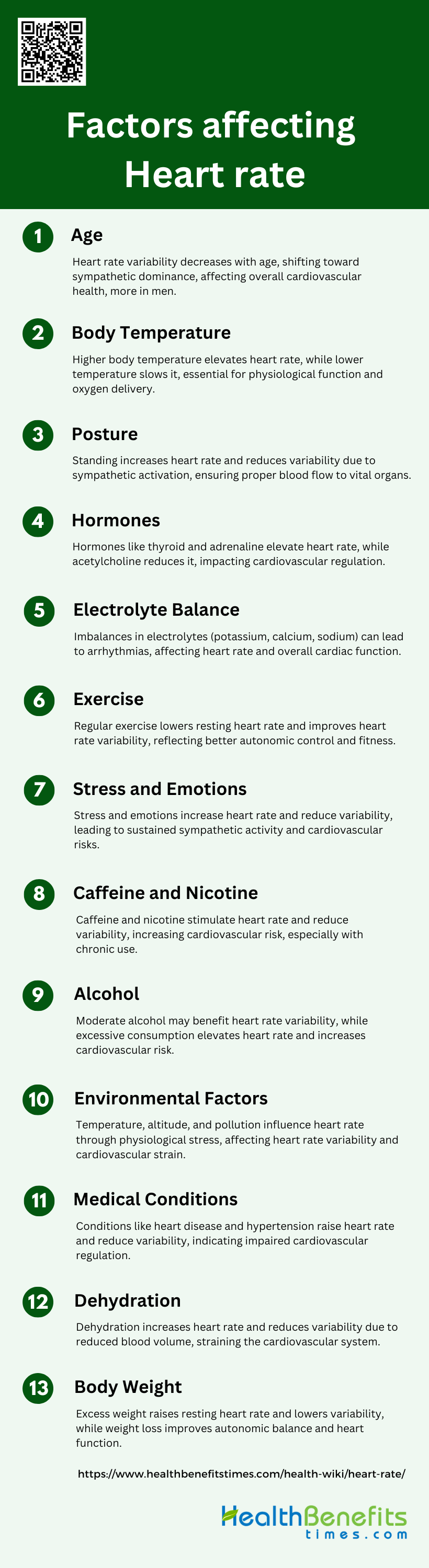
Heart rate is influenced by a variety of factors that can either increase or decrease it. Understanding these factors is crucial for maintaining cardiovascular health and optimizing physical performance. Below are some key elements that affect heart rate:
1. Age
Age significantly impacts heart rate and heart rate variability (HRV). As individuals age, there is a notable decline in HRV, reflecting reduced vagal control of the heart rhythm. This decline is more pronounced in men than in women, although women generally have higher HRV values. The normalized high-frequency (HF) power, which is indicative of parasympathetic activity, decreases with age, while low-frequency (LF) power, associated with sympathetic activity, increases. These changes suggest a shift towards sympathetic dominance and reduced parasympathetic modulation with aging, which can affect overall cardiovascular health.
2. Body Temperature
Body temperature influences heart rate through its effect on metabolic rate and autonomic nervous system activity. An increase in body temperature, such as during fever or exercise, typically results in an elevated heart rate as the body works to dissipate heat and maintain homeostasis. Conversely, a decrease in body temperature can lead to a slower heart rate. This thermoregulatory response is crucial for maintaining optimal physiological function and ensuring adequate blood flow and oxygen delivery to tissues under varying thermal conditions.
3. Posture
Postural changes significantly affect heart rate and HRV. Transitioning from a supine to a standing position increases heart rate and decreases HRV due to the activation of the sympathetic nervous system and withdrawal of parasympathetic activity. This response is necessary to maintain blood pressure and ensure adequate blood flow to the brain and other vital organs. The LF power increases, and HF power decreases upon standing, reflecting the body’s adaptation to gravitational changes and the need for enhanced cardiovascular support.
4. Hormones
Hormones play a crucial role in regulating heart rate. For instance, thyroid hormones can increase heart rate by enhancing the sensitivity of the heart to catecholamines. Similarly, adrenal hormones like adrenaline and noradrenaline increase heart rate by stimulating the sympathetic nervous system. Conversely, hormones such as acetylcholine, released by the parasympathetic nervous system, can decrease heart rate. Hormonal imbalances, therefore, can lead to significant changes in heart rate and overall cardiovascular function.
5. Electrolyte Balance
Electrolytes such as potassium, calcium, and sodium are vital for maintaining the electrical activity of the heart. Imbalances in these electrolytes can lead to arrhythmias and changes in heart rate. For example, hyperkalemia (high potassium levels) can cause bradycardia, while hypokalemia (low potassium levels) can lead to tachycardia. Maintaining proper electrolyte balance is essential for the normal functioning of the heart’s conduction system and overall cardiovascular health.
6. Exercise
Exercise has a profound impact on heart rate and HRV. Regular physical activity enhances cardiovascular fitness, leading to a lower resting heart rate and higher HRV, indicative of better autonomic control. During exercise, heart rate increases to meet the higher oxygen and nutrient demands of the muscles. Post-exercise, heart rate gradually returns to baseline, and HRV increases, reflecting improved parasympathetic reactivation. Different types of exercise, such as endurance and high-intensity training, can differentially affect HRV and cardiovascular health.
7. Stress and Emotions
Stress and emotions significantly influence heart rate through the autonomic nervous system. Acute stress activates the sympathetic nervous system, leading to an increased heart rate and reduced heart rate variability. Chronic stress can result in sustained sympathetic dominance and decreased parasympathetic activity, adversely affecting cardiovascular health. Emotional states such as anxiety and depression are also associated with lower HRV, indicating impaired autonomic regulation and increased cardiovascular risk.
8. Caffeine and Nicotine
Caffeine and nicotine are stimulants that can increase heart rate and affect HRV. Caffeine, found in coffee and energy drinks, can lead to a temporary increase in heart rate and a decrease in HRV by stimulating the sympathetic nervous system. Nicotine, present in tobacco products, also increases heart rate and reduces HRV, with chronic use leading to sustained sympathetic activation and impaired cardiovascular function. Both substances can exacerbate cardiovascular conditions and should be consumed with caution.
9. Alcohol
Alcohol consumption has a complex relationship with heart rate and HRV. Moderate alcohol intake may have a neutral or even beneficial effect on HRV, while excessive consumption can lead to increased heart rate and reduced HRV, indicating impaired autonomic function. Chronic heavy drinking is associated with a higher risk of arrhythmias and cardiovascular diseases. The effects of alcohol on heart rate and HRV can vary based on individual factors such as genetic predisposition and overall health status.
10. Environmental Factors
Environmental factors such as temperature, altitude, and pollution can influence heart rate and HRV. Extreme temperatures can stress the cardiovascular system, leading to changes in heart rate to maintain homeostasis. High altitudes can increase heart rate due to lower oxygen levels, while pollution can lead to increased heart rate and reduced HRV due to inflammatory and oxidative stress responses. Understanding these environmental impacts is crucial for managing cardiovascular health in different settings.
11. Medical Conditions
Various medical conditions, including heart disease, diabetes, and hypertension, can significantly affect heart rate and HRV. Conditions like heart failure and coronary artery disease often result in elevated heart rate and reduced HRV, reflecting impaired autonomic regulation and increased cardiovascular risk. Managing these conditions through medication, lifestyle changes, and regular monitoring is essential for maintaining optimal heart rate and HRV and reducing the risk of adverse cardiovascular events.
12. Dehydration
Dehydration can lead to an increased heart rate as the body attempts to maintain cardiac output despite reduced blood volume. This compensatory mechanism ensures adequate blood flow to vital organs but can strain the cardiovascular system. Dehydration also affects HRV, typically reducing it due to decreased parasympathetic activity and increased sympathetic activation. Maintaining proper hydration is crucial for optimal cardiovascular function and preventing excessive strain on the heart.
13. Body Weight
Body weight influences heart rate and HRV, with obesity often associated with higher resting heart rate and lower HRV. Excess body weight increases the workload on the heart and can lead to sympathetic overactivity and reduced parasympathetic modulation. Weight loss through diet and exercise can improve HRV and reduce resting heart rate, reflecting better autonomic balance and cardiovascular health. Monitoring body weight and maintaining a healthy lifestyle are essential for optimal heart function.
How Heart Rate is measured
Heart rate can be measured using various methods, including manual pulse checks, heart rate monitors, and wearable devices like smartwatches. Manual pulse checks involve palpating key pulse points such as the wrist (radial artery) and neck (carotid artery) to count the beats per minute. Heart rate monitors and wearables often use photoplethysmography (PPG), which detects blood volume changes in the microvascular bed of tissue, either through contact or non-contact methods. The accuracy of these measurements is crucial, especially in clinical settings, as it can impact the diagnosis and management of cardiovascular conditions. Studies have shown that while some smartphone apps and non-contact methods provide reliable measurements, others may be less accurate, highlighting the importance of choosing the right tool for precise heart rate monitoring.
Types of Heart Rates
Understanding the different types of heart rates is essential for assessing cardiovascular health and optimizing fitness routines. Each type of heart rate provides unique insights into how the heart functions under various conditions. Below are the primary types of heart rates and their significance:
1. Resting Heart Rate
Resting heart rate (RHR) is a critical indicator of general health and fitness. A lower RHR typically signifies better cardiovascular fitness and more efficient heart function. Studies have shown that a high RHR is associated with increased risks of cardiovascular diseases, cancer, and all-cause mortality. Regular exercise, particularly endurance training and yoga, has been found to significantly reduce RHR, contributing to improved overall health and reduced mortality risk. Monitoring RHR can help in early detection of potential health issues and in tailoring fitness programs to improve cardiovascular health.
2. Target Heart Rate
Target heart rate (THR) is essential for optimizing exercise and training effectiveness. It helps in ensuring that the exercise intensity is sufficient to improve cardiovascular fitness without overexertion. The American College of Sports Medicine recommends using percentages of maximal heart rate (HRmax) to determine THR, typically ranging from 55% to 90% of HRmax depending on the fitness goals. To calculate personal THR, one can use the formula: THR = RHR + (intensity level * (HRmax – RHR)), where intensity level is a chosen percentage of HRmax. This method ensures that the exercise is performed within a safe and effective range.
3. Maximum Heart Rate
Maximum heart rate (HRmax) is the highest heart rate an individual can achieve during maximal physical exertion. It plays a crucial role in fitness as it helps in setting appropriate exercise intensities. HRmax can be estimated using the formula 220 minus age, although more accurate methods involve direct measurement through graded exercise tests. Accurate determination of HRmax is particularly important for individuals in cardiac rehabilitation or those on beta-adrenergic blockade therapy, as using predicted HRmax can lead to inappropriate exercise intensities. Understanding HRmax helps in designing effective and safe exercise programs tailored to individual fitness levels.
Different Types of Heart Rate Zones
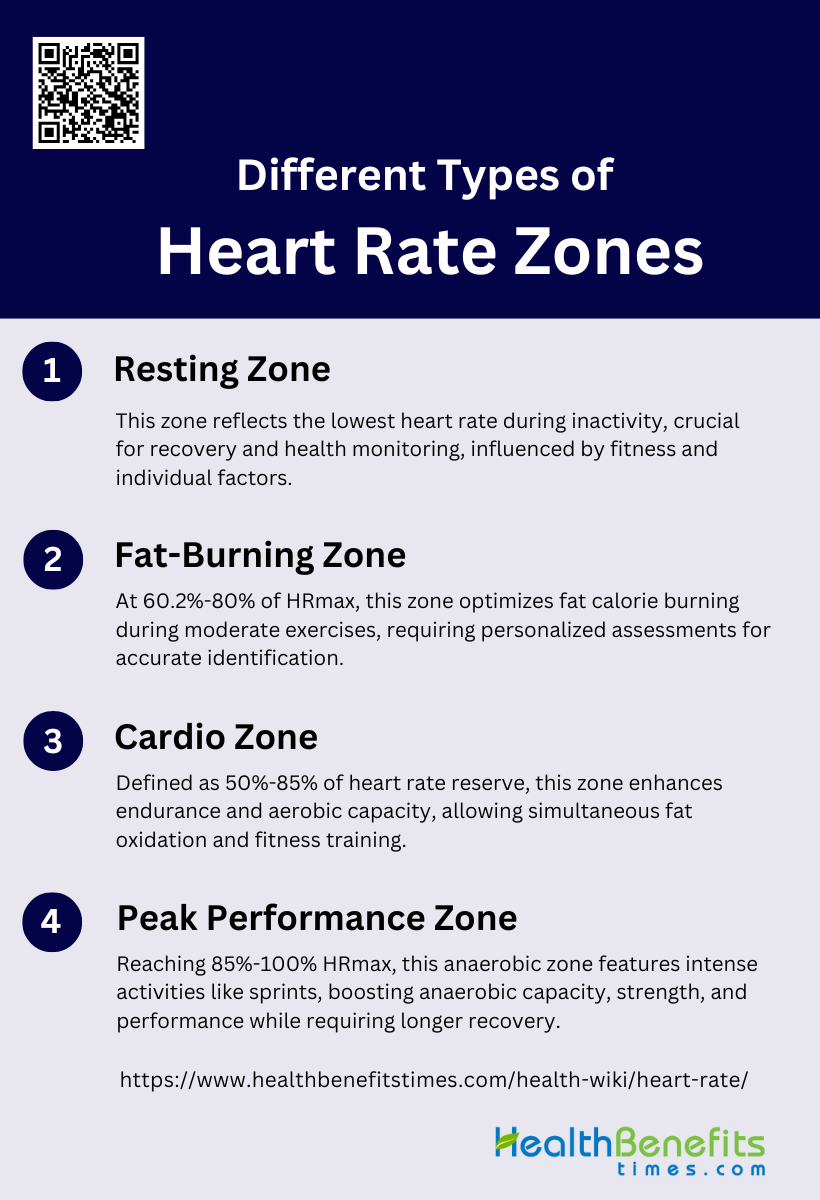
Heart rate zones are used to gauge the intensity of physical activity and optimize workout efficiency. Each zone serves a specific purpose in training and overall cardiovascular health. Below are the different types of heart rate zones and their benefits:
1. Resting Zone
The resting zone is characterized by a heart rate that is typically at its lowest during periods of inactivity or minimal physical exertion. This zone is crucial for recovery and overall cardiovascular health. It is generally measured when an individual is at complete rest, such as after waking up in the morning. The resting heart rate can vary significantly between individuals, influenced by factors such as age, fitness level, and overall health. Monitoring the resting heart rate can provide valuable insights into an individual’s fitness progress and help detect potential health issues early on.
2. Fat-Burning Zone
The fat-burning zone is a specific heart rate range where the body is believed to burn a higher percentage of calories from fat. According to Carey (2009), this zone typically falls between 60.2% and 80.0% of the maximal heart rate. The study found that maximal fat oxidation occurred at around 54.2% of maximal oxygen uptake (VO2max). This zone is often targeted during moderate-intensity exercises, such as brisk walking or light jogging, to optimize fat loss. However, the study also noted significant individual variability, suggesting that personalized assessments might be necessary for accurate zone determination.
3. Cardio Zone
The cardio zone, also known as the aerobic zone, is where the heart rate is elevated to a level that improves cardiovascular endurance and overall aerobic capacity. This zone is typically defined as 50% to 85% of the heart rate reserve, with the upper limit approaching the anaerobic threshold. Training in this zone enhances the efficiency of the cardiovascular system, increases lung capacity, and improves the body’s ability to transport and utilize oxygen. The overlap between the fat-burning and cardio zones indicates that training for both fat oxidation and aerobic fitness can be achieved simultaneously.
4. Peak Performance Zone
The peak performance zone, or anaerobic zone, is characterized by high-intensity exercise where the heart rate reaches 85% to 100% of its maximum. This zone is typically achieved during short bursts of intense activity, such as sprinting or high-intensity interval training (HIIT). Training in this zone improves anaerobic capacity, increases muscle strength, and enhances overall athletic performance. However, it is also associated with higher levels of fatigue and requires longer recovery periods. Athletes often use this zone to push their limits and achieve peak performance during competitions.
What is a Dangerous Heart Rate?
Abnormal heart rates, such as tachycardia (fast heart rate), bradycardia (slow heart rate), and irregular heartbeats, can be indicative of underlying cardiovascular issues and should not be ignored. Tachycardia is typically defined as a heart rate exceeding 100 beats per minute, while bradycardia is characterized by a heart rate below 60 beats per minute. Both conditions can be associated with increased risks of cardiovascular and non-cardiovascular death, as well as the development of sustained hypertension in individuals with normal or borderline elevated blood pressure values. It is crucial to seek medical attention if you experience persistent or severe symptoms such as chest pain, dizziness, or shortness of breath, as these could be signs of a serious condition like a myocardial infarction. Early intervention can be life-saving and help manage potential risks effectively.
Tips for maintaining a healthy heart rate
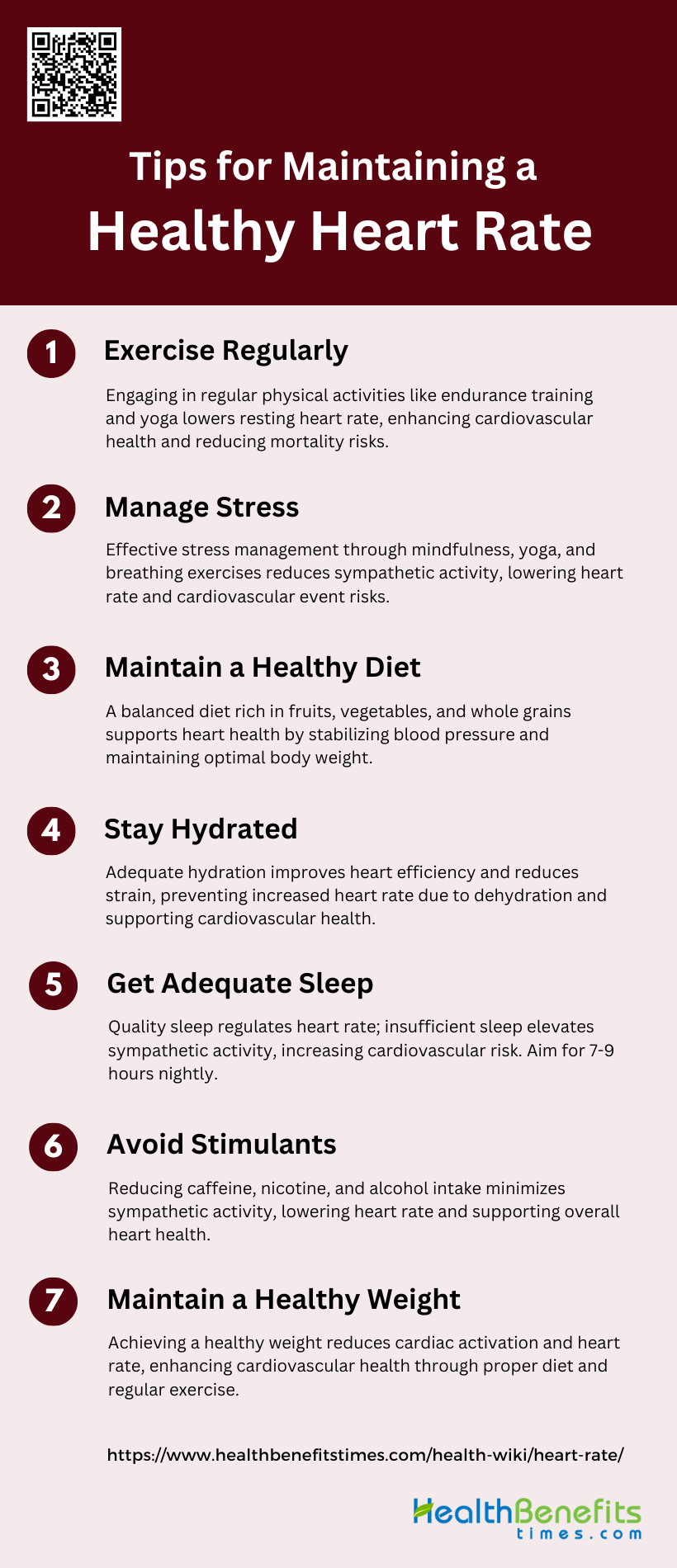
Maintaining a healthy heart rate is crucial for overall cardiovascular health and well-being. By adopting certain lifestyle habits, you can effectively manage your heart rate and improve your heart health. Below are some Tips for maintaining a healthy heart rate:
1. Exercise Regularly
Regular exercise is crucial for maintaining a healthy heart rate. Studies have shown that engaging in physical activities, particularly endurance training and yoga, significantly reduces resting heart rate (RHR) in both sexes. This reduction in RHR is associated with a decrease in all-cause mortality, highlighting the importance of regular exercise for cardiovascular health. Additionally, physical training reduces sympathetic nervous system activity, which can help lower heart rate and improve overall heart function. Therefore, incorporating regular exercise into your routine is a highly effective strategy for maintaining a healthy heart rate and promoting cardiovascular health.
2. Manage Stress
Managing stress is essential for maintaining a healthy heart rate. Chronic stress can lead to increased sympathetic nervous system activity, which elevates resting heart rate and contributes to cardiovascular risk. Techniques such as mindfulness-based stress reduction, yoga, and slow breathing exercises have been shown to effectively lower heart rate and blood pressure, thereby reducing the risk of cardiovascular events. By incorporating stress management practices into daily life, individuals can mitigate the adverse effects of stress on heart rate and overall cardiovascular health.
3. Maintain a Healthy Diet
A healthy diet plays a pivotal role in maintaining a healthy heart rate. Consuming a diet rich in vegetables, fruits, whole grains, and lean proteins while limiting salt, saturated fats, and added sugars can significantly reduce the risk of developing hypertension and dyslipidemias, which are key factors affecting heart rate. Additionally, a balanced diet helps in maintaining a healthy body weight, which is crucial for optimal heart function. By adhering to dietary recommendations, individuals can support their cardiovascular health and maintain a stable heart rate.
4. Stay Hydrated
Staying hydrated is important for maintaining a healthy heart rate. Adequate hydration ensures that the heart can pump blood more efficiently, reducing the strain on the cardiovascular system. Dehydration can lead to an increase in heart rate as the body compensates for the reduced blood volume. Therefore, drinking sufficient water throughout the day helps in maintaining a stable heart rate and supports overall cardiovascular health.
5. Get Adequate Sleep
Adequate sleep is essential for maintaining a healthy heart rate. Poor sleep quality or insufficient sleep can lead to increased sympathetic nervous system activity, resulting in elevated heart rate and higher cardiovascular risk. Studies have shown that weight gain, often associated with poor sleep, can increase cardiac sympathetic activation during both wakefulness and sleep, further stressing the importance of good sleep hygiene. Ensuring 7-9 hours of quality sleep per night can help regulate heart rate and promote cardiovascular health.
6. Avoid Stimulants
Avoiding stimulants such as caffeine, nicotine, and excessive alcohol is crucial for maintaining a healthy heart rate. These substances can increase sympathetic nervous system activity, leading to elevated heart rate and higher cardiovascular risk. Reducing or eliminating the intake of these stimulants can help lower resting heart rate and improve overall heart function. By making mindful choices about stimulant consumption, individuals can better manage their heart rate and support cardiovascular health.
7. Maintain a Healthy Weight
Maintaining a healthy weight is vital for a stable heart rate and overall cardiovascular health. Obesity is associated with increased cardiac sympathetic activation, which can elevate heart rate and contribute to cardiovascular risk. Weight management through a combination of healthy eating, regular exercise, and behavioral interventions can help reduce heart rate and improve heart function. By achieving and maintaining a healthy weight, individuals can significantly lower their heart rate and enhance their cardiovascular health.
Heart Rate Variability (HRV)
Heart Rate Variability (HRV) refers to the variation in time intervals between consecutive heartbeats, known as inter-beat intervals (IBIs), and is a key indicator of autonomic nervous system function, reflecting the balance between sympathetic and parasympathetic activity. The difference between heartbeats is not constant; a healthy heart exhibits complex and dynamic fluctuations that allow the cardiovascular system to adapt to various physical and psychological challenges. HRV is significant for assessing stress and recovery, as lower HRV is often associated with stress, indicating reduced parasympathetic activity and increased sympathetic dominance, while higher HRV suggests better autonomic regulation and recovery. Monitoring HRV can be done using time-domain, frequency-domain, and non-linear metrics, which provide insights into the autonomic regulation of the heart. These measurements can be easily and non-invasively obtained using wearable devices, making HRV a valuable tool for evaluating emotional and physiological states.
FAQs
1. What are the normal ranges for heart rate in different age groups?
Normal heart rate ranges can vary by age, with newborns typically having a higher heart rate of 120-160 bpm, while children and adolescents may range from 70-100 bpm. For adults, a resting heart rate of 60-100 bpm is considered normal.
2. How does hydration status affect heart rate?
Dehydration can lead to an increased heart rate as the body compensates for reduced blood volume. Conversely, adequate hydration supports optimal cardiovascular function and helps maintain a stable heart rate.
3. What are the signs of an abnormal heart rate?
Signs of an abnormal heart rate include palpitations, dizziness, fainting, shortness of breath, and chest pain. These symptoms may indicate bradycardia (slow heart rate) or tachycardia (fast heart rate), warranting medical evaluation.
4. How does sleep quality affect heart rate?
Poor sleep quality can lead to an elevated resting heart rate and reduced heart rate variability. Sleep disorders, such as sleep apnea, can significantly affect cardiovascular health.
5. What lifestyle changes can help regulate heart rate?
Regular physical activity, a balanced diet, adequate hydration, stress management techniques, and sufficient sleep can all contribute to a healthy heart rate and improved heart rate variability.
6. Can heart rate vary throughout the day?
Yes, heart rate can fluctuate throughout the day based on activity levels, stress, food intake, and hormonal changes. It is usually lower in the morning and may rise during physical activity or stressful situations.
7. How does temperature affect heart rate?
Higher ambient temperatures can increase heart rate as the body works to dissipate heat. Conversely, lower temperatures can lead to a lower heart rate as metabolic demands decrease.
8. What is the relationship between heart rate and physical fitness?
Individuals with higher cardiovascular fitness levels tend to have lower resting heart rates and greater heart rate variability, indicating better autonomic regulation and cardiovascular health.
9. How can I effectively monitor my heart rate during exercise?
To monitor heart rate during exercise, consider using heart rate monitors, fitness trackers, or smartphone apps that provide real-time data on your heart rate, ensuring you stay within your target heart rate zone.
10. What should I do if my heart rate is consistently high or low?
If you consistently experience a high or low heart rate, it’s advisable to consult a healthcare professional for evaluation and possible testing to determine underlying causes and appropriate management strategies.