

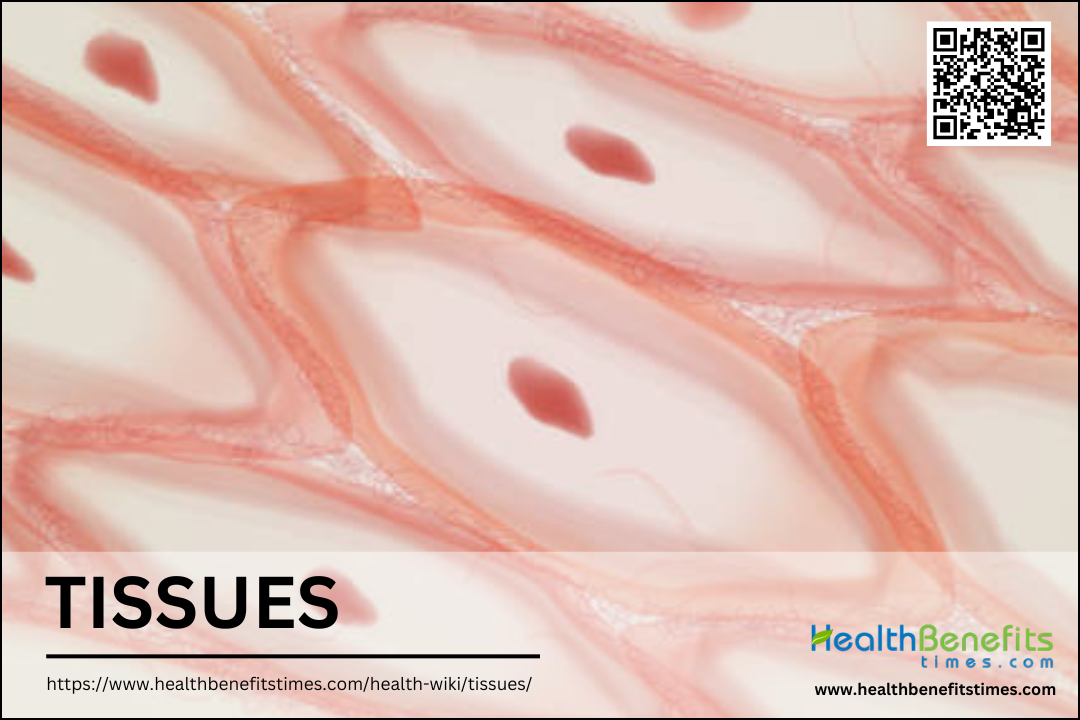
Tissues are groups of similar cells that work together to perform specific functions within an organism. The concept of tissues was first introduced in the 17th century by N. Grew, and the classification of tissues into four main types—epithelium, connective tissue, nervous tissue, and muscle tissue—was established in the 19th century by German histologists R.A. Kölliker and F. Leydig. Tissues are not only defined by their cellular composition but also by their extracellular matrix (ECM), which provides structural and functional support. The ECM’s composition varies significantly across different tissues, contributing to their unique properties and functions, such as the rigidity of bone or the elasticity of skin. Advances in tissue engineering aim to create functional tissue substitutes by mimicking the complex architecture and biological functions of native tissues, often using scaffolds and stem cells to promote tissue repair and regeneration. Perinatal tissues, such as the placenta and umbilical cord, have shown great potential in regenerative medicine due to their unique biological properties and ethical advantages.
How tissues are formed
Tissue formation is a complex and dynamic process regulated by a combination of mechanical and chemical signals. Cells adhere to one another and migrate based on substrate rigidity, with stiff substrates causing cells to spread and soft substrates promoting tissue-like structures through weakened adhesions and myosin II-dependent contractile forces. Mechanical forces generated by cells are as crucial as genetic and chemical signals in controlling embryological development and tissue patterning. Cell-cell adhesion and actomyosin-based contractility set the tension within cells, dictating how they pack together into tissues. Additionally, tissue morphogenesis involves the coordination of mechanical and chemical signals, with tissue material properties playing a significant role in how tissues deform and undergo phase transitions during development. The formation of tissues during embryogenesis involves interactions between multiple cell types through direct contacts and paracrine signaling, with cells responding to environmental signals to shape tissue architecture. This intricate interplay of forces and signals ensures the proper formation, maintenance, and adaptation of tissues throughout development.
Types of Tissues
The human body is composed of four primary types of tissues, each serving unique and vital roles. Understanding these tissues is essential for comprehending how the body functions as a whole. Below are types of tissues:

1. Epithelial Tissue
Epithelial tissue consists of layers of tightly connected cells forming complex three-dimensional structures such as cysts, tubules, or invaginations. These tissues are found lining the outer surfaces of the body (e.g., skin) and the inner surfaces of organs and cavities (e.g., digestive tract, respiratory tract). Epithelial tissues serve multiple functions including protection, absorption, filtration, and secretion. They act as barriers to protect underlying tissues from external insults, mediate the transport of nutrients and other molecules, and play a role in host defense by producing antimicrobial substances.
2. Connective Tissue
Connective tissue is characterized by its role in supporting and connecting different tissues and organs within the body. It includes a variety of tissue types such as bone, blood, and adipose tissue. These tissues provide structural support, protection, insulation, and transport of substances. The extracellular matrix of connective tissues plays a crucial role in filtration, growth, and protease control, contributing to metabolic functions by facilitating the diffusion of nutrients from the bloodstream to cells.
3. Muscle Tissue
Muscle tissue is specialized for contraction and movement. It is found throughout the body and is essential for various functions including movement and stability. There are three types of muscle tissue: skeletal muscle, which is attached to bones and enables voluntary movements; cardiac muscle, which is found in the heart and is responsible for pumping blood; and smooth muscle, which is found in the walls of internal organs and helps regulate involuntary movements such as digestion and blood flow.
4. Nervous Tissue
Nervous tissue is responsible for control and communication within the body. It is composed of neurons, which transmit electrical signals, and neuroglia, which support and protect neurons. Nervous tissue is found in the brain, spinal cord, and peripheral nerves. It plays a critical role in sensing stimuli, processing information, and coordinating responses, thereby maintaining homeostasis and enabling complex behaviors.
Functions of Tissues in the Body
Tissues in the human body perform a wide range of essential functions that are crucial for maintaining health and homeostasis. Each type of tissue has specialized roles that contribute to the body’s overall functionality. Below is a list of Functions of Tissues in the Body:
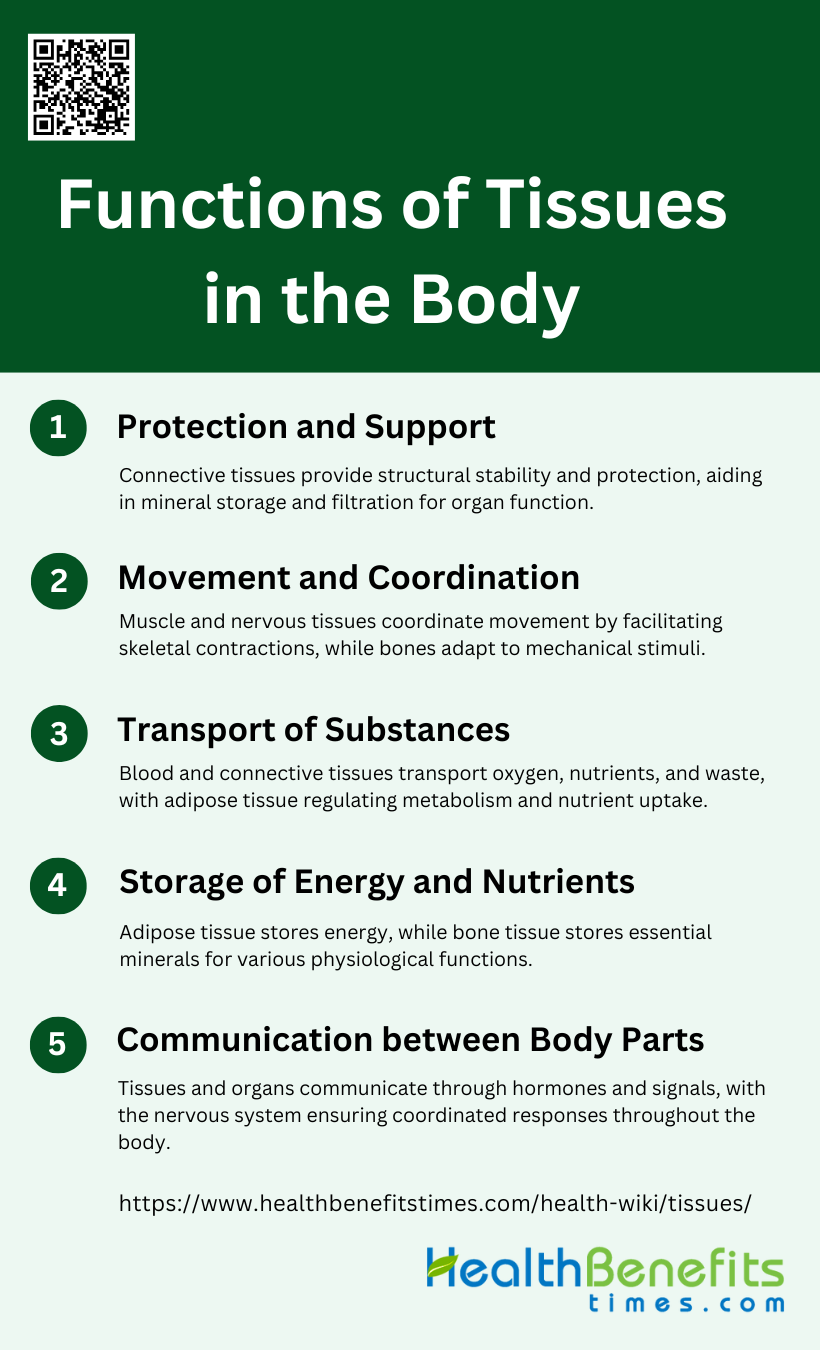
1. Protection and Support
Connective tissues play a crucial role in providing protection and support to the body. These tissues, including cartilage and bone, offer structural support and stability to various organs and the entire body. For instance, bone tissue not only supports and protects vital organs but also serves as a storage site for minerals like calcium and phosphate, which are essential for various physiological processes. Additionally, the extracellular matrix of connective tissues contributes to filtration, growth, and protease control, further enhancing their protective functions.
2. Movement and Coordination
Muscle tissues are primarily responsible for movement and coordination in the body. These tissues are characterized by their high degree of contractility, which enables them to move the skeleton and facilitate various bodily movements. The nervous system also plays a significant role in movement and coordination by transmitting signals between the brain and muscles, ensuring precise control of muscle contractions and movements. Furthermore, bone tissue, being highly innervated, interacts with the nervous system to adapt to mechanical stimuli, thereby contributing to coordinated movements.
3. Transport of Substances
The transport of substances within the body is primarily facilitated by the circulatory system, which includes the heart, blood, and blood vessels. Blood serves as the medium for transporting oxygen, nutrients, hormones, and waste products to and from various tissues and organs. Additionally, the extracellular matrix of connective tissues aids in the diffusion of nutritive substances from the bloodstream to the cells, ensuring efficient nutrient transport and metabolic functions. Adipose tissue also plays a role in regulating metabolism and nutrient uptake through the secretion of hormones.
4. Storage of Energy and Nutrients
Adipose tissue is the primary site for the storage of energy and nutrients in the body. It stores energy in the form of lipids and mobilizes these energy reserves according to the body’s needs, maintaining energy balance. Adipose tissue also acts as an endocrine organ, secreting hormones that regulate various metabolic processes, including glucose homeostasis and lipid metabolism. Additionally, bone tissue stores essential minerals like calcium and phosphate, which are crucial for various physiological functions.
5. Communication between Body Parts
Communication between different body parts is facilitated by various tissues and organs through the secretion of signaling molecules and hormones. For instance, bone tissue secretes osteokines that can influence distant targets, including the brain, highlighting the role of bone in inter-organ communication. Adipose tissue also secretes adipokines, which communicate with other metabolic organs to regulate energy homeostasis and metabolic functions. The nervous system, through its network of neurons, ensures rapid and precise communication between different body parts, coordinating various physiological processes.
How Tissues Work Together
Interaction among tissue types
Tissues interact through complex signaling pathways and cellular communication to maintain homeostasis and support organ function. For instance, mesenchymal stem cells (MSCs) and transit amplifying cells (TACs) engage in reciprocal signaling to regulate tissue homeostasis. MSCs influence TACs through an IGF-WNT signaling cascade, while TACs feedback to MSCs via Wnt5a/Ror2-mediated non-canonical WNT signaling, highlighting the importance of bidirectional communication in tissue maintenance. Similarly, neuroimmune interactions, where immune and neuronal cells coordinate responses, are crucial for maintaining tissue homeostasis and protection.
Examples of tissue collaboration in organs
In the human colon, tissue homeostasis is maintained by stem cells in crypt structures that balance proliferation and differentiation. This process is regulated by waves of Erk signaling, which are crucial for maintaining tissue patterning and stem cell compartments. Another example is the interaction between adipose tissues and the nervous system, which plays a key role in energy metabolism. White, brown, and beige adipose tissues communicate with the brain through neural and endocrine pathways to regulate lipid metabolism and energy homeostasis. Additionally, resident macrophages in various organs perform specialized functions, such as microglia in the brain supporting neuronal circuits and Kupffer cells in the liver scavenging blood particles.
Role in maintaining homeostasis
Tissues work together to maintain homeostasis by regulating specific variables within the tissue environment. For example, the interaction between MSCs and TACs ensures the maintenance of mesenchymal tissue homeostasis through coordinated signaling pathways. In metabolic regulation, inter-organ communication involving peptide, small-molecule, and lipid mediators is essential for systemic homeostasis, with dysregulation leading to conditions like obesity and diabetes. Furthermore, regulatory T cells (Tregs) maintain immune homeostasis and establish the tissue microenvironment by interacting with both immune and non-immune cells, adapting to local environments to prevent pathogenesis. These interactions underscore the importance of coordinated cellular and molecular mechanisms in sustaining homeostasis across different tissues and organs.
The Importance of Tissues in the Body
How different tissues work together to maintain overall health
Different tissues in the body work synergistically to maintain overall health by performing specialized functions and interacting with each other. For instance, adipose tissue, which includes white, brown, and beige fat, plays a crucial role in maintaining lipid and glucose homeostasis. Dysfunction in adipose tissue can lead to metabolic diseases such as type 2 diabetes mellitus (T2DM) and cardiovascular disease (CVD). Additionally, macrophages, which are tissue-resident immune cells, regulate tissue repair and regeneration by interacting with epithelial cells, endothelial cells, and fibroblasts, ensuring proper healing and preventing fibrosis. This intricate interplay between different tissues and cell types is essential for maintaining homeostasis and overall health.
The role of tissues in growth, repair, and disease resistance
Tissues play a pivotal role in growth, repair, and disease resistance through various mechanisms. For example, fibroblast growth factors (FGFs) are key players in tissue repair and regeneration, controlling the migration, proliferation, differentiation, and survival of different cell types. Macrophages also contribute significantly to tissue repair by undergoing phenotypic changes that help in wound healing and fibrosis prevention. Furthermore, the immune system, including T cells, plays a crucial role in disease resistance by modulating inflammatory responses and ensuring proper tissue repair and regeneration, especially in age-related diseases. These processes are vital for maintaining tissue integrity and function, thereby contributing to overall health and disease resistance.
Examples of how tissue dysfunction can lead to diseases
Tissue dysfunction can lead to a variety of diseases, often with severe health implications. For instance, dysfunctional adipose tissue in obesity promotes a pro-inflammatory environment that contributes to type 2 diabetes mellitus (T2DM) and cardiovascular disease (CVD). Similarly, age-related T cell dysfunction can result in improper immune responses, leading to tissue damage and diseases such as cardiovascular disorders and neuroinflammation. Additionally, impaired macrophage function can lead to chronic wounds and pathological fibrosis, further exacerbating tissue damage and disease. These examples highlight the critical importance of maintaining tissue function to prevent disease and promote overall health.
FAQ
1. How do tissues evolve in different organisms?
Tissue evolution across species varies significantly, with higher-order organisms like mammals exhibiting more complex tissue structures compared to simpler organisms like sponges. The development of specialized tissues like nervous and muscle tissues allowed for greater functionality and adaptation in more complex organisms.
2. What is the significance of tissue regeneration in medical research?
Tissue regeneration is crucial for developing therapies to repair or replace damaged tissues. Advances in stem cell research, bioengineering, and 3D bioprinting have opened new possibilities for tissue regeneration, aiming to treat conditions such as organ failure, severe injuries, and degenerative diseases.
3. How do environmental factors influence tissue function?
Environmental factors such as temperature, diet, and toxins can significantly impact tissue function. For example, exposure to pollutants can damage lung tissue, while nutrient deficiencies can weaken bone and muscle tissue over time. Understanding these influences helps in disease prevention and health management.
4. How does aging affect the different types of tissues in the body?
Aging affects tissues by reducing their regenerative capacity, altering their structure, and impairing function. For instance, skin loses elasticity due to changes in connective tissue, muscle mass decreases, and nerve signal transmission slows down, contributing to overall aging effects.
5. Can tissue transplants be used to treat diseases or injuries?
Yes, tissue transplants like skin grafts, corneal transplants, and even engineered tissues are used in medical treatments. These procedures help restore function, heal injuries, and treat conditions like burns, blindness, and degenerative diseases.
6. What are the challenges in tissue engineering for organ replacement?
Tissue engineering faces challenges like replicating the intricate vascular systems of organs, preventing immune rejection, and ensuring long-term functionality. Overcoming these challenges is key to advancing the field of regenerative medicine.
7. How do tissues contribute to immune responses?
Tissues play an active role in immune responses by hosting immune cells like macrophages and lymphocytes. These cells detect pathogens, initiate inflammatory responses, and support tissue repair following infections or injuries.
8. What role does the extracellular matrix (ECM) play in tissue function?
The extracellular matrix (ECM) provides structural support to tissues, regulates cellular behavior, and facilitates communication between cells. It also plays a critical role in tissue repair, influencing processes like cell migration and differentiation.
9. How are artificial tissues created in the lab, and what are their applications?
Artificial tissues are created using techniques like 3D bioprinting, scaffold-based engineering, and stem cell technology. These tissues are used for research, drug testing, and potentially as transplants to replace damaged tissues in patients.
10. How do tissues interact with the microbiome in the human body?
Tissues, particularly those in the digestive and respiratory systems, interact with the human microbiome. These interactions help regulate immune responses, digestion, and protection against harmful pathogens.