

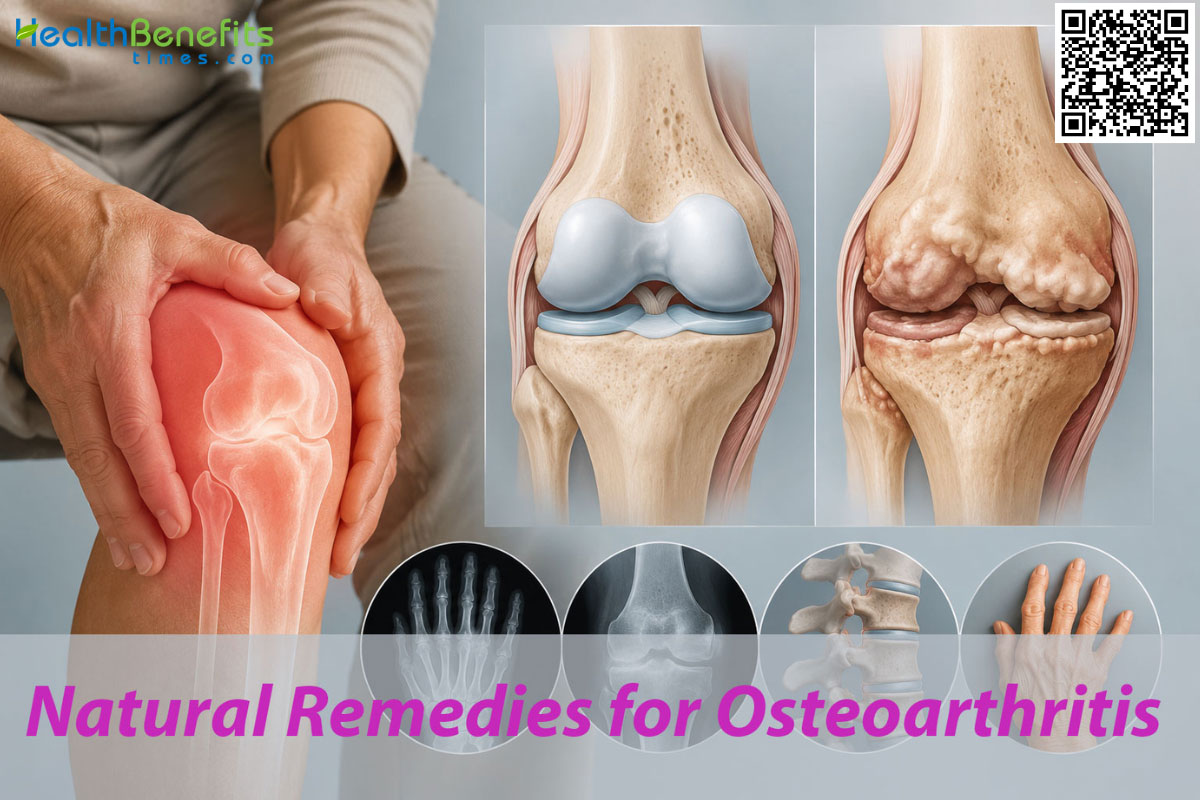
Osteoarthritis is the most common degenerative joint disease, characterized by the gradual breakdown of cartilage the smooth, protective tissue covering the ends of bones 1. In a healthy joint, cartilage absorbs shock and allows bones to glide smoothly. When this tissue deteriorates, the underlying bones rub directly against one another. This deterioration involves the entire joint structure, frequently leading to abnormal bone growth, localized inflammation, and progressive structural changes (da Costa et al., 2012). Consequently, individuals with osteoarthritis typically experience chronic pain, joint stiffness, swelling, and reduced mobility. The condition most often affects weight-bearing joints like the knees, hips, and spine, as well as the hands. While it is a progressive disease with no known cure, symptoms are generally managed through lifestyle modifications, physical activity, and medical treatments designed to alleviate pain and preserve joint function 2.
Causes of Osteoarthritis
- Older Age: The risk of developing osteoarthritis increases significantly as people get older due to natural wear and tear on the joints over time.
- Joint Injury or Trauma: Past injuries to the joints, such as those sustained from sports, falls, or accidents, can damage joint structures and lead to osteoarthritis later in life.
- Repetitive Joint Stress (Overuse): Engaging in work or activities that require repetitive motions, kneeling, squatting, or lifting heavy objects can overwork and damage the joints.
- Obesity and Overweight: Carrying excess body weight places severe physical stress on weight-bearing joints (like the hips and knees) and produces metabolic abnormalities and systemic inflammation that break down cartilage.
- Genetics and Family History: Having family members with osteoarthritis increases the likelihood of developing the condition, as certain genetic traits can determine the biochemical makeup of bone and cartilage.
- Biological Sex: Women are more susceptible to developing osteoarthritis than men, particularly after age 50 and following menopause.
- Muscle Weakness: A lack of muscle mass and weakness in the muscles surrounding the joints provide less support, leading to joint instability and increased cartilage breakdown.
- Congenital Joint Abnormalities: Being born with bone deformities or defective cartilage places improper mechanical stress on joints from an early age, increasing the risk of the disease. 3, 4, 5
Symptoms of Osteoarthritis
- Joint pain: Worsens with movement or weight-bearing and typically improves with rest; may progress to constant pain in severe stages.
- Joint stiffness: Most noticeable upon waking or after prolonged inactivity, generally resolving within 30 minutes.
- Swelling and tenderness: Localized soft-tissue swelling (effusion) and pain elicited upon applying light pressure to the joint line.
- Crepitus: A palpable or audible grating, crunching, or popping sensation when the affected joint moves.
- Loss of flexibility: Reduced range of motion that physically restricts the joint from moving through its full extent.
- Bony enlargements: Hard structural deformities caused by osteophytes (bone spurs), frequently presenting as Heberden’s and Bouchard’s nodes in the hands.
- Joint instability: A sensation of the joint buckling, shifting, or “giving way,” often exacerbated by surrounding muscle weakness.
- Neurological deficits: Numbness, tingling, or weakness in the extremities, occurring specifically if spinal osteoarthritis compresses exiting nerve roots. 3, 6, 7, 8
Natural Remedies for Osteoarthritis
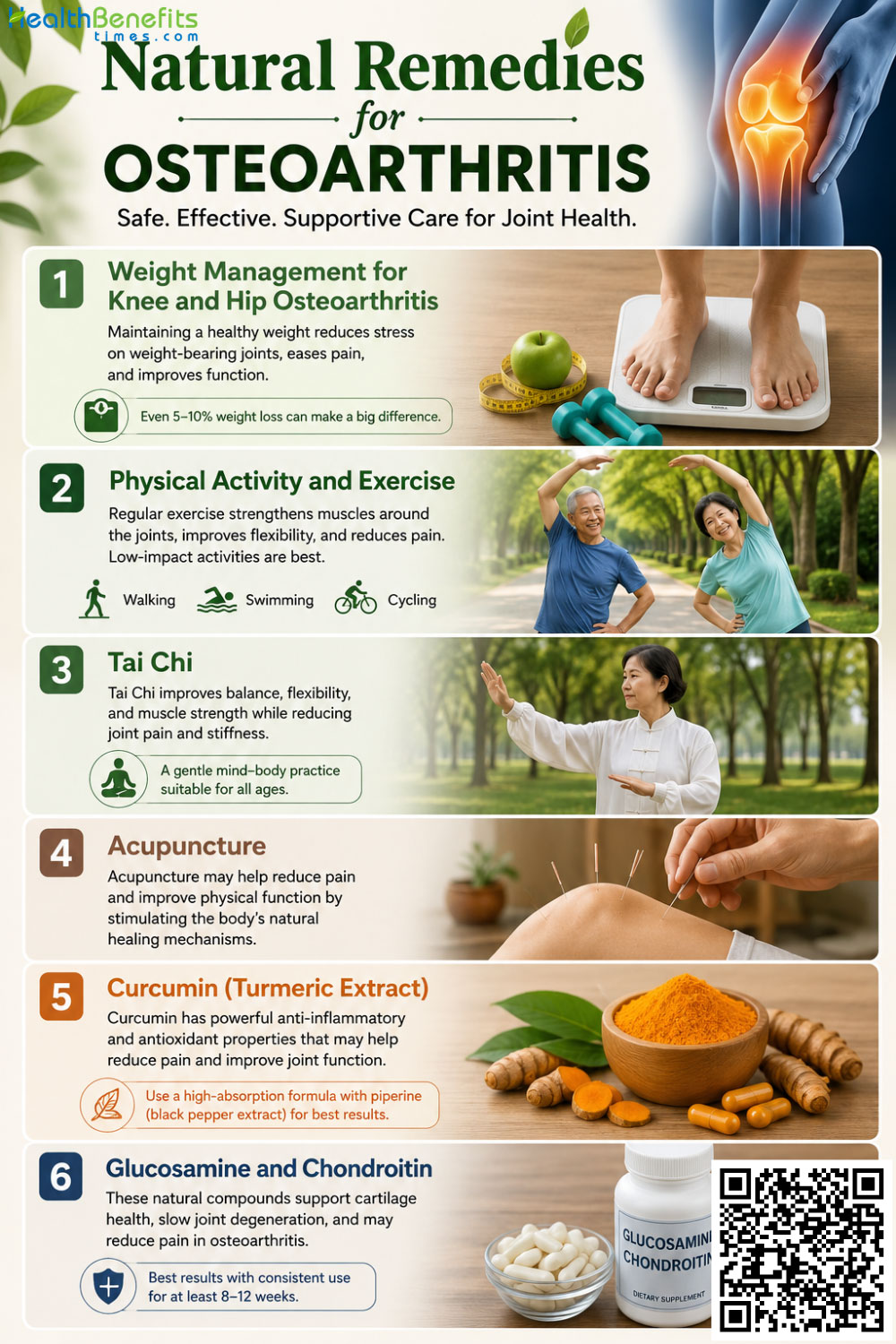
1. Weight Management for Knee and Hip Osteoarthritis
Carrying excess weight places increased mechanical stress on weight-bearing joints such as the knees and hips. For individuals who are overweight or obese, losing weight can reduce joint pain and improve physical function. The 2019 American College of Rheumatology and Arthritis Foundation guideline makes a strong recommendation for weight loss in patients with knee or hip osteoarthritis who are overweight or obese, based on research evidence 9. The EULAR 2023 updated recommendations also included maintenance of healthy weight and weight loss as a core non-pharmacological management strategy 10. Combining a reduced-calorie diet with low-impact exercise provides the most sustainable results. Consult a healthcare provider before starting any weight loss plan.
2. Physical Activity and Exercise
Exercise is widely recognized as a first-line, non-pharmacological strategy for managing osteoarthritis symptoms. The CDC states that low-impact, moderate-intensity aerobic activities such as walking, water exercise, and cycling, along with muscle strengthening exercises, are the safest and most effective physical activities for adults with hip or knee osteoarthritis -. The ACR and Arthritis Foundation strongly recommend exercise for all patients with knee, hip, or hand osteoarthritis 9. Start with 10 to 15 minutes of activity and gradually increase duration as tolerated. Avoid high-impact exercises that stress the joints. Consult a physical therapist or qualified exercise professional for personalized guidance.
3. Tai Chi
Tai Chi is a mind-body exercise that combines slow, controlled movements with deep breathing. A 2025 systematic review and meta-analysis of 17 randomized controlled trials involving 980 participants found that Tai Chi significantly reduced pain, joint stiffness, and improved physical function in individuals with knee osteoarthritis 11. The ACR and Arthritis Foundation made a strong recommendation for Tai Chi in their 2019 osteoarthritis management guideline 9. Learn Tai Chi from a qualified instructor who can modify movements for individual physical limitations. The practice generally has an excellent safety profile, with no serious adverse events reported in clinical studies 11.
4. Acupuncture
Acupuncture may provide pain relief and functional improvements for knee osteoarthritis patients. A 2024 systematic review and meta-analysis of 10 randomized controlled trials involving 3,221 participants reported that acupuncture may offer pain alleviation and functional improvements lasting three to six months after treatment completion, with a good safety profile 12. The ACR and Arthritis Foundation made a conditional recommendation for acupuncture in their 2019 guideline 9. Seek acupuncture from a licensed practitioner with experience treating osteoarthritis. Common side effects may include minor bruising or soreness at needle insertion sites.
5. Curcumin (Turmeric Extract)
Curcumin, the active compound in turmeric, possesses anti-inflammatory properties. A 2024 umbrella meta-analysis reviewing multiple meta-analyses of randomized controlled trials concluded that curcuminoid supplementation strongly supports pain relief, improved joint mobility, reduction of stiffness, and decreased medication use in osteoarthritis patients 13. A 2025 systematic review and meta-analysis of 21 studies involving 1,705 patients showed that curcumin significantly decreased serum levels of C-reactive protein (CRP) and tumor necrosis factor-alpha (TNF-alpha), both markers of inflammation 14. Use standardized turmeric extracts containing curcuminoids, typically 500 mg taken twice daily -. Take with food to improve absorption and reduce the risk of stomach upset. Curcumin may interact with blood-thinning medications, so consult a healthcare provider before starting supplementation.
6. Glucosamine and Chondroitin
These compounds are natural components of joint cartilage. However, the National Center for Complementary and Integrative Health notes that large studies have shown inconsistent results, and it remains uncertain whether they help knee osteoarthritis symptoms 2. The ACR and Arthritis Foundation 2019 guideline strongly recommended against the use of glucosamine alone or in combination with chondroitin. These supplements are generally safe, but glucosamine may increase blood sugar levels in some people, and both supplements have been associated with a slightly increased risk of bleeding -. Discuss potential use with a healthcare provider, particularly for individuals taking blood thinners or managing diabetes.
Foods to Avoid When You Suffer from Osteoarthritis
1. Added Sugars and Refined Carbohydrates
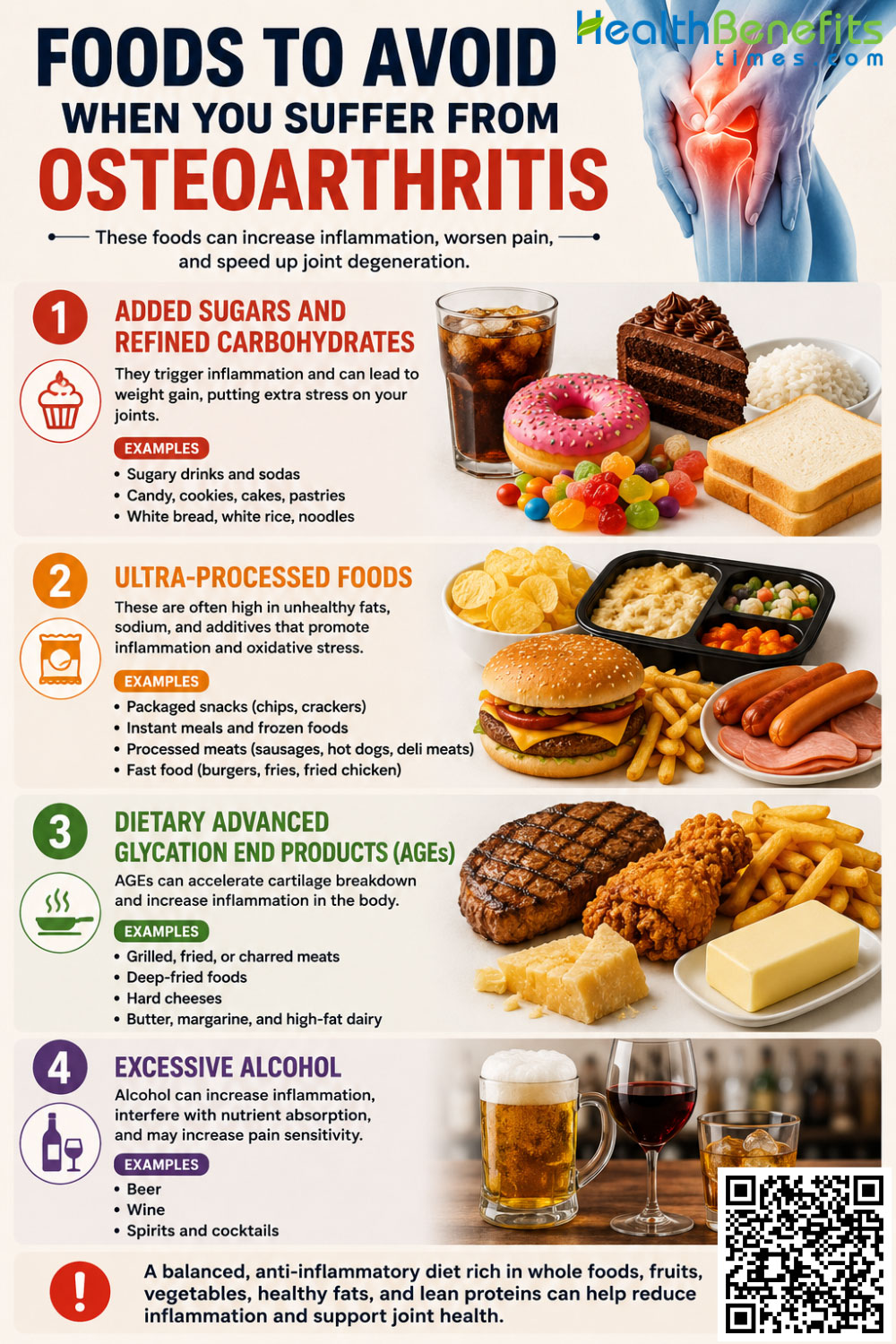
High intake of added sugars (such as sucrose and high-fructose corn syrup) and refined carbohydrates triggers a systemic inflammatory cascade by elevating cytokine production, which directly exacerbates cartilage degradation and joint pain 15. Additionally, these foods drive weight gain, increasing the mechanical load and biochemical stress on weight-bearing joints like the knees and hips 16.
2. Ultra-Processed Foods
Heavily processed foods including commercial baked goods, fast food, and pre-packaged meals—are dense in artificial additives, excess sodium, and unhealthy fats that promote systemic oxidative stress. High consumption of ultra-processed diets is significantly associated with greater muscle fat infiltration around the joints and the structural progression of osteoarthritis 17 18.
3. Dietary Advanced Glycation End Products (AGEs)
AGEs are pro-inflammatory compounds formed when proteins and fats combine with sugars, a process accelerated by high-heat cooking methods like frying, roasting, or grilling. The accumulation of dietary AGEs in joint tissues stimulates intracellular signaling pathways that increase reactive oxygen species, driving cartilage calcification and accelerating tissue loss 19 20.
4. Excessive Alcohol
Heavy alcohol consumption particularly beer and hard liquor induces systemic inflammation, raises uric acid levels, and disrupts metabolic homeostasis. Excessive intake is prospectively associated with an increased risk of incident radiographic and symptomatic knee osteoarthritis, accelerating joint wear and pain 21 22.
When To see Doctor when you have Osteoarthritis
1. Severe, Persistent, or Worsening Pain
While mild discomfort is common with osteoarthritis, pain that does not improve with standard self-care such as rest, ice, or over-the-counter pain relievers requires medical attention. You should also seek help if the pain lasts beyond a few days or becomes severe enough to interrupt your sleep and interfere with daily activities. A doctor can help adjust your pain management plan or explore advanced therapies. 23, 4
2. Sudden Swelling, Redness, or Warmth
Osteoarthritis can cause mild swelling, but a joint that suddenly becomes significantly swollen, red, or hot to the touch is a warning sign. These symptoms can indicate a complication such as a joint infection (septic arthritis), an inflammatory flare-up, or the presence of crystals in the joint (like gout), all of which require prompt diagnosis and treatment. 24, 25
3. Joint Instability and Loss of Mobility
If you feel like a joint is loose, buckling, or giving way when you try to use it, you need a medical evaluation to prevent falls and further injury. Additionally, if extreme stiffness or a locked joint prevents you from bearing weight, climbing stairs, or performing basic daily tasks, a doctor can intervene with physical therapy, supportive devices, or discuss surgical options. 3, 6
4. Accompanying Systemic Symptoms
Osteoarthritis is a localized condition that breaks down joint cartilage; it does not cause systemic body-wide symptoms. If your joint pain or swelling is accompanied by a fever, chills, or unexplained weight loss, contact a healthcare provider immediately. These are red flags that could point toward an autoimmune disease, a severe infection, or another underlying medical issue rather than typical wear-and-tear arthritis. 26, 27