

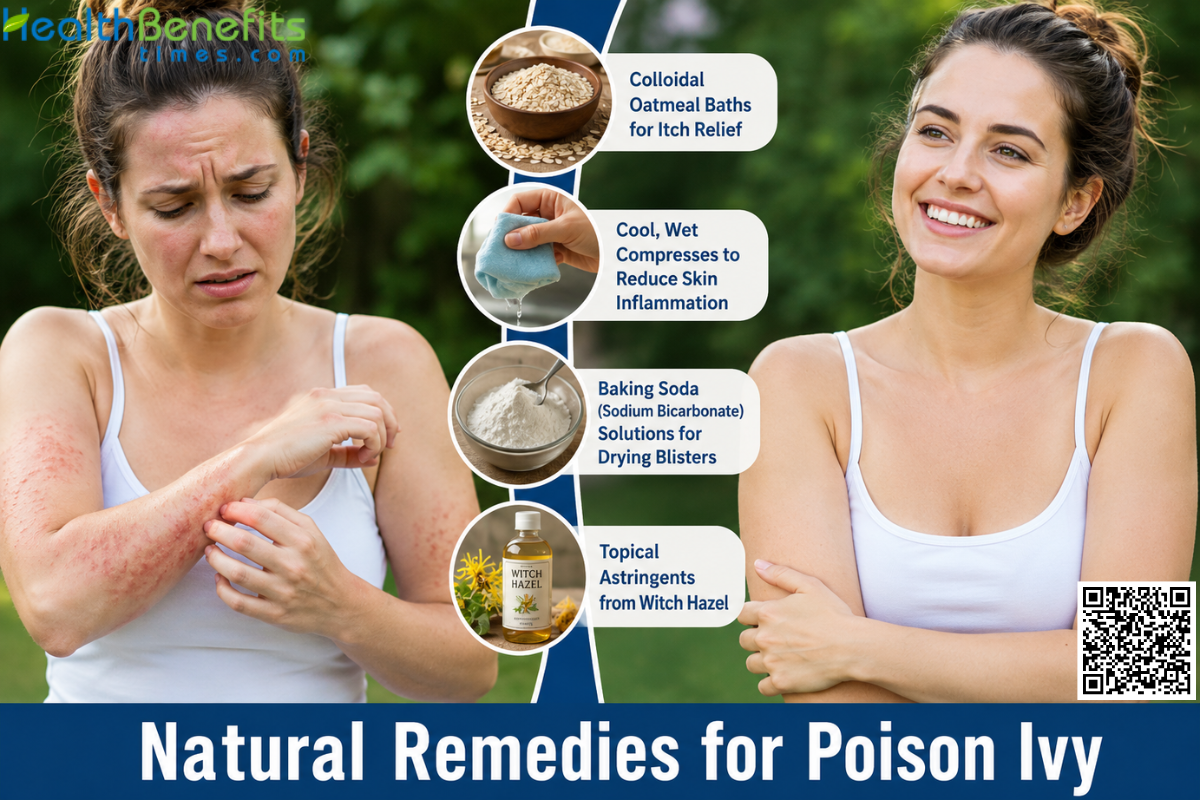
Poison ivy (Toxicodendron radicans) is a woody vine or shrub native to North America that is widely known for causing severe skin reactions. The plant produces urushiol, a highly allergenic oil found in its leaves, stems, and roots 1. When urushiol comes into direct contact with the skin, it rapidly binds to skin cells and triggers a type IV cell-mediated hypersensitivity reaction 2. This immune response results in allergic contact dermatitis, clinically presenting as an intensely itchy, red, blistering rash that typically develops within 24 to 48 hours of exposure 3. Poison ivy is the most common cause of allergic contact dermatitis in North America, affecting millions of people annually 4. Because the oil absorbs quickly, immediate skin decontamination with soap and water is necessary to prevent the rash; once the reaction begins, it is generally self-limiting and resolves within one to three weeks.
Causes of Poison Ivy
1. Direct Contact
Touching any broken or crushed part of the poison ivy plant, including the leaves, stems, roots, or berries, directly transfers urushiol oil to the skin, which triggers the allergic reaction 5. Even minimal physical contact with the sap can release enough oil to cause severe allergic contact dermatitis.
2. Indirect Contact
Urushiol oil is highly stable and does not evaporate or degrade easily, meaning it can remain active on surfaces for months or even years. Touching contaminated items such as unwashed clothing, gardening tools, camping equipment, or the fur of outdoor pets can unknowingly transfer the oil to human skin and cause a delayed rash 6.
3. Inhalation of Smoke
Burning poison ivy plants vaporizes the urushiol, carrying the microscopic oil particles into the air. Breathing in this toxic smoke causes severe internal allergic reactions within the nasal passages, throat, and lungs, resulting in dangerous respiratory distress that requires immediate medical care.
Symptoms of Poison Ivy
1. Intense Itching
Severe itching is typically the first sign of an allergic reaction to urushiol oil, often beginning within 24 to 48 hours after exposure to the plant.
2. Red Rashes and Streaking
A localized red rash frequently develops in a distinctive linear pattern or in streaks, matching exactly where the plant brushed against the body or where the oil was transferred by the hands.
3. Swelling
Noticeable swelling of the skin often occurs in the affected areas, and can become particularly severe if the delicate skin of the face, eyelids, or genitals is exposed to the plant oil.
4. Blisters
Small to large fluid-filled blisters emerge across the rash, which may eventually break, ooze, and form a dry crust. The clear fluid inside these blisters does not contain urushiol and cannot spread the rash to other parts of the body or to other people.
5. Respiratory Distress
If poison ivy plants are burned, inhaling the smoke can cause a severe internal allergic reaction leading to coughing, wheezing, and dangerous swelling of the airway, which requires emergency medical attention.
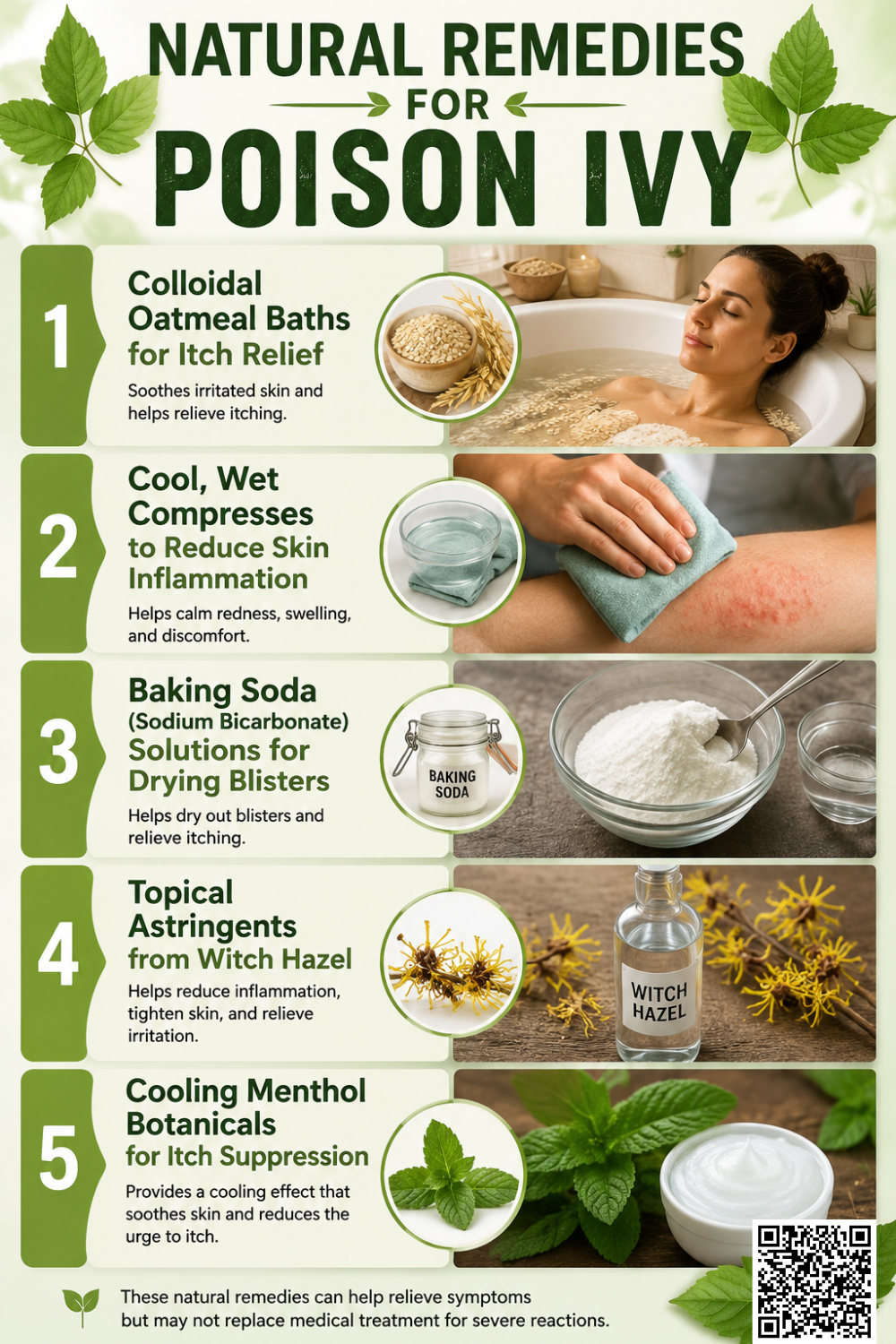 Natural Remedies for Poison Ivy
1. Colloidal Oatmeal Baths for Itch Relief
How it may help
Colloidal oatmeal consists of finely ground oats that bind to the skin to form a protective, moisturizing barrier. It helps retain moisture and balances the skin’s pH, which effectively soothes intense itching and reduces the redness associated with poison ivy rashes.
What research says
Clinical research demonstrates that colloidal oatmeal contains specific compounds, such as avenanthramides, which provide significant anti-inflammatory and antioxidant benefits 7. These compounds actively inhibit the production of inflammatory proteins in the body, effectively reducing skin irritation, swelling, and itching caused by allergic contact dermatitis.
How to use it safely
Sprinkle one cup of colloidal oatmeal under running water into a lukewarm bath. Soak in the tub for 15 to 20 minutes. After bathing, gently pat your skin dry with a clean towel instead of rubbing, to avoid further irritating the poison ivy rash.
Potential precautions or side effects
Oatmeal makes bathtub surfaces extremely slippery, so use caution when stepping in and out. Although rare, immediately discontinue use if you experience increased redness or a new allergic reaction.
2. Cool, Wet Compresses to Reduce Skin Inflammation
How it may help
Applying a cool, wet compress directly to a poison ivy rash causes local blood vessels to constrict. This action significantly reduces skin inflammation, swelling, and redness. The cooling sensation also provides immediate, temporary relief from intense itching and helps dry out actively oozing blisters during the early stages.
What research says
Clinical guidelines strongly recommend using cool water compresses as a standard, first-line topical treatment for allergic contact dermatitis. The application of cold physically slows the nerve conduction of itch signals and decreases local blood flow, effectively managing swelling and blistering safely without prescription medications.
How to use it safely
Soak a clean, soft washcloth in cool tap water and wring out the excess. Apply the damp cloth directly to the rash for 15 to 30 minutes, several times a day. Always use a fresh cloth for each application to maintain cleanliness and prevent bacterial skin infections.
Potential precautions or side effects
Do not apply ice directly to the rash, as extreme cold can damage the skin. Avoid rubbing the affected area with the cloth, which can worsen irritation and blistering.
3. Baking Soda (Sodium Bicarbonate) Solutions for Drying Blisters
How it may help
Baking soda, clinically known as sodium bicarbonate, acts as a natural alkaline skin protectant that draws excess fluid out of weeping poison ivy blisters. Applying a wet baking soda paste or soaking in a treated bath relieves minor irritation and temporarily stops intense itching while helping the blisters dry faster.
What research says
The U.S. Food and Drug Administration (FDA) recognizes sodium bicarbonate as an effective over-the-counter skin protectant for temporarily relieving minor skin irritation caused by poison ivy. Clinical data confirms that baking soda wet dressings and baths successfully dry oozing blisters and protect the compromised skin barrier during healing 8.
How to use it safely
To create a paste, mix three teaspoons of baking soda with enough cool water to form a thick consistency, and apply it directly to the affected skin. For widespread rashes, dissolve one to two cups of baking soda into a warm bath and soak for 15 to 30 minutes.
Potential precautions or side effects
Avoid applying baking soda to deep open wounds or severely broken skin. Soaking for too long may excessively dry your skin. Stop use immediately if your condition suddenly worsens.
4. Topical Astringents from Witch Hazel
How it may help
Witch hazel is a natural astringent derived from the Hamamelis virginiana plant. When applied to a poison ivy rash, it causes the skin tissues to contract. This drying action helps reduce the fluid in oozing blisters, while its mild cooling effect relieves inflammation, swelling, and itchiness.
What research says
Clinical evidence indicates that the high tannin content in witch hazel provides strong astringent and anti-inflammatory properties 9. Dermatological guidelines support using topical astringents to dry weeping lesions and protect the skin barrier during the active blistering phase of allergic contact dermatitis.
How to use it safely
Pour a small amount of liquid witch hazel extract onto a sterile cotton ball or clean gauze pad. Gently dab it directly onto the affected skin up to six times a day. Do not rub the rash, as this can cause further irritation.
Potential precautions or side effects
Avoid applying witch hazel to raw, deep open wounds or near your eyes. Many store-bought witch hazel solutions contain alcohol, which may cause temporary stinging or excessive skin dryness.
5. Cooling Menthol Botanicals for Itch Suppression
How it may help
Menthol, a botanical compound derived from peppermint plants, creates an immediate cooling sensation when applied to the skin. This cooling effect provides fast, temporary relief from poison ivy by distracting the nervous system and interrupting the localized transmission of intense itch signals to the brain.
What research says
Clinical studies demonstrate that topical menthol actively binds to and stimulates TRPM8, a specific cold-sensing ion channel located in the skin 10. Activating these receptors successfully suppresses the surrounding pruriceptors (itch-sensing nerves), confirming menthol as a proven, highly effective antipruritic treatment for allergic contact dermatitis 11.
How to use it safely
Apply a thin layer of an over-the-counter anti-itch cream or lotion containing a low concentration of menthol (typically 1% to 3%) directly to the rash up to three times daily. Always wash your hands thoroughly after application to prevent transferring the menthol to your face or eyes.
Potential precautions or side effects
Never apply menthol products to raw, broken skin or actively oozing blisters, as it will cause severe burning. Some individuals may experience localized skin irritation or mild allergic reactions.
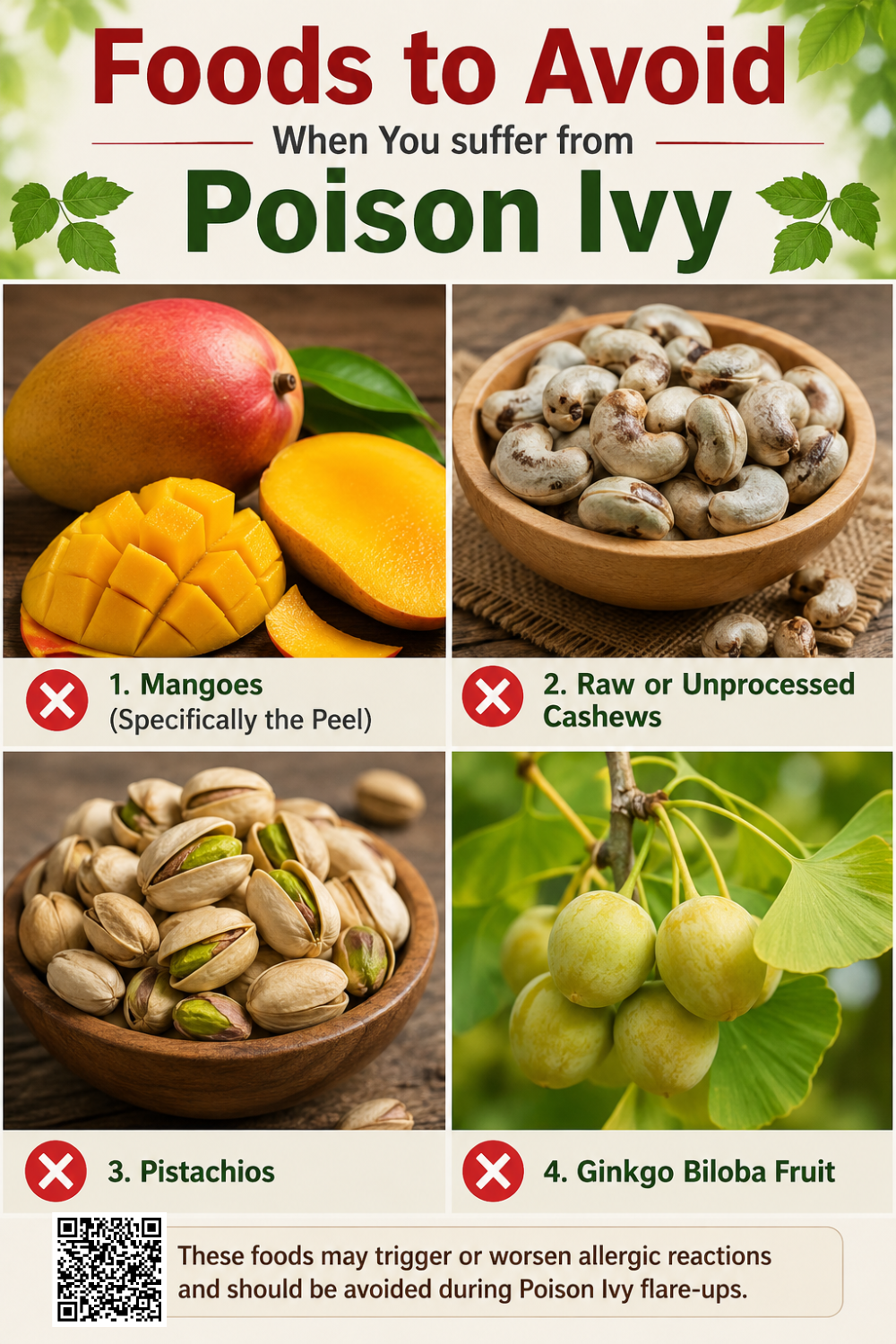 Foods to Avoid When You suffer from Poison Ivy
1. Mangoes (Specifically the Peel)
The fruit’s peel and sap contain urushiol-like compounds. Eating unpeeled mangoes can trigger a cross-reactive allergic rash around the mouth in individuals already sensitized to poison ivy 12.
2. Raw or Unprocessed Cashews
Cashew shells contain anacardic acid, which is chemically similar to urushiol. While commercially roasted cashews remain safe, handling raw, unroasted cashews can provoke severe allergic contact dermatitis 13.
3. Pistachios
Pistachios belong to the same botanical family as poison ivy. Highly sensitized individuals might occasionally experience cross-reactive allergic skin reactions when consuming or handling them 14.
4. Ginkgo Biloba Fruit
The fleshy outer pulp of ginkgo seeds contains bilobol and ginkgolic acids. These compounds strongly resemble urushiol and can trigger identical allergic skin reactions upon physical contact 15.
When To see Doctor when you suffer from Poison Ivy
1. Severe Allergic Reactions
Seek emergency care immediately if you experience difficulty breathing, swallowing, or severe facial swelling, which indicates a life-threatening systemic reaction.
2. Widespread Rash
Consult a healthcare provider if the intense blistering rash spreads rapidly and covers more than 25 percent of your total body surface area.
3. Sensitive Body Areas
Professional medical treatment is required if the rash develops on your eyes, mouth, face, or genital regions to prevent localized tissue damage.
4. Signs of Infection
See a doctor if you notice yellow pus, soft honey-colored crusts, or red streaks radiating from blisters, indicating a secondary bacterial infection.
5. Prolonged Symptoms
Schedule a clinical evaluation if the severe itching and rash show no signs of improvement after two to three weeks of continuous home treatment.