


Cordyceps militaris, a remarkable entomopathogenic fungus, has emerged as one of the most researched and promising medicinal mushrooms in modern scientific literature. With thousands of years of traditional use in Asian medicine, this “caterpillar fungus” now benefits from extensive scientific validation, demonstrating a wide array of therapeutic properties that support human health and wellness. (1)
Names in Other Languages of Cordyceps Militaris
| Language | Name |
| Chinese | 蛹虫草 (Yǒngchóngcǎo) |
| English | Scarlet Caterpillar Club, Caterpillar Fungus |
| German | Orangegelbe Puppenkernkeule |
| Danish | Puppe-snyltekølle |
| Dutch | Rupsendoder |
| Norwegian | Raud åmeklubbe |
| Swedish | Röd larvklubba |
| Korean | 번데기동충하초 |
| Japanese | サナギタケ |
What is Cordyceps Militaris
Cordyceps militaris is a parasitic ascomycete fungus belonging to the family Cordycipitaceae, scientifically classified under the order Hypocreales. (2) UnlikeCordyceps sinensis*, C. militaris can be successfully cultivated on various substrates, making it more accessible and affordable for commercial production and research applications. (3)
Originally described by Carl Linnaeus in 1753 as Clavaria militaris, this fungus was later reclassified by German mycologist J.H.F. Link in 1833 as Cordyceps militaris. (4) The fungus naturally parasitizes the larvae and pupae of moths and butterflies, particularly Lepidoptera species, growing from their bodies as distinctive orange to red club-shaped fruiting bodies.
Botanical Description of Cordyceps Militaris
Cordyceps militaris produces distinctive fruiting bodies measuring 1-8 centimeters in height, characterized by their vibrant orange to red coloration. (2) The fruiting body consists of a club-shaped structure with a stipe (stem) and head, where the stipe typically measures 25-40 mm in length and 1-1.5 mm in width, while the head extends 20-30 mm and appears slightly broader than the stipe. (5)
The surface of the head appears rough due to the presence of semi-immersed perithecia (fruiting structures), each measuring approximately 650-770 × 300-500 μm. (5) The internal fungal tissue ranges from whitish to pale orange, while the spores are smooth, hyaline, and long-filiform, often septate and decomposing into 3-7 μm × 1-1.2 μm sub-spores at maturity. (2)
Microscopically, the fungus exhibits polymorphic conidia formation through undifferentiated phialides, displaying microcyclic conidiation directly from germinating ascospores. (6) This unique reproductive strategy allows for rapid colonization and adaptation to various environmental conditions.
Nutritional Profile of Cordyceps Militaris
Cordyceps militaris boasts an impressive nutritional composition that contributes significantly to its health-promoting properties. Analysis of cultivated fruiting bodies reveals a rich profile of macronutrients and bioactive compounds. (7) (8)
Macronutrient Composition (dry weight basis):
- Carbohydrates: 47.67-60.04%
- Protein: 23.02-30.41%
- Crude fiber: 11.06-15%
- Fat: Variable content
- Ash: Mineral content varies with cultivation substrate
Amino Acid Profile:
The fruiting bodies contain significant levels of essential amino acids, with lysine (15.06 mg/g), glutamic acid (8.79 mg/g), proline (6.68 mg/g), and threonine (5.99 mg/g) being the most abundant. (9) The total free amino acid content reaches approximately 69.32 mg/g in fruiting bodies, substantially higher than the 14.03 mg/g found in the mycelial corpus.
Fatty Acid Composition:
C. militaris is particularly rich in unsaturated fatty acids, which comprise approximately 70% of total fatty acids. (9) This includes beneficial compounds like linoleic acid (C18:2), making it an excellent source of essential fatty acids.
Key Bioactive Compounds:
- Cordycepin: 39.82-92.4 mg/kg (varies with cultivation conditions)
- Adenosine: 10.5-105 mg/100g
- Ergosterol: 61.73-928 mg/100g
- Cordycepic acid: 14.36 mg/g
- Polysaccharides: 13.45-17.65% (extraction dependent)
- Carotenoids: 1.63-3.22%
- Flavonoids: 19.90-30.56%
Difference between Cordyceps Sinensis and Cordyceps Militaris
Based on extensive research from scientific literature, here is a comprehensive comparison between these two important Cordyceps species presented in tabular format:
| Characteristic | Cordyceps Sinensis (Ophiocordyceps sinensis) | Cordyceps Militaris |
| Scientific Name | Ophiocordyceps sinensis (formerly Cordyceps sinensis) | Cordyceps militaris |
| Common Names | Caterpillar fungus, Yarsagumba, Dong chong xia cao, Winter worm summer grass | Military caterpillar fungus, Orange cordyceps |
| Natural Habitat | High-altitude meadows above 3,500m on Tibetan Plateau | Temperate regions, various climates worldwide |
| Geographic Distribution | Tibet, Himalayas (Bhutan, Nepal, India) | Global – Asia, North America, Europe |
| Elevation/Altitude | 3,000-5,000 meters (10,000-16,000 ft) | Sea level to moderate altitudes |
| Host Species | Ghost moth larvae (Thitarodes species) – 102 species identified | Various insects – moths, beetles, diverse Lepidoptera and Coleoptera |
| Cultivation Method | Wild harvesting only (cultivation extremely difficult) | Commercial cultivation in controlled environments |
| Availability | Extremely rare and limited | Readily available through cultivation |
| Cost per Kilogram | $20,000-$50,000 USD per kg | $16-$200 USD per kg (depending on quality) |
| Physical Appearance – Color | Golden yellow to brown, dark brown stalk | Bright orange to red fruiting bodies |
| Key Bioactive Compounds | Adenosine, polysaccharides, amino acids, mannitol | Cordycepin, adenosine, polysaccharides, ergosterol |
| Cordycepin Content | Absent or very low (0 mg/g) | High levels (12.3-377.82 mg/100g depending on strain) |
| Adenosine Content | Higher levels (0.81 mg/g) | Lower than C. sinensis but present |
| Traditional Use History | Extensive – used in TCM for over 600 years | Less extensive historical use |
| Cultivation Difficulty | Extremely difficult – requires specific host-parasite relationship | Easy – can be grown on rice, wheat, other substrates |
| Shelf Life | Long shelf life when properly dried | Long shelf life, stable storage |
| Harvesting Method | Hand-collected from wild during May-June | Controlled cultivation harvest |
| Growth Requirements | Specific high-altitude, cold climate conditions | Standard laboratory conditions (20-25°C, pH 5.5-6.5) |
| Production Scale | Very limited wild harvest only | Large-scale commercial production possible |
| Quality Control | Variable due to wild harvesting conditions | Consistent due to controlled cultivation |
| Environmental Impact | High – overharvesting threatens ecosystem | Lower – sustainable cultivation methods |
| Research Focus | Traditional medicine applications | Modern scientific research and applications |
| Market Status | Premium luxury item, status symbol | Accessible dietary supplement market |
| Sustainability | Endangered due to overharvesting | Sustainable through controlled cultivation |
Key Distinctions
1. Bioactive Compound Profile: The most significant difference lies in their active compounds. Cordyceps sinensis contains higher adenosine levels but lacks cordycepin entirely, while Cordyceps militaris contains both compounds, with notably high cordycepin content (up to 90 times higher than wild C. sinensis). (10)
2. Cultivation and Accessibility: Cordyceps sinensis requires specific high-altitude environments and ghost moth caterpillar hosts, making artificial cultivation extremely challenging. (11) In contrast, Cordyceps militaris can be easily cultivated on various substrates like rice, wheat, and other grains under controlled laboratory conditions. (12)
3. Economic Factors: The price difference is dramatic – wild Cordyceps sinensis commands prices up to $50,000 per kilogram due to its scarcity, while cultivated Cordyceps militaris is available for $16-200 per kilogram depending on quality. (13)
4. Sustainability: Cordyceps sinensis faces severe conservation challenges due to overharvesting and is considered endangered, while Cordyceps militaris offers a sustainable alternative through controlled cultivation. (14)
This comprehensive comparison demonstrates that while both species share similar therapeutic properties, Cordyceps militaris provides a more accessible, affordable, and sustainable option with unique advantages in cordycepin content and consistent quality control through cultivation methods.
Health Benefits of Cordyceps Militaris
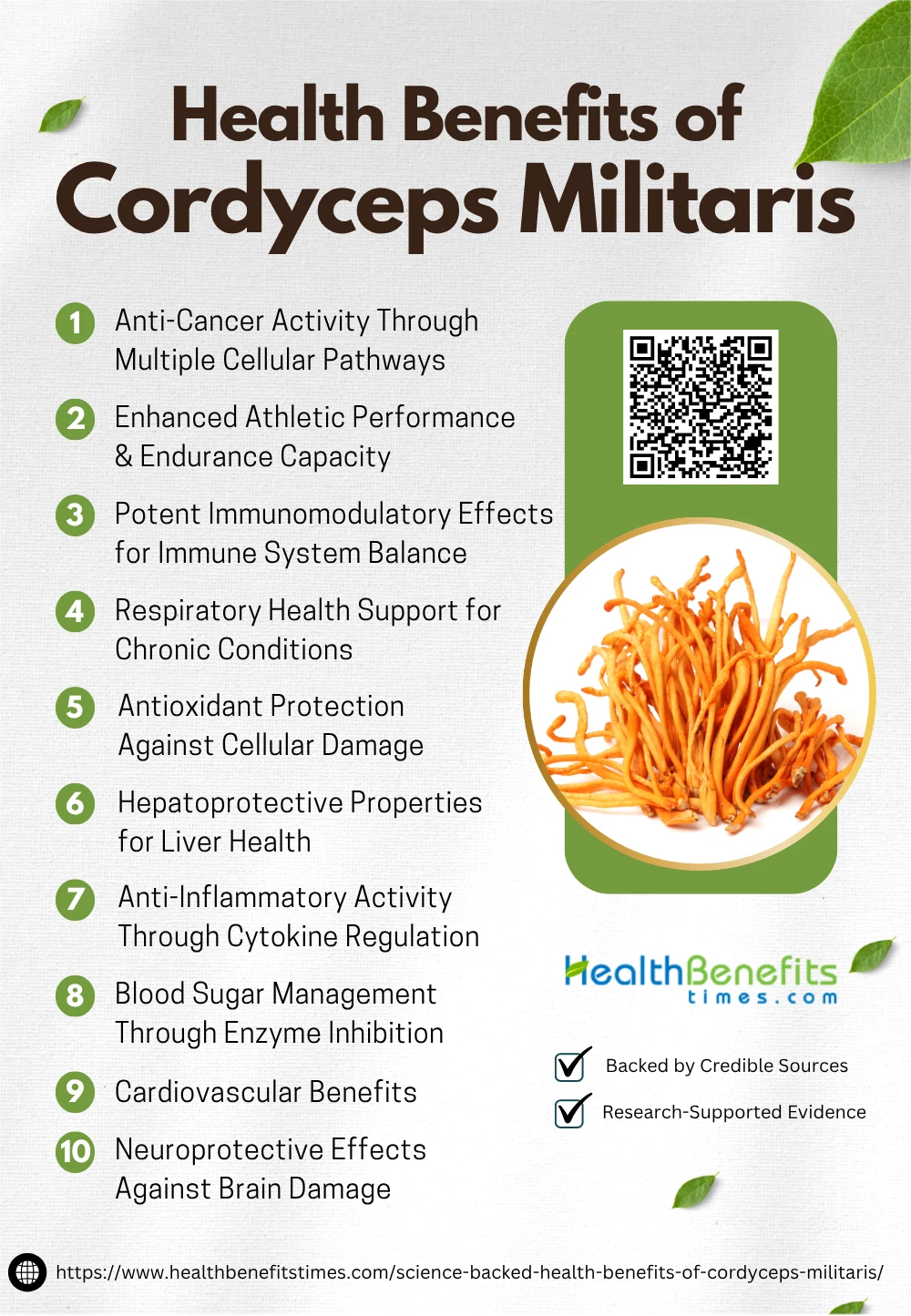 1. Anti-Cancer Activity Through Multiple Cellular Pathways
Cordyceps militaris demonstrates potent anti-cancer properties through various molecular mechanisms. Research shows that the fungus inhibits tumor cell proliferation, migration, and invasion while promoting apoptosis in multiple cancer cell lines. (15) (16)
In lung cancer studies, C. militaris fraction (CMF) significantly reduced cell viability in NCI-H1299 and Lewis lung cancer cells, with oral administration of 65-260 mg/kg decreasing tumor growth and metastasis in xenograft models. (15) The anti-cancer mechanism involves the Akt/GSK-3β/β-catenin pathway, leading to reduced expression of matrix metalloproteinases MMP-2 and MMP-9.
For colorectal cancer, C. militaris ethanol extract induced cell cycle arrest in the G2/M phase and promoted p53-dependent, mitochondrial-mediated apoptosis in RKO cells. (16) The treatment upregulated pro-apoptotic proteins including cleaved caspase-9, cleaved caspase-3, cleaved PARP, Bim, Bak, and Bad.
Cordycepin, the primary bioactive compound, exhibits significant anti-proliferative effects against various cancer types, including breast, bladder, and colon cancers, with IC50 values ranging from 30-200 μM depending on the cell line. (17)
2. Enhanced Athletic Performance and Endurance Capacity
Scientific evidence supports C. militaris‘ ability to improve athletic performance and endurance capacity through multiple physiological mechanisms. (18) (19)
A three-week supplementation study with 4 g/day of C. militaris significantly improved maximal oxygen consumption (VO2max) and showed potential improvements in ventilatory threshold and time to exhaustion. (18) The enhancement appears related to improved ATP generation pathways rather than reduced muscle fatigue markers.
In athlete studies, C. militaris supplementation (1g/day) increased oxygen saturation to 95%, stabilized heart rate to 90±5 bpm, and significantly reduced running times for both 5km (13.5 minutes) and 200m (25 seconds) distances. (20) The fungus decreased treadmill fatigue by 2.5-fold compared to controls, with increased red blood cell size leading to enhanced oxygen-carrying capacity.
The performance benefits stem from C. militaris‘ ability to increase adenosine triphosphate (ATP) production, enhance oxygen utilization, and improve blood flow to working muscles. (21)
3. Potent Immunomodulatory Effects for Immune System Balance
C. militaris exhibits sophisticated immunomodulatory properties, enhancing immune function without causing overstimulation. (22) (23)(24)
Polysaccharides from C. militaris activate macrophages, enhancing phagocytosis and nitric oxide production while regulating inflammatory molecule expression. (23) The immunomodulatory effects occur through MAPK signaling pathway activation, specifically phosphorylation of ERK, JNK, and p38 pathways.
In immunosuppressed mice, C. militaris significantly restored organ damage, increased serum levels of IgM, IgG, and IL-2, and promoted proliferation of CD3+CD4+ and CD3+CD8+ T lymphocyte subsets. (24) The fungus also improved intestinal flora diversity, increasing beneficial bacteria like Lactobacillus and Alistipes while reducing pathogenic strains.
Cordyceps militaris immunomodulatory protein (CMIMP) enhanced macrophage phagocytic ability through increased F-actin expression and cell size via TLR4-NF-κB pathway-dependent mechanisms. (25)
4. Respiratory Health Support for Chronic Conditions
C. militaris demonstrates significant therapeutic potential for respiratory conditions, including asthma, bronchitis, and chronic obstructive pulmonary disease. (26) (27)
In lipopolysaccharide-induced lung injury models, C. militaris extract inhibited immune cell infiltration, tissue fibrosis, and excessive mucus deposition. (27) The treatment suppressed expression of mucin 5AC (MUC5AC), inducible nitric oxide synthase (iNOS), and cyclooxygenase-2 (COX-2) in lung tissues.
Cordycepin specifically alleviates airway hyperresponsiveness, reduces inflammation, and decreases IgE and eosinophil levels in asthma models. (28) The compound also reduced airway remodeling with decreased levels of inflammatory markers TNF-α, TGF-β1, IL-5, and IL-13.
Clinical studies demonstrate that C. militaris mycelia are effective for treating asthma and show beneficial effects for patients with influenza A viral infections. (26)
5. Antioxidant Protection Against Cellular Damage
C.militaris exhibits potent antioxidant properties through multiple mechanisms, providing comprehensive protection against oxidative stress. (29) (30)
The fungus demonstrates strong scavenging activities against DPPH, hydroxyl (- OH), and nitric oxide (NO) radicals, with 90.65% – OH scavenging activity at 100 μg/mL concentration. (29) In hydrogen peroxide-induced oxidative stress models, C. militaris significantly increased cell viability and decreased reactive oxygen species (ROS) production.
C.militaris treatment reduced hepatic TBARS (lipid peroxidation marker) by 23.4% and increased glutathione (GSH) levels by 18.7% in obese mice, demonstrating its ability to ameliorate oxidative stress. (31) The antioxidant effects contribute to protection against various age-related diseases and metabolic disorders.
6. Hepatoprotective Properties for Liver Health
Research demonstrates significant hepatoprotective effects of C. militaris against various forms of liver damage. (31) (32)
In non-alcoholic fatty liver disease (NAFLD) models, C. militaris consumption significantly decreased serum glucose, improved insulin sensitivity (HOMA-IR), and reduced hepatic triglyceride accumulation. (31) The treatment also reduced serum ALT activities and inflammatory cytokine levels (TNF-α and IL-6).
For palmitic acid-induced hepatocyte damage, C. militaris ethyl acetate extract demonstrated protective effects against apoptosis, mitochondrial dysfunction, ER stress, inflammation, and oxidative stress. (32) In vivo studies showed that C. militaris supplementation prevented hepatomegaly, reduced serum triglycerides, and inhibited liver fibrosis.
The hepatoprotective mechanisms involve enhanced antioxidant enzyme activity, reduced lipid peroxidation, and preservation of mitochondrial function through modulation of oxidative phosphorylation (OXPHOS) complexes. (32)
7. Anti-Inflammatory Activity Through Cytokine Regulation
C.militaris exhibits comprehensive anti-inflammatory effects through regulation of multiple inflammatory pathways. (33) (34)
Cordycepin reduces expression of pro-inflammatory mediators TNF-α, COX-2, iNOS, and NF-κB in LPS-induced inflammation models. (28) The compound also inhibits production of inflammatory cytokines NO, TNF-α, PGE2, and IL-1β in microglial cells, contributing to neuroprotective effects.
In clinical studies, C. militaris supplementation significantly reduced inflammatory biomarkers including CRP, IL-6, and TNF-α. (35) The anti-inflammatory activity involves inhibition of MAPK phosphorylation and NF-κB signaling pathways.
Human cytokine analysis reveals that C. militaris downregulates activity of inflammatory cytokines and chemokines, particularly IL-12(p70), interferon-γ inducible protein 10, and macrophage inflammatory protein-1β. (36)
8. Blood Sugar Management Through Enzyme Inhibition
C.militaris demonstrates significant anti-diabetic properties through multiple mechanisms involving enzyme inhibition and glucose metabolism enhancement. (37) (38)
The fungus exhibits potent α-glucosidase inhibition (IC50 = 336.4 ± 16.0 µg/mL) and α-amylase inhibition (IC50 = 504.6 ± 4.2 µg/mL), effectively reducing post-prandial glucose levels. (37) These effects are particularly pronounced in fruiting bodies grown on specific substrates with high cordycepin content.
In diabetic animal models, both water and alcohol extracts of C. militaris significantly reduced fasting blood glucose levels by 46.1-86.3% compared to untreated controls. (38) The hypoglycemic effects are associated with enhanced pyruvate kinase activity, promoting glucose metabolism.
C.militaris also demonstrates beneficial effects on diabetic complications, reducing serum markers of kidney injury (BUN, creatinine, uric acid) and preventing diabetic nephropathy through antioxidant and anti-inflammatory mechanisms (93). (38)
9. Cardiovascular Benefits
C.militaris provides comprehensive cardiovascular support through multiple mechanisms including blood pressure regulation, cholesterol management, and anti-thrombotic effects. (35) (39)
Clinical studies demonstrate that C. militaris significantly improves arrhythmia treatment efficacy, with beneficial effects on both bradycardia and tachycardia. (35) The mechanism involves regulation of adrenergic signaling in cardiomyocytes and PI3K-Akt signaling pathways.
Cordycepin demonstrates cardioprotective properties in ischemic heart models and exhibits anti-aggregation activity by inhibiting platelet aggregation through increased cGMP and cAMP activity. (40) The compound also prevents collagen-induced platelet aggregation and reduces fibrinogen attachment to glycoprotein IIb/IIIa.
C.militaris supplementation reduces serum triglycerides, total cholesterol, and LDL levels while improving overall lipid profiles in diabetic and obese models. (41)
10. Neuroprotective Effects Against Brain Damage
C.militaris exhibits significant neuroprotective properties through anti-inflammatory, antioxidant, and anti-apoptotic mechanisms. (42)
In global cerebral ischemia models, C. militaris (300 mg/kg) provided 78.4% protection against neuronal cell density reduction in the hippocampal CA1 region. (42) The treatment significantly improved spatial memory performance in Morris water maze tests and reduced neuronal death markers.
Cordycepin demonstrates neuroprotective effects in Alzheimer’s disease models by reducing ROS production, inhibiting neuroinflammation, and preventing amyloid beta-induced cognitive impairment. The compound also protects against blood-brain barrier damage and reduces cerebral edema in stroke models.
The neuroprotective mechanisms involve inhibition of microglial activation (reduced OX-42 expression), suppression of pro-inflammatory cytokines, and preservation of mitochondrial function. (42)
How to Use Cordyceps Militaris for Maximum Benefits
Dosage Guidelines:
Clinical studies suggest optimal dosages ranging from 1-4 grams daily, depending on the intended use and individual factors. (43)
- General wellness: 1-2 grams daily
- Athletic performance: 3-4 grams daily for 3-6 weeks
- Therapeutic applications: 1.5-3 grams daily for 3 months
- Acute conditions: Up to 1.5 grams three times daily for 15 days
Administration Methods:
C. militaris can be consumed as dried powder, capsules, extracts, or incorporated into foods and beverages. (44) For optimal absorption, consume on an empty stomach or with light meals. The dose can be split throughout the day or taken as a single dose.
Timing Considerations:
For athletic performance, begin supplementation 3-4 weeks before peak performance periods. For general health maintenance, consistent daily use provides optimal benefits. (18)
Side Effects of Cordyceps Militaris
Cordyceps militaris is generally well-tolerated with minimal reported side effects. (45) (46)
Common Side Effects (rare occurrence):
- Gastrointestinal disturbances (nausea, stomach discomfort, mild diarrhea)
- Allergic reactions in sensitive individuals
- Mild headache or dizziness
Precautions and Contraindications:
- Blood disorders: May increase bleeding risk due to anticoagulant properties
- Autoimmune conditions: Potential immune system stimulation
- Diabetes medications: May enhance hypoglycemic effects
- Surgery: Discontinue 2 weeks before scheduled procedures
- Pregnancy and lactation: Insufficient safety data available
Drug Interactions:
C. militaris may interact with anticoagulant medications, diabetes drugs, and immunosuppressants. (47) Consult healthcare providers before combining with prescription medications.
Safety Profile:
Long-term toxicity studies demonstrate safety at doses up to 4000 mg/kg body weight in animal models, with no observed adverse effect level (NOAEL) established at the highest tested doses. (45)
Conclusion
Cordyceps militaris represents a scientifically validated, multi-target therapeutic agent with extensive health benefits supported by robust research evidence. From its impressive anti-cancer and immunomodulatory properties to its cardiovascular and neuroprotective effects, this remarkable fungus offers a comprehensive approach to health optimization.
The accessibility and affordability of cultivated C. militaris, combined with its superior cordycepin content compared to wild Cordyceps sinensis, positions it as the optimal choice for therapeutic applications. With its excellent safety profile and minimal side effects, C. militaris provides a natural, evidence-based solution for supporting human health across multiple physiological systems.
As research continues to unveil new therapeutic applications and mechanisms of action, Cordyceps militaris stands as a testament to the power of traditional medicine validated through modern scientific methodology, offering hope for natural approaches to complex health challenges.