

Life can throw you off course at any time without warning. One moment everything feels stable, and the next thing you know, a single event is disrupting how you live your life.
Sometimes unexpected situations can hold you back physically, like an injury or impairment. In these cases, your body and mind are forced to redirect all resources toward survival and repair. Although recovery can be a challenge, it’s not impossible to regain your footing.
Below are some of the most common situations that can throw you off track, but they can be overcome.
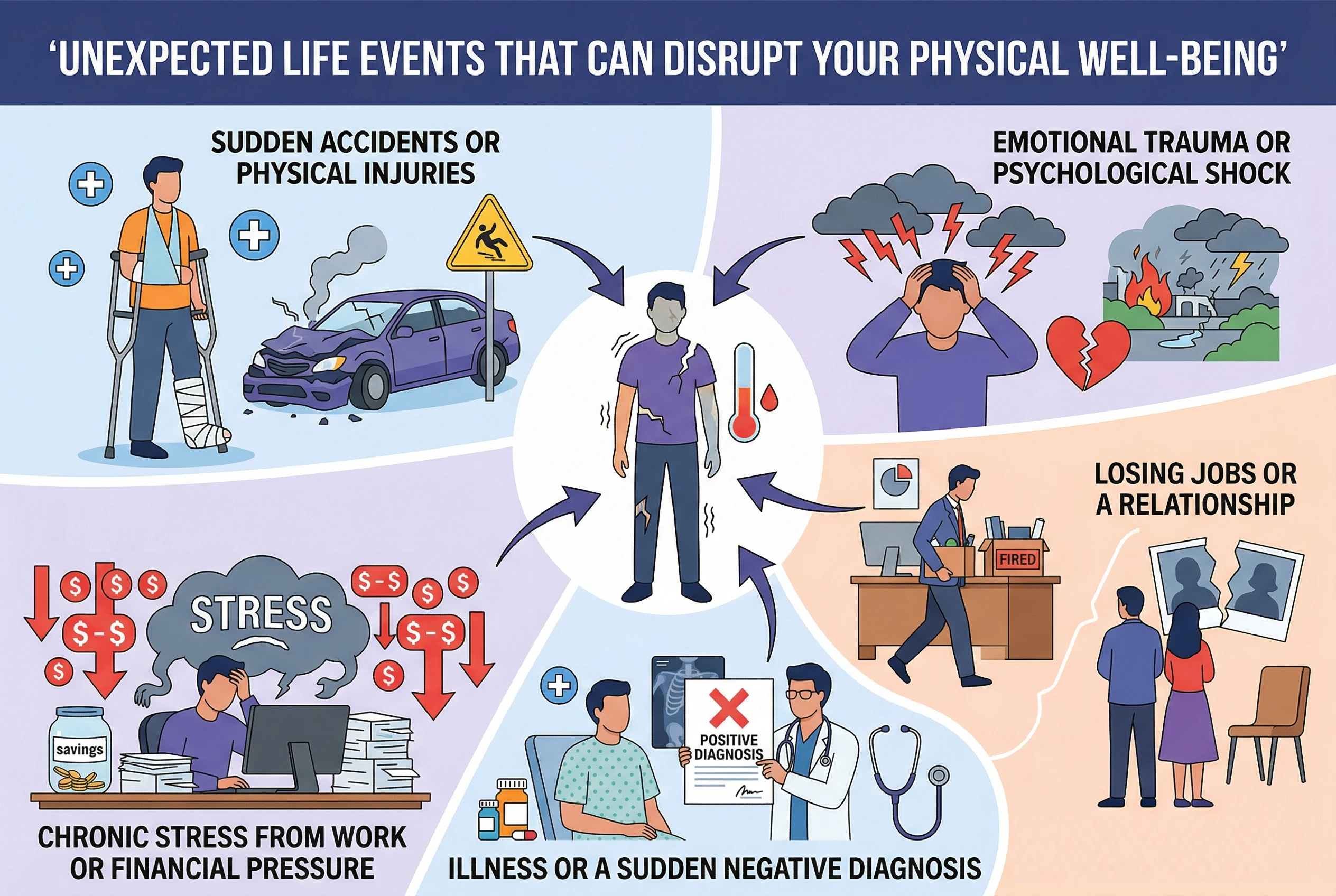
1. Sudden accidents and physical injuries
A sudden injury can seriously disrupt your physical well-being. Whether it’s a car accident, a slip and fall, or another unexpected incident, your body will shift into emergency mode immediately. All of your body’s stress responses will be activated to kickstart the healing process, although the immediate impact can feel negative.
For instance, your body will release stress hormones like adrenaline and cortisol to manage the shock. This process includes activating inflammation as a healing response and can be uncomfortable. Swelling, stiffness, and reduced mobility are part of this process and can limit your ability to function.
Accidents that happen unexpectedly can reshape the way your body functions for a long period of time, and that’s why it’s important to recognize when an injury is serious enough to warrant a lawsuit. If you’ve been hurt in an accident caused by someone else’s negligence, you deserve financial compensation.
2. Emotional trauma or psychological shock
Even when an event is only emotional, your body will still respond as if your survival is at stake, and that can disrupt your physical well-being. Events like loss, violence, and intense stress can trigger physiological changes that prevent your body from functioning at its best.
For instance, emotional trauma following a physical injury can prevent wound healing, and a major psychological shock can put your body into fight or flight for an extended period of time. This state of chronic stress is linked to a wide range of health problems that can negatively affect your cardiovascular system and put you at risk for strokes, heart attacks, and blood clots.
Many people also experience digestive problems and difficulty sleeping following an emotionally traumatic experience.
3. Major life transitions
Big life changes like moving, changing jobs, or ending a relationship can cause a significant amount of stress to your physical body. Your body gets used to consistency and routine, and any sudden changes can be jarring. Even simple changes in your daily routine can negatively affect your sleep quality, eating patterns, and energy levels. Having to rearrange your day is frustrating but doable. Being sleep deprived for extended periods of time can be detrimental.
Adapting to change requires energy, and many people experience extreme fatigue and headaches during these intense periods of transition. Some stressful life changes can even alter hormone levels that cause weight gain or loss.
4. Illness or a sudden negative diagnosis
Receiving a diagnosis or dealing with a sudden illness can disrupt your life in a single moment. One doctor’s visit can alter your entire routine and your life priorities. Even when your condition seems manageable on paper, it can zap your energy levels, reduce your mobility, and make it hard to function.
When illness hits, your immune system kicks into high gear to fight off infection and mitigate damage. While this response is critical for healing, it also comes with fatigue and soreness. Your illness might be localized but it can drain your whole body. For instance, an activated immune system can affect multiple organs and create symptoms throughout your whole body.
A scary diagnosis can force you to change the way you eat, sleep, and move through the world. It might even limit your social life and require you to undergo serious medical procedures.
5. Chronic stress from work or financial pressure
Sometimes the biggest sources of stress are ongoing and build over time. This is exactly how stress from work and finances works. Chronic stress from long-term sources like work or financial problems doesn’t happen overnight. It begins with something small until it snowballs into something you stress about daily.
Pay attention to your body after life disruptions
There are countless unexpected situations that can disrupt your life. The key to managing these situations when they arise is to recognize what’s going on in your body and support yourself. For example, if you’re becoming sleep deprived, make it a point to pull your body out of stress mode so you can start getting a good night’s sleep.
The human body is resilient, but it’s not invincible. How you respond after a setback will determine how you recover.