

- A flexitarian diet is a mostly plant-based eating pattern that occasionally includes meat or animal products.
- It offers more flexibility than vegetarianism, making it easier to adopt and sustain long-term.
- Research suggests that flexitarian diets may provide similar or even greater health benefits compared to strict vegetarian diets when balanced properly.
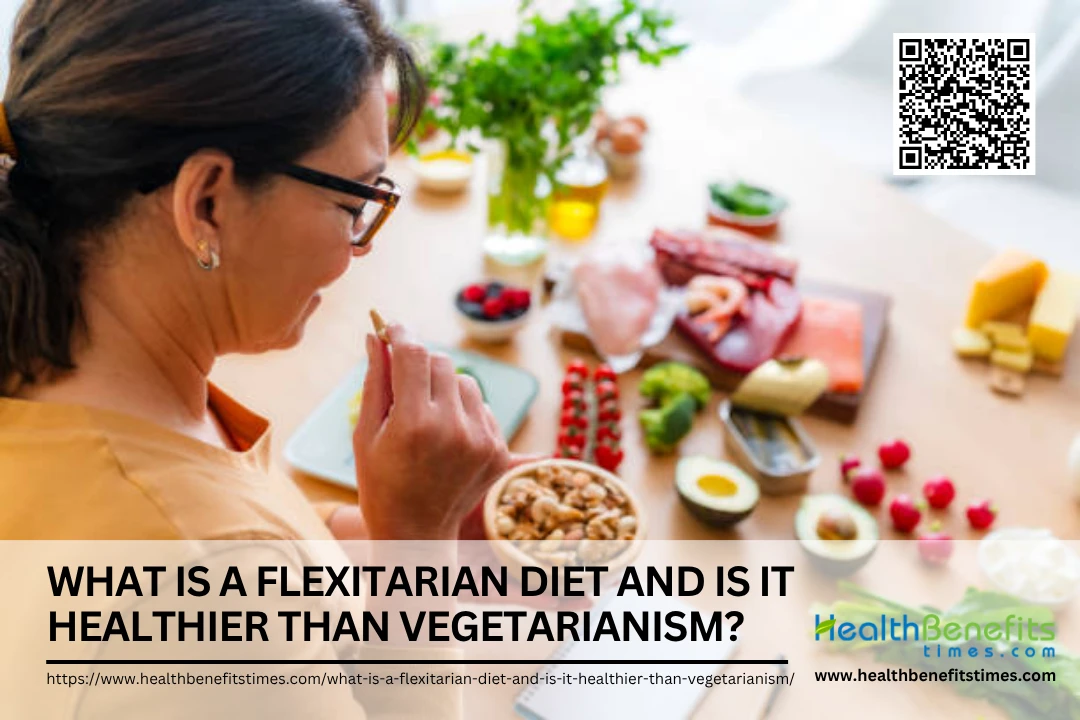 A diet is defined as the sum of food consumed by a person or organism, often guided by cultural habits, nutritional goals, and health conditions, and includes both quality and quantity of nutrients consumed over time. In recent years, plant-based eating patterns have surged in popularity as people search for sustainable and health-conscious dietary solutions. Among these, the flexitarian diet has emerged as a balanced and adaptable alternative to strict vegetarianism. While vegetarianism excludes all forms of meat, the flexitarian diet allows for occasional consumption of meat, poultry, or fish while focusing primarily on plant-based foods. This flexible approach has been associated with multiple health benefits, such as reduced risk of cardiovascular disease, improved metabolic outcomes, and enhanced diet adherence due to its less restrictive nature. Comparatively, both diets have demonstrated positive outcomes for health and the environment, but some studies suggest that flexitarianism may offer nutritional advantages by reducing potential deficiencies linked to strict vegetarianism and maintaining a favorable gut microbiome composition.
What Is a Flexitarian Diet?
The flexitarian diet is a semi-vegetarian approach that emphasizes mostly plant-based foods while allowing occasional meat and animal product consumption. The term “flexitarian” was popularized by dietitian Dawn Jackson Blatner and represents a flexible style of vegetarianism that adapts to personal dietary needs and preferences. (1)
The core principles of the flexitarian diet revolve around moderation and plant-forward eating. It encourages higher intake of vegetables, fruits, whole grains, legumes, and nuts, while reducing meat and processed food consumption. Unlike strict vegetarianism, it promotes inclusivity and sustainability by easing the transition toward healthier habits (Derbyshire, 2017 – Frontiers in Nutrition).
A common misconception is that flexitarianism is simply a diluted form of vegetarianism or an excuse for inconsistent eating. However, research highlights it as a distinct and structured approach to healthful eating, supported by nutritional science and sustainability metrics. (2)
What Is a Vegetarian Diet?
A vegetarian diet is characterized by the exclusion of meat, poultry, and fish, while including plant-based foods and often dairy and eggs, depending on the type. Variants include lacto-vegetarian (includes dairy), ovo-vegetarian (includes eggs), and lacto-ovo vegetarian (includes both). Some people also follow stricter patterns such as veganism, which eliminates all animal-derived products. (3)
The motivations behind adopting vegetarian diets are diverse. Ethically, individuals seek to avoid animal suffering; environmentally, this diet reduces greenhouse gas emissions and land use; and from a health perspective, it is linked to lower risks of heart disease, hypertension, and certain cancers. (4)
Despite these benefits, vegetarian diets may lead to potential nutrient deficiencies if not carefully planned. Critical nutrients such as vitamin B12, iron, omega-3 fatty acids, and zinc often require supplementation or fortified foods. (5)
Types of Flexitarians
Flexitarians come in various types based on how often they consume meat. From casual reducers to near-vegetarians, each type reflects a different level of commitment to plant-based eating.
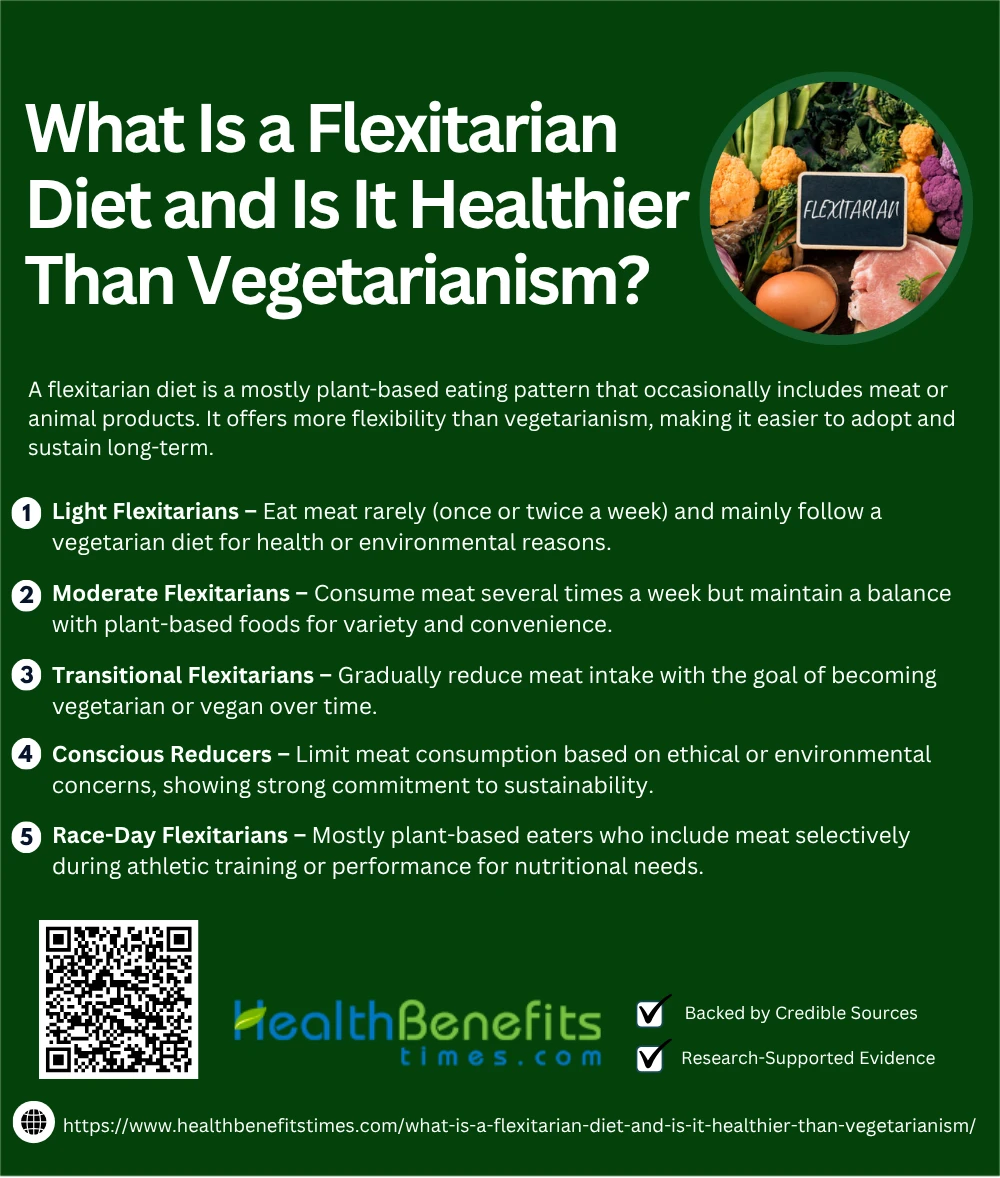 1. Light Flexitarians
Light flexitarians adhere predominantly to a vegetarian diet but allow themselves to eat meat infrequently—usually no more than once or twice a week. Their meals consist largely of vegetables, legumes, whole grains, and plant-based proteins. This group is often motivated by health concerns or environmental sustainability, rather than ethical objections to animal consumption. According to Mueller et al. (2022), this category tends to have higher diet quality scores and better cardiovascular health outcomes due to their limited intake of red and processed meats. (1)
2. Moderate Flexitarians
Moderate flexitarians strike a balance between plant-based and animal-based eating, consuming meat several times a week but not daily. They are less rigid than vegetarians and light flexitarians but more intentional than general omnivores. This dietary approach often appeals to individuals seeking variety and social flexibility while still desiring the health and ecological benefits of a plant-forward lifestyle. Malek & Umberger (2021) highlighted that moderate flexitarians prioritize convenience and practicality, often blending plant-based meals with culturally familiar animal proteins. (6)
3. Transitional Flexitarians
Transitional flexitarians are individuals gradually reducing their meat consumption with the intent of eventually becoming vegetarian or vegan. Their current eating habits still include meat, but at significantly reduced frequency, often guided by experimentation or nutritional learning. This group often uses flexitarianism as a stepping stone toward a more defined dietary identity. Verain et al. (2022) explain that transitional flexitarians play a pivotal role in the evolving food system as they represent a flexible and scalable approach to plant-based eating. (7)
4. Conscious Reducers
Conscious reducers actively limit their meat intake based on ethical beliefs, environmental activism, or animal welfare concerns, rather than primarily for health or dietary preferences. Their food choices reflect deliberate values, such as reducing carbon footprints or opposing industrial animal farming. This group often educates themselves about food sourcing and sustainability. According to Sheen et al. (2023), conscious reducers demonstrate consistent behavior change supported by strong intrinsic motivation, which increases long-term dietary adherence. (8)
5. Race-Day Flexitarians
Race-day flexitarians follow a mostly plant-based diet but selectively incorporate meat or animal protein during intense training or athletic performance periods. This group typically includes endurance athletes and fitness enthusiasts who value the nutritional density of meat, particularly for muscle repair and energy. Tanous et al. (2024) describe this group as “performance-flexible,” tailoring their diet to meet specific metabolic demands without abandoning a primarily vegetarian framework. (9)
Key Differences between Flexitarian and Vegetarian Diets
Here is a clear and concise comparison table outlining the key differences between Flexitarian and Vegetarian diets:
| Aspect | Flexitarian Diet | Vegetarian Diet |
| Definition | Primarily plant-based diet that allows occasional meat/fish | Diet that excludes meat, poultry, and fish |
| Meat Consumption | Permitted occasionally (flexible) | Completely excluded |
| Animal Products (Eggs/Dairy) | Generally included | Included (unless vegan) |
| Main Focus | Health and environmental balance with dietary flexibility | Ethical, health, and environmental concerns |
| Protein Sources | Plants, with occasional meat, fish, or animal products | Plant-based, eggs, and dairy |
| Common Motivation | Improve health, reduce meat intake, environmental concerns | Animal welfare, ethical reasons, health, environmental reasons |
| Structure | Semi-structured, based on individual choice | More structured, consistent exclusion of meat |
| Suitability | For those reducing meat but not fully eliminating it | For those committed to avoiding all meat consistently |
| Nutritional Considerations | Must monitor meat quality and portion sizes | Must ensure adequate iron, B12, and protein intake from plants |
Health Benefits of a Flexitarian Diet
A flexitarian diet offers numerous health benefits by emphasizing plant-based foods while allowing occasional meat. It supports heart health, weight management, and may reduce the risk of chronic diseases.
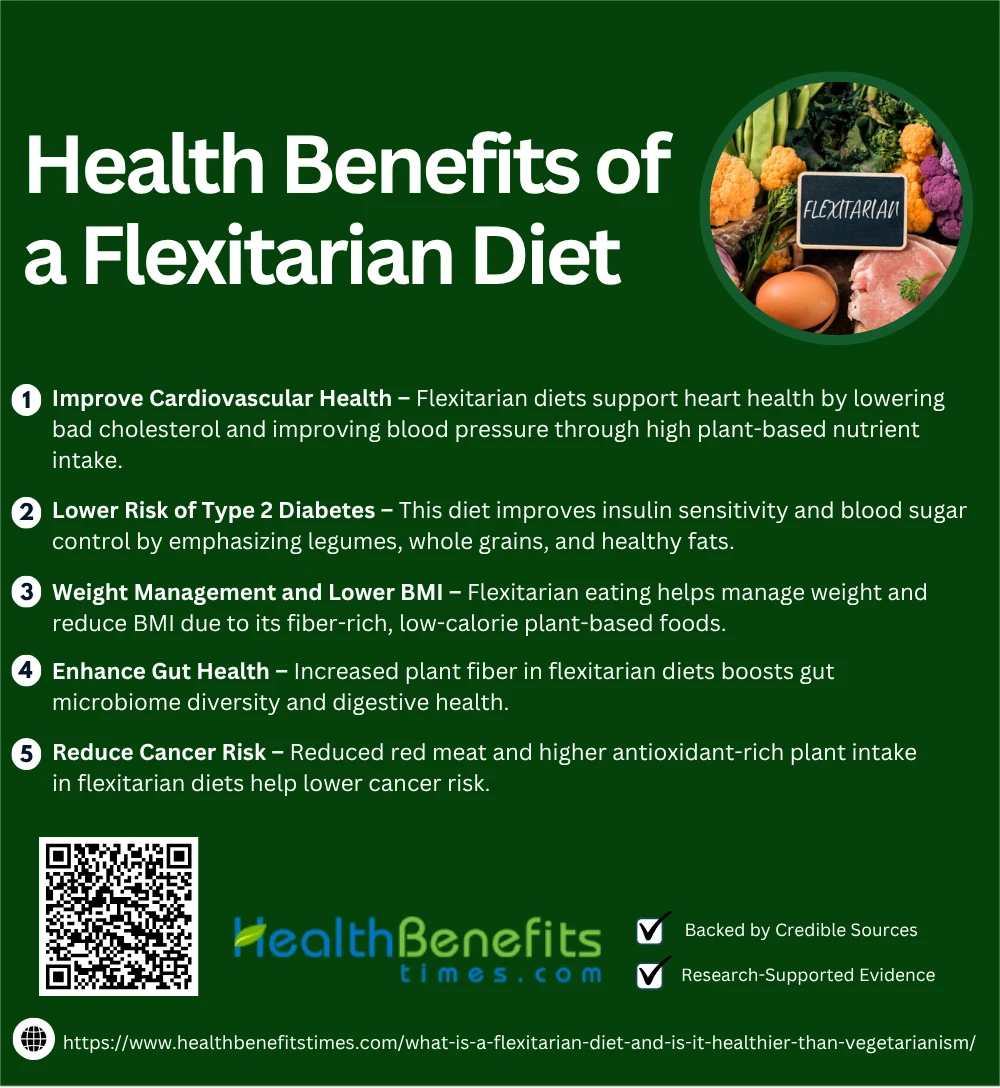 1. Improve Cardiovascular Health
A flexitarian diet significantly benefits cardiovascular health by lowering LDL cholesterol and improving blood pressure due to its high intake of fiber, antioxidants, and plant-based fats. A cohort study found better cardiovascular risk profiles in flexitarians than omnivores. (10) Additional research linked plant-forward eating with lower coronary artery disease risk. (11) Flexitarian choices also align with reduced CHD mortality and dietary models improving vascular outcomes. (12) (13)
2. Lower Risk of Type 2 Diabetes
A flexitarian diet can reduce type 2 diabetes risk by moderating glycemic load and enhancing insulin sensitivity. Its reliance on legumes, whole grains, and unsaturated fats plays a critical role in glycemic control. A clinical nutrition review emphasizes its preventive impact on diabetes and metabolic disease. (14) Lifestyle studies show reduced diabetes incidence in flexitarian populations. (15) Plant-centric diets also lower fasting glucose levels and dietary transitions support metabolic health overall. (16) (17)
3. Weight Management and Lower BMI
A flexitarian diet is effective for managing weight and reducing BMI due to its high fiber, low saturated fat, and nutrient-dense food profile. Studies report that plant-forward diets promote satiety and regulate body composition. (18) Bioactive compounds in plant foods aid metabolic balance. (11) Flexitarians also show reduced obesity prevalence and lower body fat percentage. (19) (15)
4. Enhance Gut Health
Flexitarian diets improve gut health by increasing microbiome diversity through plant-based fiber intake. High consumption of legumes, grains, and fermented foods fosters beneficial bacterial strains. (20) A scoping review showed flexitarian patterns promote microbiome resilience. (21) Gut flora diversity directly correlates with fiber consumption levels. (22) Recent evidence confirms diet-mediated microbiome changes in flexitarian individuals. (23)
5. Reduce Cancer Risk
A flexitarian diet may lower cancer risk by reducing intake of red and processed meats while increasing fiber-rich, antioxidant-rich plant foods. High consumption of legumes and cruciferous vegetables in this diet supports anti-inflammatory and anti-carcinogenic effects. (24) Moreover, limiting meat reduces colorectal and pancreatic cancer risk factors. (16) The planetary flexitarian model has also been linked to reduced diet-related cancer deaths. (12) Emerging data even connect bioactive compounds in such diets to suppression of tumor growth pathways. (11)
Health Benefits of a Vegetarian Diet
A vegetarian diet focuses on plant-based foods and excludes meat, offering many health benefits. It may lower blood pressure, reduce heart disease risk, and support overall wellness through nutrient-rich meals.
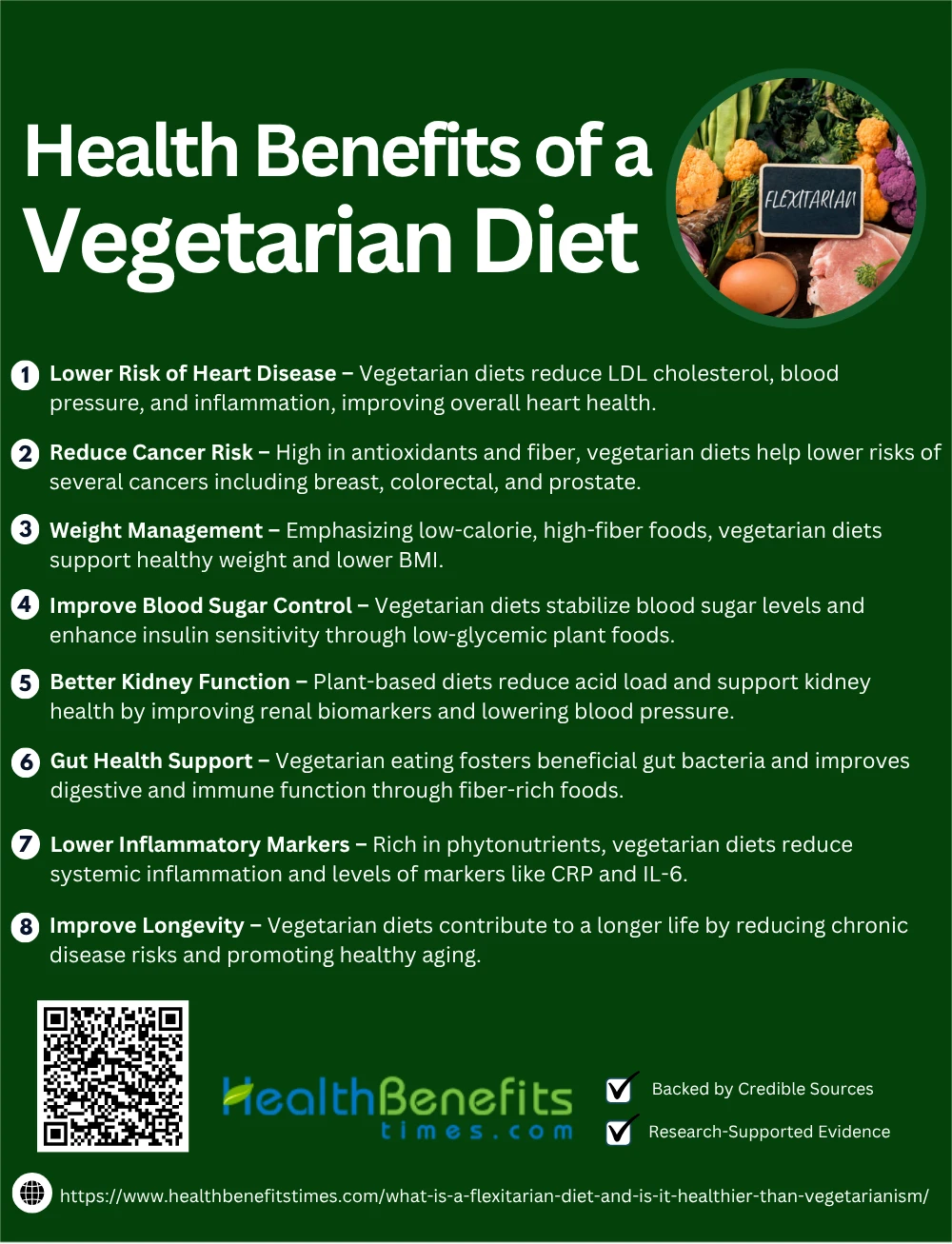 1. Lower Risk of Heart Disease
A vegetarian diet reduces heart disease risk by lowering LDL cholesterol, blood pressure, and inflammation. Studies confirm its ability to improve cardiovascular biomarkers and reverse artery damage. High fiber and low saturated fat intake correlate with better lipid profiles. Plant-based nutrition lowers metabolic syndrome prevalence and supports vascular health. (25)
2. Reduce Cancer Risk
Vegetarian diets help lower cancer risk due to higher intake of phytochemicals, antioxidants, and fiber. These components modulate gene expression and inflammation. Diets rich in plant proteins have shown breast cancer protective effects. Evidence suggests colorectal and prostate cancer rates are lower in vegetarians. Gut microbiota alterations further contribute to reduced carcinogenesis.
3. Weight Management
Vegetarian diets promote weight loss and BMI reduction by emphasizing high-fiber, low-calorie foods. Nutritional studies found vegetarians maintain healthier body weights due to plant-rich intake. (26) Dietary programs focusing on fruits and vegetables achieved better outcomes in obesity management. Fiber enhances satiety, aiding calorie control. Meal interventions confirmed sustained weight benefits.
4. Improve Blood Sugar Control
A vegetarian diet enhances blood sugar control through low-glycemic foods and fiber-rich intake. Studies show improvements in insulin sensitivity and A1C levels among vegetarians. Lacto-vegetarian diets were linked to reduced glycemic spikes. Fiber from legumes and vegetables supports glucose regulation. Public health programs also report improved outcomes.
5. Better Kidney Function
Vegetarian diets help protect kidney function by reducing acid load and lowering blood pressure. A recent clinical study revealed improved renal biomarkers in patients following plant-based protocols. Kale-rich vegetarian meals improved kidney antioxidant capacity. Another study emphasized dietary shifts’ role in slowing CKD progression. Research on alkaline diets also confirmed reduced stone risks.
6. Gut Health Support
Vegetarian diets promote microbial diversity, enriching beneficial bacteria and reducing pathogens. A study linked vegetarian intake to gut microbiome improvement within days. Higher fiber intake supports short-chain fatty acid production, vital for gut lining repair. Fermented vegetarian foods enhance digestion and immunity. (27) Additional evidence confirms anti-inflammatory gut profiles in vegetarians.
7. Lower Inflammatory Markers
Vegetarian diets are associated with reduced levels of inflammatory markers such as C-reactive protein (CRP) and interleukins. High intake of antioxidants and phytonutrients from plants contributes to this anti-inflammatory effect. Studies also confirm lipid profile improvement and systemic inflammation reduction. Other research shows significant CRP decline in vegetarians and IL-6 modulation.
8. Improve Longevity
Vegetarian diets promote longer lifespan by lowering chronic disease risks and supporting metabolic efficiency. A Chinese longitudinal study found a direct link between high-quality vegetarian diets and extended life expectancy. Dietary phytochemicals improve cellular repair mechanisms. Blue Zone research supports plant-based longevity outcomes. Fiber-rich intake also correlates with better aging biomarkers.
Which Diet Is Healthier?
Determining whether a flexitarian or vegetarian diet is healthier depends on scientific evidence and personal context. Comparative research shows both diets are linked to reduced risks of cardiovascular disease, cancer, obesity, and type 2 diabetes. (4) (19) Flexitarian diets, however, may offer slightly better nutrient adequacy due to the occasional inclusion of animal products, reducing deficiencies in B12, iron, and omega-3s. (5) (28) Vegetarian diets, by contrast, often align more strongly with ethical and environmental motivations and have long-term evidence in reducing chronic disease incidence. (10) (15)
In terms of adherence, flexitarian diets are more sustainable for many individuals due to their inherent flexibility, making them ideal for long-term behavior change. (29) Studies emphasize that diet quality matters more than strict labels, with whole-food plant-based approaches outperforming heavily processed vegetarian alternatives. (23) Ultimately, both diets are health-promoting when carefully planned and matched to individual nutritional needs and lifestyle priorities.
How to Transition to a Flexitarian or Vegetarian Diet
Transitioning to a flexitarian or vegetarian diet is easier with gradual changes. Start by adding more plant-based meals, exploring new recipes, and ensuring balanced nutrition for long-term success.
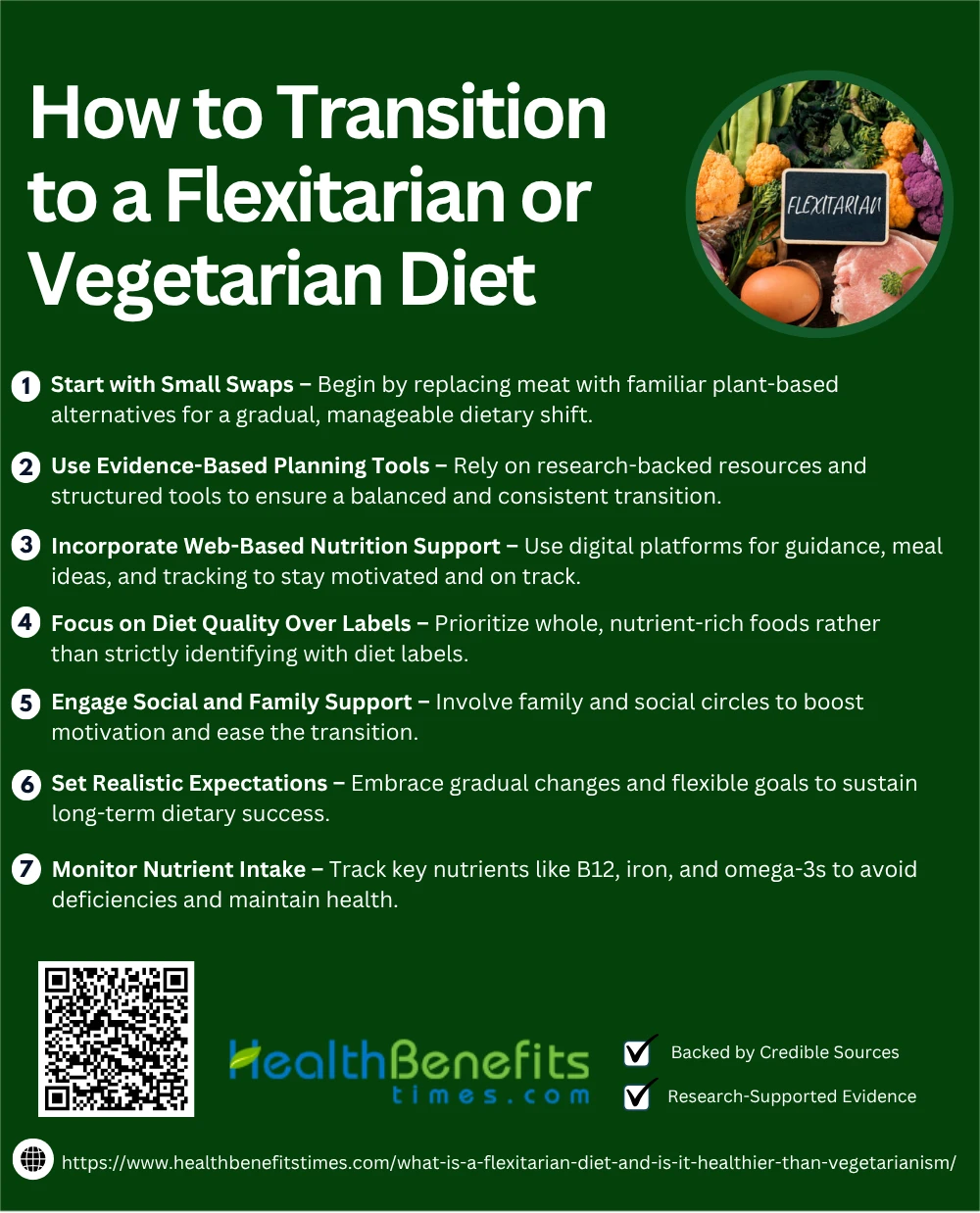 1. Start with Small Swaps
Transitioning to a flexitarian or vegetarian diet can begin with simple ingredient swaps—like replacing meat with legumes or tofu. Research shows that small, familiar changes improve adherence and satisfaction. (30) Gradual substitution increases satiety and nutrient quality. (31) Incremental changes are less overwhelming and more sustainable, especially when guided by taste and ease. (32) (33)
2. Use Evidence-Based Planning Tools
Effective transition to plant-rich diets benefits from using structured, research-backed resources. Tools like digital nutrition platforms and guided interventions increase consistency and nutrient adequacy. (34) Systematic reviews show tailored behavior strategies improve adherence. (35) Evidence-based educational materials and goal-setting approaches help personalize the process. (36) (37)
3. Incorporate Web-Based Nutrition Support
Digital tools enhance dietary transitions by offering structured guidance, recipes, and behavior tracking. A web-based education intervention improved plant-based adherence among young adults. (34) Flexitarians using app-based coaching showed higher engagement rates. (38) Online self-monitoring boosted intake quality and compliance. Broader digital surveys reveal motivational insights. (39) (40)
4. Focus on Diet Quality Over Labels
When shifting to a flexitarian or vegetarian diet, prioritizing diet quality over identity labels ensures better health outcomes. Research shows that plant-based diets rich in whole foods reduce chronic disease risk. Emphasizing minimally processed plants improves longevity. Diverse nutrient intake is vital (Frontiers in Nutrition), as is limiting ultra-processed foods.
5. Engage Social and Family Support
Social reinforcement plays a critical role in sustaining dietary shifts. Family support reduces resistance and enhances motivation during transition. Flexitarian households thrive when collective meals align with shared goals. (41) Peer-based support increases adherence. (42) Community encouragement also boosts long-term engagement. (43)
6. Set Realistic Expectations
To effectively transition to a flexitarian or vegetarian diet, it’s crucial to set realistic expectations and understand that gradual change promotes long-term adherence. Unrealistic goals often lead to burnout and diet relapse. Behavioral support enhances success rates. Flexibility and small, sustainable shifts work better than rigid restrictions.
7. Monitor Nutrient Intake
A successful transition to a plant-forward diet requires careful nutrient monitoring. Essential nutrients like B12, iron, and omega-3s are often under-consumed. Monitoring intake prevents deficiencies common in plant-based patterns. Supplementation and fortified foods may be necessary (Nutrition Reviews), especially for iron and B12.
Conclusion
Both flexitarian and vegetarian diets offer valuable health benefits, with each providing unique advantages depending on personal preferences and nutritional needs. A flexitarian diet allows more flexibility while still promoting plant-based eating, making it easier for many to adopt and maintain. On the other hand, a vegetarian diet offers a stricter approach that can provide strong ethical and environmental benefits. Ultimately, the healthiest choice depends on individual lifestyle, goals, and consistency in making nutrient-rich food choices. Whether you reduce meat gradually or eliminate it entirely, prioritizing whole, plant-based foods is key to achieving better health and long-term well-being.