

- Earthing, also known as grounding, is the practice of connecting your body directly to the Earth’s surface energy.
- Research suggests earthing may help reduce inflammation, improve sleep, and lower stress.
- Simple methods like walking barefoot or using grounding devices can bring potential health benefits.
 Earthing, also known as grounding, refers to the therapeutic practice of making direct physical contact with the Earth’s surface to absorb its free electrons, which may help balance the body’s electrical charge and reduce oxidative stress. This connection is typically achieved by walking barefoot on natural surfaces like grass, soil, sand, or unsealed concrete, or by using specially designed indoor conductive systems such as grounding mats and sheets. The Earth maintains a negative electrical potential, and direct contact allows for the transfer of electrons into the body, which may neutralize free radicals and reduce inflammation. Researchers have observed that earthing can influence the autonomic nervous system, supporting parasympathetic activity and lowering stress responses. Indoor grounding systems have also been shown to mimic outdoor benefits, providing convenience for those without access to nature. Furthermore, studies suggest that grounding may improve sleep quality, reduce pain, and promote faster recovery after physical activity by modulating the body’s physiological responses.
The Science behind Earthing: How It Is Supposed to Work
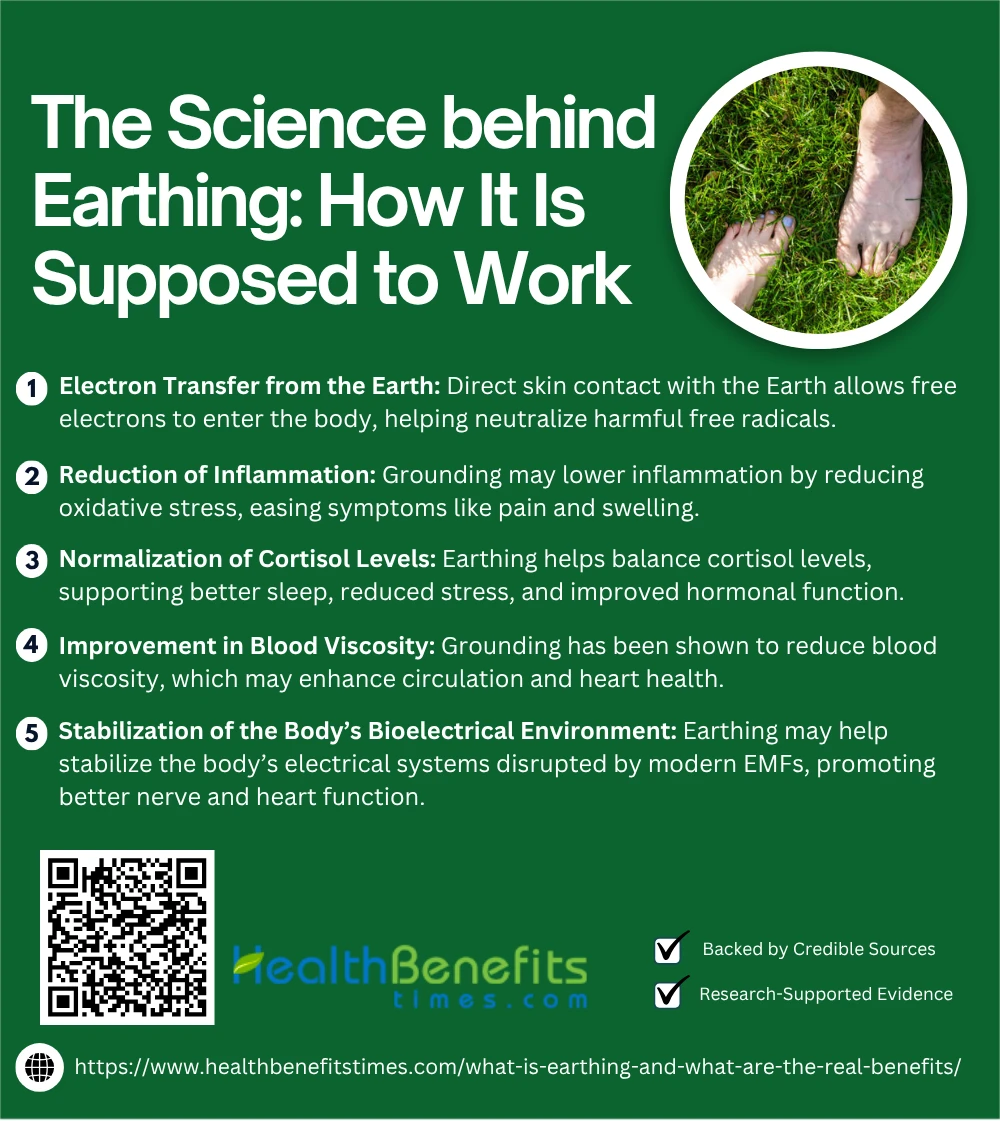
Earthing, or grounding, is believed to work by allowing the body to absorb electrons from the Earth’s surface, potentially reducing inflammation, balancing stress hormones, and promoting overall physiological well-being.
 1. Electron Transfer from the Earth
At the heart of earthing science is the theory of electron transfer. The Earth’s surface carries a negative charge and is a vast reservoir of free electrons. When your bare skin comes into contact with the ground—such as walking barefoot on grass or soil—these electrons can flow into your body. This process is believed to help neutralize positively charged free radicals, which are unstable molecules that can cause oxidative stress and cellular damage. This electron uptake acts like a natural antioxidant mechanism, reducing the burden of free radicals in the body.
2. Reduction of Inflammation
Chronic inflammation is at the root of many modern diseases, including cardiovascular conditions, arthritis, and autoimmune disorders. Studies suggest that grounding can reduce inflammation by neutralizing reactive oxygen species, which are a major driver of inflammatory processes. This anti-inflammatory effect has been observed in small clinical trials and case studies, where participants experienced reductions in pain, swelling, and redness after regular grounding practices.
3. Normalization of Cortisol Levels
Cortisol is the body’s primary stress hormone, closely tied to the sleep-wake cycle and emotional regulation. Disruptions in cortisol levels can lead to insomnia, fatigue, and heightened stress responses. Research has shown that grounding may help restore a natural diurnal cortisol rhythm, particularly when individuals sleep on grounding sheets or pads. This normalization supports better sleep quality, reduced stress, and a more balanced hormonal environment.
4. Improvement in Blood Viscosity
Blood viscosity—essentially how thick or sticky the blood is—affects circulation and cardiovascular health. High blood viscosity can increase the risk of hypertension and blood clots. A clinical study found that grounding significantly reduced blood viscosity in healthy adults after just two hours of contact with the Earth. Improved blood flow and reduced clotting potential suggest that earthing may play a role in heart health and vascular function.
5. Stabilization of the Body’s Bioelectrical Environment
The human body is an intricate bioelectrical system, where nerves, muscles, and the heart rely on electrical signals to function properly. Modern environments filled with electromagnetic radiation may disrupt this system. Grounding helps restore electrical stability by syncing the body’s electrical charge with that of the Earth. This stabilization supports healthier nerve signaling, muscle contraction, and cardiac rhythms, contributing to an overall sense of physiological balance and well-being.
Difference between Common Methods of Practicing Earthing
Here is a clear and concise table showing the difference between common methods of practicing earthing, comparing outdoor and indoor methods based on key factors like accessibility, effectiveness, cost, and convenience:
| Method | Type | Description | Accessibility | Effectiveness | Cost | Convenience |
| Walking Barefoot on Grass/Soil | Outdoor | Direct contact with natural ground surfaces like grass, dirt, or soil. | Easy in rural/suburban areas | High (direct Earth contact) | Free | Moderate (weather-dependent) |
| Walking Barefoot on Sand (Beach) | Outdoor | Walking barefoot on wet or dry sand, especially near saltwater. | Limited to coastal areas | High | Free | Moderate |
| Lying on Natural Surfaces | Outdoor | Resting body directly on grass, soil, or sand. | Easy in natural settings | High | Free | Low to Moderate |
| Swimming in Natural Waters | Outdoor | Immersing body in lakes, rivers, or the ocean for full-skin contact. | Seasonal & location-limited | High (if in natural water) | Free | Low (weather and location) |
| Grounding Mat or Pad | Indoor | Conductive mat that connects to grounded outlets, used under feet or wrists. | Widely available | Moderate to High | $$ (mid-range) | High (usable anywhere) |
| Grounding Sheets | Indoor | Bedsheets with conductive fibers that connect to the ground for sleeping. | Available online | Moderate to High | $$$ (higher-end) | Very High (overnight use) |
| Grounding Bands/Patches | Indoor | Wearable bands or adhesive patches for localized grounding. | Compact and portable | Targeted effectiveness | $$ | High (for working/sitting |
How to Practice Earthing
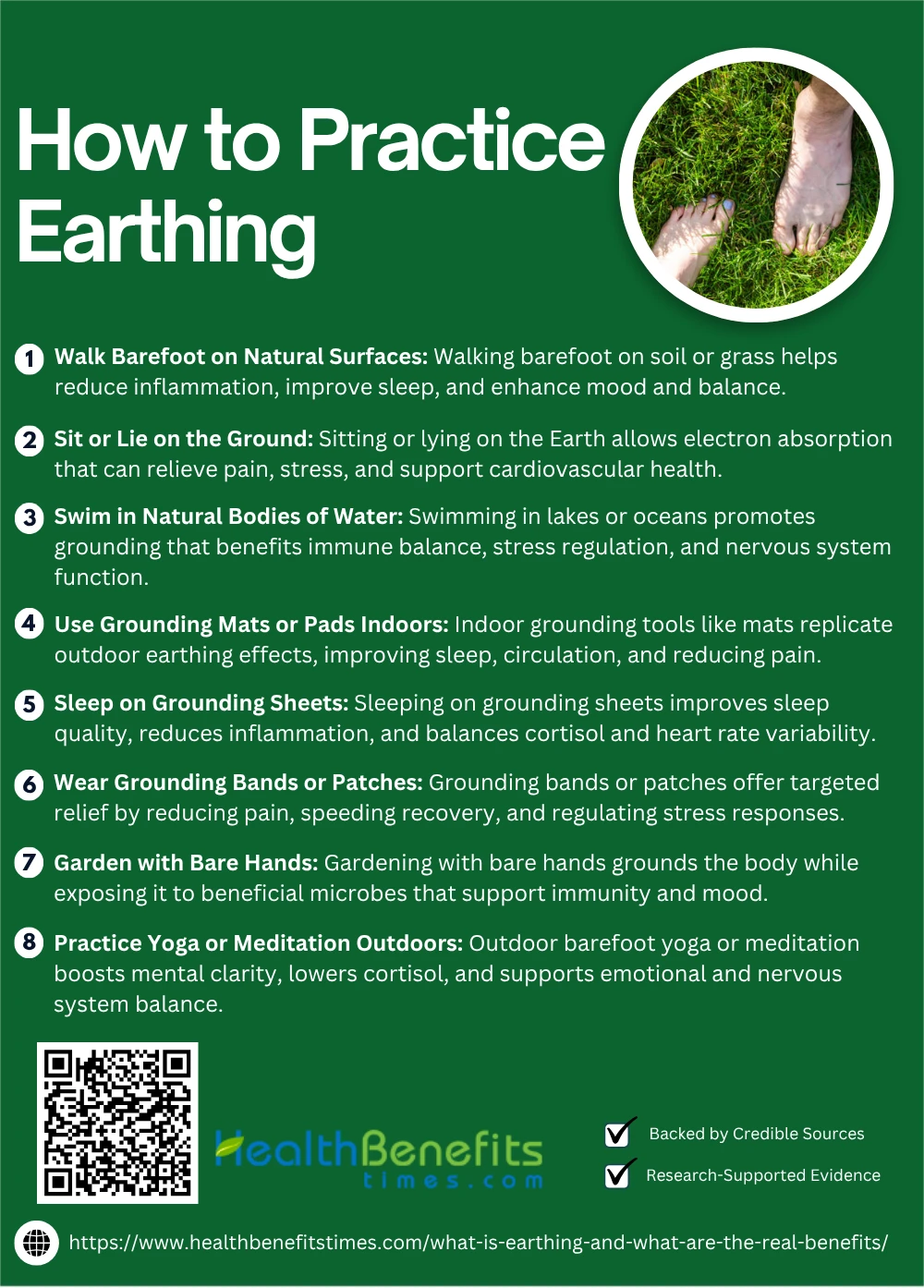
Practicing earthing is simple and accessible. It involves direct contact with natural surfaces like grass, soil, or sand, or using grounding tools indoors to reconnect with the Earth’s energy.
 1. Walk Barefoot on Natural Surfaces
Walking barefoot on natural surfaces, a practice known as earthing, has been shown to reduce inflammation and improve sleep. Research suggests that direct contact with the Earth stabilizes circadian rhythms and supports reduced cortisol levels. (1) It may also enhance mood by increasing the release of endorphins, as indicated by clinical studies on grounding. (2) Moreover, walking barefoot can improve balance and proprioception, contributing to better neuromuscular function.
2. Sit or Lie on the Ground
Sitting or lying on the Earth promotes grounding, a process where the body absorbs negative electrons from the soil. Studies show this can reduce pain and stress by modulating inflammatory responses. (1) It also supports cardiovascular health by enhancing blood viscosity. (3) Ground contact may further enhance parasympathetic activity, leading to improved autonomic nervous function. (4)
3. Swim in Natural Bodies of Water
Swimming in lakes or oceans fosters direct skin contact with Earth’s electrical field, supporting anti-inflammatory effects and immune balance. Studies show grounding through water can enhance autonomic nervous system stability. (1) Natural water exposure may also regulate stress and cortisol levels, and improve antioxidant defense systems, as seen in research on water immersion and grounding. (5)
4. Use Grounding Mats or Pads Indoors
Grounding indoors with mats or pads connected to Earth’s energy can mimic outdoor earthing benefits. Research confirms these devices reduce inflammation and improve sleep quality by normalizing cortisol rhythms. (1) Clinical trials indicate improvements in blood flow and reduced pain when using conductive mats. (2) They also positively influence heart rate variability and stress. (6)
5. Sleep on Grounding Sheets
Grounding sheets allow overnight contact with Earth’s electrons, promoting restorative sleep. Research shows they help regulate cortisol secretion patterns, enhancing sleep quality and reducing nighttime stress. (1) Clinical evidence links grounding during sleep to decreased inflammation and pain levels. (2) Additionally, improvements in heart rate variability suggest better autonomic nervous system balance from consistent use. (6)
6. Wear Grounding Bands or Patches
Wearing grounding bands or patches provides localized electron transfer for inflammation relief and pain reduction. Studies confirm these devices reduce delayed-onset muscle soreness and promote faster recovery. (2) Grounding patches also normalize immune response markers and improve blood flow. Furthermore, research highlights their benefits on autonomic regulation, particularly under stress or physical exertion. (6) (1)
7. Garden with Bare Hands
Gardening with bare hands enables direct contact with soil, fostering grounding and microbial exchange. Research indicates that touching soil helps regulate the immune system via exposure to beneficial microbes. (7) Grounding through touch also enhances inflammatory response control, while exposure to nature improves mood and stress regulation. (1)
8. Practice Yoga or Meditation Outdoors
Practicing yoga or meditation barefoot on natural ground integrates earthing with mindful movement. Studies link this to lower cortisol levels and improved autonomic nervous system regulation. (1) (6) Ground contact during meditation also enhances mental clarity and emotional stability, making outdoor mindfulness an effective method for holistic grounding and psychological well-being. (5)
Claimed Health Benefits of Earthing
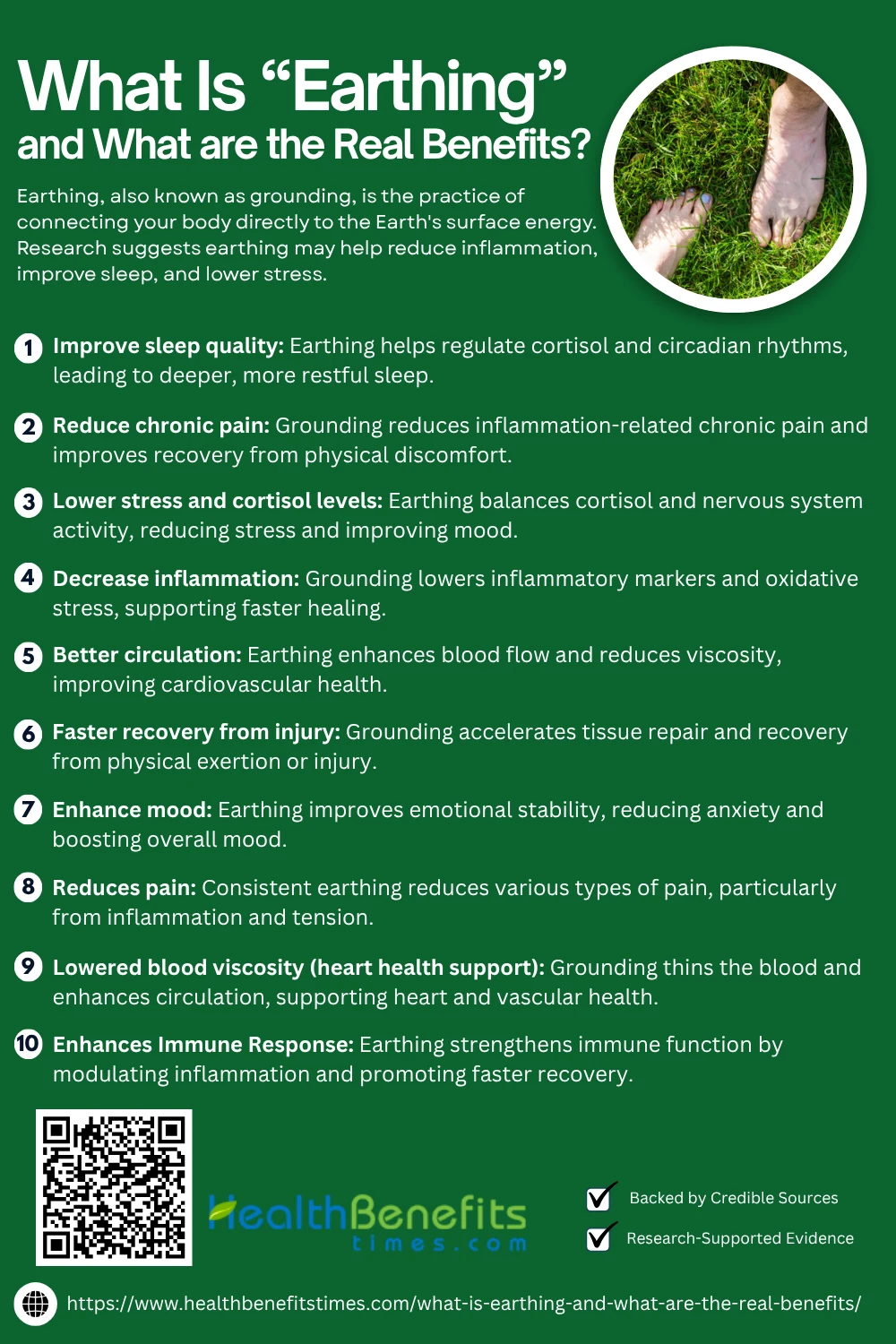
Many proponents believe earthing offers significant health benefits, including improved sleep, reduced pain, lower stress levels, and enhanced healing—by reestablishing the body’s natural electrical connection with the Earth.
 1. Improve sleep quality
Grounding, or earthing, has been associated with improvements in sleep patterns and circadian rhythm. A study published in the Journal of Environmental and Public Health found that sleeping grounded normalizes cortisol secretion during sleep. (1) Additionally, research shows earthing during rest hours significantly reduces nighttime cortisol levels, enhancing overall sleep quality. (8) Complementary findings suggest improved autonomic nervous system balance, reduced sleep disturbances, and better REM sleep.
2. Reduce chronic pain
Clinical studies show that earthing significantly reduces chronic pain, especially inflammatory-related discomfort. According to a controlled study published in the Journal of Inflammation Research, grounding led to measurable reductions in pain markers like white blood cell count. (2) Another investigation in PubMed Central noted dramatic pain relief in patients with musculoskeletal issues. (1) Further, earthing benefits include decreased delayed-onset muscle soreness, improved HRV, and reduced pain-related sleep disturbances.
3. Lower stress and cortisol levels
Scientific evidence suggests earthing significantly reduces stress and cortisol levels, promoting psychological balance. A pivotal study in the Journal of Environmental and Public Health revealed grounded individuals had normalized daily cortisol rhythms. (1) Findings also showed improved mood states and reduced sympathetic nervous activity. (9) Additionally, EEG scans demonstrated reduced stress after earthing exposure. Other supporting results include calmer brainwave patterns and lowered stress biomarkers.
4. Decrease inflammation
Grounding has been shown to reduce inflammation by modulating immune response and oxidative stress. In a study published on PubMed Central, earthing decreased inflammatory markers, including CRP and WBC counts. (2) A separate trial demonstrated reduced cytokine activity in grounded subjects. (8) Research also confirmed faster recovery from muscle-induced inflammation, enhanced cell repair signals, and suppressed oxidative stress pathways.
5. Better circulation
Research indicates that earthing improves blood flow and circulation, supporting cardiovascular function. A clinical trial in PubMed Central demonstrated enhanced zeta potential, reducing blood viscosity. (2) Additionally, grounded participants showed faster red blood cell transit. (10) Improved peripheral circulation was documented in thermal imaging studies. (11) Other findings point to increased skin microcirculation and normalized autonomic tone linked to vascular health. (9)
6. Faster recovery from injury
Studies suggest that earthing accelerates injury recovery by modulating inflammation and promoting tissue repair. In a study from ScienceDirect, grounded individuals experienced quicker muscle recovery and reduced swelling. (12) Electrophysiological changes also support cellular regeneration. Recovery from physical exertion improved significantly with overnight grounding. (2) Moreover, enhanced wound healing has been noted and cytokine modulation promotes faster tissue repair. (13) (10)
7. Enhance mood
Evidence suggests earthing significantly enhances mood and emotional stability. A clinical investigation in PubMed Central found that grounding reduces anxiety and depression. (1) It stabilizes the autonomic nervous system, as supported by ScienceDirect. (10) Improvements in serotonin regulation were observed in EEG-monitored trials. Additionally, grounded individuals reported increased vitality and decreased tension, with mood upliftment comparable to mindfulness therapy. (9)
8. Reduces Pain
Research consistently shows that earthing helps reduce pain levels, particularly in cases of inflammation and chronic discomfort. A study in the Journal of Inflammation Research noted reduced pain intensity in grounded subjects. (2) Improvements in musculoskeletal pain were also documented in ScienceDirect. (12) Subjects reported less pain interference with sleep and daily activity. Thermal imaging confirmed reduced inflammation hotspots, while mood-linked pain perception also improved. (8) (13)
9. Lowered blood viscosity (heart health support)
Earthing has been shown to lower blood viscosity, a key factor in reducing cardiovascular risk. A pivotal study in PubMed Central demonstrated improved zeta potential in red blood cells after grounding. (2) This reduced blood aggregation and supported smoother circulation. (10) Other findings revealed improved heart rate variability and vascular function. (9) Thermal data even suggest enhanced capillary perfusion. (11)
10. Enhances Immune Response
Grounding has shown measurable effects on immune function enhancement by influencing inflammatory and repair processes. Research published in PubMed Central confirmed reduced white blood cell counts and normalized immune markers post-earthing. (2) Inflammatory cytokines dropped significantly in ScienceDirect monitored studies. (12) Grounded subjects also exhibited faster recovery from infections and cellular regeneration. (8) This immune resilience aligns with ecological health stability models. (13)
How to Try Earthing Yourself
Earthing, or grounding, connects your body to the Earth’s natural energy. It’s a simple practice you can try at home or outside to support better sleep, reduced stress, and healing.
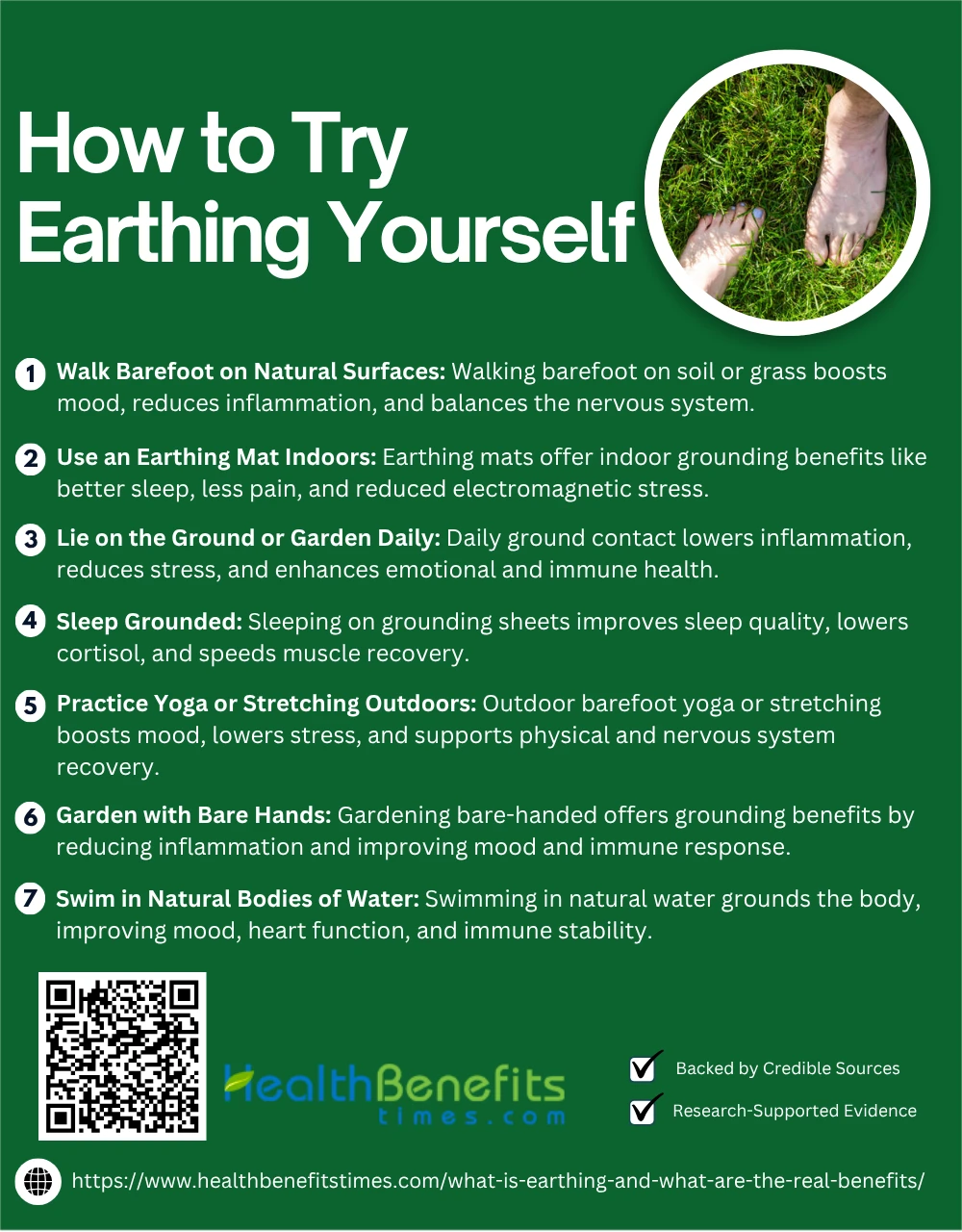 1. Walk Barefoot on Natural Surfaces
Walking barefoot on soil, grass, or sand is the most direct way to practice earthing. Studies show it improves heart rate variability and nervous system regulation. (10) It also reduces inflammation, enhances mood, supports immune balance, and aligns circadian rhythms. (8) (1)
2. Use an Earthing Mat Indoors
An earthing mat mimics ground contact indoors by connecting to a grounded outlet. Clinical trials show it improves sleep and reduces cortisol. (14) It also decreases pain intensity, stabilizes autonomic function, enhances energy levels, and reduces electromagnetic stress. (15) (16) (17) (15)
3. Lie on the Ground or Garden Daily
Simply lying on natural ground—grass, soil, or sand—allows your body to absorb Earth’s electrons. This reduces inflammation and improves parasympathetic balance. (10) Daily contact enhances immune modulation, lowers cortisol, calms brainwave activity, and supports emotional health. (2) (9)
4. Sleep Grounded
Sleeping grounded—using earthing sheets or pads—offers continuous physiological benefits overnight. It significantly reduces nighttime cortisol levels and improves sleep architecture. (1) (14) Studies report enhanced heart rate variability, deeper REM sleep, and faster muscle recovery due to inflammation reduction. (8) (13)
5. Practice Yoga or Stretching Outdoors
Doing yoga or stretching barefoot on natural ground enhances grounding’s benefits by merging physical movement with Earth contact. This practice improves HRV and reduces cortisol. (9) Grounded movement enhances nervous system tone and mood regulation. It also reduces inflammation and boosts recovery post-activity. (2) (10)
6. Garden with Bare Hands
Gardening with bare hands connects you to Earth’s surface electrons, offering daily micro-doses of grounding. This contact boosts immune regulation, reduces inflammatory cytokines, and enhances parasympathetic activity. (2) (12) It also calms stress biomarkers and uplifts mood similarly to nature-based therapies. (9)
7. Swim in Natural Bodies of Water
Swimming in lakes, oceans, or rivers allows for full-body grounding via highly conductive water. This immersion improves autonomic balance and reduces inflammation. (10) Studies confirm lowered cortisol and enhanced vagal tone. (9) Grounded water contact also elevates mood, boosts immune response, and improves cardiovascular metrics. (2) (18)
Potential Risks or Considerations of Earthing
While earthing offers health benefits, it’s important to consider potential risks such as electrical hazards, allergies, or skin irritation—especially when using grounding devices or spending extended time outdoors.
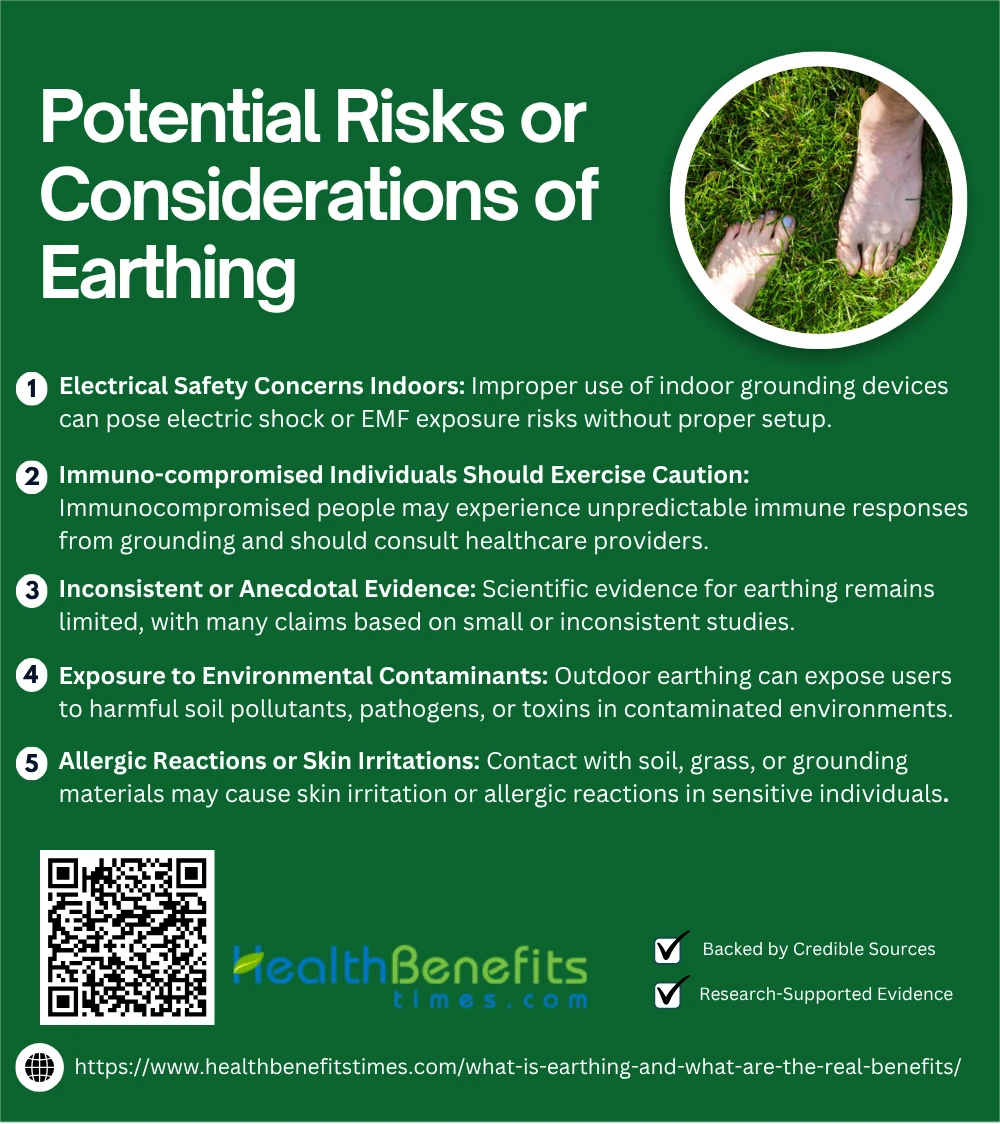 1. Electrical Safety Concerns Indoors
Indoor earthing devices—like mats or bed sheets—must be used cautiously to prevent shock or EMF exposure. Incorrect grounding may lead to electrical hazards. (16) Faulty outlets amplify risk. (2) Studies recommend certified plugs only, with regular outlet testing and EMF shielding consideration. (13) (9)
2. Immuno-compromised Individuals Should Exercise Caution
While earthing can modulate immune responses, immunocompromised individuals should proceed cautiously. Sudden shifts in cytokine activity may alter therapeutic stability. (8) Grounding may influence autoimmune dynamics. (12) Limited trials exist for vulnerable groups. (13) Experts suggest clinical supervision and awareness of immunologic feedback. (2)
3. Inconsistent or Anecdotal Evidence
Though promising, earthing research remains limited by inconsistent study designs and anecdotal claims. Many findings lack replication. (1)Sample sizes are often small, and controls are variable. (10) Peer-reviewed support is growing but uneven, and calls for rigorous trials continue. (9) (13)
4. Exposure to Environmental Contaminants
Earthing outdoors may expose individuals to soil-based contaminants such as pesticides, pathogens, or heavy metals. Ground contact in polluted environments carries toxicological risk. (10) Some soils harbor harmful microbes. (8) Urban areas may contain residual industrial waste. (13) Experts recommend location screening and hygienic practices. (2)
5. Allergic Reactions or Skin Irritations
Barefoot earthing or direct skin contact with soil, grass, or mats may cause rashes or dermatitis, particularly in sensitive individuals. Allergens in soil can trigger contact eczema. (19) Pollen and fungal spores can cause irritation. (9) Artificial grounding materials might induce reactions. (16) Hygiene after grounding is essential, as is patch testing for mat users. (13) (1)
Earthing vs. Other Natural Therapies
Here is a detailed comparison table showing the differences between Earthing and Other Natural Therapies (like yoga, meditation, forest bathing, and sun exposure):
| Aspect | Earthing | Yoga | Meditation | Forest Bathing | Sun Exposure |
| Definition | Direct contact with Earth’s surface (e.g., barefoot on soil, use of mats) | Mind-body practice combining physical postures, breath control, and focus | Mental practice for mindfulness or stress reduction | Immersion in natural forest settings for health benefits | Controlled exposure to sunlight for vitamin D synthesis |
| Primary Mechanism | Electron transfer from Earth to body | Physical movement, breathwork, and nervous system regulation | Focused attention reduces sympathetic activity | Sensory engagement with nature reduces stress hormones | UV exposure stimulates vitamin D and endorphin production |
| Scientific Backing | Growing but limited peer-reviewed clinical trials | Strong evidence base across physiology, stress, and flexibility | Strong psychological and neurological support | Emerging evidence in psychophysiology | Well-established effects on bone health, circadian rhythm |
| Main Benefits | Reduces inflammation, improves sleep, modulates cortisol | Enhances flexibility, lowers stress, improves strength | Lowers anxiety, improves focus, enhances emotional regulation | Reduces cortisol, improves mood, boosts immunity | Supports bone health, improves sleep, enhances mood |
| Equipment/Setting Required | Natural ground or grounded indoor device (mat, sheet, patch) | Yoga mat, quiet space, guidance (optional) | Quiet place, timer or app (optional) | Access to a forested or green area | Outdoor space with safe sun access |
| Best for | Chronic inflammation, pain relief, sleep disorders | Flexibility, posture, holistic fitness | Anxiety, depression, cognitive clarity | Stress reduction, immune support | Vitamin D deficiency, mood regulation |
| Risks/Considerations | Soil contaminants, electrical safety (indoors), allergies | Injury with poor form, not suitable for certain medical conditions | May surface repressed emotions, requires regularity | Allergies, ticks, pollution in some forests | Overexposure risk (sunburn, skin cancer) |
| Duration Recommendation | 20–40 minutes daily (barefoot or grounded) | 30–60 minutes, 3–5 times/week | 10–30 minutes daily | 1–2 hours weekly |
Conclusion
In conclusion, earthing—also known as grounding—is a natural practice that reconnects you with the Earth’s energy by walking barefoot on grass, soil, or sand, or by using grounding tools. Scientific studies suggest that earthing may offer several health benefits, including reduced inflammation, improved sleep, lower stress levels, and enhanced immune function. While more research is needed to fully understand its long-term effects, many people report feeling more balanced and energized through regular grounding. As a simple, low-cost wellness practice with minimal risk, earthing is worth exploring as part of a holistic approach to improving your overall health and well-being.