

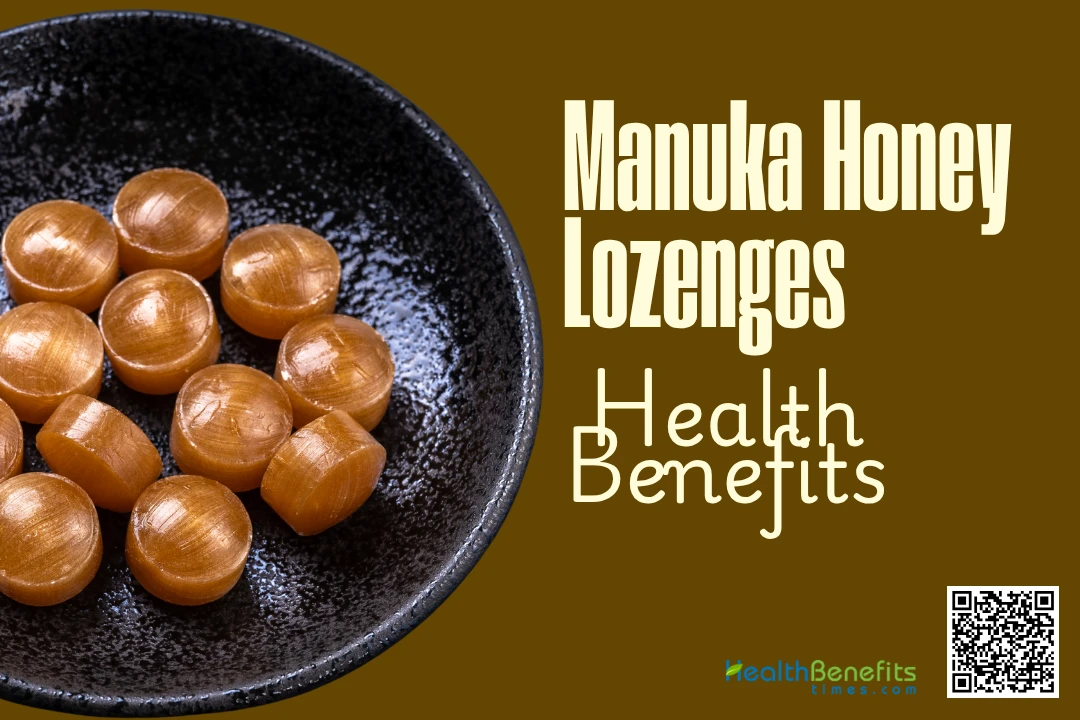
Manuka honey lozenges are small, candy-like pastilles made primarily from premium New Zealand Manuka honey—harvested from the nectar of the native Leptospermum scoparium shrub in remote regions such as the East Cape and tested for methylglyoxal (MGO) content to certify authenticity and potency. Physically, each lozenge is typically 2.5–3 g, hard-shelled, and composed of over 90% pure Manuka honey (often 300–500 MGO), sometimes with a soft liquid honey center, and lightly flavored with natural extracts like lemon, propolis, peppermint, or blackcurrant. As they dissolve slowly in the mouth, these lozenges deliver Manuka honey’s renowned antibacterial and anti-inflammatory compounds directly to the throat lining, providing targeted relief for sore throats, coughs, and dry mouths while also supporting immune health and everyday well-being.
Composition and Manufacturing of Manuka Honey Lozenges
Manuka honey lozenges are formulated to deliver the therapeutic benefits of Leptospermum scoparium honey in a convenient, palatable form for health and wellness enthusiasts. Typically, the honey content ranges from 50% to over 90% by weight in the final product, with the remainder comprising carriers and tableting aids. The high methylglyoxal (MGO) content characteristic of Manuka honey is preserved through low-temperature processing and controlled dehydration to minimize loss of enzymatic activity and bioactive compounds. Formulation often includes natural flavorings (e.g., ginger, lemon) and minimal stabilizers to enhance throat-soothing properties without compromising purity.
- Dried Manuka honey powder (up to 99% of lozenge mass) is combined with flowing agents such as silicon dioxide or maltodextrin to ensure smooth tableting. (1)
- Therapeutic ingredients and natural flavor extracts (like ginger and lemon oil) are added to the honey–carrier mixture, typically under 5% total weight. (2)
- Manufacturing involves mixing under controlled temperature (<20°C) and humidity (<75% RH), followed by compression into tablets or flash-flow spinning to produce honey floss-type particles, helping preserve non-peroxide activity. (1)
Science-backed health benefits of Manuka Honey Lozenges
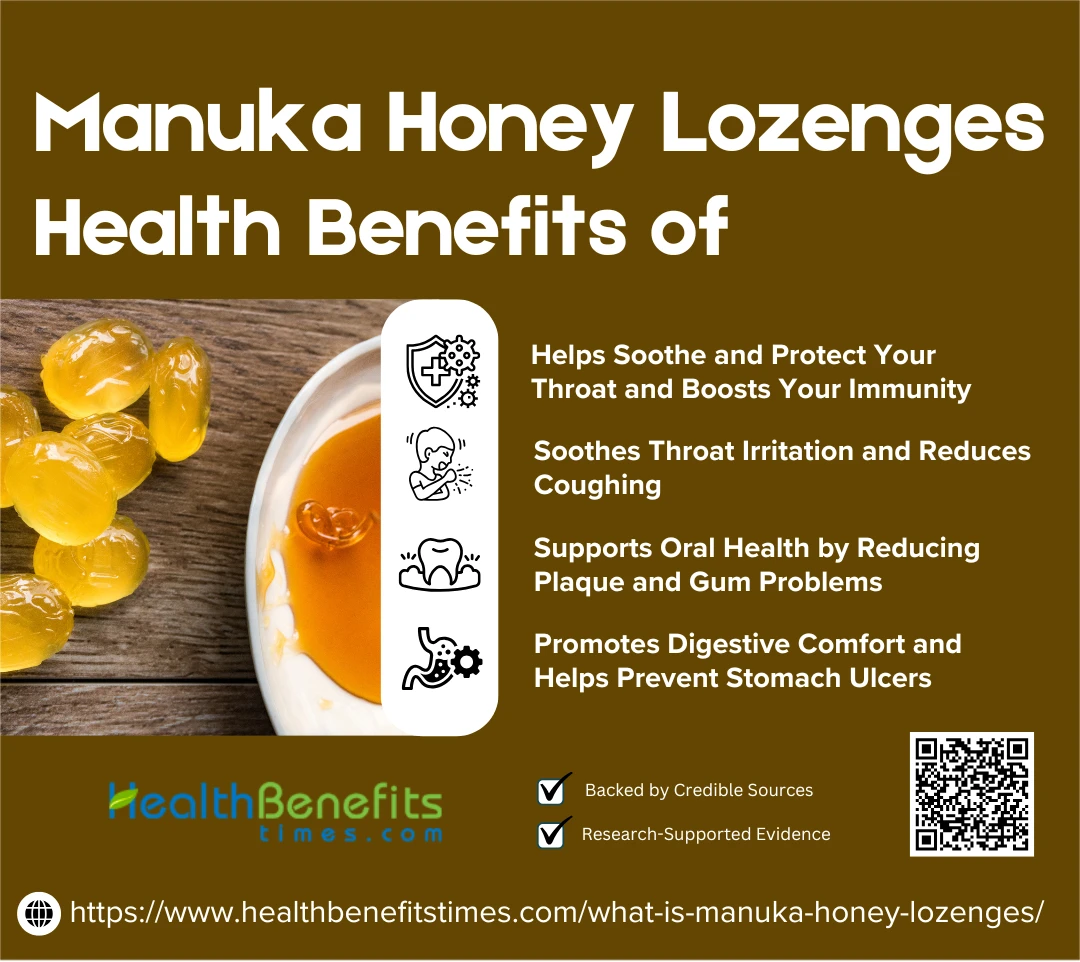 1. Helps Soothe and Protect Your Throat and Boosts Your Immunity
Manuka honey lozenges offer a natural, multi-faceted approach to throat care and overall wellness. By slowly dissolving in the mouth, these lozenges create a protective coating that helps to alleviate throat irritation and maintain mucosal hydration, while their rich concentration of unique phenolic compounds and methylglyoxal supports broad-spectrum antimicrobial activity. (3) The anti-inflammatory properties of Manuka honey further contribute to reduced throat discomfort and help maintain a balanced oral environment. (4) Additionally, regular use of Manuka honey lozenges delivers sustained exposure to immunomodulatory components—such as leptosperin and pollen-derived phytochemicals—that work to fortify the body’s natural defenses and support immune resilience. (5)
Research findings:
- According to a randomized trial comparing honey lozenges to standard care for radiation-induced esophagitis, patients who used Manuka honey lozenges experienced significantly less throat pain and dysphagia during treatment. (6)
- Research by Majtan et al. demonstrated that Manuka honey activates toll-like receptor pathways, enhancing pro-immune cytokine production and promoting a more robust innate immune response. (7)
- Studies on honey candies, including lozenges, confirmed that processing preserves the antibacterial and anti-inflammatory activities of raw Manuka honey, maintaining its functional benefits in convenient, palatable formats. (8)
2. Soothes Throat Irritation and Reduces Coughing
Manuka honey lozenges deliver a gentle, sustained release of honey’s natural compounds that coat and lubricate the throat, helping to ease roughness and scratchiness experienced during irritation. The lozenge format allows active components like methylglyoxal and hydrogen peroxide to remain in contact with the mucosal lining, providing soothing relief with each slow dissolve. (9) In addition to its demulcent action, Manuka honey exhibits mild anti-inflammatory and antimicrobial properties that can help calm inflamed throat tissues and support natural defenses against irritants, contributing to reduced coughing and improved comfort. (10)
Research Findings
- Research conducted by Paul et al. demonstrated that a single dose of honey lozenges markedly decreased nighttime cough frequency and improved sleep quality in children with upper respiratory infections (Research by Ian Paul et al.).
- A systematic review of honey versus placebo and diphenhydramine found that honey lozenges relieved cough severity more effectively than no treatment or standard cough medicine over a three-day period (According to a Cochrane review). (9)
- An in vitro study confirmed that lozenge processing preserves honey’s anti-inflammatory and antibacterial activities, ensuring that the therapeutic benefits against throat irritation remain intact after formulation (Research by McRae et al.). (10)
3. Supports Oral Health by Reducing Plaque and Gum Problems
Manuka honey lozenges harness the natural antibacterial and anti-inflammatory properties of Leptospermum scoparium nectar to promote healthier teeth and gums. Regular use helps inhibit oral biofilms, protecting against plaque buildup and gingival inflammation while soothing gum tissues with its moisturizing effect. (11) (12) (13)
Research Findings
- Research by Mason et al. demonstrated that Manuka honey inhibits key plaque-forming bacteria in vitro, markedly reducing Streptococcus mutans and other pathogens. (11)
- A double-blind randomized field trial found that rinsing with Manuka honey mouthwash over 21 days significantly lowered plaque and gingival scores compared to controls. (12)
- A clinical study reported that participants using Manuka honey lozenges experienced a measurable reduction in plaque accumulation and gum bleeding after 72 hours without other oral hygiene measures. (13)
4. Promotes Digestive Comfort and Helps Prevent Stomach Ulcers
Manuka honey lozenges harness the anti-inflammatory and antibacterial properties of Manuka honey to soothe the gastrointestinal tract and support digestive wellness. By delivering bioactive compounds directly to the throat and stomach lining, these lozenges help maintain a balanced gut environment and protect the mucosal barrier from irritants. (14) Their formulation preserves key enzymes and hydrogen peroxide content, ensuring that anti-inflammatory activity is retained during consumption. (8) In addition, Manuka honey’s unique methylglyoxal content contributes to maintaining a healthy microbiome by reducing pathogenic bacteria while encouraging beneficial microbes, promoting overall comfort and resilience against ulcer formation. (15)
Research findings
– Manuka honey lozenges help reduce the severity of ethanol-induced gastric lesions in rat models, demonstrating significant gastroprotective effects compared to controls, likely through antioxidant and anti-inflammatory mechanisms. (15)
– Chronic gastric ulcers induced by acetic acid in animal studies heal more rapidly when treated with daily Manuka honey, showing reduced mucosal damage and improved tissue regeneration. (16)
– In vitro studies reveal that Helicobacter pylori—a major contributor to peptic ulcer disease—exhibits significant sensitivity to Manuka honey at concentrations as low as 5% v/v, indicating potential for preventing bacterial colonization in the stomach lining. (17)
Recommended Usage and Dosage of Manuka honey lozenges
For individuals seeking natural throat support and overall wellness, Manuka honey lozenges offer a convenient way to harness the antimicrobial and soothing properties of Manuka honey. Clinical research suggests the following regimen for optimal benefit:
- Dissolve two Manuka honey lozenges slowly in the mouth four times daily, totaling eight lozenges per day, to maintain continuous mucosal coating and relief during periods of throat irritation (18)
- Refrain from eating or drinking for at least one hour after each dose to allow the honey’s active components to adhere to and protect the mucosal surfaces(18)
This dosage aligns with a randomized phase II trial in which patients undergoing chemoradiation therapy for lung cancer experienced throat discomfort mitigation when adhering to this schedule . Manuka honey’s unique non-peroxide antimicrobial activity supports its use as a daily supplemental lozenge, suitable for travelers, office settings, or home pantry for on-demand throat relief(18)
Potential Side Effects and Interactions
Individuals seeking natural approaches for throat soothing with Manuka honey lozenges should be aware of both rare adverse reactions and possible interactions when using these products alongside other therapies.
The most significant potential concerns include:
- IgE-mediated allergic reactions, including anaphylaxis. Although extremely rare, honey can trigger systemic allergic responses characterized by urticaria, angioedema, and hypotension following skin-prick or ingestion tests. (19)
- Delayed wound healing in diabetic ulcers. High methylglyoxal (MG) concentrations in Manuka honey (up to 100-fold above conventional honeys) may promote advanced glycation end products that impair collagen remodeling and microcirculation, raising concerns about topical use in diabetic foot wounds. (20)
- Interactions with conventional therapies. In a Phase III trial of sublingual “Immunoxel” Manuka honey lozenges used adjunctively in pulmonary tuberculosis, no adverse effects were observed, and hepatotoxicity from antituberculosis drugs was attenuated, indicating potential protective interactions without safety concerns. (21)
How to Select Quality Manuka Honey Lozenges
When selecting quality Manuka honey lozenges, prioritize products with verified UMF certification that measures multiple bioactive compounds including methylglyoxal (MGO), leptosperin, and dihydroxyacetone (DHA). The UMF rating system provides the most comprehensive quality assurance for authentic New Zealand Manuka honey compared to MGO ratings alone. Research demonstrates that leptosperin serves as a definitive authenticity marker unique to Manuka nectar and enables accurate identification of genuine products.
Look for lozenges containing 90% or higher Manuka honey content to ensure therapeutic potency, as many commercial products use honey as a minor ingredient. Studies indicate that authentic Manuka honey maintains its antimicrobial properties even at lower UMF grades, with UMF 5+ demonstrating equal or superior antibacterial activity compared to higher ratings. Select products with minimum MGO levels of 150-300 mg/kg for effective antibacterial benefits, as research confirms this threshold provides notable antimicrobial effects against resistant bacteria.
Storage conditions significantly impact quality preservation. Choose lozenges stored below 25°C away from direct sunlight, as research shows temperatures above 45°C and light exposure degrade bioactive compounds including MGO and antioxidant properties. Examine packaging dates carefully, as the conversion of DHA to MGO continues during storage, potentially altering stated potency levels over time. Avoid products exceeding 40 mg/kg hydroxymethylfurfural (HMF) content, which indicates overheating or prolonged storage that compromises honey quality.
How to Consume Manuka Honey Lozenges for Maximum Health Benefits
To maximize the therapeutic potential of Mānuka honey lozenges, it is essential to follow evidence-based consumption practices that ensure prolonged mucosal contact, consistent dosing, and optimal preservation of active compounds.
First, suck one lozenge slowly every 2–3 hours, allowing it to dissolve completely in the mouth to maintain sustained antimicrobial and anti-inflammatory action on the throat and oral mucosa. (22) Second, use the lozenges consistently for at least 7 days, as regular intake has been shown to stimulate cytokine production by innate immune cells, enhancing overall immune support. (23) Finally, avoid eating or drinking for 30 minutes after each lozenge to preserve the methylglyoxal (MGO) concentration at the mucosal surface, thereby ensuring maximal antibacterial efficacy. (24)
For individuals seeking natural, on-the-go support for sore throats, cough, and immune health, these guidelines help ensure that each dose of Mānuka honey lozenge delivers potent bioactive compounds directly where they are most needed.
Conclusion
In summary, Manuka honey lozenges harness the unique antibacterial, anti-inflammatory, and immunomodulatory compounds of New Zealand Leptospermum scoparium honey—especially its methylglyoxal-rich profile—in a convenient, slow-dissolving form that soothes throat irritation, reduces coughing, supports oral and digestive health, and bolsters immune resilience. When selecting lozenges, choose products with verified UMF or MGO ratings, high honey content, and proper storage to preserve potency, and follow evidence-based dosing of one slowly dissolved lozenge every 2–3 hours for at least a week, avoiding food or drink for 30–60 minutes afterward. While generally safe, individuals with honey allergies or certain diabetic concerns should exercise caution and consult healthcare providers before use.