

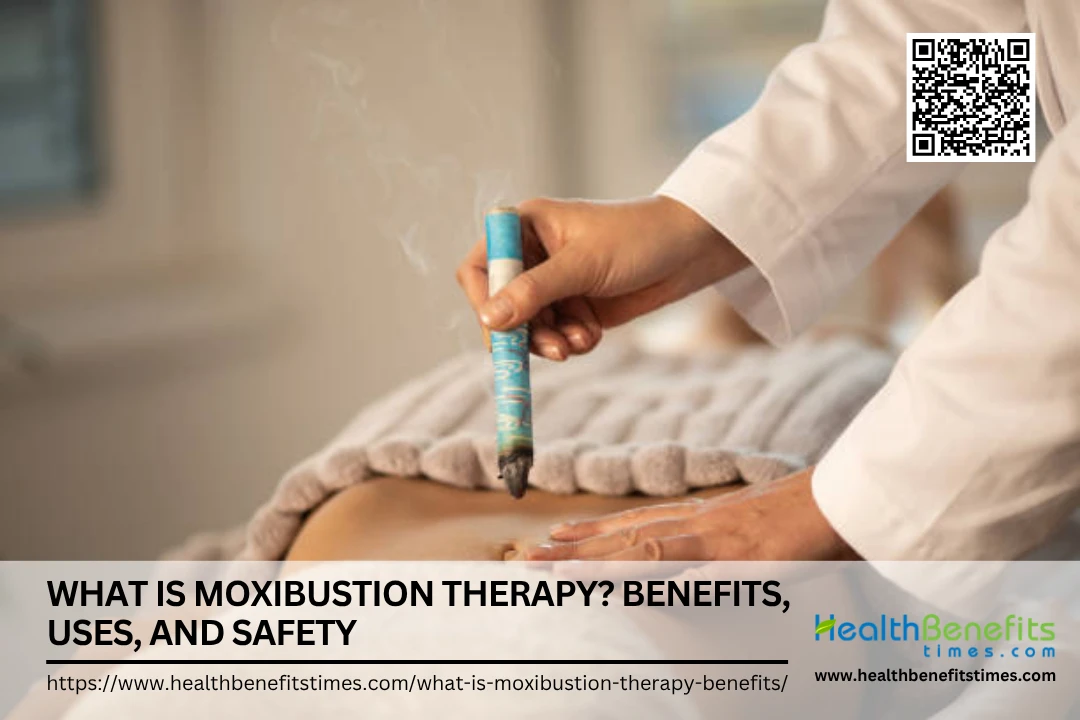
 Moxibustion might sound unusual at first – it’s a therapy from Traditional Chinese Medicine (TCM) that involves burning a specific herb (mugwort) near the body to promote healing. This ancient practice has been used for thousands of years in East Asia and is now gaining attention worldwide among people looking for natural wellness methods. So, what exactly is moxibustion, how does it work, and what health benefits can it offer? In this friendly, beginner-friendly guide, we’ll explain moxibustion in simple terms and explore its potential benefits, backing up each with scientific research where available.
What Is Moxibustion Therapy?
Moxibustion is a form of heat therapy in which dried mugwort herb (Artemisia, often called “moxa”) is burned on or near specific points on the body (usually the same points used in acupuncture). (1) (2)
The term moxibustion actually comes from “moxa” (a Japanese word for mugwort) combined with the Latin combustion (“burning”)britannica.com. (1) In practice, a practitioner lights a stick or cone made of compressed mugwort and holds it just above the skin at an acupuncture point, allowing therapeutic warmth to penetrate. The warmth is believed to stimulate circulation and improve the flow of “Qi” (vital energy) along the body’s meridians, helping to restore balance and health. From ancient times, Chinese healers observed that heating certain points increased circulation and relieved painbritannica.com – essentially, moxibustion was their way of warming up the body to encourage healing. (3)
People who try moxibustion often describe it as deeply relaxing. The gentle heat can soothe areas that feel cold or tense, and sessions typically leave a pleasant warm sensation. Moxibustion is commonly used alongside acupuncture, but it can also be a stand-alone therapy. Today, it’s practiced not only in China and Japan but around the world by acupuncturists and holistic therapists. Despite its ancient roots, researchers are now studying moxibustion’s effects in modern scientific terms to understand how it might help various health conditions.
Types of Moxibustion
There are two main ways moxibustion can be performed, often called direct and indirect moxibustion:
- Direct Moxibustion: A small cone of moxa is placed right on the skin at an acupuncture point and burned. In the old days, practitioners sometimes let it burn down completely to blister the skin (“scarring” moxibustion). In modern practice, however, the burning moxa is typically removed just before it causes any burn or scar (“non-scarring” moxibustion). The person feels a focused warmth on that spot. Direct moxibustion is very powerful but requires skill to avoid pain or injury.
- Indirect Moxibustion: This is the more common method today. The moxa is lit and held just above the skin (usually at a distance of an inch or so) so that the heat radiates into the point without actual contact. One popular technique uses a moxa stick that looks like a thick incense stick or cigar – the practitioner moves it in small circles near the area to warm it. Another indirect method places the burning moxa on the handle of an acupuncture needle inserted in the point, transmitting heat through the needle. Sometimes a medium like ginger slice, garlic, or salt is placed on the skin and the moxa cone is burned on top of it, buffering the heat. All these indirect techniques aim to stimulate the point with warmth while minimizing any risk of burning the skin. The result is a pleasant, penetrating heat without discomfort.
No matter the type, safety precautions (like having a bowl of water to extinguish the moxa and good ventilation for the smoke) are important. Smokeless moxa (mugwort charcoal sticks) are also available for those sensitive to smoke – they provide heat with less odor and smoke. In the hands of a trained practitioner, both direct and indirect moxibustion are safe and comfortable.
Health Benefits of Moxibustion
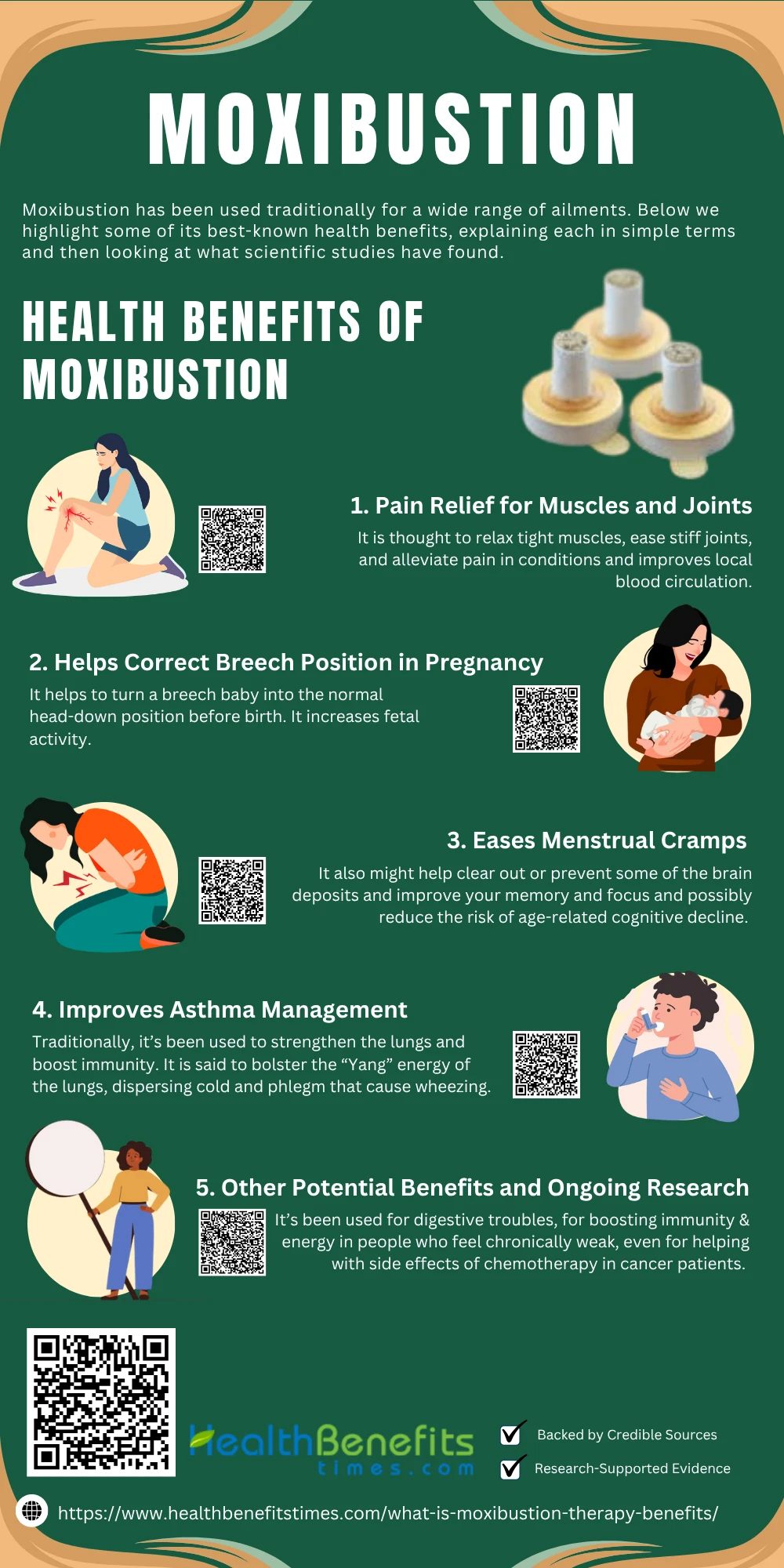
Moxibustion has been used traditionally for a wide range of ailments. Below we highlight some of its best-known health benefits, explaining each in simple terms and then looking at what scientific studies have found. It’s important to remember that while moxibustion has a long history, modern research is still catching up – so evidence varies from very promising to preliminary depending on the condition.
 1. Pain Relief for Muscles and Joints
In Plain Terms: One of the most popular uses of moxibustion is to soothe aches and pains. The comforting heat from moxa therapy is thought to relax tight muscles, ease stiff joints, and alleviate pain in conditions like arthritis or chronic back pain. By improving local blood circulation and warming areas of cold tension, moxibustion can melt away soreness. Many people with knee pain or lower back pain report feeling looser and more mobile after moxibustion sessions. Think of it like a deep therapeutic heating pad that reaches into your muscles – it’s no surprise that in TCM it’s used to dispel “cold” and stagnation that cause pain.
What Research Shows: Scientific studies are beginning to back up these analgesic (pain-relieving) effects. For example, a 2017 meta-analysis of clinical trials in patients with knee osteoarthritis found that moxibustion treatment led to significantly greater pain reduction and symptom improvement compared to placebo (sham) moxibustion or even conventional drugs. (4) (5)
Patients who received moxibustion reported less pain and better knee function, suggesting the heated therapy can help reduce inflammation and discomfort in arthritic joints. Studies on chronic low back pain have also reported favorable results – when moxibustion was added to standard care like exercise or medication, patients experienced more relief than with standard care alone. (6) However, due to the small sizes of trials and variable quality, researchers caution that it’s difficult to draw firm conclusions yet. (7) In short, early evidence suggests moxibustion can indeed relieve pain in muscles and joints, but more high-quality research is needed to fully confirm its effectiveness. If you suffer from aches and pains, moxibustion might be worth a try as a complementary therapy alongside your usual treatments – many people find it noticeably helpful for pain relief.
2. Helps Correct Breech Position in Pregnancy
In Plain Terms: An intriguing use of moxibustion is in maternity care: specifically, to help turn a breech baby (a baby positioned feet-first or bottom-first in the womb) into the normal head-down position before birth. In TCM practice, a point on the little toe (known as BL67 or “Zhiyin”) is stimulated with moxibustion around the 34th to 36th week of pregnancy. The gentle heat at this acupoint is believed to increase fetal activity – moms often feel the baby start moving around more during and after the treatment. The goal is to encourage the baby to flip into the head-down position, potentially avoiding the need for a cesarean section. Many expectant mothers find this non-invasive method appealing: it’s basically warming your pinky toe with an herb stick for about 20 minutes a day, usually under guidance from a practitioner or midwife.
What Research Shows: It might sound surprising that burning an herb by the toe could affect a baby’s position, but scientific studies have evaluated this and found real results. A systematic review of randomized trials concluded that moxibustion significantly increases the likelihood of turning a breech fetus to head-down (vertex) presentation compared to no treatment or other methods. (8) (9)
In the analyzed studies, pregnant women who received moxa therapy at BL67 had higher rates of their babies rotating into the correct position by birth – in fact, one meta-analysis found about a 29% higher success rate in the moxibustion group. Additionally, women treated with moxibustion were less likely to require oxytocin augmentation during labor, suggesting the therapy might also help pregnancies progress more naturally. (10) The exact mechanism isn’t fully clear, but researchers speculate that moxibustion may stimulate maternal hormones and uterine activity, leading to increased fetal movements that assist the baby in turning. (11) Importantly, no serious adverse effects for mother or baby were reported in these trials. While more research is always welcome, evidence to date supports moxibustion as a safe, effective option to help correct breech presentation. Pregnant women interested in this should consult their healthcare provider – and if approved, seek a qualified practitioner to perform or teach the technique.
3. Eases Menstrual Cramps (Dysmenorrhea)
In Plain Terms: For those who suffer from painful menstrual cramps, moxibustion offers a ray of warmth and relief. Primary dysmenorrhea (the medical term for common menstrual pain not caused by an underlying condition) can be debilitating each month. Moxibustion is used in TCM to warm the uterus and improve blood flow, usually by treating acupoints on the lower abdomen or legs that correspond to gynecological health. The idea is that the gentle heat helps relax uterine muscles, reduce stagnation of blood, and alleviate the cramping pain. Women who try moxibustion for period pain often report that their cramps become milder and their abdomen feels more comfortable and soothed. It’s a natural approach that can be done in a clinic or even at home with a stick-on moxa device, offering an alternative (or supplement) to popping painkillers.
What Research Shows: Modern studies are providing scientific support for moxibustion’s cramp-relieving reputation. A recent (2025) systematic review and meta-analysis looked at numerous clinical trials of moxibustion for primary dysmenorrhea. The findings were quite encouraging: overall, moxibustion therapy led to significant reductions in menstrual pain intensity and associated symptoms compared to control groups. (12) (13)
Women treated with moxa reported lower scores on pain scales and menstrual symptom indices, meaning they felt better and had less severe cramps. Some of the studies even measured hormone levels and found that moxibustion might influence them in beneficial ways – for instance, progesterone (a hormone that can help ease menstrual symptoms) was higher in the moxibustion groups, while excess estrogen levels were lower, suggesting a balancing effect. (12) Additionally, certain biochemical markers linked to pain and inflammation (like prostaglandins and beta-endorphins) showed changes that correlate with pain relief. In plain language, moxibustion not only helps women feel less period pain, but measurably changes the body’s response to reduce cramps. These studies were done mostly in Asia and showed good results, though the researchers note that larger, high-quality trials are still needed to confirm long-term safety and efficacy. If you struggle with menstrual cramps, moxibustion is emerging as a promising natural remedy to consider – ideally discussed with a healthcare provider, especially if you want to use it in conjunction with other treatments.
4. Improves Asthma Management
In Plain Terms: Breathing is life, and asthma can make breathing a daily challenge. Moxibustion has traditionally been used to strengthen the lungs and boost immunity, which in turn might help people with asthma or chronic breathing issues. In TCM terms, the warming of specific points (often on the back or chest, like the points Bladder 13 or Ren 17 associated with lung function) is said to bolster the “Yang” energy of the lungs, dispersing cold and phlegm that cause wheezing. From a patient’s perspective, moxibustion can feel like a soothing chest treatment – some asthma sufferers say they experience less coughing, easier breathing, and fewer attacks when they receive regular moxa therapy alongside their standard asthma medications. It’s not a standalone cure, but a complementary approach aimed at improving overall respiratory wellness.
What Research Shows: A growing body of clinical research suggests that moxibustion may indeed provide measurable benefits for asthma control when used as a complement to conventional medicine. A comprehensive 2024 meta-analysis reviewed 37 randomized trials involving nearly 2,900 asthma patients. It found that patients who received moxibustion plus their usual asthma medications had better outcomes than those who only took medications. (14) Specifically, the add-on moxibustion group showed improved lung function (higher breathing capacity measurements) and better symptom control – meaning they had fewer or less severe asthma symptoms, as reflected in asthma control test scores. (14) (15)
In some studies, moxibustion alone was even compared to asthma drugs: the results indicated that moxa therapy produced comparable improvements in breathing and quality of life to standard inhalers, though typically the best results were seen when combining both approaches. (16) Interestingly, there were also observations of changes in immune markers (like IgE levels and T-cell counts), suggesting moxibustion might modulate the immune response in asthma – but those findings were not entirely consistent and need more research. On the safety front, the review noted that all reported side effects from moxibustion were mild, such as slight skin redness or a cough from smoke, with no serious issues. (17) The bottom line is that moxibustion can be a beneficial complementary therapy for asthma, helping patients breathe easier when used alongside their inhalers and medications. It’s important for anyone with asthma to continue their prescribed medical treatment, but adding moxibustion (under professional guidance) might offer extra relief and better control of symptoms.
5. Other Potential Benefits and Ongoing Research
In Plain Terms: Beyond the well-studied uses above, moxibustion has a whole list of traditional applications. It’s been used for digestive troubles (like chronic diarrhea, abdominal pain, or ulcerative colitis flare-ups), for boosting immunity and energy in people who feel chronically weak, and even for helping with side effects of chemotherapy in cancer patients. In Chinese hospitals, you might find moxibustion incorporated into stroke rehabilitation programs to improve circulation and limb recovery. The range of uses is broad: basically, any condition that TCM attributes to “cold,” “deficiency,” or blocked circulation might be treated with the warming power of moxa. For example, some folks use a moxa stick at home on their belly for indigestion or on their feet to improve sleep. These uses highlight the versatility of moxibustion – it’s a bit of a universal tonic in traditional practice, aimed at strengthening the body as a whole. However, not all of these claims have solid scientific proof yet, so they remain potential benefits that are still under investigation.
What Research Shows: Modern research into these other areas is underway, though the results so far are mixed. Take digestive disorders as an example: there have been studies in China looking at moxibustion for inflammatory bowel diseases like ulcerative colitis. Some small trials reported that adding moxibustion helped reduce gut inflammation and improved patients’ symptoms, but when researchers reviewed all the evidence, they found it was not yet conclusive. A systematic review (2010) noted that while a few trials showed better response rates with moxibustion than standard medication, the overall quality of those studies was low and prone to bias – therefore current evidence is insufficient to confirm moxibustion as an effective treatment for ulcerative colitis. (18) (19)
In other words, more rigorous research is needed before we can say it definitely helps gut diseases. Similarly, for cancer care, moxibustion has been tested as a way to relieve chemo side effects (like nausea, vomiting, and fatigue). A Cochrane review in 2018 found some low-quality evidence that moxa therapy may reduce chemotherapy-induced nausea/vomiting and improve certain blood counts and quality of life measures for patients. (20) (21)
However, the researchers emphasized that many of the studies had poor reporting and high risk of bias, which reduces confidence in the results. (20) On a brighter note, these reviews often conclude with recommendations for more high-quality trials, which means the scientific community sees enough potential to keep investigating. Areas like immune function, fatigue, and rehabilitation are being studied with moxibustion, and future findings will clarify how much it can really do. For now, it’s safe to say that moxibustion shows promise across various health issues, but for some of these “extra” uses, we should await stronger evidence. If you’re interested in trying it for a less-proven purpose, just do so with realistic expectations and alongside standard medical care.
Safety and Precautions
Is moxibustion safe? Generally, yes – when performed properly, moxibustion is considered low-risk and gentle, with a track record of safety over centuries. The most common experience during moxa therapy is a feeling of warmth and relaxation. Unlike some medications or invasive procedures, moxibustion doesn’t typically cause systemic side effects. That said, it does involve open flames and heat, so there are important precautions to keep in mind:
- Burn Risk: The practitioner must be careful to keep the burning moxa at an appropriate distance and duration on the skin. If left too long or too close, it’s possible to get a small burn or blister. In skilled hands this is rare – modern practitioners usually test the heat by hand and check in with the patient frequently. If you ever feel too hot or any pain during moxibustion, speak up immediately so the moxa can be moved further away. Never fall asleep with moxa burning on or near you (this is why DIY moxa should be done only with proper tools and alertness).
- Smoke and Odor: Traditional moxibustion produces a lot of smoke with a distinct herbal smell (some say it’s akin to cannabis or sage). While many find it pleasant or tolerable, it can irritate some people’s eyes or respiratory system. Always use moxa in a well-ventilated area. If you have asthma or smoke sensitivities, let your practitioner know – they can use smokeless moxa sticks or adequate ventilation. The smoke itself is not toxic in small amounts, but in enclosed spaces it can be intense. After a session, airing out the room or using an air filter is a good idea.
- Sensitive Areas: Moxibustion is typically avoided on areas of the body that have loss of sensation, open wounds, or on mucous membranes. For example, it wouldn’t be done on an area with neuropathy (since the person can’t feel heat properly and might get burned) or directly on the face/over eyes, etc. Practitioners choose points carefully and often shield the skin with a layer of ointment or a slice of ginger/garlic for direct moxa to prevent any damage.
- During Pregnancy: Aside from the specific breech correction technique (which is done in a controlled way on the toe), extensive moxibustion is generally avoided in early pregnancy unless under professional guidance. Some acupuncture points that are contraindicated in pregnancy (because they might stimulate uterine contractions) should not be heated either. Always consult a qualified prenatal acupuncturist or doctor before using moxa in pregnancy.
- Fire Safety: It sounds obvious, but since moxa involves fire, basic safety measures are a must. Practitioners keep a metal container or ashtray for the burning moxa stick and ensure it’s fully extinguished in water after use (a smoldering moxa stick can start a fire if left unattended). If you do moxibustion at home, have a plan to extinguish and never leave the room with moxa burning.
The good news is that studies reporting on moxibustion therapy consistently find very few adverse effects. In clinical trials involving thousands of patients, the side effects from moxa were mostly minor and temporary. (17) These included things like slight skin redness, a blister in rare cases, or some coughing from the smoke – and importantly, no serious complications attributed to moxibustion were noted. When compared to medications (which can have significant side effects), moxibustion’s side effect profile appears very mild.
As always, if you have a medical condition, it’s wise to discuss with your healthcare provider before starting moxibustion. It’s meant to be a complementary therapy – for serious illnesses like asthma, cancer, or inflammatory disease, use it alongside (not in place of) standard medical treatments. And make sure you learn from a professional if you plan to do moxa by yourself at home. With good guidance and common-sense caution, moxibustion can be a safe addition to your health routine.
Conclusion
Moxibustion may be an ancient therapy, but it’s finding its place in modern wellness as a gentle, natural way to support health. By harnessing the power of heat from the humble mugwort plant, this practice aims to boost circulation, relieve pain, and balance bodily functions. We’ve seen that for several issues – from pain relief to turning breech babies, from easing menstrual cramps to aiding asthma – moxibustion offers notable benefits that are increasingly backed by scientific research. Of course, it’s not a magic cure-all, and more rigorous studies are needed, especially for its wider applications. (20) But the emerging evidence is encouraging and helps validate why moxibustion has stood the test of time in traditional medicine.
If you’re a health-conscious individual curious about alternative therapies, moxibustion is certainly worth learning about. Many people enjoy it as a complementary treatment that feels nurturing and can integrate well with other therapies. Whether you’re seeking drug-free pain relief, looking for help with a specific condition like breech pregnancy or cramps, or simply want to enhance your wellness, moxibustion might have something to offer. Just remember to approach it wisely: consult experienced practitioners, ensure safe usage, and maintain open communication with your healthcare providers. With its friendly warmth and low risk, moxibustion therapy shines as an example of ancient wisdom benefiting modern well-being. It’s a fascinating intersection of tradition and science – one that continues to evolve as research sheds more light on its healing heat.