

- Buckwheat is a gluten-free, nutrient-dense seed often used in various health foods.
- Sprouted buckwheat granola is made by germinating buckwheat seeds, enhancing their nutrient profile.
- It offers a crunchy, flavorful, and healthy alternative to traditional granola, rich in fiber, antioxidants, and minerals.
 Sprouted buckwheat refers to buckwheat seeds that have been soaked in water until they begin to sprout, enhancing their nutritional profile. The sprouting process breaks down starches into simpler sugars, making the nutrients more bioavailable and easier to digest. It is rich in antioxidants, protein, fiber, and essential minerals like magnesium and zinc. Sprouted buckwheat is gluten-free and can improve gut health due to its increased enzyme activity. Studies suggest that sprouting increases the antioxidant levels and bioavailability of minerals in buckwheat, making it a healthier choice than unsprouted varieties. Sprouting Buckwheat, Clusterbucks Superfood, Lil Bucks, Buckwheat vs Sprouted provide further insights into its benefits and properties. (1)(2)
Comparison to regular buckwheat
Here is a table comparing the differences between sprouted buckwheat and regular (unsprouted) buckwheat:
| Aspect | Sprouted Buckwheat | Regular Buckwheat |
| Nutritional Value | Higher in protein, fiber, and minerals (e.g., magnesium, zinc) | Lower in protein and fiber compared to sprouted |
| Digestibility | Easier to digest due to breakdown of starches during sprouting | More starchy, harder to digest |
| Antioxidant Content | Increased levels of antioxidants, improving health benefits | Contains lower levels of antioxidants |
| Enzyme Activity | Enhanced enzymatic activity that aids digestion | Lower enzymatic activity |
| Gluten-Free | Naturally gluten-free | Naturally gluten-free |
| Preparation Method | Soaked in water until sprouting occurs, often dehydrated | Processed into groats, no soaking or sprouting |
| Taste and Texture | Nutty, mild flavor with a crunch | Slightly bitter, grain-like texture |
| Bioavailability of Nutrients | Higher due to sprouting process | Lower, nutrients are less bioavailable |
| Uses | Can be used in salads, granolas, or as a flour substitute | Typically used in porridge, flour, or as groats |
Health Benefits of Sprouted Buckwheat Granola
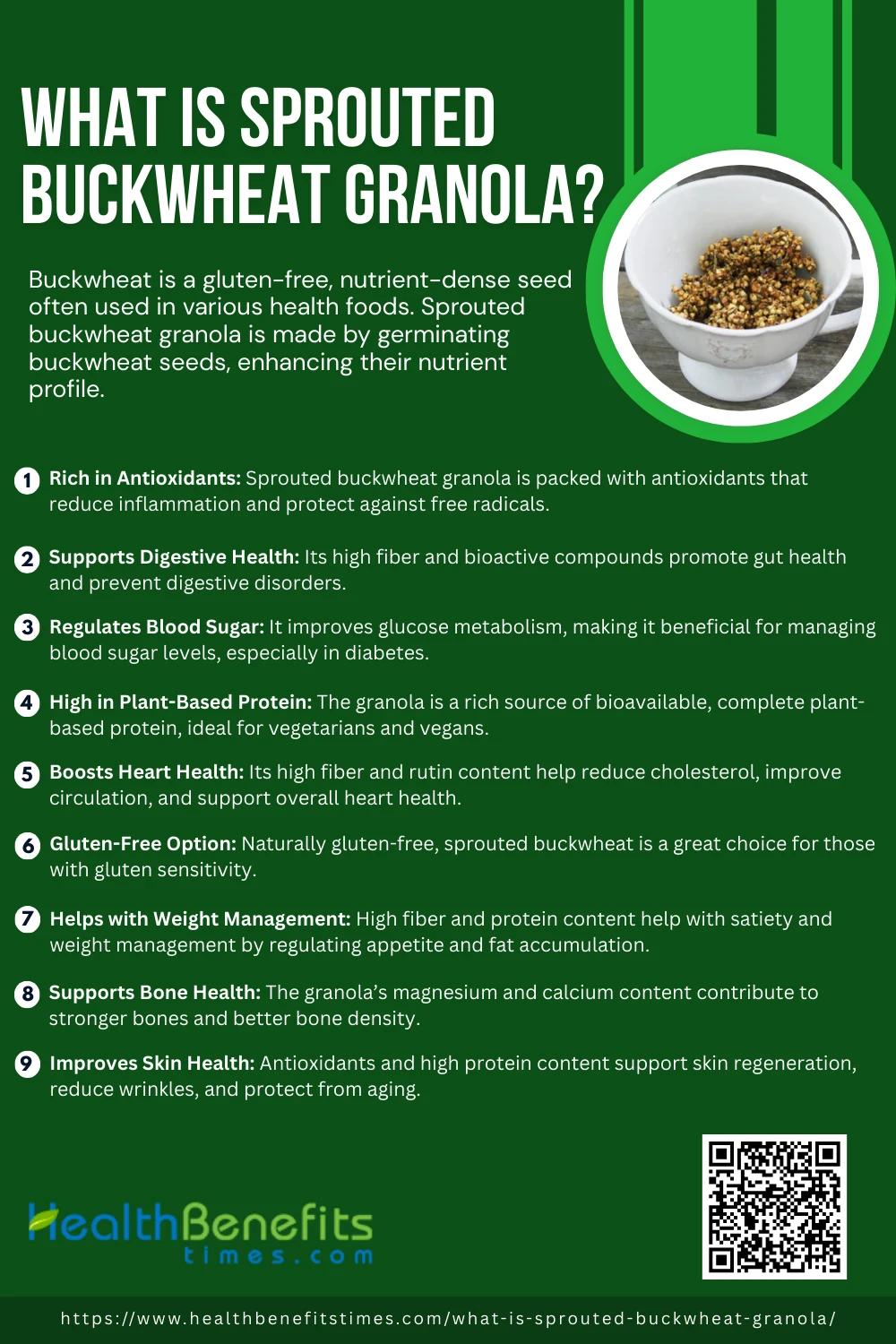 1. Rich in Antioxidants
Sprouted buckwheat granola is rich in antioxidants, making it an excellent food for combating oxidative stress. Buckwheat itself is known to be one of the most antioxidant-dense foods, and sprouting enhances its antioxidant levels further. These antioxidants, such as flavonoids, help reduce inflammation and protect the body from harmful free radicals. Studies have shown that sprouted buckwheat is also a good source of magnesium, which complements its antioxidant properties. Buckwheat’s antioxidants may improve overall health, as indicated in Healthline’s review. Additionally, sprouting increases the bioavailability of these nutrients, as Pacha explains. (3)
2. Supports Digestive Health
Sprouted buckwheat granola can significantly support digestive health due to its rich content of dietary fiber and bioactive compounds. Research indicates that sprouting enhances the nutritional profile of buckwheat, particularly its ability to promote gut health by fostering beneficial microbiota and preventing digestive disorders like constipation and ulcers. Studies have also shown that sprouted grains help in the improved absorption of phenolics during digestion, enhancing their protective effects on the digestive system. Moreover, buckwheat granola contributes to the restoration of gut functions by acting on gut-associated lymphoid tissues. The incorporation of sprouted grains like buckwheat can be key to maintaining a healthy gut flora. Additionally, it may offer significant protection against digestive issues through its antioxidant and anti-inflammatory properties.
3. Regulates Blood Sugar
Sprouted buckwheat granola plays a significant role in regulating blood sugar levels. Studies have shown that sprouted buckwheat improves glucose metabolism by reducing blood glucose levels, particularly in diabetic conditions. This effect is attributed to its bioactive compounds, which promote better insulin sensitivity. (4) Buckwheat, when sprouted, is known to regulate blood sugar levels through its unique polyphenolic compounds and fiber content, making it an ideal food for managing type 2 diabetes. (5) Additionally, it has been found to effectively curb high blood glucose levels and reduce associated complications. (6) By adding sprouted buckwheat granola to their diet, individuals with blood sugar concerns can experience improved glycemic control and better overall metabolic health. (7)
4. High in Plant-Based Protein
Sprouted buckwheat granola is a rich source of high-quality plant-based protein, making it an excellent dietary addition. The sprouting process enhances its protein content, making it a valuable source of amino acids, especially lysine, which is often limited in other plant proteins. (8) Buckwheat’s protein is highly bioavailable and is well-suited for those following plant-based diets. (9) Moreover, research highlights that sprouted buckwheat offers a complete protein profile, contributing to muscle repair and overall body function. (10) Studies suggest that incorporating sprouted buckwheat into foods like granola can improve protein quality, essential for vegetarian and vegan nutrition. (11) This makes it a vital ingredient for plant-based meals that aim to meet protein needs. (12)
5. Boosts Heart Health
Sprouted buckwheat granola is recognized for its heart-healthy benefits due to its high fiber and antioxidant content. The sprouting process increases the bioactive compounds in buckwheat, particularly rutin, a flavonoid known for its cardiovascular benefits. (13) Regular consumption of sprouted buckwheat can reduce cholesterol levels, improve circulation, and decrease the risk of cardiovascular diseases. (10) Studies show that the increased rutin content in sprouted buckwheat granola supports heart health by improving endothelial function and reducing inflammation. (11) Furthermore, sprouted buckwheat is also shown to help regulate blood pressure, contributing to overall heart wellness. (4) With its impressive health profile, it’s no surprise that buckwheat-based products like granola are promoted for their cardioprotective properties. (14)
6. Gluten-Free Option
Sprouted buckwheat granola is a great gluten-free alternative for individuals with gluten sensitivity. Buckwheat, naturally gluten-free, remains free from gluten after sprouting, making it an ideal ingredient for gluten-free diets. It is also a nutritious alternative to other gluten-containing grains and has become popular in gluten-free recipes like granola bars. (11) Furthermore, its fiber and protein-rich nature enhances the overall health benefits of gluten-free diets. This makes it a valuable addition to a gluten-free pantry for those looking for high-quality grains. (15) As a gluten-free grain, sprouted buckwheat provides essential nutrients while maintaining dietary restrictions. (16)
7. Helps with Weight Management
Sprouted buckwheat granola may play a role in weight management due to its high fiber and protein content, which contribute to enhanced satiety. Research suggests that sprouted grains like buckwheat can help regulate body weight by controlling appetite and reducing fat accumulation. (4) The bioactive compounds in sprouted buckwheat, such as flavonoids, have been shown to reduce body mass index (BMI) and support healthy metabolism. (17) Including sprouted buckwheat in diets may improve fat oxidation, which supports weight loss efforts. (11) Moreover, its antioxidant properties help reduce inflammation, a key factor in weight management. (18) By improving metabolic functions, sprouted buckwheat granola can aid in long-term weight management strategies. (9)
8. Supports Bone Health
Sprouted buckwheat granola is beneficial for bone health due to its high mineral content, including magnesium and calcium, essential for maintaining strong bones. Studies show that magnesium, abundant in sprouted grains like buckwheat, plays a critical role in bone production and health. (8) Additionally, buckwheat’s high fiber and antioxidant content have been linked to better bone density and reduced inflammation, supporting skeletal health. (10) The bioactive compounds in sprouted buckwheat enhance calcium absorption, contributing to improved bone mineralization. (4) This makes sprouted buckwheat granola a perfect addition for bone health, especially for individuals looking for plant-based dietary sources. (9) Moreover, it supports overall body processes, including bone development and blood circulation. (19)
9. Improves Skin Health
Sprouted buckwheat granola is a rich source of antioxidants, such as vitamin C and flavonoids, which are known to support skin health. These antioxidants combat oxidative stress and protect the skin from premature aging and UV damage. (20) Additionally, buckwheat’s high protein content contributes to skin cell regeneration, supporting a healthy complexion and reducing wrinkles. (4) Research also highlights that sprouting enhances the bioavailability of these nutrients, making them more accessible to the body. (6) By improving collagen production and elasticity, sprouted buckwheat can help in maintaining youthful skin. (4)
How to Incorporate Sprouted Buckwheat Granola into Your Diet

- As a Breakfast Cereal – Pour sprouted buckwheat granola into a bowl and enjoy with milk or plant-based alternatives for a filling, gluten-free breakfast.
- Topping for Yogurt – Sprinkle granola over plain or flavored yogurt to add crunch, fiber, and antioxidants, pairing well with fresh fruits.
- As a Snack – Eat it straight from the jar or pack it in a small container for a portable, healthy snack alternative.
- In Smoothie Bowls – Scatter granola over smoothie bowls for added crunch, protein, and balance to fruit sweetness.
- In Baking – Mix granola into batters for cookies, muffins, or bars to boost nutrition and texture.
- In Salads – Toss a handful over green or vegetable salads to add crunch, protein, and flavor variety.
- As a Topping for Oatmeal – Add granola on top of warm oatmeal along with dried fruits for a crunchy, nutrient-dense breakfast.
- Mix with Dried Fruit – Combine granola with raisins, cranberries, or other dried fruits for a sweet, fiber-rich snack mix.
- In Parfaits – Layer granola between yogurt and fresh fruits like berries to build a wholesome, crunchy parfait.
Potential Side Effects of Sprouted buckwheat granola
 1. Foodborne Illness Risks
Sprouted buckwheat granola may pose foodborne illness risks due to potential bacterial contamination, particularly from Salmonella or E. coli, which thrive in the warm, humid conditions used for sprouting. These bacteria can be difficult to eliminate even after washing El Dorado County. (21) To minimize risks, thorough cooking of sprouts is recommended University of Connecticut. (22) It’s essential to avoid raw sprouts, as they can cause digestive issues such as diarrhea Harvard University. (23)
2. Digestive Issues
Sprouted buckwheat granola may cause digestive discomfort, including gas and bloating due to its high fiber content Casa de Sante. Although sprouting reduces phytic acid, enhancing digestibility Lil Bucks, some people still experience digestive issues WebMD. (24)
3. Allergic Reactions
Buckwheat may also trigger allergic reactions such as skin rash, asthma, and anaphylaxis, especially in sensitized individuals Anaphylaxis Campaign. (25) Studies show buckwheat allergies are common in Asian populations ScienceDirect. (26)
4. Potential for Interaction with Blood Thinners
Sprouted buckwheat granola may interact with blood thinners due to its properties that can affect circulation and blood flow. Buckwheat has been noted for improving blood circulation WebMD and is recommended in moderation for people on anticoagulants Guthrie. It can potentially increase the effects of blood thinners NHS. (24)
5. Overconsumption Risks
Overconsuming sprouted buckwheat granola may lead to digestive discomfort due to its high fiber content WebMD. (24) Excessive intake can cause issues such as bloating or diarrhea Flourishing Kitchen. (27) Additionally, overconsumption may lead to oxalate buildup, contributing to kidney stones YouTube. (28)
6. Gastrointestinal Sensitivity
Sprouted buckwheat granola may cause gastrointestinal sensitivity in some individuals, leading to symptoms such as abdominal pain, diarrhea, and nausea. Although sprouting enhances digestibility, individuals with wheat allergies may still experience discomfort Lil Bucks. Additionally, buckwheat can sometimes irritate sensitive stomachs, particularly in large amounts.
7. Interaction with Medications
Sprouted buckwheat granola can potentially interact with medications, particularly those affecting blood pressure and blood flow. Buckwheat contains rutin, an antioxidant that may lower blood pressure and reduce inflammation Healthline. (29) For individuals on blood thinners or hypertension medication, buckwheat should be consumed cautiously Medical News Today. (30)