Health Benefits
    Facebook Twitter Instagram
    Friday, December 5
    Facebook Twitter Pinterest
    Health Benefits
    • Home
    • Dental Health
    • Mental Health
    • Weight Loss
    • Health Wiki
    • Nutrition
    • Healthy Recipe
    • BMI Calculator
    Health Benefits
    Home»Herbs and Spices»Facts about White Jute
    Herbs and Spices

    Facts about White Jute

    By SylviaNovember 27, 2019Updated:November 29, 2019No Comments5 Mins Read
    Facebook Twitter Pinterest LinkedIn Tumblr Email

    Corchorus capsularis, commonly known as white jute, is a shrub species in the family Malvaceae. The plant originated in China but is now grown in Bangladesh and India, and found spread across much of tropical Africa. It is also cultivated in the Amazon region of Brazil. Bangla white jute, Jute, White jute, round-podded jute, jute plant, jute, Nalta jute are few of the popular common names of the plant. It is one of the sources of jute fiber, considered to be of finer quality than fiber from Corchorus olitorius, the main source of jute. The leaves are used as a foodstuff and the leaves, unripe fruit and the roots are used in traditional medicine.

    Plant Description

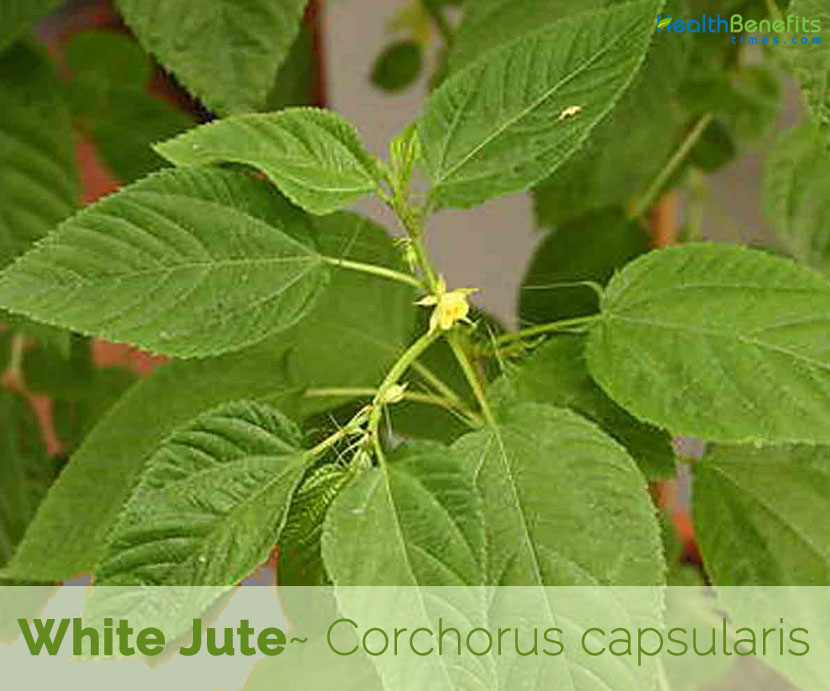
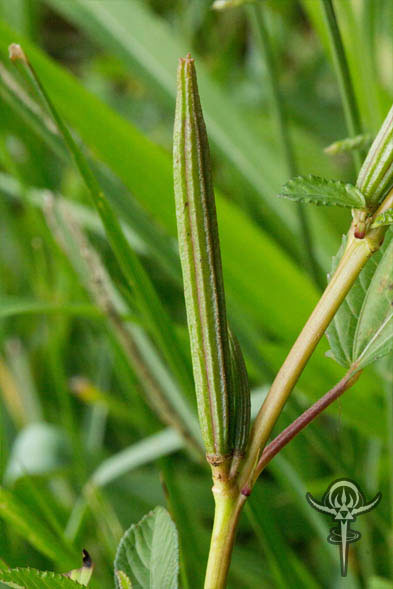
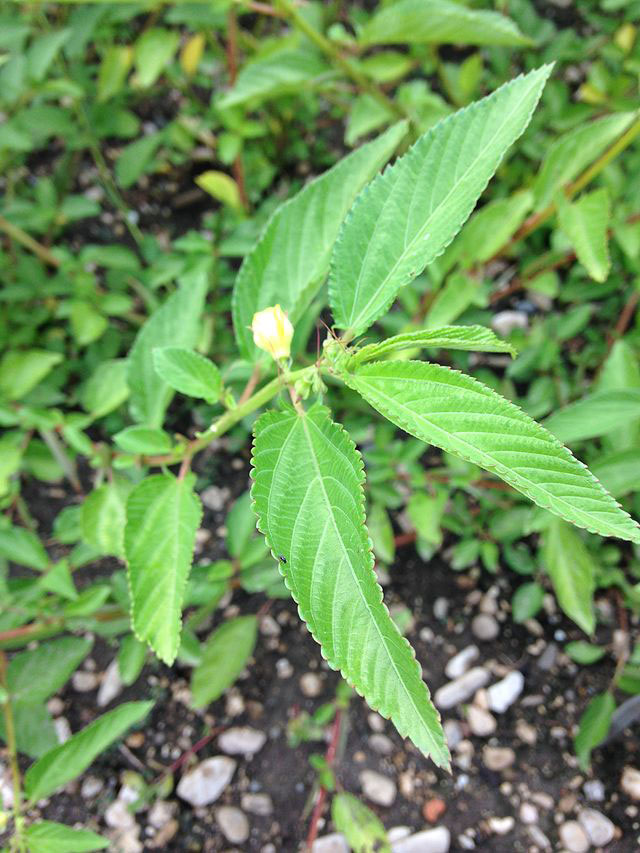
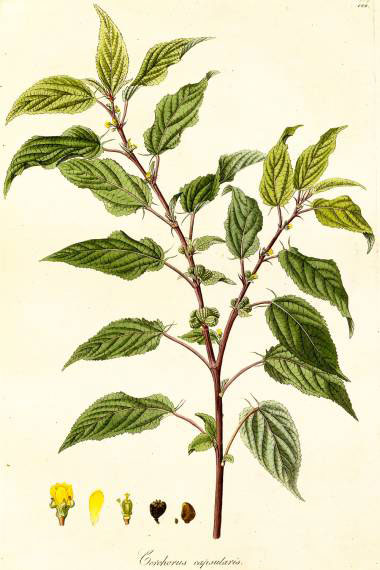
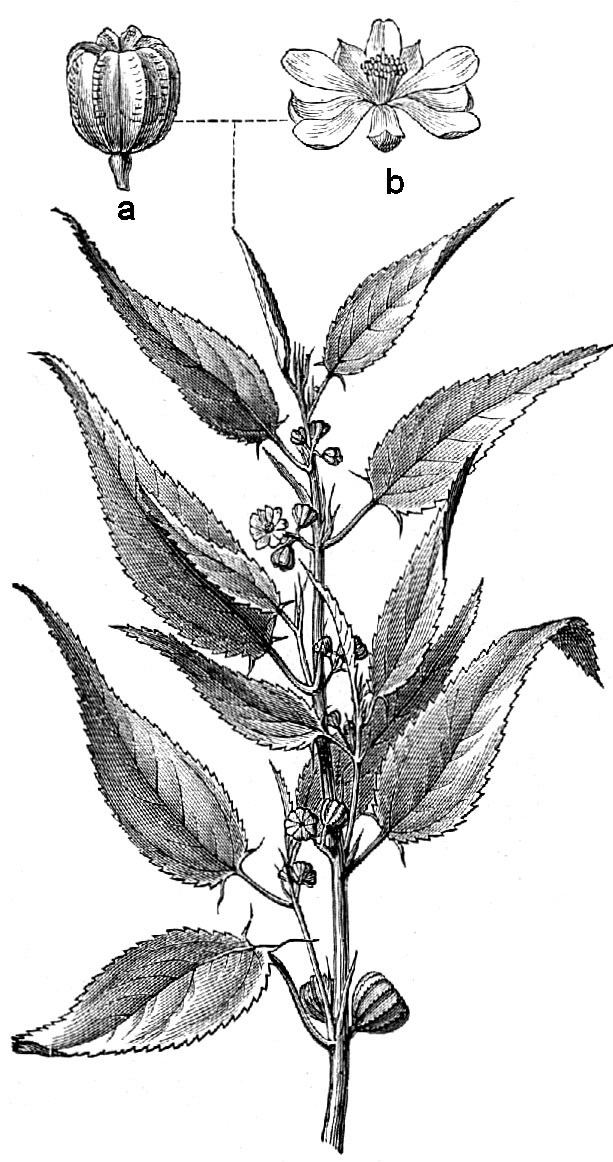
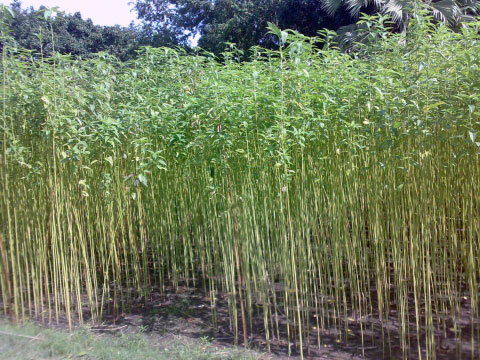
    White Jute is an erect, annual to perennial plant that grows about two or more meters in height, unbranched or with only a few side branches. The plant is found growing in low-lying watery places, among field hedges or along the border of cultivated fields, degraded forest areas and along sides of water courses. The stems are usually purplish. The leaves are ovate-lanceolate 5-12 cm long, pointed at the tip and rounded at the base, with tail-like projections on each side of the midrib, and toothed at the margins. The flowers are borne in small groups in the axils of the leaves, and are about 4 mm long. The sepals are often purplish and the petals are yellow. The many seeded globose to globose-obovoid capsules is about 1 centimeter in diameter, with longitudinal ridges. This species produces the greatest part of the jute of commerce, being about ten times as abundant as Corchorus olitorius. It is cultivated in India, and is also grown for its fiber in the Yangtze Valley of China.

    It thrives almost anywhere, and can be grown year-round. Most  genera  are  tropical,  but  the  genus  Tilia,  commonly called  linden,  or  lime  tree,  in  Europe  and  Asia  and basswood in North America, is found throughout the north temperate. Many species yield fiber, but the chief sources of commercial jute are two species; C. capsularis and C. olitorius, grown primarily in the Ganges and Brahmaputra valleys. Although jute adapts well to loamy soil in any hot and  humid  region,  cultivation  and  harvesting  require abundant  cheap  labor,  and  India  remains  the  unrivaled world producer as well as the chief fiber processor. Kolkata (Calcutta) is the main center. Europe and the United States import large quantities of jute fiber and cloth. 

    Fruit-of-White-Jute Leaves-of-White-Jute Plant-Illustration-of-White-Jute Sketch-of-White-Jute White-Jute White-Jute-Farming
    [Show thumbnails]
    Traditional uses and benefits of white Jute

    • Leaves are appetizer, carminative, demulcent, laxative, stimulant and stomachic.
    • An infusion is used in the treatment of dysentery, fevers, and dyspepsia and liver disorders.
    • Decoction of the roots and unripe fruits is used in the treatment of dysentery.
    • Leaves have been used to increase appetite, as an aid to digestion, as a laxative and as a stimulant.
    • An infusion of the leaves has been used to reduce fever, and the roots and leaves have been used against dysentery.

    Ayurvedic Health benefits of White Jute

    • Dry Skin: Grind few leaves of White Jute to make out a paste. Apply a thin layer of this to your skin. Repeat this treatment daily to get the smooth and soft skin.
    • Dandruff: Grind the fresh leaves of White Jute to make a paste. Apply this paste on your scalp. Allow it to dry for 1 hour. Wash off your scalp with water. Repeat this procedure for twice a week to get rid of Dandruff.
    • Hair fall: Paste prepared from White Jute leaves induces the growth of hair. Apply this paste twice a week. This paste will make your hair strong.

     Culinary uses

    • Leaves can be consumed raw or cooked.
    • Young leaves are added to salads whilst older leaves are cooked as a pot-herb.
    • Tea is made from the dried leaves.
    • Immature fruits are added to salads or used as a potherb.
    • Leaves and shoots of this plant are widely eaten in salads when young and are used as a cooked leafy vegetable when older.
    • Leaves are dried and powdered to use as a thickener in soups or as an herbal tea.
    • Immature fruits are also eaten, raw or cooked.
    • It makes an excellent spinach substitute in areas with hot summers.

    Other facts

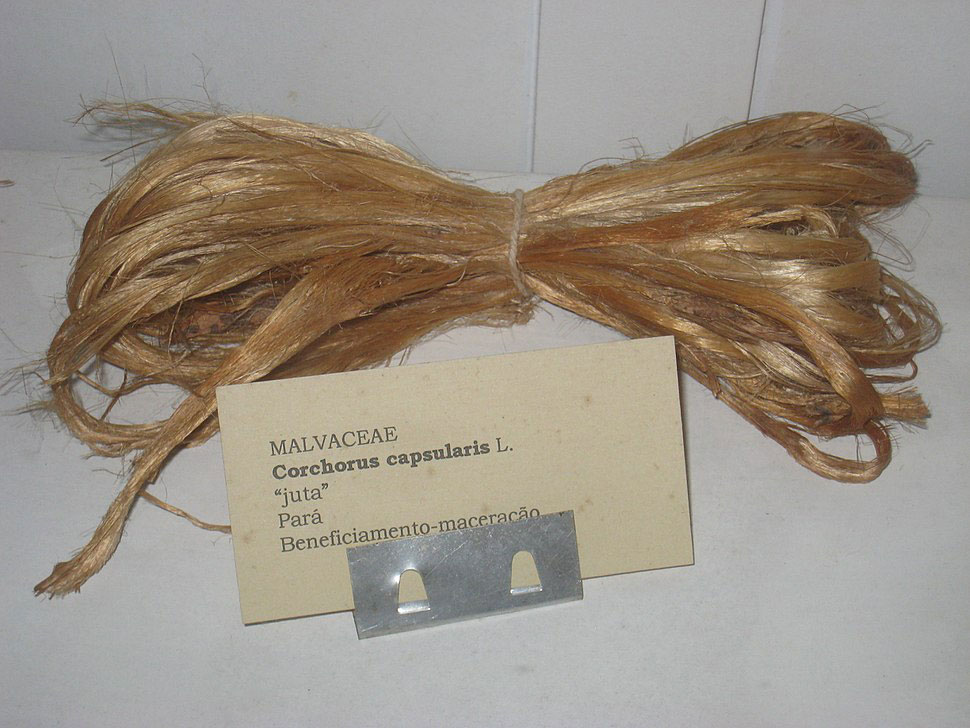
    • Fiber is obtained from the stems; it is the main source of jute.
    • Fiber is slightly coarse and is used mainly for sackcloth etc.
    • Stems are harvested when the plant is in flower and are then retted (allowed to begin to rot) so that the fiber can be extracted.
    • Growing the plants very close together will prevent some of the branching.
    • If used in making paper, the fibers are cooked for 2 hours with lye and then ball milled for 4½ hours.
    • The paper is grey/buff.
    • The very light and soft wood is used in making sulphur matches.
    • It is used for making sacks, bags, carpets, curtains, fabrics and paper.

    References:

    https://www.itis.gov/servlet/SingleRpt/SingleRpt?search_topic=TSN&search_value=506092#null

    https://npgsweb.ars-grin.gov/gringlobal/taxonomydetail.aspx?id=11456

    https://pfaf.org/user/Plant.aspx?LatinName=Corchorus+capsularis

    https://plants.usda.gov/core/profile?symbol=COCA38

    https://en.wikipedia.org/wiki/Corchorus_capsularis

    http://www.theplantlist.org/tpl/record/kew-2736337

    https://indiabiodiversity.org/species/show/229279

    http://tropical.theferns.info/viewtropical.php?id=Corchorus+capsularis

    https://gd.eppo.int/taxon/CRGCA

    https://en.wikipedia.org/wiki/Corchorus_capsularis

    https://www.cabi.org/isc/datasheet/16020

    78%
    78%
    Awesome

    Comments

    comments

    Herbs and Spices W
    Share. Facebook Twitter Pinterest LinkedIn Tumblr Email
    Previous ArticleBotox vs. Dysport: Contraindications to Their Use
    Next Article Know about the Dabai

    Related Posts

    Uses of Monkey Pitcher plant

    April 16, 2024

    Traditional uses and benefits of Wild Marigold

    March 21, 2024

    Traditional uses and benefits of Drooping fig

    March 12, 2024

    Comments are closed.


    White Jute Facts

    White Jute Quick Facts
    Name: White Jute
    Scientific Name: Corchorus capsularis
    Origin Originated in China but is now grown in Bangladesh and India, and found spread across much of tropical Africa
    Shapes Many seeded globose to globose-obovoid capsules, about 1 centimeter in diameter
    Taste Bitter
    Health benefits Beneficial for dysentery, fevers, dyspepsia liver disorders and helps to increase appetite.
    Name White Jute
    Scientific Name Corchorus capsularis
    Native Originated in China but is now grown in Bangladesh and India, and found spread across much of tropical Africa. It is also cultivated in the Amazon region of Brazil
    Common Names Bangla white jute, Jute, White jute, round-podded jute, jute plant, jute, Nalta jute
    Name in Other Languages Arabic:    Jût (جوت ), خَيْش , aljuti (الجوتي),  jawtiat kabsulia (جوتية كبسولية)
    Assamese: Chutia-pata, Nalita, Nali-sak, Mora-pat, Mora pat, mara shaak (মৰা শাক)
    Azerbaijani: Girdəmeyvə cut  
    Basque: Jute
    Bengali:  Jhuto, koshta (কোষ্টা)
    Catalan: Jute
    Chinese:  Hunag ma (黄麻), Yuan guo huang ma (圆果黄 麻)
    Danish:  Rundkapslet jute, Hvid jute
    Dutch:   Blanke jute, Juteplant, Rondpeulige jute
    English:  Bangla white jute (India), Jute, White jute, round-podded jute, jute plant, jute, Nalta jute
    Finnish: Juutti, Kuitujuutti
    French: Chanvre de Calcutta, Corète textile, Corète capsulaire, Corette, Gooni, Jute à fruit capsulaire, Jute à capsules globuleuses
    German: Indischer flacks,  Jutepflanze,  Rundkapseljute, Rundkapsel-Jute,  Weiße Jute
    Greek:   Lefki giuta (Λευκή γιούτα),  Giuta me sfairika perikardia (Γιούτα με σφαιρικά περικάρπια), Giuta me sfairikus karpus (Γιούτα με σφαιρικούς καρπούς)
    Gujarati:  Śaṇa (શણ)
    Hindi:  Patsan (पटसन), Shuti paat, Tita paat, San (शन), Narincha, patta shaak (पट्ट शाक)
    Indonesian: Yute
    Italian:  Corcoro, Iuta a frutto capsulare, Iuta bianca, Juta Bianca, juta
    Japanese: Ichibi Kouma (コウマ), tsunaso (ツナソ)
    Javanese: Yute
    Kannada: Senabu (ಸೆಣಬು)
    Kenya: Mrenda, Murere
    Konkani: Tupkati (तुपकटी)
    Korean: Hwangma 
    Malay:   Kancing baju
    Malayalam: Chanachedi
    Marathi:  Isabanda, Isapanda, Isaphanda, chonche (चोंचे), isabanda (इसबंद), kshudra chanchu (क्षुद्र चंचु)
    Persian:  Jut (جوت)
    Polish:  Juta, Juta torebkowa
    Portuguese:  Juta branca, Juta de fruto Redondo, juta
    Punjabi:  Patsan (ਪਟਸਨ)
    Romanian: Luta
    Russian:  Dzhut (Джут), Belyi dzhut (Белый джут),     Dzhut krugloplodnyi (Джут круглоплодный)
    Sanskrit:  San (शणं)
    Sierra leone: Krain
    Spanish:  Yute blanco, Yute de fruto redondeado
    Swedish: Jute
    Tamil: Pirattaikeerai, naru-valli (நறுவல்லி)
    Tangkhul: Ruimon
    Thai: Po krachao (ปอกระเจา), Px s̄êng (ปอเส้ง) Po seng,  Seng, (เส้ง)  Po (ปอ)
    Turkish:   Bunlar beyaz jüt, Hind keneviri
    Urdu: Noori
    Vietnamese: Bằng đay, Bố, Cây đay, Đai,  Đay, Đay quả tròn
    Plant Growth Habit Erect, annual to perennial plant
    Growing Climates Low-lying watery places, among field hedges or along the border of cultivated fields, degraded forest areas and along sides of water courses
    Plant Size Two or more meters in height
    Leaf Ovate-lanceolate, 5 to 12 centimeters long, pointed at the tip and rounded at the base, with toothed margins and tail-like projections on the each side of the midrib
    Flowering season October-December
    Flower Small groups in the axils of the leaves, about 4 millimeters long. Sepals are often purplish and the petals are yellow
    Fruit Shape & Size Many seeded globose to globose-obovoid capsules, about 1 centimeter in diameter, with longitudinal ridges
    Taste Bitter
    Plant Parts Used Whole Plant, seed
    Season February-March
    Precautions
    • The seeds contain a digoxin-like substance and are poisonous to both animals and insects.

    White Jute Scientific Classification

    Scientific Name: Corchorus capsularis

    Rank Scientific Name & (Common Name)
    Kingdom Plantae (Plants)
    Subkingdom Tracheobionta (Vascular plants)
    Infrakingdom Streptophyta  (land plants)
    Super Division Spermatophyta (Seed plants)
    Division Magnoliophyta (Flowering plants)
    Sub Division Spermatophytina  (spermatophytes, seed plants, phanérogames)
    Class Magnoliopsida (Dicotyledons)
    Sub-Class Dilleniidae
    Super Order Rosanae
    Order Malvales
    Family Tiliaceae (Linden family)
    Genus Corchorus L. (corchorus)
    Species Corchorus capsularis L. (jute)
    Synonyms
    • Corchorus cordifolius Salisb.
    • Corchorus marua Buch.-Ham.
    • Rhizanota cannabina Lour.
    • Rhizanota cannabina Lour. ex Gomes
    Categories
    • Beverages (78)
    • Dairy (28)
    • Dental Health (15)
    • Equipment (5)
    • Essential OIls (196)
    • Facts (2,939)
    • Foods (255)
    • Fruits (516)
    • Giveaway (1)
    • Grains and Cereals (36)
    • Health & Beauty (763)
    • Herbs and Spices (1,249)
    • Medicines (9)
    • Mental Health (19)
    • Nutritional value (27)
    • Nuts and seeds (73)
    • Oils (81)
    • Pets (4)
    • Poultry & Seafoods (67)
    • Pulses and Beans (16)
    • Reviews (25)
    • supplement (2)
    • Vegetables (304)
    • Weight Loss (22)

    What is Lupin Bean Flour?

    Science Backed Health Benefits of Durian (Durio zibethinus)

    Science Backed Health Benefits of Feijoa (Pineapple Guava) (Acca sellowiana)

    Science Backed Health Benefits of Gac Fruit (Momordica cochinchinensis)

    Science Backed Health Benefits of Amaranth Leaves (Amaranthus spp)

    Science Backed Health Benefits of Arrowhead (Sagittaria sagittifolia)

    ABOUT
    Home
    About us
    Contact us
    Privacy Policy
    Terms & conditions
    Disclaimer
    Direct Communication
    e-mail: [email protected]
    Gmail: [email protected]
    Whatsapp: +977-9841146511
    Viber: +977-9841146511
    Useful
    Health Wiki
    Nutrition
    Facebook Twitter Pinterest
    © 2025 www.healthbenefitstimes.com All rights reserved.

    Type above and press Enter to search. Press Esc to cancel.

    ×

    Log In

    Forgot Password?

    Not registered yet? Create an Account