Health Benefits
    Facebook Twitter Instagram
    Friday, December 5
    Facebook Twitter Pinterest
    Health Benefits
    • Home
    • Dental Health
    • Mental Health
    • Weight Loss
    • Health Wiki
    • Nutrition
    • Healthy Recipe
    • BMI Calculator
    Health Benefits
    Home»Poultry & Seafoods»Whiting fish facts and nutritional information
    Poultry & Seafoods

    Whiting fish facts and nutritional information

    By s mJanuary 17, 2017Updated:June 18, 2017No Comments6 Mins Read
    Facebook Twitter Pinterest LinkedIn Tumblr Email

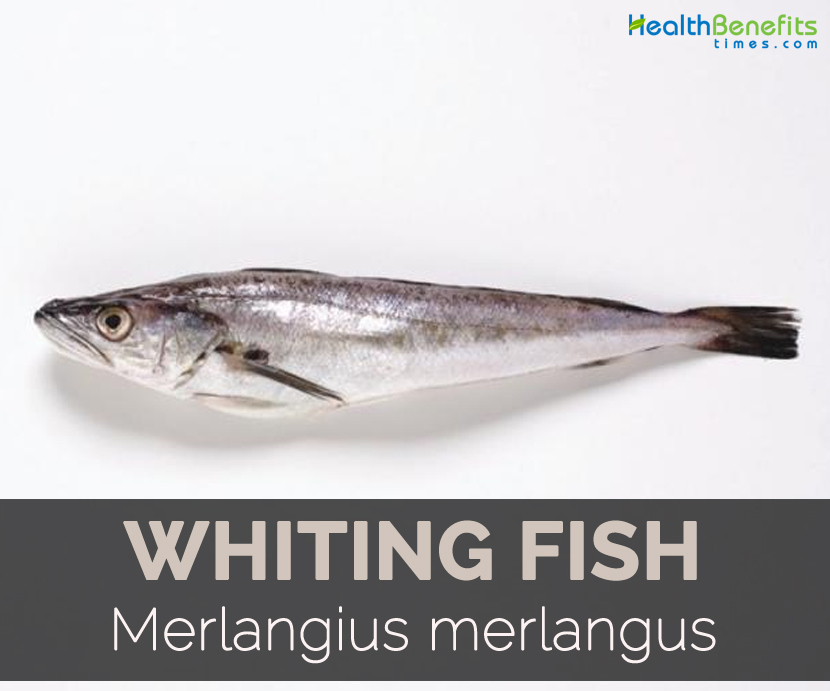
    The Whiting fish (Merlangius merlangus) commonly called English whiting, European whiting, Golden cutlet, North Sea whiting, Spelding, Whiting and Merling is native to northeastern Atlantic Ocean. It is found in Southeastern Barents Sea, Iceland, Scandinavia, North Sea, Baltic, Black Sea, Portugal, Aegean Sea, Mediterranean Sea and Adriatic Sea. They exist on mud, sand and gravel seabeds at the depth of 100 m (328 ft). It is vital in Eastern North Atlantic Ocean, Western Baltic, Northern Mediterranean and Black Seas. Whiting fish has elongated body with small head and pointed snout measuring 70 cm long. The tail is truncate. The skin’s color varies from yellow, brown, green to dark blue and silvery belly. It is a predator fish with long pointed teeth. The diet consists of eel-pout, lesser sandeel, sprat, herring, haddock, cod, crustaceans, squid and worms. The fish becomes mature at the age of three or four. The female could lay the eggs upto one million which floats in an open ocean. The female grows fast in comparison to males and has the lifespan of ten years. The anterior fins are elongated and anal fins are close to each other. The long pectoral fin is found at the base of anal fin.

    Nutritional value

    In 85 grams of cooked whiting fish, it offers 63.5 g of water, 99 calories, 19.96 g of protein, 1.44 g of total lipid fat and 1.24 g of ash. The same serving size offers 92.08% of Vitamin B12, 63.45% of Selenium, 55.02% of Isoleucine, 54.81% of lysine, 50.91% of tryptophan, 49.72% of threonine, 48.67% of valine, 47.65% of histidine, 43.89% of leucine, 39.92% of protein, 34.57% of phosphorus, 12.87% of choline and 11.77% of Vitamin B6.

    Health Benefits of Whiting fish

    Whiting fish is packed with various amounts of nutrients, minerals, vitamins, lipids and amino acids. Due to the presence of these nutrients, it provides ample amount of health benefits. Some are discussed below:

    1. Forms DNA

    It helps to form DNA in the body. Vitamin B12 is essential for the division of cells. The deficiency of Vitamin B12 results in the abnormal cell formations called magaloblasts. It could also lead to anemia.

    1. Lowers fatigue

    It provides relief from the weakness and fatigue. Vitamin B12 has the ability to improve stamina of body to combat heavy work pressure.

    1. Bone health

    Phosphorus is essential for the growth and maintains the teeth and bone health. It promotes the tooth enamel and gum health. It also provides relief from the conditions such as loss of minerals density and bone loss called osteoporosis. It also ensures the health of skeletal structure. Phosphorus is associated with heart health and prevents the chances of cardiovascular ailments. (1) (2)

    1. Supports digestion

    Phosphorus is vital for supporting digestion. It stimulates niacin and riboflavin. Vitamin B is essential for the metabolism of energy. It clears constipation, indigestion, diarrhea and bowel movements. It helps to eliminate toxins from the body. (3)

    1. Lowers cholesterol

    The high intake of niacin lowers the level of bad cholesterol and increase good cholesterol. It prevents the chances of atherosclerosis and thickening of artery walls.

    1. Mental problems

    The supplements of niacin help to cure the mental derangement and other health conditions.

    1. Treat cramps

    Magnesium helps to cure kidney stress, muscular tension and kidney stress. It assists calcium absorption that speeds up healing process. Its deficiency might show leg cramps and general fatigue. It treats the problems of chronic leg problems. (4)

    1. Prevent heart ailments

    It prevents irregular heartbeats, damage and muscle stress. It soothe nerves and resolves digestive process. It also prevents indigestion, cramps, vomiting, constipation, flatulence and abdominal pain. The deficiency of magnesium could lead to heart diseases. (5)

    Precautions                                                                                                 

    • The people who are allergic to fish should avoid it.
    • The excessive intake might lead to side effects or worsen the health.
    • People with health problems, breast feeding and pregnant women should consult the doctor before consumption.

    How to Eat         

    • It is boiled, deep fried, grilled and poached.
    • The fish is also added to stews, soups and various dishes.

    Whiting fish facts

    Whiting fish resembles the cod fish. It has small head, elongated body and pointed snout. It measures about 70 cm long with blue to green skin and silvery to white belly. It contains two anal fins and three dorsal fins. On the side, it has pectoral fins and pelvic fins are found near the gills. It thrives in gravel and mud beds or rocky bottoms. Female whiting fish lays up to one million of eggs that float in an open ocean. Its prey consists of shrimps, crabs, molluscs, squid, worms and cuttlefish.

    Whiting fish facts and nutritional information Quick Facts
    Name: Whiting fish facts and nutritional information
    Scientific Name: Merlangius merlangus
    Origin Native to northeastern Atlantic Ocean
    Colors Yellowish, brown, greenish, dark blue
    Shapes Elongated body, small head, pointed snout, Length: 70 cm
    Calories 99 Kcal./cup
    Major nutrients Vitamin B-12 (92.08%)
    Selenium (63.45%)
    Isoleucine (55.02%)
    Lysine (54.81%)
    Tryptophan (50.91%)
    Health benefits Forms DNA, Lowers fatigue, Bone health, Supports digestion, Lowers cholesterol
    Name Whiting fish facts and nutritional information
    Scientific Name Merlangius merlangus
    Native Native to northeastern Atlantic Ocean
    Common/English Name English whiting, European whiting, Golden cutlet, North Sea whiting, Spelding, Whiting, Merling
    Name in Other Languages Arabic: Murluts, Nazalli, Peskadil’ia;
    Breton: morlouan;
    Bulgarian: Medjid, Medzhid;
    Catalan: Merlà;
    Corsican: Nasellu;
    Croatian: Pišmolj, Ugotica velika;
    Danish: Hvilling, Hvitting, Slinger;
    Dutch: Koudgerookte vlinders, Wijting;
    Faroese: Hvítingur;
    Finnish: Valkoturska;
    French: Lécaud, Merlan, Merlu, Nasellu, Varlet;
    German: Merlan, Witting, Wittling;
    Greek: Bacaliaros, Bakaliaros, Taouki, Ntaoúki (Νταούκι);
    Hebrew: Merlan;
    Icelandic: Làsa, Lýsa;
    Irish: An faoitín;
    Italian: Arface, Filetti affumicati, Merlano, Molo, Molo de parangal, Morgano, Nasello atlantico, Orfacio, Pisci fica;
    Mandarin Chinese: Yá xuě (牙鱈), Chǐ xuě de yìmíng (齒鱈的異名), Chǐ xuě de yì míng (齿鳕的异名);
    Manx: Finnag, Kelk;
    Norwegian: Hvitting, kviting;
    Polish: Witlinek, Witlinek czarnomorski;
    Portuguese: Badeho, Badejo, Badejo-do-Mar-Negro, Filete fumado;
    Romanian: Bacaliar;
    Russian: Merlang (Мерланг), Chernomorskaya, Chernomorskiy merlang, Merlang, Merlanka, Piksha;
    Serbian: Pismolj, Ugoti velika, Ugoti velika;
    Slovenian: Mol;
    Spanish: Liba, Merlan, Plegonero;
    Swedish: Vitling;
    Turkish: Bakalyaro, Bakalyaro baligi, Bakalyaro baligi
    Tail Truncate
    Shape & size Elongated body, small head, pointed snout, Length: 70 cm
    Color Yellowish,  brown, greenish, dark blue
    Belly Silvery
    Flavor/aroma Mild
    Diet Eel-pout, lesser sandeel, sprat, herring, haddock, cod, crustaceans, squid, worms
    Major Nutritions Vitamin B-12 (Cobalamine) 2.21 µg (92.08%)
    Selenium, Se 34.9 µg (63.45%)
    Isoleucine 0.92 g (55.02%)
    Lysine 1.833 g (54.81%)
    Tryptophan 0.224 g (50.91%)
    Threonine 0.875 g (49.72%)
    Valine 1.028 g (48.67%)
    Histidine 0.587 g (47.65%)
    Leucine 1.622 g (43.89%)
    Protein 19.96 g (39.92%)
    Health Benefits
    • Forms DNA
    • Lowers fatigue
    • Bone health
    • Supports digestion
    • Lowers cholesterol
    • Mental problems
    • Treat cramps
    • Prevent heart ailments
    Calories in 3 oz (85 gm) 99 Kcal.
    Precautions    
    • The allergic ones should avoid it.
    • The excessive intake could cause side effects.
    • People with health complications should consult the doctor before consumption.
    How to Eat
    • It is boiled, deep fried, grilled and poached.
    • It is added to stews, soups and various dishes.


    References:

    https://www.organicfacts.net/health-benefits/vitamins/health-benefits-of-vitamin-b12-or-cyanocobalamin.html

    https://www.organicfacts.net/health-benefits/vitamins/vitamin-b3-or-niacin.html

    75%
    75%
    Awesome

    Comments

    comments

    Poultry & Seafoods W
    Share. Facebook Twitter Pinterest LinkedIn Tumblr Email
    Previous ArticleTuna facts and health benefits
    Next Article Purple yam facts and health benefits

    Related Posts

    Traditional uses and benefits of Wild Marigold

    March 21, 2024

    Health benefits of Winged Pea

    November 10, 2023

    Health benefits of Weeping lovegrass

    October 31, 2023

    Comments are closed.


    Whiting fish Scientific Classification

    Scientific Name: Merlangius merlangus

    Rank Scientific Name & (Common Name)
    Kingdom Animalia
    Subkingdom Bilateria
    Infrakingdom Deuterostomia
    Phylum Chordata
    Subphylum Vertebrata
    Infraphylum Gnathostomata
    Superorder Paracanthopterygii
    Order Gadiformes
    Family Gadidae
    Subfamily Gadinae
    Genus Merlangius
    Species Merlangius merlangus
    Superclass Osteichthyes
    Class Actinopterygii
    Sub Class Neopterygii
    Infraclass Teleostei
    • Cooked
    • Raw
    Nutritional value of Fish, whiting, mixed species, cooked, dry heat
    Serving Size: 3 oz, 85 g

    Calories 99 Kcal. Calories from Fat 12.96 Kcal.


    Proximity Amount % DV
    Water 63.5 g N/D
    Energy 99 Kcal N/D
    Energy 411 kJ N/D
    Protein 19.96 g 39.92%
    Total Fat (lipid) 1.44 g 4.11%
    Ash 1.24 g N/D

     
    Minerals Amount % DV
    Calcium, Ca 53 mg 5.30%
    Iron, Fe 0.36 mg 4.50%
    Magnesium, Mg 23 mg 5.48%
    Phosphorus, P 242 mg 34.57%
    Potassium, K 369 mg 7.85%
    Sodium, Na 112 mg 7.47%
    Zinc, Zn 0.45 mg 4.09%
    Copper, Cu 0.034 mg 3.78%
    Manganese, Mn 0.111 mg 4.83%
    Selenium, Se 34.9 µg 63.45%


    Vitamins Amount % DV
    Water soluble Vitamins
    Vitamin B1 (Thiamin) 0.058 mg 4.83%
    Vitamin B2 (Riboflavin) 0.051 mg 3.92%
    Vitamin B3 (Niacin) 1.419 mg 8.87%
    Vitamin B5 (Pantothenic acid) 0.212 mg 4.24%
    Vitamin B6 (Pyridoxine) 0.153 mg 11.77%
    Vitamin B9 (Folate) 13 µg 3.25%
    Folic Acid 0 µg N/D
    Folate, food 13 µg N/D
    Folate, DEF 13 µg N/D
    Choline 70.8 mg 12.87%
    Vitamin B-12 (Cobalamine) 2.21 µg 92.08%
    Fat soluble Vitamins
    Vitamin A, RAE 32 µg 4.57%
    Vitamin A, IU 109 IU N/D
    Retinol 32 µg N/D
    Vitamin E (alpha-tocopherol) 0.32 mg 2.13%
    Vitamin D (D2 + D3) 1.5 µg N/D
    Vitamin D3 (cholecalciferol) 1.5 µg N/D
    Vitamin D 62 IU N/D
    Vitamin K (phylloquinone) 0.1 µg 0.08%

     
    Lipids Amount % DV
    Fatty acids, total saturated 0.34 g N/D
    Myristic acid  14:00(Tetradecanoic acid) 0.058 g N/D
    Palmitic acid 16:00 (Hexadecanoic acid) 0.242 g N/D
    Stearic acid 18:00 (Octadecanoic acid) 0.04 g N/D
    Fatty acids, total monounsaturated 0.378 g N/D
    Palmitoleic acid 16:1 (hexadecenoic acid) 0.103 g N/D
    Oleic acid 18:1 (octadecenoic acid) 0.235 g N/D
    Gadoleic acid 20:1 (eicosenoic acid) 0.023 g N/D
    Erucic acid 22:1 (docosenoic acid) 0.017 g N/D
    Fatty acids, total polyunsaturated 0.499 g N/D
    Linoleic acid 18:2 (octadecadienoic acid) 0.017 g N/D
    Linolenic acid 18:3 (Octadecatrienoic acid) 0.011 g N/D
    18:04 0 g N/D
    20:4 undifferentiated 0.017 g N/D
    20:5 n-3 (EPA) 0.241 g N/D
    22:5 n-3 (DPA) 0.014 g N/D
    22:6 n-3 (DHA) 0.2 g N/D
    Cholesterol 71 mg N/D

     
    Amino acids Amount % DV
    Tryptophan 0.224 g 50.91%
    Threonine 0.875 g 49.72%
    Isoleucine 0.92 g 55.02%
    Leucine 1.622 g 43.89%
    Lysine 1.833 g 54.81%
    Methionine 0.591 g N/D
    Cystine 0.214 g N/D
    Phenylalanine 0.779 g N/D
    Tyrosine 0.674 g N/D
    Valine 1.028 g 48.67%
    Arginine 1.194 g N/D
    Histidine 0.587 g 47.65%
    Alanine 1.207 g N/D
    Aspartic acid 2.043 g N/D
    Glutamic acid 2.979 g N/D
    Glycine 0.958 g N/D
    Proline 0.706 g N/D

    *Above mentioned Percent Daily Values (%DVs) are based on 2,000 calorie diet intake. Daily values (DVs) may be different depending upon your daily calorie needs. Mentioned values are recommended by a U.S. Department of Agriculture. They are not healthbenefitstimes.com recommendations. Calculations are based on average age of 19 to 50 years and weighs 194 lbs.


    Source:
    https://ndb.nal.usda.gov/

    Nutritional value of Fish, whiting, mixed species, raw
    Serving Size:1 fillet, 92 g

    Calories 83 Kcal. Calories from Fat 10.89 Kcal.


    Proximity Amount % DV
    Water 73.85 g N/D
    Energy 83 Kcal N/D
    Energy 347 kJ N/D
    Protein 16.85 g 33.70%
    Total Fat (lipid) 1.21 g 3.46%
    Ash 1.2 g N/D

     
    Minerals Amount % DV
    Calcium, Ca 44 mg 4.40%
    Iron, Fe 0.31 mg 3.88%
    Magnesium, Mg 19 mg 4.52%
    Phosphorus, P 204 mg 29.14%
    Potassium, K 229 mg 4.87%
    Sodium, Na 66 mg 4.40%
    Zinc, Zn 0.81 mg 7.36%
    Copper, Cu 0.029 mg 3.22%
    Manganese, Mn 0.096 mg 4.17%
    Selenium, Se 29.5 µg 53.64%


    Vitamins Amount % DV
    Water soluble Vitamins
    Vitamin B1 (Thiamin) 0.052 mg 4.33%
    Vitamin B2 (Riboflavin) 0.042 mg 3.23%
    Vitamin B3 (Niacin) 1.196 mg 7.48%
    Vitamin B5 (Pantothenic acid) 0.199 mg 3.98%
    Vitamin B6 (Pyridoxine) 0.144 mg 11.08%
    Vitamin B9 (Folate) 12 µg 3.00%
    Folic Acid 0 µg N/D
    Folate, food 12 µg N/D
    Folate, DEF 12 µg N/D
    Choline 59.8 mg 10.87%
    Vitamin B-12 (Cobalamine) 2.12 µg 88.33%
    Fat soluble Vitamins
    Vitamin A, RAE 28 µg 4.00%
    Vitamin A, IU 92 IU N/D
    Retinol 28 µg N/D
    Vitamin E (alpha-tocopherol) 0.28 mg 1.87%
    Vitamin D (D2 + D3) 1.3 µg N/D
    Vitamin D3 (cholecalciferol) 1.3 µg N/D
    Vitamin D 52 IU N/D
    Vitamin K (phylloquinone) 0.1 µg 0.08%

     
    Lipids Amount % DV
    Fatty acids, total saturated 0.227 g N/D
    Myristic acid  14:00(Tetradecanoic acid) 0.041 g N/D
    Palmitic acid 16:00 (Hexadecanoic acid) 0.145 g N/D
    Stearic acid 18:00 (Octadecanoic acid) 0.029 g N/D
    Fatty acids, total monounsaturated 0.257 g N/D
    Palmitoleic acid 16:1 (hexadecenoic acid) 0.075 g N/D
    Oleic acid 18:1 (octadecenoic acid) 0.149 g N/D
    Gadoleic acid 20:1 (eicosenoic acid) 0.028 g N/D
    Erucic acid 22:1 (docosenoic acid) 0.004 g N/D
    Fatty acids, total polyunsaturated 0.388 g N/D
    Linoleic acid 18:2 (octadecadienoic acid) 0.018 g N/D
    Linolenic acid 18:3 (Octadecatrienoic acid) 0.031 g N/D
    18:04 0.038 g N/D
    20:4 undifferentiated 0.072 g N/D
    20:5 n-3 (EPA) 0.086 g N/D
    22:5 n-3 (DPA) 0.017 g N/D
    22:6 n-3 (DHA) 0.121 g N/D
    Cholesterol 62 mg N/D

     
    Amino acids Amount % DV
    Tryptophan 0.189 g 42.95%
    Threonine 0.739 g 41.99%
    Isoleucine 0.776 g 46.41%
    Leucine 1.369 g 37.04%
    Lysine 1.547 g 46.26%
    Methionine 0.499 g N/D
    Cystine 0.18 g N/D
    Phenylalanine 0.658 g N/D
    Tyrosine 0.569 g N/D
    Valine 0.868 g 41.10%
    Arginine 1.008 g N/D
    Histidine 0.496 g 40.26%
    Alanine 1.019 g N/D
    Aspartic acid 1.725 g N/D
    Glutamic acid 2.515 g N/D
    Glycine 0.809 g N/D
    Proline 0.596 g N/D
    Serine 0.687 g N/D

    *Above mentioned Percent Daily Values (%DVs) are based on 2,000 calorie diet intake. Daily values (DVs) may be different depending upon your daily calorie needs. Mentioned values are recommended by a U.S. Department of Agriculture. They are not healthbenefitstimes.com recommendations. Calculations are based on average age of 19 to 50 years and weighs 194 lbs.


    Source:
    https://ndb.nal.usda.gov/

    WordPress Tabs
    Categories
    • Beverages (78)
    • Dairy (28)
    • Dental Health (15)
    • Equipment (5)
    • Essential OIls (196)
    • Facts (2,939)
    • Foods (255)
    • Fruits (516)
    • Giveaway (1)
    • Grains and Cereals (36)
    • Health & Beauty (763)
    • Herbs and Spices (1,249)
    • Medicines (9)
    • Mental Health (19)
    • Nutritional value (27)
    • Nuts and seeds (73)
    • Oils (81)
    • Pets (4)
    • Poultry & Seafoods (67)
    • Pulses and Beans (16)
    • Reviews (25)
    • supplement (2)
    • Vegetables (304)
    • Weight Loss (22)

    What is Lupin Bean Flour?

    Science Backed Health Benefits of Durian (Durio zibethinus)

    Science Backed Health Benefits of Feijoa (Pineapple Guava) (Acca sellowiana)

    Science Backed Health Benefits of Gac Fruit (Momordica cochinchinensis)

    Science Backed Health Benefits of Amaranth Leaves (Amaranthus spp)

    Science Backed Health Benefits of Arrowhead (Sagittaria sagittifolia)

    ABOUT
    Home
    About us
    Contact us
    Privacy Policy
    Terms & conditions
    Disclaimer
    Direct Communication
    e-mail: [email protected]
    Gmail: [email protected]
    Whatsapp: +977-9841146511
    Viber: +977-9841146511
    Useful
    Health Wiki
    Nutrition
    Facebook Twitter Pinterest
    © 2025 www.healthbenefitstimes.com All rights reserved.

    Type above and press Enter to search. Press Esc to cancel.

    ×

    Log In

    Forgot Password?

    Not registered yet? Create an Account