

Understanding how your digestive system functions is the first step toward finding relief. Gastroparesis, which is frequently referred to as delayed gastric emptying, is a medical disorder that slows or entirely stops the movement of food from your stomach into your small intestine 1. Normally, after you swallow a meal, strong muscles in the wall of your stomach grind the food into much smaller pieces and push them downward to continue the digestive process 2. However, when a person develops gastroparesis, these stomach muscles work very poorly or simply do not function at all. This condition causes the stomach to take an abnormally long time to empty its contents, even though there is absolutely no physical blockage or structural obstruction in the stomach or intestines 3. For the average person, this delay means food sits stagnant in the stomach, leading to a variety of uncomfortable symptoms, nutritional challenges, and disruptions to daily life.
Section 2: Causes of Gastroparesis
Discovering the exact reason why the stomach stops emptying properly can sometimes be a complex puzzle for medical professionals. The digestive process relies on a delicate network of nerves and pacemaker cells, and when this network is damaged, gastroparesis occurs. Here are the primary causes of this condition:
- Idiopathic Origins: In a large portion of medical cases, doctors are completely unable to find a specific underlying cause for the delayed stomach emptying, even after running extensive diagnostic tests. This is clinically termed idiopathic gastroparesis, and it represents the most common diagnosis overall 4. People with this form are more frequently women, often of a younger or middle age, who suddenly develop symptoms like abdominal pain and early satiety without any prior warning signs.
- Diabetes Mellitus: Chronically high blood sugar is notorious for inflicting widespread damage on the body’s blood vessels and delicate nerve endings. Diabetes stands out as the most common known cause of gastroparesis 5. Over time, elevated blood glucose levels damage the vagus nerve the vital communication pathway that tells the stomach muscles to contract as well as the special pacemaker cells located directly within the stomach wall 6.
- Surgical Complications: Undergoing medical procedures in the chest or abdominal area carries an inherent risk to the surrounding anatomical structures. Gastroparesis is a frequent complication following surgeries that involve the esophagus, stomach, duodenum, or pancreas, particularly if the vagus nerve is accidentally cut, stretched, or injured during the operation 7.
- Viral Infections: Sometimes, a severe stomach bug leaves a lasting mark long after the initial nausea and diarrhea have faded. Certain viral infections that target the gastrointestinal tract can cause neurological damage to the stomach, resulting in post-infectious gastroparesis that can linger for months or years 1.
- Neurological and Autoimmune Diseases: Because digestion is heavily controlled by the brain and nervous system, systemic diseases can disrupt this process. Conditions like Parkinson’s disease, multiple sclerosis, and certain autoimmune disorders such as scleroderma are known to interfere with the nerve signals required for healthy stomach contractions 8.
- Medication Side Effects: While they do not cause the actual disease, numerous prescription drugs can severely delay gastric emptying and mimic the symptoms of gastroparesis. Common culprits include narcotic pain medications (like codeine, hydrocodone, and morphine), specific antidepressants, anticholinergic drugs used to block nerve signals, and even some newer weight-loss and diabetes medications 9.
Symptoms of Gastroparesis
- Early Satiety: This feels like an overwhelming sensation of being completely full shortly after starting a meal. You might take just two or three bites of food and feel as though you have just eaten a massive Thanksgiving dinner 6.
- Prolonged Postprandial Fullness: Unlike normal digestion where the heavy feeling of a meal fades after an hour or two, this symptom leaves you feeling uncomfortably stuffed and heavily burdened by food for many hours, sometimes even lingering into the next day 5.
- Chronic Nausea: A persistent, low-grade feeling of sickness in your stomach that can last all day long. This nausea is often worse in the mornings or immediately following any attempt to eat solid food 8.
- Frequent Vomiting: Because the food has nowhere to go, the stomach may forcefully expel it. It is not uncommon for individuals to vomit up completely undigested food that was consumed several hours, or even a full 24 hours, prior to the vomiting episode 2.
- Excessive Bloating: As food ferments and sits stagnant, the stomach area can physically swell and distend outward. This bloating can make clothing feel painfully tight and cause the abdomen to feel hard to the touch 4.
- Constant Belching: Trapped gas inside the non-moving stomach naturally seeks an escape route. This leads to frequent, uncontrollable burping that often tastes like the food eaten much earlier in the day 1.
- Upper Abdominal Pain: A dull, aching pain or sharp cramping localized right in the upper middle area of the abdomen, just below the rib cage. This discomfort is typically aggravated by eating 10.
- Heartburn and Reflux: When the stomach is overly full of stagnant food and digestive acids, that mixture tends to press upward against the esophageal sphincter, causing a burning sensation in the chest and throat 11.
- Poor Appetite and Weight Loss: The constant fear of nausea, combined with the physical sensation of fullness, destroys the natural desire to eat. Over time, this leads to unintentional weight loss and severe malnutrition because the body is not absorbing enough calories or essential nutrients 12.
Gastroparesis Facts table
| # Symptoms | |
| # Causes | |
| # Types of Gastroparesis | |
| # How does spread |
|
| # Age Group |
|
| # You might be at a higher risk for exposure of this disease if you: | |
| # How doctors diagnose |
|
| # Other facts |
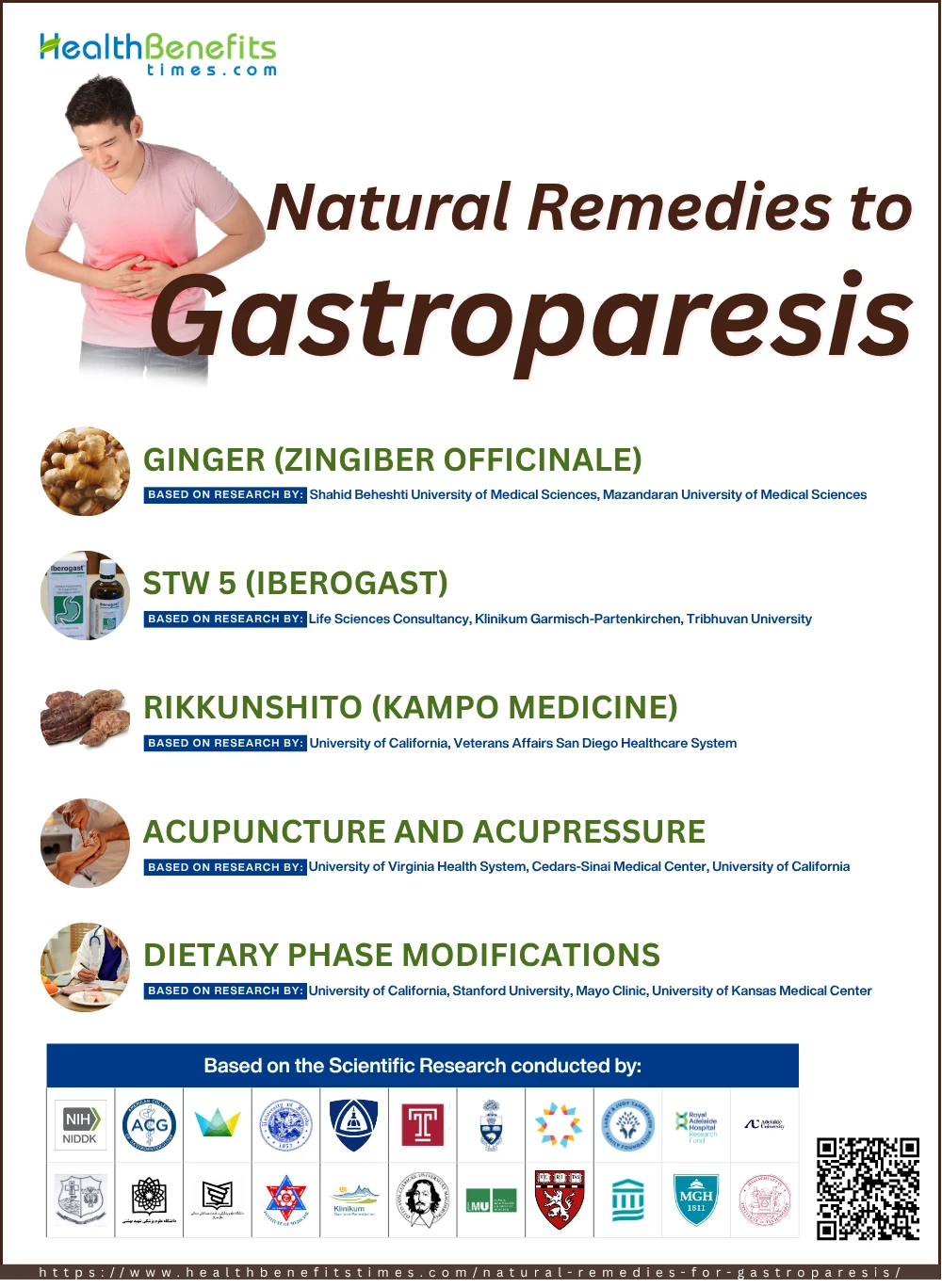
Natural remedies for Gastroparesis
1. Ginger (Zingiber officinale)
For thousands of years, the humble ginger root has been celebrated in traditional medicine for its profound ability to soothe an upset stomach. Today, clinical research confirms what ancient healers knew: ginger contains powerful active compounds that genuinely support digestion. Studies show that ginger can actively accelerate the rate at which the stomach empties its contents into the small intestine 15. It works by gently stimulating the rhythmic contractions of the lower stomach, known as the antrum, prompting it to squeeze more effectively 15. Additionally, ginger possesses fantastic antioxidant properties and acts as a natural anti-emetic, meaning it actively suppresses the urge to vomit 16.
Note: Ginger is commonly used by drinking it as a freshly steeped tea, chewing on small pieces of crystallized ginger, or taking it in a standardized capsule form (usually around 1500 mg daily split into smaller doses) to find natural relief from nausea. 17
 2. STW 5 (Iberogast)
Finding a gentle herbal liquid that addresses multiple symptoms at once can feel like a major victory. STW 5, widely known commercially as Iberogast, is a highly researched liquid botanical preparation that blends nine different plant extracts. These include bitter candy tuft, chamomile flower, caraway fruit, lemon balm leaf, peppermint leaf, and licorice root 10. Rather than just forcing the stomach to pump faster, STW 5 takes a multi-targeted approach. Research indicates that it helps relax the upper part of the stomach so you can comfortably hold more food without feeling full instantly, while simultaneously reducing hypersensitivity and inflammation in the digestive tract 11. It is particularly helpful for those dealing with overlapping issues like heartburn and functional dyspepsia 18.
Note: This herbal remedy is commonly used in liquid drop form; you simply add the recommended number of drops into a small glass of water or juice and drink it right before or during your meals for digestive support. 19
3. Rikkunshito (Kampo Medicine)
Turning to traditional Japanese herbal medicine, known as Kampo, introduces a fascinating remedy called Rikkunshito. This carefully balanced mixture consists of eight distinct herbs, including ginseng and licorice, and is widely prescribed in Japan for functional stomach disorders 20. What makes Rikkunshito so unique is its proven ability to increase your body’s natural levels of ghrelin, often called the “hunger hormone” 21. By boosting ghrelin and interacting with specific nerve receptors in the gut, this herbal blend has been shown to improve the expansion of the upper stomach and alleviate the sensation of early fullness, making it easier to finish a meal 22.
Note: Rikkunshito is commonly used by dissolving the pre-measured, granulated herbal powder into a cup of warm water to create a soothing, earthy tea that is consumed daily to help restore lost appetite. 23
4. Acupuncture and Acupressure
Stimulating specific pressure points on the body is a cornerstone of ancient Eastern medicine that is gaining strong support from modern science. For gastroparesis, clinical trials suggest that applying needles or firm physical pressure to specific points most notably the PC6 (Neiguan) point on the inner wrist and the ST36 (Zusanli) point on the lower leg can provide meaningful symptom relief 24. This process is believed to work by sending calming signals along the vagus nerve, which helps regulate the autonomic nervous system and restore a healthier rhythm to the stomach’s electrical pacing 25. Patients often report significant decreases in nausea, bloating, and upper abdominal pain after regular sessions 26.
Note: Acupuncture is applied by a licensed professional using tiny, painless needles during weekly sessions, while acupressure can be easily self-applied at home by firmly massaging your own wrist and leg points, or by wearing specialized anti-nausea wristbands. 27
5. Dietary Phase Modifications (Liquid and Puréed Foods)
Sometimes, the most powerful natural remedy is simply changing the physical texture of the food you eat. Because a paralyzed stomach struggles immensely to grind solid food, you can naturally bypass this problem by doing the grinding for it. Medical guidelines confirm that liquid emptying is often completely preserved in patients, even when their ability to empty solid food is severely broken 28. Shifting your diet toward small-particle foods, well-cooked purées, and nutrient-dense liquids removes the heavy workload from your stomach muscles, allowing gravity and simple fluid dynamics to move your meals safely into the intestines 29.
Note: This nutritional strategy is commonly applied by putting meals into a high-powered blender to create smooth, easy-to-drink soups and smoothies, ensuring you get enough daily calories without triggering terrible pain. 30
Is there any exercise or physical activities to relief Gastroparesis
Moving your body is generally wonderful for overall health, but when you have a compromised digestive system, you must be strategic about how and when you exercise. The goal is to encourage blood flow and gentle movement without triggering the body’s stress response. Here are some of the best physical activities to support stomach emptying.
1. Gentle Post-Meal Walking
Gravity is a reliable friend when your internal digestion is struggling. Engaging in very mild, upright physical activity immediately following a meal naturally assists the anatomical flow of food downward through the digestive tract 12. Light walking stimulates healthy blood circulation throughout the entire body, ensuring that your digestive organs receive the oxygen and energy they need to fuel whatever muscular contractions they can still manage 31.
Note on how to do: Stand up shortly after finishing your meal and take a slow, relaxed 15-to-20-minute stroll on a flat surface, taking careful care not to elevate your heart rate or break a heavy sweat. 32
2. Diaphragmatic Breathing (Abdominal Breathing)
Your diaphragm is a large muscle sitting just above your stomach, and it is intimately connected to the vagus nerve. Taking slow, deep breaths directly massages the internal digestive organs and forces your nervous system to shift out of a stressed “fight or flight” state and into a calm “rest and digest” state 33. Clinical trials have demonstrated that meditative diaphragmatic breathing can significantly improve the heart rate variability and vagal tone, which creates a much more favorable internal environment for stomach motility and reduces the perception of physical pain 34.
Note on how to do: Lie flat on your back in a quiet room with one hand on your chest and the other on your belly; inhale slowly and deeply through your nose so only your belly hand rises, then exhale gently through your mouth, repeating this for 10 to 15 minutes. 35
3. Tai Chi and Restorative Yoga
Mind-body exercises offer a beautiful dual benefit by combining gentle, flowing physical postures with focused breathwork. These traditional practices have been extensively studied for their ability to gently stimulate the gastrointestinal tract without demanding excessive cardiovascular output from the heart 36. The very light twisting and stretching motions inherent in Tai Chi and restorative Yoga can also help relieve trapped gas and physical tension within the abdominal cavity, providing wonderful relief from bloating and cramping.
Note on how to do: Follow a beginner’s guided video or attend a gentle class, focusing purely on fluid, slow-motion movements and deep stretching, while strictly avoiding any poses that place extreme pressure or tight compression directly on a full stomach. 37
Foods and Activities to Avoid When You suffer from Gastroparesis
To maintain a calm digestive environment and prevent severe flare-ups, learning what not to do is just as important as knowing what to do. Certain food compounds and daily habits demand way too much effort from a paralyzed stomach. When you suffer from gastroparesis, you should strictly avoid the following:
- High-Fiber Foods: Raw vegetables, whole grain breads, bran cereals, beans, nuts, and seeds are incredibly dangerous for a slow stomach. Fiber cannot be broken down by human digestive enzymes; it relies entirely on strong stomach contractions to be mashed up. Without that grinding action, fiber binds together to form hard, indigestible masses called bezoars, which can cause total blockages in your digestive tract 28.
- Tough Fruit and Vegetable Skins: The outer peels of apples, potatoes, tomatoes, and berries are notorious for resisting the digestive process. You should always peel your fruits and vegetables and cook them until they are completely soft to prevent them from getting stuck in your stomach 38.
- High-Fat Solid Foods: Dietary fat naturally triggers the release of hormones that tell the stomach to slow down its emptying process. Eating heavy, deep-fried foods, greasy cuts of meat, or rich solid desserts will create an agonizingly long delay in your stomach 39. (Interestingly, liquid fats, such as whole milk or nutritional shakes, are often well-tolerated and provide essential calories you need).
- Large, Infrequent Meals: Eating two or three massive meals a day overwhelms your stomach’s limited capacity. When a large volume of food stretches the stomach walls excessively, it leads to immediate pain, nausea, and an inability to process the backlog 30. You must switch to eating 5 or 6 very small meals instead.
- Carbonated Beverages: Fizzy sodas and sparkling waters introduce a massive volume of air into a stomach that already struggles to empty its gas. Drinking carbonation will lead to painful, tight bloating and severe acid reflux 40.
- Lying Down After Eating: Reclining flat removes the natural benefit of gravity. Going to bed or lounging horizontally on the couch immediately after a meal allows stomach acid and fermenting food to wash back up into your esophagus, causing severe heartburn and regurgitation 41. You should stay sitting up for at least 2 hours after eating.
- Vigorous or Strenuous Exercise: While light walking is highly beneficial, intense running, heavy weightlifting, or high-intensity interval training is detrimental. Strenuous exercise forces your body to redirect its blood supply away from your digestive tract and into your skeletal muscles, which halts digestion entirely and frequently triggers acute nausea and vomiting 32.
Myths and Misconceptions
Navigating chronic illness requires separating deeply ingrained health myths from scientifically validated facts. There is a lot of misinformation surrounding stomach issues.
| Myth | Reality |
| Gastroparesis means there is a physical blockage in your gut. | This disease is purely a functional and neuromuscular disorder. Medical imaging confirms there is absolutely no physical tumor, scar tissue, or structural blockage stopping the food from leaving the stomach 3. |
| Only people with poorly controlled diabetes develop this condition. | While diabetes is the most recognized cause, a vast number of cases are actually idiopathic, meaning they happen spontaneously without any identifiable underlying disease or prior health issue at all 4. |
| Eating a healthy, high-fiber diet is the best way to fix digestion. | For a healthy stomach, fiber is excellent. However, for a paralyzed stomach, fiber is incredibly dangerous because it forms hard, obstructive masses (bezoars) when it cannot be ground up properly 28. |
| If you can’t eat solid food, you will always be extremely skinny. | Paradoxically, many individuals maintain or even gain weight due to a heavy reliance on high-calorie simple carbohydrates, massive fluid retention from constant bloating, and a dramatically slowed metabolic rate 38. |
| Drinking a lot of water with meals helps push the food down faster. | Consuming large volumes of liquid at the exact same time as solid food can actually over-distend the stomach, completely filling its limited physical capacity and making you feel overly full and bloated much faster 30. |
Special Considerations
Because delayed gastric emptying affects your entire body’s nutrition and medication absorption, certain populations face uniquely complex challenges. These groups require highly individualized management strategies to stay healthy and safe.
1. Children
Pediatric cases present a critical threat to normal, healthy physical development. Because growing bodies require a steady, large surplus of nutrients to fuel bone growth and brain development, the chronic malnutrition associated with gastroparesis can lead to stunted growth, delayed puberty, and severe weight loss in kids 42. Medical professionals must prioritize non-radioactive testing for children, frequently utilizing gastric ultrasonography or simple breath tests to avoid radiation exposure from standard hospital scans 4. Furthermore, dietary management must be incredibly gentle to ensure they get high-calorie, easily digestible nutrition without triggering food avoidance behaviors, which are very common in distressed, nauseous youth.
2. Pregnancy
Gestational hormones naturally relax smooth muscle tissues across the entire body, which inherently slows down everyone’s digestive tract to some degree 43. When pre-existing gastroparesis meets pregnancy, women face a grueling battle against intractable nausea and severe vomiting. The most perilous challenge for pregnant women with this condition lies in managing blood sugar. Because food absorption is entirely unpredictable, timing insulin injections becomes dangerous; if the insulin acts before the delayed food hits the bloodstream, the mother risks severe, life-threatening low blood sugar that can harm both her and the baby 44.
3. Chronic conditions
Individuals managing diabetes must navigate a vicious, cyclical relationship with their digestion every single day. High blood sugar (hyperglycemia) chemically slows stomach emptying even further, while unpredictable stomach emptying causes erratic blood sugar spikes and sudden crashes 12. Achieving tight blood glucose control is the absolute cornerstone of managing diabetic gastroparesis. Similarly, patients with autoimmune thyroid diseases (such as hypothyroidism) must monitor their hormone levels closely, as inadequate thyroid hormone depresses overall neurological and metabolic function, which directly exacerbates the paralysis of the stomach 6.
4. Elderly
Older adults face heightened vulnerabilities due to age-related physical declines and the fact that they often take multiple different medications. The elderly are far more susceptible to the severe, dangerous side effects of standard pharmaceutical treatments for stomach emptying 45. For example, metoclopramide a very common drug used to speed up the stomach carries a high risk of causing tardive dyskinesia (irreversible, involuntary muscle twitching and movements), a danger that increases significantly with advanced age. Therefore, prioritizing natural dietary modifications and gentle herbal remedies is exceptionally important for older patients to avoid catastrophic drug reactions.
Precaution before use of natural remedies when you have Gastroparesis
While botanical teas and alternative therapies offer a much gentler approach to symptom management, the word “natural” does not automatically mean risk-free. Implementing holistic remedies requires the same level of care and caution as starting a new pharmaceutical drug. Before diving into natural treatments, you must consider the following precautions:
- Confirm the Diagnosis First: Before you try treating sluggish digestion with herbs, a physician must definitively rule out a mechanical obstruction, gastric outlet blockage, or active inflammatory bowel disease using an endoscopy 46. Trying to treat a physical blockage with motility herbs will cause you severe abdominal harm.
- Monitor for Hypoglycemia: For those of you with diabetes, improving your stomach emptying through remedies like ginger or acupuncture means that food will finally enter your bloodstream faster than it did before 47. Your insulin timing will likely need careful adjustment by a doctor to prevent dangerous blood sugar drops.
- Check for Herb-Drug Interactions: Herbal compounds are chemically active substances. For instance, the licorice root found in STW 5 (Iberogast) contains glycyrrhizin, which in large, unregulated amounts can cause fluid retention and elevated blood pressure 23. If you are on blood pressure or heart medications, you must consult a pharmacist before taking herbal drops.
- Beware of High-Fiber Supplements: Many over-the-counter “natural digestion aids” or laxatives contain heavy doses of psyllium husk or inulin fiber 30. These will devastate a paralyzed stomach and quickly promote the formation of intestinal blockages (bezoars).
- Do Not Discontinue Prescribed Regimens: Natural remedies should act as complementary therapies to make you feel better, not immediate replacements for medical care. Halting vital medications, especially insulin, thyroid hormones, or prescribed prokinetics without medical supervision can lead to rapid physiological deterioration 12.
When to see Doctor
A chronically paralyzed stomach can swiftly escalate from a daily nuisance into a life-threatening medical emergency. Recognizing the red flags of severe complications allows you to get prompt, potentially life-saving medical intervention. You should seek a doctor’s help right away if you experience any of the following:
- Signs of Severe Dehydration: If fluid intake becomes impossible due to nausea, your body will dry out very rapidly. Symptoms requiring immediate hospital IV fluids include extreme thirst, a completely dry mouth, dark-colored urine, an inability to urinate, sunken eyes, and skin that fails to flatten immediately after being pinched 6.
- Intractable Vomiting: Vomiting that persists continuously for more than one hour, completely preventing you from keeping down water or oral rehydration solutions, necessitates emergency medical care 6.
- Blood in Emesis (Vomit): Expelling bright red blood or dark material that resembles old coffee grounds indicates a severe tear in the esophagus, an actively bleeding stomach ulcer, or an acute gastrointestinal hemorrhage 6.
- Unmanageable Pain: While a dull cramping ache is common, experiencing sudden, sharp, stabbing stomach pain that refuses to go away could signal a perforated bowel, a severe blockage, or another acute abdominal crisis 6.
- Extreme Weakness or Fainting: Feeling extremely dizzy upon standing, experiencing light-headedness, or actively fainting suggests profound malnutrition, critically low blood pressure from dehydration, or severe hypoglycemia 6.
- Erratic Blood Glucose: Consistently recording blood sugar readings that are dangerously high or dangerously low requires urgent endocrinological intervention to prevent a diabetic coma 6
Comments
This article is based on Scientific Research Conducted by following Research Organization:
- Gastroparesis–National Institute of Diabetes and Digestive and Kidney Diseases, United States
- Definition & Facts for Gastroparesis–National Institute of Diabetes and Digestive and Kidney Diseases, United States
- Gastroparesis–American College of Gastroenterology, United States
- Gastroparesis–StatPearls Publishing, United States
- How Does Gastroparesis Affect People with Diabetes?–National Institute of Diabetes and Digestive and Kidney Diseases, United States
- Symptoms & Causes of Gastroparesis–National Institute of Diabetes and Digestive and Kidney Diseases, United States
- Gastroparesis: Current diagnostic challenges and management considerations–University of Florida, United States
- Gastroparesis: definitions and diagnosis–Johns Hopkins School of Medicine, United States, Temple University School of Medicine, United States
- Diagnosis of Gastroparesis–National Institute of Diabetes and Digestive and Kidney Diseases, United States
- A Review of the Mechanisms of Action of the Herbal Medicine, STW 5‐II, Underlying Its Efficacy in Disorders of Gut–Brain Interaction–Zane Cohen Centre for Digestive Diseases, Canada, Lunenfeld-Tanenbaum Research Institute, Canada, Mount Sinai Hospital, Canada, University of Toronto, Canada
- Herbal Preparation STW 5 for Functional Gastrointestinal Disorders: Clinical Experience in Everyday Practice
- Treatment for Gastroparesis–National Institute of Diabetes and Digestive and Kidney Diseases, United States
- ACG Clinical Guideline: Gastroparesis–American College of Gastroenterology, United States
- Dietary Interventions for Gastroparesis: A Systematic Review
- Effects of ginger on gastric emptying and motility in healthy humans–University of Adelaide, Australia, Royal Adelaide Hospital, Australia
- A review of the gastroprotective effects of ginger (Zingiber officinale Roscoe)–Father Muller Medical College, India
- Ginger in gastrointestinal disorders: A systematic review of clinical trials–Shahid Beheshti University of Medical Sciences, Iran, Mazandaran University of Medical Sciences, Iran
- Clinical effects of STW 5 (Iberogast) are not based on acceleration of gastric emptying in patients with functional dyspepsia and gastroparesis–Tribhuvan University Teaching Hospital, Nepal
- STW 5 (Iberogast®) a safe and effective standard in the treatment of functional gastrointestinal disorders–Ludwig-Maximilians-Universität München, Germany, Otto-von-Guericke University Magdeburg, Germany, Klinikum Garmisch-Partenkirchen, Germany, Life Sciences Consultancy, Germany
- Beneficial Effects of Rikkunshito, a Japanese Kampo Medicine, on Gastrointestinal Dysfunction and Anorexia in Combination with Western Drug: A Systematic Review–Harvard Medical School, United States, Brigham and Women's Hospital, United States, Ragon Institute of MGH, MIT and Harvard, United States, Massachusetts General Hospital, United States, Massachusetts Institute of Technology, United States
- Preventive effect of rikkunshito on gastric motor function inhibited by L-dopa in rats–University of Oklahoma Health Sciences Center, United States, Oklahoma City Veterans Affairs Medical Center, United States
- Efficacy of Rikkunshito, a traditional Japanese medicine (Kampo), in treating functional dyspepsia–University of Bologna, Italy, Sant’Orsola-Malpighi Hospital, Italy
- Rikkunshito as a Therapeautic Agent for Functional Dyspepsia and its Prokinetic and Non-Prokinetic Effects–University of California, San Diego, United States, Veterans Affairs San Diego Healthcare System, United States
- A Clinical Randomized Controlled Trial of Acupuncture Treatment of Gastroparesis Using Different Acupoints–University of California, San Diego, United States, Veterans Affairs San Diego Healthcare System, United States
- Gastrointestinal Motility Disorders and Acupuncture–Mayo Clinic, United States, Mayo Foundation for Medical Education and Research, United States
- Efficacy and safety of acupuncture for postoperative gastroparesis syndrome: a systematic review and meta-analysis–University of California, Los Angeles (UCLA), United States, Cedars-Sinai Medical Center, United States
- Gastroparesis and Nutrition: The Art–University of Virginia Health System, United States
- Transcutaneous Electrical Acustimulation Improves Gastroparesis Symptoms and Ameliorates Gastric Pace-Making Activity in Patients With Diabetic Gastroparesis–University of California, San Francisco (UCSF), United States, Stanford University, United States
- Nutritional approaches for gastroparesis–Mayo Clinic, United States, University of Kansas Medical Center, United States
- Diet Intervention for Gastroparesis and Diabetes Mellitus–University of Virginia Health System, United States
- Physical Exercise as a Therapeutic Approach in Gastrointestinal Diseases–Federal University of Piauí, Brazil, University of Porto, Portugal, Institute of Biomedical Sciences Abel Salazar (ICBAS), Portugal, MedInUP, Portugal
- The impact of physical exercise on the gastrointestinal tract–UNESP School of Medicine, Brazil
- Effects of Diaphragmatic Breathing on Health: A Narrative Review–Hamasaki Clinic, Japan
- Meditative-based diaphragmatic breathing vs. vagus nerve stimulation in the treatment of fibromyalgia-A randomized controlled trial: Body vs. machine–Oslo University Hospital, Norway, University of Oslo, Norway
- Effect of deep diaphragmatic breathing on pain in patients with metastatic gastrointestinal cancers–Kermanshah University of Medical Sciences, Iran, University Putra Malaysia, Malaysia
- The Effect of Diaphragmatic Breathing as a Complementary Therapeutic Strategy in Stress of Children and Teenagers 6–18 Years Old–International Hellenic University, Greece, Aristotle University of Thessaloniki, Greece
- Acute Effects of Diaphragmatic Breathing on Trunk and Shoulder Mobility and Pulmonary Function in Healthy Young Adults–University of Belgrade, Serbia
- Gastroparesis Diet Tips–Birat Medical College and Teaching Hospital, Nepal
- Diet Intervention for Gastroparesis–University of Virginia Health System, United States
- Eating, Diet, & Nutrition for Gastroparesis–National Institute of Diabetes and Digestive and Kidney Diseases (NIDDK), United States
- Nutrition Intervention for the Patient with Gastroparesis: An Update–University of Virginia Health System, United States
- Avoidant Restrictive Food Intake Disorder–StatPearls Publishing, United States
- Gastroesophageal Reflux Disease (GERD)–StatPearls Publishing, United States
- Pregestational Diabetes Mellitus–StatPearls Publishing, United States
- Metoclopramide–StatPearls Publishing, United States
- Gastroparesis Registry 2: Continuation of the NIDDK Gastroparesis Registry for the Characterization and Clinical Course of Gastroparesis Patients (GpR 2)–National Institute of Diabetes and Digestive and Kidney Diseases (NIDDK), United States
- Benefits of acupuncture for diabetic gastroparesis: a comparative preliminary study–University of Texas Medical Branch, United States, Veterans Affairs (VA) Health System, United States