

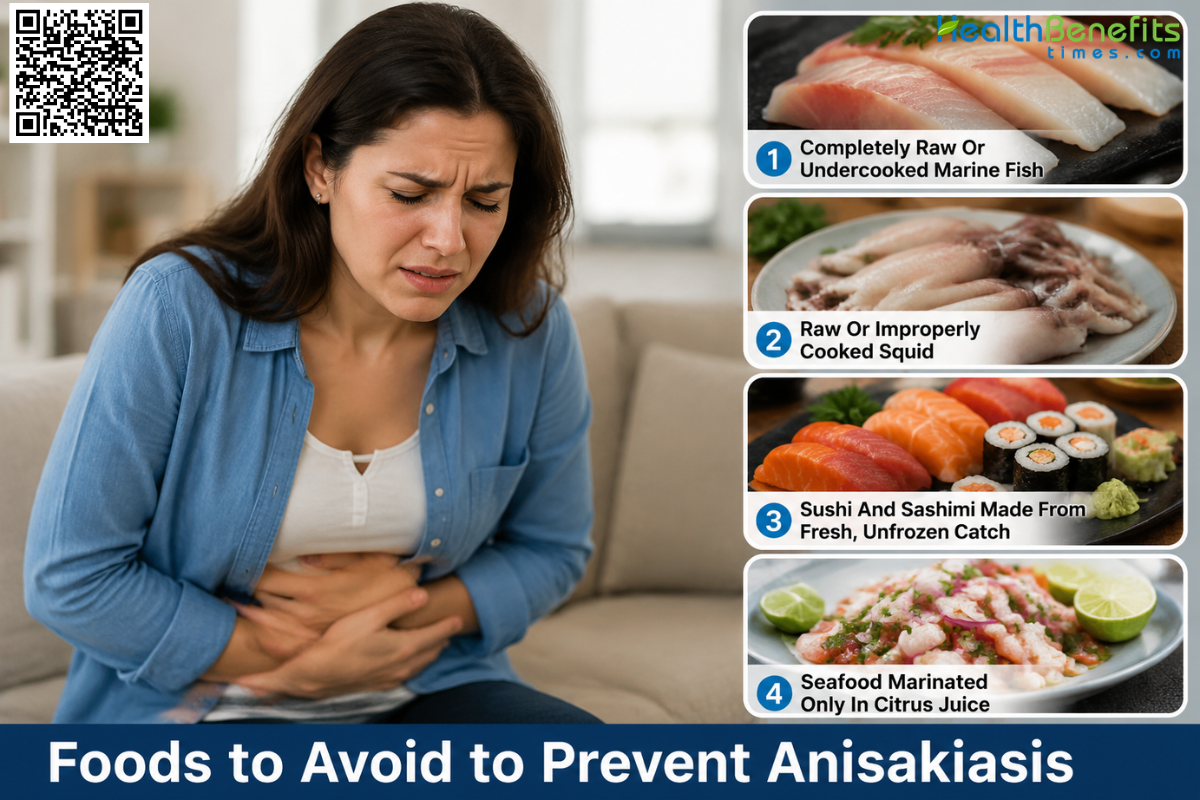
Anisakiasis is a parasitic infection caused by consuming raw or undercooked seafood contaminated with microscopic nematode worms. The condition primarily occurs when humans ingest infected marine fish or squid, allowing the live larvae to attach to or penetrate the lining of the stomach and intestines 1. Once attached, these parasites trigger severe abdominal pain, nausea, vomiting, and mild to severe allergic reactions, which can sometimes mimic acute food poisoning or appendicitis 2. Because the human digestive tract is not the natural home for these marine parasites, the worms cannot reproduce and eventually die inside the body. However, a doctor may still need to physically remove the parasites using a specialized medical tube to relieve immediate, painful symptoms before the body can naturally clear them 3.
Causes of Anisakiasis
- Consuming Raw or Undercooked Seafood: Ingesting raw, undercooked, or inadequately frozen marine fish and squid infected with live Anisakis nematode larvae 1.
- Eating Traditional Raw Fish Dishes: Consuming culinary dishes prepared with raw or nearly raw seafood, such as sushi, sashimi, and ceviche, that have not been subjected to parasite-destroying commercial freezing standards 3.
- Ingesting Lightly Preserved Fish: Eating lightly salted, smoked, or chemically marinated seafood, such as pickled herring, because these mild traditional preservation methods are insufficient to kill the infective microscopic larvae 1.
- Consuming Specific High-Risk Marine Species: Ingesting specific marine hosts that commonly harbor the parasite in their muscle tissues and organs, primarily including salmon, herring, cod, mackerel, and squid 4.
Symptoms of Anisakiasis
- Severe Abdominal Pain: Patients frequently experience sudden, intense stomach pain caused by the parasitic larvae burrowing into the stomach or intestinal walls, which can sometimes mimic the pain of appendicitis 2.
- Nausea and Vomiting: The physical irritation and severe inflammation of the digestive tract commonly trigger acute nausea and vomiting shortly after consuming the contaminated seafood 2.
- Throat Tingling and Coughing: In some instances, individuals feel a distinct tingling or tickling sensation in the back of the throat and may physically cough up the live worms 2.
- Allergic Reactions: The immune system often reacts to the parasite’s proteins, causing allergic symptoms that range from mild skin rashes and hives (urticaria) to severe, life-threatening anaphylaxis 3.
- Digestive Disturbances: When the larvae attach further down in the intestinal tract, the infection can cause prolonged diarrhea, severe abdominal bloating, and the presence of blood and mucus in the stool 2.
- Mild Fever: A low-grade fever frequently develops as the body’s natural inflammatory response attempts to fight off the localized parasitic infection 2.
Foods to Avoid to Prevent Anisakiasis
1. Completely Raw Or Undercooked Marine Fish
How it may help
Anisakiasis occurs exclusively when living parasitic worms are swallowed. Avoiding raw or insufficiently cooked marine fish eliminates the only pathway these parasites use to enter the human digestive system. By ensuring the fish is thoroughly cooked, any microscopic larvae are completely destroyed before they can attach to the stomach lining.
What research says
The Centers for Disease Control and Prevention confirms that anisakiasis is directly caused by consuming infected, raw, or undercooked marine species like salmon, herring, and cod 1. Clinical studies demonstrate that proper heat treatment is the most reliable method for neutralizing these nematode larvae in seafood 3.
How to practice this safely
You should always cook marine fish to a safe internal temperature of at least 145°F (63°C) 5. If you choose to eat raw fish, ensure it was commercially frozen at -4°F (-20°C) for a minimum of seven days to kill hidden parasites 1.
Potential precautions or side effects
Relying on a microwave to cook fish may leave cold spots where parasites survive. You must always use a food thermometer to verify the thickest part reaches the required temperature.
2. Raw Or Improperly Cooked Squid
How it may help
Squid frequently act as intermediate hosts for Anisakis worms. By avoiding raw or undercooked squid, you completely block the transmission of live microscopic larvae into your digestive tract. Thoroughly cooking the squid physically destroys the parasites before they can attach and cause severe stomach pain and inflammation.
What research says
The Centers for Disease Control and Prevention identifies marine squid as a primary carrier of infective Anisakis larvae 1. Clinical research confirms that consuming raw squid, often prepared as sashimi, directly leads to parasitic attachment in the human stomach, triggering acute digestive distress and allergic reactions 3.
How to use it safely
You should always cook squid to a safe internal temperature of at least 145°F (63°C) to neutralize any hidden parasites 5. If you intend to eat raw squid, ensure it has been commercially frozen at -4°F (-20°C) for a minimum of seven days.
Potential precautions or side effects
Quickly flash-searing thick squid tubes often fails to reach the required internal temperature. You must ensure the entire piece of meat turns completely opaque and firm to guarantee safety.
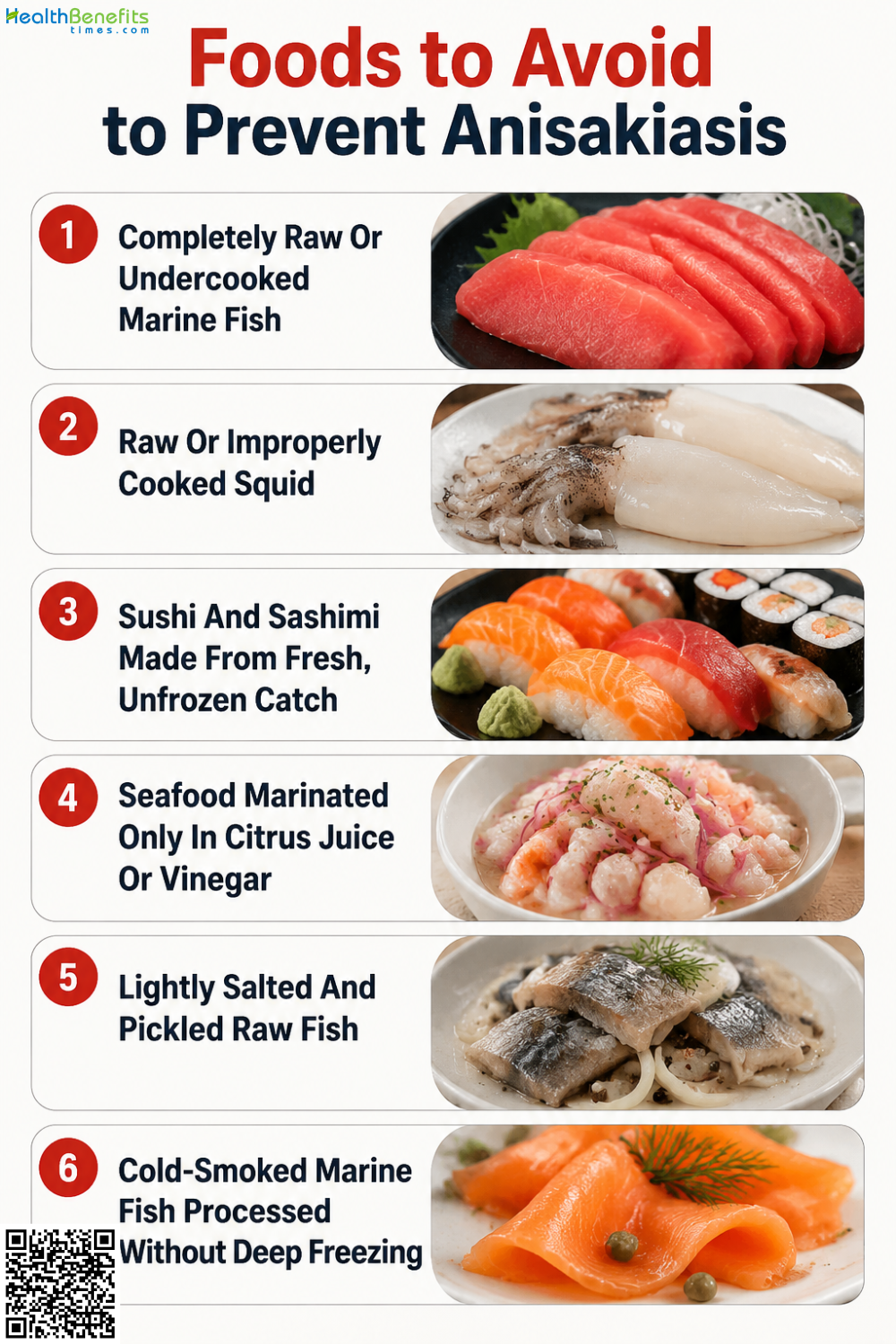
3. Sushi And Sashimi Made From Fresh, Unfrozen Catch
How it may help
Consuming freshly caught, raw fish directly exposes you to live marine parasites. Avoiding unfrozen sushi and sashimi ensures you do not swallow living worms. Proper commercial freezing physically destroys the hidden larvae, completely removing the risk of the parasites attaching to your stomach wall.
What research says
The Centers for Disease Control and Prevention confirms that eating traditional raw dishes like sushi and sashimi made from unfrozen marine fish is a primary cause of anisakiasis 1. Clinical guidelines conclude that deep freezing is the only effective non-cooking method to neutralize these nematode larvae 3.
How to use it safely
You should only consume sushi or sashimi prepared from fish that has been commercially frozen to FDA standards. Ensure the seafood was stored at -4°F (-20°C) for at least seven days or flash-frozen at -31°F (-35°C) for 15 hours 5.
Potential precautions or side effects
Standard home freezers are not cold enough to effectively kill these parasites. You should never attempt to make raw sushi using freshly bought, unfrozen supermarket fish.
4. Seafood Marinated Only In Citrus Juice Or Vinegar
How it may help
Avoiding seafood prepared exclusively in acidic marinades, such as traditional ceviche, stops you from swallowing live marine parasites. Citrus juice and vinegar chemically alter the meat’s texture to make it appear cooked, but they are completely ineffective at killing the hardy Anisakis worms hidden inside.
What research says
The Centers for Disease Control and Prevention warns that marinating raw seafood in citrus juice or vinegar does not destroy infective parasitic larvae 1. Clinical studies confirm that Anisakis worms easily survive acidic environments, making chemical marination useless for preventing parasitic infections 3.
How to use it safely
You can still enjoy marinated seafood dishes if you start with properly treated ingredients. You must ensure the raw fish was commercially frozen at -4°F (-20°C) for at least seven days before applying the citrus marinade to guarantee all parasites are dead 5.
Potential precautions or side effects
Leaving the fish in the acidic marinade for a longer duration will not eventually kill the worms. Only strict temperature control through cooking or commercial freezing guarantees safety.
5. Lightly Salted And Pickled Raw Fish
How it may help
Avoiding lightly salted or pickled raw fish prevents you from ingesting live marine parasites. Traditional preservation methods, such as light salting, do not create a harsh enough environment to kill Anisakis worms. By avoiding these foods, you completely remove the risk of these parasites attaching to your digestive tract.
What research says
The Centers for Disease Control and Prevention confirms that traditional preparation methods, including light salting and pickling, fail to destroy infective parasitic larvae 1. Clinical research concludes that Anisakis worms easily survive for extended periods in the mild brine and acidic solutions commonly used for pickling 3.
How to use it safely
You can safely eat salted or pickled fish only if the raw seafood was subjected to strict commercial freezing before preservation. Ensure the fish was frozen at -4°F (-20°C) for at least seven days to guarantee all hidden parasites are dead 5.
Potential precautions or side effects
Never rely on home pickling or salting to make fresh, unfrozen catch safe to eat. These traditional recipes only flavor the meat but leave live parasites completely intact.
6. Cold-Smoked Marine Fish Processed Without Deep Freezing
How it may help
Cold-smoking operates at low temperatures that merely flavor the fish without cooking it. Avoiding cold-smoked fish that has not been deeply frozen prevents you from ingesting live marine worms. This ensures parasites cannot reach your stomach and cause severe abdominal pain or severe allergic reactions.
What research says
The Centers for Disease Control and Prevention states that smoking processes do not kill Anisakis larvae unless the fish reaches a safe internal cooking temperature 1. Clinical data shows these parasites survive the low heat of cold-smoking, making prior commercial freezing mandatory to prevent infection 3.
How to use it safely
You can safely consume cold-smoked salmon or other fish if the raw seafood was commercially frozen first. Ensure the product was frozen at -4°F (-20°C) for at least seven days before the cold-smoking process began to destroy all hidden parasites 5.
Potential precautions or side effects
Do not confuse hot-smoked fish with cold-smoked fish. Hot-smoking completely cooks the meat and kills parasites, while cold-smoking leaves the flesh raw and potentially infectious.
When to see a Doctor when you struggle from Anisakiasis
If you have recently consumed raw or undercooked marine fish or squid and develop sudden digestive distress, you should seek immediate medical evaluation. Consult a healthcare professional if you experience any of the following specific warning signs.
1. Severe Abdominal Pain
Seek emergency care if you experience sudden, intense stomach pain, which indicates the parasite is actively burrowing into your stomach lining 2.
2. Acute Vomiting
Consult a doctor immediately if you develop severe nausea and continuous vomiting shortly after eating raw marine seafood 2.
3. Severe Allergic Reactions
Go to an emergency room if you develop hives, facial swelling, or breathing difficulties, as the parasite can trigger life-threatening anaphylaxis 3.
4. Coughing Up Worms
Seek medical attention if you feel a tingling throat sensation and physically cough up worms, allowing doctors to correctly identify the infection 2.
5. Bloody Stool and Diarrhea
Visit a healthcare provider if you experience prolonged diarrhea or notice blood and mucus in your stool, signaling severe intestinal inflammation 2.