


Uvula infection, medically known as uvulitis, is the swelling and inflammation of the small, fleshy tissue hanging at the back of the mouth. It is most frequently caused by a bacterial infection, particularly streptococcus, though allergic reactions, acid reflux, inhaling chemicals, and throat injuries can also trigger the condition 1. When the uvula becomes infected, it expands and turns red, leading to symptoms such as a severe sore throat, pain while swallowing, excessive saliva, and a feeling that something is stuck in the throat 1. Mild cases often resolve within one to two days with rest, fluids, and prescribed treatments like antibiotics for bacteria or steroids to reduce swelling 1. However, if the swelling becomes severe and is left untreated, it can block the airway and restrict breathing, requiring immediate emergency medical care to open the airway 1.
Causes of Uvula infection
1. Bacterial Infections
The most frequent cause of uvula inflammation is an infection resulting from streptococcus bacteria, which attacks the soft tissues in the mouth 1.
2. Allergic Reactions
The uvula can swell rapidly when a person is exposed to common allergens such as pollen, dust, pet dander, or specific foods like peanuts and eggs 1.
3. Physical Injuries
Trauma to the back of the throat, which frequently happens during medical procedures like endoscopies or tonsil removal surgeries, often leads to tissue swelling 1.
4. Acid Reflux
Stomach acid flowing upward into the esophagus and throat can burn the sensitive tissues of the uvula, causing chronic irritation and inflammation 1.
5. Chemical Exposure
Swallowing or inhaling harsh, toxic chemicals can cause immediate chemical burns and swelling of the throat structures 1.
6. Smoking
Direct inhalation of tobacco smoke, as well as consistent exposure to secondhand smoke, introduces chemical irritants that can cause the uvula to swell 1.
Symptoms of Uvula infection
1. Fever
An individual with an infected uvula may develop a high body temperature, particularly when the inflammation is caused by a bacterial infection 1.
2. Pain While Swallowing
The swollen tissue at the back of the mouth makes swallowing food, liquids, or even natural saliva highly painful and difficult 1.
3. Throat Fullness
Patients frequently experience a persistent and uncomfortable sensation that a foreign object is stuck in the back of their throat 1.
4. Excessive Saliva
Because swallowing becomes difficult and painful, the mouth may produce or retain an unusual amount of extra saliva 1.
5. Choking and Coughing
As the enlarged uvula swells and hangs lower than normal, it can touch the tongue or throat walls, triggering an involuntary reflex to cough, choke, or gag 1.
6. Loss of Appetite
Due to the severe throat pain and effort required to swallow, individuals often experience a significantly decreased desire to eat or drink 1.
7. Breathing Difficulties
In the most severe cases, an intensely swollen uvula can physically obstruct the airway, restricting normal breathing and requiring immediate emergency medical intervention 1.
Natural Remedies for Uvula infection
1. Rinsing with Warm Saltwater
How It May Help
Rinsing the mouth with warm saltwater significantly helps reduce tissue swelling by gently drawing excess fluid out of the inflamed areas. This straightforward remedy quickly soothes severe throat pain 2 while effectively clearing away thick mucus, irritating airborne allergens, and harmful microbes 3 that may be clinging directly to the infected uvula.
What Research Says
Clinical guidelines support using warm saline gargles as a highly effective, low-cost treatment for managing sore throats and oral inflammation 2. Major medical authorities verify that routine saltwater rinsing can significantly reduce the overall severity of upper respiratory tract infections 4 by enhancing oral hygiene and physically washing away infectious pathogens.
How to Use It Safely
To create a proper saline rinse, dissolve half a teaspoon of plain salt into eight ounces of warm water 2. Take a moderate sip, tilt your head backward, and actively gargle the liquid near your uvula for ten to fifteen seconds before safely spitting it out.
Potential Precautions or Side Effects
Always spit the saltwater out completely, because swallowing high amounts of salt can trigger stomach cramps 2. Never give this rinse to young children who cannot gargle without choking.
2. Drinking Warm Teas and Broths
How It May Help
Drinking warm teas and clear broths provides immediate relief to an inflamed uvula by directly moistening dry oral tissues and thinning thick mucus 4. This continuous hydration prevents the throat from drying out, which significantly decreases the friction and sharp pain experienced during routine swallowing 5.
What Research Says
Health experts confirm that consuming warm liquids is an effective, evidence-based strategy for easing acute throat inflammation 4. Clinical reports demonstrate that warm fluids naturally stimulate saliva production and increase local blood flow, which actively assists the immune system in repairing the infected oral tissues 6.
How to Use It Safely
Select non-caffeinated herbal teas or clear chicken broths to safely soothe your swollen uvula 4. Always check the temperature carefully before taking a sip, ensuring the liquid is comfortably warm, and drink continuously throughout the day to keep your throat completely hydrated 6.
Potential Precautions or Side Effects
Never drink boiling hot fluids, as extreme heat will cause painful tissue burns and instantly increase uvula swelling 6. Strictly avoid caffeinated beverages, which actively dehydrate your throat 4.
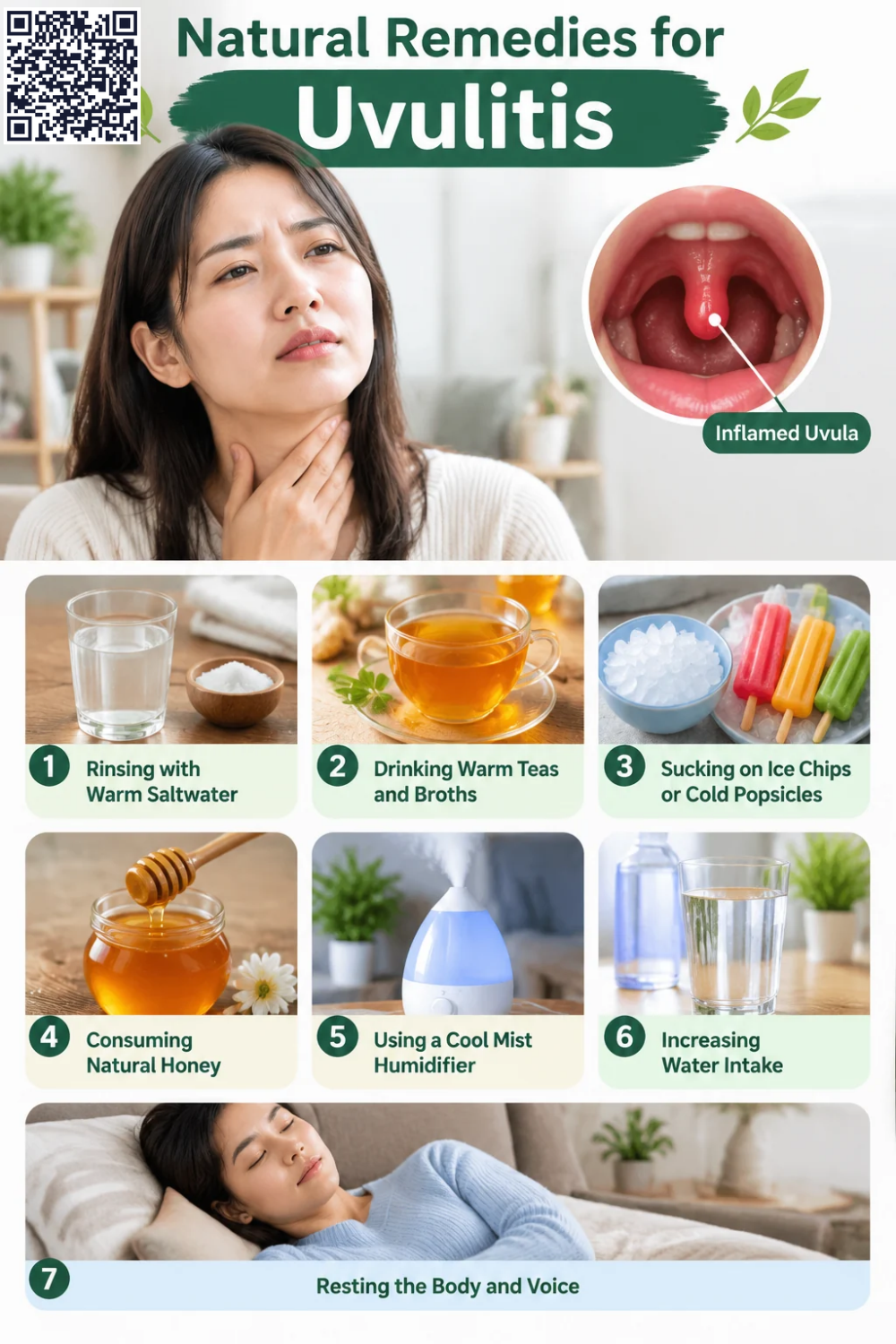
3. Sucking on Ice Chips or Cold Popsicles
How It May Help
Applying cold items like ice chips directly to inflamed oral tissues immediately constricts swollen blood vessels 6. This cooling physical action temporarily numbs the highly sensitive nerve endings located around the uvula 4, which successfully minimizes sharp swallowing pain and rapidly reduces the overall size of the swollen throat structure.
What Research Says
Public health authorities strongly endorse applying cold items as a safe, non-medical intervention to manage acute throat discomfort 4. Clinical observations confirm that localized cooling rapidly lowers tissue temperatures and suppresses the body’s inflammatory response 7, providing patients with immediate, temporary relief from the intense swelling caused by oral infections.
How to Use It Safely
Choose plain ice chips or simple frozen popsicles to gently cool your inflamed throat 4. Allow these frozen items to melt slowly in your mouth rather than aggressively chewing them 6. Use this simple cooling treatment regularly during the day to keep the swollen tissues numb.
Potential Precautions or Side Effects
Never give solid ice chips to young children because they pose a severe choking risk 6. Strictly avoid acidic citrus popsicles, which will painfully burn your irritated uvula 4.
4. Consuming Natural Honey
How It May Help
Natural honey acts as a thick, soothing barrier that directly coats the inflamed tissues of an infected uvula. This protective coating rapidly decreases friction and severe swallowing pain 8, while its potent natural antibacterial properties actively destroy the harmful microbes 9 that cause swelling, promoting faster healing of the throat.
What Research Says
Clinical investigations verify that natural honey is a highly effective antimicrobial agent that significantly suppresses bacterial growth 9 in oral and throat infections. Medical researchers confirm that honey reduces the severity of acute upper respiratory symptoms 8 just as effectively as traditional cough suppressants, reducing the constant coughing that further irritates the uvula.
How to Use It Safely
Mix one tablespoon of pure, raw honey into a warm, caffeine-free liquid 4 to safely soothe your swollen uvula. Swallow this warm mixture very slowly to ensure it fully coats your throat 8, and repeat this simple process two to three times daily for the best relief.
Potential Precautions or Side Effects
Never give honey to infants under twelve months because it carries a severe risk of infant botulism 10. Diabetics must monitor their blood sugar closely 11 when consuming it.
5. Using a Cool Mist Humidifier
How It May Help
Operating a cool mist humidifier actively adds consistent moisture to indoor air, which prevents the infected uvula from drying out. This continuous ambient moisture significantly soothes inflamed oral tissues 4 by reducing the friction caused by swallowing. Furthermore, the inhaled water vapor effectively thins out thick, sticky mucus 2 that naturally accumulates around the swollen throat.
What Research Says
Clinical guidelines endorse utilizing environmental humidification as a primary supportive treatment for acute upper respiratory conditions 4. Medical researchers verify that breathing moist air naturally preserves the protective barriers of the throat 12, which accelerates tissue repair and rapidly decreases the severe throat pain associated with a swollen uvula.
How to Use It Safely
Place the humidifier close to your bed and fill it exclusively with distilled water 13 to prevent hard mineral buildup. You must strictly wash the machine’s water tank daily 14 to ensure you are inhaling clean, safe vapor continuously throughout the night.
Potential Precautions or Side Effects
Never use a dirty humidifier, because stagnant water rapidly breeds harmful mold and bacteria 14. Inhaling these contaminated microbes triggers severe lung infections 13 and worsens uvula swelling.
6. Increasing Water Intake
How It May Help
Consistently increasing daily water intake keeps the throat tissues well-lubricated, preventing the infected uvula from drying out and cracking. Proper systemic hydration actively thins out thick oral mucus 6 and flushes irritating debris from the mouth. This continuous moisture significantly reduces painful friction during normal swallowing 4 and directly soothes the swollen structures.
What Research Says
Medical authorities emphasize that aggressive fluid replacement is a primary requirement for treating acute upper respiratory infections 4. Clinical evidence confirms that optimal internal hydration maintains the protective barriers of the throat’s mucosal lining 3, allowing the body’s natural immune system to clear the underlying bacterial infection much more efficiently while reducing severe local inflammation.
How to Use It Safely
Keep a glass of clean, room-temperature water nearby and take small, frequent sips throughout the entire day rather than gulping large volumes at once 15. You can also consume clear broths or diluted, non-acidic juices to maintain your essential fluid requirements safely 4 and comfortably without triggering gag reflexes.
Potential Precautions or Side Effects
Individuals with severe kidney disease or congestive heart failure must consult their doctor before drastically increasing fluids 16, because their damaged organs cannot safely process excess water 17 and may experience dangerous bodily swelling.
7. Resting the Body and Voice
How It May Help
Getting adequate physical rest allows the human body to effectively redirect its energy toward fighting the underlying bacterial infection. Simultaneously, resting the vocal cords prevents the physical friction that naturally occurs during normal speaking 6. This vital vocal silence stops further irritation of inflamed oral tissues, directly allowing the enlarged uvula to shrink and heal faster 4.
What Research Says
Medical research strongly emphasizes that sufficient sleep remains a fundamental biological requirement for maintaining a highly functional immune system during acute illnesses 18. Furthermore, clinical treatment guidelines recommend complete voice rest as a primary intervention for throat inflammation, confirming that minimizing structural throat movement rapidly decreases local tissue swelling and shortens overall recovery time 6.
How to Use It Safely
Consistently sleep eight to ten hours nightly to support complete immune recovery 19. When awake, communicate using written notes instead of talking. Strictly avoid whispering entirely, because this unnatural vocal action places severe mechanical strain on throat tissues and actively worsens existing uvula inflammation 20.
Potential Precautions or Side Effects
Prolonged bed rest can cause muscle stiffness or dangerous blood clots in vulnerable individuals 21. Always maintain light, basic daily mobility around your home while strictly resting your throat 22.
Foods to Avoid When You Suffer from Uvula Infection
1. Acidic Foods
Acidic items like oranges and tomatoes directly burn inflamed oral tissues, which actively worsens severe throat pain and delays tissue healing 23.

2. Spicy Foods
Spices and hot peppers contain compounds that severely irritate infected mucous membranes, instantly increasing localized swelling and burning sensations across the uvula 23.
3. Hard and Crunchy Foods
Sharp foods like dry crackers physically scratch the swollen uvula during swallowing, causing direct mechanical injury to the already compromised throat tissue 24.
4. Extremely Hot Foods and Drinks
Consuming piping-hot meals causes painful thermal burns on the sensitive, infected uvula, triggering immediate and dangerous increases in structural tissue swelling 6.
5. Alcoholic Beverages
Alcohol actively dehydrates the oral cavity and chemically burns the throat lining, leaving the swollen uvula dry, irritated, and highly vulnerable 25.
When to See a Doctor for Uvula Infection
1. Difficulty Breathing
Seek immediate emergency care if the swollen uvula restricts airflow or causes shortness of breath, as this indicates a life-threatening airway obstruction 1.
2. Inability to Swallow Saliva
Go to the hospital if swelling becomes so severe that you cannot swallow your own saliva, leading to uncontrolled drooling 4.
3. Muffled Voice
Contact a doctor rapidly if your voice suddenly sounds thick, muffled, or like you have a hot potato in your mouth 26.
4. High Fever
Consult a healthcare provider if your throat pain is accompanied by a persistent high fever, which strongly suggests a spreading bacterial infection requiring antibiotics 4.
5. Symptoms Persisting Over Two Days
Schedule a medical evaluation if severe throat swelling and pain do not improve after 48 hours of basic home care and rest 1.