

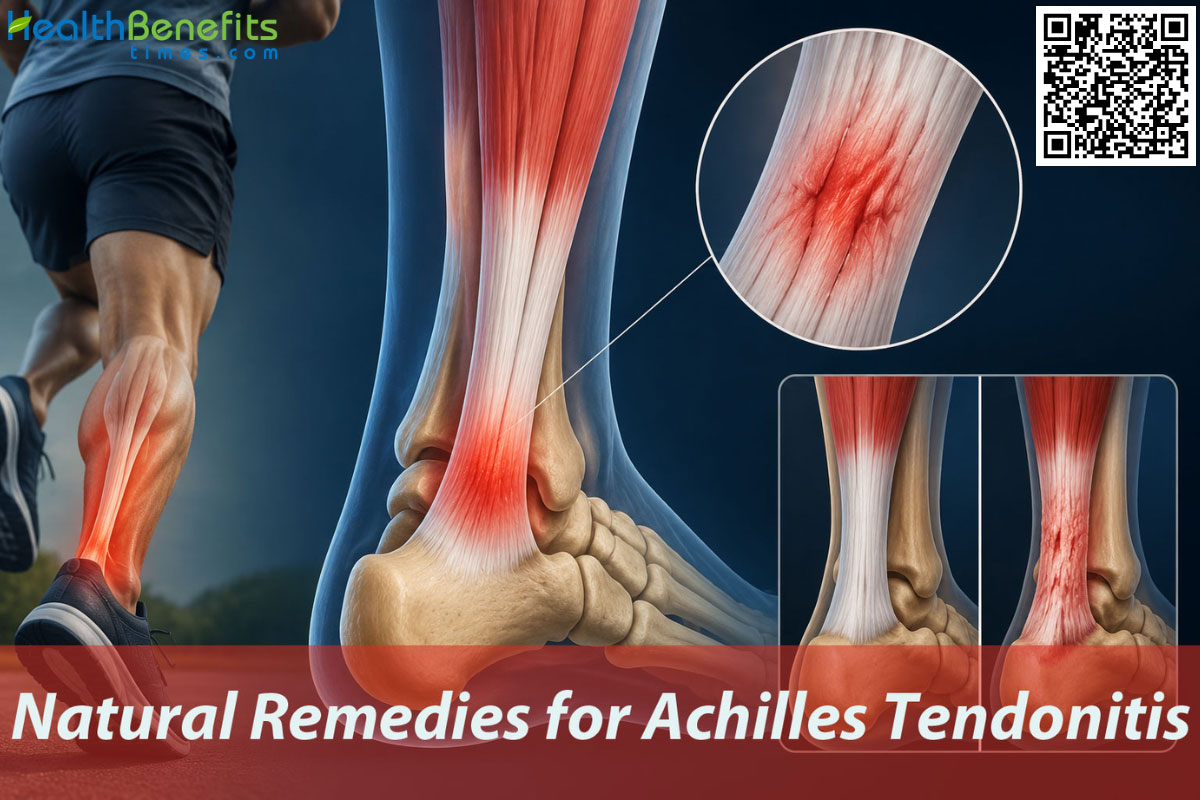
Achilles tendonitis is a common musculoskeletal condition characterized by inflammation and irritation of the Achilles tendon, the thick, fibrous band of tissue connecting the calf muscles to the heel bone. This condition typically arises from repetitive stress or overuse rather than a single acute injury. Individuals with Achilles tendonitis commonly experience localized pain, stiffness, or tenderness at the back of the ankle, which often worsens following physical activity or after periods of rest, such as in the morning. While frequently observed in athletes particularly runners due to sudden increases in training intensity, it can affect any individual who places consistent strain on this tendon. Proper management is essential to prevent the progression from inflammation to more severe structural damage, such as tendon degeneration or rupture.1, 2
Causes of Achilles Tendonitis
- Sudden increases in physical activity: Rapidly raising the intensity, distance, or frequency of workouts, particularly in sports that involve running or jumping.
- Repetitive overuse: Continuous strain and repeated impact on the tendon without giving it enough time to rest and recover.
- Improper footwear: Wearing poorly fitted, worn-out, or stiff shoes that lack proper support or cushioning.
- Foot and leg mechanics: Structural issues such as flat feet, high arches, excessive inward rolling of the foot while walking (overpronation), or having legs of slightly different lengths.
- Calf muscle tightness and weakness: Lack of flexibility or strength in the calf muscles, which places extra stress and pulling force on the tendon.
- Age-related changes: Natural aging, which reduces blood supply to the tendon, makes it less flexible, and gradually weakens its fibers.
- Bone spurs: Extra bone growth on the back of the heel that physically rubs against and irritates the tendon.
- Poor training surfaces: Running or exercising on hard, uneven, slippery, or slanted surfaces, or suddenly switching from soft to hard terrain.
- Inadequate warm-up: Skipping proper stretching and warm-up routines before exercising, forcing a cold, stiff tendon to absorb heavy shock.
- Systemic health conditions: Underlying medical issues that can affect overall tendon health, including obesity, diabetes, high blood pressure, and high cholesterol.
- Certain medications: Side effects from specific prescription drugs known to weaken tendon tissue, notably fluoroquinolone antibiotics, statins, and corticosteroids.
Symptoms of Achilles Tendonitis
- Gradual onset of pain along the back of the lower leg or near the heel, particularly during or immediately after physical activity such as walking, running, or jumping.
- Noticeable stiffness, soreness, or a dull ache in the tendon in the morning or after sitting for prolonged periods, which typically improves with light movement or stretching.
- Visible swelling, thickening, or puffiness around the tendon that may worsen throughout the day with continued use or weight-bearing activities.
- Tenderness or extreme sensitivity when touching, pinching, or pressing the back of the ankle and heel.
- The development of a firm, palpable lump or nodule along the back of the tendon.
- Reduced flexibility and a noticeably limited range of motion in the ankle, especially when trying to flex the foot upward.
- Weakness in the calf or lower leg, making it difficult or painful to stand on the toes, push off the foot, or climb stairs.
- A noticeable decline in athletic performance, such as feeling sluggish or experiencing reduced running speed and jumping ability.
- Pain that migrates or shifts slightly as the ankle moves through its range of motion.
Natural Remedies for Achilles Tendonitis
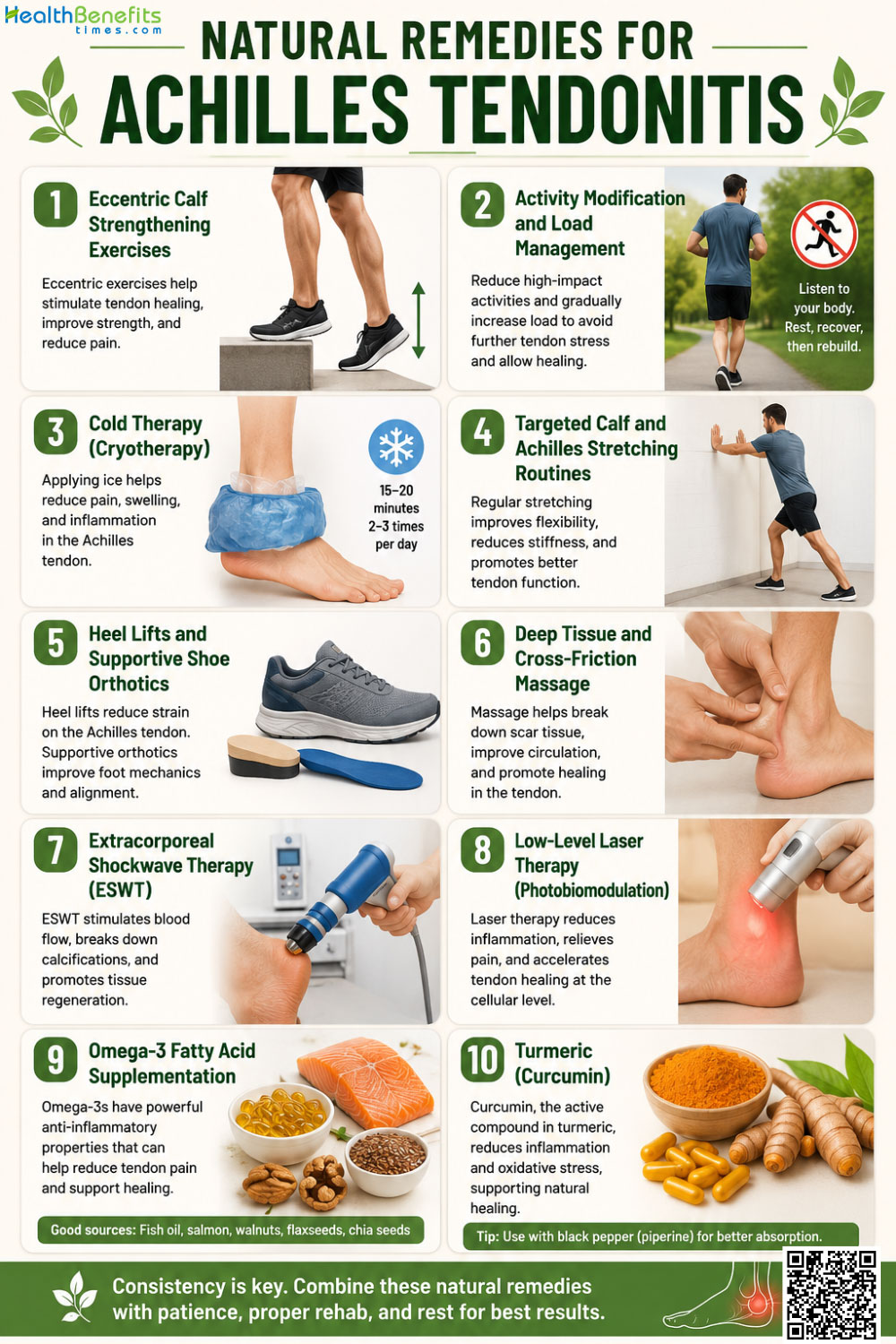
1. Eccentric Calf Strengthening Exercises
How it may help
Eccentric strengthening lengthens the calf muscle under tension, which stimulates tendon repair. This mechanical loading reduces painful blood vessel growth within damaged tissue (Jayaseelan et al., 2016) 11. It reorganizes collagen fibers, restores strength, and improves elasticity to decrease daily pain (Demir Benli et al., 2022) 12.
What research says
Clinical evidence demonstrates that eccentric programs effectively relieve pain and restore function in Achilles tendinopathy. These exercises promote structural improvements like increased tendon thickness and long-term stiffness (Jayaseelan et al., 2019) 13. Furthermore, lower-volume, pain-guided routines can yield similar positive outcomes to traditional high-repetition protocols (Stevens & Tan, 2014) 14.
How to use it safely
To perform safely, rise onto the balls of your feet using both legs, then slowly lower your heel below the step level using only the injured leg (Trybulski, n.d.) 15. Maintain control throughout the motion and stop immediately if you experience sharp, severe pain.
Potential precautions or side effects
Mild soreness is expected initially. However, executing movements too aggressively can strain the calf muscle or temporarily worsen tendon microcirculation and inflammation (Knobloch, 2006) 16.
2. Activity Modification and Load Management
How it may help
Activity modification temporarily replaces high-impact movements, like running or jumping, with low-impact alternatives to reduce physical stress on the damaged tissue 17. This strategic load management prevents further microscopic tearing and allows collagen fibers to properly heal without causing the tendon to weaken from total rest 18.
What research says
Clinical evidence indicates that continuing modified, pain-monitored activities is significantly more effective for tendon recovery than complete immobilization 19. Studies confirm that optimal tissue loading stimulates cellular repair mechanisms and restores structural integrity much faster than passive rest alone 20.
How to use it safely
You should swap high-impact sports for low-stress exercises like swimming or stationary cycling to maintain your fitness 21. Use a pain scale to guide your activity, ensuring any discomfort during movement remains mild and completely resolves within twenty-four hours 22.
Potential precautions or side effects
Avoid complete, prolonged rest, because it causes muscle shrinking and weakens the tendon 23. Returning to intense activities too rapidly may trigger severe inflammation and re-injury 24.
3. Cold Therapy (Cryotherapy)
How it may help
Applying cold therapy constricts local blood vessels, which decreases blood flow and may address the abnormal blood vessel growth often seen in damaged tendon tissue 25. This sudden temperature drop numbs localized nerve endings to quickly suppress severe, acute pain signals originating from the heel 26.
What research says
Clinical evidence shows that ice application effectively manages acute pain flare-ups but does not significantly alter the underlying cellular healing process or reverse tendon degeneration 27. Medical reviews confirm that cryotherapy functions primarily as an immediate, short-term analgesic rather than a standalone cure for chronic tendon injuries 5.
How to use it safely
You should apply a cold compress to the injured heel for fifteen to twenty minutes, especially after engaging in stressful physical activities 28. Always wrap the ice source in a thin, damp cloth to protect your tissue, allowing at least forty-five minutes between each cooling session 29.
Potential precautions or side effects
Direct ice contact can trigger frostbite, superficial skin burns, or temporary nerve numbing 30. Prolonged cooling also hardens the calf muscle, making it temporarily less elastic and increasingly stiff 31.
4. Targeted Calf and Achilles Stretching Routines
How it may help
Targeted stretching elongates the calf muscle fibers, which reduces chronic tension at the heel bone connection 32. This improved flexibility allows for better ankle joint movement and stops shortened muscles from continuously pulling against the inflamed tendon tissue 33.
What research says
Clinical studies demonstrate that regular calf stretching significantly improves ankle flexibility, directly correcting the restricted movement that frequently triggers tendon injuries 34. While stretching alone cannot repair microscopic tissue damage, evidence confirms it successfully reduces symptoms when paired with active muscle-loading programs 35.
How to use it safely
You should execute slow, static stretches by keeping your heel flat and leaning forward toward a wall 36. Hold both straight-knee and bent-knee positions for thirty seconds without bouncing, making sure you feel a gentle lengthening sensation rather than sharp pain 37.
Potential precautions or side effects
Aggressive, bouncing movements can overstretch fragile fibers and provoke sudden muscle spasms 38. Pushing past a comfortable range will increase tendon compression, worsen inflammation, and delay tissue healing 39.
5. Heel Lifts and Supportive Shoe Orthotics
How it may help
Heel lifts artificially elevate the foot to decrease mechanical tension and reduce immediate pulling forces on the Achilles tendon. Supportive orthotics also correct abnormal foot posture, which helps distribute physical stress away from the injured area and prevents excessive tissue strain during regular walking 40.
What research says
Clinical evidence demonstrates that heel wedges provide immediate short-term pain relief and improve walking speed for acute injuries 41. However, recent biomechanical studies confirm that these orthotics do not significantly alter hindfoot mechanics or reduce overall tendon load during long-term movement compared to active rehabilitation 42.
How to use it safely
You should insert identically sized heel wedges into both shoes simultaneously to maintain an even leg length and avoid pelvic misalignment 43. Gradually reduce the thickness of these lifts as your daily pain subsides so your calf muscles do not adapt to a shortened position 44.
Potential precautions or side effects
Prolonged use of elevated heel supports can cause permanent calf muscle stiffness and abnormal tendon shortening 45. Moreover, wearing an insert in only one shoe risks secondary pelvic misalignment.
6. Deep Tissue and Cross-Friction Massage
How it may help
Deep tissue and cross-friction massage apply firm, localized pressure directly across the injured tendon fibers 46. These mechanical techniques successfully break down stiff scar tissue and abnormal fibrous adhesions that form during an injury 47. The targeted pressure also increases local blood flow to promote faster cellular healing 48.
What research says
Clinical evidence indicates that combining deep transverse friction massage with conventional physical therapy significantly reduces pain and restores function in damaged tendons 49. However, systematic reviews note that while it reliably enhances overall recovery when paired with exercise, its effectiveness as an entirely isolated treatment remains clinically unproven 50.
How to use it safely
You should apply moderate pressure using your fingers, rubbing horizontally across the Achilles tendon rather than vertically along its length 51. Perform this gentle manual technique for several minutes, but ensure the physical pressure remains tolerable and never triggers sharp, agonizing pain 29.
Potential precautions or side effects
Aggressive massage over acutely inflamed tissue can worsen localized swelling and intensify overall pain 25. You must strictly avoid deep friction techniques if the tendon feels hot or structurally ruptured 52.
7. Extracorporeal Shockwave Therapy (ESWT)
How it may help
Extracorporeal Shockwave Therapy delivers acoustic pressure waves to the damaged tendon tissue to stimulate healing through a process called mechanotransduction 53. Instead of disintegrating tissue, these mechanical waves increase local blood vessel formation, boost cellular collagen production, and block pain signals from traveling to the brain 54.
What research says
Clinical studies show moderate evidence that shockwave therapy effectively reduces pain and improves function for mid-portion Achilles tendon injuries when combined with physical exercise 55. However, recent research indicates the therapy is significantly less effective for insertional injuries near the heel bone and remains inconclusive as an isolated treatment 56.
How to use it safely
You should undergo three to five treatment sessions spaced one week apart, administered by a trained healthcare professional 57. The therapist must apply a conductive medium and initiate low-energy acoustic pulses directed at your most tender spot, gradually increasing the intensity based on your physical tolerance 6.
Potential precautions or side effects
You may experience temporary bruising or mild numbness after the procedure 58. Furthermore, using excessively high energy levels can cause unnecessary tissue damage instead of promoting cellular repair 59.
8. Low-Level Laser Therapy (Photobiomodulation)
How it may help
Low-level laser therapy delivers specific wavelengths of red or near-infrared light directly into the damaged tendon tissue to stimulate cellular energy production 60. This light-based process, called photobiomodulation, accelerates tissue repair, reduces localized swelling, and suppresses pain signals without generating harmful heat 61.
What research says
Clinical evidence indicates that photobiomodulation significantly reduces pain and accelerates recovery in Achilles injuries when added to standard exercise programs 62. Systematic reviews confirm that targeted light wavelengths successfully decrease tendon inflammation and improve overall structural healing faster than physical therapy alone 63.
How to use it safely
You should receive this treatment from a licensed physical therapist who can accurately calibrate the laser’s wavelength and energy output 64. Attend multiple consistent sessions over several weeks, as the cellular healing benefits accumulate gradually rather than providing immediate relief 65.
Potential precautions or side effects
This non-invasive therapy rarely causes side effects, but you must wear protective eyewear to prevent retinal damage 66. Avoid using lasers directly over active cancerous tumors 67.
9. Omega-3 Fatty Acid Supplementation
How it may help
Omega-3 fatty acids regulate the body’s natural inflammatory response by reducing the production of pain-causing chemical signals within damaged tissue 68. This biological process lowers localized swelling, protects healthy cells from further oxidative stress, and encourages the body to synthesize new collagen fibers to repair microscopic tears 69.
What research says
Recent clinical studies confirm that consistent omega-3 supplementation significantly improves structural tendon healing and reduces overall pain when paired with active exercise rehabilitation 70. Furthermore, genetic research suggests that individuals maintaining naturally higher systemic levels of these fatty acids experience a significantly lower risk of developing chronic Achilles injuries 71.
How to use it safely
You should take a daily oral omega-3 supplement containing active fish oil derivatives alongside a full meal to maximize bodily absorption 72. Maintain this dosage over several consecutive weeks, because the necessary cellular anti-inflammatory benefits take considerable time to accumulate deep within your tendon tissue 73.
Potential precautions or side effects
High doses may cause mild gastrointestinal upset, heartburn, or a fishy aftertaste 74. You must consult your doctor before using these supplements if you take prescription blood-thinning medications 75.
10. Turmeric (Curcumin)
How it may help
Curcumin, the active compound in turmeric, acts as a powerful anti-inflammatory agent by blocking specific enzymes that cause swelling within damaged tissues 76. This biological mechanism significantly reduces oxidative stress around the heel and suppresses the cellular signals responsible for chronic tendon pain 77.
What research says
Clinical evidence demonstrates that curcumin supplementation significantly reduces tendon inflammation and accelerates cellular repair processes 78. Medical reviews confirm that these compounds enhance collagen organization and decrease localized pain with an efficacy comparable to traditional non-steroidal anti-inflammatory medications 79.
How to use it safely
You should consume turmeric supplements formulated with black pepper extract, because this addition dramatically increases the body’s ability to absorb the active curcumin 80. Take these oral capsules alongside a meal containing dietary fats to further enhance tissue delivery and maximize overall therapeutic benefits 81.
Potential precautions or side effects
High doses occasionally trigger mild stomach upset or diarrhea 82. You must avoid concentrated supplements if you take prescription blood thinners to prevent severe bleeding complications 83.
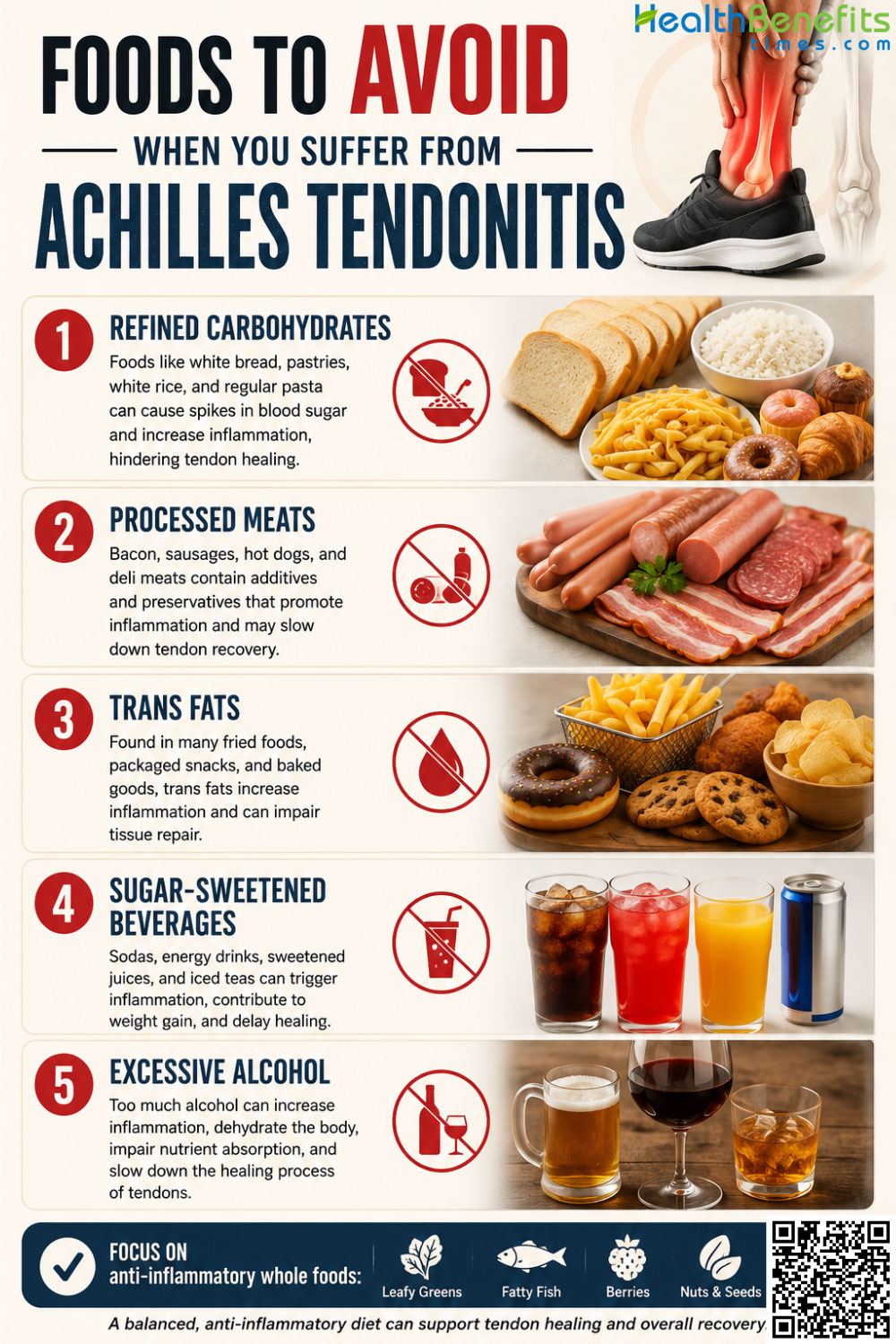
Foods to Avoid When You Suffer from Achilles Tendonitis
1. Refined Carbohydrates
White breads and pastries spike blood glucose, creating advanced glycation end products that weaken tendon collagen and worsen systemic inflammation 84 85.
2. Processed Meats
Sausages and deli meats contain high levels of saturated fats and chemical preservatives that trigger inflammatory markers, directly delaying tissue repair 86 87.
3. Trans Fats
Artificial trans fats found in fried foods drastically increase pro-inflammatory cytokines, disrupting cellular healing processes and keeping tendons chronically inflamed 88 89.
4. Sugar-Sweetened Beverages
Sodas and energy drinks cause rapid insulin spikes that elevate C-reactive protein levels, increasing oxidative stress around the injured tendon 90 91.
5. Excessive Alcohol
Heavy alcohol consumption dehydrates soft tissues and impairs protein synthesis, severely restricting your body’s natural ability to manufacture new collagen fibers 92 93.
When To see Doctor when you have Achilles Tendonitis
1. Inability to Bear Weight
Seek immediate medical attention if severe heel pain completely prevents you from walking or standing on the affected leg, as this indicates critical tissue failure 94 95.
2. Sudden Popping Sensation
Hearing or feeling a distinct “pop” or snap at the back of your ankle often signals an acute, complete Achilles tendon rupture requiring urgent evaluation 96 97.
3. Visible Deformity or Gap
A visible indentation, unusual lump, or palpable gap along the back of the ankle suggests structural tearing that necessitates professional imaging and diagnostic intervention 98 99.
4. Unrelenting Chronic Symptoms
Consult a specialist if your pain and stiffness persist or progressively worsen after several weeks of dedicated rest, ice, and conservative home care 100 101.
5. Signs of Severe Inflammation
Unexplained excessive heat, spreading redness, or severe swelling around the calf and heel requires prompt assessment to rule out deep infections or vascular complications 102 103.