


Tay-Sachs disease is a rare, inherited neurodegenerative disorder characterized by the progressive destruction of nerve cells in the brain and spinal cord. It is clinically classified as a lysosomal storage disorder caused by mutations in the HEXA gene 1. This genetic mutation leads to a deficiency of the enzyme beta-hexosaminidase A, which is essential for breaking down a specific fatty substance called GM2 ganglioside 1. Without sufficient levels of this enzyme, lipids accumulate to toxic levels within the central nervous system, causing severe and irreversible cellular damage 2. The condition manifests in three primary clinical forms—infantile, juvenile, and adult-onset—with the infantile form being the most common and ultimately fatal 1. Currently, there is no cure for the condition, and clinical management focuses exclusively on symptom relief, nutritional support, and palliative care 3.
Causes of Tay-Sachs Disease
1. HEXA Gene Mutation
The primary underlying cause of the condition is an inherited genetic flaw, or mutation, in the HEXA gene 4. This specific gene is responsible for providing the body with instructions to create a crucial protein needed for normal nervous system function.
2. Enzyme Deficiency
Because of the altered HEXA gene, the body fails to produce adequate amounts of an essential enzyme known as beta-hexosaminidase A, or Hex-A 5. This enzyme normally acts as a cellular recycling center to break down specific waste materials.
3. Toxic Cellular Accumulation
Without sufficient Hex-A enzyme, a fatty substance called GM2 ganglioside cannot be properly broken down. As a result, this fat accumulates to toxic, dangerous levels inside the nerve cells of the brain and spinal cord, causing progressive and irreversible damage to the nervous system 1.
4. Autosomal Recessive Inheritance
The disease is passed down through families in what is called an autosomal recessive pattern. This means a child must inherit two defective copies of the HEXA gene—one from the mother and one from the father—to develop the condition 6. People who inherit only one defective gene are healthy carriers; they do not show symptoms but have a 25 percent chance of having an affected child if their partner is also a carrier 1.
Symptoms of Tay-Sachs Disease
- Loss of Motor Skills: Infants typically appear normal until three to six months of age, after which their physical development slows, and they lose previously acquired abilities such as rolling over, sitting, or crawling 6.
- Exaggerated Startle Response: An early and highly characteristic behavioral sign is an abnormally severe startle reaction to sudden or loud noises 5.
- “Cherry-Red” Eye Spot: A hallmark physical sign of the condition is the appearance of a distinct “cherry-red” spot in the back of the eye, which a physician can identify during a standard retinal examination 1.
- Progressive Muscle Weakness: As nerve cell damage continues, patients develop severe muscle weakness and low muscle tone, which eventually progresses to complete physical paralysis 1.
- Sensory Loss: The continuous destruction of the central nervous system causes gradual but profound sensory decline, ultimately resulting in vision loss, blindness, and deafness 6.
- Seizures: Disruptions in normal brain activity often trigger frequent and severe neurological seizures, which usually begin by the time an affected child is one to two years old 5.
- Late-Onset Symptoms: In the rarer juvenile or adult forms of the disease, symptoms progress more slowly and typically include clumsiness, slurred speech, muscle cramps, loss of physical coordination, and sometimes the development of psychiatric disorders 6.
Natural Remedies for Tay-Sachs Disease
1. Nutritional and Hydration Therapy
How it may help
As Tay-Sachs progresses, patients lose the ability to swallow safely. Specialized nutritional and hydration therapy ensures that the child receives essential calories and fluids 5. This supportive care helps prevent malnutrition, reduces the risk of food entering the lungs, and maintains physical comfort during the advanced stages of the disease 1.
What research says
Clinical guidelines state there are currently no treatments that slow or reverse Tay-Sachs disease 6. However, medical literature confirms that proactive nutritional management, including the use of specialized feeding devices, is a critical component of palliative care to prevent severe weight loss and fatal respiratory infections like aspiration pneumonia 1.
How to use it safely
You should work closely with a medical team to regularly evaluate the patient’s swallowing abilities. To ensure safety, healthcare providers may recommend thickened liquids, puréed foods, or the surgical placement of a feeding tube directly into the stomach to bypass the throat entirely 5.
Potential precautions or side effects
Oral feeding carries a high risk of choking as muscle control declines. If using a feeding tube, monitor the insertion site daily for signs of infection or skin irritation 1.
2. Chest Physiotherapy and Airway Clearance Techniques
How it may help
Chest physiotherapy helps remove mucus from the lungs, which becomes difficult as muscle weakness progresses in Tay-Sachs disease. These airway clearance techniques improve breathing capacity and reduce the accumulation of lung secretions, helping to prevent severe respiratory infections like pneumonia, which are a primary complication 5.
What research says
Clinical guidelines emphasize that while no therapy alters the progression of the disease, proactive respiratory management is essential 1. Medical consensus confirms that regular chest physiotherapy effectively clears airway secretions, thereby delaying respiratory failure and improving physical comfort during the advanced stages of the disorder 1.
How to use it safely
You should consult a respiratory therapist to learn proper techniques. Safely perform gentle chest percussion, where you rhythmically clap on the patient’s chest or back, and use postural drainage positions to allow gravity to help move mucus out of the lungs 5.
Potential precautions or side effects
Avoid performing chest physical therapy immediately after feeding to prevent vomiting. Apply gentle force to prevent bruising or fractures, as bedridden patients often develop reduced bone density 1.
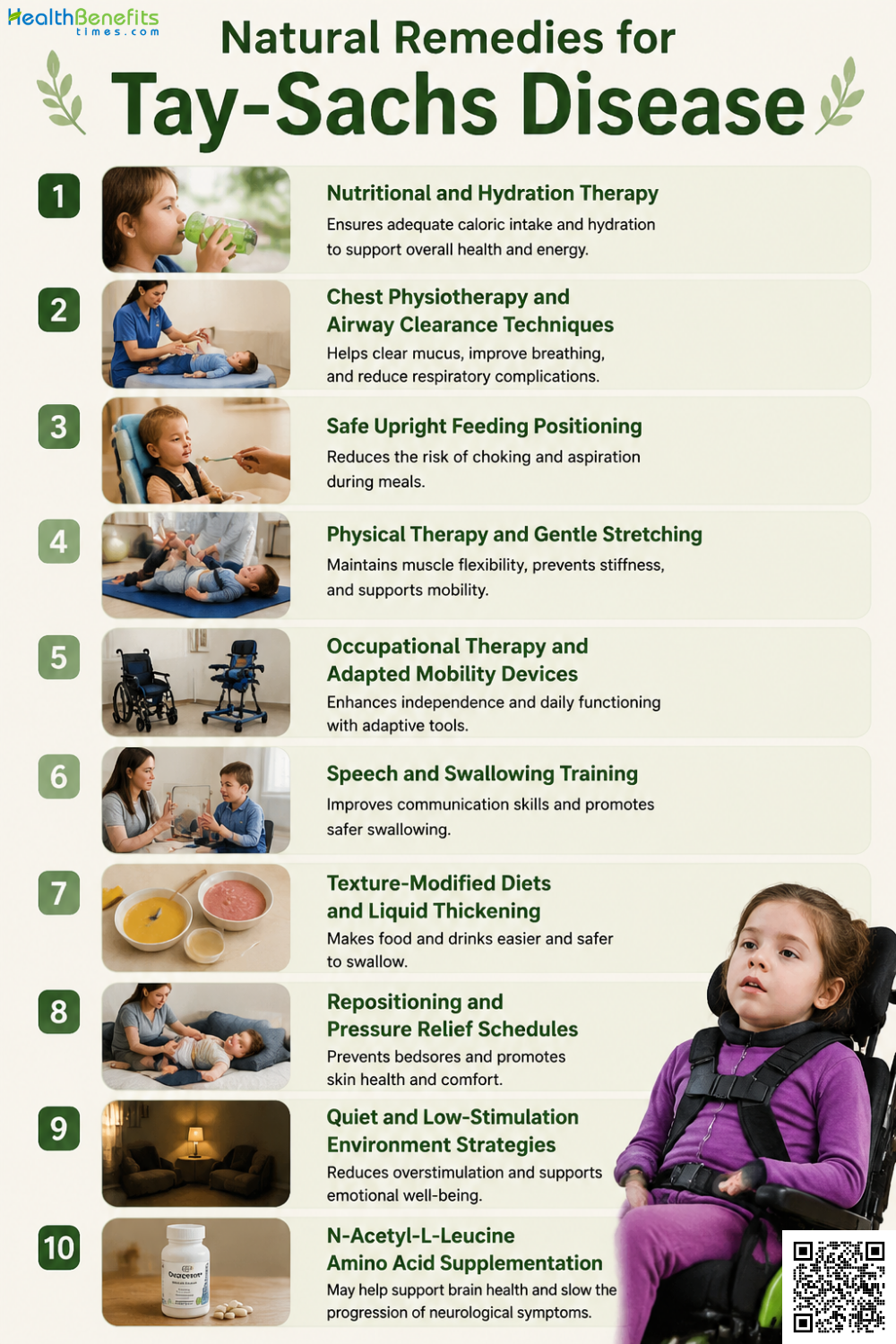
3. Safe Upright Feeding Positioning
How it may help
Maintaining a secure, upright posture during meals helps prevent food and liquids from entering the airway, a common issue as swallowing muscles weaken in Tay-Sachs disease 5. This physical positioning utilizes gravity to direct food safely into the stomach, significantly reducing the risk of choking and lung infections 6.
What research says
Clinical care guidelines confirm that managing swallowing difficulties is essential for patients with progressive neurological disorders 7. Medical literature demonstrates that implementing postural adjustments, such as upright feeding, effectively decreases the incidence of aspiration pneumonia, which is a leading cause of severe complications in Tay-Sachs patients 5.
How to use it safely
You should keep the patient seated at a 90-degree angle during all meals and for at least 30 minutes afterward 7. Use supportive seating devices or specialized cushions to maintain proper head and neck alignment, ensuring the airway remains clear while eating 5.
Potential precautions or side effects
Avoid feeding the patient if they are excessively sleepy or slouching, as this severely increases choking risks 6. Discontinue oral feeding entirely if severe coughing occurs during meals.
4. Physical Therapy and Gentle Stretching
How it may help
Physical therapy and gentle stretching help maintain joint flexibility and reduce muscle stiffness in patients with Tay-Sachs disease 5. As motor function declines, these continuous range-of-motion exercises preserve movement in the arms and legs, delay permanent joint tightening, and make daily handling and positioning far more comfortable 1.
What research says
Clinical literature confirms that while physical therapy cannot halt underlying nerve degeneration, it remains an essential supportive care standard 6. Medical evidence shows that routine passive exercises effectively prevent painful joint deformities, maintain muscle length, and optimize physical comfort throughout the course of progressive neurodegenerative disorders 1.
How to use it safely
You should consult a licensed physical therapist to design a customized exercise routine. Gently move the patient’s limbs through their natural range of motion several times daily, ensuring all movements are slow and controlled to prevent discomfort or injury 5.
Potential precautions or side effects
Never force a joint past its natural point of resistance or cause pain. Excessive pressure can cause muscle tears or bone fractures in fragile limbs 1.
5. Occupational Therapy and Adapted Mobility Devices
How it may help
Occupational therapy and specialized mobility equipment help manage the progressive loss of motor skills in Tay-Sachs patients 5. Adapted devices, such as customized wheelchairs and supportive seating, maintain proper body alignment, prevent pressure sores, and maximize physical comfort as muscle weakness advances 1.
What research says
Clinical guidelines emphasize that while there is no cure, multidisciplinary supportive care is the standard treatment for managing Tay-Sachs disease 6. Medical literature confirms that occupational therapy and the use of adaptive equipment effectively delay postural deformities and improve the overall quality of daily life during disease progression 1.
How to use it safely
You should collaborate with a licensed occupational therapist to select and properly fit customized mobility devices 5. Ensure wheelchairs and braces are adjusted regularly to accommodate the patient’s changing physical needs, and routinely reposition the patient to prevent skin breakdown 1.
Potential precautions or side effects
Avoid using improperly fitted equipment, as this can cause painful pressure ulcers, restrict breathing, or worsen joint deformities 1. Regularly inspect the skin around supportive devices for severe irritation.
6. Speech and Swallowing Training
How it may help
Speech and swallowing therapy assists patients in managing the progressive loss of muscle control in the throat and mouth 5. A specialized therapist provides strategies to maintain communication and teaches safe swallowing techniques to prevent food or liquids from accidentally entering the lungs 1.
What research says
Clinical standards dictate that intervention by a speech-language pathologist is a crucial part of multidisciplinary supportive care 7. Medical evidence indicates that specialized swallowing evaluations and subsequent dietary modifications effectively lower the risk of fatal aspiration pneumonia and maintain safe nutritional intake during disease progression 1.
How to use it safely
You should schedule an evaluation with a certified speech-language pathologist to assess swallowing safety. Follow their specific instructions carefully, which often involve altering food textures, such as puréeing solid meals and thickening liquids, to make swallowing safer and easier 5.
Potential precautions or side effects
Do not force oral feeding if the patient is coughing or choking. Because swallowing exercises cannot reverse permanent nerve damage, transitioning to tube feeding may eventually be necessary 1.
7. Texture-Modified Diets and Liquid Thickening
How it may help
Altering the consistency of food and fluids helps patients with progressive swallowing difficulties safely consume meals 5. By thickening thin liquids and puréeing solid foods, this dietary modification prevents the accidental inhalation of food into the airway, severely reducing the risk of lung infections 1.
What research says
Clinical guidelines dictate that managing swallowing dysfunction is essential for patients with progressive neurodegenerative disorders 7. Medical literature confirms that implementing texture-modified diets effectively prevents aspiration pneumonia, which is a leading cause of severe complications and mortality in advanced Tay-Sachs disease 1.
How to use it safely
You should consult a speech-language pathologist to determine the safest food consistency 5. Use commercial thickening powders to alter thin liquids into a thicker, slower-moving consistency, which allows the patient to swallow with much better control and safety 1.
Potential precautions or side effects
Thickened liquids can sometimes reduce a patient’s overall fluid intake, increasing the risk of dehydration 1. You must discontinue oral feeding entirely if continuous choking occurs during modified meals.
8. Repositioning and Pressure Relief Schedules
How it may help
Routine physical repositioning prevents painful skin breakdown and bedsores in bedridden patients 1. As Tay-Sachs disease causes progressive muscle paralysis, patients lose the ability to shift their own weight. Scheduled turning relieves continuous pressure on vulnerable skin areas, improves blood circulation, and maximizes overall physical comfort 5.
What research says
Medical literature confirms that meticulous pressure relief is a critical component of palliative care for progressive neurodegenerative disorders 1. Clinical guidelines indicate that frequently changing a paralyzed patient’s position effectively prevents the development of severe pressure ulcers, which are a major source of pain and serious infections 1.
How to use it safely
You should establish a strict schedule to gently turn the patient every two hours while they are in bed 1. Use supportive foam wedges or specialized medical pillows to relieve pressure on bony areas, such as the heels and tailbone, ensuring their body remains properly aligned.
Potential precautions or side effects
Always move the patient gently to avoid tearing fragile skin or injuring stiff joints 5. Inspect their skin daily and seek medical care if persistent red spots appear.
9. Quiet and Low-Stimulation Environment Strategies
How it may help
An exaggerated startle response to sudden noises is a hallmark early symptom of Tay-Sachs disease caused by severe nervous system damage 5. Maintaining a calm, low-stimulation environment minimizes these distressing neurological reactions, helping to keep the patient physically comfortable and free from unnecessary stress 1.
What research says
Clinical literature identifies an abnormal, hyper-reactive startle reflex to auditory stimuli as a classic manifestation of the disease 1. Medical management guidelines emphasize that because neurological decline cannot be reversed, modifying the patient’s immediate surroundings to reduce sensory triggers is a highly effective palliative strategy for improving quality of life 6.
How to use it safely
You should design a dedicated, quiet living space away from loud household activities. Speak in soft, soothing tones before physically touching the patient to avoid triggering a severe startle reflex 5. Utilize sound-absorbing materials to dampen unexpected environmental noises.
Potential precautions or side effects
Do not completely isolate the patient, as gentle interaction remains important. Ensure the quiet, dimmed environment does not interfere with routine medical monitoring 1.
10. N-Acetyl-L-Leucine Amino Acid Supplementation
How it may help
N-Acetyl-L-Leucine is a modified amino acid that helps protect nerve cells and supports overall brain function. In patients with Tay-Sachs disease, this specialized oral supplement can help reduce severe movement problems, improve physical coordination, and enhance daily quality of life as the central nervous system progressively declines.
What research says
Recent clinical trials demonstrate that N-Acetyl-L-Leucine significantly improves motor function and actively slows disease progression in neurodegenerative conditions, specifically including Tay-Sachs disease. Medical studies confirm the oral therapy effectively reduces clumsiness and improves daily functioning while maintaining a highly favorable safety profile during active treatment.
How to use it safely
You must only use this specific amino acid supplement under the strict supervision of a neurologist. Take the oral medication exactly as prescribed, as clinical doses are carefully calculated based on the patient’s exact body weight and age to ensure maximum safety and therapeutic effectiveness.
Potential precautions or side effects
Because it is actively undergoing clinical evaluation for Tay-Sachs, long-term effects remain largely unknown. Monitor the patient closely for mild stomach upset and report any unexpected symptoms immediately.
Foods to Avoid When You Suffer from Tay-Sachs Disease
Because Tay-Sachs disease causes progressive muscle weakness and severe swallowing difficulties, preventing choking and aspiration pneumonia is critical. Certain food textures present severe safety risks and must be excluded.
1. Thin Liquids
Unmodified thin liquids like water or clear juice flow too quickly, easily entering the lungs and causing aspiration pneumonia in patients with diminished swallowing reflexes 5.
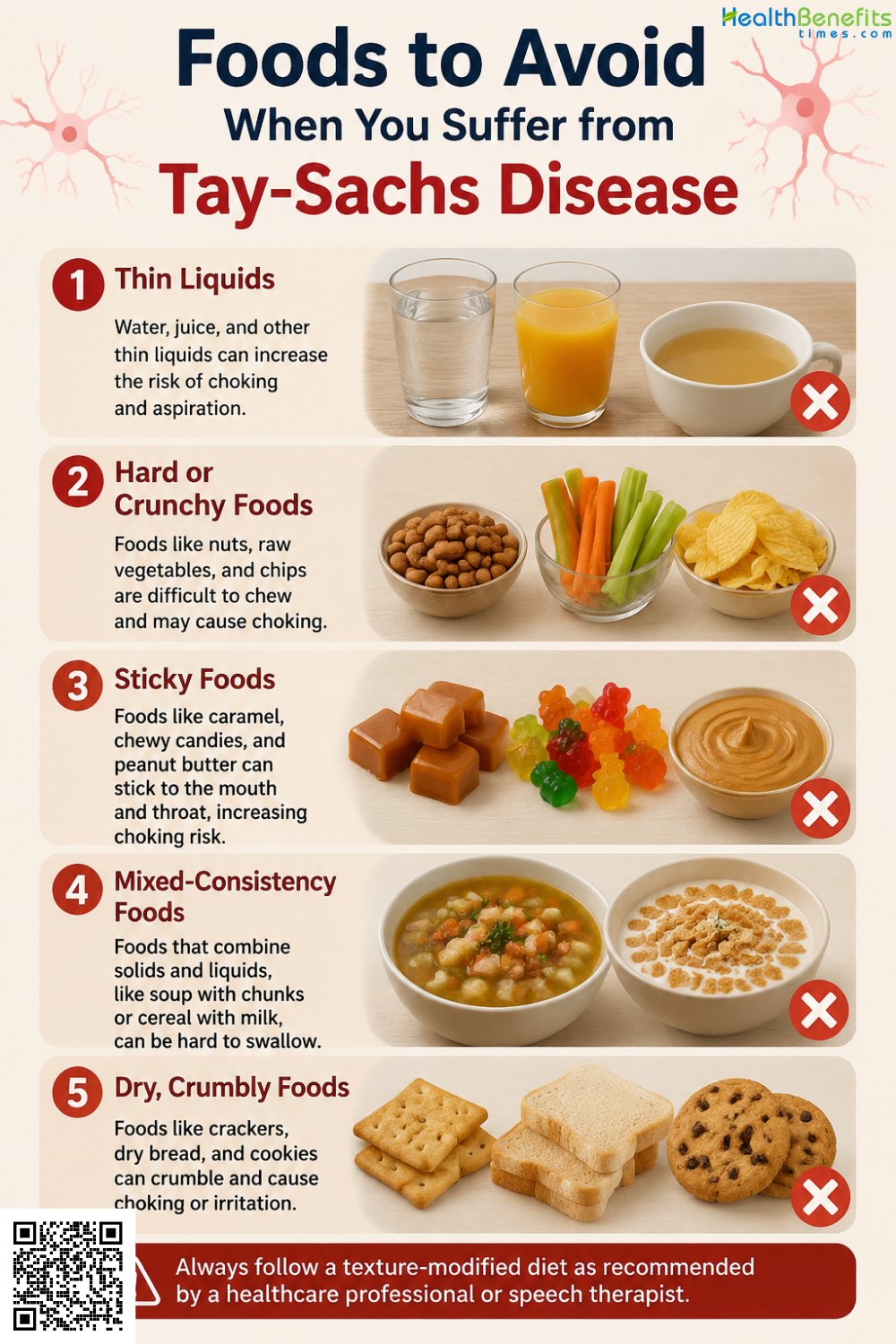
2. Hard or Crunchy Foods
Foods requiring extensive chewing, such as raw carrots or nuts, present severe choking hazards as progressive muscle weakness impairs the jaw and throat 1.
3. Sticky Foods
Peanut butter, caramel, and thick cheeses can easily lodge in the airway because weakened throat muscles cannot generate enough force to clear them safely 1.
4. Mixed-Consistency Foods
Meals containing both liquids and solids, like chunky soups, confuse compromised swallowing reflexes, increasing the likelihood that food particles will accidentally enter the lungs 7.
5. Dry, Crumbly Foods
Crackers or dry bread can easily flake apart in the mouth, causing particles to be inhaled into the airway and trigger severe respiratory distress 5.
When to See a Doctor When You Struggle from Tay-Sachs Disease
Because Tay-Sachs disease is a rapidly progressive and life-threatening neurological condition, continuous medical supervision is absolutely necessary. You should seek immediate pediatric or neurological evaluation if you observe severe developmental delays, sudden regression of previously learned skills, or acute complications that threaten airway safety.
1. Loss of Motor Milestones
See a physician immediately if an infant stops rolling over, sitting, or crawling, as this regression is a primary indicator of rapid central nervous system decline 5.
2. Exaggerated Startle Reflex
Consult a doctor if an infant exhibits severe, abnormal startle responses to everyday noises, which serves as one of the earliest clinical signs of the disorder 1.
3. Onset of Seizures
Seek emergency medical care if the patient experiences sudden convulsions, as progressive brain damage frequently triggers severe neurological seizures that require immediate pharmaceutical management 6.
4. Swallowing Difficulties and Choking
You must schedule an urgent clinical evaluation if the patient consistently chokes during meals, indicating weakened throat muscles and a high risk of fatal aspiration pneumonia 1.
5. Breathing Complications
Immediately contact healthcare providers if you notice shallow breathing, persistent coughing, or chest congestion, as these symptoms strongly suggest severe lung infections requiring urgent medical treatment 5.