

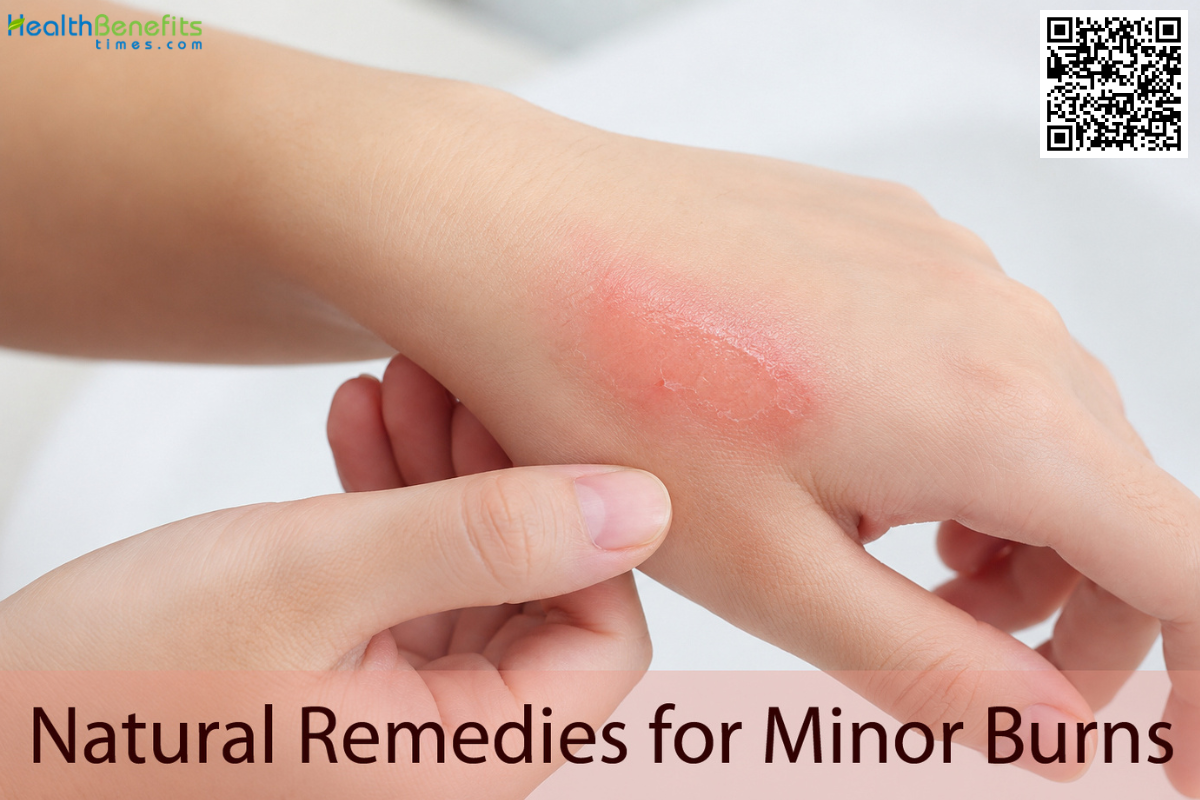
A minor burn is a relatively mild tissue injury that primarily affects the outermost layer of the skin, known as the epidermis. Clinically, these are most often classified as superficial or first-degree burns. They typically cause localized redness, pain, and mild swelling, but do not result in significant blistering or loss of normal skin function 1. In some cases, a small second-degree burn—which extends slightly into the deeper skin layer called the dermis—may also be considered minor if it covers less than 10 to 15 percent of the body and does not involve critical areas like the face, hands, feet, or groin 2. While minor burns can be quite painful, they generally heal on their own within a few weeks without leaving severe scars. If you experience a minor burn, immediate cooling with tap water and basic first aid are usually sufficient for a safe, complication-free recovery.
Causes of Minor Burns
1. Thermal Causes
Contact with hot liquids, such as boiling water, hot drinks, cooking oils, or steam (scald injuries). Direct contact with hot objects or heated surfaces, including stoves, radiators, and styling tools. Brief exposure to open flames or fires.
2. Radiation Causes
Prolonged exposure to ultraviolet (UV) light from the sun (sunburn) or tanning beds. Exposure to ionizing radiation, such as X-rays or localized radiation therapy.
3. Chemical Causes
Contact with acidic or alkaline substances found in common household products, including drain cleaners, paint thinners, and lye.
4. Electrical Causes
Contact with low-voltage electricity, such as faulty household wiring, exposed outlets, or damaged electrical cords. 3
Symptoms of Minor Burns
- Pain
- Red or pink skin coloration
- Warmth to the touch
- Skin that blanches (turns pale) when pressure is applied
- Softness of the affected area
- Dry skin (typical in superficial or first-degree burns)
- Moist skin (typical in superficial partial-thickness or second-degree burns)
- Blister formation 4
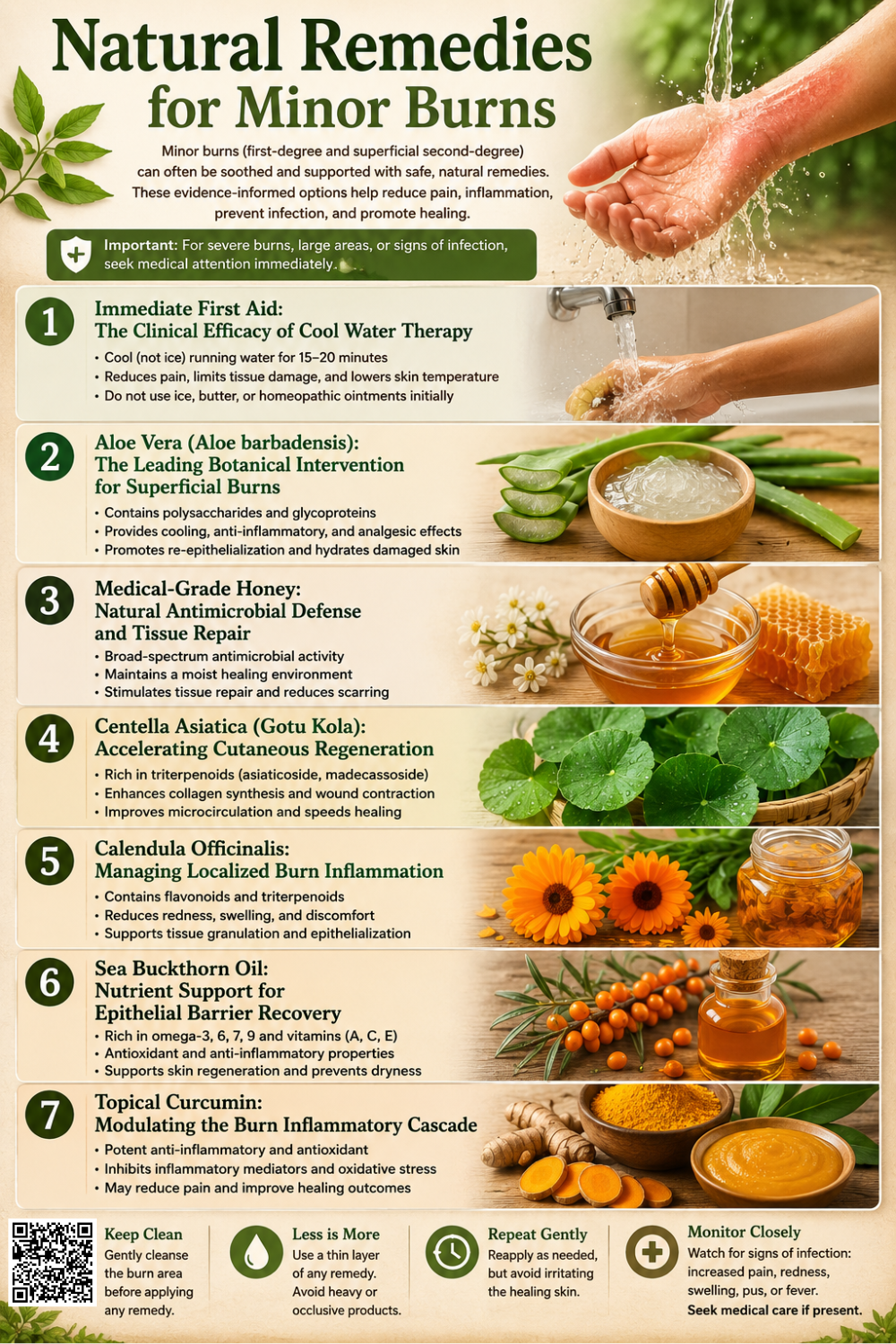 Natural Remedies for Minor Burns
1. Immediate First Aid: The Clinical Efficacy of Cool Water Therapy
How it may help: Cool running water acts as an essential intervention that rapidly extracts retained heat from the skin and halts the progression of cellular injury 5. This thermal regulation stabilizes the affected tissues, actively decreases localized swelling, and provides substantial immediate pain relief by lowering the surface temperature of the wound 6.
What research says: Clinical evidence demonstrates that adequate water cooling significantly reduces overall burn severity and minimizes long-term complications 7. Extensive studies conclude that this first-aid protocol reliably decreases the depth of tissue damage, promotes faster natural healing, and substantially lowers the statistical probability of a patient requiring surgical skin grafts 8.
How to use it safely: For optimal first aid, you must promptly irrigate the minor burn under a gentle flow of cool, clean tap water for twenty uninterrupted minutes 9. To ensure proper healing, you should carefully remove any restrictive clothing or jewelry near the damaged area before significant swelling begins to develop 10.
Potential precautions or side effects: You must never apply ice or freezing water directly to the skin, as intense blood vessel constriction can worsen tissue death and trigger dangerous hypothermia in vulnerable individuals 11.
2. Aloe Vera (Aloe barbadensis): The Leading Botanical Intervention for Superficial Burns
How it may help: Aloe vera gel provides a cooling effect and maintains essential skin moisture to soothe superficial burns 12. The botanical extract contains active compounds that reduce local inflammation, minimize itching, and stimulate collagen synthesis to successfully repair the damaged epidermal barrier.
What research says: Clinical systematic reviews demonstrate that topical aloe vera effectively accelerates the wound healing process for first- and second-degree burns 13. Pure aloe applications significantly reduce overall recovery time compared to conventional topical treatments, while also rapidly speeding up complete skin epithelialization 14.
How to use it safely: For optimal results, gently cleanse the burn with cool water before applying a generous, even layer of pure, fragrance-free aloe vera gel directly over the affected tissue. You should reapply the gel multiple times daily to ensure the burn remains consistently moisturized and protected during recovery.
Potential precautions or side effects: While safe, aloe vera occasionally triggers adverse reactions like transient itching or allergic contact dermatitis 15. You must avoid applying it to severe third-degree burns.
3. Medical-Grade Honey: Natural Antimicrobial Defense and Tissue Repair
How it may help: Medical-grade honey creates a protective, moist barrier over minor burns that promotes tissue regeneration and reduces pain. 16 Its natural acidity and high sugar content draw out moisture, preventing bacterial growth and clearing away dead skin. 17 Additionally, honey releases small amounts of hydrogen peroxide, providing a gentle yet effective antimicrobial defense against infections. 18
What research says: Studies show that medical-grade honey heals superficial and partial-thickness burns faster than conventional treatments. 19 Clinical evidence indicates that honey-treated burns often heal within two to three weeks, significantly reducing recovery time compared to standard antibacterial creams. 20 Furthermore, systematic reviews confirm that honey effectively clears infections and promotes faster skin closure in burn patients. 21
How to use it safely: First, clean the burn gently with cool water. Apply a generous layer of sterile, medical-grade honey directly to a clean dressing pad rather than rubbing it onto the wound. 22 Place the pad over the burn and secure it loosely, changing the dressing daily. 23
Potential precautions or side effects: Always use sterilized, medical-grade products, as raw supermarket honey can contain harmful bacteria. 24 Discontinue application immediately if you notice increased pain, swelling, or signs of an allergic reaction.
4. Centella Asiatica (Gotu Kola): Accelerating Cutaneous Regeneration
How it may help: Centella asiatica, commonly known as Gotu kola, accelerates tissue regeneration by stimulating the growth of essential skin cells and increasing collagen production. Its active compounds, specifically asiaticoside and madecassoside, decrease inflammatory reactions and promote the structural repair of the skin, effectively aiding burn recovery.
What research says: Clinical investigations demonstrate that topical application of Centella asiatica significantly enhances the healing rate of partial-thickness burns. Studies confirm that the plant extracts expedite the regrowth of the outer skin layer, increase tissue strength, and minimize noticeable scarring by inhibiting localized inflammation at the wound site.
How to use it safely: For minor, superficial burns, gently cool and cleanse the affected area first. Apply a standardized topical cream or ointment containing Centella asiatica extract directly to the closed wound once or twice daily. Ensure the burn is superficial; strictly avoid applying the extract on open, weeping, or third-degree burns.
Potential precautions or side effects: Although generally safe, topical applications may occasionally trigger contact dermatitis, localized skin irritation, or allergic reactions. You should discontinue use immediately if redness, severe itching, or unusual swelling occurs.
5. Calendula Officinalis: Managing Localized Burn Inflammation
How it may help: Calendula officinalis contains active natural compounds, such as flavonoids and carotenoids, that strongly reduce local inflammation and tissue swelling in minor burns 25. These chemicals block histamine release to decrease pain while stimulating new blood vessel formation and collagen production to repair damaged skin 26.
What research says: Scientific studies demonstrate that applying Calendula officinalis to thermal burns significantly shortens healing time and speeds up wound closure 27. Research confirms the extract enhances tissue structure repair while lowering markers of cellular damage and oxidative stress when compared to untreated burns 28.
How to use it safely: Clean the minor burn gently with cool water and pat it dry. You should apply a thin layer of medical-grade calendula ointment to the closed wound twice daily. Allow the application to dry completely before loosely covering the treated skin with a clean, sterile bandage.
Potential precautions or side effects: People allergic to the Asteraceae plant family may develop allergic contact dermatitis 29. You must stop using the product immediately if burning, severe itching, or unexpected blistering occurs 30.
6. Sea Buckthorn Oil: Nutrient Support for Epithelial Barrier Recovery
How it may help: Sea buckthorn oil contains abundant essential fatty acids, including palmitoleic acid, which provide crucial structural materials for repairing damaged skin 31. These lipid nutrients help restore the skin barrier and supply the building blocks needed to stimulate new cell growth over minor burn wounds 32.
What research says: Clinical testing demonstrated that applying sea buckthorn significantly shortened the healing duration for second-degree burns compared to standard silver sulfadiazine treatments 33. Additional laboratory evaluations confirmed that the extract rapidly increases structural collagen production, strengthening new tissue and promoting faster wound closure 34.
How to use it safely: Gently clean the minor burn with cool water and pat it completely dry. You should apply a thin, even layer of the oil directly to the affected tissue twice daily 35. Cover the wound with a sterile, non-stick bandage to protect the healing barrier.
Potential precautions or side effects: While typically safe, sea buckthorn oil can cause mild skin irritation or allergic reactions in sensitive individuals. You must perform a patch test on healthy skin before treating the burn.
7. Topical Curcumin: Modulating the Burn Inflammatory Cascade
How it may help: Curcumin, the primary active compound in turmeric, possesses distinct anti-inflammatory and antioxidant properties that support overall wound recovery 36. Applied topically to minor burns, it reduces excessive tissue inflammation by downregulating specific signaling proteins called cytokines 37. Furthermore, curcumin acts on multiple cellular phases to encourage tissue remodeling, stimulate collagen deposition, and prevent further oxidative tissue damage 38.
What research says: Clinical and preclinical investigations indicate that curcumin effectively improves overall wound closure times compared to conventional care alone 39. Research highlights its dual capability to provide analgesic relief for burn-related pain while simultaneously expediting skin regeneration 40.
How to use it safely: For minor first-degree burns, ensure the skin is completely cooled and cleaned before application. Since curcumin has low solubility, mix it into an inert carrier like a sterile hydrogel or medical ointment, then apply a thin layer to the site 41. Always cover the treated area with a sterile bandage.
Potential precautions or side effects: Topical curcumin is generally well-tolerated, but it may cause temporary yellow staining or mild allergic contact dermatitis 42. You must discontinue use immediately if increased redness or irritation develops.
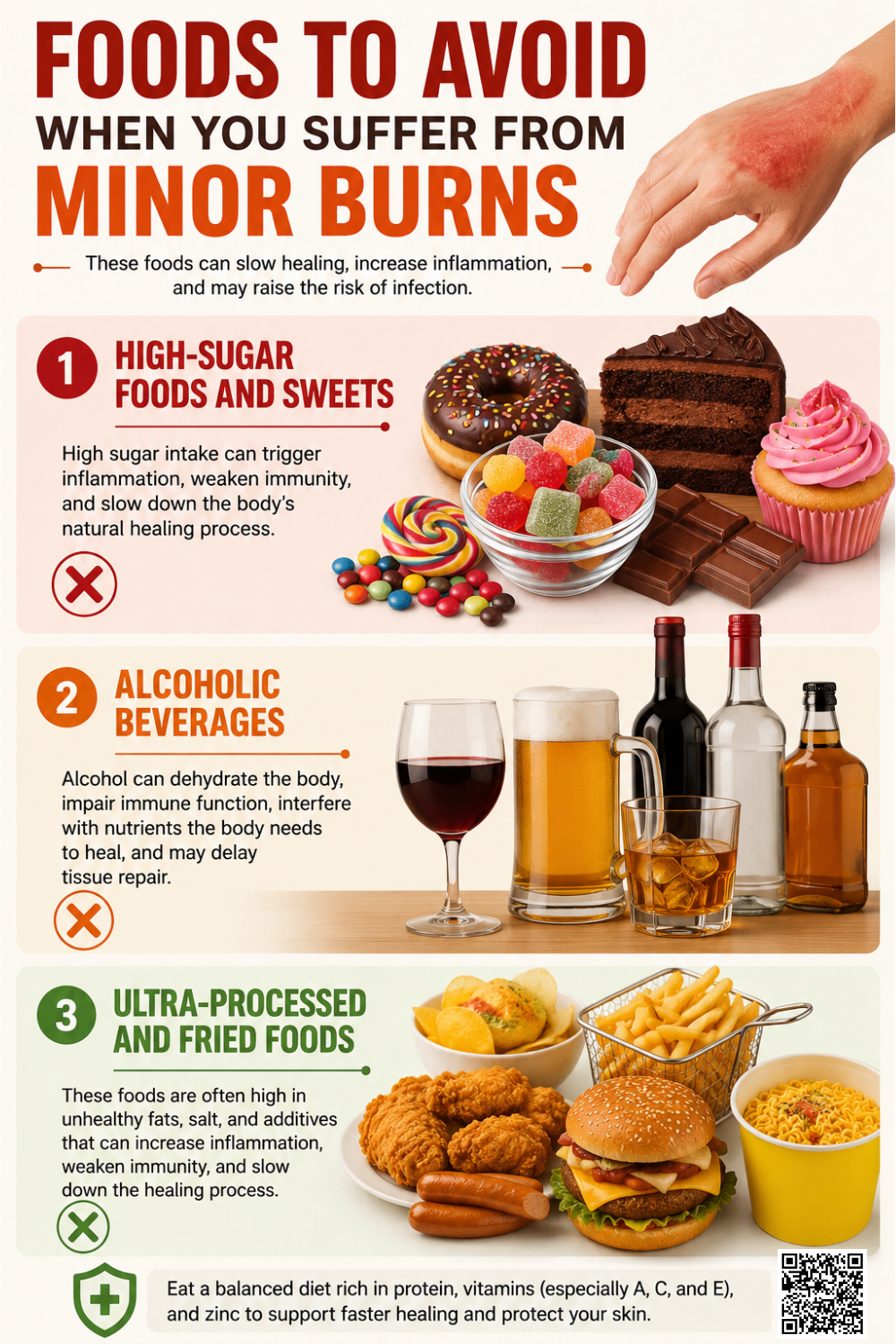 Foods to Avoid When You suffer from Minor Burns
1. High-Sugar Foods and Sweets
Excessive sugar intake prolongs the inflammatory phase of wound healing and impairs the cellular immune response, which can significantly delay the repair of damaged skin tissue. 43, 44
2. Alcoholic Beverages
Alcohol consumption promotes oxidative stress, disrupts proper hydration, and negatively alters the inflammatory mediators required for efficient wound matrix remodeling and cell proliferation. 45, 46
3. Ultra-Processed and Fried Foods
These foods are laden with saturated fats and high sodium, which trigger systemic inflammation, deplete essential nutrients, and hinder the collagen synthesis necessary for healthy burn recovery. 47, 48, 49
When To See a Doctor When You Have Minor Burns
1. Size of the Burn
Seek medical evaluation if the minor burn exceeds three inches (7.5 centimeters) in diameter, as larger surface areas carry higher risks for severe complications and require professional dressing. 50, 51
2. Location of the Injury
Consult a doctor immediately if the burn is located on the face, hands, feet, groin, buttocks, or over a major joint to prevent functional impairment and permanent cosmetic damage. 52, 53
3. Signs of Infection
Visit a healthcare provider if you notice increasing pain, spreading redness, significant swelling, oozing pus, or a systemic fever, as these symptoms strongly indicate a progressing bacterial infection.
4. Vulnerable Patient Demographics
Medical attention is necessary if the affected individual is a child under five, an adult over seventy, or someone with a compromised immune system or pre-existing diabetes. 54, 55
5. Appearance and Depth
See a doctor if the burned skin appears leathery, charred, noticeably white, or brown, or if the area is numb, indicating a potentially deeper third-degree injury needing specialized care. 56