


Endophthalmitis is a rare but severe inflammation of the fluid and tissues inside the eye, generally triggered by an infection. Because it is a sight-threatening medical emergency, the condition requires early diagnosis and urgent treatment to prevent irreversible vision loss 1. Healthcare experts classify this infection into two primary types based on its origin. Exogenous endophthalmitis happens when germs enter the eye directly from the outside environment, frequently occurring after eye surgeries or traumatic open eye injuries 2. Conversely, endogenous endophthalmitis develops when an infection from another part of the body, such as a liver abscess, travels through the bloodstream and settles inside the eye 2. Individuals with this condition typically experience sudden and intense eye pain, noticeable redness, rapidly worsening vision, and swelling of the eyelids 1.
Causes of Endophthalmitis
- Post-Surgical Contamination: Eye operations, particularly routine cataract removals and glaucoma surgeries, are the most frequent triggers for this condition. Bacteria that naturally live on the skin or eyelids, such as Staphylococcus epidermidis, can inadvertently enter the sterile inner chambers of the eye during the procedure 3.
- Intravitreal Injections: Medical treatments requiring a needle to deliver medication directly into the eye carry a small risk of introducing surface bacteria into the deep intraocular fluid 4.
- Penetrating Eye Injuries: Traumatic physical injuries that puncture or slice through the eyeball allow environmental bacteria, soil microbes, or fungi to directly bypass the eye’s protective outer layers and cause rapid infection 3.
- Progression of Corneal Ulcers: Severe, untreated infections on the clear front surface of the eye (keratitis) can gradually erode the tissue, allowing the infection to breach the ocular wall and spread inward 4.
- Systemic Bacterial Spread: In rare instances, bacteria from a distant internal infection such as a liver abscess, an infected heart valve (endocarditis), or a severe urinary tract infection can travel through the bloodstream and settle inside the blood vessels of the eye 5.
- Systemic Fungal Spread: Fungi, most notably Candida albicans, can enter the bloodstream and seed an infection inside the eye. This specific pathway primarily affects individuals with weakened immune systems, uncontrolled diabetes, prolonged hospitalizations, or a history of intravenous drug use 6.
Symptoms of Endophthalmitis
- Severe Ocular Pain: Patients typically experience sudden, intense, and progressively worsening eye pain, though certain fungal or chronic infections may present with milder discomfort 3.
- Rapid Vision Loss: A sudden decline in visual acuity ranging from severe blurriness to complete blindness frequently occurs within hours or days of the initial infection 3.
- Extreme Redness and Swelling: The condition causes pronounced ocular inflammation, resulting in deeply bloodshot conjunctiva (the white part of the eye) and noticeably swollen eyelids 4.
- Hypopyon (Visible Pus): A classic clinical sign is the accumulation of yellowish-white inflammatory pus in the anterior chamber, which is the fluid-filled space between the clear cornea and the colored iris 4.
- Photophobia: The profound internal inflammation triggers an extreme, painful sensitivity to light exposure 7.
- Floaters and Visual Haze: Inflammatory cells and microbial debris accumulating in the internal vitreous fluid cast shadows on the retina, causing patients to perceive new dark spots or a pervasive cloudiness obstructing their sight 4.
Best Treatment for Endophthalmitis
1. Direct Antibiotic Injections Into the Eye
How it may help
Delivering antibiotics directly into the eye bypasses natural bodily barriers, ensuring immediate, high concentrations of medication reach the infected fluid. This targeted approach rapidly halts bacterial reproduction, minimizing delicate tissue damage and preserving vision much faster than oral or intravenous alternatives 1.
What research says
Clinical studies establish direct injections as the primary standard of care for bacterial endophthalmitis. Research confirms that immediate administration of broad-spectrum antibiotics, typically vancomycin and ceftazidime, successfully eradicates the infection and significantly improves long-term visual outcomes in the majority of patients 3.
How to use it safely
You must receive these injections exclusively from a trained ophthalmologist in a sterile clinical environment. To ensure safety, the physician will apply local numbing drops and clean the eye surface with an antiseptic iodine solution before carefully administering the medication with a microscopic needle 4.
Potential precautions or side effects
Risks include temporary pressure spikes, intraocular bleeding, retinal detachment, or rarely, medication-induced toxicity to the retina 1. Seek immediate emergency care if your vision suddenly darkens.
2. Surgical Removal of Infected Eye Fluid (Vitrectomy)
How it may help
Surgical removal of the infected gel-like fluid inside the eye physically clears out massive amounts of bacteria, inflammatory cells, and toxic debris. This rapid clearing allows injected antibiotics to work more effectively, reduces structural damage to the retina, and dramatically increases the chances of restoring clear vision 1.
What research says
Clinical studies conclude that early vitrectomy significantly improves visual outcomes for patients experiencing severe vision loss—specifically those only able to perceive light. For milder cases, research shows surgical removal offers similar outcomes to antibiotic injections alone, but it remains highly effective at preventing advanced complications 3.
How to use it safely
You must have this complex microsurgery performed by a specialized retina surgeon in an operating room. Strictly adhere to your post-operative care plan, which requires applying prescribed antibiotic eyedrops on a precise schedule and wearing a rigid protective eye shield while sleeping 4.
Potential precautions or side effects
Surgical risks include retinal detachment, internal bleeding, and accelerated cataract formation 3. Immediate medical evaluation is critical if you experience sudden pain spikes or further vision darkening.
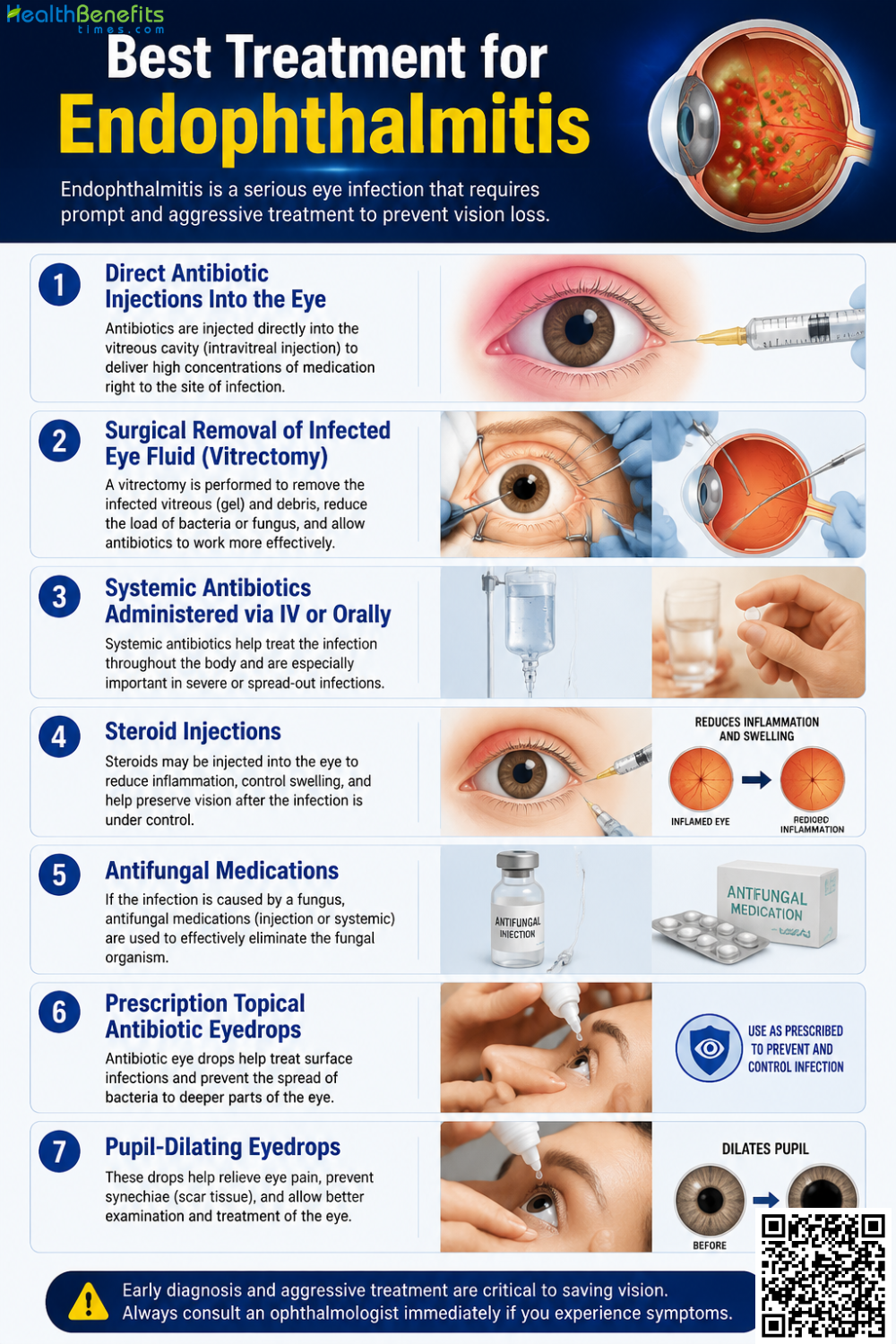
3. Systemic Antibiotics Administered via IV or Orally
How it may help
Systemic antibiotics, given intravenously or orally, circulate through the bloodstream to target the infection source. While primarily used when the infection originates elsewhere in the body, they also prevent widespread bacterial spread in severe traumatic eye injuries, supporting localized eye treatments 2.
What research says
Research concludes that systemic antibiotics offer limited benefit for routine post-surgical endophthalmitis due to poor eye tissue penetration. However, clinical protocols mandate their use for endogenous endophthalmitis to eradicate the primary internal infection source and improve overall patient survival rates 3.
How to use it safely
You must complete the entire prescribed antibiotic course, even if vision improves quickly, to prevent bacterial resistance. Intravenous medications require hospital administration, while oral pills should be taken exactly on schedule with water to maintain consistent blood medication levels 4.
Potential precautions or side effects
Systemic antibiotics may cause gastrointestinal distress, yeast infections, or severe allergic reactions 3. Immediately seek medical care if you develop breathing difficulties, facial swelling, or widespread skin rashes.
4. Steroid Injections
How it may help
Injected steroids combat the intense, harmful inflammation that often accompanies endophthalmitis. By rapidly suppressing the eye’s overactive immune response, these medications reduce collateral tissue damage and prevent the development of thick scar tissue, which is essential for protecting the retina and preserving functional vision 2.
What research says
Clinical findings suggest that adding steroids to antibiotic treatment may improve visual recovery in select patients. While research confirms they significantly lower inflammation, experts emphasize they must never be used alone, as they could suppress the immune system and allow the underlying infection to proliferate unchecked 3.
How to use it safely
Only a qualified ophthalmologist should administer these injections. They must confirm the infection is under control with effective antibiotics before introducing steroids. You must attend all follow-up appointments to monitor for any rebound inflammation or signs that the infection has worsened after the steroid dose 4.
Potential precautions or side effects
Improper use may delay infection clearance. Secondary risks include elevated intraocular pressure (glaucoma) or the premature development of cataracts requiring future surgical intervention 2.
5. Antifungal Medications
How it may help
Antifungal agents, such as voriconazole or amphotericin B, inhibit the growth and reproduction of fungal organisms within the eye. By targeting the fungal cell wall or metabolic processes, these drugs neutralize the infection, preventing the formation of deep-seated colonies that can destroy delicate ocular structures and lead to permanent vision impairment 6.
What research says
Clinical research identifies early diagnosis and prompt antifungal administration as critical factors for saving eyes affected by fungal endophthalmitis. Studies demonstrate that intravitreal injection of voriconazole is currently the most effective therapeutic intervention, often yielding superior outcomes compared to older medications due to its enhanced tissue penetration and broader activity against common pathogens 6.
How to use it safely
These medications must be administered by an ophthalmologist in a sterile, clinical setting. Depending on the infection severity, they may be injected directly into the vitreous fluid or prescribed as systemic therapy. You must strictly follow all dosing schedules and attend every planned monitoring appointment to ensure effectiveness 6.
Potential precautions or side effects
Side effects may include localized inflammation or ocular toxicity. Systemic usage requires close monitoring for liver enzyme elevations, visual field changes, and potential drug interactions with other medications 6.
6. Prescription Topical Antibiotic Eyedrops
How it may help
Topical antibiotics provide a continuous, high concentration of medication to the eye’s surface. They are primarily used as a supplementary treatment to help prevent the spread of surface bacteria and manage infections on the clear front window of the eye (cornea), thereby supporting the primary surgical or injectable treatments 3.
What research says
Clinical evidence indicates that topical drops alone are insufficient to treat deep intraocular infections because they struggle to penetrate the eye’s internal structures. Therefore, research dictates their use strictly as an adjunctive therapy following primary invasive procedures to help maintain a sterile environment and reduce surface bacterial load 3.
How to use it safely
Wash your hands thoroughly before use. Gently pull your lower eyelid down, drop the medication into the pocket, and close your eye without blinking to ensure full absorption. Do not allow the dropper tip to touch your eye or any surface to prevent contamination of the bottle 3.
Potential precautions or side effects
Side effects may include temporary stinging, blurred vision, or localized allergic reactions. Discontinue use and contact your ophthalmologist immediately if you experience increased swelling or pain.
7. Pupil-Dilating Eyedrops
How it may help
These drops (cycloplegics) paralyze the iris muscle, keeping the pupil dilated. This alleviates the intense, painful spasms caused by internal ocular inflammation and prevents the iris from sticking to the lens or cornea, a complication that could permanently block fluid drainage and trigger secondary glaucoma 3.
What research says
Clinical protocols consistently recommend cycloplegic agents as a standard supportive treatment for endophthalmitis. Research confirms that while they do not treat the infection itself, their use is essential for patient comfort and for maintaining the anatomical integrity of the eye’s internal structures during the acute recovery phase 3.
How to use it safely
Apply the drops as precisely prescribed by your ophthalmologist. After administering, gently press on the inner corner of your eyelid for one minute to minimize the medication entering your bloodstream. Because your pupils will remain dilated, avoid driving and wear sunglasses to protect your light-sensitive eyes 3.
Potential precautions or side effects
Side effects include extreme light sensitivity, blurred near vision, and rarely, an acute spike in eye pressure. Use caution if you have a history of narrow-angle glaucoma.
Foods to Avoid When You Suffer from Endophthalmitis
Endophthalmitis is a severe, sight-threatening intraocular infection requiring immediate clinical intervention. While no specific dietary restrictions treat the infection itself, patients must manage overall systemic health to support recovery, particularly if underlying conditions like diabetes are present.
1. Refined Sugars and High-Glycemic Foods
Elevated blood glucose levels can impair immune function and delay healing. Maintaining stable blood sugar is critical for patients, especially those with diabetes, to prevent further infection progression 6.

2. Highly Processed Foods
These often contain excessive sodium and inflammatory additives. A balanced, nutrient-dense diet is essential to support the body’s inflammatory response and aid the healing of delicate ocular tissues 8.
3. Alcohol
Consumption can interfere with medication efficacy, lead to dehydration, and disrupt the immune system’s ability to combat active pathogens effectively during the critical recovery phase 9.
When to Seek Emergency Medical Attention
Endophthalmitis is an ophthalmic emergency. Patients should immediately consult an ophthalmologist or visit an emergency department if they experience the following symptoms, as prompt intervention is critical to salvage vision:
1. Sudden Vision Decline
Any rapid or progressive decrease in visual acuity, including blurriness or the perception of a dark veil, requires immediate diagnostic evaluation to prevent permanent loss 3.
2. Intense Ocular Pain
Severe, unrelenting pain deep within the eye often signals high-grade intraocular inflammation and requires urgent assessment by a retina specialist 4.
3. Visible Pus or Discharge
The appearance of a yellowish-white fluid level in the lower part of the iris (hypopyon) indicates severe infection that necessitates immediate surgical or pharmacological intervention 4.
4. Extreme Light Sensitivity
Profound pain triggered by light exposure (photophobia) typically points to significant internal ocular inflammation, signaling a need for emergent clinical examination 7.
5. Marked Redness and Swelling
Significant inflammation characterized by intense conjunctival redness and eyelid swelling post-surgery or after eye trauma serves as a clinical red flag for infection 3.