

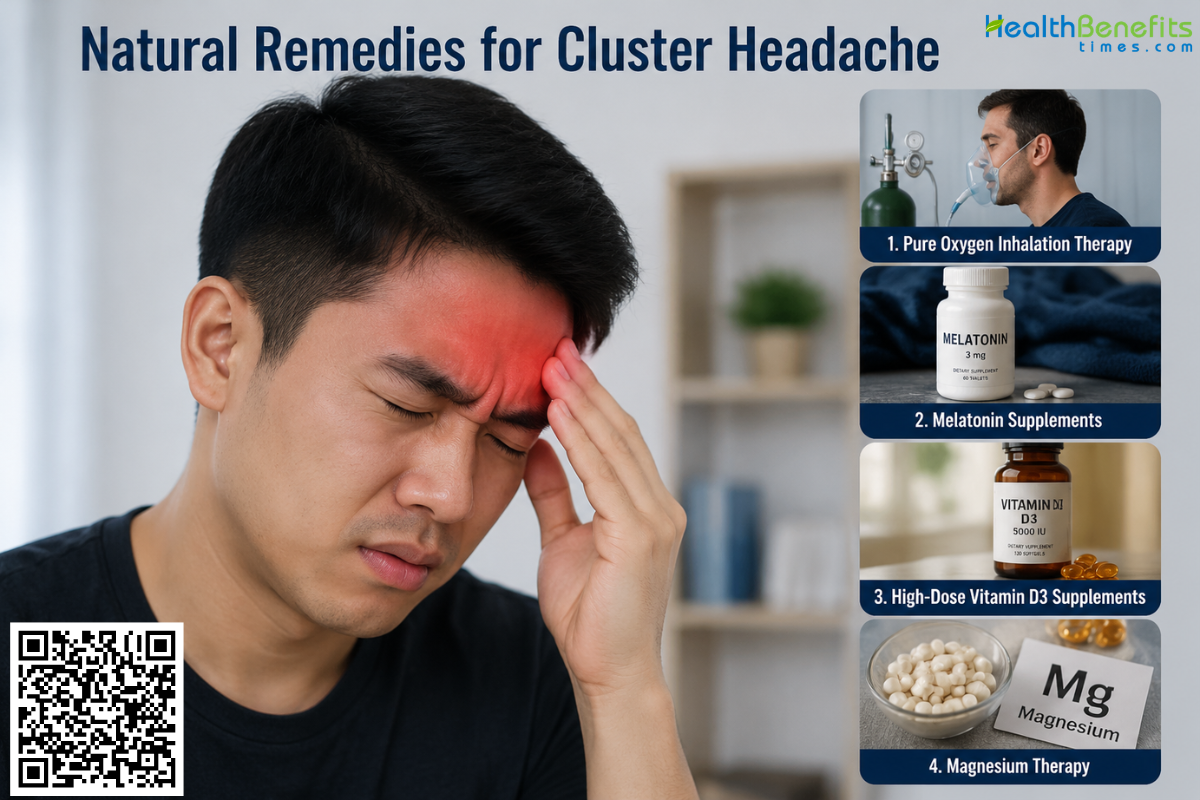
A cluster headache is a rare, exceptionally painful neurological condition characterized by severe pain on one side of the head, usually around or behind the eye. These sudden attacks occur in groups or “clusters” that can strike up to eight times a day and last from 15 minutes to three hours per episode 1. The intense pain is accompanied by involuntary physical reactions on the affected side of the face, including eye redness, excessive tearing, a drooping eyelid, and nasal congestion 2. Episodes often follow a strict daily rhythm, frequently waking individuals at the same time each night, and cluster periods can persist for weeks or months before the condition enters remission 3. Unlike typical headaches, the explosive nature of the pain causes individuals to feel extremely restless and agitated, making it nearly impossible to lie still or rest during an attack 1.
Causes of Cluster Headache
- Brain Clock Irregularities (Hypothalamus Dysfunction): The primary underlying cause is believed to be an overactive hypothalamus, the region of the brain responsible for regulating the body’s internal biological clock. This dysfunction explains the strict, clock-like timing of the attacks, which frequently strike at the exact same time of day or during specific seasons of the year 1.
- Nerve Pathway Activation: The explosive pain is generated by the sudden activation of the trigeminal nerve, a major nerve responsible for carrying sensations from the face to the brain. When this nerve pathway is overstimulated, it causes both the intense facial pain and the involuntary physical symptoms, such as a watery eye and a blocked nostril on the affected side 4.
- Genetic Susceptibility: Inherited traits contribute to the development of the condition, as having a first-degree relative with cluster headaches significantly increases a person’s risk of experiencing them compared to the general population 5.
- Chemical and Environmental Triggers: While not root causes, certain substances act as powerful catalysts that initiate attacks during an active cluster period. Consuming any amount of alcohol, smoking tobacco, inhaling strong chemical odors, or taking blood vessel-widening medications like nitroglycerin will rapidly trigger an episode in most affected individuals 1.
Symptoms of Cluster Headache
- Severe, One-Sided Head Pain: The defining symptom is explosive, burning, or piercing pain that occurs exclusively on one side of the head, most often centered strictly behind, in, or around one eye 1.
- Extreme Agitation and Restlessness: Unlike other severe headaches where individuals prefer to lie completely still in a quiet room, the intensity of a cluster attack causes profound physical restlessness, forcing the person to pace the floor, rock back and forth, or continuously change positions 1.
- Eye Redness and Tearing: On the side of the face experiencing the pain, the eye typically becomes distinctly bloodshot and produces excessive, uncontrollable watering 4.
- Nasal Congestion and Runny Nose: The nostril on the painful side of the head frequently becomes severely blocked or produces a continuous, clear discharge during the duration of the attack 1.
- Eyelid Drooping and Pupil Shrinkage: The eyelid on the affected side may become swollen or visibly droop downward, and the dark center of the eye (the pupil) may shrink to a smaller size compared to the unaffected eye 6.
- Facial Sweating and Flushing: The forehead and cheek on the side of the headache may suddenly start sweating profusely or become noticeably red and flushed as the pain peaks 1.
Natural Remedies for Cluster Headache
1. Pure Oxygen Inhalation Therapy
How it may help:
Inhaling pure oxygen is believed to work by narrowing swollen blood vessels in the brain and calming the overactive facial nerves responsible for explosive pain 1. This rapid reduction of nerve inflammation quickly interrupts the headache process before the attack reaches its peak intensity.
What research says:
Clinical guidelines establish pure oxygen as a primary, highly effective rescue treatment. Studies demonstrate that breathing 100 percent oxygen completely stops headache pain for most individuals within 15 to 30 minutes of starting therapy 4. It remains one of the most reliable methods to halt active attacks.
How to use it safely:
To stop an attack, you must breathe 100 percent oxygen through a tight-fitting non-rebreather face mask at a high flow rate of 12 to 15 liters per minute 1. Begin treatment immediately when pain starts, sitting upright and breathing deeply for 15 to 20 minutes.
Potential precautions or side effects:
This therapy lacks major side effects. Because oxygen is highly flammable, never smoke near the equipment. People with severe lung conditions like COPD must consult a doctor before use 4.
2. Melatonin Supplements
How it may help:
Because cluster headaches are tightly linked to disruptions in the brain’s internal clock, stabilizing sleep-wake cycles is critical. Melatonin is a natural hormone that regulates this biological rhythm. Supplementing it helps correct underlying circadian imbalances, suppressing the irregular brain activity responsible for triggering nighttime attacks 4.
What research says:
Clinical evidence indicates that melatonin serves as an effective preventive measure for episodic cluster headaches. Research shows that taking a daily 10-milligram dose of melatonin significantly reduces the frequency of attacks within days, though it appears less effective for treating chronic, year-round forms of the condition 7.
How to use it safely:
To prevent attacks during an active cycle, take a 10-milligram dose of melatonin every evening approximately 30 to 60 minutes before bedtime 7. Take this consistently at the exact same time each night to effectively reset and maintain your body’s daily sleep rhythm.
Potential precautions or side effects:
Melatonin is generally safe but frequently causes next-day drowsiness, vivid dreams, or dizziness 4. Do not drive immediately after use and consult a doctor if you take blood-thinning medications.
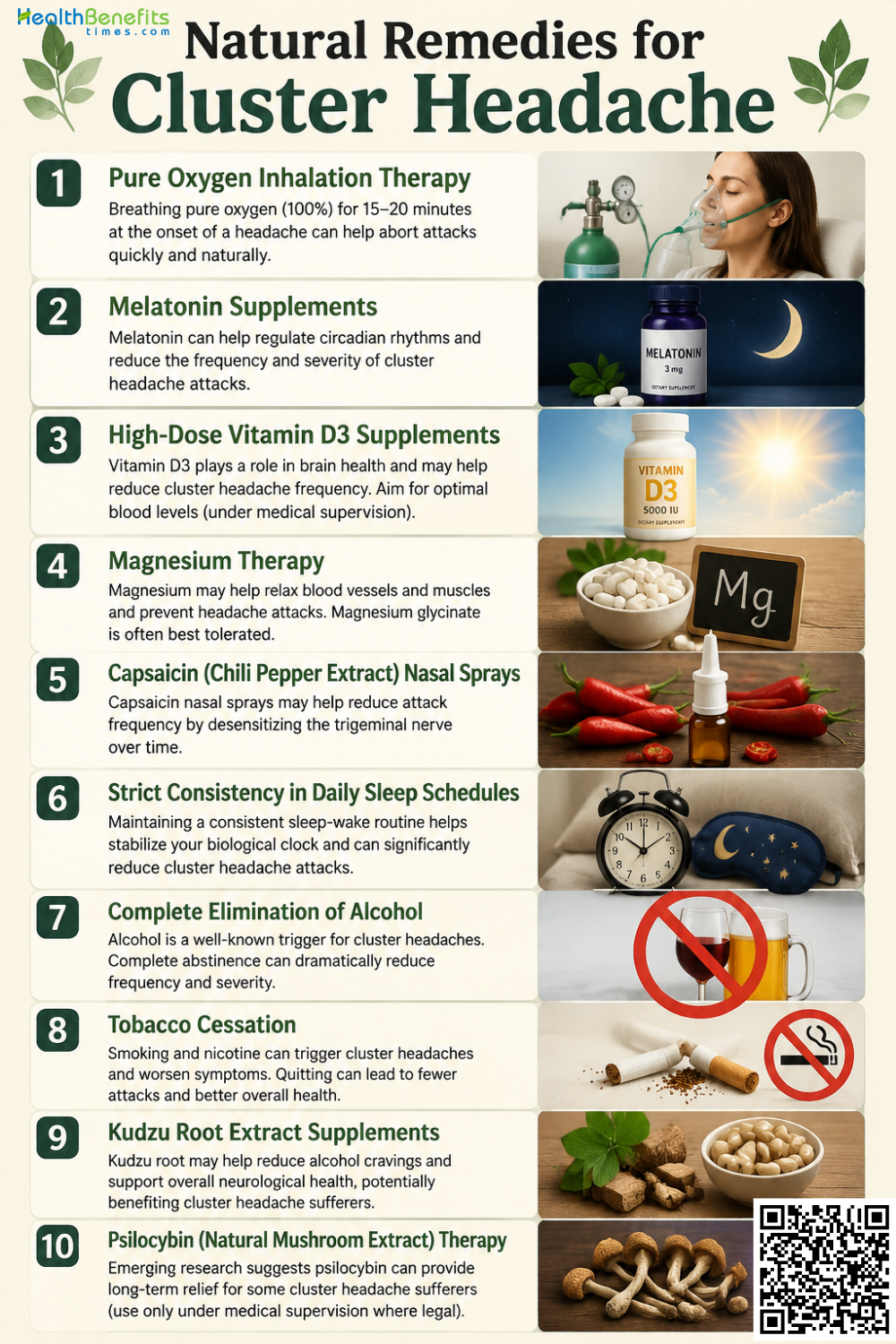
3. High-Dose Vitamin D3 Supplements
How it may help:
Vitamin D regulates brain inflammation and supports healthy nerve function. Since cluster headaches involve nerve irritation, restoring normal vitamin levels may calm the overactive trigeminal nerve and stabilize the hypothalamus. This helps raise the body’s threshold for headache triggers, making severe attacks less likely to occur 8.
What research says:
Clinical observations reveal that a significant percentage of individuals with cluster headaches have underlying vitamin D deficiencies. Research confirms that taking high-dose vitamin D3 supplements can drastically reduce the frequency of headache cycles, serving as a highly effective preventive strategy for many affected patients 8.
How to use it safely:
Work with your doctor to test your blood levels before starting. To prevent attacks, take your prescribed daily dose of vitamin D3 alongside essential supporting nutrients, such as magnesium and vitamin K2, which help your body absorb and process high doses correctly 9.
Potential precautions or side effects:
Taking too much vitamin D without medical supervision can cause dangerous calcium buildup in your blood, potentially leading to kidney stones 9. Always have a doctor monitor your levels.
4. Magnesium Therapy
How it may help:
Magnesium relaxes blood vessels and blocks pain-transmitting chemicals in the brain. Because individuals with cluster headaches often have underlying magnesium deficiencies, restoring this essential mineral prevents nerve overstimulation. This calming effect on the nervous system helps stop active attacks and lowers the chance of future episodes 10.
What research says:
Clinical studies demonstrate that individuals experiencing cluster headaches frequently possess abnormally low ionized magnesium levels in their blood. Research concludes that intravenous magnesium infusions can rapidly relieve severe pain during an active attack for deficient patients, making it a valuable clinical intervention 10.
How to use it safely:
To help prevent headache cycles, take a daily oral magnesium supplement, such as magnesium glycinate, which is highly absorbable. For an active, severe attack, consult your doctor about receiving a fast-acting intravenous (IV) magnesium infusion in a controlled medical setting 10.
Potential precautions or side effects:
Oral magnesium supplements frequently cause diarrhea or mild stomach cramps 11. Do not take high doses without medical supervision if you have pre-existing kidney disease, as impaired kidneys cannot safely filter excess magnesium.
5. Capsaicin (Chili Pepper Extract) Nasal Sprays
How it may help:
Capsaicin, the active compound in chili peppers, relieves pain by desensitizing the trigeminal nerve. When applied inside the nose, it depletes a specific chemical known as substance P, which the body uses to transmit pain signals to the brain. Depleting this chemical numbs the nerve pathway and stops intense pain signals 12.
What research says:
Clinical studies demonstrate that applying capsaicin nasal spray significantly reduces the frequency and severity of cluster headache attacks. Research concludes that patients experience a meaningful decrease in episodic attacks when the capsaicin treatment is repeatedly applied specifically to the nostril on the same side of the head where the pain occurs 12.
How to use it safely:
During an active headache cycle, apply a medical-grade capsaicin nasal spray directly into the nostril on the side of your face experiencing the pain 12. Use only specialized nasal sprays provided by a doctor, and never attempt to use cooking hot sauces or homemade chili extracts.
Potential precautions or side effects:
Expect a brief but intense burning and stinging sensation inside the nose immediately after application 12. It also frequently causes temporary sneezing, teary eyes, and a runny nose.
6. Strict Consistency in Daily Sleep Schedules
How it may help:
Cluster headaches are tightly linked to the brain’s biological clock, which is regulated by the hypothalamus. Sudden changes in daily routines disrupt this internal rhythm. Maintaining a strict sleep schedule helps stabilize brain activity, preventing the erratic nerve stimulation that frequently triggers severe nighttime attacks 13.
What research says:
Clinical observations show a profound connection between cluster headaches and circadian rhythms, with attacks often striking at the exact same time each day. Research confirms that both sleep deprivation and irregular sleeping patterns disrupt this delicate biological clock, acting as powerful triggers for new attacks 14.
How to use it safely:
Go to bed and wake up at the exact same time every day, including on weekends. Avoid taking daytime naps, and do not sleep in late, as oversleeping is a known catalyst that can immediately provoke an attack during an active cycle 13.
Potential precautions or side effects:
This behavioral adjustment carries no physical side effects. However, strictly adhering to this routine may require you to temporarily limit late-night social activities or adjust demanding work shifts 14.
7. Complete Elimination of Alcohol
How it may help:
Alcohol rapidly widens blood vessels in the head, making it a highly potent trigger for cluster headaches. Completely eliminating alcohol prevents this sudden vessel expansion, keeping sensitive nerve pathways calm and blocking the rapid onset of a severe pain attack 1.
What research says:
Clinical studies establish alcohol as a universal trigger during an active cluster headache cycle. Research shows that consuming even small amounts of alcohol, especially beer or wine, can provoke a full-blown attack within an hour for the majority of patients experiencing an active bout 3.
How to use it safely:
You must strictly avoid all forms of alcoholic beverages from the moment a new cluster headache cycle begins until it completely finishes 1. Once the active period ends and you enter remission, you can typically resume drinking alcohol without it triggering an attack.
Potential precautions or side effects:
Stopping alcohol abruptly carries no risks for casual drinkers. However, if you consume heavy amounts of alcohol daily, sudden cessation may cause dangerous withdrawal symptoms requiring medical supervision 15.
8. Tobacco Cessation
How it may help:
Tobacco smoke contains harsh chemicals that alter blood flow and irritate delicate nerve endings. Because cluster headaches involve severe nerve and blood vessel sensitivity, quitting tobacco removes this continuous source of irritation. This calms the vascular system in the head, helping to prevent sudden attack triggers 1.
What research says:
Clinical data shows that a vast majority of individuals with cluster headaches have a history of heavy smoking. Research concludes that while quitting tobacco may not instantly cure the disorder, complete cessation significantly decreases the frequency and intensity of attack cycles over time 4.
How to use it safely:
To stop smoking successfully, work with a doctor to create a tailored quitting plan. You can safely use over-the-counter nicotine replacement patches or gums to manage physical cravings 16. Strictly avoid second-hand smoke, as inhaling any tobacco smoke can provoke an attack.
Potential precautions or side effects:
Quitting tobacco causes temporary physical withdrawal symptoms, including irritability, headaches, anxiety, and strong cravings 16. Relapsing into smoking can immediately restart a dormant headache cycle.
9. Kudzu Root Extract Supplements
How it may help:
Kudzu root contains natural plant compounds called isoflavones, which may help regulate blood flow and calm inflammation in the brain. While the exact process remains unproven, this stabilizing effect is believed to stop the sudden widening of blood vessels that sparks the severe pain of a cluster headache 17.
What research says:
Anecdotal clinical data indicates kudzu extract may offer meaningful relief. In a medical review of patients who self-treated with the supplement, nearly 70 percent experienced decreased pain intensity, while more than half reported a significant reduction in the frequency of their attacks during an active cycle 17.
How to use it safely:
If you try this remedy, select a high-quality, over-the-counter kudzu root extract and take it daily during an active headache cycle. Follow the manufacturer’s dosing instructions carefully. Always consult your doctor before starting, as official clinical dosing guidelines for cluster headaches do not currently exist 17.
Potential precautions or side effects:
Kudzu is generally well-tolerated with minimal reported side effects. However, it may interact with birth control pills and diabetes medications, making a doctor’s supervision essential before use 17.
10. Psilocybin (Natural Mushroom Extract) Therapy
How it may help:
Psilocybin acts similarly to serotonin, a natural chemical regulating pain and blood vessels. By stimulating specific serotonin receptors in the brain, it helps stabilize the overactive hypothalamus and interrupts the trigeminal nerve pathways responsible for explosive pain, effectively breaking the cycle of repeated attacks 18.
What research says:
Clinical studies show psilocybin provides profound relief for many individuals resistant to conventional medications. Research confirms that carefully measured doses can completely abort an active cluster attack, prematurely end a cluster cycle, and significantly extend the pain-free remission periods between future cycles 18.
How to use it safely:
Because psilocybin remains a restricted substance in many regions, you should pursue this therapy only through authorized clinical trials or legally approved, medically supervised treatment programs 18. Never forage for wild mushrooms or self-medicate due to severe safety and legal risks.
Potential precautions or side effects:
Psilocybin causes powerful psychedelic effects, including temporary hallucinations and anxiety 18. It is strictly unsafe for anyone with a personal or family history of severe psychiatric conditions like schizophrenia.
Foods to Avoid When You Suffer from Cluster Headache
1. Alcoholic Beverages:
Beer, wine, and liquor rapidly widen blood vessels, making them the most universally recognized and potent dietary triggers during an active cluster headache cycle 3.
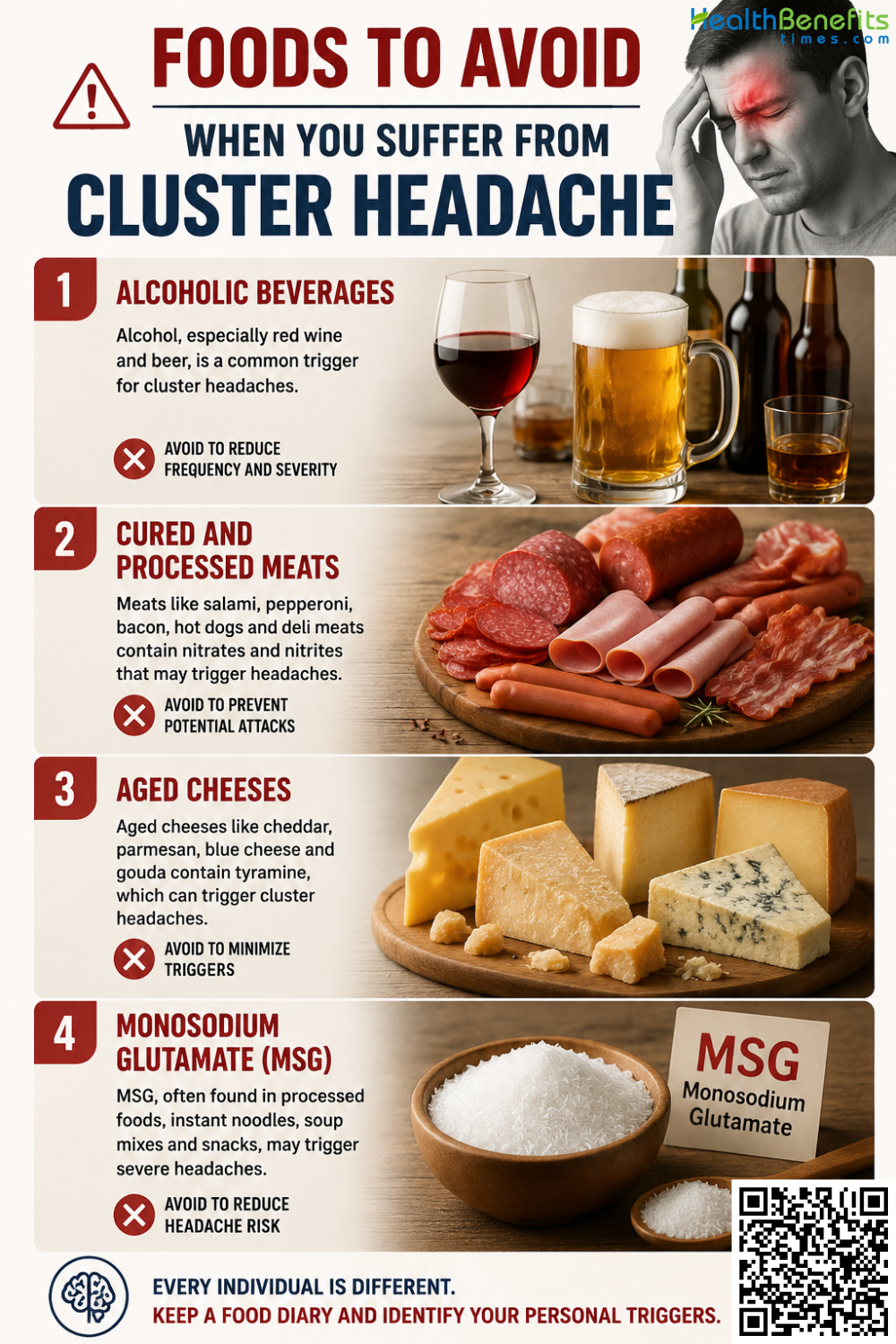
2. Cured and Processed Meats:
Foods like bacon, hot dogs, and deli slices contain nitrates. These chemical preservatives dilate blood vessels, which can suddenly provoke an active cluster attack 19.
3. Aged Cheeses
Hard cheeses are rich in tyramine. Since individuals with cluster headaches exhibit abnormal tyramine metabolism, consuming these foods may disrupt nerve function and trigger pain 20.
4. Monosodium Glutamate (MSG)
Found in many packaged snacks, MSG can overstimulate neural pathways. Doctors frequently recommend avoiding this common additive to help prevent sudden and unpredictable headache attacks 21.
When to See a Doctor When You Suffer from Cluster Headache
1. Experiencing First-Time Symptoms
If you experience explosive, one-sided head pain for the first time, seek immediate medical evaluation to rule out life-threatening conditions like a brain tumor or aneurysm 22.
2. Changes in Attack Patterns
Consult a doctor if your established headache cycle suddenly changes, becomes significantly more severe, or feels fundamentally different from your usual cluster attacks 22.
3. Emergence of Neurological Signs
Seek emergency care if head pain is accompanied by a fever, stiff neck, confusion, numbness, or speaking difficulties, as these indicate severe neurological emergencies 1.
4. Ineffective Current Treatments
Schedule a medical appointment if your currently prescribed treatments, such as pure oxygen therapy or daily preventive medications, no longer successfully stop or reduce your headache attacks 1.