


Paroxysmal hemicrania is a rare primary headache disorder categorized under a group of conditions known as trigeminal autonomic cephalalgias. It is characterized by severe, strictly one-sided stabbing or throbbing head pain, typically localized around the eye, temple, or forehead 1. Unlike common migraines, these painful episodes are remarkably brief—lasting between 2 and 30 minutes—but occur with extreme frequency, often striking from five to forty times a day. During an episode, patients experience localized involuntary nervous system symptoms on the same side as the pain, which frequently include a tearing red eye, nasal congestion, facial sweating, or a drooping eyelid 2. A defining clinical hallmark of paroxysmal hemicrania is its absolute responsiveness to indomethacin; maintaining therapeutic doses of this specific anti-inflammatory medication can completely prevent the attacks and resolve the symptoms 3.
Causes of Paroxysmal hemicrania
1. Nervous System Abnormalities and Genetics
Most cases occur without an underlying disease and are caused by an abnormal activation of specific facial nerve circuits (the trigeminal-autonomic pathways) and a deep brain region called the hypothalamus. Research concludes that inherited genetic factors also play a role, as a family history of related headache disorders increases the likelihood of developing these nerve pathway dysfunctions.
2. Physical Movements and Mechanical Triggers
In roughly 10 percent of affected individuals, painful episodes are directly triggered by simple physical actions, such as bending forward or turning the head. Furthermore, attacks can be provoked by applying firm, direct pressure to sensitive areas on the neck, particularly over the upper bones of the spine 4.
3. Environmental and Lifestyle Triggers
Sudden attacks can be initiated by external variables, which include significant emotional stress, the sudden relaxation period following a stressful event, intense physical exercise, alcohol consumption, and exposure to extremely hot or cold environments. Additionally, certain prescription medications that dilate blood vessels have been clinically proven to trigger these headache episodes 5.
4 Underlying Medical Conditions (Secondary Causes)
A small percentage of individuals develop the condition as a direct result of a separate physical illness or structural injury. Confirmed causes include nerve tumors, spreading cancers located near the eye, blood vessel abnormalities like aneurysms, tumors in the pituitary gland, and areas of tissue damage within the brain. Prior physical trauma to the head or neck has also been documented as an initial cause for developing the disorder.
Symptoms of Paroxysmal hemicrania
1. Intense, One-Sided Head Pain
Individuals experience sudden, severe, and sharp or throbbing pain that is strictly limited to one side of the head, usually focusing on the area around, behind, or above the eye.
2. Short but Highly Frequent Attacks
The painful headache episodes are uniquely brief, typically lasting between two and thirty minutes per attack, but they occur repeatedly, usually striking anywhere from five to forty times within a single 24-hour period.
3. Eye-Related Reactions
On the exact same side as the head pain, the body exhibits involuntary physical changes, most commonly severe eye redness, excessive watering or tearing, a noticeably drooping upper eyelid, and a shrinking of the pupil.
4. Nasal and Facial Changes
During an active pain episode, the affected side of the face frequently develops a blocked or continuously runny nose, mild swelling of the eyelid tissue, and sudden sweating or flushing across the forehead and cheek.
5. Physical Restlessness and Agitation
Unlike individuals with common migraines who generally prefer to rest in a dark room, many people with this condition experience a strong sense of physical restlessness during an attack, finding it difficult to sit perfectly still or lie down until the pain subsides.
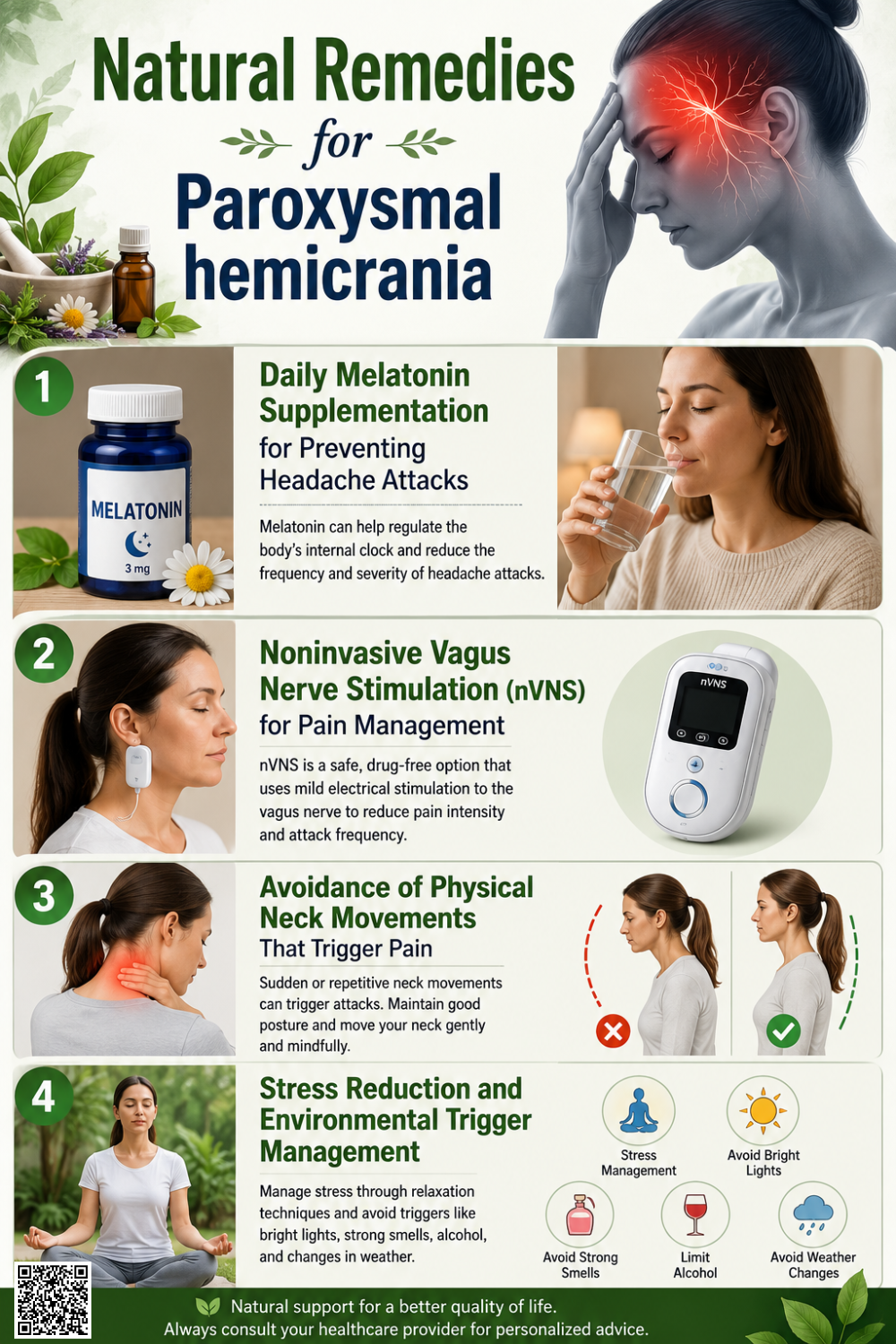 Natural Remedies for Paroxysmal hemicrania
1. Daily Melatonin Supplementation for Preventing Headache Attacks
How it may help
Melatonin is a hormone that regulates sleep cycles and shares a chemical structure with indomethacin. It targets the hypothalamus—the specific brain region involved in these headaches—and provides anti-inflammatory effects that calm overactive nerve pathways to prevent painful attacks 6.
What research says
Clinical evaluations conclude that melatonin is an effective alternative treatment for patients who cannot tolerate indomethacin. Although it may not completely eliminate pain, research confirms it significantly reduces headache frequency and severity in a substantial number of patients with paroxysmal hemicrania 7.
How to use it safely
You should take melatonin precisely as directed by your doctor, usually as a single dose before bedtime. Clinical evidence shows that effective daily doses typically range from 3 to 10 milligrams. Always seek medical supervision before replacing prescribed therapies with supplements.
Potential precautions or side effects
While generally well-tolerated, you may experience minor side effects like daytime sleepiness or dizziness 8. You must consult your physician before use if you take other medications.
2. Noninvasive Vagus Nerve Stimulation (nVNS) for Pain Management
How it may help
Noninvasive vagus nerve stimulation (nVNS) uses a hand-held device to deliver mild electrical impulses to the vagus nerve in the neck. These targeted signals travel to the brainstem to block pain pathways and calm the overactive nerve circuits responsible for these severe headache attacks 9.
What research says
Clinical studies demonstrate that nVNS is a highly beneficial preventive therapy for patients who cannot tolerate indomethacin. Research confirms that regular use reduces monthly headache frequency by more than half in most patients, while significantly decreasing the severity and duration of remaining attacks 10.
How to use it safely
You should apply the specialized device directly to the side of your neck where the pain occurs. Medical protocols require administering consecutive stimulation doses multiple times a day, continuing the treatment for at least three months to achieve optimal pain reduction.
Potential precautions or side effects
Clinical trials report no adverse events from this therapy. However, you must consult a physician to ensure the device is safely calibrated for your specific medical needs.
3. Avoidance of Physical Neck Movements That Trigger Pain
How it may help
In some individuals, specific neck movements directly stimulate hypersensitive nerve circuits in the upper spine and trigeminal system 11. Avoiding these mechanical triggers prevents the physical activation of the neural pathways that initiate severe, sudden headache attacks.
What research says
Clinical studies conclude that approximately 10 percent of patients with paroxysmal hemicrania experience mechanically provoked attacks. Research confirms that simple physical actions, such as bending forward, turning the head, or applying pressure to specific neck vertebrae, can immediately trigger an episode.
How to use it safely
You should carefully observe your daily activities to identify if specific physical actions precede your headache attacks. Once identified, consciously modify your posture, limit abrupt neck rotations, and avoid placing unnecessary pressure on the back of your neck.
Potential precautions or side effects
Adjusting your posture carries no adverse health risks. However, you must consult a physician if severe neck stiffness occurs to ensure no underlying spinal injuries exist.
4. Stress Reduction and Environmental Trigger Management
How it may help
Managing environmental factors and psychological stress stabilizes the nervous system by preventing sudden spikes in stress hormones. This proactive management minimizes the hyperactivation of facial nerve pathways and brain regions responsible for initiating intense headache episodes, keeping the neurological system in a calm, regulated state.
What research says
Clinical observations confirm that extreme emotional stress, the sudden relaxation period following high stress, and environmental extremes like severe temperature changes are known precipitants of attacks . Furthermore, research identifies alcohol consumption and intense physical exertion as external variables that reliably provoke these severe headache episodes.
How to use it safely
You should maintain a consistent daily routine and practice calming techniques like deep breathing to manage emotional stress. Additionally, you must actively identify and avoid personal environmental triggers, such as extreme temperatures or alcohol, to significantly reduce your risk of sudden headache attacks.
Potential precautions or side effects
Lifestyle modifications carry no medical risks. However, you should consult a healthcare provider if your stress levels remain unmanageable or if severe headaches persist despite strict environmental control.
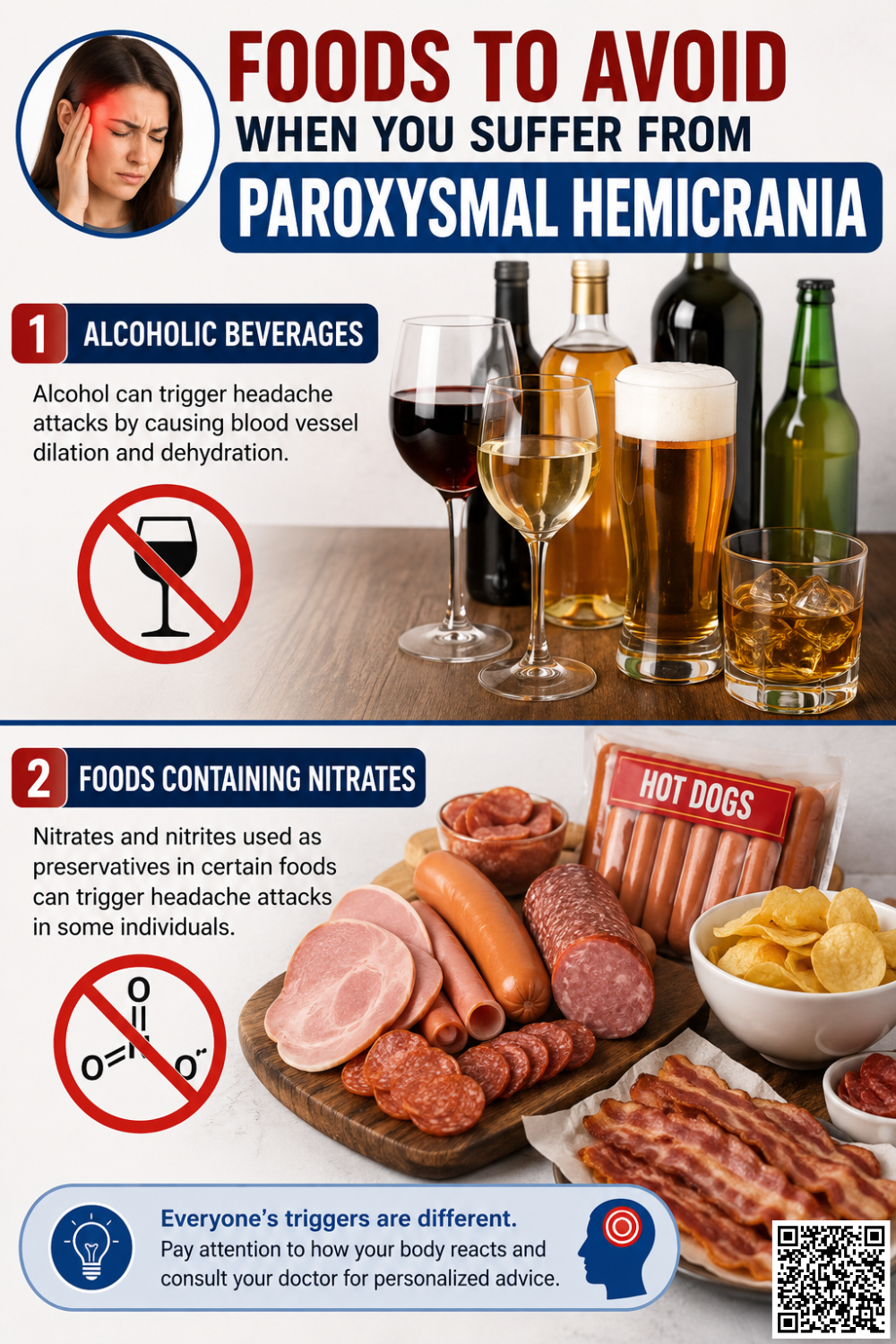 Foods to Avoid When You Suffer from Paroxysmal hemicrania
1. Alcoholic Beverages
Alcohol is the most scientifically documented dietary trigger for paroxysmal hemicrania. Consuming even small amounts can directly provoke severe headache episodes and should be strictly avoided. 12
2. Foods Containing Nitrates
Processed foods like cured meats contain nitrates, which act as nitric oxide donors. This chemical expands blood vessels and is clinically known to trigger these severe headaches. 13
When To See a Doctor When You Suffer from Paroxysmal hemicrania
1. Experiencing First-Time Symptoms
You must see a doctor to confirm the diagnosis and rule out serious underlying brain or nerve conditions that cause identical head pain.
2. Developing New or Changing Pain
You should seek immediate care if your headache pattern changes suddenly, worsens, or is accompanied by fever, signaling a potential medical emergency. 14
3. Failing to Respond to Indomethacin
You should contact your physician if standard indomethacin treatment does not completely eliminate your attacks, as this may indicate an incorrect diagnosis.
4. Experiencing Medication Side Effects
You must seek medical attention if you develop severe stomach pain or bleeding, as long-term indomethacin use carries risks of gastrointestinal ulcers.
5. Noticing New Neurological Symptoms
You require urgent evaluation if your headache occurs alongside vision loss, weakness, or numbness, which are clinical warning signs of brain tissue damage. 15