


An ear furuncle, clinically referred to as acute localized otitis externa, is a painful bacterial infection that develops in a hair follicle within the outer section of the ear canal. The condition is most commonly caused by Staphylococcus aureus bacteria, which trigger an active infection when they enter deeper tissue layers 1. This bacterial entry usually occurs after the delicate skin inside the ear is scratched or injured by objects like cotton swabs, hairpins, or fingernails 2. As the targeted hair follicle becomes infected, it swells into a localized, pus-filled boil. Because the skin inside the ear canal is tightly stretched over underlying cartilage with very little cushioning tissue, the swelling creates immense pressure. Consequently, the primary symptom is severe, localized ear pain that frequently worsens during jaw movement, such as chewing, or when the outer ear is gently manipulated 2.
Causes of Ear Furuncle
- Bacterial Infection of Hair Follicles: The primary medical cause of an ear furuncle is a localized bacterial infection, most frequently caused by Staphylococcus aureus, which directly invades a hair follicle situated in the outer section of the ear canal 2.
- Mechanical Trauma to the Ear Canal: Inserting objects like cotton swabs, fingernails, or hearing aids into the ear can create microscopic cuts in the delicate lining, allowing surface bacteria to bypass the natural protective barrier and enter deeper skin tissues 3.
- Underlying Dermatological Conditions: Chronic skin disorders such as eczema, psoriasis, or contact dermatitis cause excessive itching and scaling, which structurally weakens the ear canal skin and increases the likelihood of bacterial penetration and boil formation 4.
- Weakened Immune System: Systemic medical conditions that compromise immune function, most notably poorly controlled diabetes mellitus, severely reduce the body’s natural ability to fight off routine staphylococcal bacteria, predisposing individuals to severe or recurrent ear furuncles 2.
- Excessive Moisture Accumulation: Prolonged exposure to trapped water or high humidity softens and breaks down the superficial skin layers inside the ear, creating an ideal environment for natural skin bacteria to rapidly multiply and invade vulnerable hair follicles 1.
Symptoms of Ear Furuncle
- Severe, Localized Ear Pain: The primary symptom is intense pain in a specific area of the ear canal, which often worsens when the jaw moves during chewing or when the outer ear is physically touched or pulled 1.
- Visible Red Bump or Pustule: A distinct, swollen, and reddened boil or pus-filled blister appears on the skin just inside the entrance of the ear canal 1.
- Drainage of Fluid and Pus: If the pressure causes the infected boil to naturally rupture, it releases trapped yellow or white fluid, pus, and flaky skin debris out of the ear 1.
- Persistent Itchiness: The infected hair follicle frequently causes continuous itching and a sensation of irritation inside the ear canal as the surrounding skin stretches and swells 4.
- Temporary Hearing Reduction: When a boil grows large enough to physically block the narrow ear canal, it prevents sound waves from properly reaching the eardrum, resulting in a temporary sensation of muffled hearing 5.
- Swollen Lymph Nodes: As the immune system fights the concentrated bacterial infection, the protective lymph nodes located just in front of or behind the affected ear may become enlarged and tender to the touch 1.
How to treat an Ear Furuncle
1. Using Prescription Antibiotic Ear Drops
How it may help
Prescription antibiotic ear drops deliver medicine directly to the infected hair follicle in the ear canal. This targeted approach stops the growth of bacteria causing the boil. By applying the medication exactly where it is needed, these drops help reduce painful swelling and clear the localized infection faster than natural healing 6.
What research says
Clinical studies show that topical antibiotic drops are highly effective as a primary treatment for outer ear infections, curing most cases within a week to ten days 6. Research confirms direct application provides a stronger concentration of medicine at the site, bypassing the widespread bodily effects of oral antibiotics 6.
How to use it safely
Wash your hands thoroughly before handling the bottle. Lie on your side with the affected ear facing upward. Place the prescribed number of drops into the ear canal and remain in this position for three to five minutes to allow the liquid to reach the boil 7.
Potential precautions or side effects
Common side effects include mild stinging, itching, or redness in the ear canal after application 6. Stop using the drops and contact a medical professional if a severe rash develops.
2. Applying a Warm Compress
How it may help
Applying a warm compress increases blood circulation to the affected area. This enhanced blood flow delivers infection-fighting white blood cells directly to the boil. The gentle heat encourages the furuncle to open and drain naturally while providing immediate relief from localized ear pain 8.
What research says
Clinical guidelines endorse moist heat therapy as a standard first-line treatment for localized skin boils. Research confirms that applying warmth accelerates the natural immune response and speeds up the spontaneous rupturing and drainage of the infected hair follicle, often resolving small boils without requiring surgical intervention 8.
How to use it safely
Soak a clean washcloth in warm water and squeeze out the excess liquid. Hold the damp cloth gently against the affected ear for ten to fifteen minutes. Repeat this process three to four times a day until the boil naturally drains. Wash the cloth immediately after use 8.
Potential precautions or side effects
Avoid using excessively hot water to prevent burning sensitive ear skin. Never squeeze or pop the boil yourself, as this can push the infection deeper into the tissue 8.
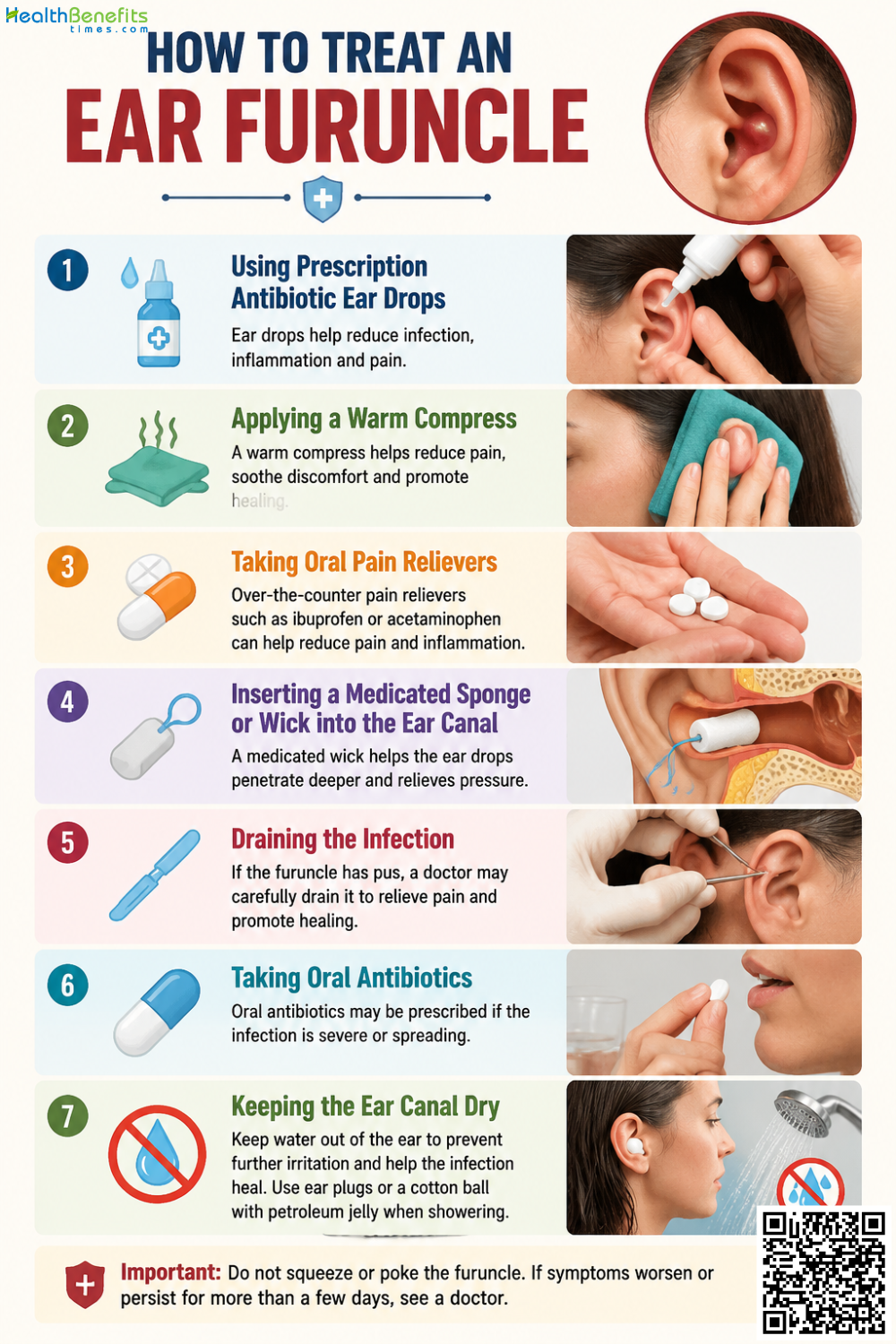
3. Taking Oral Pain Relievers
How it may help
Over-the-counter oral pain relievers, such as ibuprofen or acetaminophen, help manage the intense discomfort associated with an ear boil. Because skin in the ear canal is tightly attached to cartilage, swelling causes severe pain. Ibuprofen specifically decreases inflammation, reducing the pressure around the infected follicle 6.
What research says
Clinical guidelines emphasize that pain management is a crucial step in treating outer ear infections. Research indicates that using oral analgesics alongside topical treatments significantly improves comfort during the initial days of infection, before antibiotics fully eliminate the underlying bacterial growth 6.
How to use it safely
Read the package instructions carefully to determine the correct dosage. Take anti-inflammatory pain relievers with food or a glass of milk to prevent stomach irritation. Never exceed the maximum daily limit printed on the medication label 9.
Potential precautions or side effects
Common side effects include stomach upset and heartburn. Avoid these medications and consult a physician if you have a history of stomach ulcers, bleeding disorders, or kidney disease 9.
4. Inserting a Medicated Sponge or Wick into the Ear Canal
How it may help
When severe swelling blocks the ear canal, drops cannot reach the boil. A doctor inserts a tiny, compressed sponge called an ear wick past the blockage. Once moistened with liquid medication, the sponge expands, pulling the antibiotic inward and holding it directly against the infected area 6.
What research says
Clinical guidelines state that inserting an ear wick is a highly successful method for treating severe ear canal infections. Medical evidence confirms that bypassing the physical blockage is essential; without the wick, topical treatments fail to reach the infection site, delaying recovery and risking complications 6.
How to use it safely
Never attempt to insert an ear wick yourself; it must be placed by a medical professional. Once inserted, apply your prescribed antibiotic drops directly onto the outer end of the sponge. Leave it in place until it falls out naturally or your doctor removes it 6.
Potential precautions or side effects
You may feel mild discomfort during insertion. Do not push the sponge deeper. Contact your doctor immediately if pain worsens or if the wick remains stuck after several days 6.
5. Draining the Infection
How it may help
When an ear boil becomes large, painful, and filled with pus, a doctor may need to drain it. This minor clinical procedure instantly relieves the severe pressure built up inside the ear canal. Removing the trapped infected fluid stops the pain and allows the tissue to begin healing immediately 8.
What research says
Clinical guidelines identify surgical incision and drainage as the most effective treatment for large boils that do not resolve with warm compresses or antibiotics alone. Medical research concludes that properly opening the infected pocket provides rapid pain relief and significantly speeds up the overall recovery time 8.
How to use it safely
Never attempt to squeeze, pop, or pierce an ear boil at home. This procedure must be performed by a healthcare provider in a sterile clinical setting. After the doctor drains the infection, carefully follow their instructions for keeping the ear clean and applying any prescribed antibiotic ointments 8.
Potential precautions or side effects
Squeezing the boil yourself can push bacteria deeper, causing severe spreading infections or scarring 8. Professional drainage may cause temporary bleeding and mild soreness at the incision site.
6. Taking Oral Antibiotics
How it may help
Oral antibiotics combat severe ear boils by attacking the bacterial infection from inside the body. Medical professionals prescribe these medications when the infection spreads beyond the ear canal into surrounding facial tissue or causes a fever, ensuring the bacteria are completely eliminated 8.
What research says
Clinical guidelines reserve oral antibiotics for complicated cases, such as when patients develop a fever or the infection spreads to nearby skin. Research confirms that while unnecessary for simple boils, systemic antibiotics are crucial for preventing dangerous complications in severe bacterial infections 8.
How to use it safely
Always complete the entire prescribed course of oral antibiotics, even if your ear pain disappears. Stopping the medication early allows surviving bacteria to multiply and become resistant to treatments. Take the pills exactly as directed by your healthcare provider 10.
Potential precautions or side effects
Common side effects include nausea, diarrhea, and stomach upset 10. Seek emergency medical help immediately if you experience breathing difficulties or a severe rash after taking the medication.
7. Keeping the Ear Canal Dry
How it may help
Moisture trapped inside the ear creates an ideal environment for bacteria to multiply. Keeping the ear canal completely dry removes this breeding ground. This simple environmental control prevents the bacterial infection from worsening and supports the body as it heals the inflamed hair follicle 7.
What research says
Clinical protocols emphasize moisture control as a critical component of treating outer ear bacterial infections. Research concludes that maintaining a dry ear canal significantly reduces the bacterial load and accelerates overall healing times when combined with standard prescribed medical treatments 6.
How to use it safely
Place a cotton ball lightly coated with petroleum jelly into the outer ear before showering to block water. Gently dry the outer ear with a towel afterward. Avoid swimming or fully submerging your head until a medical professional confirms the boil has cleared 7.
Potential precautions or side effects
Never insert cotton swabs deep into the ear canal to dry it. This action can push bacteria deeper, irritate sensitive skin, and potentially rupture the eardrum 7.
Foods to Avoid When You suffer from Ear Furuncle
While specific foods do not directly cause an ear furuncle, certain dietary choices can impair the body’s immune response and delay the healing of localized bacterial skin infections. Clinical evidence indicates that diets promoting high blood sugar or systemic inflammation severely compromise the ability of white blood cells to effectively destroy Staphylococcus aureus, the bacteria primarily responsible for forming painful boils in the ear canal 11. Avoiding specific inflammatory foods supports natural immune function during active treatments.
1. High-Sugar Foods and Beverages
Excessive glucose rapidly elevates blood sugar levels. High blood sugar structurally weakens the immune system, making it significantly harder for the body to fight off staphylococcal bacterial infections 11.

2. Ultra-Processed Foods
Heavily processed foods contain synthetic additives and unhealthy fats that trigger chronic bodily inflammation. This inflammatory state diverts immune resources, slowing the natural healing process of infected skin tissues 12.
3. Refined Carbohydrates
Foods like white bread and pastries have a high glycemic index. They cause immediate blood sugar spikes, which clinical studies link to an increased recurrence of severe bacterial boils 11.
4. Excessive Alcohol
Consuming high amounts of alcohol suppresses bone marrow function and reduces the production of infection-fighting white blood cells, leaving the body highly vulnerable to spreading bacterial skin infections 13.
5. Foods High in Trans Fats
Artificial trans fats, often found in fried commercial foods, impair blood vessel function. Poor circulation restricts the delivery of necessary antibodies and oxygen to the infected ear canal 14.
When to see Doctor when you suffer from Ear Furuncle
Seeking timely medical evaluation for a localized bacterial infection in the ear canal is critical to prevent severe structural and systemic complications. Clinical guidelines dictate that while small furuncles may occasionally resolve naturally, infections exhibiting aggressive growth or spreading beyond the localized hair follicle require professional intervention. Medical assessment is crucial to differentiate a simple boil from early mastoiditis or malignant otitis externa, a dangerous necrotizing infection that aggressively destroys surrounding temporal cartilage and bone tissue 1. Immediate physician-directed treatments, such as targeted systemic antibiotic therapy or sterile surgical drainage, are strictly necessary when specific severe warning signs appear 2.
1. Intense, Unrelenting Pain
Consult a doctor if ear pain becomes unbearable or disrupts sleep. A physician may need to perform a sterile incision and drainage to relieve extreme pressure 1.
2. Spreading Redness and Swelling
Seek immediate care if inflammation spreads to the outer ear or face. This indicates cellulitis, which requires prescription systemic antibiotics to stop tissue necrosis 15.
3. High Fever Development
A fever indicates the localized bacterial infection has entered the bloodstream. This systemic reaction requires aggressive medical evaluation and oral antibiotics to prevent severe physical complications 16.
4. Complete Ear Canal Blockage
See a specialist if swelling fully obstructs the canal, causing hearing loss. Doctors must insert a medicated wick to ensure topical antibiotics reach the infected follicle 17.
5. Pre-existing Diabetes or Immunodeficiency
Immunocompromised individuals must seek immediate evaluation for any ear boil. These patients carry a highly elevated risk of developing malignant necrotizing otitis externa, a life-threatening bone infection 1.