


Benign prostatic hyperplasia (BPH) is a common condition in older men involving a non-cancerous enlargement of the prostate gland. The prostate is a small gland that surrounds the urethra, which is the tube that carries urine out of the body. As the prostate grows, it can press against and squeeze the urethra, which physically restricts the normal flow of urine 1. This pressure causes uncomfortable lower urinary tract symptoms, such as a weak urine stream, difficulty starting urination, a sudden and urgent need to urinate, and waking up frequently at night to use the bathroom 2. BPH is highly prevalent, affecting roughly half of all men between the ages of 51 and 60, and up to 90 percent of men older than 80 3. Importantly, having an enlarged prostate is a normal part of aging for many men and does not increase the risk of developing prostate cancer.
Causes of Benign Prostatic Hyperplasia
1. Hormonal Imbalances with Age
As men grow older, the amount of active testosterone in their blood naturally decreases, which leaves a higher proportion of estrogen. Studies suggest that this higher ratio of estrogen within the prostate gland triggers prostate cells to grow and multiply 1.
2. Dihydrotestosterone (DHT) Accumulation
DHT is a male hormone that plays a crucial role in prostate development. Even as overall blood testosterone levels drop during aging, older men continue to produce and store high amounts of DHT in the prostate. This localized build-up directly encourages the continued growth of prostate tissue 3.
3. Genetics and Family History
BPH frequently runs in families, indicating a strong genetic component. Men who have a direct blood relative, such as a father or brother, with an enlarged prostate face a significantly higher risk of developing the condition themselves 4.
4. Metabolic Factors and Obesity
There is a strong link between prostate enlargement and metabolic issues. Men who have obesity, type 2 diabetes, or heart disease have a higher risk of developing BPH, likely because these conditions cause body-wide inflammation and hormonal changes that stimulate prostate growth 5.
Symptoms of Benign Prostatic Hyperplasia
1. Frequent Urination (Frequency and Nocturia)
A primary symptom is the need to urinate unusually often, typically defined as eight or more times a day. This includes waking up multiple times during the night to use the bathroom, a condition known as nocturia 1.
2. Urinary Urgency
Individuals often experience a sudden, powerful, and uncontrollable need to urinate that is difficult to delay 3.
3. Difficulty Starting (Hesitancy)
It is common to have trouble initiating the urine flow. A person may need to wait several seconds or physically strain before urination begins 2.
4. Weak or Interrupted Urine Stream
Because the enlarged prostate squeezes the urethra, the resulting urine stream is often weak, slow, or constantly stops and starts rather than flowing in a steady, continuous stream 1.
5. Incomplete Bladder Emptying
There is often a lingering sensation that the bladder is still partially full immediately after urinating. This retained urine can create an environment that encourages bacterial growth, leading to urinary tract infections 4.
6. Post-Urination Dribbling
Urine may continue to leak or dribble out slowly for a brief period after the main stream has completely stopped 2.
7. Urinary Retention
In severe, advanced cases, the swelling can completely block the urethra, making it impossible to urinate. This complete inability to empty the bladder is a medical emergency that requires immediate medical intervention 3.
Natural Remedies for Benign Prostatic Hyperplasia
1. Beta-Sitosterol
How It May Help
Beta-sitosterol is a natural plant substance found in various fruits, vegetables, and nuts. For men with benign prostatic hyperplasia (BPH), it helps relieve uncomfortable urinary symptoms by reducing prostate inflammation and relaxing pelvic muscles to improve urine flow, though it does not physically shrink the enlarged prostate gland 6.
What Research Says
Clinical reviews conclude that beta-sitosterol significantly improves urinary symptom scores and increases peak urine flow rates in men with mild to moderate BPH 6. However, researchers emphasize that the supplement strictly manages symptoms without reducing the actual size of the prostate, meaning it is not a cure for the underlying enlargement 7.
How to Use It Safely
You can take beta-sitosterol as a daily oral dietary supplement. Standard clinical dosages typically range from 60 to 130 milligrams per day, divided into multiple doses 6. Always consult your doctor before starting this supplement to ensure it is appropriate for your specific health needs.
Potential Precautions or Side Effects
Beta-sitosterol is generally considered safe but can occasionally cause mild digestive side effects, such as nausea, indigestion, or gas 7.
2. Saw Palmetto Berry Extract
How It May Help
Saw palmetto berry extract is derived from a small palm tree and is frequently used to manage BPH symptoms. It is believed to work by blocking a specific enzyme that converts testosterone into dihydrotestosterone (DHT), which is the primary hormone responsible for stimulating prostate gland enlargement and causing urinary difficulties 8.
What Research Says
Despite its popularity, rigorous clinical trials conclude that saw palmetto extract does not improve urinary symptoms, urine flow, or nighttime awakenings better than a placebo pill 8. Major health organizations state there is currently insufficient scientific evidence to recommend it as an effective treatment for an enlarged prostate 1.
How to Use It Safely
If you choose to try saw palmetto, you must first consult your healthcare provider to ensure it will not interfere with your prostate evaluations 8. When approved, the standard studied dosage is typically 320 milligrams taken daily as an oral capsule 9.
Potential Precautions or Side Effects
Saw palmetto is generally well-tolerated by most men, but it can occasionally cause mild side effects such as headaches, digestive discomfort, constipation, and nausea 8.
3. Pygeum (African Plum Tree Bark)
How It May Help
Pygeum is an herbal extract derived from the bark of the African plum tree. It contains natural compounds that help reduce inflammation within the prostate gland and inhibit the hormones that cause prostate cells to multiply. This action helps relax the urinary tract, easing the urge to urinate frequently and improving overall bladder function 10.
What Research Says
Extensive clinical reviews report that men taking pygeum experience a significant improvement in lower urinary tract symptoms compared to those taking a placebo. Studies conclude that the extract effectively increases peak urine flow rates and successfully reduces the amount of urine left in the bladder after urination 10.
How to Use It Safely
You should discuss starting pygeum with your doctor to ensure it fits your overall health strategy. In clinical studies, the standard effective dosage generally ranges from 100 to 200 milligrams per day, usually divided into two equal doses taken orally as capsules 11.
Potential Precautions or Side Effects
Pygeum is considered generally safe for most men. When side effects do occur, they are typically mild and limited to digestive discomfort, such as stomach upset, nausea, or diarrhea 12.
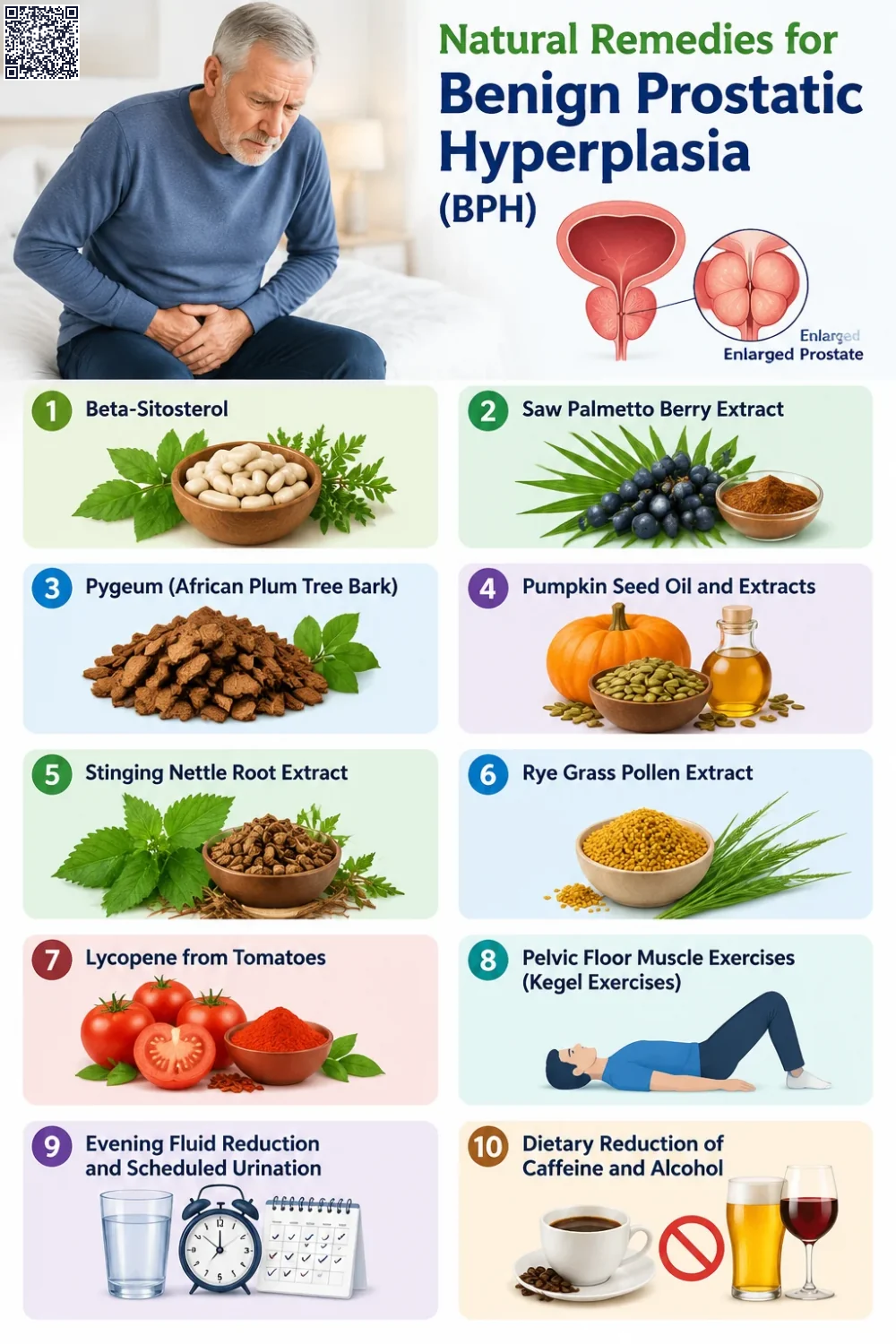
4. Pumpkin Seed Oil and Extracts
How It May Help
Pumpkin seed extracts are rich in natural plant compounds, zinc, and healthy fats that support prostate health. These active substances work together to reduce gland inflammation and block specific hormones that drive prostate tissue growth, which helps relieve pressure on the urethra and eases common urinary difficulties 12.
What Research Says
Clinical trials demonstrate that men taking pumpkin seed oil experience significant improvements in overall urinary symptoms and report a better quality of life compared to those taking a placebo. Researchers conclude that it effectively reduces nighttime urination frequency and improves overall urine flow without shrinking the actual prostate gland 13.
How to Use It Safely
You should consult your doctor before adding this supplement to your daily routine. In clinical studies, an effective dosage is typically 320 to 500 milligrams of pumpkin seed oil taken daily as an oral capsule, often divided into two equal doses consumed with meals 12.
Potential Precautions or Side Effects
Pumpkin seed oil is considered highly safe for most men. When minor side effects do occur, they are typically limited to mild stomach upset, slight nausea, or mild diarrhea 13.
5. Stinging Nettle Root Extract
How It May Help
Stinging nettle root extract contains natural chemicals that reduce prostate gland inflammation. These active compounds also block specific hormones from binding to prostate tissue, which stops the cells from multiplying. By slowing this cellular growth and reducing internal swelling, the extract relieves physical pressure on the urethra and eases urinary difficulties 14.
What Research Says
Clinical trials demonstrate that stinging nettle root significantly improves lower urinary tract symptoms compared to a placebo. Researchers conclude that the extract effectively decreases nighttime urination frequency and improves peak urine flow rates. It provides measurable symptom relief without reducing the overall physical size of the prostate 15.
How to Use It Safely
You should consult your healthcare provider before starting stinging nettle root. In clinical studies, an effective dosage is typically 360 milligrams taken daily as an oral capsule. This is often divided into two equal doses and consumed with meals for optimal absorption 15.
Potential Precautions or Side Effects
Stinging nettle root is generally very safe. When mild side effects do occur, they are usually limited to minor stomach discomfort, excessive sweating, or mild skin rashes 14.
6. Rye Grass Pollen Extract
How It May Help
Rye grass pollen extract, often recognized by the clinical name Cernilton, helps manage benign prostatic hyperplasia by relaxing the smooth muscles of the urethra and improving the bladder’s natural ability to contract. This combined physical action reduces resistance against urine flow, making it significantly easier to empty the bladder 16.
What Research Says
Systematic reviews of clinical trials conclude that rye grass pollen extract modestly improves overall lower urinary tract symptoms compared to a placebo. Researchers note that men taking the extract experience a better overall quality of life and report a significant reduction in the need to wake up at night to urinate 17.
How to Use It Safely
You should consult your doctor before adding this herbal supplement to your management plan. In clinical studies, the standard effective dosage is typically 126 milligrams to 378 milligrams of the extract taken daily as an oral capsule, often divided into multiple equal doses consumed with daily meals 18.
Potential Precautions or Side Effects
Rye grass pollen extract is generally very well-tolerated by most men. When rare side effects do occur, they are strictly limited to minor digestive upset, such as mild nausea 18.
7. Lycopene from Tomatoes
How It May Help
Lycopene is a powerful natural antioxidant that gives tomatoes their red color. It concentrates directly in prostate tissue, where it neutralizes harmful molecules and reduces chronic inflammation. By decreasing this oxidative stress, lycopene stops prostate cells from rapidly multiplying, which helps prevent the gland from further enlargement and relieves urinary pressure 12.
What Research Says
Clinical trials show that men taking daily lycopene supplements experience a halt in prostate growth compared to those given a placebo. Researchers conclude that lycopene effectively improves lower urinary tract symptom scores, enhances overall urine flow, and successfully lowers prostate-specific antigen (PSA) levels in the blood 19.
How to Use It Safely
You can easily increase your intake by eating cooked tomato products, as heat significantly improves lycopene absorption. If you choose an oral daily supplement, clinical trials typically use 15 milligrams. Always discuss starting new supplements with your doctor first 19.
Potential Precautions or Side Effects
Lycopene is considered highly safe for general use. Consuming excessively high amounts may occasionally cause a completely harmless, temporary orange discoloration of the skin or minor digestive upset 20.
8. Pelvic Floor Muscle Exercises (Kegel Exercises)
How It May Help
Pelvic floor muscle exercises, commonly called Kegels, strengthen the muscles that directly support the bladder and control urine flow. By physically building these muscles, men can improve their ability to hold urine, suppress sudden urinary urges, and successfully stop accidental leakage or post-urination dribbling 1.
What Research Says
Clinical research confirms that pelvic floor muscle training effectively reduces the severity of lower urinary tract symptoms in men with an enlarged prostate. Health authorities conclude that regularly performing these physical exercises significantly decreases instances of urinary urgency and successfully improves overall voluntary bladder control 3.
How to Use It Safely
Identify the correct muscles by stopping your urine stream once. Afterward, only practice on an empty bladder. Squeeze these pelvic muscles for three to five seconds, then fully relax. You should aim to complete ten to fifteen repetitions, three times a day, in any comfortable position 21.
Potential Precautions or Side Effects
These exercises are completely safe. However, never routinely practice them while actively urinating, as this can prevent the bladder from fully emptying and increase the risk of bacterial infections 21.
9. Evening Fluid Reduction and Scheduled Urination
How It May Help
Limiting fluid intake before bedtime directly reduces the volume of urine the kidneys produce overnight, which successfully decreases frequent sleep interruptions. Additionally, adopting a scheduled urination routine trains the bladder muscle to hold more fluid over time. This physical conditioning helps reduce sudden urges and decreases overall daytime bathroom visits 2.
What Research Says
Medical guidelines establish behavioral modifications as highly effective first-line treatments for mild prostate enlargement. Clinical reviews conclude that intentionally managing fluid timing and adhering to a strict voiding schedule significantly improves lower urinary tract symptom scores and successfully reduces disruptive nighttime awakenings compared to taking no action 3.
How to Use It Safely
Stop drinking all liquids one to two hours before going to sleep. During daytime hours, you should practice scheduled urination by purposefully using the bathroom at set intervals, such as every three hours, even if you do not currently feel a strong urge to go 1.
Potential Precautions or Side Effects
You must consume adequate water during the day. Severely restricting your total daily hydration causes concentrated urine, which chemically irritates the bladder lining and can worsen your urinary urgency 2.
10. Dietary Reduction of Caffeine and Alcohol
How It May Help
Caffeine and alcohol act as strong diuretics, meaning they force the kidneys to produce excess urine rapidly. Both substances also physically irritate the inner lining of the bladder and stimulate muscle spasms. Eliminating these specific chemical triggers directly reduces sudden urinary urgency and decreases overall bathroom frequency 1.
What Research Says
Urological guidelines establish that eliminating dietary bladder irritants is a highly effective primary behavioral treatment. Clinical studies conclude that actively reducing daily caffeine and alcohol intake significantly lowers urinary tract symptom severity scores and successfully decreases disruptive nighttime awakenings in men managing enlarged prostates 3.
How to Use It Safely
You should gradually reduce your intake of coffee, tea, soda, and alcoholic beverages to minimize cravings. Try to completely avoid consuming these specific beverages during the late afternoon and evening hours to successfully prevent them from disrupting your sleep pattern with nighttime urination 2.
Potential Precautions or Side Effects
Stopping caffeine abruptly causes temporary withdrawal symptoms like severe headaches and fatigue 22. Always replace these avoided drinks with plain water to prevent dehydration and irritating, highly concentrated urine 1.
Foods to Avoid When You suffer from Benign Prostatic Hyperplasia
1. Red and Processed Meats
Consuming high amounts of beef, pork, and processed meats increases body-wide inflammation, which significantly elevates the risk of developing clinical prostate enlargement 5.
2. High-Fat Dairy Products
Diets heavy in whole milk, cheese, and butter stimulate prostate cell growth, directly worsening lower urinary tract symptoms and accelerating gland enlargement 23.
3. Excess Dietary Sodium
High salt intake forces the kidneys to overwork and increases urinary tract irritation, which severely worsens frequent urination and nighttime awakenings 24.
4. Refined Carbohydrates and Sugars
Diets high in refined sugars cause insulin spikes and metabolic inflammation, which clinically correlates with increased prostate volume and more severe urinary symptoms 5.
When to see Doctor when you struggle from Benign Prostatic Hyperplasia
1. Complete Inability to Urinate
Seek immediate emergency medical care if you cannot pass any urine. This acute retention causes severe damage to the bladder and kidneys if left untreated 1.
2. Blood in the Urine
Consult a doctor immediately if you notice visible blood in your urine, as this strongly indicates serious underlying complications, dangerous infections, or physical bladder damage 2.
3. Painful Urination or Fever
Seek prompt medical evaluation if urination becomes painful or is accompanied by a fever. These symptoms signify an active bacterial urinary tract infection requiring antibiotics 3.
4. Worsening Daily Symptoms
Schedule an appointment if frequent urination, weak flow, or sudden urges severely disrupt your sleep and daily activities, requiring clinical evaluation and targeted medical intervention 4.