


Wheezing is a high-pitched, whistling sound that occurs during breathing when air flows through narrowed or restricted airways. This sound is most commonly heard when breathing out, though it can also happen when taking a breath in. The narrowing of the air passages is typically caused by inflammation, excess mucus, or muscle spasms within the lungs. Health authorities note that wheezing is not a disease itself, but rather a primary symptom of underlying respiratory issues, most notably asthma, chronic obstructive pulmonary disease (COPD), severe allergies, or respiratory infections 1. While a mild, isolated episode might clear up on its own, persistent or severe wheezing indicates restricted airflow that requires clinical evaluation to identify the root cause and properly restore normal breathing function.
Causes of Wheezing
- Asthma: This condition is the most frequent cause of wheezing, resulting from chronic inflammation that swells and narrows the lung’s airways 2
- Respiratory Infections: Illnesses caused by viruses or bacteria, such as pneumonia or bronchiolitis, lead to airway irritation and increased mucus production 3
- Allergic Reactions: Exposure to environmental allergens triggers a rapid immune response that causes the breathing tubes to constrict and limit airflow 2
- Gastroesophageal Reflux Disease (GERD): Chronic stomach acid washing back up into the throat can irritate lung tissues, causing the airways to spasm 2
- Foreign Object Inhalation: Accidentally breathing food, small toys, or other objects into the airway physically blocks normal airflow and creates a whistling sound 4
- Heart Conditions: Poor pumping of the heart, such as in heart failure, can cause fluid to accumulate inside the lungs, which obstructs breathing and mimics asthma symptoms 3
- Obstructive Sleep Apnea: The relaxation of throat tissues during sleep can partially block the upper airway, resulting in nighttime wheezing 2
- Genetic and Structural Abnormalities: Diseases like cystic fibrosis produce unusually thick, sticky mucus that clogs airways, while physical defects present from birth can permanently restrict the lung passages 2
Symptoms Associated with Wheezing
- High-Pitched Whistling Sound: The primary characteristic of wheezing is a continuous musical or rattling noise emitting from the chest. This sound is most prominent when breathing out (exhaling), though it can also occur when taking a breath in 5.
- Shortness of Breath (Dyspnea): Individuals frequently experience a sudden or ongoing feeling of breathlessness, often described as an inability to draw enough air into the lungs 6.
- Chest Tightness: The restriction of airways typically causes a physical sensation of heavy pressure, squeezing, or constriction across the chest wall 7.
- Persistent Coughing: A recurrent cough often accompanies the whistling sound, and these coughing fits tend to worsen significantly during the night or early in the morning 8.
- Rapid Breathing (Tachypnea): As the body struggles to maintain oxygen levels through narrowed breathing tubes, the resting breathing rate may abnormally increase above 20 breaths per minute in adults 6.
- Increased Work of Breathing: In severe cases, visible signs of physical respiratory distress appear. This includes the flaring of the nostrils and the visible inward pulling (retraction) of the neck and rib muscles while attempting to inhale 9.
- Sleep Disturbances: Because symptoms frequently flare up or worsen at night, individuals often experience sudden awakenings, leading to daytime fatigue and reduced concentration 5.
Natural Remedies for Wheezing (mild, non-emergency)
1. Practicing Pursed-Lip Breathing
How it may help
Pursed-lip breathing helps control wheezing by creating a small amount of pressure inside the airways. This pressure keeps the breathing tubes open longer, preventing them from closing while breathing out. By reducing trapped air, this technique decreases the physical effort required to breathe and improves oxygen levels in the body 10.
What research says
Clinical literature confirms that pursed-lip breathing is a highly effective intervention for conditions that narrow the airways. Research demonstrates that prolonging the outward breath successfully empties the lungs of stale, trapped air. This significantly relieves sudden breathlessness and helps individuals easily regain control over their breathing rate during mild wheezing 11.
How to use it safely
To perform this technique safely, relax your neck and shoulder muscles. Inhale slowly through your nose for a count of two. Pucker your lips tightly, exactly as if blowing out a candle, and exhale gently through your mouth for a count of four 12.
Potential precautions or side effects
Never force the air out of your lungs rapidly. If this breathing exercise causes dizziness or lightheadedness, stop immediately and return to your normal breathing pattern 13.
2. Eliminating Indoor Allergens
How it may help
Removing indoor allergens helps control wheezing by eliminating the microscopic particles that trigger hyperactive immune responses in the respiratory tract. When individuals reduce exposure to common triggers like dust mites, pet dander, and mold, the airways experience less irritation, directly preventing the swelling and muscle spasms responsible for narrowed breathing passages 14.
What research says
Clinical studies confirm that comprehensive indoor allergen reduction significantly decreases respiratory symptoms and wheezing frequency. Environmental health research demonstrates that minimizing indoor exposure to household triggers lowers airway hyperreactivity. Consequently, patients who actively manage their indoor air quality experience fewer asthma flare-ups and require less frequent medical intervention for breathing difficulties 15.
How to use it safely
Wash your bed linens weekly in hot water to destroy dust mites. Use a vacuum equipped with a HEPA filter to clean carpets and furniture thoroughly. Keep pets out of sleeping areas, and maintain indoor humidity below fifty percent to prevent mold growth inside your home 16.
Potential precautions or side effects
Wear a protective mask while cleaning, as vacuuming temporarily disturbs settled particles. If you are highly sensitive, ask someone else to perform these deep cleaning tasks for you 16.
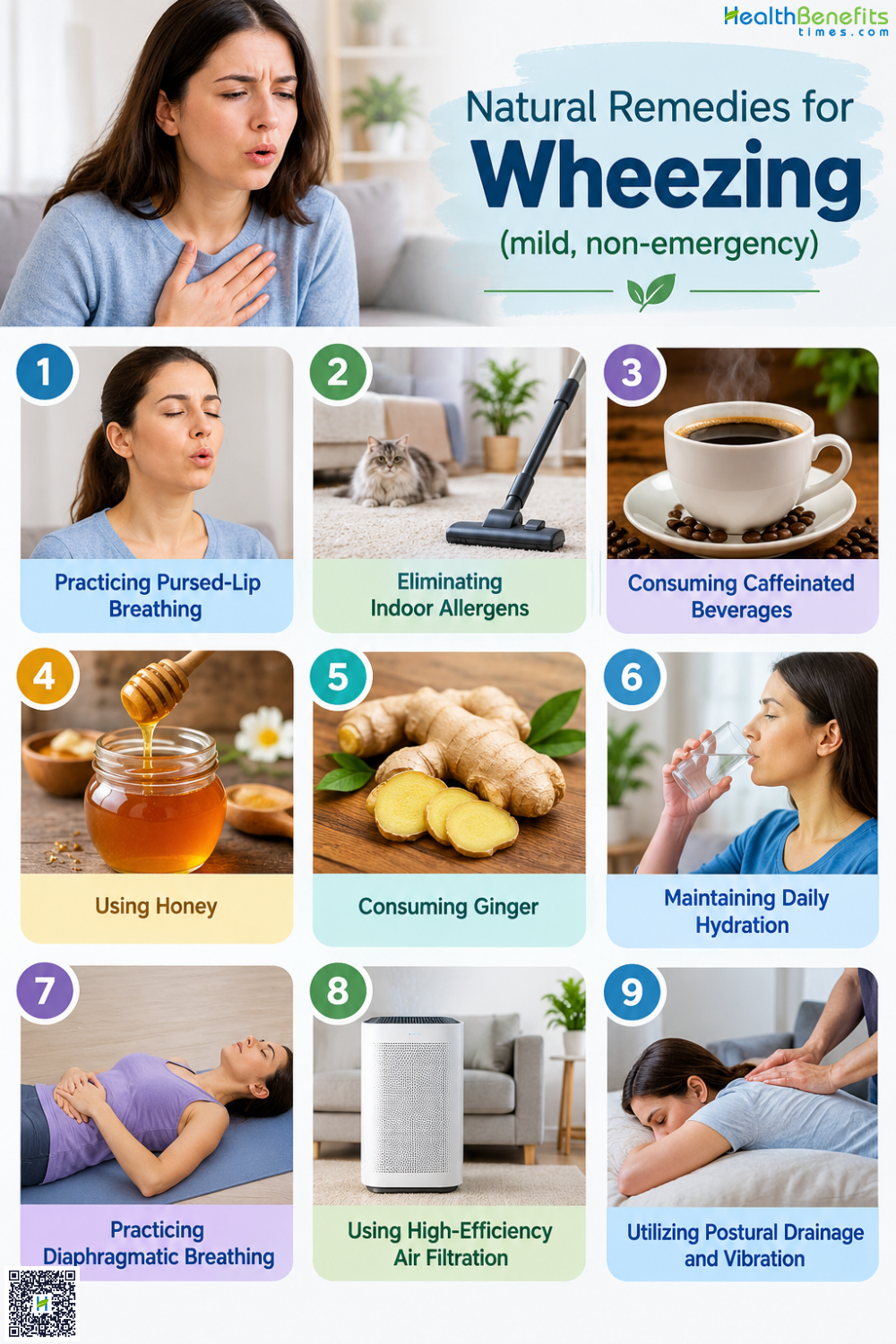
3. Consuming Caffeinated Beverages
How it may help
Consuming caffeinated beverages helps control mild wheezing because caffeine is chemically related to theophylline, a standard asthma medication. When absorbed, caffeine functions as a mild bronchodilator. It effectively relaxes the constricted muscles surrounding the breathing tubes, which safely opens the airways and makes it physically easier for air to flow. 17
What research says
Clinical reviews consistently demonstrate that caffeine creates a measurable, immediate improvement in overall airway function for individuals experiencing mild respiratory restriction. Comprehensive research concludes that a single moderate dose of caffeine noticeably expands the lung airways for up to four hours, temporarily relieving wheezing without requiring prescription rescue medication. 18
How to use it safely
To manage symptoms safely, slowly drink one to two cups of warm, brewed black coffee or strong tea when you first notice mild wheezing. Avoid adding dairy. Never replace your prescribed medical rescue inhalers with caffeine if your breathing difficulties suddenly worsen or persist. 19
Potential precautions or side effects
Immediately limit intake if you experience a rapid heart rate, jitteriness, or insomnia. Furthermore, caffeine can trigger acid reflux, which may severely irritate your throat and cause further airway spasms. 20
4. Using Honey
How it may help
Honey acts as a natural demulcent, meaning it physically coats and soothes an irritated throat. By calming the mucous membranes and reducing inflammation in the upper respiratory tract, it effectively decreases coughing fits. This soothing action prevents further airway irritation that can trigger or worsen mild wheezing. 21
What research says
Clinical trials conclude that honey significantly reduces cough frequency and respiratory severity, particularly during upper respiratory infections. Medical research demonstrates that honey performs better than usual care and common over-the-counter cough suppressants in calming nighttime airway irritation, thereby improving breathing comfort and sleep quality without pharmaceutical interventions. 22
How to use it safely
Swallow one to two teaspoons of plain honey up to twice daily to soothe throat irritation. Alternatively, dissolve the honey into a cup of warm water or decaffeinated tea to help loosen airway mucus. Consume this mixture slowly before bedtime to calm nighttime respiratory spasms. 23
Potential precautions or side effects
Never give honey to infants under one year old due to the severe risk of infant botulism. Additionally, monitor your blood sugar closely if you manage a diabetic condition. 24
5. Consuming Ginger
How it may help
Ginger contains active natural compounds, specifically gingerols, that directly target and relax the smooth muscles lining the respiratory tract. By significantly reducing airway inflammation and preventing muscle spasms, this root helps widen narrowed breathing passages. This steady relaxation improves airflow and naturally decreases the whistling sound of mild wheezing. 25
What research says
Clinical studies reveal that ginger compounds effectively relax constricted airway tissues. Respiratory research concludes that these active components not only open breathing passages on their own but also work synergistically with standard asthma medications to enhance overall lung function, offering a proven complementary approach for relieving restricted breathing. 26
How to use it safely
To safely ease breathing, steep one inch of freshly sliced ginger root in boiling water for ten minutes to make a soothing tea. Drink this warm beverage up to twice daily. Alternatively, mix small amounts of freshly grated ginger directly into your daily meals for a gentle effect. 27
Potential precautions or side effects
Do not consume large amounts, as excessive doses cause heartburn or stomach upset. Consult a physician before use if taking blood-thinning medications, as ginger can increase bleeding risks. 27
6. Maintaining Daily Hydration
How it may help
Maintaining optimal daily hydration helps control wheezing by thinning the thick, sticky mucus that frequently clogs respiratory passages. When lung secretions remain thin and fluid, the body can easily cough them out. This natural clearing process removes physical obstructions from the breathing tubes, immediately reducing the whistling sound and effort required to breathe. 28
What research says
Clinical respiratory research concludes that systemic dehydration significantly impairs mucociliary clearance, the body’s mechanism for sweeping debris from the lungs. Medical studies demonstrate that proper fluid intake prevents mucus from forming solid plugs, which is essential for maintaining unrestricted airflow and reducing airway hyperresponsiveness in patients experiencing respiratory irritation. 29
How to use it safely
To safely thin lung secretions, consistently drink clear water evenly throughout the day. You should also consume warm fluids, such as clear broths or decaffeinated herbal teas, which provide soothing heat that further helps relax mild airway constriction and easily loosen stubborn chest congestion. 30
Potential precautions or side effects
Avoid excessive fluid intake if you have severe kidney disease or heart failure, as fluid overload can rapidly accumulate inside the lungs and drastically worsen your breathing difficulties. 31
7. Practicing Diaphragmatic Breathing
How it may help
Diaphragmatic breathing helps control wheezing by engaging the large muscle at the base of the lungs instead of the weaker chest muscles. This targeted technique maximizes lung expansion and significantly reduces the physical effort required to inhale. By promoting deep, controlled breaths, it effectively slows the breathing rate and minimizes the airway turbulence that produces whistling sounds. 32
What research says
Clinical pulmonary research concludes that diaphragmatic breathing effectively reduces the body’s overall work of breathing and oxygen demand. Medical studies demonstrate that individuals utilizing this technique experience notable improvements in lung capacity. It successfully lowers respiratory rates and grants patients greater physical control over sudden breathlessness during mild obstructive airway events. 33
How to use it safely
Sit comfortably and place one hand on your chest and the other on your stomach. Breathe in deeply through your nose, ensuring your stomach rises while your chest remains perfectly still. Slowly exhale through pursed lips, allowing your stomach muscles to gently fall back inward. 34
Potential precautions or side effects
Avoid forcing deep breaths or practicing for extended periods initially, as overexertion causes respiratory fatigue. Stop immediately if you feel lightheaded, unusually dizzy, or increasingly breathless during the exercise. 34
8. Using High-Efficiency Air Filtration
How it may help
High-efficiency air filtration helps control wheezing by actively removing microscopic airborne irritants, such as pollen, pet dander, and fine smoke particles, from indoor environments. By breathing cleaner air, the respiratory system experiences less physical irritation, which directly prevents the severe airway inflammation and muscle spasms that cause whistling breathing sounds. 35
What research says
Clinical environmental studies conclude that using high-efficiency particulate air (HEPA) filters significantly reduces indoor respiratory triggers. Research demonstrates that continuous use of these purifiers noticeably lowers airway hyperresponsiveness and decreases the frequency of mild wheezing episodes, particularly in individuals with documented environmental allergies or asthma. 36
How to use it safely
Place a certified HEPA air purifier directly in your primary living space or bedroom. Keep doors and windows tightly closed while the machine runs to block new outdoor irritants. You must replace the internal filters according to the manufacturer’s exact schedule to maintain clean airflow. 35
Potential precautions or side effects
Strictly avoid purchasing air purifiers that generate ozone. Ozone is a toxic gas that severely irritates lung tissues and will rapidly worsen wheezing and underlying respiratory conditions. 37
9. Utilizing Postural Drainage and Vibration
How it may help
Utilizing postural drainage and gentle chest vibration helps control wheezing by physically loosening thick mucus trapped in the lower lungs. By positioning the body so gravity pulls secretions upward, these techniques clear blocked airways, directly reducing the restricted airflow and whistling sounds associated with heavy chest congestion. 38
What research says
Clinical respiratory research confirms that physical airway clearance techniques significantly improve lung function. Medical studies demonstrate that combining gravity-assisted positioning with manual chest vibration successfully mobilizes stubborn secretions better than coughing alone, offering a proven, non-pharmaceutical method for reducing airway resistance and improving overall respiratory efficiency. 39
How to use it safely
To use this safely, lie on your side or stomach with your hips elevated above your chest using pillows. Have a caregiver repeatedly firmly cup and tap the upper back for several minutes. Practice this on an empty stomach to prevent nausea while maintaining slow, deep breathing. 38
Potential precautions or side effects
Never perform these techniques if you have recent rib fractures, severe heart conditions, or spine injuries. Stop immediately if you experience severe chest pain, worsening breathlessness, or vomiting. 38
Foods to Avoid When You Suffer from Wheezing
1. Sulfite-Preserved Foods
Certain preservatives in dried fruits, pickled vegetables, and wine trigger severe airway spasms and sudden wheezing in sensitive individuals with underlying respiratory conditions. 40
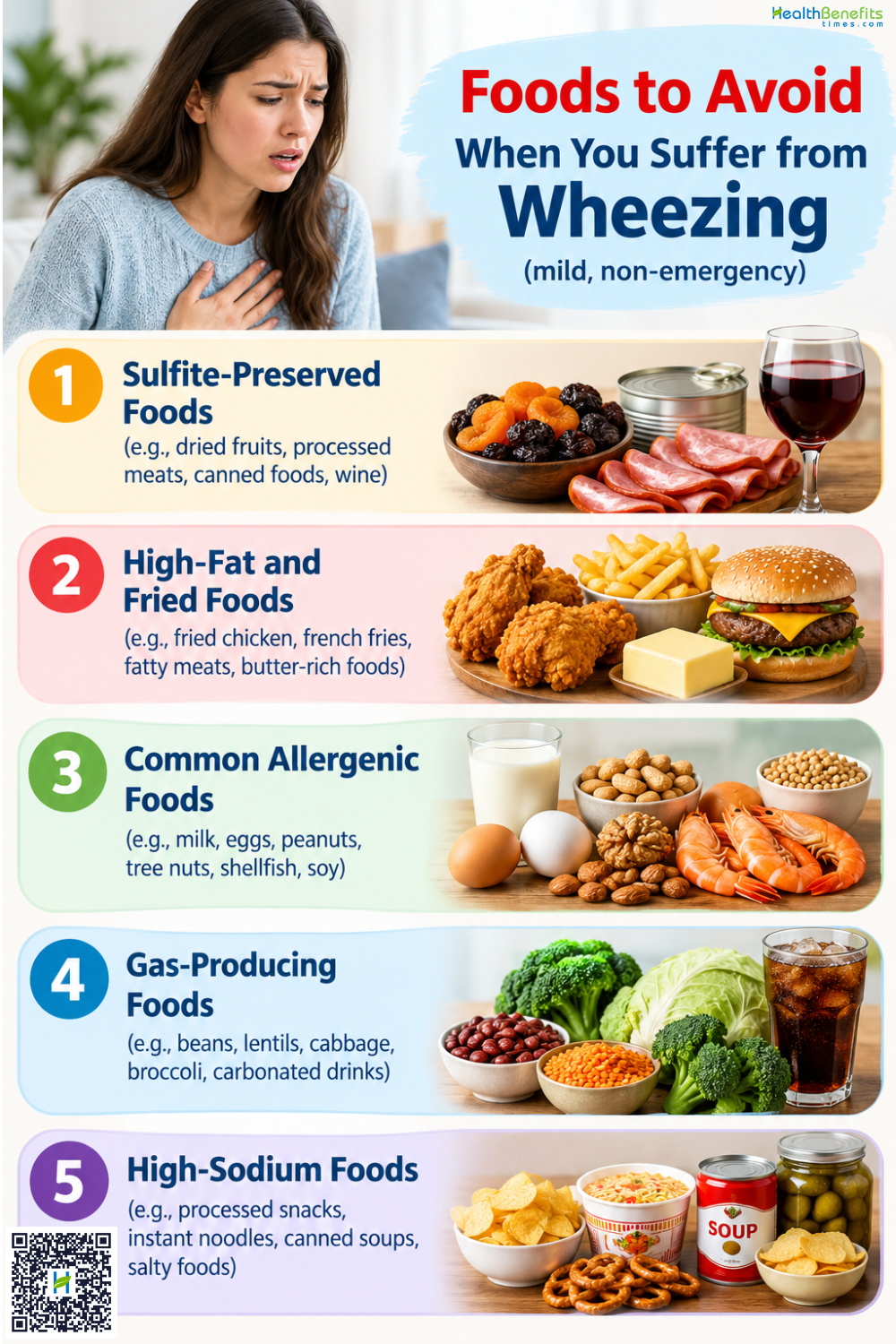
2. High-Fat and Fried Foods
Greasy foods delay stomach emptying and trigger acid reflux. This stomach acid severely irritates throat and lung tissues, causing reactive airway spasms and wheezing. 41
3. Common Allergenic Foods
Ingesting triggers like shellfish, tree nuts, or peanuts provokes a rapid immune response, immediately swelling the respiratory tract and severely restricting normal airflow. 42
4. Gas-Producing Foods
Beans, cabbage, and carbonated beverages cause abdominal bloating. This physical pressure restricts normal diaphragm movement, making breathing significantly harder and worsening wheezing symptoms. 43
5. High-Sodium Foods
Excessive salt intake promotes fluid retention and increases systemic inflammation, which clinical studies directly link to heightened airway hyperreactivity and exacerbated breathing difficulties. 44
When to See a Doctor When You Struggle from Wheezing
- Bluish Skin or Lips: Seek emergency care if skin, lips, or nail beds turn blue or gray, indicating dangerously low oxygen levels in the bloodstream. 1
- Severe Shortness of Breath: Consult a doctor immediately if you experience extreme difficulty breathing at rest or cannot speak full sentences without gasping. 8
- Sudden Confusion or Dizziness: An altered mental state or extreme lethargy combined with wheezing signals severe oxygen deprivation, requiring immediate and aggressive medical intervention. 45
- Inhalation of a Foreign Object: Emergency treatment is required if wheezing starts abruptly after choking on food or a small object, indicating a physical airway blockage. 1
- Accompanying High Fever: Schedule a clinical evaluation if wheezing occurs alongside a high fever or chills, as these symptoms strongly suggest a severe respiratory infection like pneumonia. 46
- Swelling of the Face or Tongue: Seek immediate help if wheezing is paired with facial swelling or hives, which indicates anaphylaxis, a life-threatening allergic reaction requiring rapid treatment. 47