Health Benefits
    Facebook Twitter Instagram
    Friday, December 5
    Facebook Twitter Pinterest
    Health Benefits
    • Home
    • Dental Health
    • Mental Health
    • Weight Loss
    • Health Wiki
    • Nutrition
    • Healthy Recipe
    • BMI Calculator
    Health Benefits
    Home»Foods»Benefits of Caesar Salad
    Foods

    Benefits of Caesar Salad

    By s mMarch 15, 2018Updated:March 15, 2018No Comments4 Mins Read
    Facebook Twitter Pinterest LinkedIn Tumblr Email

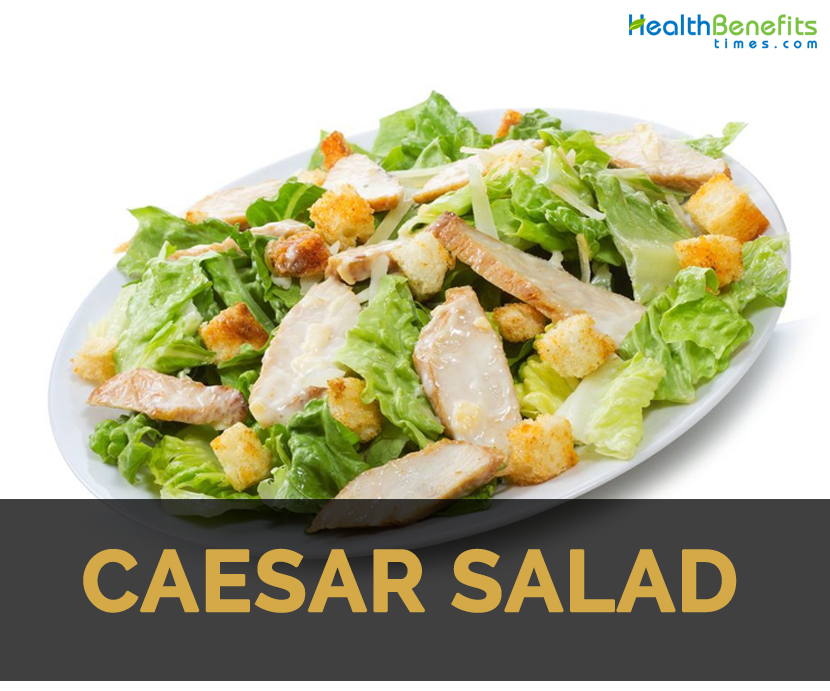
    Caesar salad is a green salad made of Romaine lettuce and Croutons which is dressed with olive oil, lemon juice, egg, garlic, black pepper, Parmesan cheese and Worcestershire sauce. The recipe comprises of romaine lettuce leaves, shavings of parmesan cheese, garlic croutons tossed in a creamy dressing that is made of olive oil, egg, lemon juice, vinegar, salt, garlic, pepper and Worcestershire sauce.  To the belief, original recipe of Caesar salad did not contain pieces of anchovy. As it may be, modern versions included them because original did have slight flavor of anchovy which came from Worcestershire sauce. It is believed that inventor opposed to use anchovies in the salad. Originally, it is believed that leaves of lettuce are served whole as it means to be lifted by stem and consumed with the fingers. The amounts of ingredient vary from chef to chef. Usually, Caesar salad contains romaine lettuce with vinaigrette dressing topped with toasted croutons. There are various salad variations that include addition of meat, garlic, vegetables and other condiments. Vegetables, additions and dressings vary such as fish or chicken.

    History

    Generally, this salad is created by a restaurateur Caesar Cardini who is an Italian immigrant operated restaurants in United States and Mexico. He was living in San Diego but was also working in Tijuana where he avoided restrictions of prohibition. His daughter Rosa recited that her father invented salad when a Fourth of July 1924 rush depleted the supplies of Kitchen. Cardini made with what he had by adding dramatic flair of table side tossing “by the chef”. The number of Cardini’s staff said that they created the dish.

    Julia Child mentioned that she consumed Caesar salad at Cardini’s restaurant when she was a child in 1920s. Dorothy Kilgallen, a newspaper columnist, in 1946 wrote a Caesar containing anchovies which differs from version of Cardini.

    Caesar salad introduced to New Yorkers by Gilmore’s Steak House. It is an elaborated creation that took ages to prepare and contains raw coddled eggs, lots of garlic, romaine, croutons, olive oil, parmesan cheese, black pepper and vinegar.

    Recipe

    Ingredients:

    • 1 large head romaine lettuce
    • 3 cups French bread
    • 1 cup olive oil
    • 8 anchovy filets
    • 2 large cloves garlic
    • 1 teaspoon dry mustard
    • 1 teaspoon Worcestershire sauce
    • 1 teaspoon fresh ground black pepper
    • 2 tablespoon lemon juice
    • 1 teaspoon coarse ground salt
    • 1/2 cup grated parmesan cheese
    • 2 egg yolks for large eggs
    • 1/4 cup parmesan cheese (shredded or shaved)

    Directions:

    1. Trim bruised or browned leaves of Romaine lettuce and then cut it into 1 ½ inch pieces. Wash, drain, pat it dry. Refrigerate it for 30 minutes to crisp the leaves.
    2. For croutons, cut bread into cubes. In a sauté pan, heat ½ cup of olive oil over medium-high heat. Fry bread cubes in the oil and toss it frequently till they’re crisp and golden. Drain croutons on a paper towel till ready to use.
    3. Peel the cloves of garlic then put it in a large wooden salad bowl. Mash cloves with the back of a wooden spoon against the sides of the bowl. Rub pieces against the bowl till they begin to disintegrate. Remove most of the mashed garlic from the bowl and discard. Add anchovies and repeat the procedure leaving the pieces of anchovy in the bowl. Then by adding the dry mustard, Worcestershire sauce, black pepper, lemon juice and egg yolks, blend well. Drizzle slowly in the remaining olive oil mixing with a wire whisk till a creamy mayonnaise type dressing forms. Add lettuce, Parmesan cheese, croutons and salt. Toss all together and serve it directly from the salad bowl.


    References:

    https://en.wikipedia.org/wiki/Caesar_salad

    http://www.culinaryarts.com/Recipes/recipefiles/Caesar.htm

    https://www.chowhound.com/food-news/184845/facts-about-caesar-salad/

    https://www.express.co.uk/life-style/top10facts/478562/Top-10-facts-about-salad

    60%
    60%
    Awesome

    Comments

    comments

    C Foods
    Share. Facebook Twitter Pinterest LinkedIn Tumblr Email
    Previous ArticleFacts about the Ironwood Tree
    Next Article How to perfecting your posture to prevent back pain

    Related Posts

    Health benefits of Chinese Sumac

    March 6, 2024

    Health benefits of Crofton weed

    March 5, 2024

    Facts about Chinese Glory Bower

    February 18, 2024

    Comments are closed.


    Facts of Caesar salad

    Caesar Salad Quick Facts
    Name: Caesar Salad
    Major nutrients Total Fat (388.43%)
    Vitamin K (205.25%)
    Sodium (189.40%)
    Vitamin D (80.00%)
    Vitamin E (74.27%)
    Name Caesar Salad
    Major Nutritions Total Fat (lipid) 135.95 g (388.43%)
    Vitamin K (phylloquinone) 246.3 µg (205.25%)
    Sodium, Na 2841 mg (189.40%)
    Vitamin D (Cholecalciferol) 12 IU (80.00%)
    Vitamin E (alpha-tocopherol) 11.14 mg (74.27%)
    Iron, Fe 2.54 mg (31.75%)
    Calcium, Ca 113 mg (11.30%)
    Protein 5.1 g (10.20%)
    Selenium, Se 3.8 µg (6.91%)
    Choline 36.7 mg (6.67%)
    Calories in 1 cup (235 gm) 1274 Kcal
    Nutritional value of Salad dressing, caesar dressing, regular
    Serving Size:1 cup, 235 g
    Calories 1274 Kcal. Calories from Fat 1223.55 Kcal.


    Proximity Amount % DV
    Water 80.6 g N/D
    Energy 1274 Kcal N/D
    Energy 5325 kJ N/D
    Protein 5.1 g 10.20%
    Total Fat (lipid) 135.95 g 388.43%
    Ash 5.64 g N/D
    Carbohydrate 7.75 g 5.96%
    Total dietary Fiber 1.2 g 3.16%
    Total Sugars 6.6 g N/D

     
    Minerals Amount % DV
    Calcium, Ca 113 mg 11.30%
    Iron, Fe 2.54 mg 31.75%
    Magnesium, Mg 5 mg 1.19%
    Phosphorus, P 45 mg 6.43%
    Potassium, K 68 mg 1.45%
    Sodium, Na 2841 mg 189.40%
    Zinc, Zn 0.26 mg 2.36%
    Copper, Cu 0.024 mg 2.67%
    Manganese, Mn 0.089 mg 3.87%
    Selenium, Se 3.8 µg 6.91%

     
    Vitamins Amount % DV
    Water soluble Vitamins
    Vitamin B1 (Thiamin) 0.024 mg 2.00%
    Vitamin B2 (Riboflavin) 0.024 mg 1.85%
    Vitamin B3 (Niacin) 0.094 mg 0.59%
    Vitamin B5 (Pantothenic acid) 0.195 mg 3.90%
    Vitamin B6 (Pyridoxine) 0.059 mg 4.54%
    Vitamin B9 (Folate) 5 µg 1.25%
    Folate, food 5 µg N/D
    Folate, DEF 5 µg N/D
    Choline 36.7 mg 6.67%
    Vitamin B-12 (Cobalamine) 0.07 µg 2.92%
    Vitamin C (Ascorbic acid) 0.7 mg 0.78%
    Fat soluble Vitamins
    Vitamin A, RAE 21 µg 3.00%
    Vitamin A, IU 80 IU N/D
    Retinol 21 µg N/D
    Beta Carotene 5 µg N/D
    Alpha Carotene 2 µg N/D
    Beta Cryptoxanthin 2 µg N/D
    Betaine 1.2 mg N/D
    Lutein + zeaxanthin 52 µg N/D
    Vitamin E (alpha-tocopherol) 11.14 mg 74.27%
    Vitamin D (D2 + D3) 0.2 µg N/D
    Vitamin D (Cholecalciferol) 12 IU 80.00%
    Vitamin K (phylloquinone) 246.3 µg 205.25%

     
    Lipids Amount % DV
    Fatty acids, total saturated 20.654 g N/D
    4:00 0.035 g N/D
    Caproic acid 6:00 (hexanoic acid) 0.014 g N/D
    Caprylic acid 8:00 (octanoic acid)  0.002 g N/D
    capric acid 10:00 (decanoic acid) 0.012 g N/D
    Lauric acid (dodecanoic acid) 12:00 0.019 g N/D
    Myristic acid  14:00(Tetradecanoic acid) 0.075 g N/D
    pentadecanoic acid (15:00) 0.007 g N/D
    Palmitic acid 16:00 (Hexadecanoic acid) 13.719 g N/D
    Stearic acid 18:00 (Octadecanoic acid) 5.795 g N/D
    Arachidic acid 20:00 (Eicosanoic acid) 0.458 g N/D
    Behenic acid (docosanoic acid) 22:00 0.465 g N/D
    Fatty acids, total monounsaturated 31.734 g N/D
    Myristoleic acid 14:1 (tetradecenoic acid) 0.007 g N/D
    Palmitoleic acid 16:1 (hexadecenoic acid) 0.07 g N/D
    Oleic acid 18:1 (octadecenoic acid) 31.321 g N/D
    Gadoleic acid 20:1 (eicosenoic acid) 0.324 g N/D
    Erucic acid 22:1 (docosenoic acid) 0.005 g N/D
    Fatty acids, total polyunsaturated 77.214 g N/D
    Linoleic acid 18:2 (octadecadienoic acid) 68.079 g N/D
    Linolenic acid 18:3 (Octadecatrienoic acid) 9.055 g N/D
    18:04 0.002 g N/D
    20:4 undifferentiated 0.021 g N/D
    20:5 n-3 (EPA) 0.019 g N/D
    22:6 n-3 (DHA) 0.038 g N/D
    Cholesterol 92 mg N/D

    *Above mentioned Percent Daily Values (%DVs) are based on 2,000 calorie diet intake. Daily values (DVs) may be different depending upon your daily calorie needs. Mentioned values are recommended by a U.S. Department of Agriculture. They are not healthbenefitstimes.com recommendations. Calculations are based on average age of 19 to 50 years and weighs 194 lbs.
     

    Source: https://ndb.nal.usda.gov/

    Categories
    • Beverages (78)
    • Dairy (28)
    • Dental Health (15)
    • Equipment (5)
    • Essential OIls (196)
    • Facts (2,939)
    • Foods (255)
    • Fruits (516)
    • Giveaway (1)
    • Grains and Cereals (36)
    • Health & Beauty (763)
    • Herbs and Spices (1,249)
    • Medicines (9)
    • Mental Health (19)
    • Nutritional value (27)
    • Nuts and seeds (73)
    • Oils (81)
    • Pets (4)
    • Poultry & Seafoods (67)
    • Pulses and Beans (16)
    • Reviews (25)
    • supplement (2)
    • Vegetables (304)
    • Weight Loss (22)

    What is Lupin Bean Flour?

    Science Backed Health Benefits of Durian (Durio zibethinus)

    Science Backed Health Benefits of Feijoa (Pineapple Guava) (Acca sellowiana)

    Science Backed Health Benefits of Gac Fruit (Momordica cochinchinensis)

    Science Backed Health Benefits of Amaranth Leaves (Amaranthus spp)

    Science Backed Health Benefits of Arrowhead (Sagittaria sagittifolia)

    ABOUT
    Home
    About us
    Contact us
    Privacy Policy
    Terms & conditions
    Disclaimer
    Direct Communication
    e-mail: [email protected]
    Gmail: [email protected]
    Whatsapp: +977-9841146511
    Viber: +977-9841146511
    Useful
    Health Wiki
    Nutrition
    Facebook Twitter Pinterest
    © 2025 www.healthbenefitstimes.com All rights reserved.

    Type above and press Enter to search. Press Esc to cancel.

    ×

    Log In

    Forgot Password?

    Not registered yet? Create an Account