| Sweetbay Quick Facts |
| Name: |
Sweetbay |
| Scientific Name: |
Magnolia virginiana |
| Origin |
Southeastern United States north along the Atlantic coast to New York |
| Colors |
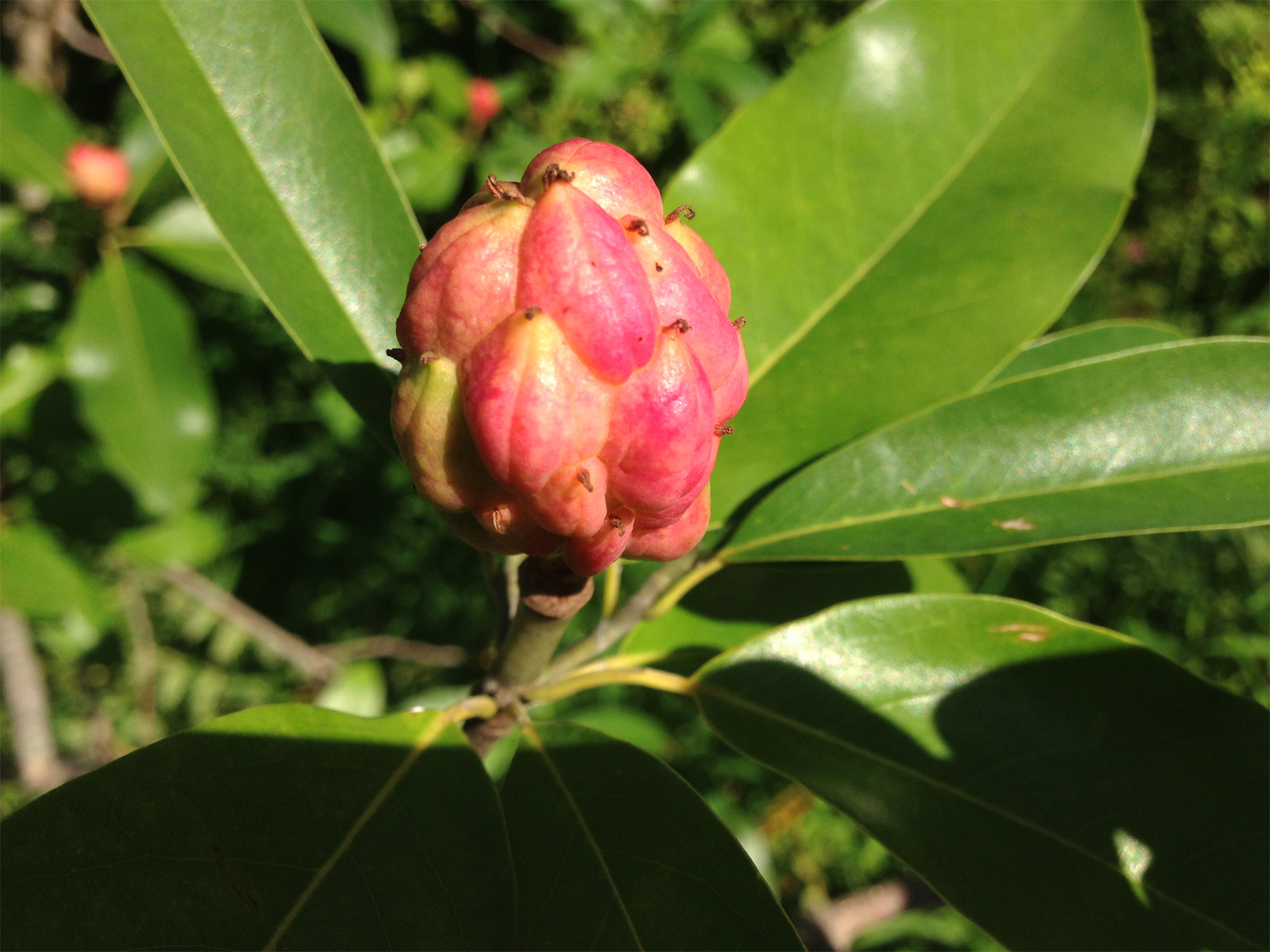
Pinkish-red |
| Shapes |
3-5 cm long, ovate drupe |
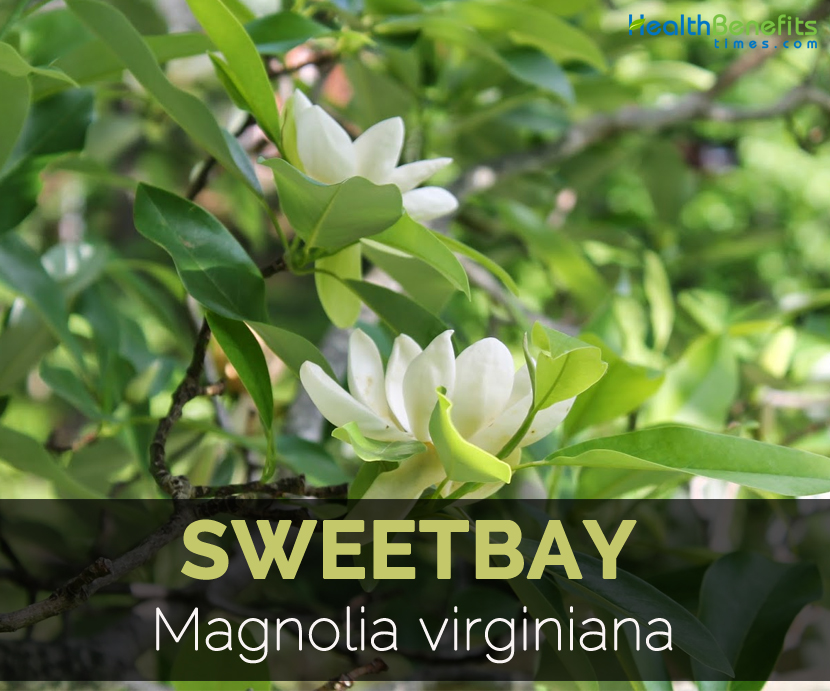
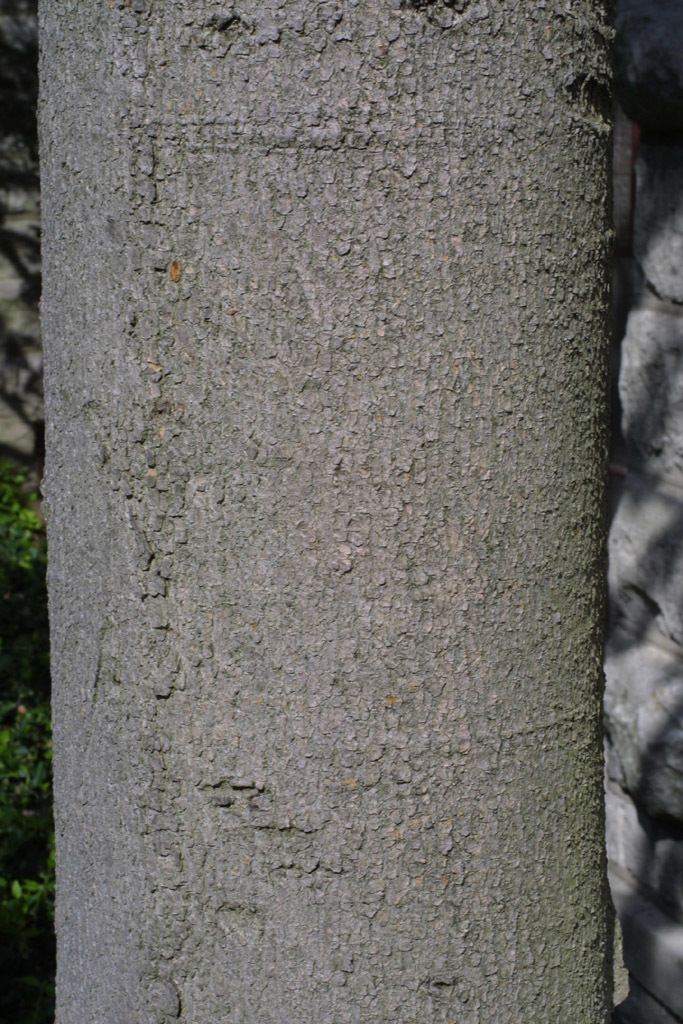
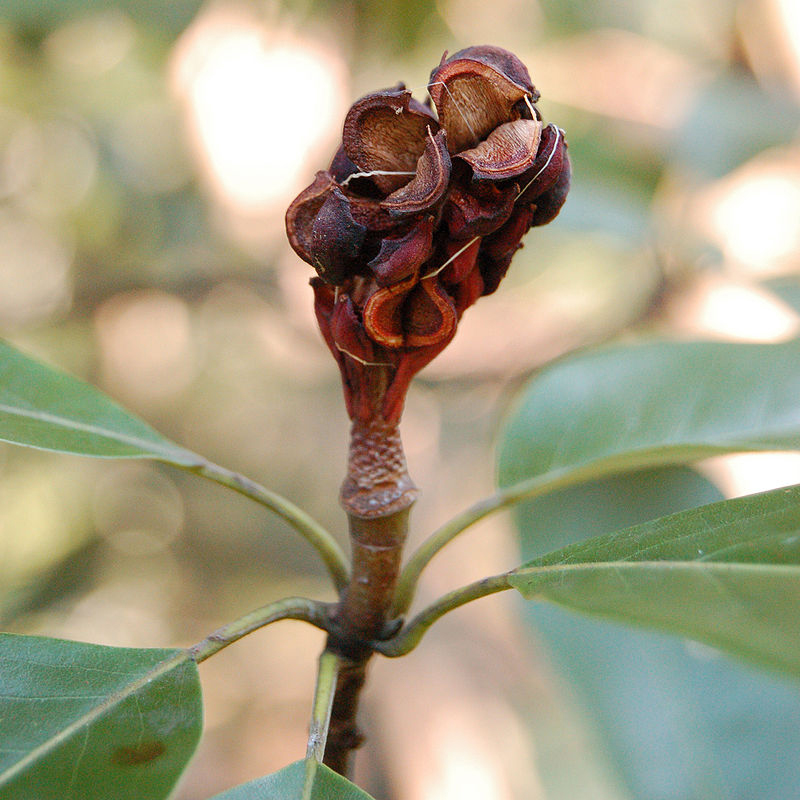
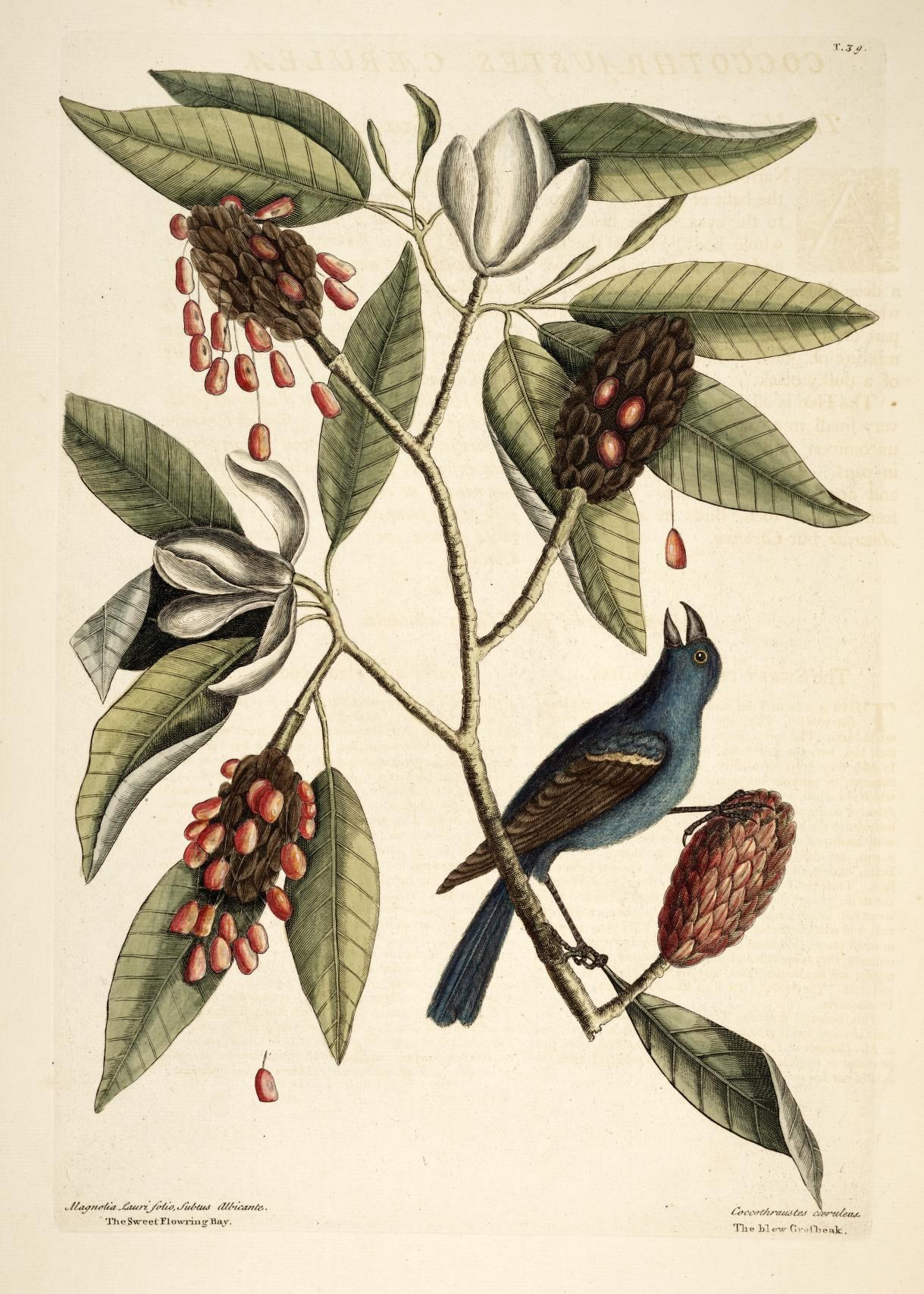
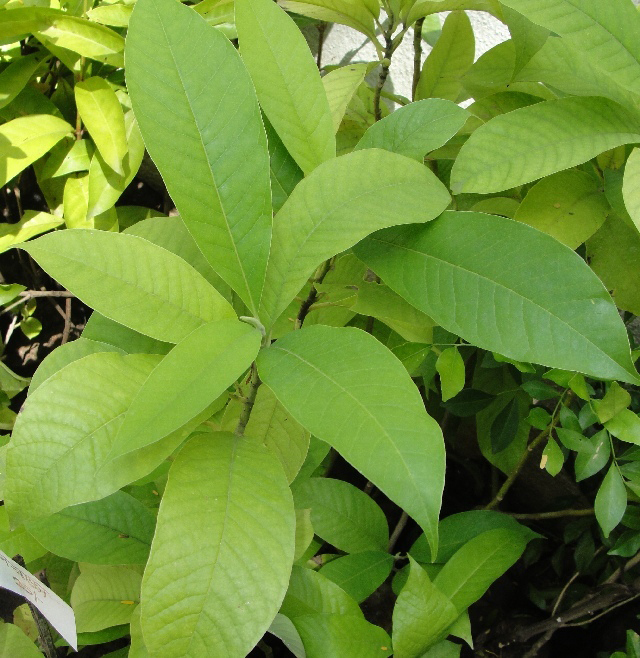
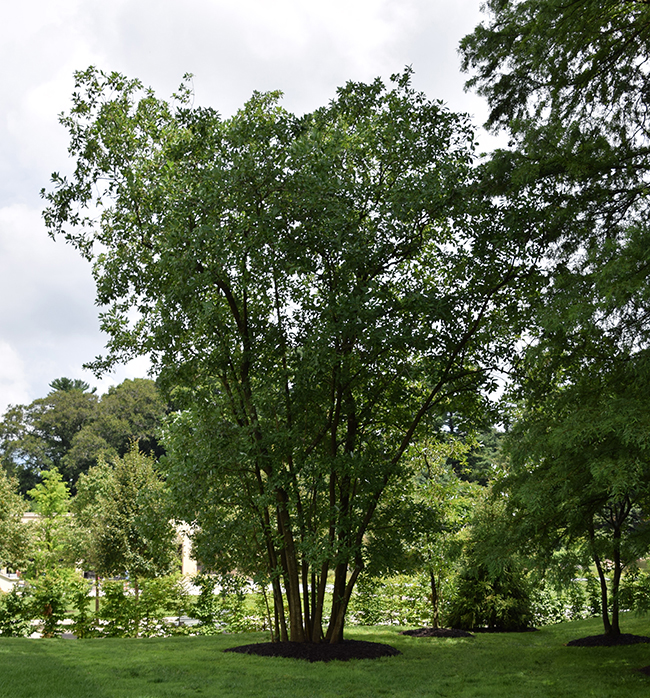
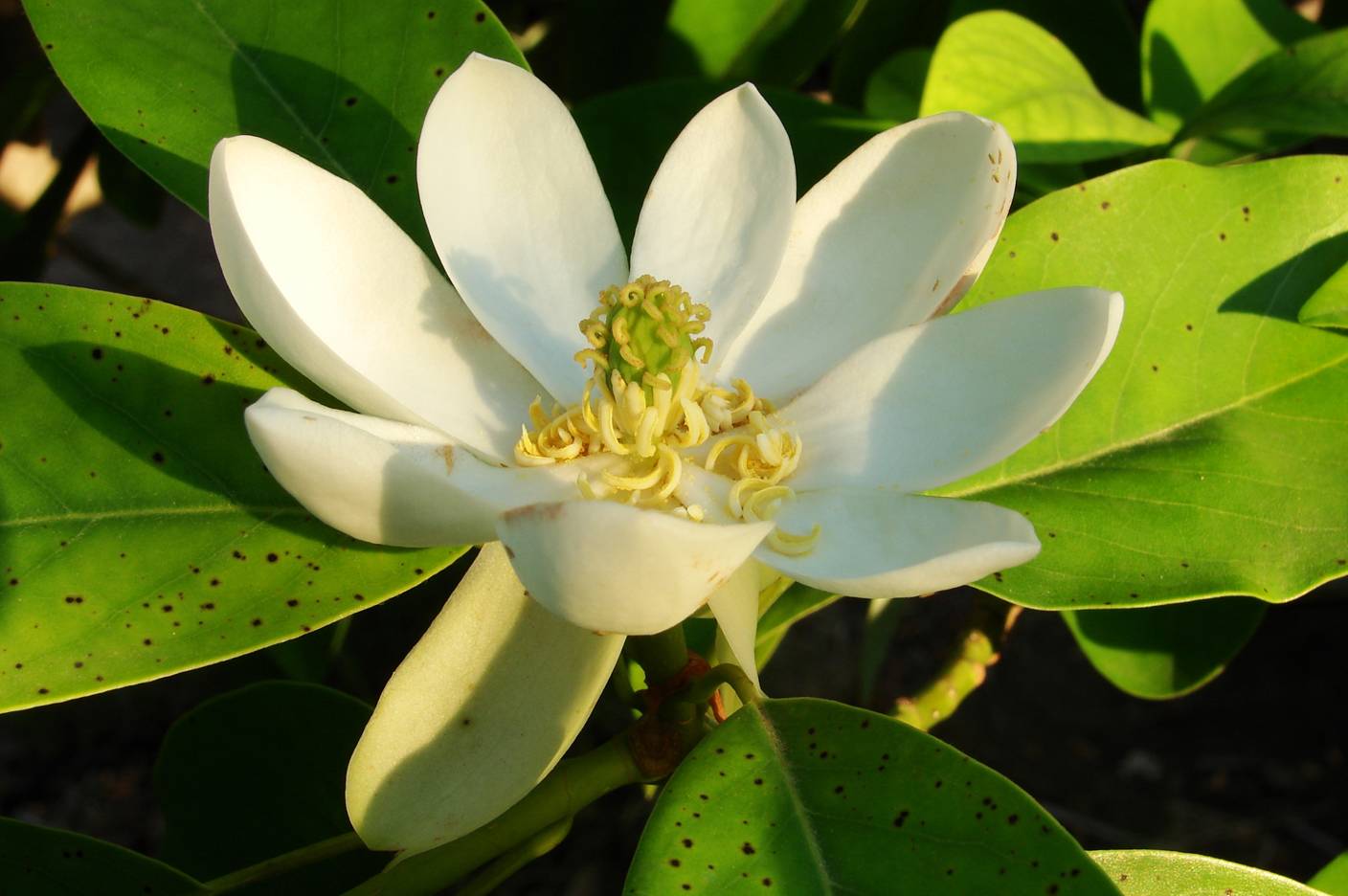
Sweetbay is an evergreen to semi-green and wide columnar tree which is ideal for use as patio tree or specimen. The tree reaches to 40 feet height in the north or to 60 feet in the south. The leaves are whitish to green. The shrub lives over 50 years. The slender and hairy twigs or gray/light brown bark has scales which are pressed together. When crushed, the bark is aromatic. Leaves are simple, alternate, toothless, oblong, slightly leathery and about 4-6 in (10-15 cm) long and 1-3 in (3-8 cm) wide. Leaves are lustrous above and pubescent below. Petiole is ½ in long. Flowers are creamy to white; lemon scented that blooms from June through September. Flowers are monoecious, spoon shaped which forms on stalks. The flowers are pollinated by beetles. Fruit is a dry, hairy, cylindrical about 5 cm long carpels. Follicles contain 1/4 in (0.6 cm) long bright and oval red seed. Seeds are attached to open pod by thin and elastic thread.
The plant tolerates saturated, flooded soils and droughty conditions. It survives flooding and serve drought without significant loss of root mass. It prefers warm climate and acid soils. Due to its preferences for moist areas and marshes, it is known as swamp bay magnolia or swamp laurel. Early inhabitants use the tincture extracted from bark for chronic rheumatism and as a medicine for colds, coughs and fevers.
Health Benefits of Sweetbay
- Digestive health
Sweet bay has antispasmodic, digestive tract stimulant, carminative and hepatic properties. It promotes secretions and also favors peristalsis that contributes digestion, supports stomach and liver. It also prevents flatulence, gastritis, aerophagia, hiatal hernia, heartburn and intestinal spasms. Eugenol offers antiulcerous, carminative and hepatoprotective properties.
- Respiratory health
The herb has bronchial, expectorant and anti-flu properties which is helpful for bronchitis, flu, respiratory tract illness and cough. The essential oil has cineol that is considered to be antitussive, antibacterial and antibronchitic properties. Besides cineol, other components have same activities such as alpha pinene, acetic acid and camphene.
- Circulatory health
Lauric, oleic and linoleic acid has circulatory properties that helps to treat arteriosclerosis and improves blood circulation. It is helpful for vascular problems associated with bad peripheral blood flow such as chilblains.
- Anti-rheumatic properties
Sweet bay reduces rheumatic pail in illness such as arthritis by offering anti-inflammatory properties of beta-pinene and alpha-pinene on affected articulation. The ointment extracted from fruits is found to be beneficial.
- Healthy skin
The herb is externally used for skin ailments caused by fungi-acetic with fungicide properties such as burns, ulcers, lumps and acne. It is also effective for eczema. Apply on skin lesions as it has bacteriostatic and renewing functions on epidermis. It also prevents infections and supports healing.
Medicinal uses
- It is helpful for malaria, rheumatism and contra-indicated in inflammatory symptoms.
- Use it as a substitute for quinine for treating malaria.
- Take it internally for colds, upper respiratory infection, bronchial diseases, gout and rheumatism.
- People chew the bark to interrupt habit.
- Tea made from fruit is a tonic or used for treating general debility and treats stomach ailments.
- It is a remedy for abdominal conditions, insect bites, nausea, cold, asthma, constipation, obesity, headache, wheezing anxiety, stress, prostate cancer, anxiety, high blood pressure, cough, toothache and menopause.
- Use it as a wash for skin diseases, sores and itching. Simmer one tbsp. of Sweetbay bark in a pint of water for about 10 minutes.
- Drink the tea made from bark for bronchial diseases, colds, rheumatism, upper respiratory tract infections and gout.
- Oil extracted from fruits or leaves are used to ease earaches and rheumatic pains.
Culinary uses
- Use the leaves as a condiment in gravies.
- Leaves are also used to prepare tea. Brew the dried leaves into herbal tea.
- Bay leaves are used to flavor stews and soups.
References:
https://www.itis.gov/servlet/SingleRpt/SingleRpt?search_topic=TSN&search_value=18070#null
https://www.botanical.com/botanical/mgmh/m/magnol03.html
http://www.naturalmedicinalherbs.net/herbs/m/magnolia-virginiana=laurel-magnolia.php
http://www.eattheweeds.com/magnolia-viginiana-how-sweet-it-is-2/
https://pfaf.org/user/Plant.aspx?LatinName=Magnolia+virginiana#targetText=It%20has%20historically%20been%20used,the%20tobacco%20habit%5B222%5D
Comments
comments