

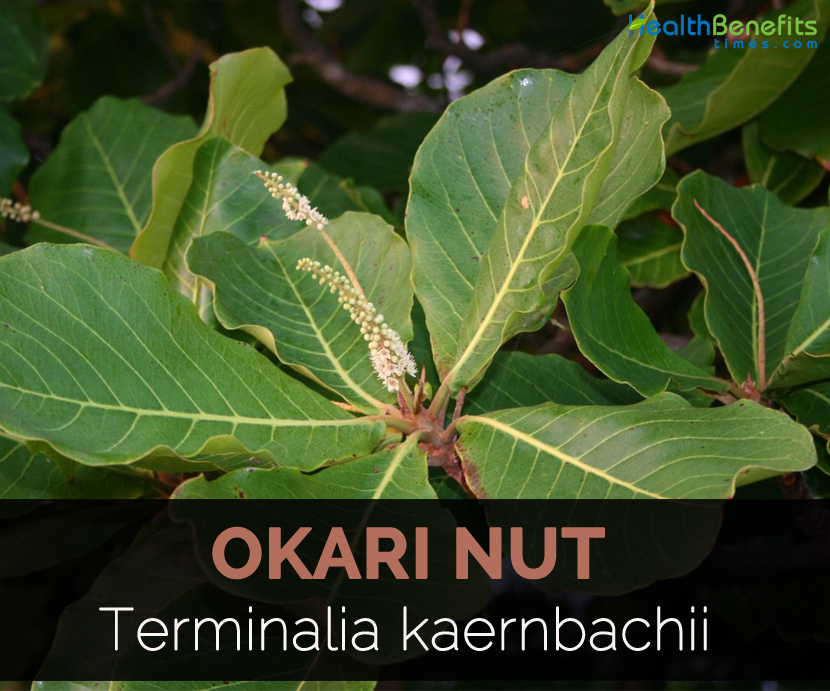
| Okari Nut Quick Facts | |
|---|---|
| Name: | Okari Nut |
| Scientific Name: | Terminalia kaernbachii |
| Origin | Indonesian Irian Jaya (West Papua), the Aru Islands, Papua New Guinea (Madang, Morobe, Western, Gulf, Central, Northern and Bougainville) and the Solomon Islands |
| Colors | Brown |
| Shapes | Ellipsoid, drupe, up to 9–11 cm long by 6–8 cm wide and 5–6 cm thick |
| Name |
Okari Nut |
|---|---|
| Scientific Name | Terminalia kaernbachii |
| Native | Indonesian Irian Jaya (West Papua), the Aru Islands, Papua New Guinea (Madang, Morobe, Western, Gulf, Central, Northern and Bougainville) and the Solomon Islands |
| Common/English Name | Okari, Okari Nut |
| Name in Other Languages | French: Noix d’Okari, Noyer d’Okari; Japan: Buraun taamineria; Papua New Guinea: okari (Tok Pisin), sarigi (Pole), Makame (Barai), yumu (Foi), topo (Podopa), favie (Onobasalo), uka (Kaluli), tukai’o ( Etoro), iuwa (Hawalisi); Solomon Islands: Bush Alite, okari English: brown terminalia, okari nut Japanese: buraun taamineria (ブラウンターミネリア) |
| Plant Growth Habit | Small, mid-canopy, tree |
| Soil | 20–30 m tall |
| Bark | Grey or grey-brown |
| Leaf | Obovate or narrow obovate, 15–28 cm long by 6–13 cm broad |
| Flower | 10 mm across |
| Fruit shape & size | Ellipsoid, drupe, up to 9–11 cm long by 6–8 cm wide and 5–6 cm thick |
| Fruit peel | Thin, brown |
| Seed | White to creamywhite, 7–8 cm long by 3–4 cm wide |
| Seed weight | 2.5 to 10 g |
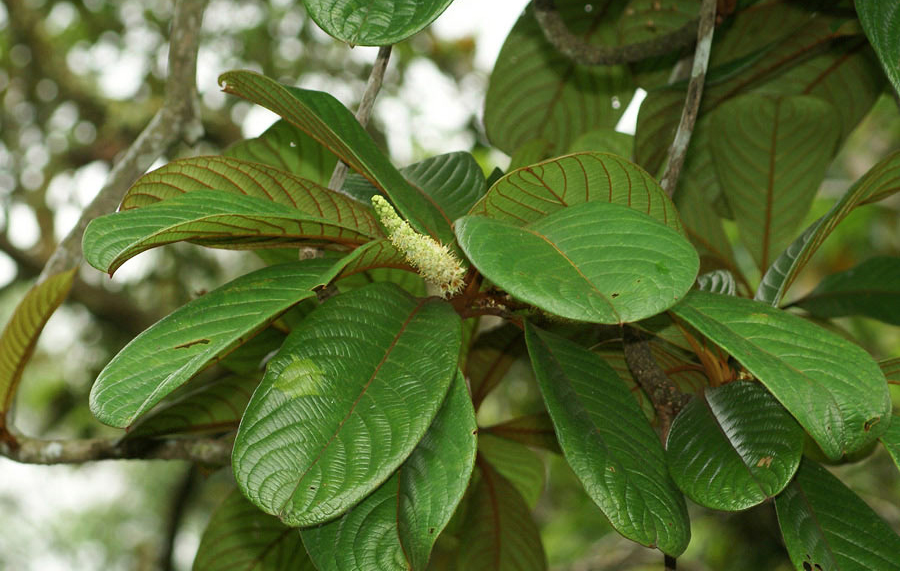 Okari-Nut-leaves
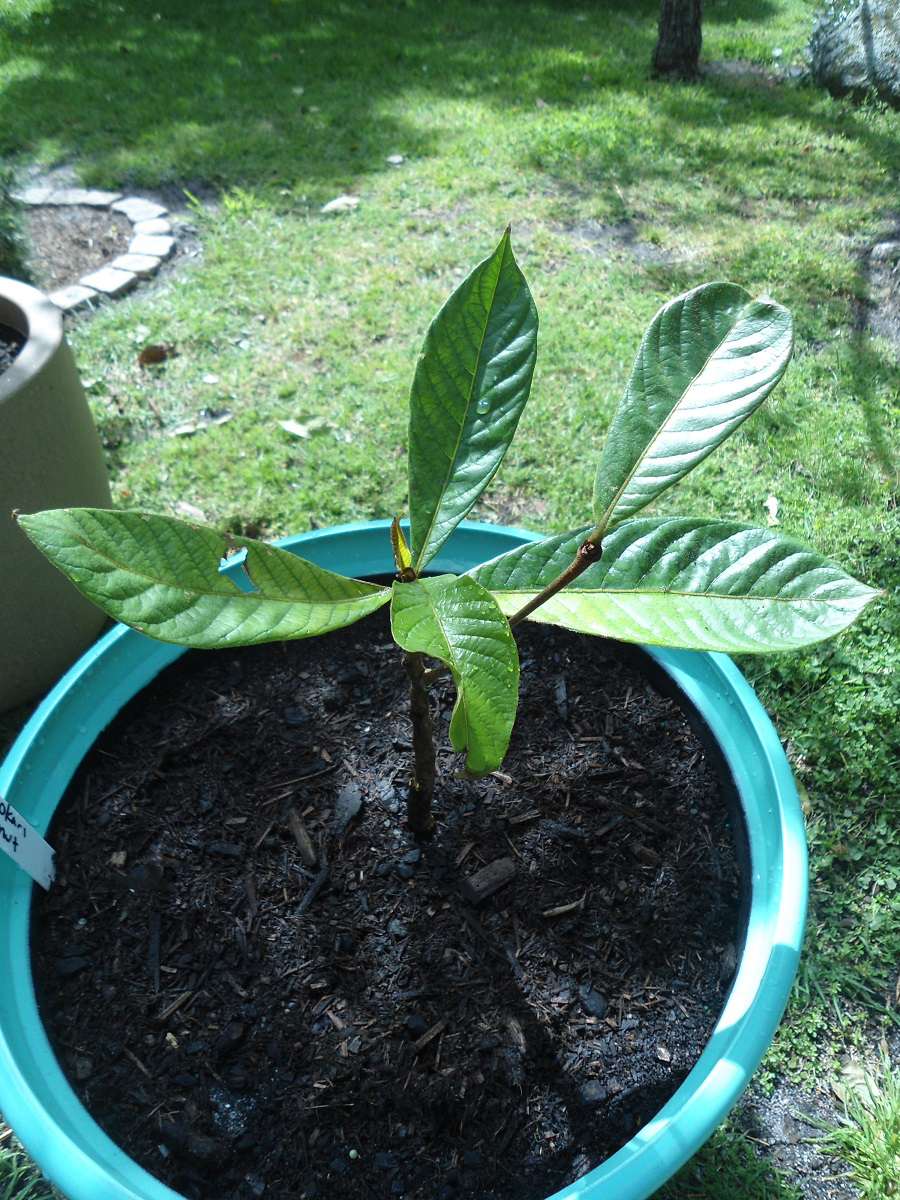 Okari-Nut-plant
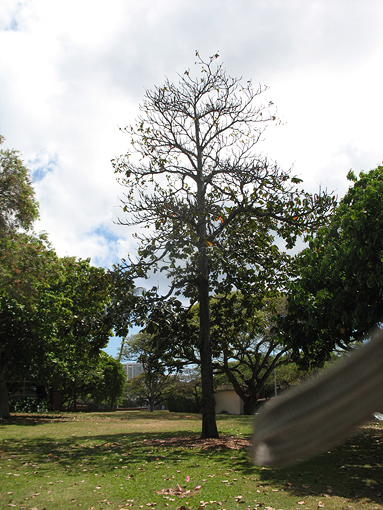 Okari-Nut-tree
- Kernels are consumed raw or cooked.
- In East Asia, seeds are consumed raw, roasted or baked.
- Roast the kernels lightly with salt.
References:
https://www.itis.gov/servlet/SingleRpt/SingleRpt?search_topic=TSN&search_value=27761#null
https://pfaf.org/user/Plant.aspx?LatinName=Terminalia+kaernbachii