

- Cardiovascular health refers to the well-being of the heart and blood vessels, ensuring efficient circulation of blood throughout the body.
- Engaging in regular brisk walking can lower blood pressure, reduce LDL cholesterol levels, and strengthen the heart muscle, thereby decreasing the risk of heart disease.
- Incorporating at least 150 minutes of moderate-intensity walking per week, such as 30 minutes a day, five days a week, can significantly enhance cardiovascular health and overall well-being.
Walking is a low-impact, rhythmic form of physical activity that requires no special equipment and is accessible to people of all ages. (1) Recognized as a cornerstone of aerobic exercise, walking plays a pivotal role in enhancing cardiovascular health. Regular walking is shown to improve heart function, lower blood pressure, and reduce the risk of cardiovascular diseases. (2) Studies suggest that even moderate-paced walking can enhance arterial flexibility and circulation, reducing the risk of atherosclerosis. (3) The cumulative evidence from diverse populations highlights that walking significantly decreases mortality rates associated with cardiovascular conditions. (1) This article delves into the multifaceted cardiovascular benefits of walking, substantiated by empirical research and clinical trials.
Understanding Cardiovascular Health
Cardiovascular health refers to the optimal functioning of the heart and blood vessels, crucial for maintaining overall well-being. It is influenced by factors such as lifestyle, genetics, and environmental exposures. (4) Research highlights that systemic approaches, including reducing salt intake, can significantly lower risks of hypertension and related disorders. (5) Furthermore, the integration of gender-specific insights has enhanced understanding of conditions like ischemic heart disease, leading to tailored therapeutic strategies. (6) Advances in pharmacogenomics are offering new frontiers in personalized medicine, targeting genetic variations that affect cardiovascular drug efficacy. (7) Additionally, system dynamics modeling of the human circulatory system has provided innovative solutions for predicting and managing cardiovascular conditions. (8) A deeper understanding of drug-induced adverse reactions is pivotal for improving patient outcomes in hypertension treatment. (9) These multidisciplinary perspectives highlight the complexity and opportunities in understanding cardiovascular health.
What cardiovascular benefits does walking offer?
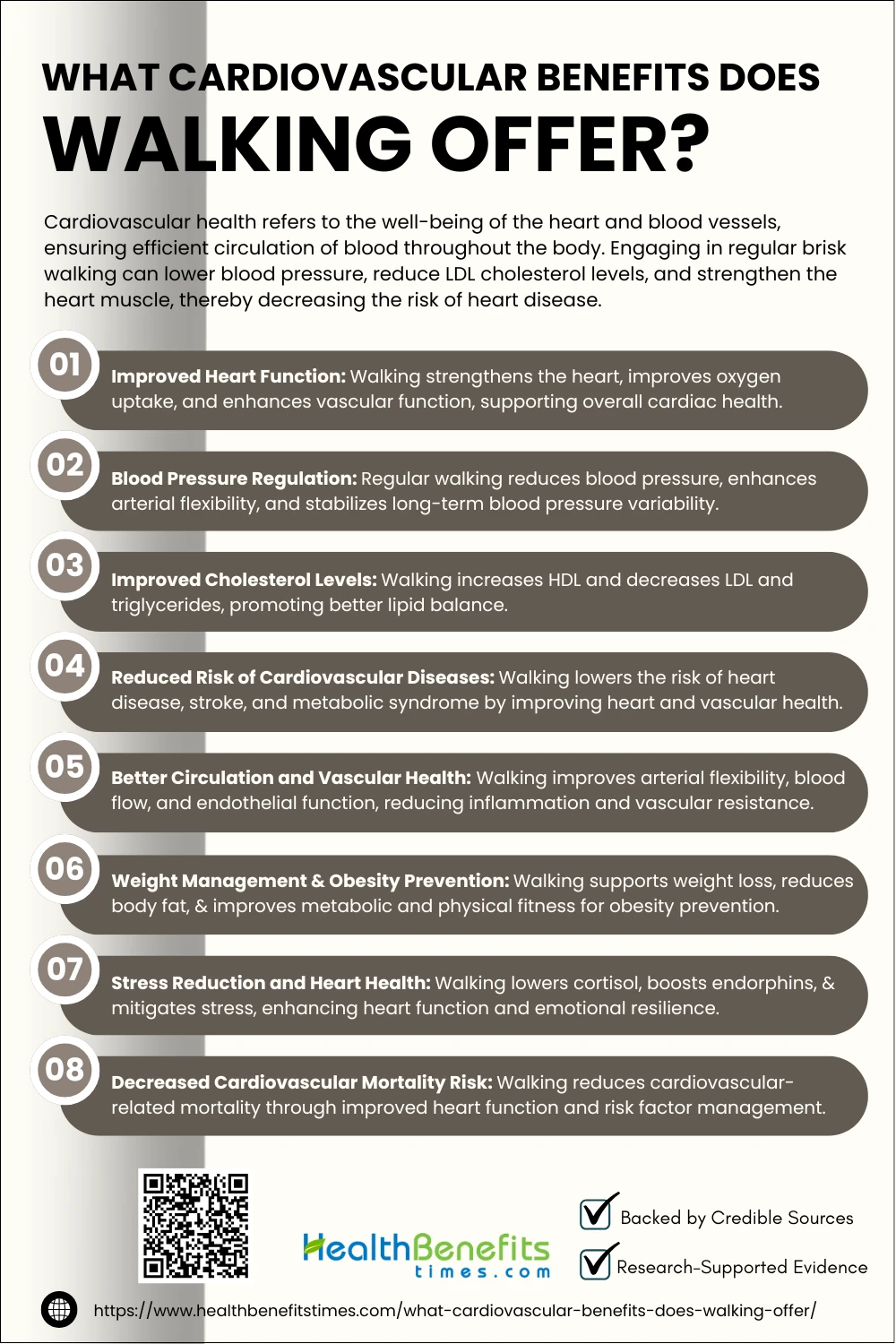
Walking is a simple, accessible exercise with profound cardiovascular benefits. It strengthens the heart, lowers blood pressure, improves cholesterol levels, and reduces the risk of heart disease and stroke. Regular walking supports weight management, enhances circulation, and alleviates stress, making it a powerful, low-impact way to boost heart health and overall well-being.
 1. Improved Heart Function
Regular walking enhances cardiovascular health by strengthening heart muscles, improving oxygen uptake, and maintaining a steady heart rate. It reduces resting heart rate, making the heart more efficient at pumping blood. (10) Walking also increases vascular endothelial function, which prevents arterial stiffness and supports circulation. (11) Evidence suggests that walking improves cardiac function in patients with chronic conditions, such as heart failure and hypertension. (12) It offers significant benefits for metabolic health, reducing strain on the cardiovascular system. (13) Moreover, studies show it enhances inspiratory muscle strength, further supporting heart efficiency. (14) Walking has even been linked to novel therapeutic benefits through cellular-level improvements. (15)
2. Blood Pressure Regulation
Walking plays a vital role in regulating blood pressure by improving arterial flexibility and reducing vascular resistance. (16) Regular walking enhances coronary blood flow and reduces hypertension risks, even in individuals with peripheral arterial disease. (17) Studies highlight walking’s ability to stabilize hemostasis under hypoxic conditions. (18) Additionally, it reduces visit-to-visit blood pressure variability, promoting long-term cardiovascular health. (19) Walking also enhances circulation, lowering cholesterol and blood pressure. (20) Cerebral blood flow regulation further underscores its therapeutic effects (21) (22)
3. Improved Cholesterol Levels
Walking significantly improves cholesterol levels by increasing high-density lipoprotein (HDL) while reducing low-density lipoprotein (LDL). (23) Brisk walking has been shown to effectively reduce total cholesterol and triglycerides. (24) Home-based walking programs significantly lower cholesterol in cardiac patients. (25) Pedometer-based walking interventions promote sustainable improvements in lipid profiles. (26) Nordic walking enhances metabolic health and lipid balance. (27) Wearable activity tracker-guided walking programs also demonstrate efficacy in improving cholesterol. (28)
4. Reduced risk of Cardiovascular diseases
Walking substantially lowers the risk of cardiovascular diseases by improving heart function, enhancing vascular health, and reducing blood pressure and cholesterol levels. (11) Regular walking mitigates the risk of secondary cardiovascular events, such as strokes and myocardial infarctions. (29) Brisk walking significantly reduces the onset of metabolic syndrome, a precursor to heart disease. (30) Studies show enhanced cardiovascular endurance and reduced weight gain in consistent walkers. (31) Elderly individuals also benefit from improved functional cardiac capacity. (32)
5. Better Circulation and Vascular Health
Walking improves vascular health by enhancing arterial flexibility, promoting better blood flow, and reducing vascular resistance. (17) Regular walking reduces chronic stress and improves endothelial function, which is crucial for vascular integrity. (33) Studies reveal walking enhances oxygenation and vascular adaptations in muscles. (34) Prehabilitation programs incorporating walking improve circulatory health in cardiac patients. (35) Furthermore, walking mitigates inflammation, a major contributor to vascular disorders. (36)
6. Weight Management and Obesity Prevention
Walking effectively aids weight management and obesity prevention by increasing calorie expenditure and promoting metabolic health. (37) Studies show that walking for 150 minutes weekly leads to significant weight reduction and prevents obesity-related conditions. (38) Incorporating walking into daily routines can reduce body fat percentage and improve insulin sensitivity. (39) Patients report improved physical fitness and emotional well-being, fostering sustainable weight management. (40) Gastroenterologists recommend walking as a primary obesity prevention strategy. (41)
7. Stress Reduction and Heart Health
Walking significantly reduces stress by lowering cortisol levels and improving mood through the release of endorphins, enhancing heart health. (42) Regular walking reduces blood pressure and enhances emotional stability, reducing the risks associated with hypertension. (16) Studies highlight walking’s role in mitigating chronic stress, which positively impacts cardiovascular function. (43) Walking improves sleep quality and overall resilience, key factors for stress management. (33) Implementing home-based walking exercises enhances functional heart capacity. (44)
8. Decreased Cardiovascular Mortality Risk
Walking significantly reduces cardiovascular mortality risk by enhancing cardiac function and lowering blood pressure, as shown in clinical studies. (45) Regular walking decreases the incidence of cardiovascular-related deaths in patients with heart failure. (46) Structured walking programs also mitigate risk factors such as elevated cholesterol and stress. (47) Population studies demonstrate reduced hospitalizations and mortality rates with increased walking routines. (48)
Recommended Walking Practices for Cardiovascular Benefits
 1. Start with Moderate Intensity
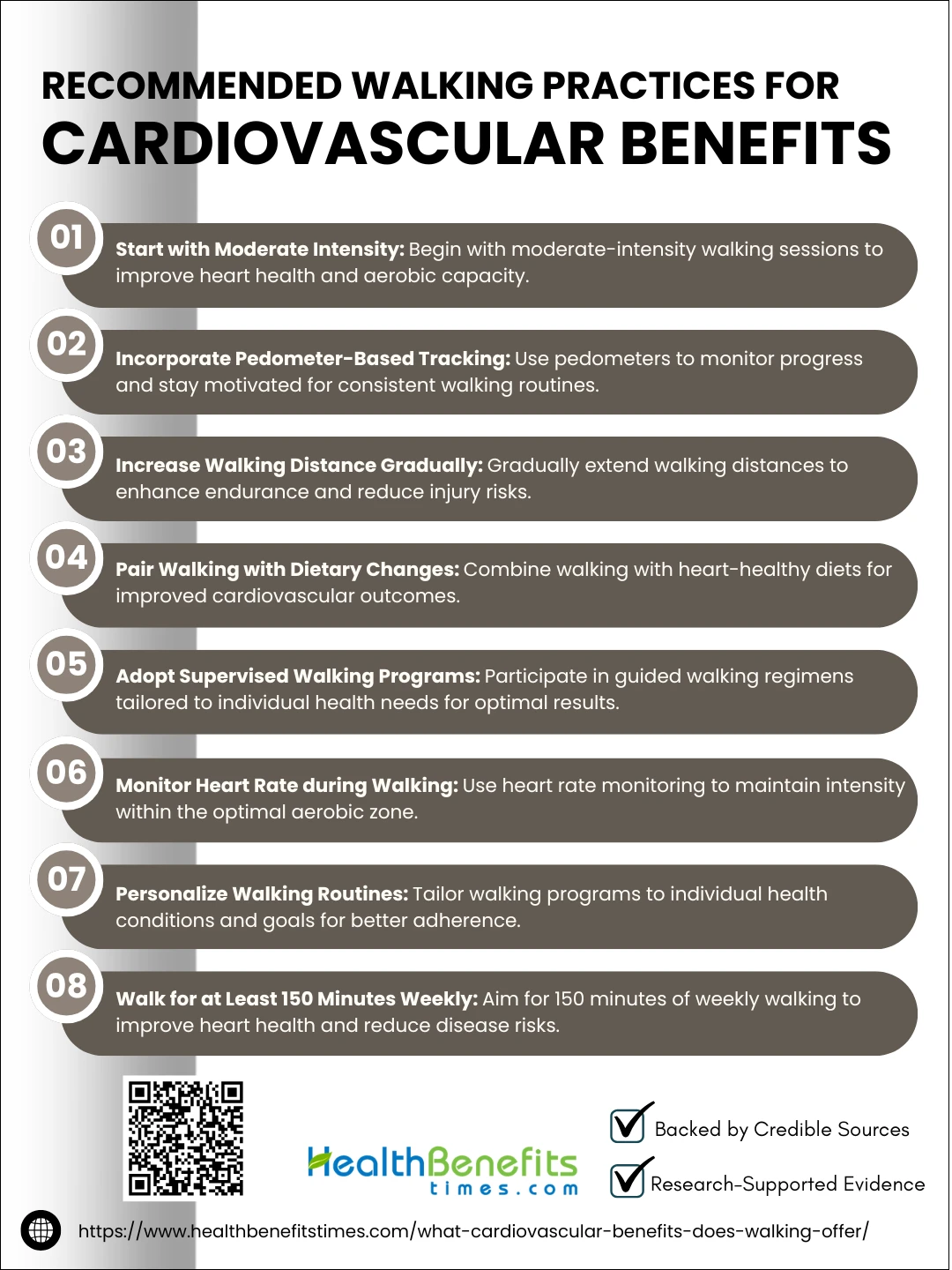
Starting with moderate-intensity walking is recommended for cardiovascular therapy as it enhances aerobic capacity and reduces hypertension. (49) A gradual increase in pace improves vascular health without overburdening the heart. (50) Regular sessions of 30 minutes optimize heart rate and oxygen uptake. (51) Structured programs combining walking with nutritional advice further improve cardiovascular outcomes. (52)
2. Incorporate Pedometer-Based Tracking
Incorporating pedometer-based tracking into walking routines enhances motivation and adherence, improving cardiovascular outcomes. (53) Pedometers help patients monitor physical activity levels, aligning with recommended guidelines for cardiovascular health. (54) Self-monitoring encourages consistent walking habits, reducing cardiovascular risks. (55) Meta-analyses show that pedometer interventions significantly boost daily activity in cardiac rehabilitation patients. (56) Combining pedometers with structured exercise programs achieves optimal benefits. (57)
3. Increase Walking Distance Gradually
Gradually increasing walking distance enhances cardiovascular endurance and minimizes injury risks. (58) Start with short walks and progressively extend duration to improve vascular function. (59) This method adapts the heart to increased workloads while boosting oxygen utilization. (52) Consistent incremental goals help maintain motivation and compliance. (39)
4. Pair Walking with Dietary Changes
Combining walking with dietary modifications significantly enhances cardiovascular health. Walking promotes weight control and complements heart-healthy diets like the Mediterranean diet. (60) Studies show that low-fat diets paired with regular walking reduce cholesterol and improve metabolic health. (61) Cardiovascular rehabilitation emphasizes this holistic approach (64). Incorporating dietary strategies improves adherence to physical activity regimens. (62)
5. Adopt Supervised Walking Programs
Supervised walking programs provide structured, medically-guided routines tailored to individual needs, enhancing cardiovascular outcomes. (63) Supervised regimens reduce cardiovascular risks by incorporating evidence-based contraindications. (64) They foster confidence and sustained participation, crucial for long-term benefits. Multidisciplinary approaches further optimize outcomes. (65)
6. Monitor Heart Rate during Walking
Monitoring heart rate during walking optimizes cardiovascular benefits by maintaining intensity within the target aerobic zone. (66) Heart rate monitoring ensures safety and efficiency in achieving fitness goals. (63) Wearable devices provide real-time feedback, improving compliance. (28) Studies recommend regular adjustments to ensure progressive overload and adaptation. (67)
7. Personalize Walking Routines
Personalizing walking routines ensures cardiovascular therapy aligns with individual health needs and capabilities. (39) Tailored programs improve adherence and maximize benefits, particularly in managing chronic conditions. (58) Context-specific interventions, such as rural health adaptations, demonstrate feasibility and effectiveness. (68) Personalized approaches incorporate aerobic exercises, optimizing functional capacity. (69) Monitoring and adjusting routines based on progress ensures sustained cardiovascular improvements. (70)
8. Walk for at Least 150 Minutes Weekly
Walking for at least 150 minutes per week is a cornerstone of cardiovascular therapy, reducing risks for heart disease and enhancing physical fitness. (71) Studies affirm that moderate-intensity walking boosts cardiorespiratory health. (72) This routine improves heart efficiency while managing hypertension and obesity. (73) Additionally, it aligns with American Heart Association guidelines for cardiovascular benefits. (74)
How much do I need to walk?
Walking at least 150 minutes per week, spread across 5 days, is recommended for cardiovascular health improvement. (75) Studies suggest brisk walking lowers blood pressure and cholesterol. (76) Individuals aiming for weight management may require additional weekly walking duration. (77) Monitoring progress ensures optimal benefits. (78) Adopting incremental goals prevents injuries. (79)
Conclusion
Walking is a simple yet powerful exercise with remarkable cardiovascular benefits, making it an essential part of a healthy lifestyle. Regular walking improves heart function, lowers blood pressure, enhances circulation, and reduces the risk of heart disease and stroke. It also helps regulate cholesterol levels, manage weight, alleviate stress, and promote overall well-being. Accessible to individuals of all ages and fitness levels, walking is a sustainable and low-impact activity that significantly decreases cardiovascular mortality risk. By incorporating walking into daily routines and following recommended practices, individuals can take proactive steps toward achieving optimal cardiovascular health and longevity.